Tag: Roscosmos

  • Directions 2021: GLONASS on the verge of a new decade

    Directions 2021: GLONASS on the verge of a new decade

    By Yury Urlichich, first deputy director general of Roscosmos State Space Corporation
    Sergey Karutin, designer general of GLONASS
    Nikolay Testoedov, director general, Information Satellite Systems JSC
    Sergey Koblov, director general, Central Research Institute of Machine Building JSC


    The year 2020 heralds the end of another 10-year stage of development of the Russian GLObal NAvigation Satellite System (GLONASS). Reconstruction of our orbital constellation, started in 2006, is bearing its fruit. Today, it is hard to imagine one’s daily life without the continuous artificial radio-navigation field provided to users globally by the GLONASS orbital constellation since 2011.

    GLONASS signals are employed to perform a wide range of tasks, such as

    • Saving lives in road accidents
    • Air, ground and naval traffic monitoring and control
    • Network synchronization of mobile cellular communications
    • Monitoring and enabling the energy grid, road travel, agricultural equipment operation, and more.

    Our orbital constellation is built upon a base of second-generation spacecraft (SC) — Glonass-M SC — that was developed in 2003 and has demonstrated outstanding operational capacity: 14 SC are already operating well beyond their expected lifetimes, and four SC celebrate their 13th birthday in orbit this year. Activities focused on improving GLONASS accuracy have not stopped for a single day.

    If we go back to 2014, the SC-based ranging offset (which specialists refer as equivalent ranging deviation) was 1.4 m. We managed to achieve 0.9 m offset on Jan. 30, 2020, and during the same week the offset did not exceed 1.15 m. Furthermore, the penultimate series-produced Glonass-M SC (Cosmos-2545), which was launched on March 30, demonstrated basic service ranging accuracy of 0.38 m on a daily interval and 0.63 m accuracy on the “best week” interval.
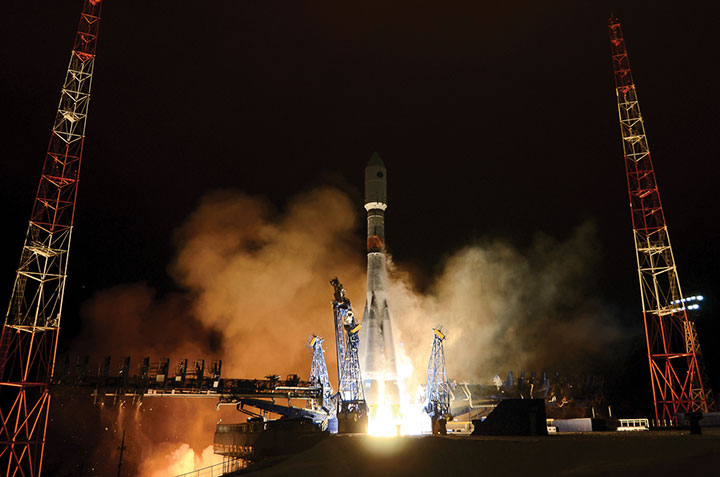
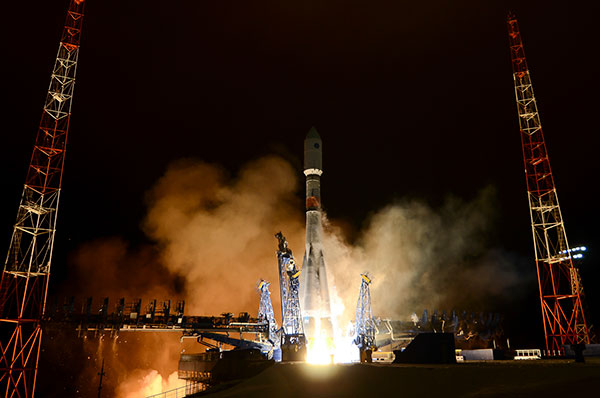
    Glonass-K No. 15 was launched into orbit on Oct. 25. (Photo: Roscosmos)
    Glonass-K No. 15 was launched into orbit on Oct. 25. (Photo: Roscosmos)

    It was Glonass-M SC development that enabled users around the world to gain access to the first dual-frequency navigation service, which is necessary for decreasing the effects of the ionosphere on navigation accuracy.

    The third generation of GLONASS SC — Glonass-K  — was successfully launched from the Plesetsk launch site on Oct. 25. This SC will provide users with a broader range of capabilities — and a more accurate and informative signal in the L3 frequency band. Further gradual rejuvenation of the GLONASS constellation will ensure the ever-improving quality of our navigation services.

    Two Glonass-K2 SC are planned for the launch campaign in 2021, and all the experience accumulated during the development of third-generation GLONASS SC (Glonass-K) will be implemented in the fourth-generation SС. Glonass -K2 is a unique SC: It will provide users with five navigation signals, its accuracy will be within 0.3–0.5 m, and its assured expected lifetime will be at least 10 years.

    High-Orbit Space Complex

    GLONASS developers remain focused on user requirements. Recent surveys show a growing demand for high-quality navigation services in difficult conditions where the SC is visible at more than 25° above the horizon. To satisfy these needs with the implementation of new CDMA signals, development of the GLONASS High-Orbit Space Complex (HOSC) will begin in 2021. Its first SC will be launched in 2025, and complete deployment of the constellation including six SC in three or six planes will be finished by the end of 2027.

    As a result, the accuracy and availability of navigation in difficult conditions will improve in the Eastern Hemisphere. But the major anticipated outcome of the HOSC implementation is assured two-fold coverage of the Northeastern segment of the globe with high-accuracy differential navigation data by GLONASS and other GNSS.

    HOSC implementation will ensure 25% navigation accuracy improvement over the Eastern hemisphere. Glonass-K SC will be used as a base platform for HASC deployment due to its excellent record.
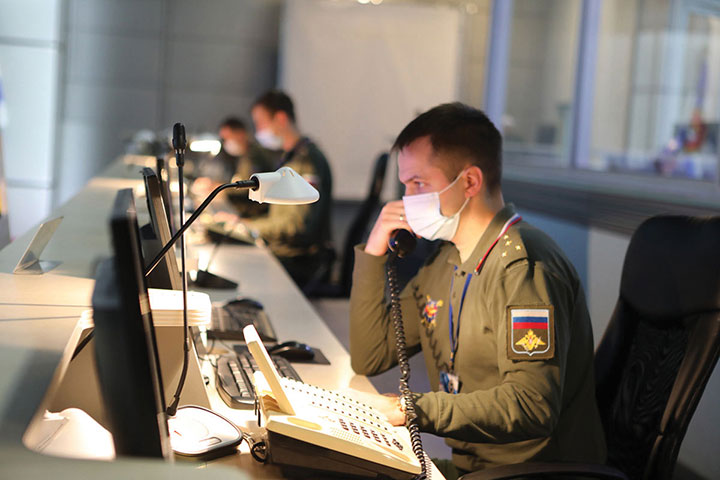
    Ground Control at the Titov Main Test Space Center established a stable telemetry connection with the new satellite shortly after launch. (Photo: Roscosmos)
    Ground Control at the Titov Main Test Space Center established a stable telemetry connection with the new satellite shortly after launch. (Photo: Roscosmos)

    User Interface Harmony

    One of the most important tasks for the year 2020 is harmonization of the GLONASS user interface. As we already mentioned, the signal propagation environment has a strong effect on navigation accuracy; therefore, new issues of GLONASS Interface Control Documents (ICD) are being prepared for publication.

    We anticipate that GLONASS end-user accuracy improvement will be achieved through introducing additional information into reserve bits of navigation frames, including relevant parameters of an ionospheric model.

    The ICD will contain operating methods with parameters of the ionospheric model and definite recommendations designed for compensation of ionospheric delays by both single-frequency and dual-frequency receivers, as well as generalized methods for compensating for tropospheric delays.

    Changes in the ICD concerning FDMA and CDMA signals will ensure backward compatibility and uninterrupted operation for the existing range of user navigation equipment.
  • Russia adds to GLONASS constellation with latest launch

    Russia adds to GLONASS constellation with latest launch

    Russia launched a new-generation Glonass-K satellite, number 15, into orbit Oct. 25. Unlike its Glonass-M predecessors, Glonass-K satellites carry two types of navigation signals — frequency-separated and code-separated. The satellites emit additional code-division L2 navigation signals.

    In addition to their main functions, Glonass-K satellites will transmit information from the Cospas-Sarsat international search-and-rescue system. Additional Glonass-K satellites are in production at ISS Reshetnev, all with a domestic electronic component base.

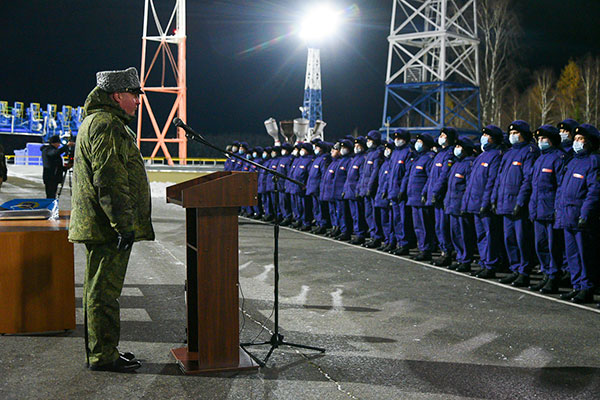
    Russia’s Aerospace Forces (VKS) Space Forces launched the satellite aboard a Soyuz-2 rocket from the Plesetsk cosmodrome in the Arkhangelsk region. The launch of the carrier rocket and the maneuvering of the spacecraft into the orbit took place under normal operating conditions, according to Roscosmos.

    Two minutes after the launch, the ground-based automated control complex of the Titov Main Testing Space Center acquired the Soyuz-2. On schedule, the Glonass-K satellite was injected into the target orbit by the Fregat upper stage and taken over by the ground-based facilities of the VKS Space Forces.

    Photo: Roscosmos
    Photo: Roscosmos

    A stable telemetric connection has been established and maintained with spacecraft. The onboard systems of the Glonass-K spacecraft are operating normally.

    GLONASS consists of 28 spacecraft, with 24 active, two in reserve, and one Glonass-K undergoing flight tests. Another spacecraft is temporarily out for maintenance.

    Glonass-M satellites form the basis of the system’s orbital grouping. Replacing the orbital constellation with Glonass-K spacecraft will ensure the stable operation of the Russian navigation system and increase the accuracy of its navigation determinations up to tens of centimeters.

    According to Roscosmos, Glonass-K spacecraft are constructed in an unpressurized design, have a guaranteed period of active existence in orbit increased to 10 years, reduced energy consumption, and significantly lower weight.

    Photo: Roscosmos
    Photo: Roscosmos
  • GLONASS-M satellite launched into orbit

    GLONASS-M satellite launched into orbit

    Russia has launched another GLONASS-M satellite, according to Roscosmos, the Russian State Space Corporation.

    A Soyuz-2.1b launch vehicle successfully carried the satellite to its planned orbit from the Plesetsk cosmodrome. The launch took place on schedule on March 16.

    Ground-based facilities of the G.S. Titov Space Forces VKS immediately took control of the satellite. A stable telemetry connection has been established and maintained with the satellite. The onboard systems of the spacecraft are operating normally.

    The launch used a Fregat booster block produced by NPO Lavochkin, part of the Roscosmos State Corporation. The satellite was manufactured by ISS, also part of Roscosmos State Corporation.

    The Soyuz-2.1b launch vehicle with encapsulated Glonass-M satellite is transported to the launchpad. (Screenshot: Russian Ministry of Defense video)
    The Soyuz-2.1b launch vehicle with encapsulated GLONASS-M satellite is transported to the launchpad. (Screenshot: Russian Ministry of Defense video)

    For the GLONASS constellation, a full complement of 24 satellites are set healthy. In addition, four satellites previously in the constellation are classified as spares, in maintenance or in test.

    The just-launched satellite is expected to replace a currently operational GLONASS-M satellite, specifically GLONASS 735 in orbital slot 24). Of the 24 healthy satellites, one is a K1; the rest are Ms. The satellite in test is also a K1 (the first K1 to be launched).

  • Directions 2020: GLONASS focuses on users

    Directions 2020: GLONASS focuses on users

    Yury Urlichich, First Deputy Director General, Roscosmos. (Photo: Roscosmos)
    Yury Urlichich, First Deputy Director General, Roscosmos. (Photo: Roscosmos)

    By Yury Urlichich, First Deputy Director General of ROSCOMOS State Space Corporation
    Sergey Karutin, Designer General of GLONASS
    Nikolay Testoedov, Director General, Information Satellite Systems

    Roscosmos keeps concentrating on user needs as it did in previous years. Growing digitalization is driving a high demand for high-accuracy navigation services. Space information technologies support user needs by modern digital services, including increasing accuracy of position and velocity determination. Because of this, it is of vital importance for us to ensure that GLONASS provides continuous services and stable performance.

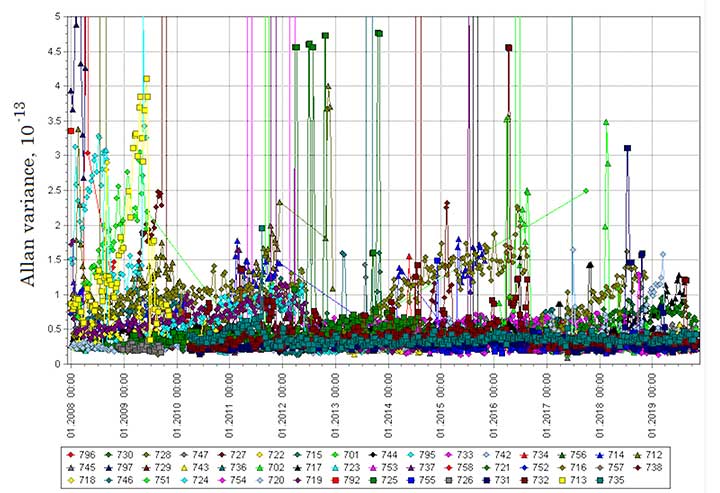
    Figure 1. Mature Glonass-M satellites show improved cesium frequency standards performance in terms of daily stability. (Image: Roscosmos)
    Figure 1. Mature Glonass-M satellites show improved cesium frequency standards performance in terms of daily stability. (Image: Roscosmos)

    Performance Standard & ICD

    This year, we finished drafting the GLONASS Open Service Performance Standard (GLONASS OS PS; the Russian language version is available). In 2020, the new version of the GLONASS Interface Control Document (ICD) also will be publicly available.

    GLONASS OS PS serves as a high-level mainframe document specifying the values of the achieved GLONASS performance characteristics plus the significant guaranteed margin. These, coupled with the signal reception environment and a priori estimation of user equipment performance characteristics, can further be translated into the performance that an end user can expect to achieve in his specific PVT solution.

    This GLONASS OS PS is a basis for certification of GLONASS services and development of lower level standards for user receiver and GLONASS-based service, as well as for development of international standards like those of the International Civil Aviation Organization (ICAO), the International Maritime Organization (IMO) and others.

    Use of the unified set of performance parameters and calculation methods for all GNSS — GLONASS, GPS, Galileo and BDS — is a conventional practice. The similar standards for GPS, Galileo and BDS have been published and are regularly updated.
    In fact, this GLONASS OS PS is the second one after the ICD baseline interface between GLONASS and user receiver manufacturers and the GLONASS-based services developers. The OS PS establishes the minimum performance that can be achieved by users with a high level of trust based on the system’s long-term statistical history.

    Signal-in-Space. This OS PS specifies standards for the GLONASS OS Signal-in-Space (SIS) performance neglecting receiver biases, signal propagation and reception biases (in terms of performance metrics used to specify system performance, that is, taking into account the GLONASS space segment and the GLONASS ground segment contributions to the performance). It can serve as a basis for certification of the GLONASS-based services and receivers incorporating GLONASS, including those used in aviation and other user domains.

    The OS PS provides an overview of the GLONASS system and an overview of the GLONASS Open Service SIS. It specifies the standards for the performance characteristics of the channel of standard accuracy used to provide the Open Service, and lists the legal reference documents.

    L3 CDMA. One of the most significant tasks is the harmonization of GLONASS user interfaces with respect to new L3 CDMA signals. The requirements related to the interface between the space segment of GLONASS and the navigation user segment for radio frequency links is established by the GLONASS ICDs.

    The new version of ICD for CDMA L1, L2 and L3 signals to be broadcast by new-generation Glonass-K2 satellites was issued in 2016. However, the Glonass-M satellites (## 755-758) and the Glonass-K satellites currently in orbit transmit the L3 signal as per the L3 Open Access CDMA Radionavigation Signal Interface Control Document (Edition 1) of 2011.

    In order to mitigate the above-mentioned discrepancies, five reference documents (Interface Control Documents for open-access signals) have been updated and prepared for publication. In addition, flight tests to verify new ionospheric and tropospheric delay models have been scheduled.

    Incorporating More Data

    The new ICDs for open access and authorized signals incorporate changes related to the introduction of additional data into the spare bits of the navigation message. This additional data is to be used by user receivers for better PVT solution purposes.

    The updated versions of ICDs will incorporate:

    • The mathematical ionospheric delay model and inclusion of the model parameter into the navigation message.
    • The mathematical tropospheric delay model, which does not require that any specific parameters be included into the navigation message. It only employs data on the latitude of a user receiver location and the season (i.e., winter, spring, summer, and autumn).
    • The attribute (or flag) to inform a user that a satellite is in the turn mode and its antenna phase center behavior is different from that when a satellite is in the sun orientation mode.
    • Information about the types of signals broadcast on the L1, L2, and L3 frequencies; 5-bit field, in which the first three bits denote L1, L2, and L3 CDMA signals, respectively, while the 4th and the 5th bits denote L1 and L2 FDMA signals, respectively.
    • A 5-bit field to be used to broadcast age of data (AOD) for time offsets in addition to the similar field used to broadcast AOD for ephemerides.

    Backward Compatibility. The updated CDMA and FDMA ICDs will support the backward compatibility for the uninterrupted operation of the existing envelope of user equipment and the introduction of the ionospheric and tropospheric model parameters into the message spare capacity.

    Constellation Refresh

    The GLONASS constellation has been replenished steadily. Since 2013, we have been launching one to two satellites a year, and this year is not an exception. The launch on May 27 and the December launch will help sustain the nominal constellation. The Glonass-M satellites demonstrate good dynamics for the average operational life. Two satellites are well beyond their 10-year design life — their operational lifetime has exceeded 12 years. As some of the Glonass-M satellites grow older, their cesium frequency standards performance in terms of daily stability improves (see Figure 1).

    Glonass-K. In 2020, the launch campaign for the Glonass-M satellites will come to its end. The Glonass-K satellites will come on stage with the first launch of Glonass-K-15 scheduled for the beginning of the next year. We are fully confident that this satellite will not disappoint our users.

  • Directions 2019: High-orbit GLONASS and CDMA signal

    Directions 2019: High-orbit GLONASS and CDMA signal

    Yury Urlichich, First Deputy Director General, Roscosmos. (Photo: Roscosmos)
    Yury Urlichich, First Deputy Director General, Roscosmos. (Photo: Roscosmos)

    By Yury Urlichich
    First Deputy Director General, Roscosmos State Space Corporation

    The year 2019 will bring GLONASS users many new opportunities. Improving navigation services specifically at the user level, primarily assessed in terms of signal accuracy and availability, is our primary goal. Improving navigation accuracy is based on space system development, including both the orbital constellation (space segment) and ground control segment.

    CDMA Signal

    A Glonass-K2 spacecraft (SC) launch followed by flight testing will be the most important event in space segment development. This SC will enable navigation not only using legacy FDMA signals available for users for more than 35 years, but simultaneously with a full row of CDMA signals in all GLONASS frequency bands: L1, L2 and L3.

    Currently the major navigation error contributors are the radio signal trajectory and the user terminal receiving environment. The new signals will allow lowering the hardware-dependent SC-user ranging error by an order of magnitude, reducing the influence of signal reflections from buildings, constructions and landscape (multipath effect), thus enabling their effective use for high-precision navigation with real-time errors below 0.1 m.

    We are also finalizing in 2019 the newest edition of the GLONASS Interface Control Document containing recommended models for evaluation of tropospheric and ionospheric delays. Our forecasts show two times navigation accuracy improvement for users of these models.

    High-Orbit GLONASS

    Improving signal availability is equally important. As large urban areas demonstrate growing use of navigation technologies, these users experience difficulties receiving signals from SC flying below the elevation angle of 25°. To provide a navigation solution in such environments, we will begin development of High-Orbit GLONASS in 2019.

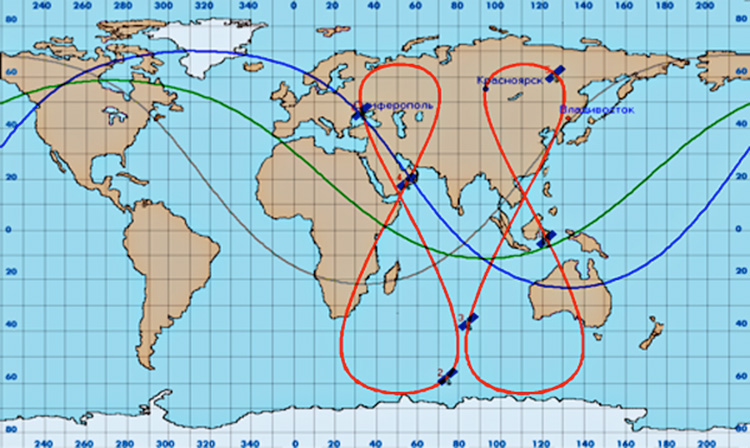
    High-Orbit GLONASS will consist of six SC distributed among the three orbital planes and forming two SC ground traces with 64.8° orbit inclination, eccentricity of 0.072, revolution period of 23.9 hours, geographical longitude of the ascendant angle – 60°, 120° (See figure below).

    High-Orbit GLONASS — ground track in red. (Image: Roscosmos)
    High-Orbit GLONASS — ground track in red. (Image: Roscosmos)

    The new generation space segment will be populated with Glonass-B satellites designed on the proven Glonass-K platform, successfully providing services since 2012. Users will be offered the full spectrum of new CDMA signals in all three GLONASS frequency bands.

    The first Glonass-B is planned for launch in 2023, with the full constellation of six SC to be deployed by the end of 2025, increasing by 25% the navigation accuracy in the Eastern hemisphere.

    The satellite mass below 1,000 kg allows Angara-A5, the new Russian heavy launch vehicle, to perform a dual launch from either Plesetsk or Vostochny launch sites.

    Much attention is being paid to the signal characteristics’ stability throughout the whole system lifecycle. For this purpose, ROSCOSMOS developed the GLONASS Monitoring and Performance Assessment System for civil users, including the distributed network of monitoring stations abroad, and dedicated radio telescopes capable of analyzing the navigation signal structure and power on the Earth’s surface.

    Currently the planned user range error (URE) for signal in space is 1.4 m. Feb. 26, with URE of 1.13 m, became the best day of the ten-month long monitoring in 2018. Moreover, this value tends to decrease as Glonass-M satellites operating beyond their guaranteed life period are being replaced. For instance, on Nov. 3, Glonass-M satellite No. 57 launched, replacing No. 16 after almost 12 years of operation in orbit.

    As already mentioned, the Glonass-K2 is planned for launch in 2019. Compared to Glonass-M and Glonass-K satellites, Mission Definition Requirements for Glonass-K2 define URE to be 0.3 m, qualitatively improving GLONASS user performance.

    The new on-board frequency standard based on passive hydrogen maser (PHM) will also contribute to better performance. This PHM is undergoing its ground tests and will be installed onboard the SC by the end of the year. Its relative 24-hour stability of better than 5×10-15 ensures the required URE.

  • Russia plans to place positioning satellites around the Moon

    Russia plans to place positioning satellites around the Moon

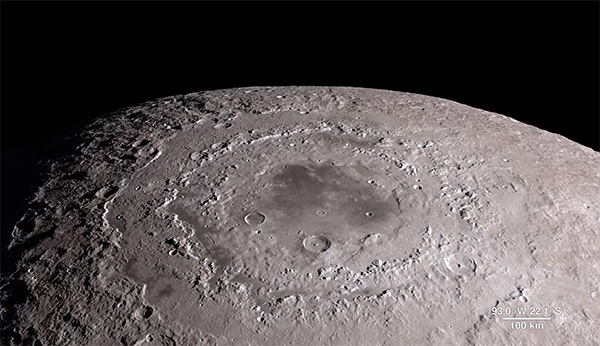
    The Orientale Basin in a 4K NASA video of the lunar surface using observations from the Lunar Reconnaissance Orbiter. (Photo: NASA)
    The Orientale Basin in a 4K NASA video of the lunar surface using observations from the Lunar Reconnaissance Orbiter. (Photo: NASA)

    Russian positioning satellites could circle the Moon by 2040.

    In a draft document describing Russia’s program for lunar exploration, plans include deployment of navigational and communications satellite groupings in lunar orbit.

    The document, adopted at a Nov. 28 joint meeting of Roscosmos and Academy of Sciences officials, was obtained by Russian news agency Sputnik, which described it here.

    According to the document, the tasks described for 2025-2030 include “the delivery to the Moon of a series of spacecraft for orbital research and the establishment of a global communications and positioning system.”

    The concept envisions the deployment of a lunar satellite navigation constellation between 2036 and 2040.

    Russia’s Earthly navigation constellation is GLONASS.

    A Roscomos press release Nov. 28 says a moon base is the agency’s top priority. “The interest of mankind to the moon is associated primarily with the fact that unique regions with favorable conditions for the construction of lunar bases were discovered on the satellite. The implementation of the lunar program will be held in several stages until 2040.”

    Russia will reportedly implement its new strategy in three phases: the launch of an orbital station, a manned mission to the surface, and the eventual construction of a permanent base.

  • ISS Reshetnev to build 11 new GLONASS-K satellites

    ISS Reshetnev has signed a contract with Russian space agency Roscosmos to build 11 new GLONASS satellites, according to the Roscosmos website. ISS Reshetnev is Russia’s leading spacecraft developer and manufacturer.

    ISS Reshetnev will build nine GLONASS-K1 satellites and two GLONASS-K2 satellites. The GLONASS-K1 satellites will be transition satellites between the existing GLONASS-M satellites and the future GLONASS-K2 satellites.

    GLONASS-K2 satellites will begin flight tests in 2018, with mass production of GLONASS-K2 satellites to begin in the 2019–2020 time frame.

    The GLONASS-K1 satellites are expected to have a 10-year lifetime. The first of the new batch of GLONASS-K1 satellites will be launched in 2018.

    Flight tests of the two GLONASS-K1 satellites now in orbit have been completed.

    — written with assistance from Richard Langley, “Innovation” editor.

  • Russia launches GLONASS-M 51 into orbit

    Russia launches GLONASS-M 51 into orbit

    GLONASS-M-51-launch-7

    A GLONASS-M satellite was launched into orbit on Feb. 7 at 03:21 Moscow time from the Plesetsk Cosmodrome spaceport, reports the Russian space agency Roscosmos.  The Russian Defense Ministry successfully launched GLONASS-M 51 (known as 751 in orbit) aboard a Soyuz-2.1b rocket with a Fregat upper stage.

    Three and a half hours after lift-off, the satellite separated from the upper stage and ground control established communications with it. The stable telemetry link shows that onboard satellite systems are functioning normally.

    According to the telemetry data received from GLONASS-M 51, the satellite is in good health. With all its mechanical subsystems successfully deployed, the satellite completed Earth and Sun acquisition. The Moscow-based System Control System and ISS-Reshetnev’s Information and Computation Center have begun satellite’s performance check-out.

    Status of the GLONASS constellation, shown here, indicates that the satellite is now in the commissioning phase.

    GLONASS-M 51 will replace a GLONASS satellite now operating three years past its design life.

    Based on the GLONASS system’s stable operation, there has been no need to launch new satellites to augment the system, said the satellite manufacturer. The most recent launch of a GLONASS satellite was performed in 2014.

    Eight GLONASS-M navigation satellites are being stored at ISS-Reshetnev Company awaiting launch.

    GLONASS orbital grouping provides a solution to problems of global positioning in the interests of the Russian Defense Ministry and civilian users. Access to civilian navigation signals of global navigation satellite system GLONASS is provided to Russian and foreign consumers free of charge and without restriction.

  • UN Seminar on SatNav Explored Sharing, Education

    UN Seminar on SatNav Explored Sharing, Education

    UN-workshop-tour-W
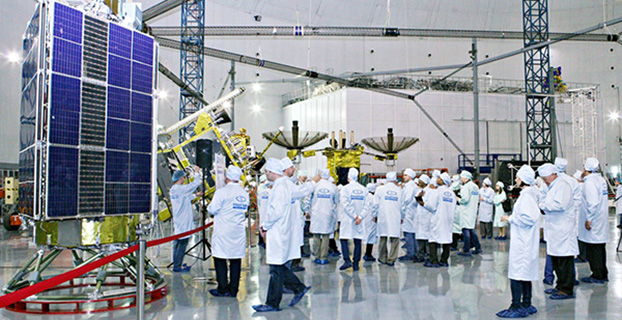
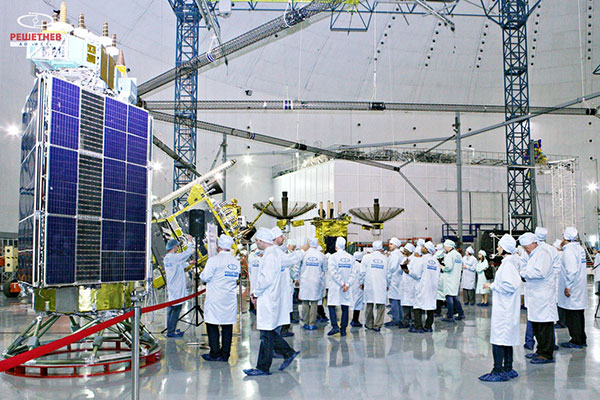
    Seminar participants visit the GLONASS production facility. (Photo: Reshetnev)

    A United Nations workshop held in Krasnoyarsk, Russia, May 18-22 focused on sharing GNSS in various countries, as well as training in GNSS technologies.

    The five-day workshop, organized jointly by the United Nations Office for Outer Space Affairs and the Russian Federal Space Agency (Roscosmos), sought to address the use of GNSS for various applications that can provide sustainable social and economic benefits, in particular for developing countries.

    Titled “The use of global navigation satellite systems, GNSS/GLONASS,” the meeting was hosted by the Reshetnev Information Satellite Systems Joint Stock Company. This is the first time the workshop was held in Russia.

    A key topic of discussion was the sharing of GNSS in different countries, according to the Reshetnev website. Particular attention was paid to training in the use of satellite navigation, with the most important outcome a proposal to create, under the auspices of the Reshetnev company, an international education center in the use of satellite navigation. The center will cooperate with the UN office in Vienna, as well as regional centers in Morocco, Nigeria, India, Brazil and China.

    The seminar was held in nine sections. The sections considered topics such as the formation and development of GNSS, GNSS infrastructure, and national projects on the use of satellite navigation. Representatives from more than 20 countries in Asia, Africa, Europe, North and Latin America shared their experiences implementing GNSS services and spoke about the real and projected benefits of using these technologies for social and economic development.

    During the seminar, participants visited the MFReshetnev satellite production company responsible for the space segment of GLONASS in Russia. Guests were shown current and future GLONASS-M and GLONASS-K satellites, as well as learned about the latest developments for GLONASS.

    UN-workshop-2-W
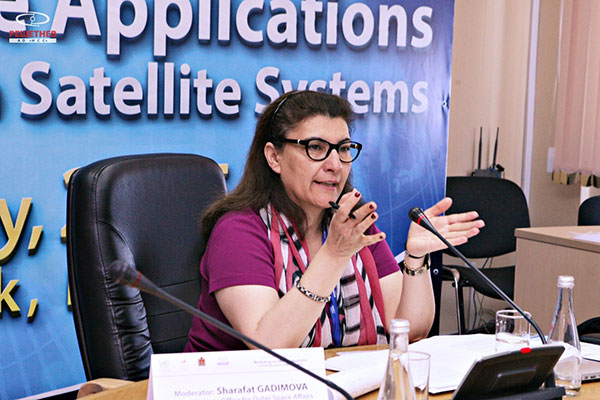
    UN representative Sharafat Gadimova summarizes the workshop. (Photo: Reshetnev)
    UN-workshop-1-W
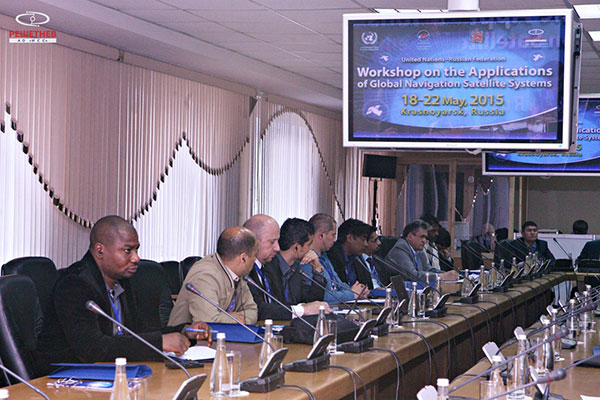
    Participants discuss the uses of satellite navigation. (Photo: Reshetnev)


  • Russia, China Sign Satellite Navigation Agreement

    012015_china3

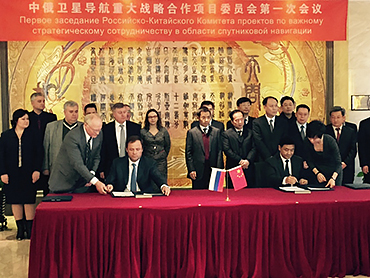
    Russia and China have signed a cooperation agreement on satellite navigation, a Russian Space Agency spokesperson told RIA Novosti on Tuesday.

    Roscosmos chief Igor Komarov met with Xu Dazhe, the leader of China’s National Space Administration, on an official visit in Beijing.

    “The first provision to set up a committee and a protocol were signed during the first working session. Igor Komarov and Xu Dazhe discussed issues of bilateral cooperation in the field of electronic components for rocket construction and building rocket engines,” the spokesperson said.

    A Russian-Chinese committee on satellite navigation was established in October 2014 at the meeting between Russia’s Deputy Prime Minister Dmitry Rogozin and his Chinese counterpart, Wang Yang.

    In November, China North Industries Corporation (NORINCO) and the Russian GLONASS nonprofit partnership agreed to establish a joint venture to promote worldwide services based on GLONASS and BeiDou.

    Russia and China also recently completed joint reconnaissance for the placement of GLONASS differential correction and monitoring stations in the Chinese cities of Urumqi and Changchun. Each country is expected to accommodate three such facilities.
  • UN, Roscosmos Plan GNSS Economic Workshop

    The United Nations and Russia’s space agency ROSCOSMOS are holding a workshop on ways to use GNSS for sustainable social and economic benefits. The workshop will be held May 18-22 in Krasnoyarsk, Russian Federation.

    The United Nations/Russian Federation Workshop on the Applications of Global Navigation Satellite Systems is organized jointly by the United Nations Office for Outer Space Affairs and the Russian Federal Space Agency (ROSCOSMOS). The workshop will address the use of GNSS for various applications that can provide sustainable social and economic benefits, in particular for developing countries.

    Current and planned projects that use GNSS technology, including the GLObalnaya NAvigatsionnaya Sputnikovaya Sistema (GLONASS) of the Russian Federation, for both practical applications and scientific explorations will be presented. Cooperative efforts and international partnerships for capacity-building, training and research, including the activities of the GLONASS learning center will also be presented.

    The workshop program will include plenary sessions described below and also sufficient time for discussions among participants to identify the priority areas where pilot projects should be launched and examine possible partnerships that could be established.  In addition, a half-day technical tour will be arranged by the Local Organizing Committee during the workshop.

    The workshop is co-organized and co-sponsored by the International Committee on Global Navigation Satellite Systems, and hosted by the Reshetnev Information Satellite Systems Joint Stock Company.

    Sessions include:

    • Session 1: Current and Planned GNSS and Satellite-Based Augmentation Systems
    • Session 2: GNSS-based Applications
    • Session 3: GNSS and Space/Atomospheric Weather Monitoring
    • Session 4: GNSS Reference Frames/Systems and Reference Station Networks
    • Session 5: Capacity building, training and education in the field of GNSS

    Visit the UNOOSA website for more information.


  • Roscosmos, Transport Ministry Sign GLONASS Agreement

    An interagency agreement for the maintenance, development and use of GLONASS was signed Dec. 5 between Russia’s Ministry of Transport and the Russian Space Agency, according to Roscosmos.

    The agreement seeks to increase the efficiency of the use of civilian infrastructure for the development of GLONASS coordinate-time and navigation for the Russian Federation, as well as international cooperation in the field of satellite navigation.

    Priority areas of cooperation will be:

    • integration of resources in departmental networks for tracking GNSS signals to improve the performance of coordinate-time and navigation in Russian Federation territory using GLONASS, and improving the safety and efficiency of different modes of transport;
    • implementation of a coordinated technical policy to support the functioning of terrestrial systems for the efficient use of GLONASS;
    • the creation of a center for collection, storage, use and provision of information to interested consumers on the state of GNSS;
    • implementation of Russian Federation policy to create conditions that promote domestic navigation technologies based on the GLONASS system abroad.

    The interagency agreement will further improve certain aspects of GLONASS, which will make the services of the Russian navigation system more attractive not only for the domestic market, but also the international market.

    The agreement was signed during Transport Week, an annual business event that is one of the largest Russian forums on issues of development and improvement of Russia’s transport system.