The Indian government is pushing smartphone makers to sell devices that receive NavIC signals along with GPS.
India originally stated NavIC would be required in smartphones sold starting in January 2023, according to Reuters, but strong reaction from smartphone manufacturers Apple, Xiaomi and Samsung apparently caused the government to push back or remove the deadline.
A deadline of January 2023 would not allow enough time for smartphone makers to integrate NavIC-enabled receivers to their devices. Steps include redesign, securing parts, testing and assembly. Many smartphones sold in India by the companies are economy-level devices priced under US$200.
The three tech giants met with government officials, seeking an extended target date of 2025, Reuters reported.
However, India’s Ministry of Electronics & IT issued a statement via Twitter :
A media report has claimed citing a meeting that mobile cos were asked to make smartphones compatible with NavIC within months. This is to clarify: (1) No timeline has been fixed. (2) The cited meeting was consultative; and (3) the issue is under discussion with all stakeholders.
NavIC (Navigation with Indian Constellation) is the operational name for the Indian Regional Navigation Satellite System (IRNSS) developed by India’s space agency for military and commercial purposes. NavIC consists of eight satellites that cover the Indian mainland and the region extending up to 1,500 km from its boundaries.
“NavIC can help in navigation on land, air, sea and also in disaster management,” Science & Technology Minister Jitendra Singh said in a press release. “NavIC satellites are placed at a higher orbit than the GPS of United States. NavIC satellites are placed in geostationary orbit (GEO) and geosynchronous orbit (GSO) with an altitude of about 36,000 km; GPS satellites are placed in medium earth orbit (MEO) with an altitude of about 20,000 km.”
“NavIC uses dual-frequency bands, which improves accuracy of dual-frequency receivers by enabling them to correct atmospheric errors through simultaneous use of two frequencies,” Singh said. “It also helps in better reliability and availability because the signal from either frequency can serve the positioning requirement equally well.”
The Exynos W920 offers high performance, efficiency and LTE connectivity in tiny form factor
Image: Samsung
Samsung Electronics is offering a new processor for wearables, the Exynos W920. The new processor integrates an LTE modem and is built with an advanced 5-nanometer (nm) extreme ultraviolet process node, offering powerful yet efficient performance demanded by next-generation wearable devices.
The Exynos W920 is embedded with a GNSS L1 receiver (GPS, GLONASS, Beidou, Galileo) for tracking speed, distance and elevation during outdoor activities. It also has a 4G LTE Cat. 4 modem.
“Wearables like smartwatches are no longer just a cool gadget to have. They’re now a growing part of our lifestyles to keep you fit, safe and alert,” said Harry Cho, vice president of System LSI marketing at Samsung Electronics. “With the Exynos W920, future wearables will be able to run applications with visually appealing user interfaces and more responsive user experiences while keeping you connected on the go with fast LTE.”
The Exynos W920 has two Arm Cortex-A55 cores for high-performing, power-efficient processing and an Arm Mali-G68 GPU with CPU performance improved by 20 percent and 10 times better graphics performance than its predecessor. With upgraded cores and improved performance, the Exynos W920 enables faster application launches and more interactive, eye-catching 3D graphical user interface (GUI) on a device’s qHD (960×540) display.
The Exynos W920 comes in a tiny package with Fan-Out Panel Level Packaging (FO-PLP). The technology incorporates the Exynos W920, power management IC and embedded multimedia card. The processor’s compact size allows smartwatches to house larger batteries or have sleeker designs.
Always-on-display (AOD) for wearables, especially for smartwatches, is a widely adopted feature as it makes it effortless to take a quick look at the time, notifications, missed calls and more without the need to wake the watch up from sleep mode. Rather than powering up the main CPU, the W920 activates a dedicated low-power display processor, the Cortex-M55, reducing display power consumption under AOD mode compared to its previous Exynos model.
The Exynos W920 supports a new unified wearable platform Samsung built jointly with Google, and will be first applied to the upcoming Galaxy Watch model.
The GPS Week Number Rollover, which took place April 6, has caused several automated NOAA stations to go offline.
Some of the outages could last until November.
Photo: NOAA
According to the EOS website, 19 National Oceanic and Atmospheric Administration (NOAA) coastal and marine automated stations were not updated to mitigate the issue, and those stations are out of commission until workers can service them on location.
The New York Times is reporting that at 7:59 p.m. EDT on Saturday, the New York City Wireless Network went dark, interrupting functions such as the collection and transmission of information from some Police Department license plate readers, Department of Transportation traffic-light programming, and communications at remote work sites for the sanitation and parks departments.
The city is now working overtime to bring affected systems back online, reports StateScoop.
Previously, GPS World reported on rollover issue for the Australian Bureau of Meteorology’s (BOM) weather balloons, as well as Boeing aircraft. Read more about the Boeing issue here.
Broadcast Date: Thursday, December 13, 2012 Moderator: Alan Cameron, publisher for GPS World Speakers: J. Blake Bullock (Samsung), Manikantan Parameswaran (Spirent), Chris Gates (NextNav), Dave Huntingford (CSR) Summary: The senior product manager responsible for a new chip that fuses input from several sensors, using the best combination at any given time to maximize coverage and accuracy while keeping power draw to a minimum, joins us to describe the new frontiers in indoor navigation. He’ll be joined by other experts in the field, where difficult challenges meet user requirements for continuous position availability.
The worldwide wearable device market recorded its eighth consecutive quarter of steady growth in the first quarter of 2015. According to the International Data Corporation (IDC) Worldwide Quarterly Wearable Device Tracker, vendors shipped a total of 11.4 million wearables in the first quarter, a 200 percent increase from the 3.8 million wearables shipped in the first quarter of 2014.
“Bucking the post-holiday decline normally associated with the first quarter is a strong sign for the wearables market,” said Ramon Llamas, research manager, Wearables. “It demonstrates growing end-user interest and the vendors’ ability to deliver a diversity of devices and experiences. In addition, demand from emerging markets is on the rise and vendors are eager to meet these new opportunities.
“What remains to be seen is how Apple’s arrival will change the landscape,” added Llamas. “The Apple Watch will likely become the device that other wearables will be measured against, fairly or not. This will force the competition to up their game in order to stay on the leading edge of the market.” The Apple Watch began shipping April 24.
“As with any young market, price erosion has been quite drastic,” said Jitesh Ubrani, senior research analyst, Worldwide Mobile Device Trackers. “We now see over 40% of the devices priced under $100, and that’s one reason why the top 5 vendors have been able to grow their dominance from two thirds of the market in the first quarter of last year to three quarters this quarter. Despite this price erosion, Apple’s entrance with a product priced at the high end of the spectrum will test consumers’ willingness to pay a premium for a brand or product that is the center of attention.”
Wearable Vendor Highlights
Fitbit started 2015 the same way it ended 2014: as the clear market leader in the worldwide wearable device market. Fitbit’s first quarter shipments were driven by the release of three new devices (the Charge, Charge HR, and the Surge) along with continued demand for its older Flex wristband and One and Zip clip-on models. Separately, these address multiple segments of the market, from casual exerciser to committed athlete, and collectively leverage Fitbit’s behavior change engine to encourage activity.
Xiaomi started off the year by blasting through the one million unit mark with its Mi Band for the first time, a significant feat made all the more impressive considering the device just started shipping during the second half of 2014. Similar to its smartphones, Xiaomi’s Mi Band was delivered primarily within its home country of China, but recent announcements point to more global aspirations for the company.
Garmin’s wearable device portfolio spans multiple areas of health and fitness, including activity tracking, running, hiking, golfing, triathlons, and multi-sport. The majority of Garmin’s devices are GPS-enabled to track location and distance, and some leverage the company’s ConnectIQ third-party applications to record activity, show notifications, and news.
Samsung’s fourth place finish came from worldwide demand for its Gear smartwatches. Since its debut in 2013, the Gear portfolio has diversified to include the Tizen-powered Gear, Gear 2, Gear Fit, Gear 2 Neo, Gear S, and the Android-Wear powered Gear Live. What has limited Samsung, however, is the ability for Gear devices to connect only with select high-end Samsung smartphones.
Jawbone beat Pebble and Sony for fifth place, a result driven by the release of its UP MOVE and continued demand for its nearly year-old UP24. The company will release two new devices in the second quarter of 2015, with the similarly-functioning UP2 and the mobile payments-enabled UP3. The company maintained its design strategy of no displays, but again touted its predictive data engine to encourage healthier lifestyles.
Top Five Wearables Vendors, Shipments, Market Share and Year-Over-Year Growth, Q1 2015 Data (Units in Millions)
Vendor
1Q15 Shipment Volumes
1Q15 Market Share
1Q14 Shipment Volumes
1Q14 Market Share
Year-over-year Change
1. Fitbit
3.9
34.2%
1.7
44.7%
129.4%
2. Xiaomi
2.8
24.6%
0
0.0%
N/A
3. Garmin
0.7
6.1%
0.3
7.9%
133.3%
4. Samsung
0.6
5.3%
0.3
7.9%
100.0%
5. Jawbone
0.5
4.4%
0.2
5.3%
150.0%
Others
2.9
25.4%
1.3
34.2%
123.1%
Total
11.4
100.0%
3.8
100.0%
200.0%
Source: IDC Worldwide Quarterly Wearable Tracker, June 2, 2015
Table Notes:
Data is subject to change.
Vendor shipments are branded device shipments and exclude OEM sales for all vendors.
The “Vendor” represents the current parent company (or holding company) for all brands owned and operated as subsidiary.
The Consumer Electronics Association (CEA) has announced that Boo-Keun Yoon, president and CEO of Samsung Electronics, will deliver the keynote address at the 2015 International Consumer Electronics Show. The International CES will take place in Las Vegas, January 6-9, and Yoon will talk at 6:30 p.m. January 5 in the Palazzo Ballroom at the Venetian.
Yoon will discuss connected devices, the future of the Internet of Things (IoT), and the vision of the smart home. He also will focus on Samsung’s vision of strategic partnerships that will drive the next wave of technology breakthroughs.
“Samsung is widely-known for its disruptive technologies and business models, and has been one of the fastest growing CE brands in the world,” said Gary Shapiro, president and CEO, CEA. “Samsung amazes at each CES with its innovative products spanning the entire tech ecosystem. We welcome Boo-Keun Yoon back to the keynote stage for the 2015 CES.”
Yoon began his career at Samsung Electronics in 1978. After serving in a number of leadership positions at Samsung Electronics, Yoon headed Samsung’s Visual Display Business from 2007, seeing its revenue double while maintaining the company’s No. 1 global TV market share for eight consecutive years. Currently, Boo-Keun Yoon serves as the president and CEO of Consumer Electronics at Samsung Electronics, leading Samsung’s Visual Display, Digital Appliances, Printing Solutions and Health & Medical Equipment Business. In addition, Yoon also acts as the company’s Chief Design Officer.
According to CEA/GfK research, global consumer technology spending will top more than $1 trillion in 2015. Lauded for its innovative design and technology across its diverse portfolio of products, Samsung Electronics is a leading global brand for high-tech electronics and digital media.
The 2015 CES will feature more than 3,500 exhibitors unveiling the latest consumer technology products and services across the entire ecosystem of consumer technologies. For more information on the 2015 CES, visit CESweb.org.
Samsung Electronics has unveiled its next-generation smart wearable device, the Samsung Gear S watch. The Gear S has assisted GPS+GLONASS, as well as 3G connectivity, allowing users to be active while always being able to access their smartphone information.
Designed with a two-inch curved Super AMOLED display and flexible band, the Samsung Gear S is also equipped with an accelerometer, a gyroscope, a compass, a heart rate monitor, and a barometer. The AMOLED display has an easy-to-use interface that allows users to read messages and notifications in a single glance with features such as conversation view and condensed font.
Connected to 3G networks, people can receive notifications from social networks, calendars and applications, even when away from their phones. Users can instantly receive incoming messages and easily reply to SMS using the onscreen keyboard or enhanced S voice functionality. The Samsung Gear S also lets users make and receive calls directly from their wrist as well as getting calls forwarded from a smartphone. The device lets users enjoy seamless communication by freely switching between connections, automatically connecting and synchronizing information once it is paired to a smartphone.
Samsung Gear S smart watch face detail. Photo: Samsung
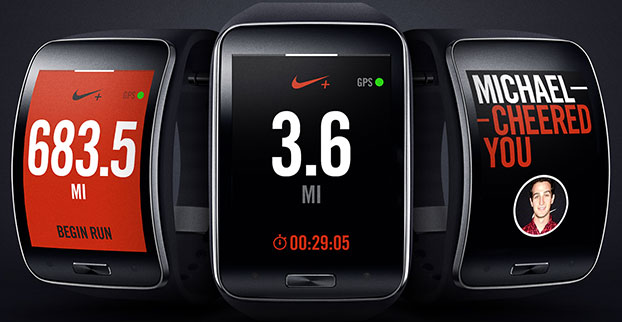
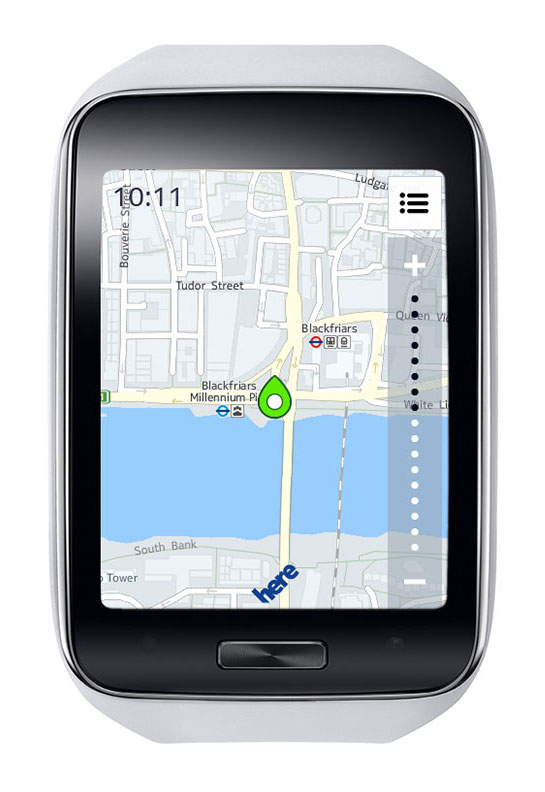
It also provides standalone features such as turn-by-turn pedestrian navigation provided by HERE. Health and fitness features include enhanced multi-sensors, built-in GPS, robust S Health features and applications like Nike+ Running so users can track their runs while leaving their smartphone at home.
“Samsung is leading the exciting and rapidly developing wearable category with continuous innovation that aims to enhance the lives of technology fans,” said Ines van Gennip, marketing director, IT & Mobile Division, Samsung UK & Ireland. “The Samsung Gear S is set to redefine the idea of the smart wearable device and the culture of mobile communication, enabling people to live a truly connected life anywhere, anytime.”
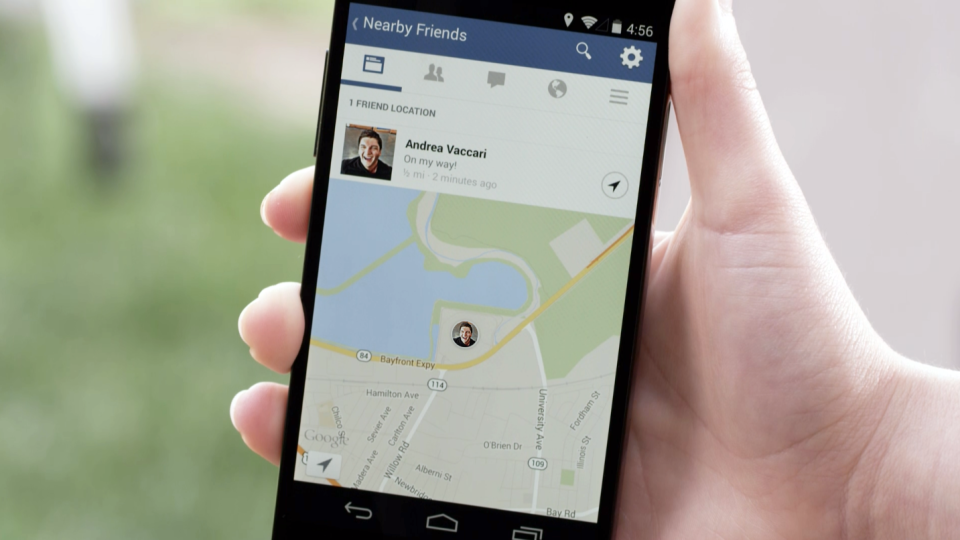
Facebook Nearby Friends feature helps people get together.
While Facebook has made big news buying companies for billions of dollars, it hasn’t been making many location-based services headlines. The recent announcement that it is rolling out a friend finder is interesting news, not only for social applications, but the potential indoor positioning markets. The news is also interesting because as many as half of Facebook users access the social media network through mobile devices.
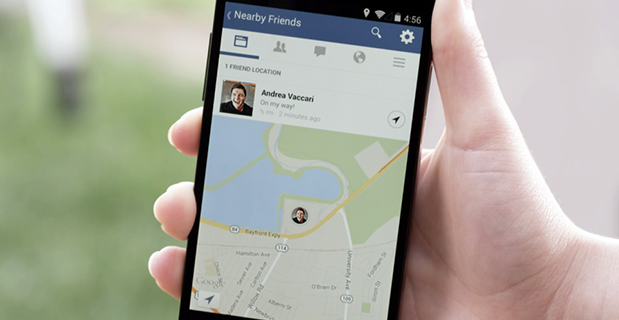
Signaling that it does have a location strategy, as GPS World reported earlier this week, Facebook announced that it was launching an LBS offering called Nearby Friends. The opt-in service allows users to find out what friends are nearby or mobile.
Nearby Friends will be available on Android and iPhones in the U.S. market this month. In Facebook’s press announcement, apparently privacy is a big issue as the company insists it is an opt-in function.
Once users agree to use the service, they will be notified when friends are in close proximity. Users can select the friends who can see their location — and can turn the service on or off at any time.
At first glance, Nearby Friends could be a valuable tool for users looking to find friends and make plans, but the real potential could be for retailers who wish to drive in-store traffic. Users can not only invite friends to a specific business on a map, but tag other traffic.
The area or business to where the friends are traveling will be displayed on their profile. This allows the friends who opt in to recommend shops, restaurants and other things to do in the specified area.
How retailers get their message out to Nearby Friends users remains to be seen. Research company Berg Insight still says advertising will constitute the main revenues for social networking and local search market segments. However, in several published reports, users have tired of the increased Facebook advertisements.
Berg says that social networking and entertainment has now overtaken mapping and navigation as the largest location market. The company says that those services include general social networking, messaging apps, friend finders such as Nearby Friends, and games.
While Facebook could use the Location History in Nearby Friends to make money selling ads, the company says it isn’t right now. But it has to be the future — and one that, privacy issues aside, could be very lucrative for the company. It could target opt-in users with ads that are only a few feet away or in the area they will meet friends.
The Wall Street Journal reported that Facebook will leverage its user base, estimated at one billion users, to improve ad targeting, expand marketing reach, and to make more money. The company earned $1.24 billion in revenue through mobile ads for the last three months of 2013, according to published reports.
After the announcement that Facebook was launching Nearby Friends, a number of tech business articles sprung up about potential, real and imagined, privacy issues. With the predictable privacy issues comes opportunities for location startups. A new location app is touting itself as the “anti-social networking” tool. Called Cloak, and available in Apple’s App Store, it allows a user to avoid friends they want to avoid by revealing the location of contacts — while keeping the user’s position hidden.
The app, which already has been downloaded more than 100,000 times, uses Instagram and Foursquare data, and published reports say Facebook compatibility is coming soon.
Rumors about Acquisition Prove False?
Earlier this month, several tech business industry publications wrote that Israel-based indoor navigation startup ShopCloud was in talks with Samsung to sell the company for as much as $90 million. Samsung has denied the rumors.
In articles like these, red flags always include terms like “several sources familiar with the details”. The price seemed high for a young company that hasn’t launched a product, though according to published reports, it has an app called Inside.
One analyst says that the Israel tech business media frequently pumps up local companies and even creates buzz for startups — and often these reports are picked up by local journalists.
Autonomous Vehicles Will Happen, but When?
In January’s Transportation Research Board (TRB) meeting in Washington, D.C., attendees agreed that self-driving vehicles are the future. The bottom line is when is the future? “We have seen the business case for autonomous vehicles — it will be a reality. When you look at the number of lives it will save, efficiency of the network, it is very compelling,” said Kevin Link, Verizon senior vice president and general manager, China. “We have to begin a slow migration of educating consumers — one of those ways is through the connected vehicle. I don’t think consumers are there yet.”
Link talked about autonomous vehicles at the Consumer Telematics Conference, also in January, but those at TRB are mainly academics and government officials, not business executives. Most believe it will take decades, Google car aside, to have a fully autonomous vehicle on the road. Others believe that if Detroit does not take notice, they can read about Google dominating this vehicle market, not being a player in it.
In other location news:
Place, the Business of Location conference will be July 22 in New York. Executives from SK Telecom, Thinknear, Sonic Notify, Aisle411, and Factual will join Google, retailer Alex and Ani, and agency MEC North America (WPP), among others. The conference will include case studies and explore how mobile, offline tracking and indoor location will change the future of digital marketing and brand advertising. Many location conferences have died in the last two years, so it is refreshing to see a conference with a strong agenda back on the scene.
Finland-based IndoorAtlas rolled out an indoor mapping application for iOS. While iOS supports Apple’s iBeacon micro-fencing solution for indoor positioning, IndoorAtlas uses the compass chip built into smartphones and does not require external hardware such as Bluetooth beacons or Wi-Fi to determine location, the company said.
The U.S. Patent and Trademark Office awarded Apple a patent that could drive technology on the next generation iPhones. The patent describes a system that combines GPS, Wi-Fi access points, and on-board location databases to provide mobile devices positioning data in all types of environments, particularly indoor location.
The Sochi 2014 Olympic Winter Games mobile app, Wireless Olympic Works (WOW), turns the world’s Android devices into mobile sports stations that fans can use to personalize their own Olympic Winter Games experience, according to maker Samsung Electronics.
The XXII Olympic Winter Games, held in Sochi, Russia, run February 7-21.
Fans attending the Olympic Winter Games in Sochi will have access to a location-based Olympic Winter Games venue guide through the Samsung WOW technology. The guide offers Olympic venue information and navigation services so visitors can feel truly integrated into the Olympic Winter Games experience on the ground, Samsung said.
Samsung’s Public WOW app also provides sports fans with real-time access to event schedules, latest reports on results, medal standings and Olympic records. Public WOW is an extension of Samsung’s custom WOW for the Olympic Family, which is a wireless communications platform developed to ensure smarter communications and smoother, wireless operations of the Olympic Winter Games by offering news and information about the games to officials and staffs.
“Samsung is offering fans around the world the most direct access to Sochi 2014 Olympic Winter Games and allowing them to design and personalize their experience in ways that are most relevant to their interests and passions,” said WS Lee, senior vice president of New Business Development, Mobile Communications Division at Samsung Electronics. “Our dedicated teams are hard at work year-round to ensure that the WOW technology is ready for use throughout the Games, both for consumers looking for the ultimate Olympic Winter Games experience, and for the Olympic Family utilizing our technology to support Games-time operations.”
All Android users worldwide can download Samsung’s Public WOW app via the Samsung App store and Google Play.
Components of the Samsung WOW app allow fans to design their own Olympic Winter Games experience in the following ways:
Personalize an Olympic Winter Games updates plan. highly personalized, live Games-time updates ranging from medal counts to big moments that can be pushed to users’ phones in real time. A new cheering service will allow fans to send cheers to support their favorite athletes and countries.
Share celebrations with social network features. Users can upload text and images instantly to share with other WOW app users and with their social networks, creating a global community around shared interests in the Olympic Winter Games and winter sports. Languages supported for the Public WOW app include Chinese, English, French, German, Korean, Russian and Spanish.
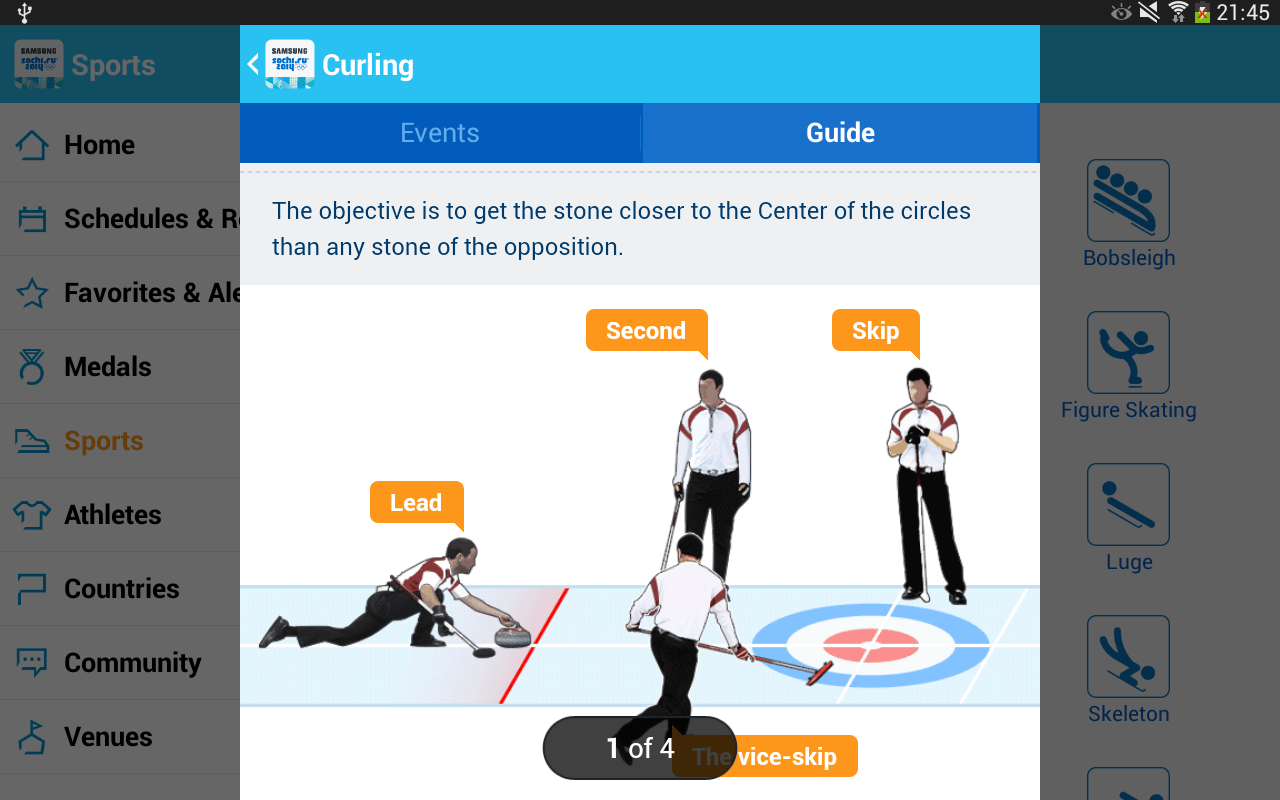
Learn about Olympic sports with an interactive, visual guide. The app offers information on all 15 winter sports at Sochi 2014 through a highly visual and engaging graphic user interface. A Visual Sports Guide will provide tutorials on each sport, including rules, equipment details and many other points of interest bring people closer to the excitement of the Olympic Winter Games.
“With its advanced technology in wireless communications, Samsung has played an essential role in the successful operation of the Olympic Winter Games. We believe the WOW app for Sochi 2014 will once again benefit the Games with more efficient and faster communications for the Olympic Family as well as fans around the world” said Timo Lumme, managing director, IOC TMS.
As part of the “Samsung Smart Olympic Games Initiative,” Samsung will provide around 18,000 mobile devices to the Olympic Family, including executives, staff, and officials from the IOC, National Olympic Committees and organizing committees in Sochi. They will be connected to Samsung’s WOW service which will provide essential, up-to-date Games Time data and connectivity that is crucial to the Olympic Winter Games operation.
The Samsung WOW service was first launched during the Athens 2004 Olympic Games for the Olympic Family and has since evolved into a must-have resource for officials, attendees and fans worldwide.
Samsung began its Olympic Games involvement as a local sponsor of the Seoul 1988 Olympic Games. Beginning with the Nagano 1998 Olympic Winter Games, the company extended its commitment to the Olympic Movement as the Worldwide Olympic Partner in the Wireless Communications Equipment category, providing its proprietary wireless communications platform, called Wireless Olympic Works (WOW), and mobile phones. These mobile phone technologies provide the Olympic Family with real-time, user location-based information service and interactive communications. Samsung’s commitment as a Worldwide Olympic Partner continues through to Rio 2016.
Qualcomm Incorporated has announced that its subsidiary, Qualcomm Technologies, Inc., is enhancing location precision in smartphones and tablets initially in China with support for China’s BeiDou Satellite Navigation System.
Supporting the BeiDou constellation within Qualcomm IZat location solutions increases the number of satellites that Qualcomm-based devices can access to provide greater position location accuracy. Qualcomm is collaborating with Samsung to launch the first wave of BeiDou enhanced consumer smartphones, demonstrating the commitment of the companies to provide technology that delivers optimum performance for location-based services within China and globally.
Powered by the Qualcomm Snapdragon 800 processor (MSM8974), the Samsung Galaxy Note 3 (WCDMA 3G version SM-N9006 & TD-LTE 4G version SM-N9008V) uses the industry’s first, integrated tri-band location platform to provide more accurate and responsive location data to mobile users. It does so by concurrently processing signals from multiple satellite networks. Armed with this capability, users will have more enjoyable experiences using their location-based services, even in the most challenging of environments.
Leveraging Qualcomm IZat location solutions, Samsung will be able to deliver an optimal user experience with quick and accurate location information and services in China. Historically, this has been a challenge in some locations, especially in urban canyons, where devices may suffer from low visibility to satellites blocked by tall buildings that obstruct the signals. Bringing BeiDou-enabled phones to China means the Galaxy Note 3 has access to more satellites, which increases location accuracy. This ultimately improves customers’ pedestrian navigation, speeds local searches and enhances other location-based services.
Qualcomm’s mobile chipsets feature interoperability with existing constellations, which use tri-band hardware integration to deliver improved location capabilities in an optimal way, with enhanced accuracy, and with no additional increase in power consumption. In Snapdragon and Gobi™ chipsets, global positioning support is built into the modem and RF chips, enabling the location signals to be processed in the modem, instead of waking up the apps processor, thus saving power without sacrificing location accuracy.
“This industry-first implementation of BeiDou in a smartphone underscores Qualcomm’s leadership in the location industry. More than 3 billion devices which feature Qualcomm’s location technology have shipped to date and the introduction of BeiDou is the latest step to evolve our technology,” said Amir Faintuch, president, Qualcomm Atheros. “We see BeiDou’s support being an important factor for OEMs in China, and globally as well. With this new location enhancement, we believe our customers can bring greater differentiation with advanced performance, applications and services.”
XRS Corporation, a mobile trucking intelligence company, has announced that Verizon is the official wireless provider for its new collaboration with Samsung Telecommunications America. The new product — NXT — creates what XRS says is the first integrated mobile device and software package designed specifically for the trucking industry.
The new solution brings together powerful XRS compliance and performance tools with Samsung Mobile’s devices, XRS said. Now, NXT is powered by the Verizon 4G LTE network, which provides the platform with superior performance and speed.
“Technology forces in the trucking industry have long been on converging paths, and our new NXT product — powered by XRS in collaboration with Verizon and Samsung Mobile – is a perfect example of how our industry is harnessing the power of technology to benefit drivers and fleet managers,” said Christian Schenk, senior vice president, XRS Corporation. “An integrated platform is the next evolution of convergence, and we are proud to be working with industry leaders like Samsung Mobile and Verizon to deliver the ultimate trucking intelligence solution.”
NXT allows drivers and fleets to purchase select Samsung Mobile devices with an XRS trucking intelligence software subscription and ready for activation on the Verizon 4G LTE network. The first device available is the Samsung Galaxy Tab 7.0, priced at a $100 discount from its suggested retail value. The data plan and subscription cost is $54 per month, including $39 for the monthly XRS fee and $15 for the monthly wireless data fee. This charge covers all required subscriptions and data, including the Relay onboard hardware component, as well as FLX messaging, hours of service, electronic DVIR, IFTA state mileage reporting and more.
“With the explosive growth of mobile electronic devices in the trucking industry, drivers have come to expect reliable and fast wireless service while they are on the road,” said Michael Toto, director of alternate channels for Verizon Enterprise Solutions. “This solution is one example of how Verizon is investing in the success of our channel partners as we collaborate to bring new innovative solutions to the market.”
NXT also offers integration with many enterprise transportation products. Over time, the platform collaboration will expand to introduce additional components, including MDM and wearable products.
The XRS trucking intelligence platform operates in both over-the-road and private carrier configurations, and is suitable for fleets of all sizes. XRS runs on certified smartphones, tablets and rugged handhelds that transmit vehicle and operator data through the cloud to a fleet management dashboard, helping companies to comply with current regulations and soon the pending Electronic Logging Device (ELD) mandate for electronic recording of a driver’s hours-of-service. Nearly 90 percent of drivers already use mobile devices while on the job.
NXT was developed through the Samsung Solutions Exchange, a newly announced strategic engagement model from Samsung Mobile that delivers a range of end-to-end solutions that address real world business challenges. The program is aimed at achieving shared value across Samsung Mobile’s rapidly growing ecosystem of enterprise customers, sales channels and alliances.
“NXT is a holistic solution for trucking that addresses performance, safety, and compliance challenges unique to the industry,” said Tim Wagner, vice president and general manager, enterprise business unit – Samsung Mobile. “Through the Samsung Solutions Exchange, we have worked closely with XRS and Verizon to enable a solution that leverages our respective strengths – which for us includes our robust suite of enterprise-grade devices.”
Customers can buy the NXT product either directly through Verizon or through XRS.
In December 2011, Grizzly Analytics released its first comprehensive report on indoor location positioning technology, predicting that indoor location services were ready to revolutionize the mobile market. The five months that followed have shown how true this was, with new initiatives announced on a regular basis and numerous demonstrations at industry conferences, Grizzly Analytics says.
In a fully revised and updated 163-page report, Grizzly Analytics gives an up-to-date analysis and comprehensive overview of indoor location positioning R&D. Included is information on the research activity of all the major mobile companies — Google, Microsoft, Samsung, Apple, Nokia, RIM, Cisco, Qualcomm, Broadcom, STMicroElectronics, Sony Ericsson and others — and also more than 30 start-up companies that are actively bringing indoor location services to market.
“These technologies are poised to revolutionize smartphone usage by enabling GPS-style mapping, navigation, local search, check-ins, location-sharing and other location-based services to work indoors in malls, megastores, offices, airports, casinos and other big indoor places,” according to a statement by Grizzly Analytics. “Indoor location will also transform commerce, enabling searching for items on store shelves, sending deals and promotions to nearby customers, advertisements for nearby stores in malls, and more. Location services are also entering the enterprise, with indoor asset tracking, employee search, and more.
“In this updated technology trend report, Indoor Location Positioning: Research Pipelines, Start-ups and Predictions, Grizzly Analytics answers the questions you have about this new technology. What approaches are being researched by different companies? Which companies have mature research? What are the gaps in each company’s research that they are likely to fill by acquiring start-up companies? Which start-up companies are likely to be acquired or to emerge successful in the market? What areas of technology are not yet addressed by start-ups, and remain open to new entrepreneurs and investors?”