A roundup of recent products in the GNSS and inertial positioning industry from the August 2024 issue of GPS World magazine.
SURVEYING & MAPPING
 Upgraded RTK Rover
Features MFi certification
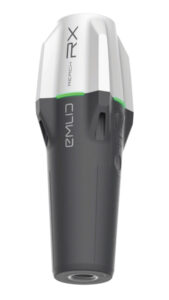
The Reach RX Network real-time kinematics (RTK) rover has been upgraded to include new MFi (Made for iPhone/iPad) certification and is fully compatible with ArcGIS, QGIS and other GIS apps for both iOS and Android. Reach RX can be seamlessly integrated into GIS workflows to help industry professionals and teams collect accurate geodata at scale.
The Reach RX offers precise positioning while receiving corrections through NTRIP and tracks GPS/QZSS, Galileo, GLONASS and BeiDou. It gets a fix in less than 5 seconds, delivering centimeter-level accuracy even in challenging conditions.
It can be used for engineering, utility inspection, landscaping and other projects of any scale. According to the company, the rover will soon be compatible with QField, Blue Marble’s Global Mapper, Mergin Maps, Avenza Maps and more.
The Reach RX weighs 250 grams; is IP68-rated, waterproof and dustproof; and withstands temperatures from -20° C to +65° C.Emlid, emlid.com
Photogrammetric Software
Upgraded coordinate system functionalities
 3Dsurvey 3.0 is an all-in-one photogrammetric software solution designed to unify lidar sensors, cameras on UAVs and various ground control points. Users can transition between orthophotos, point clouds and textured meshes.
Version 3.0 features upgraded coordinate system functionalities to obtain georeferenced spatial data without local transformations.
It includes improved coordinate system support, which handles transformations requiring special grid files and offers accurate GPS-to-local coordinate conversions. Additionally, the platform can automatically fetch missing geoid models.
The revamped coordinate system selection process includes presets for users to find the correct system by entering their country name, with the appropriate settings applied automatically. It has PRJ file support to enhance compatibility with various GIS standards. 3Dsurvey, 3dsurvey.si
 RTK Evaluation Kit
Includes L1+L2 RTK GNSS
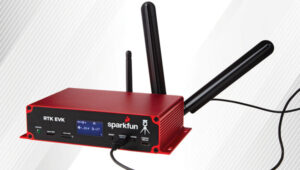
This real-time kinematics (RTK) evaluation kit (EVK) serves as a development platform for fixed or mobile high-precision positioning and navigation needs.
The RTK EVK comes with a range of options for prototyping, including L1+L2 RTK GNSS, with L-Band correction built-in if needed, running on an agile processor.
It features custom open-source software pre-loaded with RTK Everywhere firmware. Users can configure the EVK as an RTK base and push corrections to an NTRIP Caster or use corrections delivered through WiFi or Bluetooth.
The integrated u-blox NEO-D9S offers L-Band reception and access to correction services such as PointPerfect. The u-blox LARA-R6001D provides global cellular connectivity, and Zero-Touch RTK offers users a simple way to receive corrections. Users can register the device and enable PointPerfect — no NTRIP credentials are required. Sparkfun Electronics, sparkfun.com
 GNSS Receiver
With tilt compensation
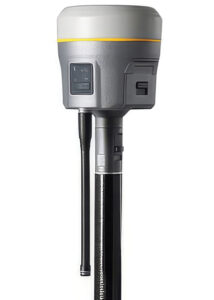
The R980 features communication capabilities to support uninterrupted field operations. It can be used for land surveying, transportation infrastructure, construction, energy, oil and gas, utilities and mining projects.
The system features Trimble’s ProPoint GNSS positioning engine and inertial measurement unit (IMU)-based tilt compensation, making it suitable for dense urban environments and under tree canopy, removing the need to level the pole when capturing data points.
It includes a dual-band UHF radio and an integrated worldwide LTE modem for receiving corrections from a local base station or VRS network. It supports the Trimble Internet Base Station Service (IBSS) for streaming RTK corrections using Trimble Access field software and features Trimble IonoGuard technology, which mitigates ionospheric disturbances for RTK GNSS. Trimble Geospatial, geospatial.trimble.com
Nautical Chart Production
Generate charts in PDF/TIF from ENC data
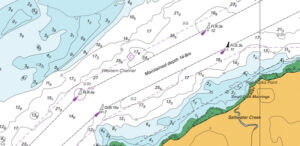 CARIS AutoChart, a nautical chart production solution, is tailored to the needs of nautical chart producers. It can automatically generate charts in PDF/TIF from ENC data. Users can seamlessly import data from ENC files to create comprehensive nautical charts in PDF and/or TIF format. CARIS AutoChart can generate chart templates from existing chart portfolios maintained with CARIS paper chart composer or CARIS HPD paper chart editor.
The software is designed to accommodate the unique needs of chart production facilities of all sizes. It can be used by hydrographic offices, port or waterways authorities.Teledyne Geospatial, teledyneimaging.com
Upgraded GIS Platform
Featuring native database integrations
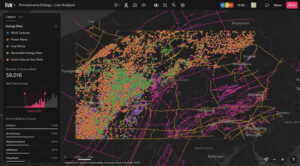 Felt 3.0 includes new features and native database integrations to improve the capabilities of geographic information systems (GIS). It provides modern GIS tools for teams to visualize, analyze and present important insights and map data relevant to their operations.
Operators can directly connect Postgres/PostGIS and Snowflake databases for automated live data updates. The API allows users to create and style elements and listen to map updates via webhooks, while providing a Python SDK for professionals to continue to work in their preferred tools. Felt, felt.com
UAV
 Gimbaled Camera
For UAV missions
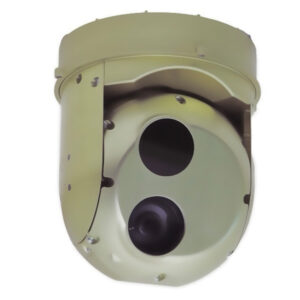
The Gimbal 155 is a gimbaled camera designed for the UAV Survey Mission program. The GOS-155 meets UAV requirements for surveillance and rescue missions. Its optimized size, weight and power (SwaP) profile, advanced day and night ISR imaging, and embedded video processor make it ideal for any mid-sized UAV — whether VTOL or winged. With its low weight of 1.8 kg, and 155 mm, UAV platforms can increase endurance without sacrificing optical performance.
The GOS-155 two-axial gimbal is an EO/IR system, comprising a 30x optical zoom HD (1280 x 720) visible camera paired with a fixed focal length uncooled thermal LWIR (1280 x 1024) camera. This allows users to collect intricate visuals across visible and infrared spectrums.
It includes embedded video processing with electronic stabilization and object tracking and can be integrated with external GPS/INS with real-time target location at 20 m across multiple environments, and around 5 m using UAVOS’ Ground Control Station software. UAVOS, uavos.com
Tactical Grade INS
Tailored to unmanned systems
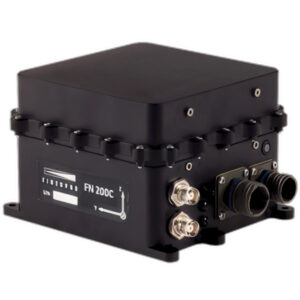 The FN 200C combines multiple functions into a single integrated platform. It features a three-in-one strapdown system compromising motion reference unit (MRU), attitude and heading reference system (AHRS) and inertial navigation system (INS) capabilities for precise positioning, velocity and orientation data in both static and dynamic movements.
It is equipped with fiber optic gyroscopes (FOG) and MEMS accelerometers. The FN 200C’s inertial measurement unit (IMU) offers accurate and reliable navigation data even in challenging conditions. The system supports various correction methods such as SBAS, DGPS, RTK, and PPP for real-time navigation and positioning in a wide range of applications.
The FN 200C utilizes NovAtel OEM7, u-blox ZED-F9P or Septentrio mosaic-H GNSS receivers to provide precise positioning information across multiple GNSS constellations. With embedded anti-jamming and spoofing features, the FN 200C offers reliable operation in environments where signal interference may be present.
The FN 200C is ideal for unmanned systems applications, including land-based surveying, aerial mapping, maritime navigation and more, delivering precise and reliable navigation data to meet the most demanding requirements. According to FIBERPRO, the system’s advanced technology, robust design and comprehensive feature set ensure that it will revolutionize navigation and operation in today’s dynamic and challenging environments. FIBERPRO, fiberpro.com
Upgraded UAV
With a modifiable flight controller
 The RDSX Pelican extended-range hybrid vertical take-off and landing (VTOL) delivery UAV is now offered with an easily modifiable flight controller, designed for users to more readily integrate customized flight systems and companion software.
The RDSX Pelican combines the reliability and flight stability of a multirotor craft with the extended range of a fixed-wing airframe. Its customizable payload bay can be factory-integrated with the A2Z Drone Delivery RDS2 commercial delivery winch to support a variety of logistics operations.
Engineered to operate within the FAA’s 55-pound max takeoff weight for Part 107 compliance, the Pelican is rated to carry payloads up to 5 kg on operations up to 40 km roundtrip. The flexibility of the Pelican’s cargo bay makes it ideal for logistics missions or deployment with payloads customized for aerial mapping, UAV inspection, forestry services, search and rescue operations, water sample collection, offshore deliveries, mining and more.
With the RDSX Pelican now operating on the Cube flight controller (CUAV X7+), users can integrate their preferred systems — including ground control software, radio beacons and other companion software systems. A2Z Drone Delivery, a2zdronedelivery.com
 GNSS Positioning Modules
Compatible with UAVs and robotics
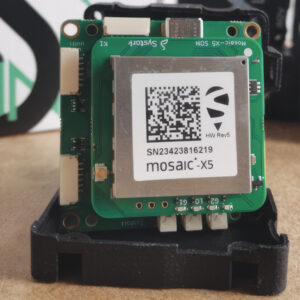
The Linnet ZED-F9P is built around u-blox’s ZED-F9P RTK module. It offers multiband signal reception including GPS L1 and L2 for precise positioning, even in areas with low satellite coverage. In addition to USB-C connectivity, it features UART, SPI and I2C interfaces for easy integration into a variety of UAV and robotics platforms.
Linnet Mosaic X5 RTK-GNSS module is based on Septentrio’s mosaic-X5 module, with multifrequency signal tracking including GPS L5. The module features an onboard CPU that runs a full internal web-based user interface for configuration and monitoring, as well as integrated NTRIP corrections. Other capabilities include built-in anti-jamming and anti-spoofing protection and a spectrum analyzer. Systork, systork.io
MOBILE
“Patch-In-A-Patch” Antenna
Maintains dual-band L1/L5 performance
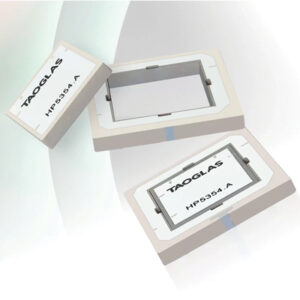 Inception is a new GNSS L1/L5 ultra-low-profile “patch-in-a-patch” antenna. The HP5354.A offers dual-band stacked patch performance in a single 35 mm x 35 mm x 4 mm form factor. This design integrates the second antenna within the first, eliminating the need for stacking parts and reducing the antenna height by 50%.
The HP5354.A antenna features a passive, dual-feed surface mount design (SMD) to decrease weight and conserve horizontal space. This makes it suitable for GNSS applications requiring high precision and limited space. The antenna improves positioning accuracy from 3 m to 1.5 m while maintaining dual-band L1/L5 performance.
With a passive peak gain of 2.61 dBi, the HP5354.A can be used for GPS L1/L5, BeiDou B1, Galileo E1, and GLONASS G1 operations. Its dual-feed design maintains circular polarization gain even when the antenna is de-tuned or requires in-situ tuning.
It is ideal for applications such as asset tracking, smart agriculture, industrial tracking, commercial UAVs and autonomous vehicles. The HP5354.A uses Taoglas’ custom electro-ceramics formula, ensuring high-quality performance and seamless integration into devices requiring high-precision GNSS.
The Taoglas HC125A hybrid coupler can combine the dual feeds for the L1 patch, offering high RHCP gain and optimal axial ratio for upper constellations including GPS L1, BeiDou B1, Galileo E1 and GLONASS G1. The Taoglas TFM.100B L1/L5 front-end module can be incorporated into the device PCB, aiming to save valuable real estate and up to two years of complex design work, according to the company. Taoglas, taoglas.com
 Waterproof GNSS Antenna
Built-in LNA
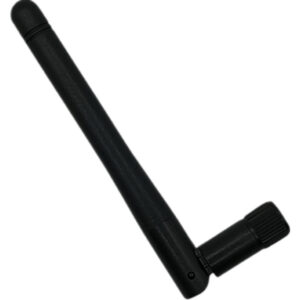
The external antenna features an adhesive mount and sealed IP67-rated waterproof protection. It is an active GPS/GNSS antenna that includes a built-in low noise amplifier (LNA) for enhanced performance, making it ideal for applications where the receiver is close to the antenna and in environments where signal strength is strong, such as open areas with a clear line of sight.
This type of antenna can amplify weak signals received from satellites by improving signal quality and reducing noise. It requires an external power source to operate the built-in LNA and is less sensitive to signal loss due to longer cable lengths. It is connected to an SMA connector at the end of a 3 m pigtail. The antennas can be used in navigation, location-based services and fleet management applications. Amphenol RF, amphenolrf.com
DEFENSE
AI and Quantum-Powered Navigation System
When GPS signals are compromised
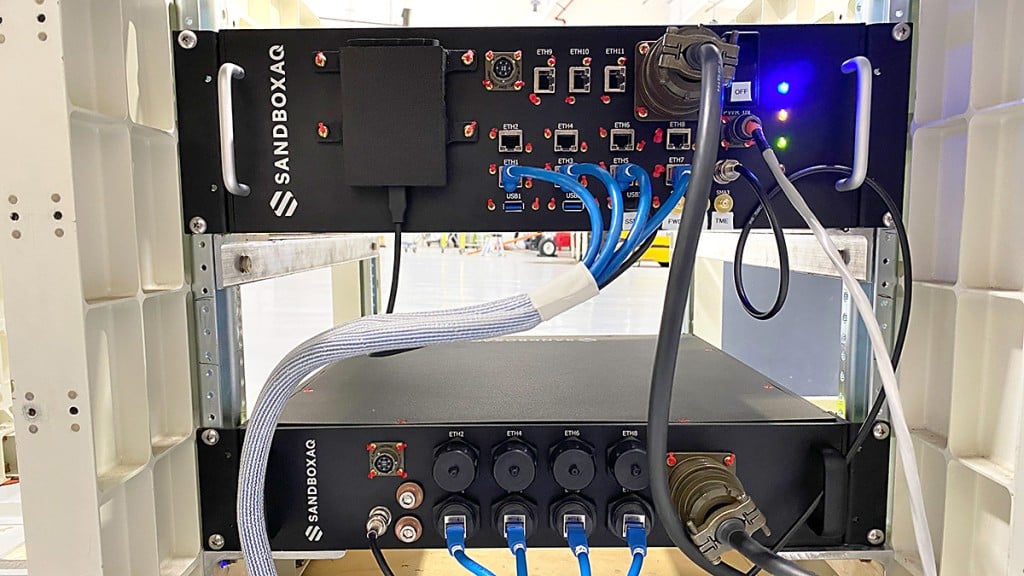
 AQNav is designed for navigation across air, land and sea when GPS signals are jammed or unavailable.
AQNav is a geomagnetic navigation system that uses proprietary artificial intelligence (AI) algorithms, powerful quantum sensors and the Earth’s crustal magnetic field. The system seeks to provide an un-jammable, all-weather, terrain-agnostic, real-time navigation solution in situations where GPS signals are unavailable, denied or spoofed.
The system uses extremely sensitive quantum magnetometers to acquire data from Earth’s crustal magnetic field, which exhibits geographically unique patterns. It uses AI algorithms to compare this data against known magnetic maps, allowing the system to quickly and accurately find its position.
It is available globally, does not rely on visual ground features or satellite transmissions to function and is not affected by weather conditions. AQNav can be integrated into a wide variety of platforms. Its passive technology emits no electronic signals, which reduces the aircraft’s detectability. SandboxAQ, sandboxaq.com
PNT Solution
Operates with or without GNSS signals
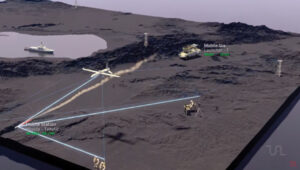 TRNAV is a terrestrial navigation solution designed to operate with or without GNSS signals.
It establishes a mesh network of ground stations capable of operating independently from GNSS by using precise pre-established locations or connecting to GNSS when available. TRNAV’s synchronized timing system ensures a minimal drift of 10 ns during a week without GNSS.
The system features a re-synchronization capability that allows the entire network to be updated instantly when just one station reconnects to a GNSS satellite, maintaining high precision across all platforms. Users can integrate mobile stations to enhance network flexibility and range, with the potential to cover distances up to 250 km.
TRNAV also offers a high-bandwidth communication channel for communication capabilities within the established network. The system employs AES-256 encryption and advanced waveform technologies, including DSSS/FHSS for robust and secure operations in challenging environments. TUALCOM, tualcom.com
Software-Defined Radio
Designed for mission-critical systems
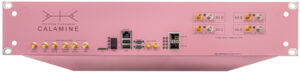 Calamine is a four-channel wide tuning range software-defined radio (SDR) that can be integrated into mission-critical systems for the defense, GNSS, communications and test and measurement markets.
The SDR offers a tuning range from near DC to 40 GHz with four independent receiver radio chains, each offering 300 MSPS sampling bandwidth. It is tailored to government, defense and intelligence communities and civil users with direct applications for radar systems, signal intelligence, spectrum monitoring and satellite communications systems. Per Vices, pervices.com
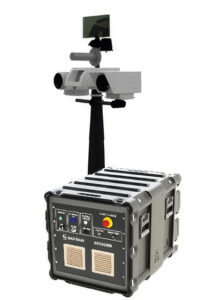 C-UAS Solution
For electronic warfare
The Skyjacker is a multi-domain electronic warfare counter unmanned aerial system (C-UAS), suitable against swarms and high-speed threats. It is designed as a response to threats posed by UAVs in the battlespace and at sensitive installations.
Skyjacker alters the trajectory of a UAS by simulating the GNSS signals that guide it toward its target.
Skyjacker is particularly well suited to countering saturation attacks, such as swarming UAVs. The system also can defeat isolated drones piloted remotely by an operator and deliver effects at ranges from 1 km to 10 km (6 mi).
It can be integrated with an array of sensors, such as optronic sights, radars, radiofrequency detectors, lasers, communication jammers and other effectors. Skyjacker can be deployed as a mobile version or interconnected with existing surveillance and fire control systems on land vehicles or naval vessels. Safran Electronics & Defense, safran-group.com