Tag: Sierra Wireless

  • Launchpad: GNSS antennas and PC boards

    Launchpad: GNSS antennas and PC boards

    A roundup of recent products in the GNSS and inertial positioning industry from the June 2021 issue of GPS World magazine.


    OEM

    Grandmaster Clock

    Multi-constellation receiver
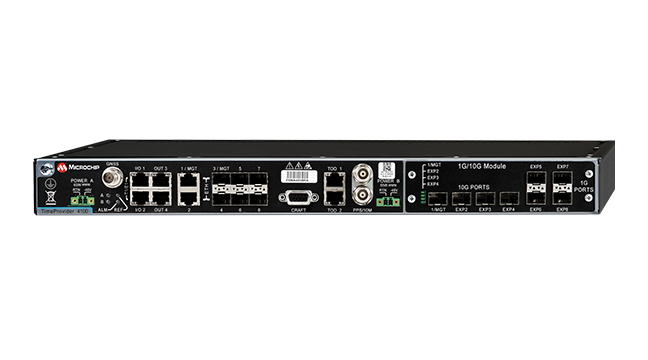
    Photo: Microchip
    Photo: Microchip

    The upgraded TimeProvider 4100 2.2 is now more redundant and resilient. It provides secure, precise timing and synchronization for critical infrastructure such as 5G wireless networks, smart grids, data centers, cable and transportation services. The 4100 2.2 introduces a software-redundancy architecture for flexible deployment, and supports a new GNSS multi-band, multi-constellation receiver to protect against time delay from space weather, solar events and other disruptions. The 4100 2.2 offers options for software and hardware support.

    Microchip Technology, microchip.com

    External Antennas

    GNSS-ready multi-port models
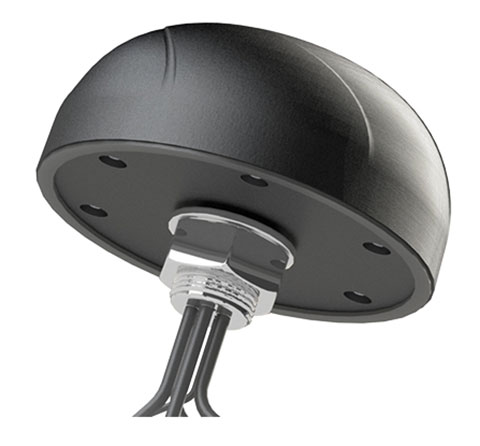
    Photo: Maxtena
    Photo: Maxtena

    The NETZ 5-in-1 multiple-input and multiple-output (MIMO) solution combines two LTE antennas and two Wi-Fi antennas with a GNSS antenna for high data throughput and streaming, video, industrial and internet of things (IoT) applications. It offers a low-profile design with integrated SubMiniature version A (SMA) connectors and is designed with rugged PC+ABS plastic black housing for demanding environmental challenges.

    Maxtena, maxtena.com

    Mini-PCLe Adapter

    For industrial applications
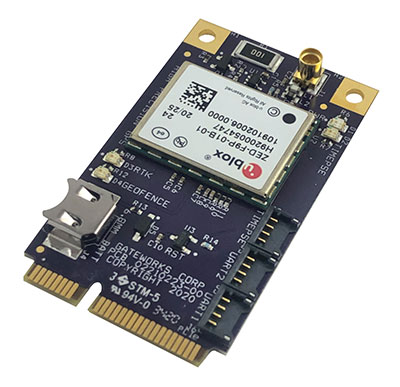
    Photo: Gateworks
    Photo: Gateworks

    The GW16143 is a high-precision GNSS/GPS Mini-PCLe adapter card that provides precise positioning to applications using Gateworks single-board computers. Based on the U-blox ZED-F9P, the GW16143’s multi-band real-time kinematic (RTK) technology enhances convergence times and performance. The module receives GPS, GLONASS, Galileo and BeiDou; supports L1 and L2/L5 bands; and provides GNSS positioning accuracy
    of <2 cm.

    Gateworks, gateworks.com

    Inertial unit

    Tactical grade for higher order integrated applications
    The IMU-NAV-100. (Photo: Inertial Labs)
    The IMU-NAV-100. (Photo: Inertial Labs)

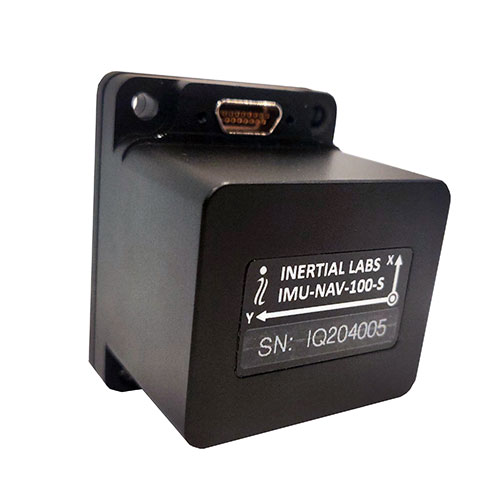
    The IMU-NAV-100 is a fully integrated inertial solution that measures linear accelerations, angular rates, and pitch and roll with high accuracy utilizing three-axis high-grade micro-electro-mechanical systems (MEMS) accelerometers and three-axis tactical-grade MEMS gyroscopes. It features continuous built-in test, configurable communications protocols, electromagnetic interference protection, and flexible input power requirements that allow it to be easily integrated in a variety of higher order systems. The IMU-NAV-100-S offers high performance stabilization for line-of-sight systems, motion-control sensors, and platform orientation and stabilization systems. The IMU-NAV-100-A is for GPS-aided INS, AHRS and motion reference units.

    Inertial Labs, inertiallabs.com

    Mass Market Board

    Single-board computer with up to three receivers
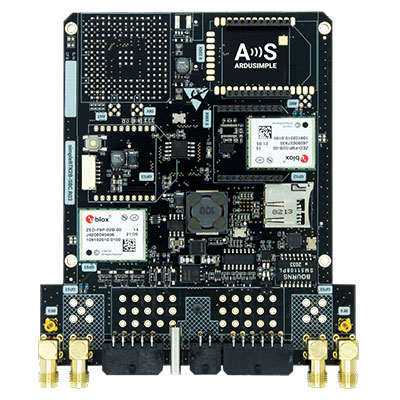
    SimpleRTK2B-SBC. (Photo: ArduSimple)
    SimpleRTK2B-SBC. (Photo: ArduSimple)

    The SimpleRTK2B single-board computer is built around up to three u-blox ZED-F9P high-precision GNSS receivers to simplify development of centimeter-level positioning solutions supporting real-time kinematics (RTK). It was developed to make RTK technology as close to plug-and-play as possible, and make the technology accessible to broader audiences. In addition to working as a stand-alone solution, customers can program their own applications with the company’s microPython API. The SimpleRTK2B-SBC delivers mechanical integration with centimeter position on three axes (heading, pitch, roll), outputting on NMEA, RTCM, RS232 and CANBus interfaces via Ethernet, Bluetooth, Wi-Fi and 2G/3G/4G communication.

    Ardusimple, ardusimple.com


    SURVEYING & MAPPING

    Utility locator

    Software with GNSS receiver enables mapping
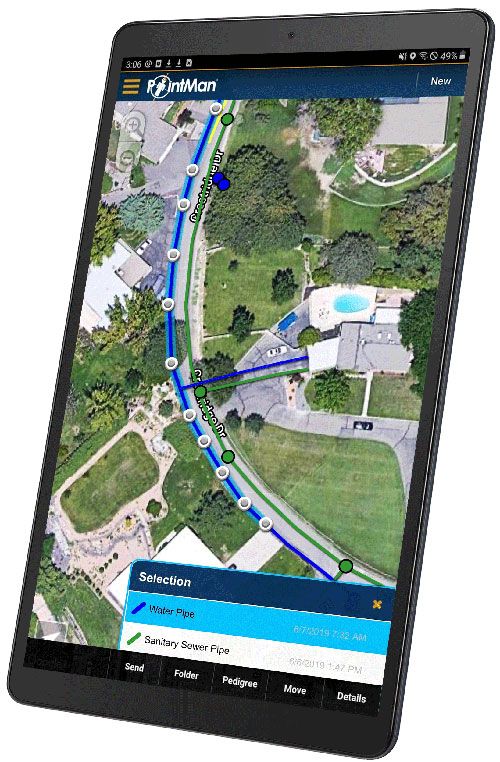
    Photo: ProStar
    Photo: ProStar

    PointMan software is now integrated into the Vivax Metrotech vLoc3 with a GNSS real-time kinematic (RTK) receiver to create a utility-locate device. Using the RTK-Pro internal cellular module with 4G LTE capabilities, the operator can connect to the NTRIP RTK caster that provides RTCM 3 corrections. With the integration of PointMan with the vLoc3 RTK-Pro, critical buried infrastructure can be captured, recorded and displayed at survey-grade without additional external equipment or post-processing. The integration provides centimeter accuracy of the precise location of buried utilities in real time. Data collected includes the type of utility, the depth of cover and the utility’s precise location.

    ProStar Holdings, prostarcorp.com

    GIS platform

    Geospatial and location intelligence for smart cities

    Screenshot: Hexagon Geospatial
    Screenshot: Hexagon Geospatial

    M.App Enterprise 2021 is a significant update to the platform for creating geospatial and location intelligence applications. The latest release features new browser-based 3D capabilities and enhanced visual effects, plus the ability to create and configure custom applications more easily. It allows users to access LuciadRIA’s 3D features with support for panoramic imagery, shading, ambient occlusion and other visualization effects to build browser-based solutions. It also features a new browser app configurator that makes it easier to create spatio-temporal dashboards, or Smart M.Apps. Feature Analyzer now allows users to add and manage multiple datasets on the fly and set up workflows.

    Hexagon Geospatial, hexagongeospatial.com


    TRANSPORTATION

    Nearshore receiver

    Measures positioning, heading, attitude, velocity and heave
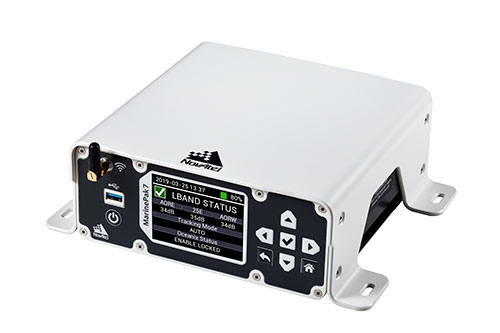
    Photo: Hexagon | NovAtel
    Photo: Hexagon | NovAtel

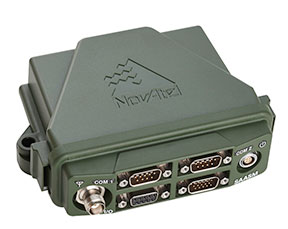
    The MarinePak7 marine-certified GNSS receiver is designed for nearshore applications. The multi-constellation, multi-frequency receiver was engineered to receive the Oceanix Correction Service from NovAtel, providing horizontal accuracy up to 3 cm (95%) in a marine environment. With SPAN GNSS+INS technology capabilities, the MarinePak7 couples GNSS and inertial measurement units (IMUs) for 3D positioning.

    Hexagon | NovAtel, NovAtel.com

    Expansion Card

    For lane-level positioning
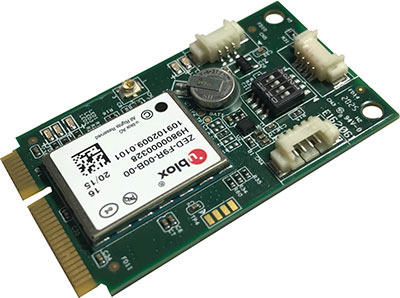
    Photo: Antzertech
    Photo: Antzertech

    The ANNA-F9 high-precision GNSS Mini-PCIe card can achieve centimeter-level accuracy. It integrates the U-blox ZED-F9 receiver platform, providing multi-band GNSS (GPS, GLONASS, BeiDou, Galileo, QZSS and SBAS) and RTK positioning, and can be integrated with embedded systems. It provides high-accuracy positioning for applications including lane-level navigation and railway transportation. The ANNA-F9 series supports RTCM formatted corrections and centimeter-level positioning from local base stations or virtual reference stations in a network RTK setup.

    Antzertech, antzer-tech.com

    Marine Antennas

    Two added to VeroStar line
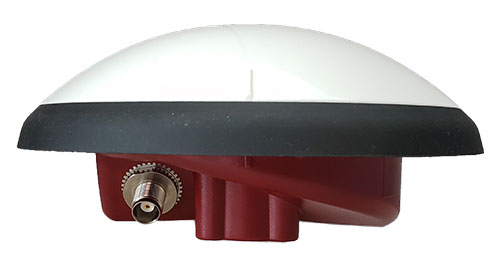
    Photo: Tallysman
    Photo: Tallysman

    Marine vessels often host both Iridium (1616–1626.5 MHz) and Inmarsat (uplink: 1626.5–1660.5 MHz) satellite communication antennas that transmit and receive signals. The VSP6037L-MAR and VSP6337L-MAR VeroStar marine antennas strongly attenuate interference from both signal sources, providing 75 dB to 85 dB of attenuation over Iridium and 85 dB to 95 dB over Inmarsat uplink, enabling clean GNSS signal reception and precise positioning. The VSP6037L-MAR supports the full GNSS spectrum; the VSP6337L-MAR supports GPS/QZSS-L1/L2/L5, GLONASS-G1/G2/G3, Galileo-E1/E5a/E5b, BeiDou-B1/B2/B2a, and NavIC-L5 signals. Both antennas support L-band correction signals. Every VeroStar antenna features a robust pre-filter and a high-IP3 LNA architecture, minimizing desensing from high-level out-of-band signals, including 700 MHz LTE, while still providing a noise figure of 1.8 dB. They meet IEC 60945 and IEC 61108 marine certifications for challenging marine environments.

    Tallysman Wireless, tallysman.com

    Cargo Service

    For tracking high-value assets

    The managed internet of things (IoT) Acculink Cargo can track the location and condition of high-value and sensitive assets, providing real-time visibility, product-level tracking and exception-based monitoring as goods move through their supply chains. Tracking can be used to avoid delays, minimize dwell time, prevent theft and remediate environmental conditions that can cause asset damage.

    Sierra Wireless, sierrawireless.com

    Tracking Antenna

    Rugged external mount
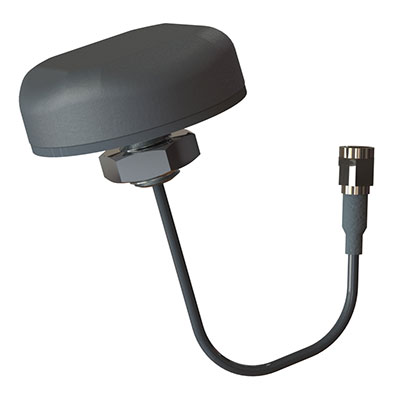
    Photo: Laird Connectivity
    Photo: Laird Connectivity

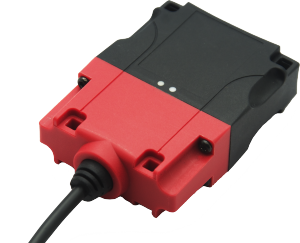
    The GNS1559MPF or Mini GNSS is a rugged, high-performance and cost-effective solution for most GNSS or asset-tracking applications. The small form factor makes it easy to install on or in vehicles or buildings. It is IP67 rated to withstand impact as well as water and dust intrusion in demanding environments and operating conditions. The antenna can be configured with different cable types in varying lengths and with various connector types. Uses include public safety, in-building, fleet management, asset tracking, vehicle and personnel tracking.

    Laird Connectivity, lairdconnect.com


    UAV

    Long-Flight UAS

    Unmanned system for long-distance flights

    Photo: Zala Aero Group
    Photo: Zala Aero Group

    The Zala 421-16E5G long-flight UAS is a domestic unmanned aerial system with a hybrid power plant. The non-aerodrome-based system is capable of providing aerial monitoring covering distances of more than 150 kilometers and staying in the air for more than 12 hours. Its power plant charges a buffer battery for an hour, allowing the UAV to fly long distances. It is equipped with two thermal imagers and a 60x video camera. Alternatively, it can carry a payload of up to 10 kg.

    Zala Aero Group, zala-aero.com/en/

    Inertial navigation system

    Ready for drone surveys
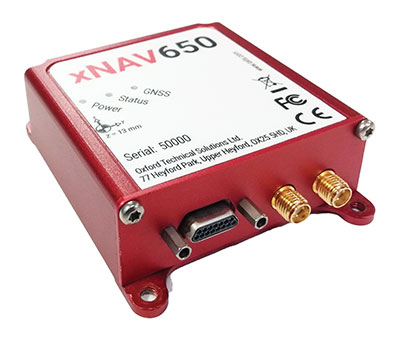
    Photo: OxTS
    Photo: OxTS

    The xNAV650 inertial navigation system (INS) provides surveyors with absolute position, timing and inertial measurements (heading and pitch/roll) that they can integrate into their projects. When combined with data from other devices (such as lidar sensors and cameras), the INS measurements can greatly enhance the surveying process. The xNAV650 has the latest micro-electro-mechanical (MEMS) inertial measurement unit (IMU) technology and survey-grade GNSS receivers. At 77 x 63 x 24 mm and 130 grams, it is suitable for a wide range of UAV data-collection applications: surveys of bridges, buildings, forests and rail; coastal monitoring; map creation; and pipeline exploration. Data collected can be fused with data from almost any lidar sensor. OxTS NAVsuite software is included with all OxTS INS. Other optional software is available, including precision time protocol and GX/IX tight-coupling technology.

    Oxford Technical Solutions, oxts.com

    Lidar System

    With GNSS receiver and IMU
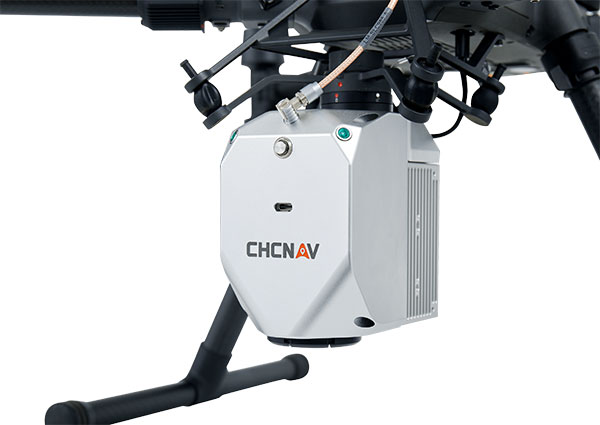
    Photo: CHCNAV
    Photo: CHCNAV

    The AlphaAir 450 (AA450) lidar system is a lightweight, compact all-in-one sensor. Featuring an inertial measurement unit (IMU), GNSS receiver and 3D scanner and camera, the AlphaAir 450 is suitable for power-line inspections, topographic mapping, emergency response, agricultural work and forestry surveys. The unit can be rapidly deployed in the field to collect geospatial data. It achieves absolute accuracy of 5 cm (vertical) and 10 cm (horizontal) for small survey areas. Adjustment algorithms applied in CHCNAV CoPre software further improve precision and accuracy. The AA450 weighs 1 kilogram for easy mounting on a UAV. It is IP64 rated against dust and water spray and operates at –20° C to +50° C.

    CHC Navigation, chcnav.com

    Imaging systems

    Survey-grade with lidar
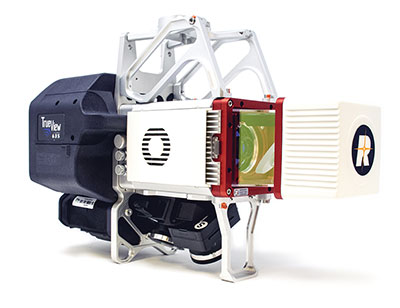
    Photo: Geocue
    Photo: Geocue

    The True View 635/640 3DIS is GeoCue’s second-generation lidar/camera-fusion platform designed to generate high-accuracy 3D colorized lidar point clouds using the Riegl miniVUX-3UAV. All 3DIS platforms include GeoCue’s data-processing software suite True View EVO, which integrates with the Applanix POSPac. With its 120° fused field of view, the True View 635/640 provides 3D mapping with excellent vegetation penetration and wire detection in a payload package of 3.2–3.6 kg. True View EVO supports the direct creation of ground classified point clouds, surface models, contours, digital elevation models, volumetric analysis, wire extraction and similar products, without the need for additional third-party software.

    GeoCue Group, geocue.com

  • Sierra Wireless launches Acculink Cargo, an IoT solution for asset tracking

    Sierra Wireless launches Acculink Cargo, an IoT solution for asset tracking

    Image: ipopba/iStock / Getty Images Plus/Getty Images
    Image: ipopba/iStock / Getty Images Plus/Getty Images

    Acculink Cargo provides a near real-time visibility, global tracking and exception-based monitoring asset tracking to serve the $30B+ global market.

    Sierra Wireless has launched Acculink Cargo, a new managed internet of things (IoT) solution that companies can quickly deploy to track the location and condition of high-value and sensitive assets.

    Delivered as a service for a single monthly fee, Acculink Cargo leverages Sierra Wireless’ expertise in IoT devices, global connectivity and the cloud to deliver a service companies can use to monitor the near real-time status of assets anywhere in the world, as they move through their supply chains.

    Acculink Cargo enables electronics manufacturers, cold-chain carriers, general freight carriers, food and produce shippers and third-party logistics firms to gain the supply-chain visibility they require to avoid shipping delays, minimize dwell time, prevent theft and remediate environmental conditions that can lead to asset damage. In addition to tracking the location of these assets, Acculink Cargo can also alert customers if an asset is exposed to light, changes in temperature, humidity, shock, or other conditions that might spoil or otherwise damage it.

    Drawing on more than two decades of experience in the IoT market, Sierra Wireless has designed Acculink Cargo to address the three key needs facing companies as they seek to track high-value and sensitive assets — real-time visibility, product-level tracking and exception-based monitoring.

    Acculink Cargo benefits include:

    • Quick deployment. Acculink Cargo fully integrates edge devices, global network connectivity and a cloud-based application, supporting quick deployment in as little as 30 days with minimal startup costs.
    • Highly accurate tracking. Use of LTE cellular wireless networks in combination with GPS data enables customers to pinpoint the location of their assets.
    • Flexibility. The cloud-based application features an intuitive user interface with customizable dashboards and configurable alerts.
    • Configurable location and status reporting. Users can set up specific geolocation, light, temperature, humidity and shock conditions to monitor for each shipment. Users can also adjust when data on these conditions is updated, allowing them to extend the battery life of their edge devices.
    • Insights. Users can analyze real-time and historical shipping data to uncover trends that can help them make better business decisions.

    “When it comes to high-value and sensitive assets, companies no longer want to just track their location as they travel through their supply chains. Today, they expect to be able to monitor the condition of these assets in near real-time as well,” said Rupal Nanavati, vice president and general manager of IoT applications, Sierra Wireless. “Acculink Cargo addresses these needs, with an easy-to-deploy, fully integrated managed solution from the global leader in IoT.”

    Pricing. Acculink Cargo is sold on an as-a-service basis, allowing customers to easily scale the solution up or down as their business needs change. Customers can purchase devices up front, and pay for connectivity and the application on a subscription basis. Or, they can sign up for a complete managed IoT service, with a single monthly fee that covers devices, network and application access.

    Acculink Cargo is currently available to customers throughout North America. Sierra Wireless plans to expand availability of the solution to other regions.

  • Launchpad: Government drone, data collectors

    Launchpad: Government drone, data collectors

    A roundup of recent products in the GNSS and inertial positioning industry from the November 2020 issue of GPS World magazine.


    OEM

    GNSS receiver

    Sub-decimeter accuracy without additional service subscription

    The AsteRs-m2-Sx. (Photo: Septentrio)
    The AsteRs-m2-Sx. (Photo: Septentrio)

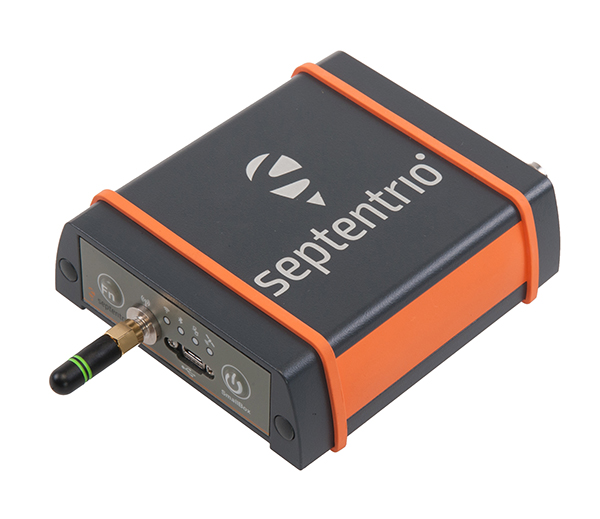
    The SECORX-S product line, which first offered GNSS OEM boards, now also includes a compact mosaic-Sx module and ruggedized receiver in an IP68 chassis, the AsteRx SB Sx. The multi-constellation multi-frequency SECORX-S receivers deliver sub-decimeter positioning without the need for additional correction service subscription or maintenance. The PPP-RTK correction service is integrated directly into Septentrio’s core GNSS technology. The addition of modules and boxed receivers to the SECORX-S line providesz accurate positioning to applications such as precision agriculture, UAVs, robotics and construction.

    Septentrio, septentrio.com

    GNSS splitters

    Improve service reliability

    Photo: Tallysman
    Photo: Tallysman

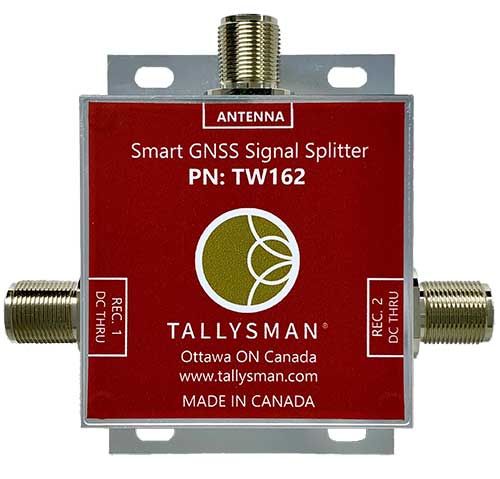
    Smart Power GNSS signal splitters improve GNSS service reliability and minimize service interruptions. The professional-grade splitters — TW162 (one antenna/two receivers) and TW164 (one antenna/four receivers) — offer system redundancy and fail-over capability. The splitters are designed to improve GNSS service reliability and reduce signal reception failures. Both splitters offer system redundancy and fail-over capability. They support GPS/QZSS-L1/L2/L5, QZSS-L6, GLONASS-G1/G2/G3, Galileo-E1/E5a/E5b/E6, BeiDou-B1/B2/B2a/B3 and L-band correction services.

    Tallysman, tallysman.com

    5G modules

    Ready for 5G platforms

    Photo: Sierra Wireless
    Photo: Sierra Wireless

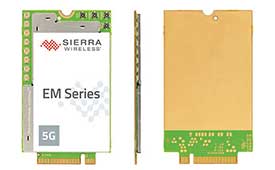
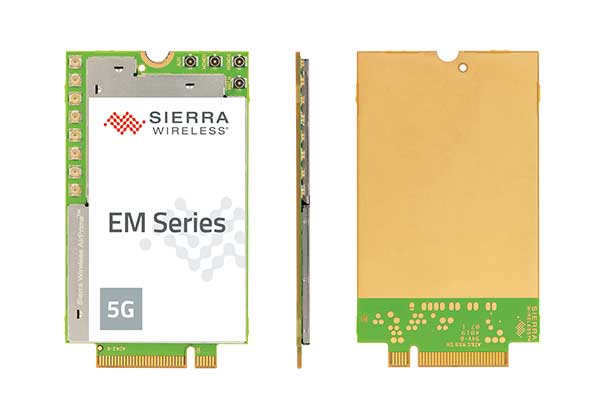
    The EM919x 5G NR Sub-6 GHz and mmWave embedded modules include an integrated GNSS receiver. Based on the industry-standard M.2 form factor, the modules will enable original equipment manufacturers (OEMs) to securely deploy 5G connectivity worldwide at the highest possible speeds with ultra-low latency for routers and gateways. The modules support mmWave, sub-6 GHz and LTE, as defined by the 3GPP Release 15 standard. Applications include private networks, enterprise networking, edge processing, live streaming, video security, e-gaming, smart factories, robotics, drones, virtual reality, machine learning, and new Industrial IoT applications.

    Sierra Wireless, sierrawireless.com

    GNSS/IMU series

    Tactical-Grade Inertial Positioning

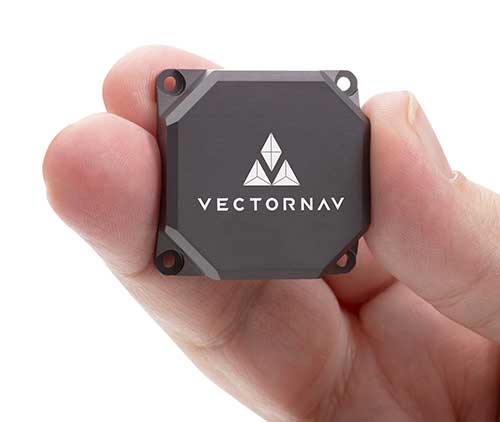
    Tactical Embedded series of GNSS/IMUs. (Photo: VectorNav)
    Tactical Embedded series of GNSS/IMUs. (Photo: VectorNav)

    The Tactical Embedded series of GNSS/IMUs feature a tactical-grade inertial measurement unit (IMU) and a multi-band GNSS receiver. The line delivers milliradian attitude accuracy and centimeter-level positioning capability in a miniature 15-gram package. The small size enables cost reductions for a range of autonomous pointing and geo-referencing applications such as gimballed intelligence, surveillance and reconnaissance (ISR); satellite communication systems; lidar mapping; and photogrammetry. The line supports external SAASM GPS for defense applications in ISR, electronic warfare, munitions and UAV navigation. The line includes the VN-110E IMU/AHRS, the VN-210E GNSS-aided inertial navigation system (INS), and the VN-310E dual-antenna GNSS/INS.

    VectorNav Technologies, vectornav.com

    GNSS/INS Sensor

    Designed for dynamic environments

    Photo: CHCNAV
    Photo: CHCNAV

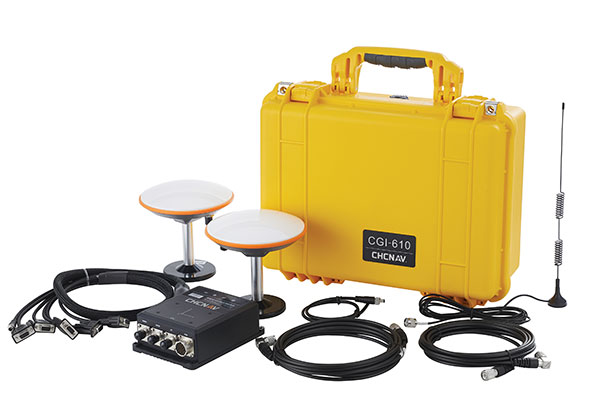
    The CGI-610 GNSS/INS high-precision dual-antenna receiver offers reliable and accurate navigation and positioning for demanding land, marine and aerial applications. The tight fusion of the latest GNSS technology with an industrial-grade MEMS IMU is powered by CHCNAV’s algorithms to deliver accurate hybrid position, attitude and velocity data, even in complex and obstructed environments where GNSS outages can occur. The CGI-610 supports data output up to 100 Hz to meet the requirements of highly dynamic applications such as airplane, train and automobile. An optional external odometer sensor for ground vehicles can provide an additional measurement of displacement and speed, which is fused with the GNSS/INS navigation solution.

    CHC Navigation, chcnav.com


    SURVEYING & MAPPING

    GNSS receiver

    Scalable-accuracy, survey-grade receiver

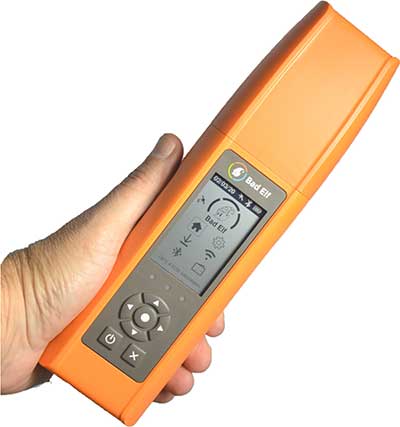
    Photo: Bad Elf
    Photo: Bad Elf

    Bad Elf Flex is a scalable-accuracy GNSS receiver with a daily option to choose between L-band and real-time kinematic (RTK). In standard configuration, it achieves 30-60 cm accuracy in real time for GIS use. Consuming a Bad Elf Flex Token unlocks a full RTK workflow for a 24-hour period to deliver 1-cm horizontal accuracy. Bad Elf Flex stores the tokens directly on the receiver, making them available for use anytime. Customers requiring high accuracy at all times can purchase the Bad Elf Flex Extreme bundle, with RTK capabilities permanently unlocked, for a one-time upgrade fee.

    Bad Elf LLC, bad-elf.com

    Data Collector

    With integrated autofocusing camera

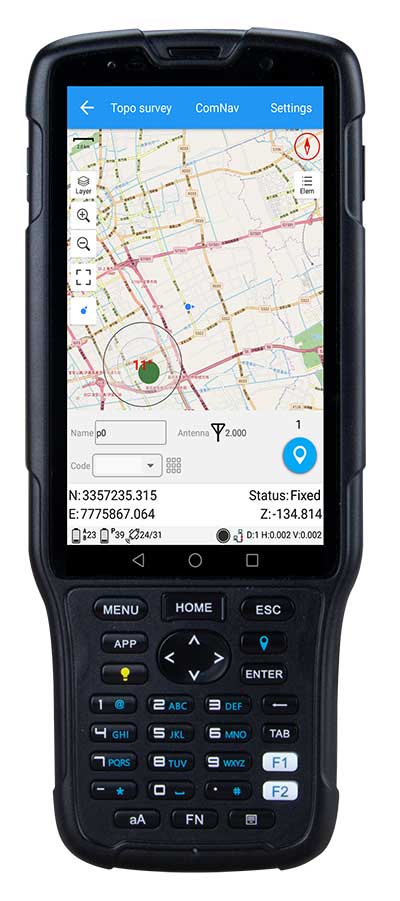
    Photo: ComNav
    Photo: ComNav

    The R550 data collector features an industrial-level design and new hardware platform to ensure efficiency and productivity in the field. The IP67 dust-and-waterproof rating protects the R550 from most harsh environments. Equipping it with a 7,000 mA Li-ion battery allows more than 14 hours of continuous operation, while fast-charging technology means four hours for a full charge. The 5-inch-wide sunlight-readable, high-resolution screen provides a smooth experience for any operation. The integrated autofocusing camera helps enhance job documentation by taking photos on site and sharing job information with colleagues. Survey Master field software available on the R550 controller ensures efficient surveys in the field, including topographic surveys, stakeouts, coordinate geometry (COGO) and more. Powered by the Android 8.1 operating system and designed with 4G RAM, 64GB ROM and 4G/BT/Wi-Fi on board, users can run other third-party apps based on their specific requirements.

    ComNav Technology, www.comnavtech.com


    UAV

    OEM board

    Provides georeferencing of airborne data

    Photo: Applanix
    Photo: Applanix

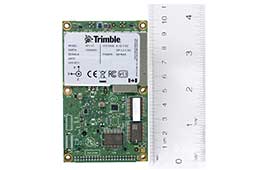
    The Trimble AP+ Air OEM solution provides direct georeferencing of airborne sensor data and enables users to accurately and efficiently produce maps and 3D models without the use of ground control points. It is designed for manned platforms, yet small enough for use on UAVs. It is also compatible with airborne remote sensors, including photogrammetric cameras, lidar, hyper- and multi-spectral cameras, and synthetic aperture radar. The Trimble AP+ Air features dual embedded survey-grade GNSS chipsets, an onboard inertial measurement unit (IMU), an external IMU, and the new Applanix IN-Fusion+ GNSS-aided inertial firmware. It is configurable to support the direct georeferencing accuracy demands of low-flying UAVs and high-altitude manned platforms. Trimble AP+ Air is supported by Applanix POSPac MMS post-processing software with CenterPoint RTX post-processing for centimeter-level positioning anywhere in the world without the need for base stations.

    Applanix, applanix.com

    Drone for Government

    American-made drone aimed at government agencies and military

    Photo: Teal
    Photo: Teal

    The Teal Golden Eagle drone is designed for short-range surveillance and reconnaissance missions. It features a FLIR Handron dual-camera sensor on a two-axis stabilizer, giving it color vision at 4K 60 fps and thermal vision for extended operations. The payload is hot-swappable. It has a flight time of up to 50 minutes and can fly at speeds of 50 mph with a range of 2 miles. It is able to fly in wind speeds of up to 30 mph and can operate between –32° and 110° Fahrenheit. Forward-facing obstacle avoidance and rear-facing visual-inertial odometry estimates location without the need for GPS. The platform has received approval from the Department of Defense.

    Teal, tealdrones.com


    TRANSPORTATION

    Antennas

    Aimed at autonomous vehicle market

    Photo: Tallysman
    Photo: Tallysman

    A new line of AccuAuto triple-band antennas are designed to provide strong clean code and phase signals to enable high-precision real-time kinematic (RTK) and precise point positioning (PPP) navigation. Model TWA928 supports GPS/QZSS-L1/L2/L5, GLONASS-G1/G2/G3, Galileo-E1/E5a/E5b, BeiDou-B1/B2/B2a and NavIC-L5 signals and frequency bands (the TWA928L includes support for L-band correction services). The AccuAuto line features patented Accutenna technology multi-constellation and multi-frequency antenna elements as well as an integrated ground plane, a radome and an underside cover that provides mist and condensation protection. A deep pre-filter minimizes out-of-band noise and maximizes in-band reception. All AccuAuto components are certified and designed to perform under challenging environmental conditions, such as extreme temperatures (–40° C to +125° C), shock and vibration.

    Tallysman Wireless, tallysman.com

    Navigation system

    Defense small-vehicle system designed for export

    Photo: Etion Create
    Photo: Etion Create

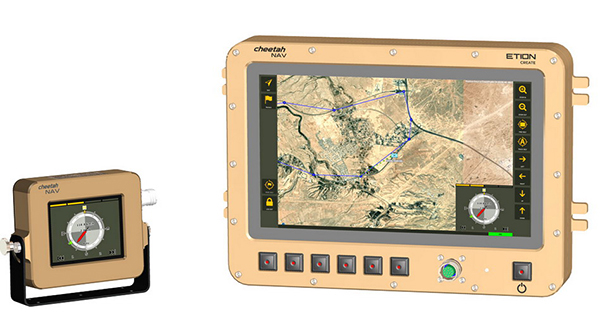
    The CheetahNAV provides situational awareness for harsh environments and battlefield conditions, providing the crew of a light military vehicle with highly accurate position information through an advanced inertial measurement system (IMS) comprising several aids, including a gyro-compensated compass and an advanced Kalman-filter-based algorithm. The system provides dead-reckoning horizontal position accuracy of 0.2% of distance traveled in a GNSS-denied situation — accuracy of 200 meters over 100 kilometers. It can integrate with inertial navigation systems (INS). Combined with GNSS and compass information, the system enables dead-reckoning and accurate positioning of the vehicle in tactical situations. The tactical-grade integral inertial measurement unit (IMU) ensures jam-free operation.

    Etion Create, etion.co.za/create/

  • 5G module with GNSS released by Sierra Wireless

    5G module with GNSS released by Sierra Wireless

    With support for mmWave, Sub-6 GHz and LTE, Sierra Wireless modules will enable original equipment manufacturers to securely deploy 5G worldwide

    Photo: Sierra Wireless
    Photo: Sierra Wireless

    Sierra Wireless is now offering its EM919x 5G NR Sub-6 GHz and mmWave embedded modules, which include an integrated GNSS receiver.

    Based on the industry-standard M.2 form factor, the 5G modules will enable original equipment manufacturers (OEMs) to deploy secure connectivity worldwide at the highest possible speeds with ultra-low latency for mobile computing, routers, gateways, industrial automation, and many new Industrial IoT applications.

    With support for mmWave, sub-6 GHz and LTE, as defined by the 3GPP Release 15 standard, Sierra Wireless’ 5G modules will power next-generation devices that deliver high-bandwidth, low-latency applications.

    Applications for the module include private networks, enterprise networking, edge processing, live streaming, video security, e-gaming, smart factories, robotics, drones, virtual reality and machine learning.

    Allied Telesis, Dynabook, LiveU, NEC Personal Computers and Panasonic are among the OEMs designing their 5G platform to launch with Sierra Wireless’ EM919x modules.

    Module versions available

    The EM9190 5G NR Sub-6 GHz and mmWave embedded module delivers high 5G speeds. Along with the GNSS receiver, the module has automatic 4G and 3G fallback and FCC certification for CBRS networks to provides reliability, security and flexibility for Industrial IoT designs.

    The EM9191 5G NR Sub-6 GHz module is also available in M.2 form factor, providing a simple upgrade path to mmWave, as well as the EM7690 LTE Cat-20 module to help facilitate the migration and differentiation between 4G LTE and 5G.

    Sierra Wireless’ EM919x modules are built on the Qualcomm Snapdragon X55 5G Modem-RF System.

    “5G is the most technically challenging evolution in the history of wireless, particularly because of the introduction of mmWave,” said Larry Zibrik, Vice President, 5G & Embedded Broadband, Sierra Wireless. “Sierra Wireless has delivered industry-leading embedded modules, beginning with the first generation of cellular data technologies, and we’re the only partner with the experience to help our customers navigate the complexities of 5G. Industry leaders trust Sierra Wireless to help them get to market on time with secure 5G connectivity, and to invest in the expertise required to enable future key features, such as dynamic spectrum sharing (DSS) and 5G NR standalone mode for even higher performance.”

    “Sierra Wireless has been our trusted partner for integrating new mobile broadband technologies for many years. Now working with the EM919x for 5G, our next-generation 5G platform for mobile computing is processing on schedule, and our team can rely on Sierra Wireless’ leading technology and expert support to help manage the challenges that come with new technologies,” said Norimasa Nakamura, Executive Officer Product Development & Engineering, Dynabook Inc.

    “Our latest generation of products has been designed to work with Sierra Wireless’ EM919x to unlock 5G potential and deliver superior video and audio capabilities with mission-critical transmission,” said Yaki Luzon, VP R&D, LiveU. “Sierra Wireless helps us ensure that LiveU is at the forefront of 5G technology for the broadcast and sports industries.”

    “Sierra Wireless has been a trusted partner helping NEC bring new broadband technologies to market for many years,” said Yasuhisa Ito, Director of NEC R&D, NEC Personal Computers. “We’re pleased with how our work with Sierra Wireless’ EM9191/Sub-6 GHz is progressing on our next-generation 5G platform for mobile computing and look forward to providing unprecedented performance with our new 5G products.”

    “5G is a completely new technology, and it will require a significant amount of effort from all parts of ecosystem to roll out,” said James Brehm, Founder & Chief Technology Evangelist, James Brehm & Associates. “Sierra Wireless’ long-standing position as an industry leader, and its relationships with carriers, infrastructure providers and chipset manufacturers will be an advantage for helping their OEM customers get to market on time and troubleshoot the teething issues we expect with new technologies. Working with Sierra Wireless significantly de-risks the process and speeds time to market for its partners. Sierra Wireless is the go-to partner for complex new technology launches.”

    For more information on the modules, Sierra Wireless offers these resources:


    Feature Image: KENGKAT/iStock/Getty Images Plus/Getty Images

  • Sierra Wireless integrates GNSS, SIM, security into multi-mode LPWA modules

    Sierra Wireless, a provider of fully integrated device-to-cloud solutions for the Internet of Things (IoT), has introduced multi-mode, low-power wide-area (LPWA) cellular modules.

    The modules are targeted at rapidly growing markets in asset tracking and connected industrial equipment, smart cities, healthcare, agriculture and wearables.

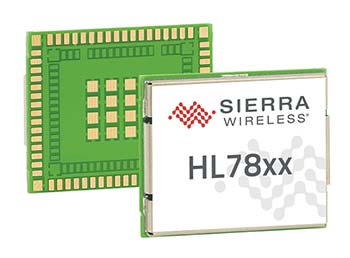
    AirPrime HL78 modules, featuring Altair Semiconductor’s integrated ALT1250 chipset, deliver power performance that extends the life of battery-operated devices by 5-10X compared to older LTE-M/NB-IoT modules.

    The new level of power saving modes was designed for power-constrained IoT applications, and includes improved wake-up and sleep-mode responsiveness, as well as ultra-low sleep-mode power.

    The modules also integrate GNSS tracking capability, security and an embedded SIM in a new compact CF3 size (18  x 15 millimeters) that is pin-to-pin compatible with other HL Series modules.

    Customers have the flexibility to deploy the same device on global LTE-M (Cat-M1/eMTC) and NB-IoT (Cat-NB1) networks, with support for more than 20 LTE frequency bands in addition to optional 2G fallback.

    Built-in security, including HTTPS, secure socket, secure boot and free unlimited firmware over-the-air (FOTA) updates from the AirVantage device management IoT Platform, helps customers ensure HL78 deployments are future proof and secure.

    LTE-M and NB-IoT LPWA networks deliver a new class of wireless technology specifically designed for low-power IoT applications. LPWA technologies combine lower cost, broader coverage and better battery life with globally available and secure cellular networks ready to connect hundreds of millions more things to the internet.

    “With the HL78 modules, OEMs and system integrators have the most scalable, lowest power module platform to build their global IoT applications on,” said Dan Schieler, senior vice president and general manager, OEM solutions, Sierra Wireless. “And to make it even simpler for our customers, we’ve integrated the SIM and cloud, as well as GNSS and security features, to drive down the size of LPWA connected devices while enhancing tamper resistance and security.”

    “More than 690 million LTE-M and NB-IoT connected devices are expected by 2022, and the market needs a low-power, compact embedded module to connect their industrial, smart city, smart home and simpler static sensor applications,” said Dan Shey, managing director and vice president at ABI Research. “With the addition of the HL78 product line, Sierra Wireless has amassed a broad portfolio of low power devices to drive the billions of advanced IoT connections we expect in the next decade.”

    “The ability to switch seamlessly between any commercially deployed LTE-M or NB-IoT frequency band gives HL78 customers the flexibility to choose which network they want to deploy their low bandwidth application on. And for those regions where LPWAN coverage is not as widely available, optional 2G fallback ensures their devices stay online,” said Ilan Reingold, vice president, business development and marketing at Altair Semiconductor (a Sony Group company). “Incorporating Altair’s advanced IoT chipset, HL78 devices will also enjoy an extended life of up to 15 years on a single battery.”

    The AirPrime HL78 modules are fully compliant with the 3GPP Release 13 standard and are Release-14-ready to support NB2 features in the future.

    Sierra Wireless AirPrime HL and WP Series modules are interchangeable across 2G, 3G, 4G and LPWA technologies. They use the CF3 form factor, which is footprint compatible across product lines, providing customers with the option to develop smarter by building their connected IoT product or service on a single module.

    HL7800 and HL7802 modules are sampling with lead customers now, with general availability in the third quarter of this year.

  • Launchpad: Automated modules, drones, lasers

    Launchpad: Automated modules, drones, lasers

    OEM

    Automobile module

    Supports integration of telematics, managed services

    The LE940A9 automotive-grade smart module supports LTE Advanced Category 9 (Cat 9) networks. It comes in three multi-band, multi-mode variants, including Voice-over-LTE (VoLTE), and is optimized for automobile manufacturers to deploy next-generation connected car technology in world markets. It features worldwide GNSS support including GPS, GLONASS, Galileo, Beidou and QZSS. The LE940A9 delivers 450-Mbps download and 50-Mbps upload speeds with extremely low latency and advanced security, enabling the next wave of automobile industry’s applications and services that also serve as a springboard for autonomous driving.

    Telit, www.telit.com

    Refreshed board

    Low-power, high-precision, positioning and heading

    The refreshed Vector Eclipse H328 is designed for robotics, autonomous vehicles, antenna pointing, marine survey, machine control and any application where high-accuracy positioning and heading is required. The multi-frequency, multi-GNSS H328 is an all-signals receiver board that includes Hemisphere’s new and innovative hardware platform, reducing its overall cost, size, weight and power consumption. It also integrates the Atlas GNSS Global Correction Service. The H328 offers fast accuracy heading of better than 0.17 degrees at 0.5-meter antenna separation and aiding gyroscope and tilt sensors for temporary GNSS outages. The 60 x 100 millimeter module with 24-pin and 16-pin headers is a drop-in upgrade for existing designs using this industry standard form factor.

    Hemisphere GNSS, www.hemispheregnss.com

    Personal mobility

    Wheelchair with embedded 3G module can be upgraded with GNSS

    A cellular module is embedded in a personal mobility wheelchair built by WHILL, a Japanese company specializing in innovative products for the mobility industry. The WHILL Model C features cloud connectivity based on a 3G cellular module from u‑blox. The embedded module features worldwide UMTS/HSPA and GPRS/EDGE coverage with a small footprint, also enabling easy and cost‑effective bolting on of a u‑blox GNSS receiver such as the MAX‑7C. The personal electric vehicle combines a sleek design with the latest innovative functionalities, enabling users to live an active lifestyle. As WHILL is looking into autonomous driving for people with disabilities, u‑blox plans to contribute with wireless positioning and connectivity technology.

    WHILL KK, www.whill.jp; u-blox, www.u-blox.com

    GNSS for small cells

    Technology for 5G networks, IoT

    The OSA 5405 SyncReach is an integrated Precision Time Protocol (PTP) grandmaster and GNSS receiver with a patent-pending dual antenna and receiver to enable the mass roll out of small cells. The new technology has been engineered to provide accurate and affordable phase synchronization for the rapidly growing small-cell market and meet the stringent timing requirements of 4.5G and 5G connectivity. With the OSA 5405, operators can migrate from legacy GNSS RF antennas and cables to standard, cost-effective copper and fiber Ethernet cabling, reducing capital expenditure and operating expenses. Available in both indoor and outdoor variants, the OSA 5405 can be deployed in challenging environments, including urban canyons where GPS signals fail or positioned on indoor windows to avoid multipath signal interference from objects in the building.

    Oscilloquartz, www.oscilloquartz.com

    LPWA with GNSS

    Global, dual-mode low-power wide-area (LPWA) cellular module

    The AirPrime WP77 smart wireless modules simplify LPWA deployments for customers developing products that need to connect to multiple networks where different LPWA technologies are supported.

    With integrated GNSS for tracking and location-based services, low-power modes and a comprehensive set of interfaces for connecting sensors and companion chips (including Wi-Fi and Bluetooth), customers can develop multi-service platforms for the transportation market, and use the WP77 for applications requiring low throughput and optimized power performance. The WP77 supports both LTE-M (Cat-M1) and NB-IoT (Cat-NB1) with optional 2G fallback, allowing customers to deploy the same device with multiple network operators worldwide. For those deploying in regions where 4G LTE coverage is not as widely available, 2G fallback ensures their devices stay connected to the network.

    Sierra Wireless, www.sierrawireless.com

    GNSS-aided ins

    Absolute orientation for devices

    The INS-T-306 module is a GNSS-aided inertial navigation system that combines GPS L1/L2, GLONASS, BeiDou and a high-performance strap-down system. It is capable of determining position, velocity and absolute orientation (heading, pitch and roll) for any device on which it is mounted. The INS-T-306 aims at facilitating motionless and dynamic applications that need high accuracy, such as vessels, ships, helicopters, unmanned aerial vehicles (UAVs) and unmanned ground vehicles (UGVs). The INS-T-306 uses an advanced GNSS receiver, barometer, magnetometers, micro-electro-mechanical (MEMS) accelerometers and gyroscopes to provide accurate position, velocity, heading, pitch and roll of the device under measure. The unit supports differential GPS (DGPS) and real-time kinematic (RTK). It is able to integrate into the lidar brands Velodyne, Riegl and Faro.

    Tersus GNSS, www.tersus-gnss.com

    UAV

    UAV detection

    Effective detection and neutralization of drones

    The SafeSky multi-sensor UAV detection and tracking system detects and neutralizes drones in any weather, providing true dome-like protection. A combination of proprietary radar, acoustic, vision and RF sensors enables minimized alarm-rates detection of small drones at a distance of at least 1,000 meters. Its miniaturized, low-power radars are based on proprietary space technology developed with the European Space Agency. All sensors data is fused and the result presented in an integrated software environment. No-drone zones are easily defined. Alarms are issued via SMS, email and in graphical and sound form. The SafeSky application is web-based and can be run on desktop computers and tablets for untethered operation. To neutralize drones, the system uses directive jammers or drone hacking (depending on regulations), forcing the drone to return to its operator or land safely in a controlled manner.

    Advanced Protection Systems, www.detectdrones.com

    Fixed-wing drone

    Large area survey tool

    The DATAhawk PPK is an ultra-high accuracy fixed-wing drone package designed for professional surveyors that need maximum geospatial precision. It provides absolute (not relative) survey-grade results within minutes. The drone produces repeatable results. It is equipped with a dual-frequency L1/L2 receiver tracking GPS and GLONASS; 132 hardware channels allow simultaneous tracking of all visible GPS/GLONASS satellites. This system allows the aircraft to fly much further than with an RTK system, once flight camera positions are corrected by combining GNSS recordings of the aircraft with the corresponding information of the reference base station on the ground. The UAV is free of the requirement of a separate, high bandwidth, GPS link to a base station.

    Quest UAV, www.questuav.com

    Light imager

    Dual thermal and visible sensor drone camera

    The FLIR Duo is the same size and shape as popular action cameras, but features advanced capabilities. Equipped with FLIR’s smallest and lightest Lepton thermal camera core, operators are no longer constrained by daylight. The Duo provides the power to see objects over 100 yards away in complete darkness, smoke and light fog. Equipped with a 160 x 120 thermal camera and High-Definition (HD) 1080 color camera, FLIR Duo allows operators to swap between the two cameras mid-flight or view both in a picture-in-picture mode via the FLIR UAS app. FLIR’s proprietary multi-spectral dynamic (MSX) image processing algorithm embosses the thermal image with key details from the visible camera, resulting in a sharp dual-spectrum image. A fully radiometric variant called Duo R delivers accurate, calibrated temperature measurements in every pixel.

    FLIR, www.flir.com

    Drone deterrence

    Technology without electronic jamming is safe for urban areas

    ApolloShield is a radio system that detects and drives unauthorized drones away at the push of a button. Its RF jammers are field-proven, immediately deployable devices that emit strong signals that break the communications of unwanted drones, driving them away from secure sites. Drone identities are extracted from the radio signal and can be used as a lead to catch the operator. ApolloShield is customizable so that every site will have optimal protection, yet is plug-and-play and can be deployed in a few hours at any location and operated without any special training. The system consists of several elements, including an omni-directional antenna, a signal processing unit (pictured), and the Cloud Control Center that can be accessed from any cloud-connected device (pictured). ApolloShield is designed for various threat scenarios, including surveillance, accident response, terrorism, and incarceration violations using drones.

    ApolloShield, www.apolloshield.com

    Collision-tolerant UAV

    Reduces accidents and injuries

    The Elios drone solves the challenge of flying drones indoors in complex and confined spaces or in contact with humans, reducing the risk of collisions and injuries. By enabling remote visual inspection in any indoor environments, Elios eliminates the need for workers to enter hazardous places or face dangerous situations. The protective carbon-fiber frame is collision-tolerant up to 15 km/h. Elios reduces downtime and performs an entire inspection in hours, eliminating the need for scaffolding, rope access, or cranes for visual inspections of difficult-to-reach areas. Its integrated payload includes simultaneous full HD and thermal imagery recording, and adjustable tilt angle.

    Flyability, www.flyability.com

    Navigation kit

    RTK GNSS for pixhawk drones

    The Here+ RTK GNSS kit is an open source drone navigation kit. It is built around u‑blox’ NEO‑M8P high-precision real-time kinematic (RTK) GNSS module. Supported by Ardupilot out of the box, the kit consists of a round rover designed to be mounted on the drone and is connected to the flight controller using a supplied 8‑pin CLIK-mate connector (for the autopilot Pixhawk2) or an optional 4 pin + 6 pin DF13 connector (for the Pixhawk1). The base station with its smaller GNSS receiver and an external antenna complete the equipment. The open-source drone technology is intended to reach a larger community and assist drone companies with affordable accessories for applications such as agriculture, powerline inspection, precision farming, logistics and 3D mapping.

    HEX, www.hex.aero

    Agriculture sensor

    Customizable filters allow for unique crop health detection

    The Quad Sensor features four fully customizable imagers for collecting precision agriculture data. In its standard configuration, the sensors offer standard normalized difference vegetation index (NDVI), green NDVI, normalized difference red edge (NDRE) and high-resolution color data capture in a single flight. Simultaneous collection of NDVI and NDRE data provides users with informative, accurate insights about crop health while streamlining operations. Custom filtering options provide virtually limitless configuration options. Because the Quad Sensor allows targeting of specific vegetative indices, it is being used by universities, researchers, large growers and agriculture advisors.

    Sentera, www.sentera.com

    Auto-follow camera drone

    Autonomous drone takes flight

    The Airdog ADII builds on the high-performance elements of the original Airdog drone. It combines advanced intelligent tracking technology with a durable design and autonomous, all-terrain flight performance. Built for hands-free operation, the ADII eliminates the need for manned operation, giving the user complete active freedom with perfect content capture. Customizable flight trajectories allow for more dynamic angles and obstacle avoidance, and scenic-capture modes provide unique filming perspectives. Its pro-grade camera stabilization and auto-record system guarantee smooth, framed, professional-grade footage even in challenging environments, such as high speeds, wind, water and abrupt elevation and terrain changes. The durable, lightweight, waterproof AirLeash tracking device allows for hands-free action with simple controls. The backlit LCD interface is loaded with easy flight, start-up tutorials and preset, sport and customizable modes plus a series of automated creative modes for capturing scenery.

    Airdog, www.airdog.com

    Onboard Defense

    Micro Electronic Defense System (OMEDS) for drones, robots

    The Pyramid installs easily to fully secure a drone or robot, add system robustness, and provide data for better planning and execution of missions. The Pyramid provides three layers of functionality: advanced security for the system and data with real-time full system encryption and GPS spoofing protection; operational reliability and robustness with RF link redundancy; and mission-enhancing benefits of RF mapping provided by collection and analysis of big data. RF mapping visually maps the datalink’s RSSI and GPS reception for better mission planning and execution. This enables better, safer, continuous autonomous operation in all environments. It includes virus and malware protection, and full system encryption for remote-control, telemetry and video links. Pyramid weighs about 1 ounce (30 grams), measures 2 inches (5 cm) and has no effect on a system’s performance. Regulus is offering a test and evaluation program to customers.

    ​​Regulus Cyber, www.regulusx.com

    UAS mapping software

    Cloud support added

    Version 17.1 of the UAS Mapping desktop product now includes an upload-to-the-cloud feature. The upgrade includes the capability to upload any UAS Mapping content to a SaaS-based sharing and collaboration platform. Users can instantly bring their drone/UAS/UAV data online. The upload process is fluently integrated in the workflows of the product, with the required checks and validations. Upload time depends on the internet connection. Once uploaded, the data is immediately available for sharing on 3dmapping.cloud. The new Catalog tool adds insight and overview of all data-collection jobs.

    Orbit GT, www.orbitgt.com

    Survey & Mapping

    Survey-grade laser

    For field data collection and mapping

    The TruPoint 300 is a fully integrated laser with vertical and horizontal angle encoders capable of producing 3-D, survey-grade measurements. It produces +/–1 millimeter range accuracy. The phase-technology product has a laser diode that emits light pulses with a distinct wavelength and pulse repetition frequency that obtains millimeter accuracy. The fully integrated MapStar Angle Technology makes the Trupoint 300 suitable for GIS, incident mapping, crush analysis, surveying, electric utilities, architecture and construction. It will measure the distance between two remote points and has onboard solutions for volume, height, 2D and 3D area. Professionals can navigate through measured data, routines and menus with a full-color touchscreen.

    Laser Technology Inc., www.lasertech.com

    Surveying application

    Enables custom app design for Android and iOS

    TerraGo Magic is a custom app designed for both iOS and Android platforms that simplifies the process of designing a custom application for specific clients and needs.Surveying firms can install this tool in their mobile device to enable the specific collection and sharing of important data that can vary as needed. The data can overlay Google and Apple Maps and allow attachments of images and video. The app avoids the time-consuming coding process, and can significantly improve workflow for many firms.

    TerraGo, www.terragotech.com

    Rugged receiver

    For harsh construction environments

    The Vector VR1000 GNSS receiver enables better positioning for machine control applications. Designed specifically for harsh construction environments, the Vector VR1000 — when combined with SiteMatrix software — can empower heavy equipment manufacturers to provide their own machine control and guidance solutions to their customers. It also has a new web user interface. The multi-frequency, multi-GNSS receiver offers real-time kinematic (RTK) positioning and high-precision heading. It has an Athena RTK engine, Atlas L-band corrections and excellent connectivity. With a baseline separation up to 10 meters, users can achieve heading accuracies of up to 0.01 degrees. The 744-channel VR1000 tracks GPS, GLONASS, BeiDou, Galileo, QZSS and IRNSS. Its connectivity features support Ethernet, CAN, internal 400-MHz/900-MHz radio, serial, Bluetooth and Wi-Fi. Integrated L-band adds support for Atlas GNSS global corrections for meter- to sub-decimeter-level accuracy.

    Hemisphere GNSS, www.hemispheregnss.com

    Imaging scanner

    Miniaturized for quick collection of as-built reality-capture data

    The BLK360 miniaturized 3D imaging laser scanner simplifies collection of as-built reality-capture data for work in architecture, design, construction and engineering, among other vertical markets. It is an easy-to-use and powerful device that enables professionals to capture 360-degree high-dynamic range (HDR) spherical imagery within minutes. Users place the lightweight BLK360 on a level surface or tripod and, with the push of a button, it captures 360-degree HDR spherical imagery and takes a 360,000 points per second laser scan. The BLK360 features +/–4 mm accuracy at 10 meters and an overall 0.6–60-meter range. Within three minutes, the spherical image and laser scan is completed and ready to view in the Autodesk ReCap Pro for mobile app, which runs on an iPad Pro. From there, users can take measurements, add markup and annotations or share onsite data with their colleagues back in the office.

    Leica Geosystems, lasers.leica-geosystems.com

  • Sierra Wireless offers LPWA module with GNSS

    Sierra Wireless offers LPWA module with GNSS

    Sierra Wireless, a provider of fully integrated device-to-cloud solutions for the Internet of Things (IoT), is offering global, dual-mode low-power wide-area (LPWA) cellular modules. The AirPrime WP77 smart wireless modules simplify LPWA deployments for customers developing products that need to connect to multiple networks where different LPWA technologies are supported.

    The Sierra Wireless AirPrime WP Series.

    The WP series simplifies development for secure telematics and gateway applications, providing a dedicated application CPU core running the Linux-based open source Legato application framework.

    With integrated GNSS for tracking and location-based services, low-power modes and a comprehensive set of interfaces for connecting sensors and companion chips, including Wi-Fi and Bluetooth, customers can develop multi-service platforms for the transportation market, and use the WP77 for applications requiring low throughput and optimized power performance.

    The WP77 supports both LTE-M (Cat-M1) and NB-IoT (Cat-NB1) with optional 2G fallback, allowing customers to deploy the same device with multiple network operators worldwide. For those deploying in regions where 4G LTE coverage is not as widely available, 2G fallback ensures their devices stay connected to the network.

    ABI Research forecasts that cellular LPWA network technologies will begin to see rapid growth from 2018 onward as carriers upgrade their networks in 2017, however, carriers have varying plans and timelines for LTE-M and NB-IoT.

    “A module with dual-mode, global coverage will be very attractive for global equipment manufacturers, especially for applications such as telematics, metering, and location tracking, which we expect will lead the way for LPWA volume deployments,” said Dan Shey, managing director and vice president at ABI Research.

    With the commercialization of LTE-M and NB-IoT LPWA technologies, cellular is now a superior option for many IoT applications that were previously restricted to short-range technologies due to cost and battery life. LPWA technologies combine lower cost, broader coverage and better battery life with globally available and secure cellular networks and will connect millions more things to the Internet.

    “With the AirPrime WP77 modules, IoT developers have everything they need in a single module to quickly build low-power connected products that can be deployed anywhere in the world,” said Dan Schieler, senior vice president and general manager, Embedded Solutions, Sierra Wireless. “The integrated open source Legato platform and AirVantage cloud provide our customers with a proven device-to-cloud architecture to design innovative LPWA solutions that extend the IoT into new applications.”

  • Sierra Wireless acquires GlobalTop’s GNSS embedded module business

    The GlobalTop Firefly X1 GNSS module.
    The GlobalTop Firefly X1 GNSS module.

    Sierra Wireless, a provider of fully integrated device-to-cloud solutions for the Internet of Things, has completed the acquisition of GlobalTop Technology’s GNSS embedded module business for $3.2 million.

    GlobalTop’s GNSS embedded module portfolio will become part of the Sierra Wireless OEM Solutions product line, and the GNSS staff from GlobalTop will join Sierra Wireless.

    GlobalTop’s GNSS products generated $5 million in revenue in the last 12 months, and the business is break-even, Sierra Wireless said.

    “Building on our portfolio of cellular, Wi-Fi and Bluetooth modules, we will have additional products to offer to our customers in markets where positioning data is critical, including high-value asset tracking, telematics, drones and automotive,” said Dan Schieler, senior vice president and general manager of OEM Solutions for Sierra Wireless.

    The TitanX1 GNSS antenna.
    The TitanX1 GNSS antenna.

    GlobalTop GNSS modules include the Firefly, Ivory and Hummingbird series (GNSS standalone), and the Titan and Ladybird (GNSS with antenna). GlobalTop launched the Titan X1 module in February.

    “With a wide array of modules and established sales channels, as well as a proven engineering team, we believe that the GlobalTop GNSS business is an important addition to Sierra Wireless,” Schieler said.

  • AirLink GX450 from Sierra Wireless now supports advanced vehicle telemetry

    Sierra Wireless has released an advanced fleet management feature to support the company’s AirLink GX450 mobile gateway, allowing it to collect OBD-II vehicle telemetry data.

    The added functionality will enable large organizations and fleet management solution providers to rapidly develop applications to monitor vehicle health and performance, helping them reduce costs, streamline operations and increase efficiency.

    Managing a vehicle-based workforce involves a large group of stakeholders, including operations, IT and fleet management. By combining mobile networking and rich vehicle telematics onto a single platform that gathers and reports vehicle diagnostic data directly to applications, this new feature will simplify and centralize vehicle management across an organization. Organizations will no longer need to purchase a separate in-vehicle telematics platform to gather and monitor vehicle health data.

    “We added advanced, easy-to-use telemetry to the AirLink GX450 to enable customers to simplify the adoption of vehicle telemetry solutions, including the ability to leverage their existing investment in fleet communications equipment,” said Jason Krause, senior vice president, Enterprise Solutions, Sierra Wireless.

    Clevest, a provider of mobile workforce management solutions for utilities, has worked closely with Sierra Wireless through the development of the AirLink GX450’s vehicle telemetry feature to produce a complete workforce management and vehicle monitoring solution.

    “Our mobile workforce platform is tightly integrated with AirLink gateways,” said Edna Menon, senior product marketing manager, Clevest. “With the GX450 telemetry feature, our utility customers can take advantage of robust vehicle diagnostic capabilities, in addition to the reliability and ease-of-use of our integrated solutions.”

    The AirLink GX450 vehicle telemetry uses an optional OBD-II accessory to collect vehicle diagnostic data and send it to a remote server using an open messaging protocol (MQTT). Vehicle telemetry is designed for applications in public safety, utilities, emergency and field services, and for large organizations or fleet management solution providers that have the in-house resources to develop their own vehicle monitoring applications.

  • Sierra Wireless and Maestro Wireless team up for global fleet and asset tracking

    Sierra Wireless and Maestro Wireless team up for global fleet and asset tracking

    The AirPrime HL Series module by Sierra Wireless.
    The AirPrime HL Series module by Sierra Wireless.

    Maestro Wireless Solutions Limited, a provider of tracking devices for Internet of Things (IoT) applications globally, has announced its first LTE Cat-1 tracker based on the AirPrime HL Series from Sierra Wireless.

    Maestro’s newest tracker, the ruggedized MT-44, provides fleet and asset tracking capabilities in harsh mobile environments using the LTE Cat-1 module with maximum data rates of 10 Mbps downlink and 5 Mbps uplink.

    The Maestro MT-40 Series is a compact range of rugged micro-trackers for the vehicle tracking market.
    The Maestro MT-40 Series is a compact range of rugged micro-trackers for the vehicle tracking market.

    “We have been integrating Sierra Wireless modules into our products for more than 15 years and we have always trusted the company to deliver on leading edge cellular technologies that improve product performance,” said Xavier Dupont, chief executive officer of Maestro. “The HL Series provides us with a single footprint for 2G and 3G global coverage and the LTE Cat-1 module is utilizing the same compact design in our newest tracker.”

    “Today, we are seeing strong interest in our LTE Cat-1 embedded modules optimized for lower bandwidth and power requirements,” said Dan Schieler, senior vice president, OEM Solutions for Sierra Wireless. “We are pleased to have Maestro deploying our latest LTE technology in their tracking devices. The HL Series Cat-1 module provides the next step in the evolution for our customers, as service providers are continuing to transition their networks to LTE technology.”

    The HL Series uses the CF3 form factor from Sierra Wireless that is footprint-compatible across product lines and network technologies, and is fully interchangeable with future versions of the modules, including LTE-M variants when they become available.

    LTE-M is a Low-Power Wide Area (LPWA) technology that will provide a highly efficient cellular option with lower radio-frequency complexity, significantly reduced power consumption (up to 10 years of service on a single AA battery), better in-building signal penetration and lower costs. Sierra Wireless is an active contributor to the LTE-M standard definition process within the 3GPP and has committed to launching compatible modules timed with network deployments, expected to begin in 2017.

    The LTE Cat-1 modules from Sierra Wireless will be commercially available in January 2016 on the HL Series.

  • August Product Showcase

    August Product Showcase

    Garmin-eTrex-W
    Consumer

    Outdoor Recreation Handheld

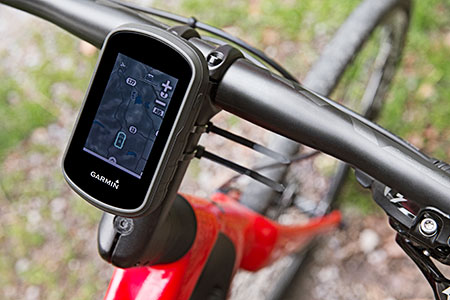
    Garmin’s eTrex Touch 25, 35 and 35t outdoor handhelds have an updated user interface and 2.6-inch capacitive touchscreen display. The eTrex Touch series also features activity profiles for navigation for multiple activities and an enhanced track manager to start and stop recording.

    The eTrex Touch series has a high-sensitivity, WAAS-enabled GPS receiver with GLONASS support and HotFix satellite prediction to locate users’ position quickly and precisely, even in heavy cover and deep canyons. All units have a three-axis tilt-compensated electronic compass, which gives directional information even when standing still. The eTrex 35 and 35t also have a barometric altimeter to get more accurate altitude, elevation and climb information, as well as indications of weather changes.
    Garmin, www.garmin.com

    FieldMaster_Tasks-WFleet Management

    Supervisor App for Fleets

    The Supervisor app for the FieldMaster suite of mobile applications allows managers to leave the office and still have visibility into their fleet and mobile workers from their smartphone or tablet, as well as manage day-to-day operations remotely.

    FieldMaster Supervisor is available with Trimble Fleet Management and Work Management. Features include viewing the team’s locations on a map; seeing their job progress, including tasks at risk; finding the nearest worker to another team member or customer; turn-by-turn navigation; inspecting job performance and documenting status in the field; and receiving vehicle and driver performance alerts in real-time.

    Trimble, www.trimble.com

    Defense

    SAASM Receiver

    FlexPak-S-front-WNovAtel’s SPAN GNSS/INS technology is now available on the company’s OEM625S dual-frequency SAASM GPS plus civil RTK receiver. SPAN offers system developers with SAASM requirements the benefit of continuously available 3D positioning, velocity and attitude (roll, pitch, yaw) for their defense applications. Authorized defense customers need access to the Precise Positioning Service (PPS) for DOD applications. When keyed, the existing OEM625S board-level receiver provides an RTK PPS solution by taking the raw measurements from an L-3 XFACTOR SAASM and applying them to NovAtel’s RTK algorithm. SPAN technology couples NovAtel’s precision GNSS receivers with robust IMUs to provide a more reliable, stable solution, even during short periods of time when satellite signals are blocked or unavailable.

    NovAtel, www.novatel.com
    Design & Test

    Record and Playback with Real Time

    Averna-RP-6100-WThe Averna RP-6100 series is an RF tool offering high-performance record-and-playback and real-time simulation in one platform for RF application validation.

    The RP-6100 can capture all GNSS bands, as well as HD Radio, Wi-Fi, LTE, radar, and cognitive radio — plus impairments — to advance RF projects and harden product designs. It features up to four channels, 160 MHz of recording bandwidth, tight channel synchronization, an extended frequency range of 10 MHz to 6 GHz and 14-bit resolution. The RP-6100 can be equipped with Skydel Solutions’ software-defined, real-time GNSS simulator, which delivers easy setups, integrated maps, dynamic scenario creation, high precision and tight parameter controls to enable highly repeatable simulations of current and future GNSS conditions, as well as corner cases.

    Averna, www.averna.com

    Mobile

    Internet of Things Platform

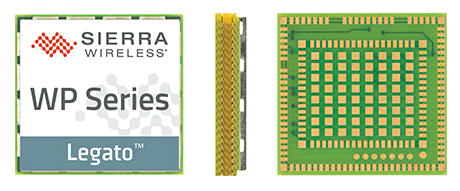
    The AirPrime WP Series of smart wireless modules is designed for the development of connected products. The WP Series provides an integrated device-to-cloud architecture enabling developers to build a Linux-based product using a single module that sends user and product data to the cloud. The AirPrime WP series offers an application processor, GNSS receiver, and cellular modem with an optional ultra-low power mode that reduces power consumption by 200 times, opening up new use-case possibilities for cellular connectivity.

    Sierra Wireless, www.sierrawireless.com

  • Sierra Wireless Offers Internet of Things Platform with GNSS
    Sierra Wireless Offers Internet of Things Platform with GNSS

    The Sierra Wireless AirPrime WP Series.
    The Sierra Wireless AirPrime WP Series.

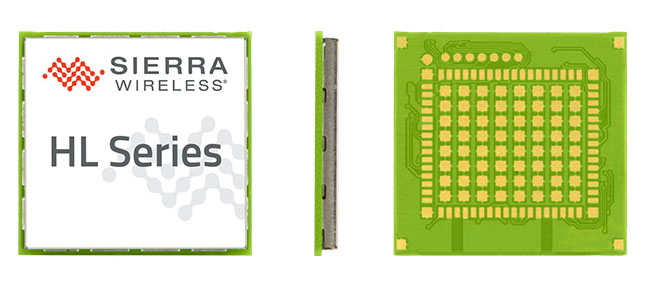
    Sierra Wireless has introduced its next generation of the AirPrime WP Series of smart wireless modules for the development of connected products and applications for the Internet of Things. The WP Series provides an integrated device-to-cloud architecture enabling IoT developers to build a Linux-based product using a single module that sends valuable user and product data to the cloud.

    AirPrime WP is part of Sierra’s new AirPrime smart portfolio, which includes:

    • AirPrime WP Series offering an application processor, GNSS receiver, and cellular modem with an optional ultra-low power mode that reduces power consumption by 200 times, opening up new use-case possibilities for cellular connectivity.
    • Legato Linux-based platform integrated directly into the application processor of the WP modules providing an open-source application framework and  professionally maintained Linux distribution.
    • Project mangOH open hardware reference design for the WP modules offering wireless, sensor, and cloud connectivity out-of-the-box to rapidly build prototypes.
    • AirVantage cloud and connectivity services providing device, application, and connectivity management as well as an IoT data platform securely integrated into the WP.

    “With the introduction of the new AirPrime WP Series modules, we have launched a powerfully integrated device-to-cloud architecture to make it easier for our customers to innovate,” said Dan Schieler, senior vice president, Embedded Solutions for Sierra Wireless. “With an application processor running the open source Legato platform, along with the AirVantage cloud for device and application management, and a new open hardware reference design, the latest WP Series modules enable developers to quickly build connected products using a single module to run all their applications.”

    The WP Series is interchangeable and completely footprint-compatible with the AirPrime HL Series, and is available in 3G and 4G LTE variants with 2G fallback on certain modules. Like the HL Series, the new WP Series modules can be soldered down or used with a socket, for flexibility in manufacturing and inventory management. The form factor, called CF3 (common flexible form factor), will be supported by Sierra Wireless through multiple generations of both WP and HL Series product lines, providing a secure migration path for customers through multi-year deployments.

    The next-generation AirPrime WP Series offers industry-leading ultra-low power mode for applications that need to prioritize power management over constant connectivity. This deep-sleep mode is designed for industrial solar- or battery-powered applications where constant connectivity is not required, opening up new use-cases for cellular connectivity where it was previously impractical.

    For OEMs and developers, the integration of processors and device software with wireless functionality can be complex and time-consuming, even more so when modifications are required for each region and each generation of the product. If location-based services are required, a GNSS receiver must be integrated as well. Furthermore, the data from the wireless connection, the connected asset, and its location must be aggregated and delivered to enterprise applications.

    The next-generation AirPrime WP Series is designed to address all of these issues. It offers an integrated processor and a GNSS receiver, reducing the number of components, integration time, and cost for developers. The Linux-based Legato platform running on the module’s processor provides the modem services needed to get the module communicating on a cellular network, plus an application framework and secured processing space to run third-party applications. Through Legato, AirPrime WP modules are pre-integrated with the AirVantage cloud for simple, secure configuration and management of the device and its data once deployed.