Tag: SiRF

  • CSR Launches SDK for Precise Indoor Location Apps

    CSR Launches SDK for Precise Indoor Location Apps

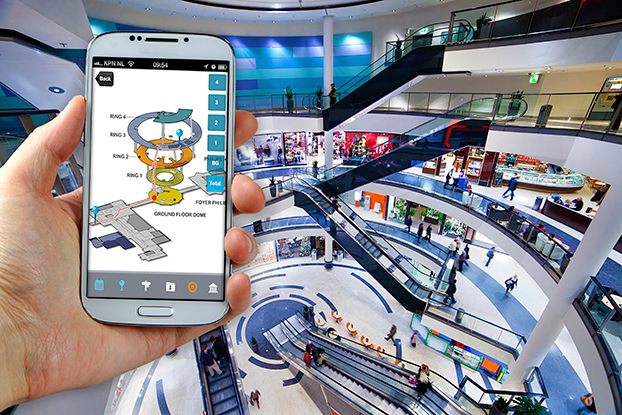
    SiRFusion SDK brings plug-and-play simplicity to Android app developers. Photo: CSR
    SiRFusion SDK brings plug-and-play simplicity to Android app developers. Photo: CSR

    CSR plc today announced the launch of its SiRFusion Software Development Kit (SDK) for Android application developers. The solution enables indoor positioning for Android developers looking to create next-generation apps.

    Developers can now leverage the SiRFusion library to rapidly integrate new location-based capabilities and services such as indoor location tagging and analytics for social networking applications, indoor navigation, lone worker efficiency and safety capabilities, as well as indoor asset tracking and targeted e-commerce services.

    CSR is being acquired by Qualcomm, with the transaction expected to close by the end of the summer of 2015.

    Mobile applications with integrated SiRFusion can now deliver the ubiquity of outdoor navigation to indoor environments without costly surveys or infrastructure upgrades. SiRFusion combines real-time Wi-Fi signals, satellite positioning information, pedestrian dead reckoning, and the company’s cloud-based CSR Positioning Center to calculate accurate indoor location. SiRFusion technology provides the accurate indoor position fixes needed to make continuous indoor navigation a part of everyday life. The system automatically crowd-sources a venue’s indoor Wi-Fi signatures as consumers walk through the location, and it has also been architected to accommodate future proximity and location technologies such as Bluetooth Smart beacons, Wi-Fi Round Trip Time (RTT), and Indoor Messaging System (IMES).

    “Offering indoor positioning accurate enough to be useful has been a challenge that the industry has been trying to solve for many years,” said Anthony Murray, Senior Vice President, Business Group at CSR. “But with consumers coming to expect anytime-anywhere positioning wherever they are, our customers have continued to express a growing interest for accurate indoor positioning without the need for additional infrastructure. With our SiRFusion Software Development Kit, we have, for the first time, made indoor location a reality for developers who want to deliver innovative location-based products and services without proprietary infrastructure.”

    SiRFusion for Android can be integrated into any app running on Android version 4.4 or later. The SDK will be available for download from www.csr.com in Q1 2015, and will include the SiRFusion library, API descriptions, and a Developer’s Guide. CSR will demonstrate SiRFusion for Android at the Location and Context World conference December 2-3, held at the JW Marriott in San Francisco, and at Consumer Electronics Show (CES) in Las Vegas January 6-9, 2015. To schedule a private briefing and demo at either event, contact [email protected]

  • CSR Launches SiRFstarV 5e GNSS Location Solution

    CSR Launches SiRFstarV 5e GNSS Location Solution

    Photo: CSR plc CSR plc has debuted the SiRFstarV 5e, a GNSS engine optimized to enable highly accurate location positioning for devices including mobile phones, cameras, and health and fitness products. By supporting fully concurrent GLONASS, GPS, QZSS, and SBAS from ROM, the highest accuracy and fastest time-to-first-fix (TTFF) are ensured.

    Wireless solutions specialist Telit Communications plc will be using the solution for its Jupiter SE868-V2 module, which was launched at CTIA Wireless 2013 in Las Vegas. The 11 x 11 millimeter QFN packaged receiver module integrates 5e, TCXO, SAW, and RTC oscillator into a small convenient package, accelerating time-to-market and reducing product development risks. CSR believes its advanced power saving modes make it extremely battery-power friendly and ideal for wearable and personal navigation applications.

    “The Jupiter SE868-V2 excels in all positioning tasks and foremost in applications requiring high reliability navigation,” says Felix Marchal, Chief Product Officer at Telit Wireless Solutions. “By using CSR’s SiRFstarV 5e solution, we have been able to create a quick and convenient upgrade path for our Jupiter JF2 GPS module customers to the latest and most robust multi-constellation support available in the market.”

    SiRFstarV 5e offers a range of features to increase accuracy, improve time to first fix and preserve battery power to enable a better user experience. These include:

    InstantFix Extended Ephemeris (EE) — Devices without wireless connectivity, such as cameras, are able to overcome slow TTFF, a common annoyance for the end user. 5e is capable of autonomously forward predicting EE for three days locally, and for connected devices the solution supports server based EE for up to 31 day for GPS and up to 14 day GLONASS EE

    Direct to battery capability — The GNSS chip can connect directly to a Lithium battery supply, enabling system cost reduction and increased power efficiency. This is implemented by an integrated switched PMU, reducing system level power and eBOM costs

    Design flexibility for optimal solution cost — With clear attention to solution implementation, 5e is designed for small size and low power. For example, UART and SPI Flash drive levels are drivable from 1.8v to 3.3v, eliminating the need for level shifters and increasing implementation flexibility

    Intelligent design — The 5e is designed to be optimised for low power battery operated devices. For instance, in asset tracking applications, the 5e engine will intelligently decide how long to try to acquire satellite signal based around its environment, saving a significant amount of battery power

    “The SiRFstarV 5e device allows our customers to select a high performance solution that will deliver end users a seamless navigation and location experience whatever the application,” says Dave Huntingford, Director of Location at CSR. “The fact that Telit has already seen the potential of SiRFstarV 5e and selected it for its Jupiter SE868-V2 module reflects the location accuracy benefits afforded by the 5e.”

    SiRFstarV 5e is offered in a size optimal 0.4-mm pitch Wafer Level Chip Scale Package (WLCSP) and a 0.5-mm pitch Ball Grid Array (BGA) for low cost PCB applications.

  • Samsung Buys CSR’s Mobile Chip Technology

    Samsung Electronics Co. has acquired the mobile-technology business of U.K.-based Cambridge Silicon Radio PLC for $310 million. The agreement includes patents to the firm’s Bluetooth, Wi-Fi, and GPS location innovations. Samsung said the move would allow its semiconductor unit to strengthen its line-up of mobile-device processors.

    Samsung competes for business from other handset makers against the chip-makers Qualcomm, Texas Instruments and Intel, reports BBC News. The firm’s chips are used in its Galaxy handsets as well as Apple’s iPhones and iPads.

    Joep van Buerden, CSR’s chief executive, said his firm offered important technologies, but was aware of a trend in which larger firms were acting to integrate many functions into a single chipset, reducing demand for specialist parts, BBC News reported.

    “I believe under Samsung’s ownership the handset operations will be in a better place to prosper in the global handset market,” Buerden said. “I would like to thank all our colleagues who will be transferring to Samsung for their outstanding service.”

    CCS Insight analyst Geoff Blaber pointed out in a Yahoo! article that Samsung’s move came soon after the acquisition of Nanoradio, a Swedish Wi-Fi chipset company, which happened June 1. “It underlines Samsung’s commitment to strengthening its vertical advantage by extending silicon capability most notably in Wi-Fi and GPS,” he said.

    About 310 members of CSR’s technology and handset team will move over to the South Korean firm.

    SiRF founder Kanwar Chadha, who had been with CSR for three years after its acquisition of SiRF in June 2009, left CSR earlier this summer and is rumored to be starting a new venture.

  • Social Loco Conference Highlights LBS Brand Marketing

    The Social Loco conference in San Francisco highlighted brands leveraging social location. However, it seems as if the conference focused more on the social than the location element. As one attendee said, “Location as a topic is almost like electricity as a topic, it’s just there.” In other industry news, veteran location executive Kanwar Chadha is moving on…


    SAN FRANCISCO — Most companies and attendees at the recent Social Loco conference here realize that while social is big, and such companies as Home Depot and Kraft are looking hard at it, the location part of it still has detractors who don’t know what to do with it.

    The problem with social location advertising is that ad execs and large companies don’t understand it — or know how to spend money against it, said Marc Prioleau, managing director of Prioleau Advisors.

    Prioleau said location industry executives would talk to each other on who is going to rule the world, with little effect. “[The problem is] that no one came from brand backgrounds and were hacking around an application, rather than focusing on a brand’s objective. Some of the ideas that were hot two years ago…aren’t so hot now,” he said.

    The big impact of location-based services, or social loco marketing, is getting consumers to take specific actions to get into a store, said speakers on a mobile panel. Location is relevant when a company can use it as a signal of intent to bring in a five- to 10-percent conversion [sale] rate. “There still has to be relevant and interesting ads, which will open the floodgates for innovation to come in,” said one panelist.

    Proximity marketing may be the key ingredient to making LBS a big part of a brand’s advertising strategy. Panelists believe that a large part of consumer purchasing comes in the proximity of someone’s home. Around 40 percent of mobile searches are local.

    The fact that a lot of searches are local is not enough, said Di-Ann Eisnor of Waze. “[Users] say that, ‘I am doing this thing already, what else could I be doing [around this area]?” she said. “Intent becomes very powerful — people sharing that intent.”

    A venture capital speaker said that brand managers at Pepsi, Gatorade, Mountain Dew, and others are holding back money to find new ways to have consumers “buy that one more can of Pepsi.” He said that brands are looking at social location as ways to try something they haven’t before. “They will get some air time with some senior leaders because of that,” he said.

    Still, hard to convice die-hard VCs that location is the way to go. “Social loco [constitutes] two important elements [of advertising]. But I don’t wake up and say, ‘Let’s do a social loco deal today’ — what is this business going to build over time?” asked John Malloy of BlueRun Ventures.

    One VC said that LBS is a technology, not necessarily a business mobile. “Investing in mobile, yes, but that’s like saying we invest in people who walk around on two legs. The challenge with location is that it tells me where I am, but not necessarily tells me what to do,” he said. “We need to see a connection to revenue. That’s a challenge with companies such as foursquare — to get a distribution to a network of merchants. Until you are getting paid, it’s just theoretical.”

    Travel May Be LBS Niche Market

    Using social location applications helps travel companies, airlines, hotels, and others in that industry find customers, said panel members. “Consumers are starting to look at social commerce and social proofing as a way to intelligently tap into friends. They are looking at five hotels my friends have been to,” said Kevin Fliess, Room 77 general manager and vice president of products. “Location and price is a huge consideration — and reading reviews from friends has more value than reading anonymous reviews.”

    “One of the challenges we face — location is sensitive — how they can share their trips [is important]. Clearly, the more options you deliver is confusing to consumers,” Nancy Ramamurthi, TripIt vice president, product management and marketing.

    One of the off-shoots of travel may be photography. David Staas, CEO of jiwire, said that the company surveyed 800 mobile consumers who used smartphones as the primary device to take a photo. “There is a location component to it; 31 percent want to remember where they took the picture,” he said. “Men and women we surveyed had different behaviors. Women want to use location to communicate with a broader network; 91 percent take pictures on the go; 20 percent of them are more likely to location tag.”

    Big Names and Big Companies Rarely Say Anything

    At such conferences as Social Loco, big-name entities such as Facebook and Google speak, which draw attendees. Sad thing is that none them say anything, most knowledgeable industry vets agree.

    Emily White, Facebook’s director of mobile partnerships, was a keynote speaker at Social Loco and fits in this big-company, no-substance conference speak genre. Yet the big media outlets, because it was Facebook speaking, quoted her with the earth-shaking news that mobile is important, and, hold on to your seat, “the web is being rebuilt around people.” Note to these big companies: Cut the PR stuff and ‘I’m so hip and my company owns the world’ talk, particularly when you are talking to a crowd of savvy marketing executives.

    Privacy Is Dead: That’s News to Me

    Actually, really isn’t news to me. Anytime a conference has a privacy panel, you know that fireworks will ensue and nothing ever gets resolved by the time the panel ends.

    Social Loco’s privacy panel was no different. One panel member said privacy is boring. “It’s boring to legislate, like seatbelts and helmets,” he said.

    A Qualcomm speaker said the company has a lawyer who does nothing but work privacy issues. Another speaker, in a rather politically incorrect manner, said more people are harmed from the Catholic Church than by Facebook’s location privacy policy.

    Chadha Leaving CSR/SiRF after 17 Years

    After more than 17 years with SiRF, including three as chief marketing officer following a merger with CSR, Kanwar Chadha is moving on. In a note to colleagues, he said he has “decided to move on and explore new destinations in my journey of adventure and discovery.”

    When Chadha co-founded SiRF in 1995, the company wanted to sell GPS for consumers, which was revolutionary as most in the industry were still trying to sell survey equipment.

    “Many thought we were pipe dreamers, some felt we were foolish to enter a market dominated by big companies with a technology controlled by the Department of Defense, and others looked at us as another flash-in-the-pan start-up,” he said. “We were technologists and evangelists at the same time. We developed innovative technologies and products to make GPS work in environments that system was never designed for, but are important for consumer usage such as urban canyons and dense foliage; all keeping in mind price points that mainstream consumers could afford.”

    Chadha was proud of an idea book he called “Navigations,” which outlined “futuristic, but artistic concept devices and scenarios highlighting potential use cases of GPS in our daily lives,” he said. “Things we may take for granted today but seemed quite far-fetched in 1995. It was expensive collateral, but probably the best I have done in my life, and it became quite popular,” he said.

    During his tenure at SiRF, the company acquired the GPS businesses of Motorola and Conexant as well some smaller companies such as Centrality, Enuvis, Impulsesoft, Kisel, and TrueSpan. He was at the company during the 2004 initial public offering and its merger with CSR in 2009.

    “Many of the original SiRFers have moved on, and I have focused my last three years on helping transform CSR into a ‘platform-focused company’ from being just a component supplier. There are many interesting challenges ahead, such as making indoor location reliable and meeting consumer expectations with location across a broad range of applications,” Chadha said.


  • Expert Advice: Moore’s Law and GNSS

    Greg Turetzky
    Greg Turetzky

    by Greg Turetzky

    I started my relationship with GNSS and Moore’s Law in 1985, writing software for GPS tracking loops on the Advanced Range Instrumentation Aircraft program at the Applied Physics Laboratory of Johns Hopkins University for the U.S. Air Force. The project’s purpose was to navigate a large jet to accurately fly a pattern to drop buoys into the ocean. That receiver had seven circuit boards (six trackers and one navigator) mounted on a VME backplane in a 19-inch rack mount in the back of a C-130, and was about the size and weight of suitcase.

    In 1988, I helped design and build a single-board Swordfish receiver at Stanford Telecom that went into a two-man portable pseudolite for Trident missile testing. This was considerably smaller and lighter: about the size and weight of a desktop computer. Moore’s law — which, by the way, states that the number of transistors that can be placed inexpensively on an integrated circuit doubles approximately every two years — helped mostly by allowing much better CPUs and memories so we could put it all on a single board. I actually carried this beast off a landing ship tank (LST) onto a small island in the South Pacific called Kwajalein.

    With Moore’s law in full swing in 1990, I moved to the commercial sector at Trimble Navigation and worked on the NavTrac, a lunchbox-sized complete GPS receiver for marine navigation, and then onward to timing receivers and eventually credit-card-sized modules. It became clear that Moore’s Law was a great friend of GNSS and was going to enable a whole new slew of applications by moving from the board level to the chip level.

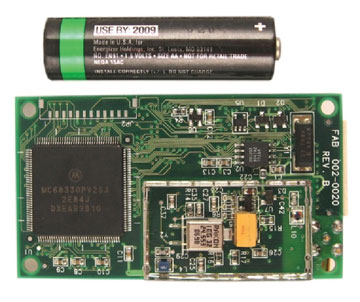
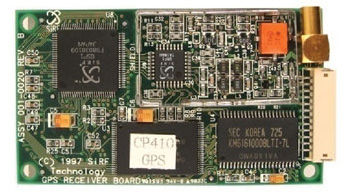
    I went to SiRF Technology, Inc., very soon after it was founded in 1995, to help develop the first commercially successful GPS chipset, the SiRFstarI (see photo).

    chip1-W
    Photo: SiRF Technology, Inc.
    chip2-W
    Photo: SiRF Technology, Inc.
    SiRFstarI-based module, both sides, with representative AA battery to scale.


    You can see that this module still had separate chips for the CPU, flash, SRAM, GPS correlator chip, the GPS RF ASIC,  and a lot of other components.

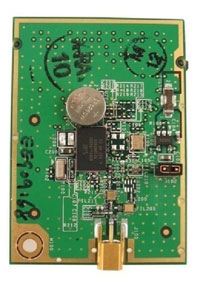
    Last year, we introduced the SiRFStarIV architecture and the GSP4e chip. The module made from this chip has the same basic functionality (RF in, position out) but at a much higher performance level in terms of sensitivity, time to first fix, accuracy, and much lower power consumption. The photo at right shows a 4e module. Also note how few external components are required.

    SiRF 4e module. A hearing-aid battery shows scale and represents the relative power requirements of this module. Photo: SiRF Technology, Inc.
    SiRF 4e module. A hearing-aid battery shows scale
    and represents the relative power requirements of this module. Photo: SiRF Technology, Inc.

    To really understand the impact of Moore’s law on GNSS today, we have to break down the impact on the various parts of the receiver. The measurement of each section (area, power, or bytes) was then normalized to a starting point of 100 in 1995. The time span of 14 years is about seven Moore’s law doublings (every 2 years), producing an expected decrease of 1/128. We can see that the power and digital silicon area have tracked very well over that time period. However, it is also apparent that RF has not even come down by half in that time frame (although it has swallowed a lot of external components as seen in the pictures) — and the code size (ROM + RAM) has grown by 2.5 times.

    This has turned Moore’s law into a bit of a foe in the current timeframe, as the costs associated with silicon products are clearly known to customers (die size is easy to measure) and has driven the prices for GPS receiver downwards accordingly. However, as one can see, more and more software is needed to enable the new features and functions, and with dropping prices due to decreased silicon size, it becomes harder and harder to pay to feed all the hungry engineers here at CSR. This is the crossroad at which our segment of the industry has arrived: how do we continue to add innovation and still make a profit selling silicon when Moore’s Law is not helping anymore? I am not sure I know the answer yet, but we have a lot of good ideas that we are working on.

    Most of these ideas come from expanding the notion of location determination to extend beyond using just GPS and its currently available augmentations. Adding support for other GNSS constellations requires more hardware; the amount is highly dependent on which constellation(s) we are talking about. GLONASS, because of its different frequency, requires more RF silicon, requiring more total area because the existing area is not shrinking as fast. Galileo and COMPASS will require more digital area for their complex coding schemes, but these can be more easily handled with shrinking process geometry. All will require significant software effort to bring in new acquisition schemes, tracking loops, and navigation algorithms.

    But location determination will not be a GNSS-only problem for much longer. Hybrid navigation using other signals of opportunity and MEMS sensors will play a large role in expanding the ability to provide accurate location to consumers wherever they go. The integration of these technologies into a coherent location determination system is a large software effort, and one that CSR has been working on for years in automotive applications.

    Clearly, the need for accurate location continues to grow in consumer devices. At CSR we feel we are in the best position to deliver that, with or without help from Moore’s law.


    Greg Turetzky is senior marketing director for SiRF Technology Inc., a member of the CSR Group of companies.
  • CSR Completes SiRF Acquisition

    England’s CSR plc and U.S.-based SiRF Technology Holdings, Inc., have completed their merger, ending years of speculation over what may become of SiRF, a pioneering maker of GPS receivers that had become financially troubled during the current economic downturn.

    “In bringing together the combined capabilities and broad range of CSR and SiRF technologies and platforms, we have created a new force in the industry and a world class organization with the commercial, technical and operational scale to build on CSR and SiRF’s existing customer relationships and deliver the next generation of connectivity and location enabled products,” said Joep van Beurden, CSR CEO. “Our strategic goal is to address the existing and emerging needs of our combined customer base for connectivity and location technologies. The potential applications and benefits to the end user of connectivity plus location are only just starting to open up, and these exciting new opportunities will be driven by our unique combination of leading location technologies and connectivity solutions.”

    SiRF co-founder Kanwar Chadha echoed those sentiments. “CSR and SiRF have a shared vision of using innovation to bring the benefits of wireless connectivity and location to mainstream consumers and enterprises and to enable new and exciting user experiences,” said Chadha, now a CSR board member and chief marketing officer. “We believe that through this merger, our customers and consumers will derive benefits from a much stronger player whose focus is on delivering best in class connectivity and location platforms.”

    For CSR’s customers, the merger with SiRF means CSR’s Connectivity Centre products are augmented by GPS technologies, including assisted GPS (A-GPS), dead reckoning, and location centric platforms, the companies said. Meanwhile, SiRF’s customers will see enhancements to SiRF’s location platforms with CSR’s Connectivity Centre capabilities.

    The enlarged CSR group will have its global headquarters in Cambridge, United Kingdom, with SiRF’s headquarters remaining in San Jose, California, which will also serve as CSR’s U.S. headquarters. The combined CSR group is now among the top 10 fabless semiconductor companies, with a combined customer list including six of the top seven handset manufacturers, the top five personal navigation device makers, the top two automotive telematics suppliers, and other auto and consumer electronics providers, CSR said.

  • CSR and SiRF Complete Merger

    CSR plc of Cambridge, UK, and SiRF Technology Holdings Inc., of San Jose, California, on June 26 completed the merger between SiRF and a wholly owned subsidiary of CSR. The merger resulted in “creating a provider of connectivity and location platforms and a company with the scale, technology, and strategy to enable its customers to address the exciting and emerging opportunities in mobile markets,” according to a company statement.

    The company said that customers of the enlarged CSR group will be able to deliver new user experiences of connectivity and location technologies in a diverse range of devices such as mobile phones, personal navigation devices, in-car navigation and telematics systems, laptop and netbook PCs, mobile internet devices, digital cameras, gaming machines, cellular accessories, and consumer electronic devices.

    “In bringing together the combined capabilities and broad range of CSR and SiRF technologies and platforms, we have created a new force in the industry and a world-class organization with the commercial, technical and operational scale to build on CSR and SiRF’s existing customer relationships and deliver the next generation of connectivity and location enabled products,” said Joep van Beurden, CEO of CSR. “Our strategic goal is to address the existing and emerging needs of our combined customer base for connectivity and location technologies. The potential applications and benefits to the end user of connectivity plus location are only just starting to open up, and these exciting new opportunities will be driven by our unique combination of leading location technologies and connectivity solutions.”

    “CSR and SiRF have a shared vision of using innovation to bring the benefits of wireless connectivity and location to mainstream consumers and enterprises and to enable new and exciting user experiences”, said Kanwar Chadha, co-founder of SiRF and newly appointed board member and chief marketing officer of CSR. “We believe that through this merger, our customers and consumers will derive benefits from a much stronger player whose focus is on delivering best in class connectivity and location platforms.”

    “Technology innovation represents the foundation for both CSR’s and SiRF’s success in the market place,” said James Collier, co-founder, board member and Chief Technology Officer of CSR.  “We look forward to combining the complementary expertise of our teams to take innovation to the next level in our multifunction radio and system platforms to address emerging customer and market needs.”

    For CSR’s customers, the merger with SiRF means CSR’s Connectivity Centre products are augmented by GPS technologies that are well respected and enjoy widespread adoption, the company said, while SiRF brings to CSR a strong IP portfolio in GPS and assisted GPS (A-GPS), dead reckoning, and location centric platforms. 
The enlarged CSR group will have its global headquarters in Cambridge, UK, with SiRF’s headquarters in San Jose becoming CSR’s U.S. headquarters.

  • The Business: SiRF, CSR to Merge; Kanwar Chadha’s Perspective

    » MASS MARKET OEM

    SiRF, CSR to Merge; Kanwar Chadha’s Perspective

    SiRF Technology Holdings, Inc., of San Jose, California, and CSR plc, formerly Cambridge Silicon Radio, headquartered in Cambridge, United Kingdom, will merge in a stock-for-stock transaction to create a new company, which will automatically assume a competitive, leading position in global connectivity and location markets. The companies expect the transaction to close in the second quarter of 2009.

    “Financially, strategically, and commercially, this is a compelling transaction,” said Joep van Beurden, CEO of CSR — and analysts would almost universally agree. SiRF has been under the financial microscope since troubles surfaced in Q1 2008, and speculation about an acquisition had been rife.

    Further, SiRF has been locked in a patent battle with Broadcom, the latter involved through its July 2007 acquisition of Global Locate.

    CSR has made its mark in the Bluetooth connectivity sector, combining multiple connectivity technologies, while SiRF has long pioneered GPS location with multifunction system-on-chip (SoC) location platforms for consumer handhelds and cell phones. In January 2007, CSR purchased GNSS software receiver innovator NordNav.

    Chadha Says. “From a strategy viewpoint,” SiRF founder and vice president of marketing Kanwar Chadha told GPS World, “multi-function radios is something we have been talking about for two years. Market opportunities became much larger in the last six months, with Nokia driving loction into every mobile phone.

    “When you see a market opportunity in front of you, it’s better to combine best-of-class than to build a solution from scratch.

    “We have a strong customer base in automotive and PNDs, while we are expanding into wireless. CSR is compelementary: strong now in wireless, and so on.

    “In easy times, you can build your own solution. In tough times, trying to build an additional platform of technology, if we start from scratch, that may take four to five years to prove out; that’s very difficult. Both of us tried to do that, by the way. They need GPS, we need Bluetooth.

    “Now, our multimode AGPS with their EGPS, and the economies of scale enjoyed by a now close to a billion-dollar company, we feel very good about that. Bluetooth in hands-free mobile phones, that has a 50 percent penetration in handsets. It is much deeper than GPS today, although GPS is catching up.

    “Their [CSR’s] world is very mobile-phone centric. We are more location-platform centric, more diverse in our view. It will be very interesting. GPS-Bluetooth-FM: for our customers, the handset vendors, this is their most requested combination. There are two ways to integrate these function: integrate GPS with a modem, as Qualcomm does, or integrate it into  what CSR calls a connectivity center, of short-range wireless technologies.”

    Lines Drawn. A significant market battle continues between the big four in the mass market OEM GPS chip sector: Broadcom, Qualcomm, CSR, and TI, formerly Texas Instruments — with Sony and Panasonic quietly going about their own business, making GPS chips for brand devices, but in a position to supply others, if they are not doing so already. The new ST-NXP Wireless joint venture with Ericsson (see story page 18) will also play in that arena.

    Chadha does not expect to see competition from manufacturers in Taiwan and China, at least not immediately. “These are complex radio technologies, not simple digital technologies.”

    Brand. “The SiRF brand won’t go away, it’s very strong,” he concluded. “We’ll continue to build on it. the location platform will be our recognizable art of the new company , and of course we’ll continue applying our expertise there.”

    On a pro forma basis, the two companies combined would have had 2008 sales of approximately $927 million. The combination will create the single largest pure-play provider of integrated connectivity and location platforms and will be one of the top 10 fabless semiconductor companies in the world, according to a joint statement. Customers include four of the top five handset makers, the top five PND makers, the top two auto-telematics suppliers, and other leading electronics providers. CSR and SiRF will have design and customer-support centers around the world.

    On closing of the transaction, SiRF stockholders are expected to own 27% and CSR shareholders are expected to own 73% of the combined company. CSR’s board will add SiRF interim CEO Dado Banatao and Chadha. The combined company, with CSR’s Van Beurden as CEO, will be based in Cambridge, and San Jose will serve as U.S. headquarters.

    » TELECOMMUNICATIONS

    Ericsson and STMicro Complete Mobile Merger

    STMicroelectronics and Ericsson have closed their agreement merging Ericsson Mobile Platforms and ST-NXP Wireless into a 50/50 joint venture. The deal was completed on the terms originally announced on August 20, 2008.

    The new company is designed for long-term stability and to become an industry leader in product research, as well as design, development, and the creation of mobile platforms and wireless semiconductors. The joint venture begins as a major supplier to four of the industry’s top five handset manufacturers, who together represent about 80 percent of global handset shipments, as well as to other industry leaders.

    Ericsson contributed $1.1 billion net to the joint venture, out of which $0.7 billion was paid  to STMicro. Before the closing of the transaction, STMicro exercised its option to buy out NXP’s 20 percent ownership stake of ST-NXP Wireless.

    Alain Dutheil, CEO of ST-NXP Wireless and chief operating officer of STMicroelectronics, will lead the joint venture as president and chief executive officer.Employing about 8,000 people — roughly 3,000 from Ericsson and 5,000 from STMicro — the new wireless technologies company is headquartered in Geneva, Switzerland.

    » MILITARY & GOVERNMENT

    Honeywell T-Hawk Micro Vehicle Heads for U.K.

    Honeywell received an order for six T-Hawk micro air vehicle (MAV) systems from the U.S. Navy, the contracting agency for the U.K. Ministry of Defence (MOD) for the T-Hawk MAV system procurement, in a contract valued at USD $5.7 million.

    The new U.K. order comes in addition to the Navy’s existing T-Hawk contract with Honeywell, announced in November 2008, for 90 systems. The T-Hawk MAV will be used by joint force EOD (Explosive Ordinance Device) units in Iraq and Afghanistan, among other locations.

    The circular vehicle, weighing 17 pounds and 14 inches in diameter, can fly down to inspect hazardous areas for threats without exposing warfighters to enemy fire. The T-Hawk MAV can take off and land vertically and fly more than 40 minutes, at more than 40 knots of airspeed, operating at altitudes of more than 10,000 feet.

    An eye-in-the-sky for battlefield surveillance, the Honeywell MAV carries video cameras to relay real-time data and a GPS device. It identifies improvised explosive devices (IEDs) and can inspect suspected bomb sites in areas inaccessible by ground robots.

    » MASS MARKET OEM

    Epson, Infineon Develop Tiny Single-Chip Receiver

    Seiko Epson Corporation of Tokyo, Japan, and Infineon Technologies AG of Neubiberg, Germany, have developed a GPS single-chip design, the XPOSYS, which is optimized for mobile devices for the consumer market — especially cellular phones with navigation features.

    Compared to existing solutions in the market, the XPOSYS, which is manufactured in a 65-nanometer process technology, provides increased performance and new levels of user experience, the companies said.

    Sensitivity has been increased from -160 dBm to -165 dBm, allowing for pinpoint positional accuracy when indoors or in urban canyons. Power consumption has been reduced by 50 percent, increasing the battery life of products in which it is included. The footprint has been reduced to 2.8 x 2.9 millimeters, which the companies claim is 25 percent less than the smallest GPS chip available elsewhere.

    u-blox Launches Cards for Mobile Computers

    A GPS PCI Express Mini card from u-blox (Thalwil, Switzerland) enables next-generation laptop, netbook, mobile internet device and Ultra Mobile PC OEMs to provide GPS and location-based services (LBS) such as personal navigation, services and people finders, and geo-tagging.

    “With the explosive potential of next-generation GPS applications and services for mobile PCs, it is the right time to introduce a robust PCI Express mini card supporting location-based services,” said Thomas Nigg, Vice President Product Marketing at u-blox.Sales of mobile PCs with integrated GPS are projected to grow from 3 million units in 2007 to 45 million units in 2011, according to u-blox.

    Qualcomm Launches Chipset for Low-Cost Smartphones

    Qualcomm, Inc., has launched the Mobile Station Modem MSM7227 chipset designed to enable high-performance, sub-$150 smartphones. The MSM7227 chipset features integrated Bluetooth 2.1 and GPS, a 600-MHz applications processor with a floating point unit, 320-MHz application DSP, 400-MHz modem processor, hardware-accelerated 3D graphics, 8-megapixel camera, and 30-fps WVGA video encode and decode and display support.

    The MSM7227 chipset is designed to provide advanced processing and multimedia while using HSDPA/HSUPA for broadband data speeds over 3G networks. It also can support all leading mobile operating systems including Android, Symbian S60, Windows Mobile and BREW Mobile Platform, according to the company.

    The MSM7227 chipset has a 12 x 12 millimeter footprint and lower power consumption than previous MSM7xxx-series chips. It is sampling now, and commercial smartphones based on the chip are expected to launch later this year.

    Broadcom Combos GPS, Bluetooth, and FM Radio System-on-Chip

    Broadcom Corporation of Irvine, California, has released BCM2075, a new, integrated GPS, Bluetooth, and FM radio in a single-chip design, targeting location-based services (LBS) applications. The processor reduces the host and application processing required by competing combo solutions, enabling greater adoption in mass market handsets, according to the company.

    The BCM2075 integrates four radios (Bluetooth, GPS, FM receive, and FM transmit), enabling the radios to operate simultaneously and with minimal interference.

    The company expects the chip to drive key handset applications that network operators and consumers are looking to adopt, furthering the cause of LBS and advanced multimedia available on mid-range mobile phones. The GPS core uses a host-based integration architecture that splits the processing duties between the BCM2075 and the host CPU system and provides low GPS power, delivering a reported 50 percent better power performance compared to other chips, the company said. Broadcom’s GPS technology, stemming largely from its July 2007 purchase of Global Locate, enables a fast time-to-first-fix and provides integrated support for other positioning technologies, such as Wi-Fi positioning.


  • SiRF and CSR to Merge

    SiRF Technology Holdings, Inc., based in San Jose, California, and CSR plc, formerly Cambridge Silicon Radio, headquartered in Cambridge, UK, will merge in a stock-for-stock transaction to create a new company, which will automatically assume a competitive/leading position in global connectivity and location markets. The companies expect the transaction to close in the second quarter of 2009.

    “Financially, strategically and commercially, this is a compelling transaction,” stated Joep van Beurden, CEO of CSR — and analysts would almost universally agree. SiRF has been under the financial microscope since troubles surfaced in Q1 2008, and speculation about an acquisition had been rife.

    Further, SiRF has been locked in a patent battle with Broadcom, the latter involved through its July 2007 acquisition of Global Locate.

    CSR has made its mark in the Bluetooth connectivity sector, combining multiple connectivity technologies, while SiRF has long pioneered GPS location with multifunction system-on-chip (SoC) location platforms for consumer handhelds and cell phones. In January 2007, CSR purchased GNSS software receiver innovator NordNav.

    For the moment, Qualcomm CDMA sits on the sidelines, but a significant and long-going market battle continues between (now) the big three in the mass market OEM GPS chip sector: Broadcom, Qualcomm, CSR — with Sony and Panasonic also quietly going about their business, primarily making GPS chips for their own brand devices, but certainly in a position to supply others, if they are not doing so already.

    Based on CSR’s and SiRF’s results for fiscal year 2008, on a pro forma basis, the combined companies would have had sales of approximately $927 million. The combination will create the single largest pure play provider of integrated connectivity and location platforms and will be one of the top 10 fabless semiconductor companies in the world, according to a joint statement by the two. Customers of the combined company include four of the top five handset manufacturers, the top five personal navigation device makers, the top two auto-telematics suppliers, and other leading auto and consumer electronics providers. CSR and SiRF will have design and customer support centers around the world.

    Under the terms of the agreement, SiRF stockholders will receive 0.741 of a CSR share for each share of SiRF common stock they own. Based on the closing stock price for CSR on February 9, this consideration would be equivalent to $2.06 of CSR stock for each SiRF share, representing total consideration of $136 million. This represents a premium to SiRF stockholders of approximately 91% over SiRF’s closing stock price on February 9. On closing of the transaction, SiRF stockholders are expected to own approximately 27% and CSR shareholders are expected to own approximately 73% of the combined company. The transaction is expected to be tax-free for SiRF stockholders.

    SiRF, listed on the NASDAQ exchange, generated revenues of $232 million in 2008, and had gross assets of $195 million as of December 27, 2008.

    CSR is listed on the London Stock Exchange. CSR’s customers include industry leaders such as Audi, Ford, LG, Motorola, NEC, Nokia, Panasonic, RIM, Samsung, Sharp, Sony, TomTo,m and Toshiba. CSR has its headquarters and offices in Cambridge, UK, and offices in Japan, Korea, Taiwan, China, India, France, Denmark, Sweden, and both Dallas and Detroit in the USA.

    According to the companies, the transaction proffers the following benefits to both the companies themselves and their stockholders:

    Combined Product Roadmap for Next-Generation Chips. The combined company will have significant R&D resources to deliver a broader portfolio of location and connectivity solutions to customers. R&D efforts will continue to support each company’s existing product lines and will also be focused on the delivery of additional multifunction radio chips, which combine CSR’s Bluetooth and other connectivity capabilities with SiRF’s GPS and GNSS technologies.

    Growing Market Opportunities and Revenue Synergies. The combined company will benefit from significantly increased scale to meet the demand for both connectivity and location services in a broad range of products spanning mobile phones, automobiles, personal computers, mobile Internet devices, digital cameras, mobile gaming, and other consumer electronics products. The companies expect to achieve significant additional revenue synergies beginning in 2010 and beyond through a combination of cross-selling opportunities, deeper penetration of existing customers, new product offerings combining complementary technologies, and access to new markets.

    Financial Synergies. The companies expect that annual cost synergies of at least $35 million in savings from gross margin improvements and reduced R&D, sales and marketing, and overhead costs can be achieved through steps that can be implemented within 60 days post completion of this transaction.

    Financial Strength and Flexibility. The combined company is expected to have a strong balance sheet and cash position. At the end of fiscal year 2008, on a pro forma basis, the combined company had $378 million in cash and no bank debt.

    Following the close of the transaction, CSR’s board of directors will be expanded to add two members of the SiRF board, interim CEO Dado Banatao and co-founder and VP of marketing Kanwar Chadha. Van Beurden will lead the combined company as CEO with the remaining leadership to be comprised of executives from both SiRF and CSR. The combined company will be headquartered in Cambridge (United Kingdom), and SiRF’s San Jose, California, headquarters will become the headquarters for CSR’s U.S. operations.

    The transaction is subject to regulatory approvals and the approval of SiRF and CSR shareholders.

    More information can be found at www.csr.com.

  • ITC Upholds Broadcom Claims, Issues Order Against SiRF

    The U.S. International Trade Commission (ITC) has issued an exclusion order against certain SiRF GPS chips and products containing those chips imported into the United States, as well as cease-and-desist orders against SiRF and four specific SiRF customers.

    This comes after the commission affirmed an ITC administrative law judge’s initial determination that SiRF infringes on three additional GPS patents held by Global Locate Inc., a wholly owned subsidiary of Broadcom. This latest ruling brings the total number of Global Locate GPS-related patents that SiRF has been found to infringe up to six.

    In 2008, an ITC administrative law judge found that SiRF infringed on all six patents asserted by Global Locate/Broadcom and subsequently recommended an import ban within in the United States; SiRF appealed the finding. The full ITC Commission subsequently upheld the administrative law judge’s finding on three patents, while holding off on a final determination on the other three pending further review. On Thursday, January 15, the commission issued both its Final Determination on those patent issues and orders regarding the appropriate form of remedy.

    “We are optimistic that the ITC orders will become effective after a 60-day statutory review period so that U.S. Customs may begin enforcement and prevent any further patent infringement,” said David Rosmann, Broadcom’s vice president for intellectual property litigation.

    The six patents at the center of the dispute are United States patents 6,417,801; 6,937,187; 6,606,346; 7,158,080; 6,704,651; and 6,651,000 — relating to extended ephemeris assistance, calculating time in GPS receivers, enhancing sensitivity in assisted GPS systems, and implementing hardware structures for parallel correlation, according to Broadcom. These patents involve several SiRF products, including SiRFstarIII and SiRFInstant devices.

    For its part, however, SiRF said that the impact of the ITC’s decision is minimal, as the products involved are legacy products. It also hinted that it could still file an appeal in federal court.

    “We are pleased that the commission followed the Federal Circuit’s Kyocera ruling, which significantly limits the impact to our customer base,” said Kanwar Chadha, founder of SiRF in a statement. “While disappointed with the commission’s ruling as it relates to its patent infringement findings regarding SiRF’s earlier products, we continue to work closely with the named customers to conform with the commission’s ruling and enable them to maintain uninterrupted product delivery to market.”

    Chadha was referring to a federal circuit court’s October 14, 2008, decision that ITC limited exclusion orders only affect parties named in an investigation involving Kyocera. Other than the four named customers in the investigation, all other SiRF customers are not affected, the company said. Those four customers have not been named publicly.

    SiRF further noted that following the 60-day presidential review period it has the option to appeal the case to the U.S. Court of Appeals for the Federal Circuit, but did not specifically say it would pursue this option. Broadcom and SiRF are already duking it out in federal district court over patent disputes; that trial is scheduled to begin in November 2010.

  • ITC to Review SiRF/Broadcom Patent Imbroglio

    The U.S. International Trade Commission (ITC) has said it will review the determination of one of its administrative law judges that previously found that SiRF Technology infringed on patents held by Broadcom subsidiary Global Locate.

    The ITC judge ruled in August that certain SiRF products, including SiRFstarIII and SiRFInstant GPS architectures, infringed upon six Global Locate/Broadcom patents; the judge later recommended to the ITC that it issue a ban on the import of related SiRF chips into the United States.

    Both SiRF and ITC staff filed appeals independently of one another seeking a review of the ruling. Now, the ITC has said it will review claims on three out of the six patents, according to SiRF.

    The commission has requested written submissions from the parties involved to address the form of remedy, if any, that should be ordered. According to the notice, if the commission contemplates some form of remedy, it must consider the effects of that remedy upon public interest, SiRF noted.

    The final ITC ruling, slated for December 2008, is further subject to a 60-day presidential review period and can then be appealed to the Federal Circuit Court of Appeals.

    SiRF, Qualcomm Play Nice

    Apparently SiRF and Qualcomm want to avoid the legal snafu in which SiRF and Broadcom are currently embroiled. SiRF also announced that it and Qualcomm have signed a mutual Patent Non-Assertion Agreement covering each party’s patent portfolio.

    “We believe that this agreement between leading innovators of A-GPS enabled location technology will help expand the market for location-enabled products, services and content, while enabling each of us to compete in the marketplace based on product merits,” said Kanwar Chadha, SiRFs founder and vice president of marketing.

    It’s been a busy week for SiRF; on Wednesday it took the wraps off its SiRFlinkIII, a single chip that combines a GPS RF front end with a Bluetooth 2.1 + EDR controller.

  • ITC Upholds Ruling in SiRF/Broadcom Patent Dispute

    The U.S. International Trade Commission (ITC) has denied the request of SiRF Technology to review its initial determination that found that Broadcom subsidiary Global Locate Inc. didn’t infringe two SiRF GPS patents.

    ITC Administrative Law Judge Paul Luckern had previously ruled that two of SiRF’s GPS patents were not infringed by Global Locate and that the asserted claims of one of the patents were invalid, following a six-day trial last March, according to Broadcom. SiRF had already dismissed two additional patents from the case before trial.

    This ITC case is separate from a case in which an ITC judge ruled earlier this month that certain SiRF Technology products, including SiRFstarIII chipsets, infringe six patents related to improving GPS processing and sensitivity held by Global Locate.

    Broadcom and SiRF have been battling on multiple fronts over patent infringement claims in federal court, the ITC, and before the U.S. Patent and Trademark Office. The August 8 ITC ruling against SiRF caused the company’s stock to take a pounding on Wall Street.