Tag: small cell

  • Get ready for 5G wireless networks with webinar Thursday

    The next generation of mobile network architectures promises increasing speeds and lower latency for the ever-expanding base of users and the constantly growing data volumes transmitted.

    In order to deploy this next generation (5G), the network must be densified. Densification implies more cell sites in more locations and getting the signal closer to the users. This in turn places more stringent requirements on network synchronization to achieve these goals.

    Network time and phase synchronization below 100 ns accuracy is critical for the low-latency requirements of 5G networks. As wireless carriers gear up for deployment, new digital GPS repeaters can ensure wireless networks are 5G-ready.

    A free webinar this Thursday, Sept. 6, will review different methods of achieving frequency, phase and time synchronization in advanced communication networks, including 5G commercial wireless applications. Join two technical experts as they discuss the requirements for 4G and 5G network synchronization, the role of GPS/GNSS signals in synchronization and the different types of synch architectures.

    Key webinar take-a-ways:

    • Advantages and Disadvantages of different synch technology
    • The benefits of a comprehensive synch strategy for your network

    Register now.

  • Microsemi broadens grand master timing options for network edge deployments

    Microsemi Corporation, a provider of semiconductor solutions differentiated by power, security, reliability and performance, has added two products to its IGM (Integrated Grand Master) product portfolio, the IGM-1100o (outdoor version) and the IGM-1100x (support external antennas), as well as capacity enhancements to its IGM-1100i (indoor version).

    The offerings broaden outdoor and indoor deployment options for mobile network operators when a cost-effective, precise timing master is needed, including small cells and backhaul to eNodeBs for wireless service delivery at the LTE network edge.

    “Last year, our innovative IGM-1100i solved the problem of providing precise time indoors where GPS signals usually cannot be received,” said Sri Purisai, vice president and business unit manager at Microsemi. “Today, backhaul to macro eNodeBs is one of the biggest challenges for network operators. Our expanded IGM portfolio solves that challenge by bringing the timing source closer to the base station. Microsemi is committed to continued innovations to solve the most difficult issues facing operators.”

    The expanded IGM portfolio and technology flexibly addresses indoor and outdoor deployment models for mobile service providers increasing network edge capacity and coverage to deliver advanced wireless services in public hotspots, such as K-20 campuses, public transit and retail settings.

    • IGM-1100i (indoor version): With its integrated GPS antenna, IGM-1100i operates indoors without the need for a dedicated antenna, associated cabling and installation hurdles. With increased capacity now from eight PTP 1588 clients to 16 clients, the IGM-1100i now also includes support for Telecom 2008 and Default 1588 profiles and support for CLI over SSH.
    • IGM-1100o (outdoor version): Complementing the IGM-1100i in outdoor wireless deployment cases where extended temperature range and ruggedization are critical factors, the IGM-1100o integrates the PTP 1588 master and an outdoor GPS antenna in a single device. It can be installed at an outdoor location like a roof top or alongside other eNodeB antenna installations. The IGM-1100o Power-over-Ethernet (PoE) capability makes rooftop deployment much simpler than over coax.
    • IGM-1100x (external antenna support): Designed for scenarios with a pre-existing GPS antenna and associated cabling, or when an indoor installation is unrealistic, IGM-1100x provides very quick and low-cost deployment of a PTP 1588 master by connecting to the existing cable via a simple cable installation to a telecom cabinet or hut. The IGM-1100x is the ideal solution for IEEE 1588 deployments of up to 16 clients with existing GPS antennas, with the TimeProvider 2700 supporting up to 128 clients.

    The entire IGM portfolio leverages the same software, delivering consistent behavior and capabilities for each form factor.

    “With increased smartphone usage worldwide, operators must leverage their spectrum more efficiently to enable more network coverage and capacity,” said David Chambers, founder of ThinkSmallCell. “Although network strategies vary widely — ranging from small cells, distributed antenna systems (DASs), spectrum re-farming, cloud RAN, eNodeBs and carrier Wi-Fi  coordination and interference mitigation within these heterogeneous networks are key to enabling new services, and this implies precise timing. Microsemi has understood that a portfolio of flexible solutions is essential, so operators can deploy the right timing solutions for their specific network architectures. Microsemi’s expanded IGM product portfolio is good news for operators and for the mobile industry.”

    According to market research firm Infonetics, the first nine months of 2015 were marked by increasing small-cell rollouts all over the world and continue to point to double-digit growth. The firm expects the total small-cell market to hit $2.2 billion in 2019 at a compound annual growth rate (CAGR) of 20 percent.

    The IGM product portfolio is part of Microsemi’s broad portfolio for LTE Advanced deployment, which includes:

    • TimePictra,  a modular web-based synchronization management system that scales and evolves with operational requirements, monitoring the IGM family as well as other Microsemi IEEE 1588 Grand Masters;
    • Indoor managed PoE midspans, which allow upgrading the network to support PoE with virtually no downtime. The family includes products with port densities of up to 24 ports and 60 watts per port, to power small cells and the IGM-1100i; and
    • Outdoor PoE switches, hubs, midspans and surge protectors, a complete outdoor PoE portfolio, essential for the deployment of the IGM-1100o.
  • GPS Source releases splitters for small cell and distributed antenna systems

    GPS Source releases splitters for small cell and distributed antenna systems

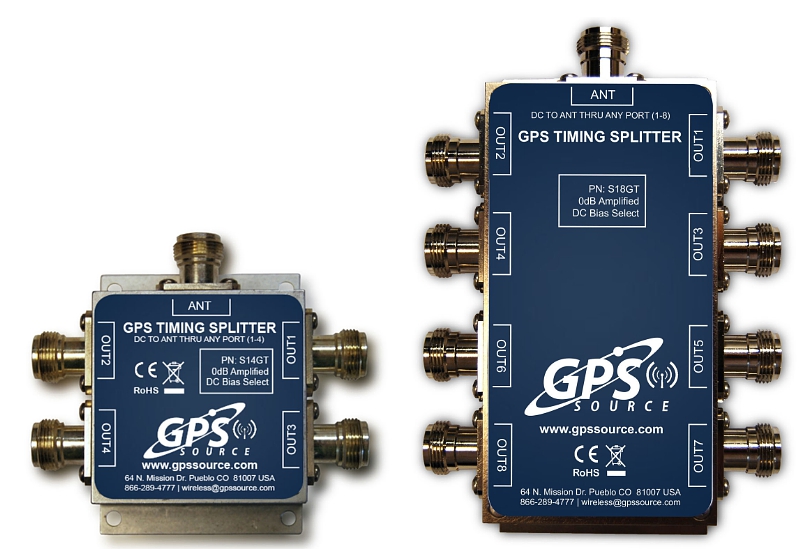
    S14GT & S18GT GPS Splitters for DAS (PRNewsFoto/GPS Source, Inc.)
    GPS Soure is offering the S14GT & S18GT splitters for small cell networks and distributed antenna systems (PRNewsFoto/GPS Source, Inc.)

    GPS Source has released of a line of GPS/GNSS splitters created for the small-cell wireless and distributed antenna system markets. Specifically designed for the L-band frequency, they can eliminate the cost of multiple antennas and long cable runs in wireless installations.

    With four or eight outputs, the new line of GPS/GNSS splitters make it possible to use a single GPS referencing antenna and cable arrangement for multiple synchronized systems. The splitters are available at a low price point and include features such as DC bias select and amplification.

    GPS Source RF signal splitters typically operate in conjunction with an active GPS antenna (a GPS antenna that includes an integrated low noise amplifier). Consequently, a GPS RF signal splitter must have provisions for managing the DC voltage to the active GPS antenna. The S14GT and S18GT will power an external GPS antenna from any of the RF outputs. A “hunt-and-pick” circuit is used to select only one DC input for power should more than one source be connected. Designed for redundancy, if the selected DC bias input should fail, the DC bias will automatically switch to another DC input to ensure an uninterrupted power supply to the active antenna.

    “Distributed antenna systems allow for easy system growth in size and scope of application, whether the system needs to scale to reach new service areas or add bandwidth and capacity,” said Robert Horton of GPS Source. ” This growth has led to a strong demand for cost effective solutions that support GPS synchronization, an area where we are specialists. GPS Source brings leading-edge technologies and addresses major GPS/GNSS challenges faced by carriers and system integrators.”

    The S14GT and S18GT are in production and will be available January 2016. A CE Mark approval from the European Notified Body for these two devices will be available afterward.

  • Oscilloquartz Offers Pluggable Grandmaster Clock and GNSS Receiver

    Oscilloquartz Offers Pluggable Grandmaster Clock and GNSS Receiver

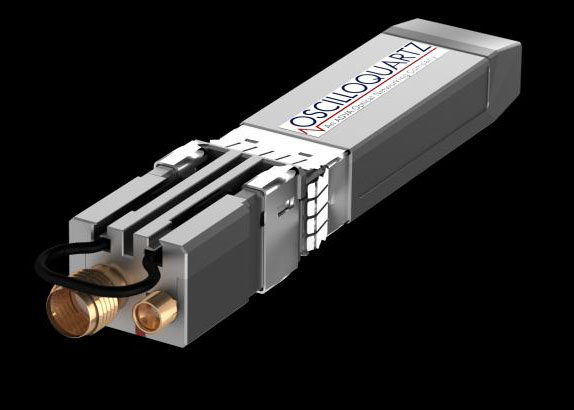
    The OSA 5401 Syncplug by Oscilloquartz.
    The OSA 5401 Syncplug by Oscilloquartz.

    Oscilloquartz, an ADVA Optical Networking company, has launched its OSA 5401 Syncplug, an accurate and efficient small-form-factor pluggable grandmaster clock and GNSS receiver.

    The device has a small footprint and compact design. It complements the existing portfolio of Oscilloquartz products, driving precise IEEE 1588v2 Precision Time Protocol (PTP) frequency and phase synchronization as well as Synchronous Ethernet deeper into access networks, including radio access and small cell networks.

    With its miniature form factor and low-touch provisioning, the new synchronization solution can be deployed in space-restrictive environments. It operates at low cost, consumes minimal energy and requires no additional power source or real estate, Oscilloquartz said.

    The OSA 5401 Syncplug supports the creation of a new time distribution architecture to meet the stringent phase-synchronization requirements of today’s access networks, the company said.

    “In terms of efficiency, precision and density of design, our OSA 5401 Syncplug miniature grandmaster is a major development for our industry,” said Kenneth Hann, senior director, R&D, Oscilloquartz. “It’s possibly the world’s smallest grandmaster clock and yet it generates phenomenally precise PTP frequency and phase synchronization for radio access and small cell networks. Now network operators have a cost-effective migration path for deploying robust phase and frequency synchronization deeper into access networks. Our OSA 5401 Syncplug integrates with existing network elements and its small form factor and rich feature set enable a versatile range of deployment options for enhanced synchronization network performance. Its timing-optimized, dual-frequency GNSS receiver achieves excellent performance even in urban canyons where small-cell deployments are often made and it can also work with a single satellite.”

    The OSA 5401 Syncplug is the first new product to be jointly engineered by Oscilloquartz and members of the recently acquired Time4 Systems. It easily conforms to all relevant PTP telecom profiles and, when locked to global navigation systems, meets the stringent requirements of G.8272 and G.811 specifications. The device functions as a Synchronous Ethernet source, GNSS receiver and a grandmaster clock. It can support both Layer 2 and Layer 3 PTP transport and is capable of unicasting and multicasting simultaneously. Advanced design and network redundancy techniques provide resiliency against local GNSS jamming. It also boasts an impressively wide operational temperature range of -40 to 85 Celsius. But the key benefits that the OSA 5401 Syncplug provides are space and energy efficiency for significant savings in installation and engineering costs. It also fully complies with multi-source agreements for total interoperability.

    “An enormous amount of expertise and passion has gone into designing this device. It’s been driven by our strategic understanding of what’s most needed in the synchronization space,” said Gil Biran, general manager, Oscilloquartz.

    “This first member of our miniature sync product family has already won great feedback from major mobile operators. What makes our ultra-compact OSA 5401 Syncplug so special is that it combines small size with high performance,” Biran said. “Make no mistake, there’s a vast amount of advanced functionality squeezed into this device. That’s what enables it to deliver highly accurate timing distribution with the smallest available footprint. This level of agility and efficiency creates a new range of solutions for service providers to deploy phase synchronization even in the most difficult network scenarios. There’s no doubt that this is an exciting time for network synchronization technology and this new product will extend our position in the market as a one-stop shop for all synchronization solutions. The new generation of mobile networks demands more small cells and a higher density of radio heads and we’re addressing this challenge in the most energy-efficient and cost-effective way possible.”

    Watch ADVA Optical Networking’s latest video on assisted partial timing support for more information.

  • MWC 2015: RAD Demonstrates IEEE 1588 Grandmaster

    RAD-grandmaster-MiCLK
    Photo: RAD

    Telecom company RAD will be expanding the timing synchronization capabilities of its Service Assured Access (SAA) solution when it introduces MiCLK, an IEEE 1588 grandmaster clock with a built-in GNSS receiver.The grandmaster clock is SFP-based (small form-factor pluggable).

    RAD is demonstrating the MiCLK at Mobile World Congress 2015, being held this week in Barcelona, Spain.

    “LTE and LTE-A’s stringent synchronization requirements and the growing use of small cells in 4G networks create synchronization challenges in the backhaul segment, but existing solutions are either too expensive or do not provide full network coverage,” said Ulik Broida, RAD’s vice president of marketing and business development. “With the revolutionary MiCLK, RAD makes it easy to upgrade existing backhaul networks to support LTE-A at an affordable price.”

    Many network operators prefer to use IEEE 1588-2008 (also known as Precision Time Protocol, or PTP) and synchronous ethernet to deliver accurate frequency and time throughout 4G backhaul networks. They are reluctant to install GNSS at every cell site because of practical and cost reasons, as well as concern about possible GNSS jamming and spoofing. However, accurate time distribution requires every network element between the time reference — the grandmaster — and the cell site to support IEEE 1588. This could be an expensive and complex endeavor when the grandmaster is located in a central PoP. “MiCLK allows network operators to avoid costly upgrades by bringing the grandmaster to the base station,” said Broida.

    RAD’s patent-pending MiCLK is a miniature pluggable device that responds to the needs of next-generation cellular backhaul networks, the company said. Its SFP design allows simple installation to upgrades any network device with a fully featured IEEE 1588 grandmaster, including a GNSS receiver and various redundancy options to sustain its operation in case of GNSS failure, RAD said.

    “Easily installed with minimal technical intervention, MiCLK is a versatile add-on anywhere in the network,” Broida concludes. “It is a valuable addition to mobile equipment vendor portfolios, and an ideal solution for 4G service providers in search of a quick, cost-effective way to bring accurate synchronization to small cell backhaul.”

    RAD  is exhibiting at Hall 2, Stand 2D50 at Mobile World Congress.


  • Microsemi GNSS Master Solves Small-Cell Synchronization Issue

    Microsemi-IGM-Solution-WMicrosemi Corporation is offering a new Integrated GNSS Master (IGM) solution for small-cell synchronization. The IGM is the company’s first solution that fully integrates a 1588v2 PTP grandmaster with a GNSS receiver and antenna in a small, fully contained package, designed to mount indoors.

    The Microsemi IGM solves the challenge of indoor synchronization, which has been a significant hurdle for cost-effective small cell indoor deployments.

    According to the Small Cell Forum, 80 percent of small cell needs are for indoor use. Microsemi expects the company’s new IGM to revolutionize indoor small cell deployments by eliminating the need for an antenna on the rooftop along with expensive power, cabling and installation costs associated with connecting the GNSS antenna to the 1588 grandmaster in a typical small-cell deployment.

    IGR reports that the cost to deploy a small cell is approximately $31,000 on average and much higher than the cost of the small cell itself. Similarly, the cost of deploying a GPS antenna on a roof is typically $15,000 to $25,000 and can go up to $60,000 in high-rise buildings, in addition to the roof rental expense on a yearly basis.

    The Microsemi IGM eliminates the need for an outdoor antenna and therefore significantly reduces the purchase, installation and maintenance deployment costs for typical GNSS antenna systems. The sensitive GNSS receiver and patented Microsemi timing algorithms result in an indoor GNSS timing solution that can be deployed in many different indoor environments.

    The IGM uses Power-over-Ethernet (PoE) to simplify installation by utilizing standard Ethernet within a facility and requires no more than 12.95 watts of power directly from the Ethernet cable. The IGM is mounted on the wall or ceiling, connected to the network via PoE, and the unit will automatically self-configure, lock to GNSS signals and provide precise frequency and phase with its 1588v2 PTP grandmaster needed for small cell operation.

    Microsemi-IGM-diagram-W

    “The IGM product introduction is a continued commitment from Microsemi to address market and customer challenges in timing and synchronization,” said Eric Colard, director of marketing and business development for Microsemi’s Frequency & Time Division. “The IGM solution complements our flagship timing products and will work with them in tandem to provide a truly end-to-end timing and synchronization solution.”

    “Deploying small cells indoor to provide better coverage and enhance capacity is becoming a priority for operators,” said Richard Webb, Analyst, Mobile Backhaul, at Infonetics, recently acquired by IHS. “The challenge of tight synchronization requirements for LTE has been difficult to solve; Microsemi’s IGM innovative solution enables mobile operators to precisely synchronize small cells indoor and lower deployment costs.”

    “The time is right for such an innovative and disruptive solution as IGM from Microsemi,” said Earl Lum, president, EJL Wireless Research. “Since Small Cells for indoor are now being readily deployed, Microsemi solves a critical cost issue and technical challenge operators are facing. The compact form factor, plug and play capability, and scalable client support of the IGM product hits the sweet spot for indoor small cell projects.”