As manufacturers convert machines and appliances into remotely controllable objects (the Internet of Things), the potential for spoofing expands, perhaps exponentially. Hackers could interfere with the data supplied to autonomous cars or tracks, remotely forcing them to crash.
Although the dangers of GPS spoofing have been pointedly discussed in may technical papers and articles in GPS World since the early 2000s, manufacturers have not devoted much attention to them because there weren’t many devices making use of location-based technologies, according to associate professor Dinesh Manandhar of the University of Tokyo.
With the proliferation of GPS-capable smartphones and other networked devices, “anyone can become a target of the attack,” Manandhar told the Japan Times in a recent interview.
“Too many things today use GPS as a reliable source of location information,” Manandhar said. “People trust the location information from GPS satellites like God. When PCs became common for many people, the sudden outbreak of computer viruses became an issue around the world, and anti-virus software become an essential tool for everyone to protect their data,” he added. “The same thing is now happening around GPS. We need a system to fight back against the risk.”
Manandhar cited some possible examples of spoofing, both by consumers — “You can falsify your smartphone’s information and make it look like you are going back and forth between Tokyo and Hawaii within just three minutes,” and by sophisticated criminals. “Let’s say I were a top manager of a major bank. I could access all the information while sitting at my desk, but I wouldn’t be able to access it from the room next to it. But people could get access to such information if they disguised the location information received by computer.”
Manandhar and many other researchers around the world are developing and testing anti-spoofing techniques, but it is a long step from demonstrated results to integration into products reaching market. “The products we are designing today are ones that we will use five years later. So we must assume the possible risks and prepare for the threats that might jeopardize our society in the future.”
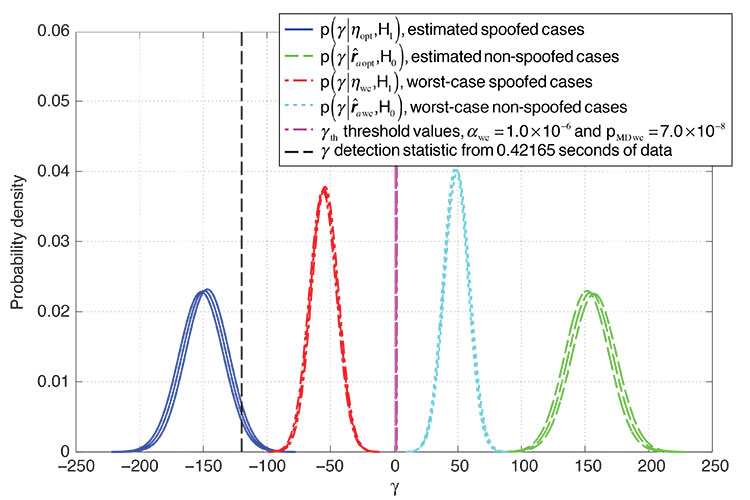
Manandhar co-authored the article “Opening Up Indoors: Japan’s Indoor Messaging System, IMES” in the May 2011 issue of GPS World. The graphic heading this news story is drawn from “GNSS Spoofing Detection: Correlating Carrier Phase with Rapid Antenna Motion,” the Innovation column in the June 2013 issue.