Tag: sports

  • Turf Tank releases Turf Tank Two

    Turf Tank releases Turf Tank Two


    Image: Turf Tank
    Image: Turf Tank

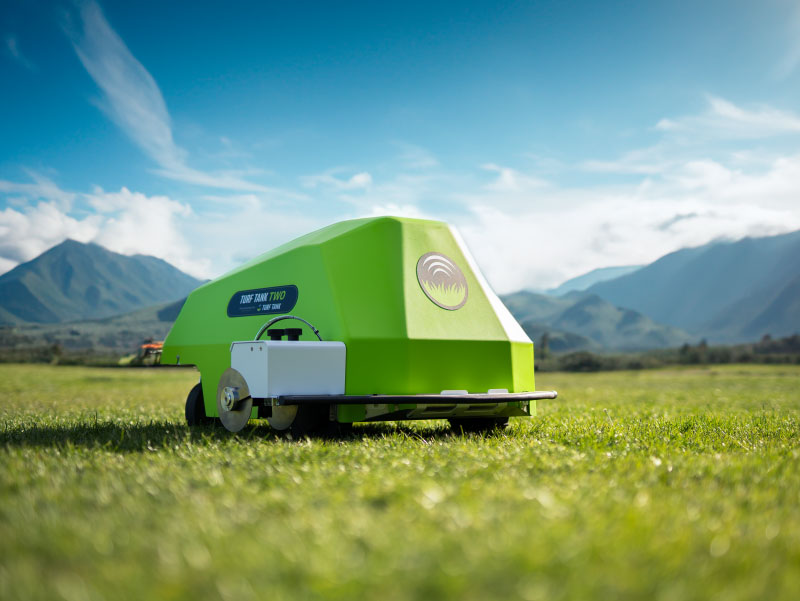
    Turf Tank — inventor of an autonomous, GPS-guided line marking robot, built and designed specifically for painting athletic fields — has released the Turf Tank Two.

    This robot features dual motor drives for enhanced torque and optimized wheels for traction. On its own and controlled through a tablet, the Turf Tank Two can paint a regulation 11 versus 11 soccer field in less than 24 minutes, a baseball or softball field in less than 11 minutes, a lacrosse field in less than 26 minutes, and a full 100-yard football field in less than 3.5 hours. It can also paint logos and numbers.

    The Turf Tank Two is 43 in x 33 in x 22.5 in. It weighs 123 lbs, without paint or the battery installed, and it can hold 5.5 gallons of paint.

    Enhanced features of the Turf Tank Two also include a revamped sprayer module and advanced control features — including a redesigned front panel that has convenient pause/resume options with LED indicators displaying the robot’s status and a start/stop sprayer button. An LED indicator also comes on the battery.

    Turf Tank Two is both eco- and environmentally friendly, the company says. Its batteries are rechargeable and because of the robot’s precision and accuracy, it uses significantly less paint and eliminates the overspray that is common with either painting by hand or using many of the older paint machines and sprayers in the market.

    Guided by GPS, the Turf Tank Two uses a base station to ensure its accuracy. The base station becomes a fixed point from which the robot knows to paint the same exact field every time it is dispatched. The base station communicates with satellites to ensure the accuracy of the field dimensions.

    Once the user installs a particular field layout, it becomes a simple drag and drop process through the tablet. From there, it’s as simple as setting one to four points on each field to give the robot a starting point, and then the robot will paint that field autonomously.
  • TinyMobileRobots enters the field painting game with TinyLineMarker

    Photo:
    Image: TinyMobileRobots

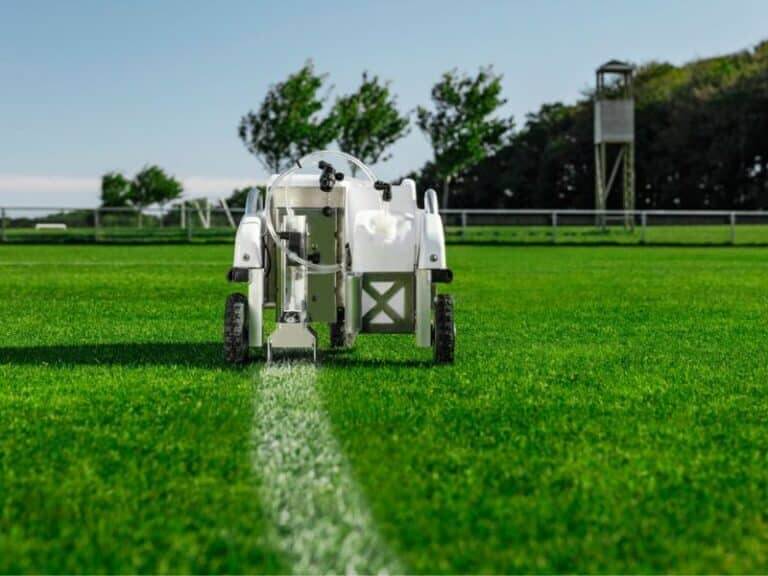
    TinyMobileRobots’ has introduced TinyLineMarker to the field painting market. TinyLineMarker is designed to accurately paint field lines in stadiums using GPS technology.

    In addition to GPS signals, the robot receives corrections signals from an RTK network in order to accurately trace the markers onto the field. Even if the GPS signal is disrupted, the numerous RTK network reference stations make it possible for the robot to correct its position and continue painting.

    As TinyLineMarker is compatible with handheld tablets, the robot will begin painting in accordance with the markers when it is started from a tablet. Once the robot completes a line marking job, the line pattern can be saved to the cloud and saved for future use. Line patterns can also be updated or changed from a tablet as needed.

  • STATSports, Taoglas hit the field with GNSS trackers

    STATSports, Taoglas hit the field with GNSS trackers

    The Apex tracker has Taoglas inside. (Photo: STATSports)

    When the world’s best athletes take the field, many are equipped with a GPS-based performance monitor that tracks a wealth of data. By monitoring in real time the players’ actions, professional sports teams can collect and analyze data that gives them an edge over the competition.

    STATSports is a provider of GPS player tracking and analysis solutions for some of the biggest sports franchises in the world. Teams in the English Premier League, La Liga, National Football League, National Basketball Association and other leagues rely on STATSports to help them improve performance and strategy, and reduce injuries.

    Tracking Key Metrics. STATSports’ Apex System includes the Apex Pod and Apex Software. The Apex Pod is an ergonomically designed unit that curves to fit players’ backs. The pod is inserted into a specially designed vest or base layer.

    It tracks a variety of metrics, including a player’s total distance, speed, accelerations, decelerations, heart rate, fatigue level and other variables that teams can use in real time or alongside post-game reviews. The data is processed through Apex Software, which creates reports and visual tracking mechanisms to compare players, track players over time and provide metrics personalized for each team.

    A tablet app gives coaches portable functionality. (Photo: STATSports)

    Apex Live Streaming uses multiple channels and synchronized mesh networking to deliver data streams from players to Apex Software for analysis. Apex delivers GPS speed and positional data; heart-rate variability; and digital compass, gyroscopic and accelerometer data. It transmits half a million numbers every minute during training and games for a squad of more than 30 players.

    Accurate Antenna

    In devices so small and sensitive, antennas can be the most common point of failure in the communications chain, said Dermot O’Shea, co-CEO of Taoglas. STATSports evaluated several antenna options before selecting Taoglas.

    Taoglas’ 25×25-mm AGGBP.25B is a two-stage 28-dB active GPS patch antenna module that provides positional accuracy in a small form factor.

    With a few dozen players and coaches on the field in training and at games, highly accurate positioning is critical. Players move quickly and are often clustered around a ball, making it difficult to accurately track player movement. STATSports required location accuracy within 1 meter, precision that
    Taoglas delivered.

    The LA Galaxy team uses STATSports. (Photo: LA Galaxy)

    Because the STATSports technology captures data in real time, teams can make real-time tactical and strategic decisions and adjustments instead of waiting for post-game analysis.

    However, with that many antennas and transmissions in close proximity, interference can be an issue. Taoglas’ solution includes a front-end surface acoustic wave (SAW) filter in front of the two-stage low noise amplifier (LNA) to reduce out-of-band noise, such as signals from nearby cellular transceivers.

    The real-time nature of STATSports’ solution means the company also requires a condensed time to first fix — when the devices are turned on, STATSports needs them to register a signal quickly and begin to receive data. The Taoglas antenna is ready within 30 seconds of powering on.

    STATSports’ proximity to Taoglas’ Wexford, Ireland, headquarters and development labs means the teams can collaborate on new functionality as STATSports develops increasingly advanced performance-tracking solutions.

  • Kika M2M Launches Theft AL3RT for Polaris eBikes

    Kika M2M Launches Theft AL3RT for Polaris eBikes

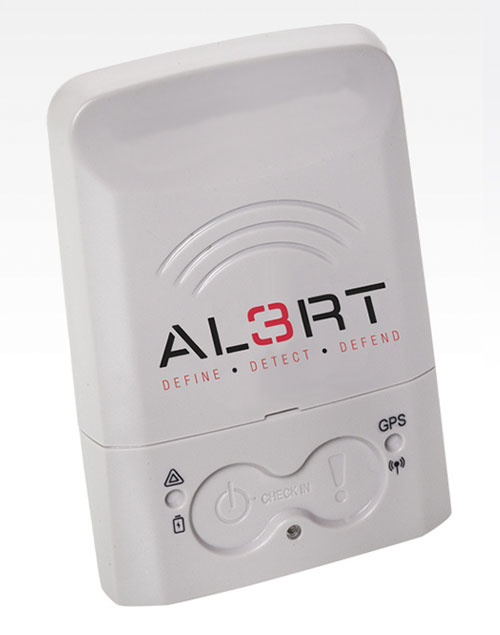
    The AL3RT asset tracker is designed for the power sports industry and runs on the AT&T network.
    The AL3RT asset tracker is designed for the power sports industry and runs on the AT&T network.

    Kika Enterprises announced at CTIA Super Mobility this week that its AL3RT asset protection unit will be available as an accessory for Polaris electric bikes worldwide, beginning January 2016. The AL3RT trackers will be sold at sports dealerships in the United States.

    Powered by AT&T, AL3RT is a stand-alone, customizable asset locator and fleet management tool designed for theft protection of on- and off-road vehicles, motorcycles, snowmobiles and personal watercraft.

    AL3RT customer benefits include: real-time location alerts, anti-theft alerts, accident panic alerts, historical location data, coverage in locations around the globe, long battery life (up to seven days) and a water- and dust-proof housing. The product line will also include several accessories, such as a multi-use cradle for easy mounting and Bluetooth multi-sensors that can be programmed individually.

    Supported by GPS, GSM, Wi-Fi and Bluetooth technologies, users can use their AL3RT smartphone app to locate their asset, as well as arm and disarm sensors and configure geofences virtually anywhere in the world. AL3RT can be configured to send individual or group alerts via email or SMS.

    “We are excited about the launch of the AL3RT, because it represents the first true anti-theft alert solution designed for the power sports industry,” commented Ricardo Salguero, president of Kika M2M. “The AL3RT offers superior features, reliability and AT&T connectivity, making it a tremendous extension of our growing line of customizable M2M solutions. This addition truly positions Kika M2M uniquely in the market with a broad range of proprietary M2M solutions for the power sports industry.”

    Kika M2M will showcase the AL3RT at CTIA Super Mobility, taking place Sept. 9-11 in Las Vegas, as a part of AT&T’s Booth #3724.

  • Expert Advice: Get Sporty

    Expert Advice: Get Sporty

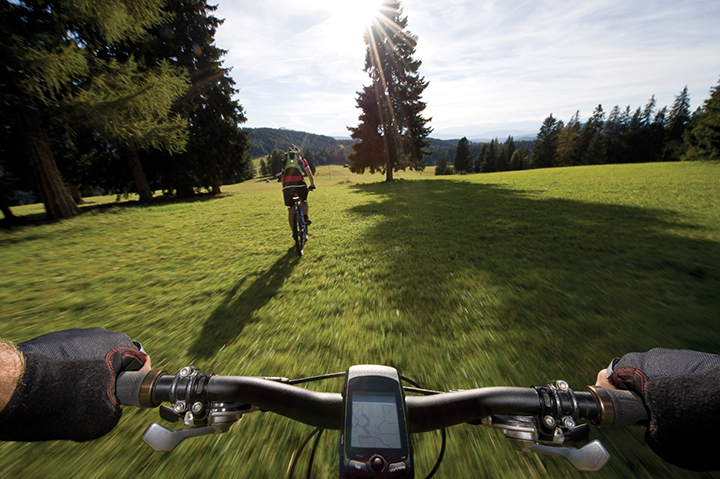
    mountain bikers, with navigation device

    By Mark Sampson

    In recent years, the sporting world has seen an explosion in the use of GPS. You will rarely spot a runner or cyclist on the road without either a smartphone strapped to their arm or a dedicated GPS device clamped to their handlebars, tracking their every move.

    The amount of information that the modern sportsperson — from casual amateur to full-time professional — logs, analyzes, and shares is phenomenal. There are now dozens of ways of uploading data for the whole world to share and study.

    As more manufacturers come to this market with the hope of capturing a share of it, they face the challenge of effectively developing and then testing their devices. Among many factors to consider, new products must have capability for local constellations such as BeiDou, GLONASS, and QZSS, not just GPS alone. New market entrants won’t have the same budget as the established big players, and constantly traveling to China or Japan to try out a new gadget will escalate costs to an unsustainable degree.

    Then there’s the issue of getting out into the kind of environment in which you imagine your new sporting GPS device will be put to use. In many cases this will be remote: forests, hills, and mountains. Stepping outside to the office car park does not constitute a sufficient test for satellite acquisition and retention. Neither does simply driving the commute route home with it.

    A GPS simulator or replay device allows for bench testing, but such devices are expensive. They might not actually fulfill your testing requirements, either: a traditional GPS simulator outputs its scenarios based on constellation modeling, either as a perfect signal or one that has simulated multipath. But you need to genuinely know how your new product will operate through, say, a forest on a downhill mountain bike run, or during a city marathon through urban canyons, or on a trail under wet trees. Adventure sport participants want to record their achievements wherever they go.

    How do you obtain this kind of realistic scenario? It will require the use of a GNSS recorder, and in an ideal world you would lend it to someone who actually does some of this stuff. Perhaps one of your colleagues is an (insane) downhill skier — who better to capture exactly that type of data, which you can replay back in a nice warm lab?

    The trouble is that a person of this sporting ilk will be unwilling or unable to carry bulky equipment that weighs several kilos. It will slow them down, so a GNSS recorder that can be easily carried without affecting the sporting activity is essential. It has to be easy to use: self-contained, with a battery that will last a couple of hours, and with one big button to start and stop recording. The user shouldn’t need any training in its operation. And ideally, it won’t need a large ground-plane antenna to capture usable data; a well-designed unit will employ a sensitive GPS engine allowing for as complete a signal as possible to be logged through a standard passive antenna.

    Looking further afield, other industries will soon be seeking a device with this level of convenience. For instance, agricultural and automotive manufacturers want the ability to send test engineers out to record drive-cycle tests easily and in a variety of vehicles. Additional features, such as controlled area network (CAN) and inertial sensor logging, synchronized with the GNSS data, will also find favor.

    The nature of the simulation market is changing: increasing numbers of developers need not just a traditional constellation simulator, but rather a replay device that is feature-rich and that doesn’t cost the earth.
    Economies of scale will likely dictate the way that this develops, and GNSS simulation will no longer be the specialist and exclusive field it once was.


    Mark Sampson is the LabSat product manager for  RaceLogic, based in Buckingham, UK.

  • Tallysman Wireless Wideband Dual-Feed GPS L1/GLONASS/ Galileo Antennas

    Press-Release-Tallysman-TW4421_TW1421-W
    Photo: Tallysman

    Tallysman Wireless announces the TW4421 and TW1421 antennas, which offer a step forward in performance for small GNSS antennas, the company said.

    The TW4421 is a low-cost dual-feed magnetic mount antenna covering the GPS L1, GLONASS L1, Galileo and SBAS (WAAS, EGNOS & MSAS) frequency band (1574 to 1606 MHz). The TW4421 features a 25-millimeter dual-feed wideband patch element that provides excellent multipath rejection with a more linear carrier phase response, by virtue of a low axial ratio across the full frequency bandwidth, Tallysman said. It is especially suitable for high accuracy applications, and also offers high out-of-band signal rejection.

    The TW4421 is housed in a compact IP67 magnetic mount enclosure and is available with a wide range of connector options.

    The TW1421 embedded antenna is lightweight (30 gm) and features a very small footprint (35 mm diameter x 7.25 mm). The TW1421 is suited for use in applications where performance and small size are of paramount importance, such as extreme-sport-wearable tracking devices and UAVs.

    “Most small low-cost GPS/GLONASS/Galileo antennas are narrow-band devices with an elliptically polarized response at the GPS and GLONASS frequencies,” said Gyles Panther CEO of Tallysman Wireless. “The TW4421/1421 antennas feature a 40-percent wider bandwidth patch, with a dual-feed structure, which provides unparalleled multipath rejection previously only available in much larger, more expensive antennas.”

  • GPS-Enabled Sports Watch

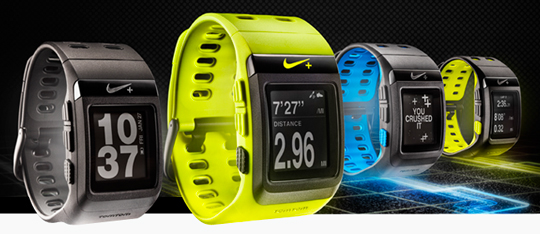
    TomTom and Nike have unveiled a new range of the Nike+ Sportwatch, coinciding with the launch of a brand new Nike+ website. The range includes several editions and color combinations, and introduces a starter product for those new to running.

    Whether they own an original or new edition, all Nike+ Sportwatch users can now access Nike’s intelligent measure of athletic ability, Nikefuel. This converts a runner’s mileage into universal units that measure movements in a wide variety of different sports. As a result, it’s easy for people to compare their performance against that of athletes in other sports, and share their achievements with friends, the companies said.

    “Our extended range of products will be very useful to those adding running into their exercise regime. And the new NikeFuel measurement brings added motivation, allowing people to share and compare their performance with friends in other sports,” says Corinne Vigreux, managing director, TomTom.

    The new Nike+ Sportwatch colors have been chosen to match Nike’s apparel and shoe ranges. They include black/anthracite, anthracite/blue glow, and high-impact volt green. The anthracite/blue glow edition is available as a starter product, priced at €149.

  • TomTom and Nike Launch New Range of the Nike+ Sportwatch

    TomTom and Nike Launch New Range of the Nike+ Sportwatch

    Photo: Nike

    TomTom and Nike today unveil a new range of the Nike+ Sportwatch, coinciding with the launch of a brand new Nike+ website www.nikeplus.com. The range includes several editions and color combinations, and introduces a starter product for those new to running.

    Whether they own an original or new edition, all Nike+ Sportwatch users can now access Nike’s intelligent measure of athletic ability, Nikefuel. This converts a runner’s mileage into universal units that measure movements in a wide variety of different sports. As a result, it’s easy for people to compare their performance against that of athletes in other sports, and share their achievements with friends, the companies said.

    “Our extended range of products will be very useful to those adding running into their exercise regime. And the new NikeFuel measurement brings added motivation, allowing people to share and compare their performance with friends in other sports,” says Corinne Vigreux, managing director, TomTom.

    The new Nike+ Sportwatch colors have been chosen to match Nike’s apparel and shoe ranges. They include black/anthracite, anthracite/blue glow, and high-impact volt green. The anthracite/blue glow edition is available as a starter product, priced at €149.