Tag: StickNTrack

  • ESNC winner Sensolus keeps Antarctic scientists safe

    Scientists will now wear safety trackers from a Belgium start-up company while working in Antarctica.

    Antarctica is the coldest, windiest and harshest location on Earth. Temperatures can reach –90°C during winter and go down to –20ºC during summer. Winds can reach 250 km/h and visibility can sink to almost zero during whiteouts. With the potential for rapid changes in weather, all outdoor activities must always be done with the greatest care.

    Carrying a SticknTrack location tracker in the pocket from Sensolus, a start-up company from ESA’s Business Incubation Centre in Flanders, will help to keep the researchers safe. The same sensors will also be used to track skidoos, sledges and other equipment used.

    StickNTrack’s developers took third place in the 2014 European Satellite Navigation Competition (ESNC), after taking first in the Flanders regional competition. It also won the European Space Agency’s Innovation Award. The product debuted in August 2015.

    The Belgian Polar Secretariat, Sigfox and Sensolus announced an agreement in January to connect the 2016 Belgian Antarctic Research Expedition to the global Sigfox Internet of Things network.

    “This partnership will allow us to test technology that could be useful for the safety of our operations in Antarctica,” said Rachid Touzani, director of the Belgian Polar Secretariat.

    The expedition includes specialists in glaciology, climatology and geomorphology in charge of various Belgian and international scientific projects. They are hosted at Belgium’s Princess Elisabeth Research Station, 200 kilometers inland in the 2.7 million square kilometers region of Antarctica known as Queen Maud Land.

    The station — designed, built and operated by the International Polar Foundation — is the first polar base that combines eco-friendly construction materials, clean and efficient energy use, optimization of the station’s energy consumption and clever waste management. It can support up to 40 people during the brief Antarctic summer of November to February.

    The team members will work within 40 kilometers of the base and, for the first, 45 GPS-based Sensolus trackers connected to the Sigfox network will allow realtime tracking of their movements, in the often-extreme weather conditions.

    Sigfox ultra-narrow-band communications will secure the link to two antennas at the base station. The information will also be sent to Belgium.

    “Having our extremely battery-efficient StickNTrack GPS trackers at the Princess Elisabeth station is very exciting,” said Sensolus CEO Kristoff van Rattinghe. “We strongly believe that sustaining missions like this is the kind of real innovation we can achieve with the Internet of Things. And this is only possible through strong collaborations like the one set up for this mission.”

    The first results on the contribution of the Sensolus and Sigfox technology to the expedition will be released in March.
  • The Business — August 2015

    The Business section from the August 2015 issue. Download the PDF.

    Includes:

    • Next-Generation Tracker Debuts
    • QinetiQ’s New GNSS Receiver Ready for Galileo PRS
    • Spectra Precision Offers Flexible GNSS Receiver for Surveyors
    • Briefs
    • Events
  • Next-Generation Tracker Debuts

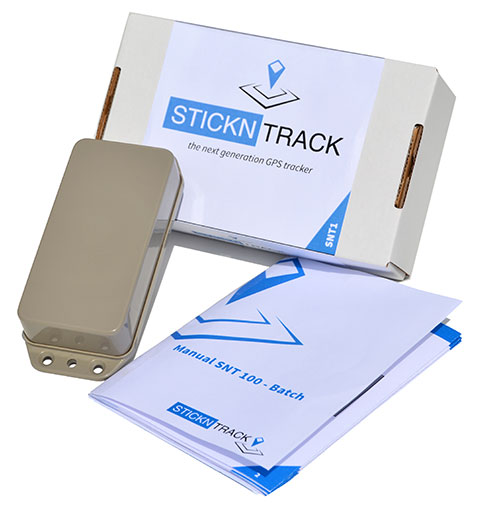
    Photo: StickNTrackStickNTrack — an award-winning low-power tracker from Sensolus — is now active in eight European countries.

    StickNTrack guards and tracks position, journeys, motion and status of any non-powered asset without the hassle of charging batteries, managing SIM cards or an intrusive installation, Sensolus said.

    StickNTrack’s web-based service platform is tailored for low-power asset tracking communicating over the French-based Sigfox. Because Sigfox is an ultra low-power communication network, it significantly reduces StickNTrack’s power needs so that it consumes up to 40 times less power and lowers life-cycle costs by 50 percent compared to existing compact GPRS/GPS products, Sensolus said.

    The tracker’s power can last up to five years. In the third quarter, an upgraded version will be released with extended battery lifetime up to nine years, according to Kristoff Van Rattinghe, who developed StickNTrack along with Laurence Claeys, Johan Criel and Koen Van Vlaenderen.

    Users can access the StickNTrack web portal with any smartphone running Android OS or iOS. The full feature set can be accessed on a tablet or laptop. Features include interactive timelines, intuitive geofencing, email alerting and optimized energy savings.

    The ruggedized, waterproof StickNTrack is 120 x 50 x 25 millimeters and weighs 255 grams. It can track assets on the water, such as yachts or buoys, providing automated logbooks, alerting users when assets enter or exit specific zones (such as harbors), and providing real-time journey information for those at home.

    StickNTrack’s developers took third place in the 2014 European Satellite Navigation Competition, after taking first in the Flanders regional competition. It also won the European Space Agency’s Innovation Award.

    Dubbed a “distruptive innovation” by the European Satellite Navigation Competition (ESNC), StickNTrack “opens up an abundance of new business opportunities in tracking trailers, containers, machinery, tools, bikes and more. Future accuracy and availability improvements based on GNSS will trigger additional advancements, such as by automating supply chains for packages and their delivery. Ultimately, stickNtrack is a next-generation location tracker that significantly lowers the barriers to embedding even more GNSS technology into our daily lives.”

    “Every day new types of non-powered assets are being connected to our service platform,” Van Rattinghe said. In the coming years, Sigfox aims to provide global coverage.