Tag: summer school

  • Registration opens for 2019 ESA-JRC Summer School

    Registration opens for 2019 ESA-JRC Summer School

    Registration is now open for the ESA-JRC International Summer School on GNSS 2019. The summer school will take place July 15-26 in Vila Nova de Cerveira, Portugal.

    The program is open to graduate students (with a first university degree), Ph.D. candidates, early-stage researchers and young professionals willing to broaden their knowledge. The 50 available seats will be given on a first-come, first-served basis.

    The mission of the ESA-JRC International Summer School on GNSS is to provide the attendees with a comprehensive overview of satellite navigation. Extensive lab work will provide attendees with hands-on learning opportunities.

    Topics covered include:

    • Basics of satellite navigation
    • Carrier-phase positioning
    • GNSS RF link performance
    • Ionospheric and tropospheric effects on GNSS
    • and more

    The summer school’s objective is to provide attendees with a comprehensive overview on satellite navigation, starting from the GNSS system, its signals, the processing of the observations in a receiver and finally determining the position-navigation-time (PNT) solution.

    Lectures on intellectual property rights (IPR) and patents, as well as on business aspects, will be given. The future of satellite systems will also be discussed.

    The main emphasis will be on the development of a group project using innovative ideas and covering all aspects, from the initial concept, to a business plan, its technical realization and marketing of the product or service.

    Internationally renowned scientists and specialists will give lectures as well as practical exercises and lab work.

    The full program is available here.
  • GNSS Summer School slated for July

    The annual ESA/JRC International Summer School on GNSS will take place July 16-27 in Loipersdorf, Austria. The early registration discount ends May 15.

    The 10-day school will cover all aspects of satellite navigation, up to and including the creation of a satnav-based business. It is open to graduate students, Ph.D.s and postdoctoral researchers, as well as young engineers and academics working within industry or agencies, aged 35 or younger.

    The number of participants is limited to 50, on a first-come, first-served basis.

    Internationally renowned scientists and specialists will be giving lectures as well as overseeing practical exercises and lab work.

    Participants will receive a full-spectrum overview of satellite navigation, starting from the theoretical basis of Global Navigation Satellite Systems, their signals, the processing performed by signal receivers and how the position-navigation-time solution is worked out.

    Also discussed will be threats to the satnav systems, such as spoofing or jamming, and countermeasures available against them, along with back-up navigation solutions for a GNSS-denied environment.

    Practical exercises will include receiving the various satnav constellations now in orbit — including Europe’s Galileo — to give course members direct, hands-on experience.

    In addition, lectures will cover business aspects, including patents and intellectual property rights.

    The main emphasis of the course will be the development of a group business project, building on an innovative idea to take in the planning of the product or service, its technical realisation and finally its marketing to customers.

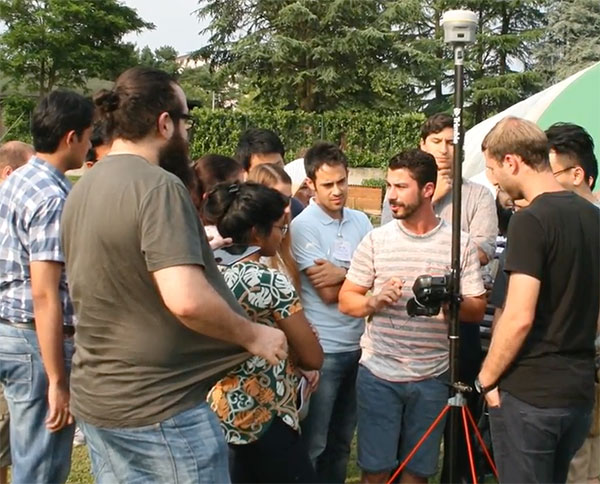
    Image: Summer School
    Image: Summer School

    The school takes place in cooperation with Stanford University in the United States, the Institut Supérieur de l’Aeronautique et de l’Espace ISAE-SUPAERO in Toulouse, France, Graz University of Technology in Austria, and the University FAF Munich in Germany.

    Austria is this year’s host nation, and the summer school is supported by Graz University of Technology and the Austrian Institute of Navigation.

    For more information and to register, visit the summer school website.

  • International GNSS summer school goes to Norway

    The University of the Bundeswehr Muenchen and the Norwegian Space Centre are organizing the International Summer School on Global Satellite Navigation Systems 2017.

    esa-jrc-summer-school-w
    Longyearbyen, Norway.

    This year the Summer School will be held at Longyearbyen, Svalbard – Spitsbergen, Norway, Sept. 4-15. Lectures start the morning of Sept. 5 and end Sept. 14 following dinner.

    The Summer School is open to graduate students, Ph.D. candidates, early-state researcher and young professionals seeking to broaden their knowledge.

    Svalbard is an Arctic wilderness series of islands comprising the northernmost part of the Norwegian territories. It is mostly uninhabited, with only about 3,000 people. Longyearbyen, however, is a living community with an airport, a university, a hospital, schools, shops, restaurants, pubs, hotels, and the world’s largest commercial ground station.

    The summer school will provide key information, fresh ideas, basics, innovative approaches and practical advice on such topics as:

    • Basics of satellite navigation
    • Ionospheric and tropospheric effects on GNSS
    • Carrier-phase positioning
    • GNSS RF link performance
    • GNSS signals
    • GNSS receivers
    • Leadership and team effectiveness
    • GNSS threats and countermeasures
    • Navigation in GNSS denied environments
    • Cyber safety for civilian navigation
    • Become a GNSS entrepreneur
    • Location data and raw measurements in Android
    • IPR and patents in GNSS
    • Liability issues in GNSS
    • Railway high-integrity navigation overlay system (RHINOS)
    • Multi-frequency multi-system GNSS
    • Evolution of GNSS, in particular of the Galileo system
    • Satellite-based augmentation system (SBAS) and receiver autonomous integrity monitoring (RAIM, ARAIM)
    • ECSS standards (phases, reviews, documentation, etc.)
    • GNSS space service volume and deep space navigation

    The summer school will be held in cooperation with the European Space Agency and the Joint Research Centre, as well as, ISAE Supaero, Stanford University and TU Graz.

    Learn more at the school website.

  • ESA to host 2016 Summer School on GNSS at JRC

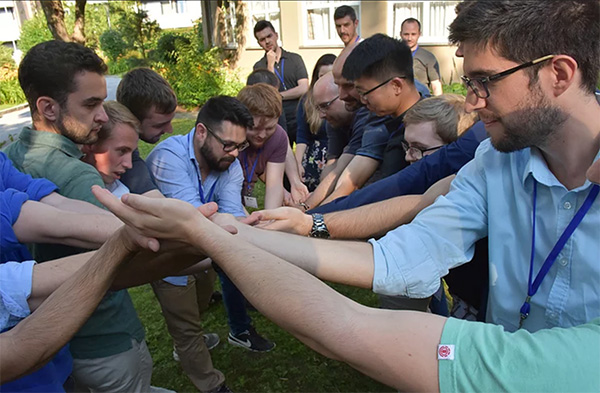
    ESA-summer-school-group-f
    Photo: ESA

    The European Space Agency (ESA) will host its Summer School on GNSS program for students July 18–29 at the European Commission Joint Research Centre (JRC) in Ispra, Varese, Italy.

    The 11-day event is open to graduate students that have studied more than three years; Ph.D. students and postdoctoral researchers younger than 35 years old; and young engineers and professionals in the industry who are less than 35 years old.

    Participants will learn a comprehensive overview of satellite navigation, starting from the GNSS system, its signals, the processing of the observations in a receiver and determining the position-navigation-time solution. They will be able to work hands-on in JRC labs and attend lectures on intellectual property rights, patents, business insights and the future of satellite systems.

    There also will be a comprehensive group project, where participants will use their innovative ideas to develop a product or service and create a business plan, technical realization and marketing of that product or service.

    Lectures, exercises and lab work will be given by internationally renowned scientists and specialists.

  • GNSS Students Sought for ESA Summer School

    Students still have time to join the ESA International Summer School on Global Navigation Satellite Systems, which will take place in Barcelona, Spain, at the end of August.

    The 10-day course — lasting from the afternoon of Aug. 31 to the morning of Sept. 10 — will cover all aspects of satellite navigation, up to and including the creation of a satnav-based business.

    Hosted by the University of Barcelona at the four-star Hotel Alimara, the Summer School is open to graduate students, PhDs and postdoctoral researchers, as well as young engineers and academics working within industry or agencies, aged 35 or younger.

    Internationally renowned scientists and specialists will be giving lectures as well as overseeing practical exercises and lab work. Participants will receive a full-spectrum overview of satellite navigation, starting from the theoretical basis of the Global Navigation Satellite System (GNSS), its signals, the processing performed by signal receivers and how the position-navigation-time solution is worked out.

    Discussion will also be made of threats to satnav systems, such as spoofing or jamming, and the countermeasures available against them, along with back-up navigation solutions for a GNSS-denied environment.

    Practical exercises will include receiving the various satnav constellations now in orbit — including Europe’s eight-satellite Galileo, the foundation of the full system soon to come — to give course members direct, hands-on experience.

    In addition, lectures will cover business aspects, including patents and intellectual property rights.

    The main emphasis of the course will be the development of a group business project, building on an innovative idea to take in the planning of the product or service, its technical realization and finally its marketing to customers.

    Register before the end of May to benefit from an early registration discount. The number of participants is limited to 50, on a first-come, first-served basis.

    The ESA International Summer School is taking place in conjunction with the GNSS Summer School of the Joint Research Centre of the European Commission, and is organized by Universitat Politecnica de Catalunya (UPC) in cooperation with Stanford University in the US, the Institut Supérieur de l’Aeronautique et de l’Espace in France, Graz University of Technology in Austria and University FAF Munich in Germany.


  • ESA International Summer School Set for July

    The ESA Summer School is scheduled for July 21-31, at the Campus of the Technical University of Ostrava, Czech Republic. The school provides attendees with a comprehensive overview of satellite navigation, starting from the various GNSS, the signals, the processing of the observations in a receiver, and finally determining the position-navigation-time (PNT) solution.

    Lab work will be carried out to give attendees hands-on experience. In addition, lectures on Intellectual Property Rights (IPR) and Patents, as well as on business aspects will be provided. The future of satellite systems will also be discussed. The main emphasis will be on the development of a group project using innovative ideas and covering all aspects, from the idea, business plan, and technical realization to the marketing of the product or service.

    The program is open to graduate students (with a first university degree), Ph.D. candidates, early-stage researchers and young professional willing to broaden their knowledge. International renowned scientists and specialists will give the lectures as well as the practical exercises and lab work.

    The following participants can register for the ESA Summer School:

    • Graduate students (more than 3 years studies)
    • Ph.D. students and postdoctoral researchers (< 35 years)
    • Young engineers and professionals from industry and agencies (< 35 years)

    The number of participants is limited to 50. Early registration (reduced rate) is recommended (first come, first serve).

    For more information on the detailed program, and to register, visit the event website.