Tag: surveing

  • GEODNET launches survey-grade GNSS rover GEO-MEASURE

    GEODNET launches survey-grade GNSS rover GEO-MEASURE

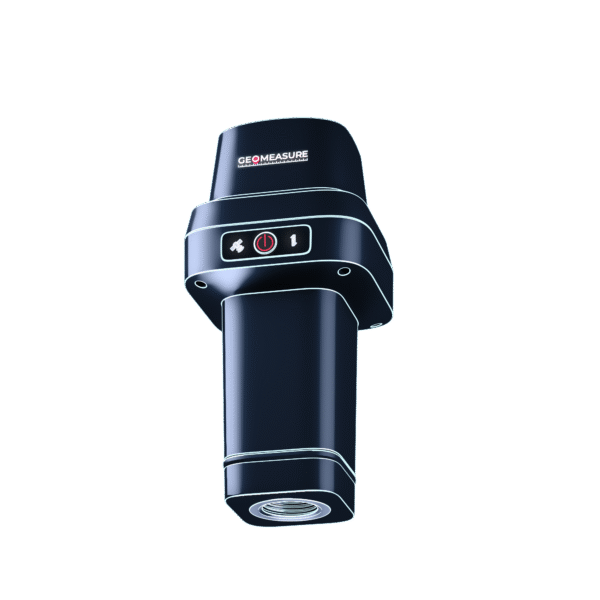
    GEODNET, provider of a decentralized real-time kinematic (RTK) network, has launched GEO-MEASURE, a survey-grade GNSS rover that delivers centimeter-level accuracy at a consumer-accessible price.

    For decades, survey-grade GNSS rovers have been essential tools for precision applications, but high costs and complex configurations have limited access to survey-grade GNSS rovers to large firms and specialized professionals. GEO-MEASURE is an affordable fully equipped RTK rover integrating robust hardware, a dedicated mobile app, and a preloaded RTK corrections service into a single turnkey package.

    GEO-MEASURE is engineered for professional reliability with quad-frequency support across GPS, GLONASS, Galileo and BeiDou, Its 1,040 tracking channels provide resilience under canopy or in urban environments. Its rugged, waterproof housing is built for daily use, while a 24-hour rechargeable battery and USB-C charging make it as convenient as a consumer device while still delivering survey-grade performance.

    Available for both iOS and Android, a free companion app simplifies setup, the company said. Once paired via Bluetooth, users can:

    • visualize survey points on maps
    • capture field notes
    • manage multiple projects
    • export data in standard formats (CSV, KML, GPX, GeoJSON) for integration with GIS platforms, CAD workflows, or drone mission software.

    By making centimeter-level accuracy affordable, accessible and scalable, GEO-MEASURE opens professional-grade GNSS workflows to new audiences in construction, GIS, drone operations, agriculture and environmental monitoring.
  • CHC Navigation introduces i83 IMU-RTK GNSS receiver

    CHC Navigation introduces i83 IMU-RTK GNSS receiver

    Photo: CHCNAV
    Photo: CHCNAV

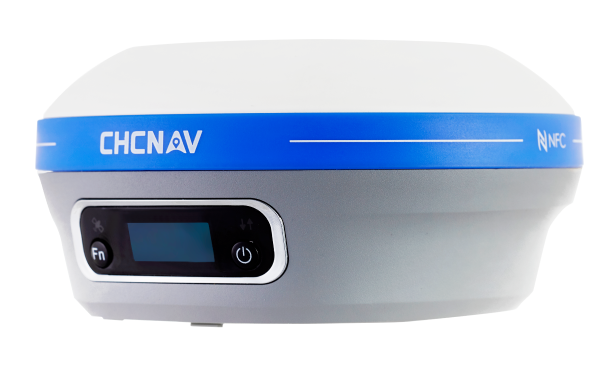
    CHC Navigation (CHCNAV) has announced the availability of the i83 GNSS receiver, an addition to its premium GNSS receiver series for surveying, mapping and construction professionals. The i83 GNSS is powered by a 1408-channel multi-band GNSS receiver, the latest iStar technology, and a calibration-free, high-end inertial measurement unit (IMU) for faster and reliable field GNSS surveying.

    “The i83 receiver combines GNSS and IMU into one single receiver to provide optimal automatic pole-tilt compensation that requires no calibration and is fully immune to magnetic interference. Operators just need to focus on their tasks and no longer need to level their pole vertically,” said Rachel Wang, product manager of CHC Navigation’s Surveying and Engineering Division. “In addition, we designed a high-resolution color display where users can clearly and intuitively get the GNSS receiver status to take full control of their survey operation.”

    The third-generation high-gain antenna with the latest advanced CHCNAV iStar algorithm improves GNSS satellite signal tracking efficiency by more than 30%. The i83 GNSS receiver features 1,408 GNSS channels for high performance across GPS, GLONASS, BeiDou, Galileo and QZSS constellations. Its onboard GNSS technology delivers centimeter-level positioning, maintains reliable fixed real-time kinematic (RTK) accuracy, and collects points faster than previous models, even in demanding conditions.

    Automatic compensation for pole tilt

    The i83 receiver’s built-in IMU automatically compensates for pole tilt, increasing surveying, engineering and mapping efficiency by 30% over conventional GNSS RTK surveying methods. In less than 5 seconds, the 200-Hz inertial module is initialized to ensure survey-grade accuracy over a pole tilt range of up to 30 degrees. Productivity is dramatically increased, RTK usability greatly improved, and potential human error reduced, whether you are an engineer, site foreman or surveyor.

    Integrated Wi-Fi, Bluetooth and near-field communication (NFC) modules provide seamless connection to field data controllers or tablets. Integrated 4G and UHF modems enable any GNSS survey mode, from RTK network NTRIP connections to UHF base-rover configurations. GNSS RTK corrections can be accessed or broadcast continuously for accurate positioning in all circumstances.

    Users do not need to carry backup or external batteries in the field because of the i83 GNSS’ ultra-low-power system-on-chip (SoC) electronic design and smart power management. The i83 GNSS can operate for up to 18 hours as a GNSS RTK network rover or more than 8 hours as an RTK base station.

    The i83 GNSS receiver is available worldwide through the CHCNAV distribution network.