Tag: SVN-49

  • Anomalous GPS signals reported from SVN49

    Anomalous GPS signals reported from SVN49

    If the interference comes from space…

    Detection of anomalous harmonics in the L1 spectrum

    Interfering signals are one of the most well-known nuisance for GNSS receivers. A number of terrestrial systems and devices can generate various types of interference, either intentionally or not, but one would not expect interfering signals to arrive from space. On May 17, researchers of the Navigation Signal Analysis and Simulation (NavSAS) Group at the Politecnico di Torino detected the presence of anomalous spikes in the L1 signal spectrum. The origin of the spikes was identified to be the transmission of non-standard codes from a non-operational GPS satellite (GPS IIF-9, SVN49). In this article, we report on some of the most significant signal observations we performed in an effort to identify and localize the source of the interference and we address the possible impact it could have on GNSS signal processing.

    By Fabio Dovis, Nicola Linty, Mattia Berardo, Calogero Cristodaro, Alex Minetto, Lam Nguyen Hong, Marco Pini, Gianluca Falco, Emanuela Falletti, Davide Margaria, Gianluca Marucco, Beatrice Motella, Mario Nicola and Micaela Troglia Gamba

    On the afternoon of May 17, 2017, during an outdoor data collection experiment, researchers of the NavSAS Group detected the presence of two spikes in the L1 spectrum, with sufficient power to be clearly visible on a display of the spectrum obtained by processing the raw digital samples at the receiver’s intermediate frequency. The initial check looked for a possible interfering source in the experimental set-up, since it was quite complex and included multiple GNSS receivers, PCs, a video camera and a couple of car batteries. But the likelihood of this source was soon dispelled as the same kind of spectrum was visible on a spectrum analyzer (SA) connected to an active, survey-grade GNSS antenna mounted on the lab roof, as displayed in FIGURE 1. The spectrum is centered at 1575.42 MHz, with the SA set to a frequency span of 5 MHz. Connecting the SA to a different survey-grade antennas on the lab roof, we saw no remarkable differences.

    The spikes also appeared on subsequent days, becoming clearly visible at about 13:00 UTC and disappearing at about 19:00 UTC, as illustrated in FIGURE 2. The main lobe of the GPS signal spectrum is visible, along with two spikes, at approximately ±0.5 MHz above and below the L1 carrier frequency. Weaker harmonics are also visible at ±1.5 MHz from the central frequency.

    Figure 1. L1 Spectrum of the received signal at 16:51 (Central European Summer Time; 14:51 UTC) on May 19, 2017, at the NavSAS Lab, Torino (located at 45°03’54.98767″ N, 7°39’32.28920″ E, 311.9667 meters).
    Figure 2. Spectrogram of the received signal. Power spectral density (PSD) is color coded.

    Response from the U.S. Air Force about the anomaly

    The 2nd Space Operations Squadron is performing maintenance on a presently non-operational satellite. SVN49 is broadcasting non-standard C/A and non-standard Y codes as described in IS-GPS-200.  Space professionals continue to conduct safe and responsible command and control of the constellation to continue to provide accuracy that exceeds established system requirements.

    As always, GPS users who experience issues should address them through the appropriate channels:  military users should contact DSN 560-2541, commercial 719-567-2541 while civilian users should contact the U.S. Coast Guard Navigation Center at 703-313-5900.

    Very Respectfully,

    NICHOLAS J. MERCURIO, Capt, USAF
    Director, 14th Air Force (Air Forces Strategic)/JFCC SPACE Public Affairs


    Exclusion of terrestrial sources

    The 24-hour repetition period of the phenomenon, along with the shape of the spectrum, could indicate the presence of a signal anomaly from a GNSS satellite. However, we could not exclude the hypothesis of unintentional interference generated by a nearby terrestrial communication system, since the area is crowded with research labs belonging to the Instituto Superiore Mario Boella and the Department of Electronics and Telecommunications of Politecnico di Torino. Nevertheless, we probed the L1 spectrum in a wider area using a simple setup, consisting of a patch antenna and a narrow-band front end. We analyzed the spectrum at the output of the front-end’s analog-to-digital converter, plotting the results on a smartphone running our software receiver in real time.

    FIGURE 3 shows the L1 spectrum observed several kilometers from the NavSAS Lab. The shape of the spectrum is different than that in Figure 1 because of the narrow-band filter of the front end, but again, the presence of the two spikes is clearly visible at ±0.5 MHz from the central frequency, approximately with the same power strength. In addition, during a dynamic data collection experiment, we recognized that the interfering signals disappeared when the western part of the sky was obscured by buildings, as demonstrated in Figure 3. This was further investigated (and confirmed) when we processed the collected set of data in the lab. At that time (May 19), the hypothesis of an interfering signal from space became more plausible.

    Figure 3. L1 Spectrum of the received signal observed on the afternoon of May 19 in Torino, 6.7 kilometers away from the NavSAS Lab: (left) in open sky conditions, (right) with the western portion of the sky obscured by a nearby building.

    Meanwhile, the presence of suspicious spikes was confirmed by colleagues at the European Commission Joint Research Centre located in Ispra, Italy, and also from researchers of the Finnish Geodetic Institute in Helsinki, Finland, and by the South African National Space Agency at the station of the South African National Antarctic Expedition IV. These multiple observations definitely excluded the possibility that the interference it could be coming from terrestrial sources or from within the receiving equipment.

    Checking the satellites in view during the presence of the spikes in the spectrum (that is, from about 13:00 to about 19:00 UTC) and bearing in mind the periodicity of the event over consecutive days, we excluded the possibility that a Galileo satellite could be the source of interference. It is indeed known that, due to an orbital period of approximately 14 hours for observers on the ground, the constellation geometry repeats only every 10 days.

    Figure 4. Visible operational GPS, Galileo and BeiDou satellites over Turin for the full time window between 13:00 and 19:00 UTC on May 20, 2017.

    FIGURE 4 shows the visibility of operational satellites over the full time window of interest for the GPS, Galileo and BeiDou constellations.

    Considering the duration of the satellites’ visibility, the search for the source of interference was restricted to SVN71 (PRN26), SVN45 (PRN21) and the C11 BeiDou satellite. However, considering the previous tests, the satellite should have been in the western portion of the sky with respect to our location, and the only operational satellite of this set is SVN71, which we initially identified as the possible source of the interfering signal.

    GPS SVN71 (PRN 26) or SVN 49?

    The frequency of the harmonics could be measured over time. The first peak at approximately 0.5 MHz above the central frequency was analyzed by post-processing a set of digital samples collected with an Universal Software Radio Peripheral, which was slaved to a 10-MHz rubidium standard and which converted the RF signal to baseband, sampling it at 5 MHz. The frequency was measured exploiting a Welch periodogram, based on a 102,400-point discrete Fourier transform, with rectangular windowing and no window overlaps.

    FIGURE 5 (a) shows the trend of the measured frequency versus time, from 12:43 to 18:38 UTC, on May 21. The frequency profile reveals that it is not constant and has a trend similar to the typical Doppler frequency shift of a GPS satellite. FIGURE 5 (b) shows the derivative of the frequency, with a minimum around 16:22 UTC. At that time, we expected to have a null Doppler shift from GPS PRN26, whereas the frequency of the peak was equal to 510.449 kHz. This is the inverse of 1.959056 microseconds, which is close to the inverse of twice the chip length, 2/Rc = 1.955034 microseconds. This indicates that the interfering signal could be a square wave with the same rate as the C/A spreading code.

    Figure 5(a). Measured frequency of the first upper harmonic versus time.
    Figure 5(b). Measured frequency of the first upper harmonic versus corresponding frequency rate.

    FIGURE 6 shows the Doppler frequency of PRN26 (blue line), as estimated by the tracking loop of a GNSS software receiver, and compares the Doppler shift to the frequency of the first upper peak (orange line), measured on the spectrum. It is possible to note that the two curves almost overlap, with a significant difference at the beginning and at the end of the observation. Thus, although the frequency of the peak follows the Doppler trend of a GPS satellite, it does not exactly match the Doppler curve of PRN26. This result weakened the hypothesis indicating that PRN26 was the source of the interference.

    Furthermore, since it was still possible to acquire and track the L1 C/A-code signal from PRN26, this satellite was unlikely to be the source of the interfering components. Thus, also motivated by the mismatch in the Doppler shift of PRN26 (as previously highlighted in Figure 6), we started to think that the source of the interference could be another satellite broadcasting a GPS-like signal.

    The search then focused on potential sources of interference coming from a non-operational satellite. The non-operational GPS satellite SVN49, launched on March 24, 2009 (also known as NAVSTAR 63 with NORAD ID 34661), has an orbit similar to that of SVN71 (see FIGURE 7). The previous remarks, let us guess that the transmission of a non-standard code (NSC) from such a satellite was the origin of the problem in the L1 spectrum. Such a case, could be similar to what has been previously reported in by Zhu et al. [1,2] when discussing the effects of the transmission of an NSC on Nov. 28, 2006.

    Figure 6. Doppler shift of GPS PRN26 estimated by a tracking loop (blue line) and comparison with the measured frequency of the first upper harmonic versus time (orange line).
    Figure 7. Skyplot illustrating the path of SVN71 (PRN26) and SVN49 over the time window of interest.

    Transmission of NSCs for testing purposes is foreseen in the GPS Interface Specification, IS-GPS-200 [3]. GPS satellites can switch off regular broadcasts of the C/A code and the P/Y code and transmit a non-standard C/A code and non-standard Y code. Such operation is intended to protect users from receiving and utilizing erroneous satellite signals in case of unhealthy conditions on the spacecraft. Strictly speaking, this case cannot be formally considered as an “anomaly,” because the transmission of non-standard codes is documented in the IS-GPS-200. Therefore, the transmission of an NSC can be considered a normal operation in itself, even though it may reflect a problem with the transmitting satellite.

    However, in this case the choice of the spreading sequence, which is likely a square wave, allowed the total power of the signal to be concentrated in just a few spectral components, thus originating continuous-wave-like in-band signals.

    The distribution of the harmonics, the main components of which are at ±500 kHz, and the presence of the odd harmonics only, matches the case recalled by Zhu et al. [1,2], of a transmission of an NSC modulated as a binary-phase-shift-keying (BPSK) sequence with alternating logical 0s and 1s, transmitted at the C/A code chipping rate (Rc=1.023 megachips per second). The spectrum of this “square wave” with period used as a spreading signal is in fact know to be
      (1)

    where δ is the Dirac-δ function. Zhu et al. [1,2] considered this specific case of a “non-standard code” to be especially remarkable, because it can affect the L1 spectrum, introducing multiple harmonic components similar to those previously illustrated in Figure 1 and Figure 3 (a).

    Figure 8. Spectrum of the simulated NSC for different C/N0 values.

    The hypothesis of the BPSK with Rc=1.023 megachips per second spreading signal has been verified by simulation. Figure 8. shows how the tested case of a received signal from SVN49 with a C/N0=55 dB-Hz best matches the measured spectrum when SVN49 is at its maximum elevation angle and the power of the received signal is the strongest.

    However, it has to be remarked that according to Zhu et al. [1,2], the NSC is designed to have negligible effect on tracking other healthy GPS satellite signals. Nonetheless, their analyses showed that an NSC transmission (as occurred on Nov. 28, 2006) can have a non-negligible impact in the performance on user equipment. In detail, when a GPS satellite is switched to NSC mode, a receiver immediately loses its capability to track that satellite signal. This is not the case with SVN49 as it is currently declared non-operational. However, due to the modified code sequence, an even worse effect is possible. In fact, the NSC introduces irregular components at a sustained level in the GPS signal spectrum.

    As a final confirmation of the transmission of the NSC from SVN49, we have used the technique of averaging and summing over the code period as described by Mitelman [6]. Considering a time window during which the Doppler shift of the signal is negligible, we have extracted the spreading code, confirming the square wave hypothesis (see FIGURE 9).

    Figure 9. Square wave code obtained by averaging and summing.

    According to the Notice Advisory to Navstar Users (NANU) 2001701, SVN49 was broadcasting standard signals as PRN04 (although set unhealthy) since the beginning of the year, but NANU 2017042 announced that PRN04 was to be re-allocated to SVN38 starting from May 18. This switch actually matches the dates when we started to see the spikes in the spectrum, since, probably, the SVN49 started that day to use the “square wave” for the spreading.

    Implementing the square wave local code, it has been possible to successfully acquire and track the NSC, as shown in FIGURE 10.

    The real-time software receiver N-Gene, documented by Molino et al. [5],has been forced to acquire and track in real time the signal coming from SVN49. FIGURE 11 shows a screenshot of the N-Gene graphical interface while processing this signal.

    Figure 11. N-Gene software receiver processing the SVN49 signal.

    The receiver was able to perform the decoding of the navigation message transmitted by SVN49, which exhibits a regular format, even if marked with an unhealthy flag (see FIGURE 12).

    Figure 12. Decoded navigation message.

    Impact on receiver signal processing

    It is well known that the spectrum of GNSS signals is basically a line spectrum in the frequency domain, which is susceptible to interference (see, for example, the book edited by Davis [4]).

    Interference with harmonic components such as those generated by the use of a square wave could strongly impact a GNSS receiver in the acquisition and tracking blocks because the interference power is dispersed over the whole search space by the correlation with the local code, compromising the acquisition accuracy and impacting other functional blocks. The impact of interference spectral lines strongly depends on their location within the frequency band. This is due to the almost periodic nature of the GNSS signals. In fact, the spectrum of a GNSS signal has components spaced at multiples of the inverse of the code period (for example, 1 kHz for GPS C/A code) with different power allocated to each component depending on the shape of the code spectrum. The effect is larger in case of matching of the interference spectral components with the ones of the GNSS signal. Furthermore, in the present case, the strongest harmonics are close to the L1 carrier frequency and are not mitigated by the front-end filter since they fall within its narrow bandwidth.

    As opposed to the case discussed by Zhu et al. [1,2] when GPS was virtually the only code-division-multiple-access system occupying the bandwidth around L1, the overall GNSS scenario has changed a lot recently. Galileo and BeiDou are also present, and the signals of the Galileo system, due to the different structure and code periods, have spectral lines spaced at 0.25 kHz. The frequency modulation of the interfering signal due to the variable Doppler shift is then even more likely to hit some of the spectral components of these signals.

    We are performing further investigations are being performed to assess the impact of the interfering signal from SVN49 on Galileo-based high accuracy applications.

    Acknowledgments

    The NavSAS Group thanks Dr. Matteo Paonni (EC Joint Research Centre) for the support given in the analysis of the L1 signal spectrum and Dr. Laura Ruotsalainen (Finnish Geospatial Institute) and Danielle Taljaard (South African National Space Agency), who performed the data collection in Antarctica.

    Bios

    Fabio Dovis, Nicola Linty, Mattia Berardo, Calogero Cristodaro, Alex Minetto and Lam Nguyen Hong are with the Navigation Signal Analysis and Simulation (NavSAS) Group, Politecnico di Torino, Torino, Italy.

    Marco Pini, Gianluca Falco, Emanuela Falletti, Davide Margaria, Gianluca Marucco, Beatrice Motella, Mario Nicola and Micaela Troglia Gamba are with the Navigation Technologies Research Area of Istituto Superiore Mario Boella, Torino.

    References

    [1] “GNSS Watch Dog: A GPS Anomalous Event Monitor” by Z. Zhu, S. Gunawardena, M. Uijt de Haag, F. van Graas and M. Braasch in Inside GNSS, Vol. 3, No. 7, Fall 2008, pp. 18–28.

    [2] “Satellite Anomaly and Interference Detection Using the GPS Anomalous Event Monitor” by Z. Zhu, S. Gunawardena, M. Uijt de Haag and F. van Graas in Proceedings of the 63rd Annual Meeting of The Institute of Navigation, Cambridge, Massachusetts, April 23–25, 2007, pp. 389–396.

    [3] Navstar GPS Space Segment / Navigation User Interfaces, Interface Specification, IS-GPS-200 Revision H including Interface Revision Notices 1–3, Global Positioning Systems Directorate, Systems Engineering and Integration, Los Angles, California, Dec. 2015.

    [4] GNSS Interference Threats and Countermeasures by F. Dovis (ed.) published by Artech House, Norwood, Massachusetts, 2015.

    [5] “N-Gene GNSS Software Receiver for Acquisition and Tracking Algorithms Validation” by A. Molino, M. Nicola, M. Pini and M. Fantino in Proceedings of EUSIPCO 2009, the 17th European Signal Processing Conference, Glasgow, Scotland, Aug. 24–28, 2009, pp. 2171-2175.

    [6] Signal Quality Monitoring for GPS Augmentation Systems by A.M. Mitelman. Ph.D. dissertation, Stanford University, Stanford, California, Dec. 2004.
     

  • Disruption in Australia Traced to User Equipment

    User equipment incorrectly interpreting data from a satellite set “unhealthy” led to an apparent constellation outage for roughly 1,000 fleet vehicles across Australia in April. The problem was traced to the way a GPS/telecomm chip reacted to an extended navigation test aboard SVN-49, having to do with the recently launched IIF satellite, SVN-64.

    Although SVN-49 was set unhealthy at the time, the integrator-equipped fleet vehicles across the continent experienced periods of several hours without satellite visibility, in unobscured environments.

    The U.S. Air Force GPS Operations Center reported that in mid-May tests, “PRN 30 [was] broadcasting almanac datasets that do not reflect constellation changes that occurred since it was last uploaded with navigation message data.  [. . . ] The utilization of these almanacs in a manner that regards the time of week, but neglects or mishandles the week number (effectively executing as if the current week number is the week number associated with these almanac parameters), will result in an increasing error in visibility determination and other almanac based estimations (elevation/azimuth, Doppler shift, SV clock offset from GPS time, etc) as the dataset’s actual week offset from the current week increases.”

    The situation occurred once previously,  in 2011 with Mercedes in Europe. The problem was traced to chips from the same manufacturer, installed by the car-maker’s integrator partner, also misinterpreting data from a satellite set unhealthy while broadcasting system test data.

  • SNV49 Off the Air?

    News courtesy of CANSPACE Listserv.

    It appears that GPS SVN49, the Block IIR-M satellite with the problematic L5 test transmitter and operating most recently as PRN27, stopped transmitting standard L-band signals on March 13. No International GNSS Service tracking station has observed the satellite since that date.

    The satellite was being used for tests, was set unhealthy, and had not been included in broadcast almanacs.

  • GPS SVN49 Resumes Transmissions Using PRN24

    News courtesy of CANSPACE Listserv.


    The GPS Block IIR-M satellite, SVN49, resumed transmissions as PRN24 at about 18:35 UTC on August 9, 2012. The signals are marked unhealthy and the satellite is not included in broadcast almanacs. SVN49 was launched on March 24, 2009, but remains out of service until an L1/L2 satellite multipath issue is resolved.

    Although not in the almanacs, a number of stations of the International GNSS Service are tracking SVN49. See: http://gge.unb.ca/test/IGS_stns_tracking_G24_223.pdf

    SNV49 previously operated between March 28, 2009, and May 6, 2011, as PRN01 and between February 2 and March 14, 2012, as PRN24.

  • The System: New Kid on the Block: IIF Readied

    The System: New Kid on the Block: IIF Readied

    New Kid on the Block: IIF Readied

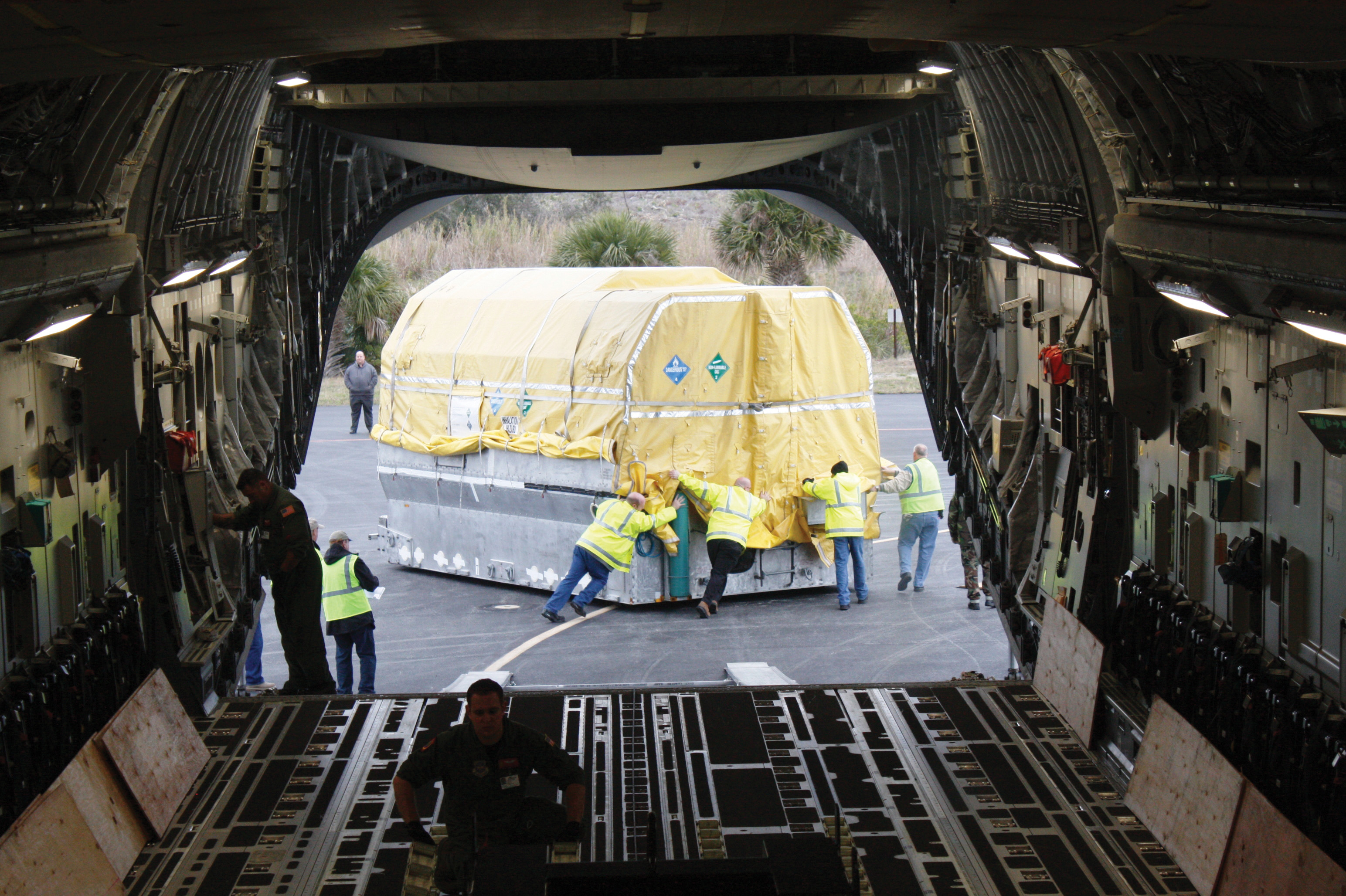
    The first Block IIF satellite destined for orbit arrived at the Navstar Processing Facility at Cape Canaveral, Florida, aboard an Air Force C-17 cargo aircraft on February 12. It is now undergoing preparations for its launch this spring on a Delta IV rocket. Block IIF will enhance GPS performance by reportedly providing twice the navigational accuracy of heritage satellites, more robust signals for commercial aviation and search-and-rescue, and greater resistance to jamming in hostile environments.

    New L5 Signal. The new IIFs will broadcast the operational civil L5 signal, whose spectrum allocation was secured by broadcast of the signal by a IIR(M) satellite last year. L5, at 1176.45 MHz, lies in the Aeronautical Radionavigation Services band and can be used for safety-of-life aviation. It will be compatible with Galileo, GLONASS, and QZSS, with the goal to be interoperable as well. L5 will transmit at a higher power than current civil GPS signals, with wider bandwidth, and lower frequency that may enhance indoor reception.

    More L2C Beacons. The IIF generation will also add to the number of satellites on orbit that broadcast the L2C signal at 1227.6 MHz, bringing it closer to full operational capability. L2C enables the development of lower-cost, dual-frequency civil GPS receivers for correction of ionospheric time-delay errors. Once the control segment modernization is complete, enhancements such as dataless and pilot channels for improved performance and an improved navigation message with more precise clock and ephemeris information will be available. L2C will also be interoperable with the Quasi-Zenith Satellite System (QZSS) under development by Japan.

    Long Life. Built by Boeing, the IIF has a longer design life of 12 years, faster processors, and more memory. It will be followed by 11 other IIFs before modernization shifts into a higher gear with the GPS III generation.

    It takes four hefty guys to wheel the new satellite along the tarmac, but it will only take one Delta IV rocket to lift it 20,171 kilometers into space on May 13.
    It takes four hefty guys to wheel the new satellite along the tarmac, but it will only take one Delta IV rocket to lift it 20,171 kilometers into space on May 13.

    Some Receivers Run Afoul of GPS Ground Control Software Update

    On January 11, 2010, when the GPS Wing and the 2nd Space Operations Squadron (2SOPS) loaded the updated AEP 5.5C software to the ground control segment, a problem surfaced with a specific subset of GPS selective availability anti-spoofing module (SAASM) receivers.

    The GPS Wing did not revert to the previous AEP 5.4 because of the upcoming IIF-SV1 launch. The scheduled sequential AEP 5.5C and AEP 5.5D updates are required before the ground control segment can adequately manage the more advanced capabilities of the IIF satellites.

    One purpose of the 5.5C AEP update is to enable SAASM functionality in coded receivers. The software for this functionality has been resident in various certified SAASM receivers for some time, but was never implemented in the ground control segment. The update alleviates that problem for the majority of SAASM receivers, but for one manufacturer it has caused problems. The updated software sends a specific code to SAASM receivers that enables them to authenticate the message and ensure that the code is correct, and is being sent from the GPS and not some other source. For most receivers this worked without a hitch, but for one manufacturer, a software (SW) bug or glitch occurred that must be corrected before the receiver can authenticate. This fix is in progress and will most likely be implemented as a software or firmware update to the receivers.

    Timing. Another problem with a different set of receivers manifested itself exactly two weeks after the AEP 5.5C update occurred. Those that have researched this problem in some depth feel that the problem is totally unrelated to the AEP update and would have occurred regardless.
    This is also considered to be a receiver software bug for the manufacturer, and that process is ongoing.

    ICD. Prior to activating the software update, the GPS Wing issued an updateable ICD or Interface Control Document that all receiver manufacturers use as a voluntary guide to determine compliance. Strict compliance by the manufacturer with the receiver interface control document (ICD) may have prevented the first issue, but the second may be a serendipitous event of the type that occurs from time to time no matter what precautions are taken.

    The GPS Wing has issued two Notice Advisory to NAVSTAR Users (NANUs) for civilian and commercial GPS users and for military users, asking for user comments.

    Letter to the Editor. Meanwhile, a reader wrote in: “I have issues with misleading e-mails containing inaccurate titles of articles posted on the site. There have been multiple cases recently claiming AEP software (SW) upgrades caused problems with receivers. In fact, and as proven by the vendors involved and others analyzing the problems, the AEP SW did not cause any of the observed conditions. ICD noncompliance of SAASM user equipment (UE) caused the problems, and the AEP SW upgrade allowed DoD, FAA, and vendors to finally discover the noncompliance issues and begin the process to resolve them. The community should view the 5.5 SW upgrade for what it is: a valuable new capability implemented correctly, which helped us all understand some unexpected shortcomings in UE.”

    The editor concurs, and apologizes for misleading article titles. However, hard information was scant — in fact, completely unavailable — at the time.

    GLONASS Gets Regional; Beidou Moves; Galileo Inks

    The three new GLONASS-M satellites launched on December 14 have been set operational: GLONASS 730 in orbital slot 1 was set healthy on January 30, joining 734 and 733, which were set healthy earlier in the month. This brings to 18 the number of satellites currently in service, although GLONASS 722 continues to provide a healthy signal only on its L1 frequency. At present, the constellation only suffices to provide a 24-hour regional signal over Russian territory, although satellites can and frequently are pulled in by global high-precision users to complete an RTK solution, along with GPS.

    Two satellites are in maintenance mode and set unhealthy, and two others, launched in 2003 and 2005, respectively, are in the process of being decommissioned.

    The next GLONASS launch, of the GLONASS Block 40 satellites originally set to rocket up last September but returned to the Reshetnev factory with problems in the signal generator, is scheduled for March 2. Three more will rise in August, and a November 10 booster will put two GLONASS-M satellites and the first GLONASS-K satellite into orbit.

    Beidou. According to tracking data from the United States Strategic Command, Beidou’s G1 satellite has drifted from its original location of 160°E and is currently at about 147°E longitude, that is, no longer in geostationary lock. Perhaps it is moving to another assigned Beidou slot, to back up or replace one of the other satellites in the constellation, but this can be no more than speculation. Hard data on the Beidou/Compass system is extremely difficult to come by. The new Chinese government Beidou/Compass website does not provide up-to-date information on the status of the constellation — something we take for granted with GPS, GLONASS, and Galileo.

    Galileo. The European Space Agency signed contracts for Galileo’s full operational capability phase on January 26: with OHB for the manufacture of 14 satellites, delivery of the first in July 2012, followed by two satellites every three months; for launch services with Arianespace; and for system support with Thales Alenia Space.


    24+3 FAQ

    Eric_Gakstatter_125Survey editor Eric Gakstatter posed these questions to the GPS Wing; their answers follow.

    Will the satellites (SVN24, SVN26) remain healthy during their repositioning journey?

    Yes. The satellites will be set unhealthy for the initial Delta-V, but will return to healthy status approximately 24 hours after initiation of the Delta-V. Initial Delta-V for SVN24 was accomplished on 13 Jan 10 and returned healthy on 14 Jan 10. SVN24 will take up to a year to reach its final destination. Initial Delta-V for SVN49 was accomplished on 21 Jan 10 and will arrive at its expanded position in Jun 10. Initial Delta-V for SVN26 will begin early Feb 10.

    Why the two-year timeframe to realize the benefits when all repositioning will be complete in 12 months?

    The two-year timeframe is a conservative estimate which takes into account potential operational necessities which could extend the time required for completion. We must take a disciplined approach to cover possible failures and ensure continuity of coverage during the transition. We will be adding GPS IIF vehicles to the constellation and older vehicles may fail during the transition timeframe. As vehicles are added and removed, the current plan is subject to change in order to provide the best service to all civil and military users. Some of these decisions could require additional time to complete the expanded constellation. However, benefits will likely be realized well in advance of 24 months.

    What is the reasoning behind using SVN49 as a key component of the 24+3 configuration since it won’t benefit a significant portion of the civilian user community, namely aviation and marine navigation as well as other SBAS (WAAS) and DGPS users? In my understanding, the FAA’s and the Coast Guard’s user bases are primarily single-frequency pseudo-range, users who won’t be able to use SVN49.

    SVN49 was selected because it is a brand new satellite with four good clocks. Although issues with SVN49’s navigation signals may make it unusable for all civil use, it could still put out a valid set of signals for military use. The Air Force team is continuing to work “open book” with civil and industry GPS experts to determine the possible outcome of SVN49. Although SVN49 is not currently healthy, GPSW and 50th SW are actively working a mitigation that may allow setting the vehicle healthy in the future. As a mitigation in case we are unable to set SVN49 healthy, SVN30 will be rephased to the same slot following a successful launch and on-orbit checkout of IIF-1. We expect to have either SVN30 or SVN49 healthy and broadcasting from the expanded slot within a 24-month timeframe. At this time, no decisions have been made and no options have been ruled out regarding SVN49.

  • Out in Front: An SVN up for Grabs

    Wednesday evening, September 23, Savannah, Georgia, 5:30 to 7:00 p.m., Session P2b — a date that will live in GPS history. The 400 to 600 of us who were there to witness it will never forget it. The SVN-49 Review Panel.

    Unprecedented puts it mildly.

    The ION program read: “SVN49 (GPS IIR-M 20) was launched in March of 2009 to support GPS constellation sustainment as well as to bring into use the new third civil signal, the L5. During the early orbit check out of this satellite, out-of-family measurements were observed impacting the legacy GPS L1 and L2 signals. The panel will review the background, current status, issues, and options moving forward with SVN49.”

    Col. David Goldstein, chief engineer, GPS Wing, gave a frank and open history and description of the situation. The panelists explained the options under consideration for partial fixes — a complete fix and eradication of the pseudorange error is not possible — and added a few remarks, but were mostly there to answer questions and provide perspective in response to opinions from the floor.

    It reminded me — now this is a leap — of a climb I led in days of yore up Mt. Kilimanjaro. Or escorted, really; the Swahili-speaking Tanzanian porters did all the leading. About two days in and a third of the way up, we realized that because of a schedule change we had made earlier for longer safari in the Selous, we didn’t have quite enough time to climb the mountain in the accepted manner and still make it back down for the once-weekly flight out. So over muesli and mangos the next morning in the A-frame hut, I just threw it open to everyone and said, “It’s your trip. What do you want to do?”

    Folks said later that in decades of group travel, they’d never seen the like.

    Basically, that’s what Col. Goldstein, Col. Madden, and the GPS Wing did. Just threw it open. “It’s your signal. What do you want to do?”

    The most likely solution may involve a partial adjustment to the signal, and then setting it useable with the caveat that it will not perform to the same degree of accuracy as other satellites, nor uniformly for all receivers.

    Javad Ashjaee of JAVAD GNSS had an interesting suggestion, which basically amounted to what my teenagers sometimes tell me: “Deal.” That is, just turn it on, and away we go. Use the anomaly to study multipath phenomena. Of course, he is in the enviable postion of having, or producing, receivers that can separate out the so-called defined multipath element.

    However it pans out, I commend the GPS Wing for taking such an open, public, and when you come right down to it, honest approach. I  heard a bit of grumbling behind the scenes that some protocols were not adhered to in going so public. But you know what? That’s how things get done, as opposed to bogging down under cover.

    And that Kili thing. We did make it up the mountain. Some of us. Sick as all getout from the altitude. Glad to come down. But we made it. Same’s gonna happen with this SVN.

  • ESRI Conference and SVN-49 Troubles

    I had a great visit at the ESRI User Conference earlier this month. If you recall last year, I wrote:

    “As much as surveyors, engineers, and constructors may not appreciate geographic information systems (GIS) technology, at some point everyone should attend at least the ESRI Survey/Engineering Summit and the first couple of days of the ESRI User Conference held every summer in San Diego, California. This is not a GIS sales pitch. It’s a networking sales pitch. When other conferences are struggling to maintain attendance levels, the ESRI conferences seemingly never fail to grow in attendance. This year, it attracted some 15,000 people from 120 countries. That means gobs of GIS people, and also gobs of surveyors and engineers.”

    The statement rang true this year too. Even in today’s economy where conferences are severely impacted or even cancelled due to travel budget cuts, the ESRI User conference still attracted ~11,000 people this month.

    On another note, I think conference organizers are getting the message. People just can’t justify attending so many conferences. Next Spring, the ACSM (American Congress for Surveying & Mapping) is combining with the GITA (Geospatial Information & Technology Association) conference in Phoenix, AZ. Instead of 1,000-1,500 for each conference, it’s a larger event at 2,000-3,000. Even more interesting is talk in the rumor mill about a joint conference including ACSM and the ESRI Survey Summit in 2011. Include the GITA conference with those and that makes a lot of sense to me.
    As usual, there were many things happening at this year’s ESRI UC conference and I attended many briefings. I’ll try to stay focused on the highly GPS/GNSS-related subjects:
    Javad GNSS. One of the bigger news items on the GPS front was the joint Javad/ESRI effort in developing an ArcPad extension for Javad’s line of receivers. The demonstration was very cool. We loaded up a local map (San Diego) from their server located in Moscow (Russia) then took a Javad RTK receiver outside with the data collector (running ArcPad w/Javad’s extension). I collected data on a few points. The data was sent off to Moscow from the data collector (via GPRS while we were outside) to update the map. After we walked back into the convention center, the demonstrator clicked the workstation “refresh” button and viola, the map was updated with the points I collected at the cm-level.
    According to the JAVAD engineer, “we make it look easy.” I agree. There’s a lot of heavy-lifting going on in the background to make this happen. With the heavy-lifting done, it still needs a bit of tweaking. There weren’t any quality control indicators (RMS values) on the data collector for the operator to reference and also ArcPad doesn’t recognize GLONASS satellites so while the GNSS receiver was utilizing GPS and GLONASS, ArcPad only reported GPS satellites. The operator really does need to know what’s going on before tapping on the STORE button. But, 95% of the work is done and the heavy lifting is complete so I don’t doubt they will finish off the last 5% in short order.
    Topcon Positioning Systems. I’ve had a few questions from readers on Topcon’s new GRS-1 receiver. Is it single frequency? Is it dual frequency? Is it for GIS? Is it for survey?
    The answers are Yes, Yes, Yes and Yes.
    The entry-level GRS-1 is a single-frequency hand-held GIS data collector. That’s about US$5,000.

    Add US$4,000 and you get a 5cm high accuracy GIS receiver.

    Add another US$2,500 and you have a full-blown, cm-level RTK rover.

    There are other options beyond this (eg. GLONASS), but I think you get the picture as I did. It’s a full L1/L2 GPS and GLONASS receiver. You pay to have features activated (plus some added hardware/software).

    I haven’t tried one yet so I couldn’t tell you how it performs, but it’s worth a look.

    Juniper Systems. Although they don’t design GPS receivers, their Archer hand-held is starting to show up in a lot of places. Hemisphere GPS has designed the XF-101 receiver as a plug-in for the Archer as well as having a similar model for the Trimble/TDS Recon and Nomad hand-helds. Javad was also offering the Archer with their systems. IkeGPS also introduced a new hand-held mapping system named the Ike1000 that is based on the Archer.

    Geneq. Their flagship product, the SXBlue GPS, seems to be gaining momentum in the GIS marketplace. They have introduced a new model that utilizes the OmniSTAR correction service called the SXBlue II-L GPS. Their use of WAAS (via Hemisphere GPS Coast technology) and performance under tree canopy has created some buzz.

    Trimble Navigation. It’s hard to leave Trimble out of the conversation, but nothing really new in the GPS product area. However, they continue their run of acquiring companies with the latest being Farm Works Software in the precision agriculture industry. In 2009, they’ve acquired four niche-market companies.

    Magellan Professional. Introduced an upgrade to support ArcPad 8.0 for post-processing on their Mobile Mapper 6 hand-held for sub-meter accuracy. FYI: Magellan consumer GPS products is no longer part of Magellan Professional. Rumor has it that Magellan Professional will revert back to the Ashtech brand name of the1990’s.

    Leica Geosystems. Where were they?

    SVN-49 Troubles, Solar Cycle 24, GAO Report

    I gave a presentation at the ESRI UC on Tuesday morning as part of the Survey (SUR) track. I focused on three core issues listed above. You can view my presentation here.

    I’ll stick to the highlights…

    <
    p>SVN-49 troubles. It’s broke and will never be as good as the other Block IIR-M satellites. Don’t expect it to be declared healthy in the immediate future. Even if a patch is developed and it’s declared healthy, it’s likely that pseudorange-based safety-of-life applications like SBAS (WAAS, EGNOS, MSAS) and NDGPS will not incorporate it into their solutions. Although more study is necessary, it appears that carrier-phase applications (cm-level real-time and post-processing) will be able to utilize SVN-49.

    Solar Cycle 24. NOAA reports that the number of sunspots during the next solar cycle (2009-2020) will be the fewest since the 1920’s. That doesn’t mean the next solar cycle will be any easier on GPS than the last one. On the contrary, it could be worse for GPS. No one knows at this point. High performance GPS L1 receivers are the most exposed. Those utilizing NDGPS, WAAS and OmniSTAR’s VBS service need to be watchful. You can sign up to receive alerts from NOAA giving a three-day forecast of activity. NOAA predicts the peak of the next solar cycle will be in May 2013. Note that typically the geomagnetic activity that most affects GPS occurs after the peak. Links and more details are in the presentation.

    GAO Report. I wrote an article on this subject back in June as it relates to medium and high precision users. You can read it here. High precision users will be affected more than other users because high precision GPS receivers perform better with a lot of observables. A loss of 2-3 GPS satellites can be significant and require users to begin using GPS mission planning software again to optimize the use of field time. Survey receivers using GPS and GLONASS will be less affected. The presentation references a report from the University of New Brunswick that takes a look at how GLONASS can compensate for a loss of GPS satellites.


  • Expert Advice: Cause Identified for Pseudorange Error from New GPS Satellite SVN-49

    By Richard Langleuy, with an additional note by Oliver Montenbruck

    The GPS Wing and its contractors have traced the cause of pseudorange errors on L1 and L2 broadcast by the newest GPS satellite, SVN-49, to the manner in which the L5 signal demonstration payload was added to the satellite. Signal leakage between the two input ports of the antenna coupler network for the satellite’s array of 12 helical antenna elements, reflected from the L5 filter and then transmitted, creates a second signal with a delay of approximately 30 nanoseconds, and the appearance of a multipath component.

    While testing an adjustment to the signal-in-space to minimize the effect of the problem on receiver navigation solutions on Earth, the GPS Wing is interested in hearing from manufacturers and the user community concerning the different impacts of SVN-49 signals on the wide range products and applications in operation, before reaching a final decision on what to do with the satellite prior to setting it healthy.


    The seventh modernized GPS Block IIR satellite was launched on March 24, 2009. Called SVN-49, its sequence number in the long line of GPS satellites, or PRN01, after its pseudorandom noise code identifier, this satellite is special. In addition to the equipment required to transmit the legacy GPS C/A-code and P(Y)-code signals and the new civil L2C-code and military M-code signals on the standard L1 (1575.42 MHz) and L2 (1227.6 MHz) frequencies, SVN-49 carries an L5 demonstration payload. L5 is the new civil signal to be transmitted on 1176.45 MHz by Block IIF and succeeding generations of GPS satellites.

    The demo payload was included to claim the frequency, which was allocated by the International Telecommunication Union before the August 26, 2009, deadline. The deadline had been imposed seven years earlier when the GPS Joint Program Office (the forerunner of the GPS Wing) applied for the frequency. The Block IIF program schedule had slipped a bit and as a safeguard (and one which eventually saved the day), the demo payload was developed and assigned to SVN-49.

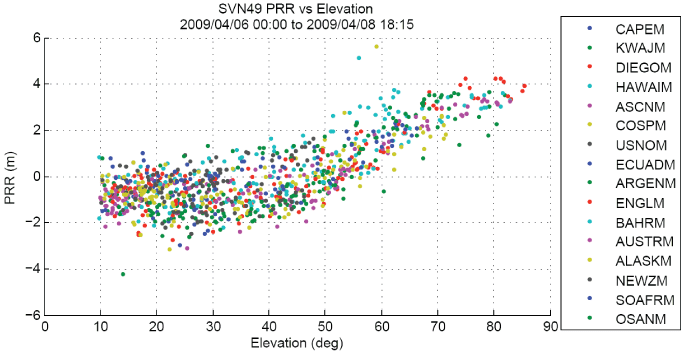
    Shortly after the L1/L2 system on SVN-49 was activated on March 28, it became clear that the satellite had a small problem. The pseudorange data obtained by U.S. Air Force Space Command’s 2nd Space Operations Squadron (2 SOPS) monitor stations had larger than normal errors. Typically, the errors have a random characteristic, with a mean of zero and a peak-to-peak variation of two meters or so. But the SVN-49 ionosphere-corrected errors reached a level of about four meters and when they were plotted against the elevation angle of the satellite as viewed at each monitor station, a clear trend emerged (see Figure 1).

    FIGURE 1. Ionospheric-refraction-corrected SVN4-9 pseudorange residuals from data collected at 2 SOPS monitor stations (courtesy GPS Wing).
    FIGURE 1. Ionospheric-refraction-corrected SVN4-9 pseudorange residuals from data collected at 2 SOPS monitor stations (courtesy GPS Wing).

    Although larger than normal, the errors still fell within the accuracy tolerances specified for GPS signals. Nevertheless, the anomalous behavior of SVN-49’s signals was a cause of concern, and the GPS Wing and its contractors mounted efforts to find the cause.

    Payload Source. They traced the source of the problem to the manner in which the L5 demo payload was added to the satellite. To understand the problem, we need to examine how the L1 and L2 signals are transmitted by a GPS satellite.

    A primary and defining characteristic of GPS signals is that the received signal power should be approximately the same at any location on the Earth’s surface within view of the satellite. In other words, we should receive about the same signal power when a GPS satellite is overhead (and closer to us) as when it is low on the horizon (and further away). Any major variation in signal level seen by a receiver is typically due to the gain pattern of the receiver’s antenna.

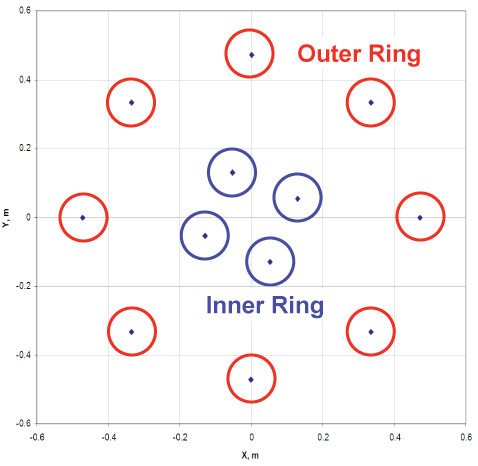
    To achieve a uniform power density at the Earth’s surface, a GPS satellite uses an array of 12 helical antenna elements, with an inner ring of four elements and an outer ring of eight, fed by an antenna coupler network (see Figure 2). The L1 and L2 signals are fed into the coupler through one of its two input ports: port J1. The inner ring of elements transmits most of the L1 and L2 power from J1 with a broad pattern, while the outer ring transmits a sharper pattern but with a weaker signal and a different phase. The net effect of this arrangement is to reduce the radiated power from the inner ring as seen at high elevation angles and boost it for lower elevation angles thereby achieving an almost uniform power density.

    FIGURE 2. L-band antenna element locations (courtesy GPS Wing).
    FIGURE 2. L-band antenna element locations (courtesy GPS Wing).

    The antenna coupler’s other input port, J2, is used on SVN-49 to feed the L5 signal to the antenna array after first passing through a filter and a 162-inch (411-centimeter) cable. Most of the power from J2 goes to the outer ring, with less going to the inner ring — the inverse of the power distribution from J1. This is why initial reports of L5 signal acquisition noted its high directivity with much weaker signals at low elevation angles compared with the L1 and L2 signals. But this behavior was expected.

    Not expected was the effect of the L5 filter and its associated cable run on the L1 and L2 signals. It turns out that some of the L1 and L2 signal from J1 exits the J2 port, is reflected from the L5 filter, and then is transmitted from the J2 port with a delay of approximately 30 nanoseconds. With hindsight, the J1 to J2 signal leakage and reflection from the L5 filter should have been prevented.

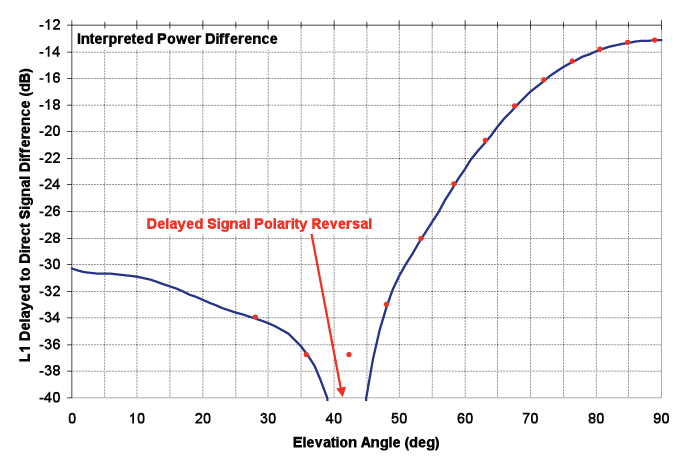
    On the ground, a receiver sees both the direct signal and the weaker reflected signal, which looks like a multipath component. The GPS Wing and its contractors have attempted to model the effect of the reflected signal on GPS receiver measurements. According to their models, if the direct and reflected L1 signals are in phase at the zenith, then a standard code-correlating receiver will measure a C/A-code pseudorange that is 1.62 meters too long. The error becomes smaller as the elevation angle drops, due to the drop in power level of the reflected signal, reaching zero at an elevation angle of about 42 degrees, corresponding to a null in the antenna pattern and then rising slightly as the elevation angle drops to zero (see Figure 3).

    FIGURE 3. Model of the differences between the SVN-49 L1 delayed (multipath) and direct signals (courtesy GPS Wing).
    FIGURE 3. Model of the differences between the SVN-49 L1 delayed (multipath) and direct signals (courtesy GPS Wing).

    P(Y), L2, and L2C. The same error behavior is expected for L1 P(Y)-code pseudoranges. Maximum L2 P(Y)-code pseudorange errors are modeled to be zero if the direct and reflected L2 signals are in quadrature, or to have maximum values of about plus 0.95 meters if the direct and reflected signals have the same phase, and minus 1.1 meters if they have the opposite phase. Ground tests should confirm which of the three possibilities describes the actual signals. The L2C signal is expected to behave in a similar manner to the L2 P(Y) signal.

    If ionosphere-free pseudoranges are computed from the L1 and L2 pseudoranges, the maximum errors are predicted to be 4.14, 2.66, and 5.84 meters for the quadrature, in-phase, and opposite-phase L2 direct and reflected signal possibilities.

    The models also predict an effect on carrier-phase measurements, but these are very much smaller: a maximum error of 6.8 millimeters on L1 and 4.8 millimeters on L2.

    It is not possible to fully fix the problem. The GPS Wing and its contractors are looking at ways to minimize the effect of the problem on receiver navigation solutions. One
    experiment under assessment is to adjust the broadcast navigation message ephemeris of the satellite by placing the antenna phase center about 152 meters above the actual position of the satellite, while compensating with a satellite clock offset. Such navigation message adjustments reduce the peak-to-peak variation of the error by about a half; they do not eliminate it.

    Status Quo? Another possibility is to broadcast the signal as is, without attempts to compensate for the error. It would then be up to the user to determine how best to use the signals. Initial indications show that certain receivers with advanced multipath mitigation correlators can essentially filter out much of the multipath component (see Narrow Correlators Screen Error section below). Receivers with standard correlators could use the SNV-49 signals but assign a higher uncertainty to the measurements when they are combined with those from other satellites.

    The GPS Wing is interested in hearing from manufacturers and the user community concerning the impact of SVN-49 signals on products and applications before coming to a final decision on what to do with the satellite before setting it healthy, and a briefing and interview process has begun to obtain that information. The decision is expect by mid-September.


    — Richard B. Langley, University of New Brunswick


    Narrow Correlators Screen Error

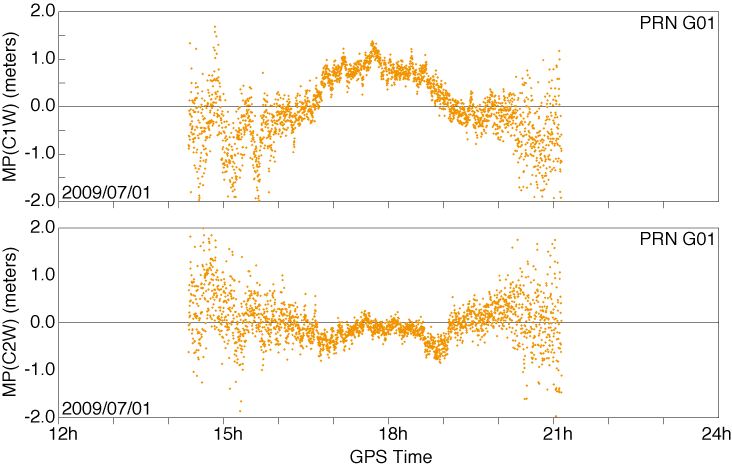
    The typical variation of SVN-49 multipath errors over time is illustrated in Figure 4 for semi-codeless P(Y)-code measurements on the L1 and L2 frequency from a commercial test receiver near Munich, Germany. SVN-49 was visible for roughly 6 hours at this site and reached a peak elevation angle of 80 degrees. The errors are most pronounced on L1 where they vary between –0.5 meters near the horizon and +1 meter near the center of the pass. L2, in contrast, is notably less affected. Here, multipath errors caused by signal reflections in the satellite are well below 0.5 meters in amplitude and cannot be clearly distinguished from local multipath at the receiver site.

    FIGURE 4. Typical SNV-49 multipath errors for semi-codeless P(Y)-code tracking on L1 (top) and L2 (bottom) from a conventional correlator (using JAVAD GNSS Triumph receivers.)
    FIGURE 4. Typical SNV-49 multipath errors for semi-codeless P(Y)-code tracking on L1 (top) and L2 (bottom) from a conventional correlator (using JAVAD GNSS Triumph receivers.)

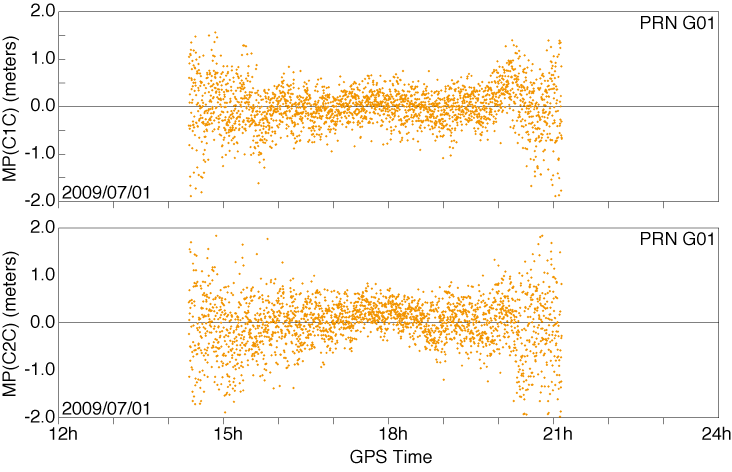
    While the example shown in Figure 4 is representative for many receivers currently tracking the new GPS satellite, a few receivers are able to filter out the satellite multipath component due to the use of special multipath-mitigation techniques. While implementation details are mostly proprietary, it is commonly known that strobe or double-delta correlators can effectively counteract short-range multipath when using an extremely narrow correlator spacing. The effectiveness of such techniques is shown in Figure 5 for C/A-code and L2C-code tracking by the same test receiver. Obviously, multipath errors are well below the thermal noise in this case and the measurement errors can hardly be distinguished from those of other GPS satellites.

    FIGURE 5. SVN49 multipath errors for C/A-code (top) and L2C-code (bottom) tracking using special multipath-mitigation techniques with 20-nanosecond correlator spacing (using JAVAD GNSS Triumph receivers.)
    FIGURE 5. SVN49 multipath errors for C/A-code (top) and L2C-code (bottom) tracking using special multipath-mitigation techniques with 20-nanosecond correlator spacing (using JAVAD GNSS Triumph receivers.)

    From a practical point of view, users will probably have to decide on their own whether to employ receivers with advanced multipath-mitigation capabilities, whether to apply elevation-angle-dependent measurement corrections (primarily for L1 code measurements), or whether to simply accept the moderate degradation of the SVN-49 measurements. In view of the wide variety of receivers in use and considering their varied applications, a unique solution to the SVN-49 problem is probably not feasible, and care should be taken before applying a priori “corrections” that might cause more harm than good.

    (Editor’s Note: The data used to track the anomalies of SVN-49 were gathered using JAVAD GNSS Triumph receivers.)

    — Oliver Montenbruck, German Aerospace Center