Tag: testbed

  • Septentrio receiver authenticates Galileo OSNMA signals

    Septentrio receiver authenticates Galileo OSNMA signals

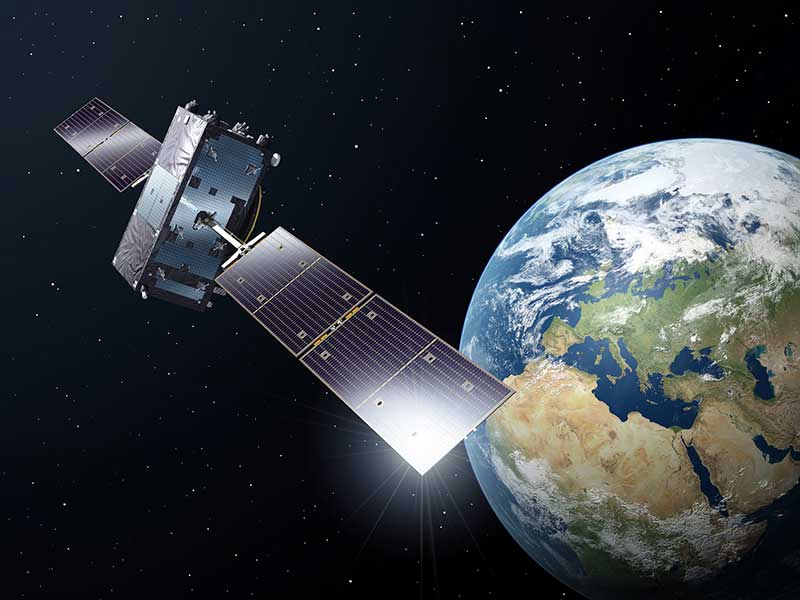
    A Septentrio receiver has successfully authenticated navigation data of the first OSNMA encrypted GNSS satellite signal.

    OSNMA (Open Service Navigation Message Authentication) offers end-to-end authentication on a civilian signal, protecting receivers from spoofing attacks.

    OSNMA is being pioneered by the Galileo Program, with Septentrio providing a testbed for this technology from the end-user point of view. The anti-spoofing capabilities of OSNMA will complement Septentrio’s already available anti-jamming technology, AIM+, and further strengthen the overall security of Septentrio GNSS receivers.

    “The authentication of the Galileo signal using the OSNMA technology is yet another first that we are pleased to share with our close partner ESA [European Space Agency],” commented Bruno Bougard, R&D director at Septentrio. “Septentrio is proud and thankful to be able to contribute to the realization of one of Galileo’s key differentiators. “

    With OSNMA, Galileo is the first satellite system to introduce an anti-spoofing service directly on a civil GNSS signal.

    OSNMA is a free service on the Galileo E1 frequency. It enables authentication of the navigation data on Galileo and even GPS satellites. Such navigation data carries information about satellite location — if altered, it will result in wrong receiver positioning computation.

    While currently in development, OSNMA is planned to become publicly available in the near future. GPS is experimenting with satellite-based anti-spoofing for civil users with its Chimera authentication system.

    Within the scope of the FANTASTIC project led by GSA, OSNMA anti-spoofing protection was implemented on a Septentrio receiver.

    “Septentrio is committed to providing highly accurate and secure positioning and timing solutions to industrial applications and critical infrastructure. This is another example where Septentrio demonstrates its leadership in end-to-end GNSS receiver security with its breakthrough anti-jamming and anti-spoofing technology,” said François Freulon, head of Product Management at Septentrio. “Thanks to our future proof products, we will be rolling out OSNMA in our portfolio as soon as it is available. This will further enhance the security of our receivers, ensuring robust, trustworthy and reliable operation even in the most challenging environments.”
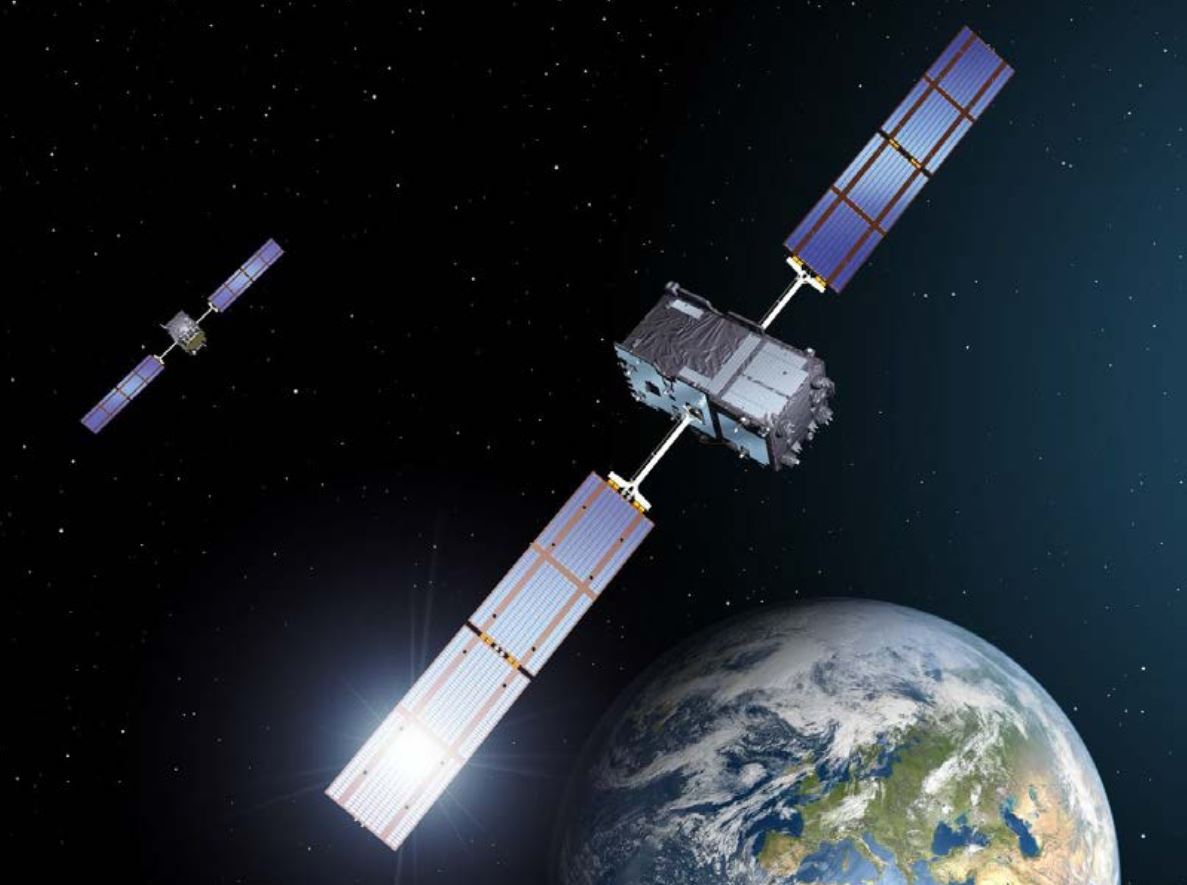
    Figure 3. European Galileo satellites provide an open authentication service on the E1 signal and a commercial authentication service on the E6 signal. (Image: European Space Agency)
    European Galileo satellites provide an open authentication service on the E1 signal and a commercial authentication service on the E6 signal. (Image: European Space Agency)

    ESA and GSA (European GNSS Agency) have now commenced the testing phase of the OSNMA authentication, which will continue during the coming months. To find out more about spoofing and OSNMA, see this article. For more information about GNSS signals and the value they bring, see Septentrio’s free webinar More GNSS signals: What’s in it for you?
  • AVL adds Rohde & Schwarz GNSS simulation to vehicle test environment

    AVL adds Rohde & Schwarz GNSS simulation to vehicle test environment

    A collaboration between AVL and Rohde & Schwarz, two providers of measuring and automotive testing systems, now permits the reproduction of realistic GNSS reception conditions for testbed vehicle testing. As a result, users can reliably test all aspects of GNSS-based vehicle positioning — a core functionality of autonomous vehicles.

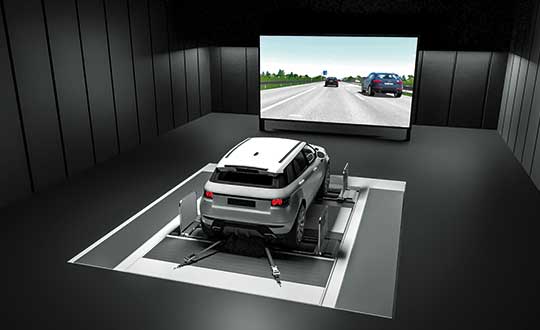
    AVL DRIVINGCUBE enables the reproducible testing of driver assistance systems and driving features for self-driving vehicles using a real vehicle within a virtual environment in a variety of different traffic situations. For that purpose, test drives are performed with a real, ready-to-drive vehicle on a chassis dynamometer or powertrain testbed.

    With the help of realistic virtual driving scenarios, it is possible to test peripheral sensors, control systems and actuators inside the vehicle in a fully reproducible and reliable manner. Automated vehicle functions are thus sufficiently validated during development and even before testing on the proving ground.

    The range of environment simulations carried out with AVL DRIVINGCUBE can now be extended to include GNSS signals, bringing simulation closer to reality than ever before. The vehicle’s GNSS receiver is stimulated realistically using GNSS signals generated on the testbed.

    This way, technical engineers can identify exactly how sensors, automated driving features and other actuators respond inside the vehicle. The now possible GNSS-based vehicle positioning feature is a core functionality of automated driving, and the approach ensures that it is reliably tested.

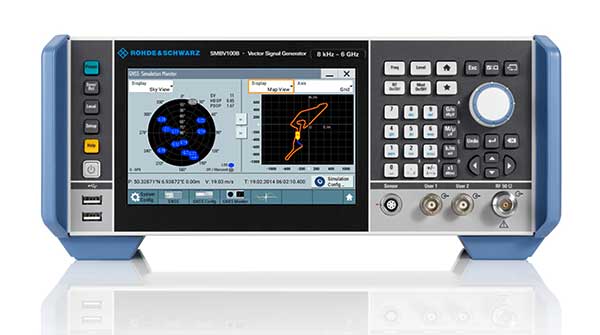
    The SMBV100B GNSS simulator. (Photo: Rohde & Schwarz)
    The SMBV100B GNSS simulator. (Photo: Rohde & Schwarz)

    For generating GNSS signals, Rohde & Schwarz GNSS simulators are used (R&S SMBV100B or R&S SMW200A), which allow the generation of signals for all of the available satellite navigation systems (GPS, Glonass, Galileo, BeiDou, QZSS, SBAS) across all frequency bandwidths (L1, L2, L5). This also makes them suitable for testing multi-frequency receivers, which are playing an increasingly important role in automated driving.

    “In Rohde & Schwarz, we now have a strong and reliable partner for GNSS stimulation. By generating consistent GNSS signals in connection with environment simulation, AVL DRIVINGCUBE now provides a test system that allows users to validate GNSS-based driver assistance systems and autonomous driving features,” explains Dr.-Ing. Tobias Düser, Head of Advanced Solution Lab at AVL Deutschland GmbH.

    Christoph Pointner, Head of Signal Generators at Rohde & Schwarz, adds: “We are very pleased to bring our expertise in the field of signal generation to this collaboration with AVL and contribute to such an important innovation and trendsetting solution for testing automatized driving features.”

    The additional GNSS stimulation makes testbed testing not only more realistic, it is above all a further step in moving testing from the road to the rig. This leads to a much sharper reduction of test drives than was the case previously and major savings in the kilometers driven.

    Rohde & Schwarz GNSS stimulators form a flexible, modular system that can be adapted to your requirements and is easily integrated in the AVL DRIVINGCUBE environment. The stimulator is controlled automatically from the simulation platform. GNSS extensions for AVL DRIVINGCUBE are available with immediate effect.

    AVL DRIVINGCUBE enables the reproducible testing of driver assistance systems for self-driving vehicles. (Photo: AVL)
    AVL DRIVINGCUBE enables the reproducible testing of driver assistance systems for self-driving vehicles. (Photo: AVL)
  • OGC seeks data and services for Testbed 13's mass migration scenario

    As part of the Open Geospatial Consortium’s (OGC) Testbed 13, the OGC is requesting information to identify, assess and gather the current state and available geospatial data and services in the Europe and Middle East regions that may be used to support the development, testing and demonstration of OGC standards and technologies advanced during Testbed 13.

    OGC Testbed 13 participants will implement services, access data, and demonstrate capabilities using the services and data identified during this request for information (RFI).

    The overarching theme for Testbed 13 is mass population migration. The Testbed aims to understand and document how information sharing and safeguarding tools and practices — including open geospatial standards — can enable cross-domain interoperability on an international level for structured communication exchange and border surveillance to assist law enforcement and humanitarian aid operations.

    The demonstration scenario for Testbed 13 will focus on addressing challenges related to the coordination of multi-regional/national operations arising from the current exodus of people from the Middle East to Europe. This includes any messaging related to the displacement and mass movement of populations in response to conflict.

    As an OGC Innovation Program initiative, Testbed 13 will investigate and develop new or enhanced OGC web service or encoding specifications over a wide variety of technology work areas. These technologies will be tested and demonstrated in an architecture and a deployed environment in support of the mass migration theme, as shown in the following diagram:


    OCG-Testbed13-W


    A wide variety of source data or data provider services available for public use are needed to support the scenarios and use cases associated with this testbed. As such, OGC is looking for your help in providing us with information on the availability of these data and services.

    The following is a partial list of types of source data or services, required over the area of interest, that could support the development of, and testing in, Testbed 13:

    • Map data and/or services
    • Feature data and/or services, such as road networks, rivers, water bodies or water sources, jurisdictional boundaries, etc.
    • Satellite imagery and/or services
    • Predictive model related data, such as base and ancillary data as well as outputs of predictive models
    • Medical and Health facilities and locations (or could be part of other feature data sources or services)

    Recommendations for additional source data or services that provide data of various types across the region of interest, are available for public use, and could support the scenario, development, and testing in Testbed 13, are welcome and encouraged.

    For more information on Testbed 13, view the Call for Participation. The RFI is available for download. Instructions on how to submit responses to, or questions concerning, the RFI are available in the download.

    Responses to the RFI are due by 15 March 2017.

  • Geoscience Australia, Lockheed collaborate on multi-GNSS SBAS research

    Geoscience Australia, Lockheed collaborate on multi-GNSS SBAS research

    Geoscience Australia, an agency of the Commonwealth of Australia, and Lockheed Martin have entered into a collaborative research project to show how augmenting signals from multiple GNSS constellations can enhance positioning, navigation and timing for a range of applications.

    Other partners are Inmarsat and GMV.

    The research project aims to demonstrate how a second-generation Satellite-Based Augmentation System (SBAS) testbed can — for the first time — use signals from both GPS and the Galileo constellation, as well as dual frequencies, to achieve greater GNSS integrity and accuracy.

    Over two years, the testbed will validate applications in nine industry sectors: agriculture, aviation, construction, maritime, mining, rail, road, spatial and utilities.

    To improve precision navigation, a second-generation SBAS will use signals from both GPS and Galileo, and dual frequencies, to achieve even greater GNSS integrity and accuracy.
    To improve precision navigation, a second-generation SBAS will use signals from both GPS and Galileo, and dual frequencies, to achieve even greater GNSS integrity and accuracy. (Graphic: Lockheed Martin)

    In January, the Australian Government announced $12 million in funding for the trial of SBAS technology.

    “Many industries rely on GNSS signals for accurate, safe navigation. Users must be confident in the position solutions calculated by GNSS receivers. The term ‘integrity’ defines the confidence in the position solutions provided by GNSS,” says Vince Di Pietro, chief executive of Lockheed Martin Australia and New Zealand. “Industries where safety-of-life navigation is crucial want assured GNSS integrity.”

    Ultimately, the second-generation SBAS testbed will broaden understanding of how this technology can benefit safety, productivity, efficiency and innovation in Australia’s industrial and research sectors, according to Lockheed.

    “We are excited to have an opportunity to work with Geoscience Australia and Australian industry to demonstrate the best possible GNSS performance and proud that Australia will be leading the way to enhance space-based navigation and industry safety,” Di Pietro adds.

    Basic GNSS signals are accurate enough for many civil positioning, navigation and timing users. However, these signals require augmentation to meet higher safety-of-life navigation requirements. The second-generation SBAS will mitigate that issue.

    Once the SBAS testbed is operational, basic GNSS signals will be monitored by widely-distributed reference stations operated by Geoscience Australia. An SBAS testbed master station, installed by teammate GMV of Spain, will collect that reference station data, compute corrections and integrity bounds for each GNSS satellite signal, and generate augmentation messages.

    “A Lockheed Martin uplink antenna at Uralla, New South Wales, will send these augmentation messages to an SBAS payload hosted aboard a geostationary Earth orbit satellite, owned by Inmarsat,” says Rod Drury, director of international strategy and business development for Lockheed Martin Space Systems Co. “This satellite rebroadcasts the augmentation messages containing corrections and integrity data to the end users. The whole process takes less than six seconds.”

    By augmenting signals from multiple GNSS constellations — both Galileo and GPS — second-generation SBAS is not dependent on one GNSS. It will also use signals on two frequencies — the L1 and L5 GPS signals, and their companion E1 and E5a Galileo signals — to provide integrity data and enhanced accuracy for industries that need it.

    Research partners

    Lockheed Martin will provide systems integration expertise in addition to the Uralla radio frequency uplink. GMV-Spain will provide its magicGNSS processors. Inmarsat will provide the navigation payload hosted on the 4F1 geostationary satellite. The Australia and New Zealand Cooperative Research Centre for Spatial Information will coordinate the demonstrator projects that test the SBAS infrastructure.

    Lockheed Martin has significant experience with space-based navigation systems. The company developed and produced 20 GPS IIR and IIR-M satellites. It also maintains the GPS Architecture Evolution Plan ground control system, which operates the entire 31-satellite constellation.

  • OGC seeks interoperability testbed participants

    T-13_Planning_Figures_OCG-testbed

    The Open Geospatial Consortium (OGC) invites interested organizations to respond to its just-released Call for Participation (CFP) in the OGC Testbed 13 Interoperability Testbed. Responses to the CFP are due by Feb. 17.

    Organizations selected to participate in Testbed 13 will develop prototype solutions based on the sponsors’ use cases, requirements and scenarios. These are described in detail in the CFP. Participants’ prototype solutions will implement existing OGC standards as well as new prototype interface and encoding specifications introduced or developed in Testbed 13. Prototype specifications may ultimately become official, member approved OGC standards, revisions to existing OGC standards, or best practices for using OGC standards.

    OGC testbeds are part of OGC’s Interoperability Program, a global, hands-on and collaborative prototyping program designed to rapidly develop, test, innovate and deliver proven candidate standards into OGC’s standards program where they are formalized for public release.

    In OGC’s Interoperability Initiatives, international teams of technology providers work together to solve specific geoprocessing interoperability problems posed by the Initiative Sponsors. OGC Interoperability Initiatives include testbeds, pilot projects, interoperability experiments and interoperability support services — all designed to encourage rapid development and mobilization of OGC standards.

    This leading-edge standards work has enormous potential and value for testbed stakeholders — both technology users and technology providers. Shared investment in spatial standard prototype solutions brings improved sharing and integration of spatial information, which has widespread and longstanding value for the testbed sponsors and for society at large.

    Technology providers gain market exposure, market intelligence and a chance to quickly take advantage of the business opportunities that arise with the introduction of new standards and associated technical capabilities.

    Anyone interested in learning more about this opportunity should contact Scott Serich, Director Interoperability Programs ([email protected]). See www.opengeospatial.org/ogc/programs/ip for more information about the Interoperability Program in which OGC testbeds, pilot projects and interoperability experiments are organized, planned and managed.

    Further information regarding Testbed 13 is available here. The CFP is available here.