Tag: transponder

  • First UK-generated satnav signal coming in test project

    First UK-generated satnav signal coming in test project

    Satellite communications company Inmarsat is working on a United Kingdom Space Agency-funded test project with the European Space Agency to deliver the first UK-generated satellite navigation signal. The project provides a potential platform for the UK to enhance its post-Brexit positioning, navigation and timing (PNT) capabilities.

    Other partners are British companies Goonhilly Earth Station Limited and GMV NSL Limited.

    Repurposing a transponder from the Inmarsat-3 F5 satellite, the test project — known as UK Space-Based Augmentation System (UK SBAS) — will provide an overlay signal to augment the U.S. GPS, refining its accuracy from a few meters to a few centimeters.

    UK PNT without EGNOS

    The UK no longer has access to the European Geostationary Navigation Overlay Service (EGNOS) Safety of Life services since leaving the European Union (EU) and is not involved in the EU’s Galileo programme for similar reasons. Therefore, this new national capability supported by current and future Inmarsat satellites could offer a new option for high-integrity, precision navigation across the country, in its airspace and within surrounding waters.

    UK SBAS will provide a basis to assess its future development into an operational capability to support safety-critical applications such as aircraft approaching and landing at airports or navigating ships through narrow channels, especially at night and in poor weather conditions.

    Goonhilly will provide the uplink for the system from Cornwall. Software from GMV NSL, based in Nottingham, will generate the ground-based navigation signal. This is a similar system to that already in use in Australia and New Zealand, supported by Inmarsat.

    The project could be crucial for UK users who need accurate, high-integrity navigation capabilities to enable their operations. It will initially cover aviation and maritime operations, but has the potential to extend into rail and other land-vehicle applications. For example, UK SBAS will comply with International Civil Aviation Organization (ICAO) standards.

    “It is very welcome news to hear that UK-based companies have teamed up to deliver this ground-breaking project, with help from government funding,” said Transport Minister Trudy Harrison. “From flying planes to steering ships, reliable and precise navigation support is a crucial part of travel. This development is a significant step forward for our world-leading space sector, as we accelerate towards a net-zero transport future.”

    Best satellite candidate
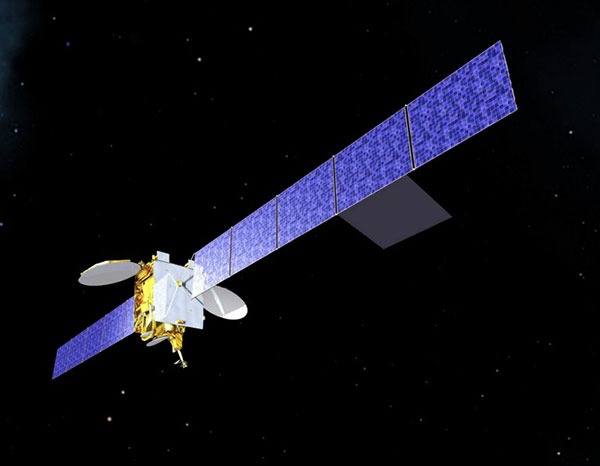
    Artist's impression of an Inmarsat-3 satellite. (Image: Inmarsat)
    Artist’s impression of an Inmarsat-3 satellite. (Image: Inmarsat)

    The Inmarsat-3 F5 satellite is in geosynchronous orbit at 54° west, ensuring that its signal covers the UK as part of its Atlantic Ocean region service overlay. This makes it an ideal candidate to participate in the test. The satellite was manufactured by Inmarsat’s Athena partner Lockheed Martin and launched in 1998.

    “This project demonstrates British innovation at its best,” said Nick Shave, vice president of Strategic Programmes for Inmarsat Global Government. “Working with Goonhilly Earth Station and GMVNSL, supported by UK funding via the ESA Navigation Innovation and Support Programme (NAVISP), enables us to extend the long life of Inmarsat’s I-3 F5 satellite with additional new services designed two decades after launch.

    “We look forward to exploring the potential for this project and the benefits it could deliver to the UK with more precise, high-integrity, resilient navigation services, whilst also exploring future capabilities on new satellites through Inmarsat’s fully funded technology roadmap,” Shave said. “This work also has the potential to be exported to other nations around the world, benefitting the UK economically as well as technologically.”

  • Celestia Technologies Group joins European move for long-range drones

    Celestia Technologies Group joins European move for long-range drones

    The ADACORSA Project vision. (Credit: ADACORSA)
    The ADACORSA Project vision. (Credit: ADACORSA)

    Celestia Technologies Group (CTG) is taking part in the ADACORSA project, a European initiative designed to unlock the potential of long-range and beyond-visual-line-of-sight (BVLOS) drones and give Europe a world-class drone industry.

    ADACORSA — Airborne Data Collection on Resilient System Architecture — is a major collaborative project launched in May 2020 that aims to demonstrate the safety and efficiency of drones or unmanned aerial vehicles (UAVs) in extended out-of-line-of-sight operation ranges.

    Specifically, it draws on European expertise in developing sensor and communication technologies for UAVs to underpin their role and reliable capability in long-range applications, including observation, analysis and transport, taking them one step further toward being integrated into conventional airspace.

    ADASCORA also seeks to increase public and regulatory acceptance of modern UAV or drone technology. More than 49 specialist companies from 12 European countries are expected to contribute know-how and practical support. The project also aims to research and develop innovative components and systems for airborne observation and detection, telecommunication and data processing along the electronics value-chain.

    Task Forces Established

    To meet ADACORSA’s ambitious targets, task forces have been set up, one of which will be led by CTG. The company will lead the development of electronic components for reliable and fail-operational environment perception and run one project demonstrator designed to integrate unmanned aircraft systems safely into the common European airspace and ensure that they operate correctly in a multi-unmanned aircraft system environment.

    CTG is a Dutch supplier and part of a pan-European company group providing innovative technology products, systems and services to space, aerospace, defense, telecommunications and scientific markets.

    Galileo + EGNOS Transponder

    CTG will use its expertise in on-board UAV electronics to develop a lightweight, high-performance transponder capable of sending and receiving accurate identification and location data for unmanned aerial vehicles.

    Positioning will be based on Galileo, supplemented by its European Geostationary Navigation Overlay Service (EGNOS), allowing all airspace users to know the location of the vehicle and contribute to safety while supporting other on-board systems such as detect-and-avoid equipment.

    The transponder will be based on conventional aviation technologies such as Mode S Interrogator and Automatic Dependent Surveillance-Broadcast (ADS-B) and will integrate new concepts including network identification, meaning the vehicle can fly safely in various scenarios. These include in locations close to airports, in drone fleet operations and within the U-Space environment. U-space is a set of European services and procedures designed to support safe, efficient and secure access to airspace for drones.

    ADACORSA has received funding from the ECSEL Joint Undertaking (JU) under grant agreement No. 876019. The JU receives support from the European Union’s Horizon 2020 research and innovation program and Germany, Netherlands, Austria, Romania, France, Sweden, Cyprus, Greece, Lithuania, Portugal, Italy, Finland and Turkey.

  • uAvionix adds ping200XR with integrated GPS to transponder lineup

    uAvionix adds ping200XR with integrated GPS to transponder lineup

    Photo: uAvionix
    Photo: uAvionix

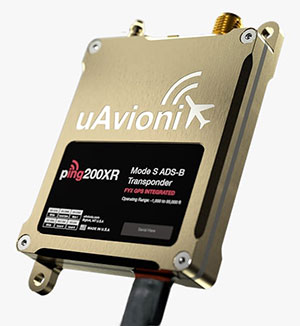
    uAvionix has added a new low-SWaP transponder to its line-up of unmanned aerial system (UAS) communications, navigation and surveillance solutions.

    The ping200XR integrates the capability of the ping200X TSO Certified Mode S ADS-B OUT transponder with the high-integrity truFYX TSO-certified GPS position source into a single enclosure. The single enclosure simplifies installation and allows the customer to choose between the existing installed GPS antenna or one provided with the ping200XR.

    The integrated GPS ensures maximum safety by providing Source Integrity Level (SIL) 3 RTCA DO-229D and TSO-C145e Class Beta 1 performance, a requirement for Mode S and ADS-B airspace access, and for reception and processing by certified avionics and Traffic Collision Avoidance Systems (TCAS) in other aircraft, as well as Air Traffic Control (ATC). SIL 3 performance is not available from non-aviation certified GPS, which are often used as an autopilot navigation source.

    The ping200XR can be integrated with popular onboard UAS autopilots for dynamic control from ground-control stations, including George — uAvionix’s enterprise autopilot solution. The ping200XR can also be pre-configured before flight and carried as a payload.

    Replicating the functionality of a cockpit transponder controller, the uAvionix mini-controller allows users to dial-in a squawk code before takeoff for even quicker integration and rapid deployment.

  • uAvionix developing transponder for space-based ADS-B surveillance

    uAvionix is developing and testing skyBeacon X, a wingtip mounted 1090MHz Mode S ADS-B OUT transponder designed to meet the update rate performance required when used in conjunction with the Aireon satellite-based global ADS-B air traffic surveillance system.

    According to the company, skyBeacon X is similar to the original skyBeacon in that it is an ED position light replacement with an integrated 1090MHz transponder, GPS position source, barometric altimeter, and LED position and anti-collision lights.

    In January 2019, NAV CANADA revealed that it will be implementing an ADS-B Performance Requirements mandate in three phases. Phase 1 includes Class A airspace and Class E airspace above FL600 by Jan 1, 2021. Phase 2 includes Class B airspace which in Canada extends from FL125 to FL180, and requires equipage by Jan 1, 2022. Phase 3, to be implemented no sooner than 2023, will require General Aviation (GA) aircraft to equip with transponders which employ antenna diversity — an antenna installed on both the bottom and the top of the aircraft — in order to achieve acceptable performance to provide Air Traffic Services.

    uAvionix plans for skyBeacon X to serve as a low-cost, diversity-compatible system for Canadian users to meet these requirements.

    “Many of our ANSP customers would like to provide air traffic control services at lower altitudes and to all types of aircraft in controlled airspace, including GA,” said Cyriel Kronenburg, Aireon’s Vice President of aviation services. “We are excited to participate in testing and validation with uAvionix to ensure skyBeacon X meets performance requirements to be used with the Aireon system. We believe these transponders offer an affordable, reliable solution for ADS-B OUT equipage that would help many of our international ANSP customers and regulators increase equipage rates for GA aircraft. This will also allow GA to leverage both the safety and operational benefits of a space-based surveillance system.”

    skyBeacon X is expected to be certified and available in 2021. According to the company, skyBeacon X will be uAvionix’s first global GA product operating on 1090MHz. While it will not be available in time for U.S. users to meet the deadline for the FAA’s mandate, it will be available and TSO certified for the Canadian projected mandate date of 2023, uAvionix added.

    The company also recently expanded into two new facilities: one in Leesburg, Virginia, and one in Columbia Falls, Montana.

  • uAvionix introduces truFYX GPS, transponder at Xponential 2019

    uAvionix Chief Operating Officer Ryan Braun discusses the company’s truFYX GPS and transponder at Xponential 2019, which took place April 29-May 2 in Chicago.

  • Becker helicopter transponder receives ADS-B certification

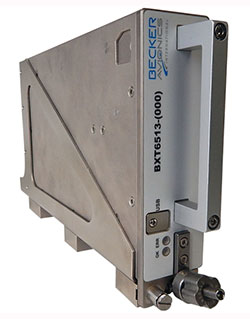
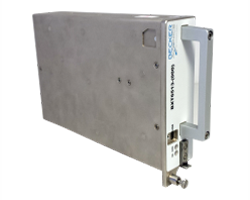
    Becker Avionics has received certification for the its BXT65XX Mode S transponder, designed specifically for the rigorous flying environment characteristic of helicopter operations.

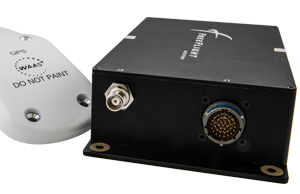
    Paired with a FreeFlight Systems’ 1203C SBAS/GNSS sensor, the remote-mounted solutions provide helicopter operators a complete and cost-effective way to equip with ADS-B Out to meet the Jan. 1, 2020, mandate.

    The system is a part of the company’s robust BXT65XX line of ADS-B Mode S transponders. Manufactured with a standard ARINC 429/743 output, this transponder easily integrates with the FreeFlight Systems Model 1203C SBAS/GNSS sensor for complete ADS-B Out compliance, the company said. It can also be installed either as dual installation for primary transponder interrogations or as single install for a dedicated ADS-B transmission.

    The transponder can be installed on aircraft not equipped with a traffic collision avoidance system. Its enhanced privacy settings can disable both ADS-B and Mode S transmissions.

    “We are pleased to announce this new milestone in our transponder product line,” said Forrest Colliver, Becker Avionics’ managing director. “This new system showcases how we tailor our compact, robust, and durable avionics to our clients’ requirements in order to provide the best solution for where and how they fly.”


  • ADS-B system for helicopters gets boost from Becker Avionics

    Becker Avionics Diversity Mode S Transponder with ADS-B certified.

    Avionics technology provider Becker Avionics has received certification for the company’s BXT6500 family Mode S transponder, designed for the rigorous flying environment characteristic of helicopter operations.

    Paired with a FreeFlight Systems’ 1203C SBAS/GNSS sensor, the remote-mounted solutions provide helicopter operators a complete and cost-effective way to equip with ADS-B Out for the upcoming Jan. 1, 2020, mandate.

    The Becker BXT6500 family Mode S transponder is diversity-capable and available for installation on non-TCAS equipped aircraft. A non-diversity option is also available.

    The FreeFlight SBAS/GNSS (WAAS/GPS) 1203C sensor.

    In addition to providing clients with ADS-B compliance, the system features enhanced privacy settings that can disable both ADS-B and Mode S transmissions — a feature unique to the BXT6500 family.

    “We are pleased to announce this new milestone in our transponder product line,” said Forrest Colliver, managing director. “This new system showcases how we tailor our compact, robust and durable avionics to our clients’ requirements in order to provide the best solution for where and how they fly.”

    The system is a part of the company’s robust BXT6500 line of ADS-B Mode S transponders. Manufactured with a standard ARINC 429/743 output, this transponder easily integrates with the FreeFlight Systems Model 1203C SBAS/GNSS sensor for complete ADS-B Out compliance, and can be installed either as dual installation for primary transponder interrogations or as single install for a dedicated ADS-B transmission.

    For more information, visit with Becker Avionics at booth C4935 and FreeFlight Systems at booth C1137 during HAI’s Heli-Expo happening this week in Las Vegas, Nevada.

  • CMD Flight gains FAA approval for ADS-B solution

    CMD Flight Solutions has received U.S. Federal Aviation Administration (FAA) approval on its third Collins TDR-94/94D Transponder and GPS pairing, the FreeFlight Systems WAAS 1203C.

    CMD Flight Solutions develops, markets and provides FAA-certified modifications to support NextGen avionics mandates and assists service and installation facilities with modification solutions to satisfy FAA-mandated requirements. The company provides Automatic Dependent Surveillance-Broadcast (ADS-B) Out on more than 5,000 business and personal aircraft.

    The supplemental type certificate (AML STC) of its ADS-B OUT solution for Part 25 airplanes covers installation of FreeFlight’s 1203C SBAS/GNSS GPS position sensor with Rockwell Collins TDR-94/94D transponders. According to FreeFlight, “The pairing is a cost-effective way to help aircraft owners meet the ADS­-B mandate.”

    ADS-B OUT compliance is due Jan. 1, 2020, in the United States.The 1203C, a 15-channel GPS sensor, is also an approved position source for NextGen applications such as CPDLC, TAWS/FMS, RNP and others.