Tag: U.S. Space Command

  • SpaceX launches GPS III satellite for US Space Force

    SpaceX launches GPS III satellite for US Space Force

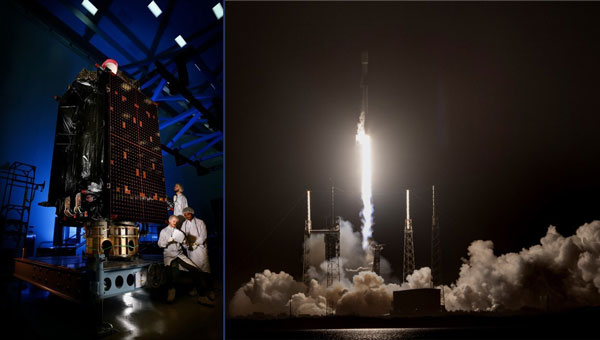
    Following weather delays, the U.S. Space Force’s Space Systems Command (SSC) and Space Operations Command expedited the Rapid Response Trailblazer launch schedule to fulfill a specific warfighter requirement. On Dec. 16, 2024, SpaceX’s Falcon 9 rocket launched the GPS III SV-07 satellite from Space Launch Complex 40 at Cape Canaveral Space Force Station, Florida.

    For the mission, multiple Space Force organizations collaborated to retrieve an existing GPS III satellite from storage, expedite integration and launch vehicle preparation, which was quickly processed for launch. The success of the launch proved a two-fold concept of operations. SSC’s Assured Access to Space showcased its agility in partnering with industry to meet evolving national needs, completing a National Security Space class launch in less than five months.

    This marks the first Space Operations Command mission led by Mission Delta 31 for a Space Vehicle launch, and it demonstrated exceptional flexibility by reducing the typical six-month pre-launch processing timeline to approximately three months, Space Operations Command said. This effort involved close coordination with Lockheed Martin in Colorado to rapidly prepare SV-07 for launch.

    The GPS III SV-07 satellite joins a robust constellation comprising 31 active vehicles, seven in reserve status and three completed GPS III vehicles awaiting launch. Equipped with M-Code technology, these satellites offer improved anti-jamming and anti-spoofing capabilities, enhancing secure access to military GPS signals for U.S. and allied forces.

  • SSC releases Epoch 2 RFI for industry inputs on MW/MT satellites

    SSC releases Epoch 2 RFI for industry inputs on MW/MT satellites

    Image: Lockheed Martin
    Image: Lockheed Martin

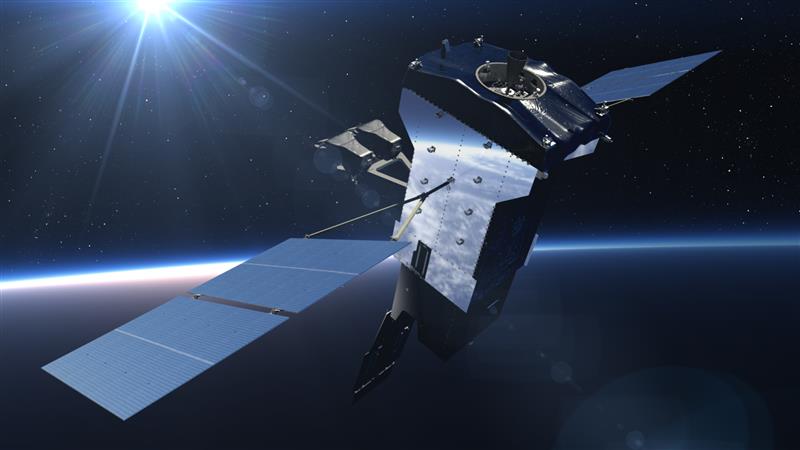
    The Resilient Missile Warning, Missile Tracking, and Missile Defense Acquisition Delta of the U.S. Space Force’s Space Systems Command (SSC) has released a request for information (RFI) seeking industry inputs for the next Epoch of medium-Earth-orbit missile warning and tracking (MW/MT) satellites. Responses from industry are requested by no later than May 16.

    A continuation of the Missile Track Custody (MTC) Program, Epoch 2 is the second increment of capability-based, phased deliveries that leverage a mature foundation of space system technology — which allows for the insertion of new technology. Resilient MW/MT Epoch 2 satellites and associated ground systems will provide next-generation overhead persistent infrared solutions to defeat advanced missile threats.

    The RFI solicits feedback from industry on the Epoch 2 acquisition strategy and technical approach for a multi-plane space segment, integrated ground segment and constellation-level systems operations.

    Epoch 2 will emphasize the maturation of MW/MT sensors, optical cross-links, data fusion, constellation mission management and robust ground communications.

    For more information on receiving the full Epoch 2 RFI can be found on the SAM.gov website linked here.

  • Who runs GPS?

    Who runs GPS?

    Who Runs GPS

    Nearly 50 years ago, in December 1973, the Defense Systems Acquisition Review Council approved the Navstar Global Positioning System for entry into Phase I of development. Since then, through its development, deployment and continuing modernization, GPS has grown into a complex program. It is operated by the Department of Defense based on legislation from Congress, executive orders from the White House, and policies established jointly with the Department of Transportation. It supports U.S. military missions as well as myriad scientific, commercial and consumer applications around the planet. Of course, the last category, with its billions of users, now dwarfs all the other ones combined.

    The GPS program, with an annual budget of nearly $2 billion and no user fees, is a gift from U.S. taxpayers to the world. It has staff in Washington, D.C.; at the Pentagon in Arlington, Virginia; at Schriever Space Force Base, Colorado; at the Space Systems Command at Los Angeles Air Force Base, California; at Cape Canaveral, Florida; at the U.S. Coast Guard Navigation Center in Alexandria, Virginia; and at GPS ground antennas in additional locations around the world. From the White House to Congress to aerospace companies, from military officers to civilian civil servants, from policy makers to engineers, from the East Coast to the West Coast to remote islands in the Pacific, Indian  and Atlantic Oceans, GPS is a vast enterprise — most of which is little known even to people in the industry and virtually unknown to the public.

    The Global Positioning System is a vast and mostly unknown enterprise. This section — the first in an occasional series of authoritative reference pieces in this magazine — aims to clarify who does what to maintain GPS as a fantastic global utility. The relevant missions of agencies or units are in italics.

    After I researched and drafted the piece, I asked the experts listed below to review it and provide corrections and additions. While grateful for their substantial feedback, I take sole responsibility for any remaining errors or omissions.

    Thank you to the following experts:

    • Harold W. Martin III, Director, Space-Based Positioning, Navigation & Timing, National Coordination Office
    • Michael J. Dunn, Capability Area Integrator for PNT, Space Systems Command, United States Space Force
    • Lt. Col. Robert O. Wray, Commander, 2nd Space Operations Squadron, United States Space Force
    • Scott R. Calhoun, Commanding Officer, Navigation Center, United States Coast Guard
    • Paul Benshoof, Technical Director, 746th Test Squadron (AFMC), Central Inertial and GPS Test Facility
    • Bernard Gruber, Senior Director, Northrop Grumman

    Please return to this page periodically to read corrections and updates to this special section. If you spot any significant inaccuracies or omissions, please bring them to my attention by writing to me at [email protected].

  • Russian jamming GPS in Ukraine war, to no effect

    Russian jamming GPS in Ukraine war, to no effect

    Image: PeterHermesFurian/iStock/Getty Images Plus/Getty Images
    Image: PeterHermesFurian/iStock/Getty Images Plus/Getty Images

    U.S. forces have detected Russian jamming of GPS signals in the Ukraine region, according to Breaking Defense. But Pentagon officials say the jamming has not affected U.S. support operations.

    U.S. reconnaissance aircraft have detected jamming over the Black Sea, but when asked about Russian jamming, a U.S. Space Command spokesperson told Breaking Defense, “There are no impacts to U.S. and Allied forces in Europe at this time.”

    Russia has been suspected of localized GPS jamming before, and officials believe it has significant electronic warfare capability.

  • Space Systems Command launches USSF-8 mission for US Space Force

    Space Systems Command launches USSF-8 mission for US Space Force

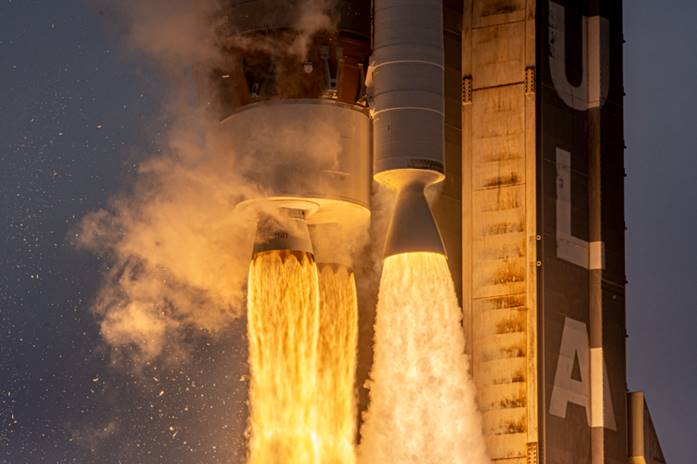
    Space Systems Command, together with United Launch Alliance and other mission partners, successfully placed the fifth and sixth Northrop Grumman-built Geosynchronous Space Situational Awareness Program (GSSAP)-5/-6 satellites into orbit for the U.S. Space Force, after an on-time launch aboard an Atlas V rocket from Space Launch Complex (SLC)-41 at Cape Canaveral Space Force Station, Florida, at 2 p.m. EST (11 a.m. PST).

    “The evolving threat to our space environment requires new levels of resiliency and survivability, autonomy and automation, and unprecedented levels of integration and networking,” said Lt. Gen. Michael A. Guetlein, commander of Space Systems Command. “Today’s successful launch will enhance our capabilities in space domain awareness and our space-based space domain awareness architecture. Congratulations to the USSF-8 integrated team and all mission partners on a successful launch.”

    The GSSAP-5/-6 satellites join a constellation supporting U.S. Space Command’s space surveillance operations as a dedicated Space Surveillance Network sensor.

    GSSAP also supports the Combined Force Space Component Command by collecting space domain awareness data, allowing for more accurate tracking and characterization of manmade orbiting objects. GSSAP is led by SSC’s Special Programs directorate.

    The National Security Space Launch (NSSL) mission launched aboard ULA’s Atlas V in the “511” configuration, which was comprised of a five-meter diameter payload fairing from RUAG Space, a single Graphite Epoxy Motor (GEM)-63 solid rocket booster from Northrop Grumman, and a single RL-10 engine from Aerojet Rocketdyne on the Centaur upper stage.

    SSC’s Launch Enterprise acquired the launch service through ULA and was responsible for successfully placing the GSSAP satellites on orbit.

    The NSSL program provides assured access for the United States’s critical warfighting space assets, and this launch vehicle has reliably placed valuable assets into their intended orbits repeatedly, adding to the NSSL program’s success record of 88 consecutive launches. The program supports a full range of government mission requirements for the nation’s defense and intelligence sectors.

    Space Systems Command is the U.S. Space Force field command responsible for rapidly identifying, prototyping and fielding resilient space capabilities for joint warfighters. SSC delivers sustainable joint space warfighting capabilities to defend the nation and its allies while disrupting adversaries in the contested space domain. SSC mission areas include launch acquisition and operations; space domain awareness; positioning, navigation and timing; missile warning; satellite communication; and cross-mission ground, command and control and data.

    A ULA Atlas V rocket carried the USSF-8 mission for the U.S. Space Force into orbit, (Photo: ULA)
    A ULA Atlas V rocket carried the USSF-8 mission for the U.S. Space Force into orbit, (Photo: ULA)

  • New Combatant commander begins organizing USSPACECOM

    New Combatant commander begins organizing USSPACECOM

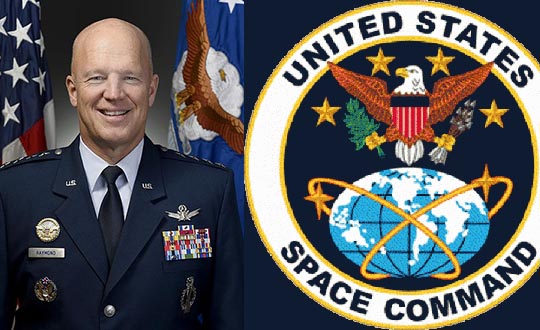
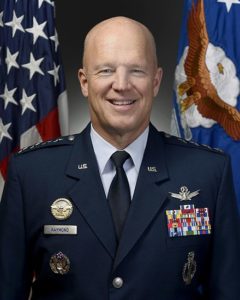
    U.S. Space Command Commander General John W. “Jay” Raymond, in his first official directives, established two subordinate commands that will jointly provide support to the new Unified Combatant Command.

    Combined Force Space Component Command and Joint Task Force Space Defense will focus the planning and execution of global space operations, activities and missions into two areas:

    1. protection and defense from threats to U.S. space capabilities/forces and
    2. maintaining and growing our national security space programs, combat-relevant space capabilities, and space cadre talent to increase warfighter lethality.

    “To ensure USSPACECOM can conduct its mission decisively, I am establishing two subordinate commands with distinct and defined mission areas to ensure the command is postured to protect and defend, while also increasing joint warfighter lethality and strengthening partnerships,” Raymond said.

    “The establishment of the Department of Defense’s 11th COCOM dedicated to space operations reflects the value of space contributions to national security, the evolution of the threats to U.S. space systems, and the importance of deterring potential adversaries from challenging or attacking U.S. space systems. These subordinate commands will have a direct impact on that mission,” he said.

    JTF-SD

    The JTF-SD will be commanded by Brigadier General Thomas L. James, with a mission to conduct space superiority operations in unified action with mission partners to deter aggression, defend space capability and, when directed, defeat adversaries throughout the continuum of conflict.

    The JTF-SD will execute its protect and defend mission through various operations centers, including National Space Defense Center at Schriever Air Force Base, Colorado; Space Situational Awareness Units; and Emerging Space Defense Units.

    CFSCC

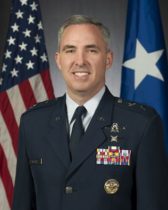
    Maj. Gen. Stephen N. Whiting. (Photo: USAF)
    Maj. Gen. Stephen N. Whiting. (Photo: USAF)

    The CFSCC will be commanded by Major General Stephen Whiting with a mission to plan, integrate, conduct and assess global space operations in order to deliver combat-relevant space capabilities to Combatant Commanders, Coalition partners, the Joint Force, and the Nation. CFSCC plans and executes space operations through four distinct and geographically dispersed operations centers, including:

    • Combined Space Operations Center at Vandenberg AFB, California;
    • Missile Warning Center at Cheyenne Mountain Air Force Station, Colorado;
    • Joint Overhead Persistent Infrared Center at Buckley AFB, Colorado; and
    • Joint Navigation Warfare Center located at Kirtland AFB, New Mexico.

    Additionally, CFSCC executes tactical control over a number of Air Force, Army and Navy space units.

    Protecting critical space assets

    “Over the past decade, our great power competitors have developed technologies that threaten our critical national assets in space,” Raymond said. “The U.S. has no desire to see a conflict in space, and we are working hard to ensure no country believes they can gain a terrestrial advantage by extending a conflict to space.

    “It’s important to understand that, like all nations, we have the inherent right of self-defense, so purposeful interference with space assets vital to our national security will be met by leveraging our multi-domain capabilities across air, land, sea, cyber and space, and all of our instruments of national power.”

  • U.S. Space Command re-established as 11th Unified Combatant Command

    U.S. Space Command re-established as 11th Unified Combatant Command

    Air Force General John W. Raymond (Photo: USAF)
    Air Force General John W. Raymond (Photo: USAF)

    In a move to enhance the United States’ space superiority capabilities, the United States Space Command (USSPACECOM) was formally re-established.

    USSPACECOM existed from 1985 to 2002 but was absorbed into U.S. Strategic Command in 2002 to make room for U.S. Northern Command and a greater focus on homeland defense.

    The Department of Defense established U.S. Space Command today as the eleventh Unified Combatant Command, with Air Force General John W. “Jay” Raymond as its congressionally confirmed commander.

    From establishment to full operational capability, General Raymond will remain dual-hatted as the commander of Air Force Space Command and U.S. Space Command. The GPS constellation is operated by Air Force Space Command’s 50th Space Wing at Schriever Air Force Base east of Colorado Springs.

    USSPACECOM will have a temporary headquarters of about 280 people at Peterson Air Force Base, Colorado.

    “Establishing USSPACECOM is a critical step that underscores the importance of the space domain and its strategic contributions to U.S. national security,” the U.S. Space Command stated in a news release. “The USSPACECOM establishment will accelerate the United States’ space capabilities to address rapidly evolving threats to U.S. space assets and the importance of deterring potential adversaries from putting critical U.S. space systems at risk.”

    “The scope, scale and complexity of today’s threat is real and it is concerning,” said Raymond during the establishment ceremony. “The establishment of a Combatant Command solely focused on the space domain demonstrates the United States’ commitment to protecting and defending its space assets against that threat.”

    Emblem of USSPACECOM
    Emblem of USSPACECOM

    The USSPACECOM mission is to deter aggression and conflict, defend U.S. and allied freedom of action, deliver space combat power for the Joint/Combined force, and develop joint warfighters to advance U.S. and allied interests in, from and through the space domain.

    The command will be postured to protect and defend, while increasing joint warfighter lethality by executing two primary missions focused on

    1. unifying and leading space capabilities for the Combined Force, and
    2. maintaining U.S. and Allied advantages in space through protection and defense.

    USSPACECOM’s global area of responsibility includes the area surrounding the earth at altitudes equal to or greater than 100 kilometers above mean sea level.

  • CNN explores space warfare, US military’s use of GPS

    shiyan-grabbing-cnn-space-warfare
    Photo: Shiyan

    A spaceborne laser zaps a GPS satellite, disabling it.

    A “kamikaze” satellite hits and destroys other nations’ critical satellites.

    Another satellite moves beside an Intelsat bird — and listens in.

    A new CNN special considers all of these possibilities in an exploration of an arms race in space, showcasing the devastation that would be caused by space warfare and how the U.S. military is preparing.

    War in Space: The Next Battlefield” premiered Nov. 29 on CNN. It provides the general public with an understanding of the critical nature of GPS, ranging from mundane activities such as daily commutes and withdrawing money from a bank, to the reliance on GPS for soldiers and intelligence agencies defending the U.S.

    The documentary explores the belief by many in the military and civilian experts that war in space is inevitable, with particular attention to methods China and Russia might use to interfere with or disable GPS.

    CNN goes inside Lockheed Martin’s facility, where it is building the next-generation GPS III satellite, as well as U.S. Space Command at Peterson Air Force Base, and visits the 2SOPS team at Schriever Air Force Base.

    CNN national security correspondent Jim Sciutto interviews the chain of command for space warfare, including Gen. William L. Shelton and Gen. John Hyten, both former commanders of Air Force Space Command. (Gen. Hyten is now commander of U.S. Strategic Command).

    Also interviewed are Adm. Cecil Haney (Ret.), former commander of U.S. Strategic Command; Lt. Gen. David Buck, commander of the Joint Functional Component Command for Space; and Defensive Duty Officer 1st Lt. Andrew Engle, a newly created position to monitor threats in space.

    If you haven’t seen this documentary, you can still watch it through on demand on cable and via the CNNgo app.

  • The System: Compass Awry

    Compass Awry

    One of the satellites in the Chinese domestic satellite navigation system, Beidou, is no longer in geostationary orbit and appears to have been abandoned.

    According to information from the U.S. Space Command, the orbit of Beidou 1D was raised by around 130 kilometers on February 18, 2009. This may have been an attempt to place the satellite in a graveyard or disposal orbit. Such a maneuver is carried out by spacecraft operators when a satellite reaches the end of its life due to a malfunction or some other reason. However, the recommended boost height for geostationary satellites is about 300 kilometers, where a satellite is above the zone used to reposition active geostationary satellites and also provides a buffer for natural orbit variations due to solar radiation pressure and other causes. Beidou 1D may not have had sufficient propellant to reach desired orbit height.

    In its current orbit, Beidou 1D is drifting westward at a rate of about 4.5 degrees per day and has already completed one circuit of the Earth. On July 17, it was positioned just west of the Greenwich meridian.

    China launched Beidou 1D in February 2007; according to the Xinhua news agency at the time, the satellite was to serve as a backup to the three satellites already in orbit, perhaps replacing the first Beidou satellite, Beidou 1A, when necessary. Subsequent reports did indicate that Beidou 1A appeared to have malfunctioned.

    It is not known what kind of malfunction Beidou 1D suffered or whether its signals have been switched off. Accurate detailed information about the current status of the Beidou domestic system is difficult to obtain.

    China has plans to improve its domestic navigation system and to develop a global system known as Beidou 2 or Compass. Its first medium Earth orbit satellite, Beidou M1, was launched on April 13, 2007, followed by a geostationary satellite, Beidou G2, on April 14, 2009.

    — Richard Langley

    Galileo, Too, Has Accounting Problems

    The European Union’s Galileo program has been ill-prepared and badly managed, according to a report by the European Court of Auditors released on June 29. These defects have set back development by five years, it believes.

    The report also criticizes the Union’s 27 individual member states for counterproductive promotion of their respective national aerospace industries. The auditors conclude that the original public-private partnership plan was “inadequately prepared and conceived” and “unrealistic.”

    The European Commission (EC) “must considerably strengthen its management,” advice the EC has evidently taken to heart. For the last year, contract negotiations by the European Space Agency (ESA) have taken place under the watchful eye of an EC program manager.

    Contracts. On June 15, ESA signed contracts for the procurement of so-called long-lead items required for the construction of the constellation with Astrium GmbH and OHB Systems, the latter a German company and the former a German-French partnership with British involvement. Both Astrium (€7 million) and OHB (€10 million) contracts relate to parts for equipment of the satellite platforms and navigation payloads. Award of the satellite contracts themselves is planned to take place by the end of 2009.

    ESA and Arianespace contracted for launch of the first four operational Galileo satellites on two Soyuz launch vehicles from Europe’s Spaceport in French Guiana. The four IOV satellites will be placed in orbit by end of 2010.

    Conversations at the Paris Air Show seemed to indicate that ESA and the EC may divide the satellite construction contract into two stages to permit a later modification of the design, and that they may also divide the first satellite contract between the two bidders, Astrium and OHB, as an insurance policy to reduce the possibility of further development delays, and as a boon to design flexibility.

    The Astrium CEO sharply criticized this option, saying it would increase overall program cost. The OHB CEO seemed more sanguine, lauding ESA’s move as likely to maintain a competitive environment.