Tag: UNESCO World Heritage Site

  • UNESCO sites get precise imagery with Spectra Precision

    Photo: Spectra Precision
    Photo: Spectra Precision

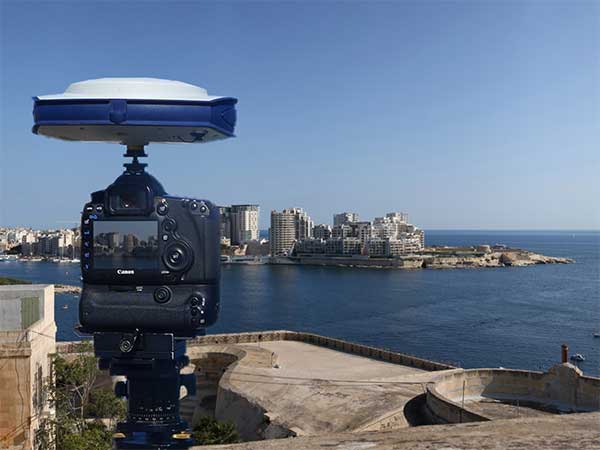
    Verified photomontages for UNESCO World Heritage sites achieves accuracy with Spectra Geospatial SP80

    Verified photomontage is an important planning tool to envision how proposed surrounding development plans would affect UNESCO World Heritage sites. Verified photomontage demands the best accuracy for the best visualization to determine what a development may look like to a person standing at the photographic viewpoint.

    For MS Environmental (MSE), selected to provide verified photomontage for multiple UNESCO World Heritage sites, including in the UK Royal Botanical Gardens at Kew and the City of Bath, the Spectra Geospatial SP80 GNSS receiver enabled the highest quality visualization.

    “The one-centimeter accuracy delivered by the SP80 is essential,” said Mike Spence, a verified photomontage specialist and founder of MSE. “The highest level of accuracy in the relationship between the actual camera location and the 3D model camera gives confidence in the visualization. In addition, The SP80 offers both simplicity and a robust design though it’s taken a few knocks over the years, it gives us the confidence we can use the equipment anywhere in the world and get the best results.”

    At Kew Gardens, MSE was commissioned to produce accurate visualizations of views from within the UNESCO World Heritage Site. There was concern about development proposals for tall tower blocks in west London and how these might affect historic views from Kew Gardens.

    The work culminated in a public inquiry, where evidence was presented that showed how views would change as a result of the proposed development. “Without the level of accuracy provided by the SP80 together with a transparent technical methodology it would have been unclear precisely how these historic views would change,” Mike Spence said.

    At the UNESCO World Heritage City of Bath, the Bath and North East Somerset Council commissioned MSE to produce technical photography from strategic views around the World Heritage City to show how development proposals would affect strategic views across the city.

  • Royal Gardens get precise imagery with Spectra Precision

    Royal Gardens get precise imagery with Spectra Precision

    Photo: Spectra Precision
    Photo: Spectra Precision

    Verified photomontages for UNESCO World Heritage sites achieves accuracy with Spectra Geospatial SP80

    Verified photomontage is an important planning tool to envision how proposed surrounding development plans would affect UNESCO World Heritage sites. Verified photomontage demands the best accuracy for the best visualization to determine what a development may look like to a person standing at the photographic viewpoint.

    For MS Environmental (MSE), selected to provide verified photomontage for multiple UNESCO World Heritage sites, including in the UK Royal Botanical Gardens at Kew and the City of Bath, the Spectra Geospatial SP80 GNSS receiver enabled the highest quality visualization.

    “The one-centimeter accuracy delivered by the SP80 is essential,” said Mike Spence, a verified photomontage specialist and founder of MSE. “The highest level of accuracy in the relationship between the actual camera location and the 3D model camera gives confidence in the visualization. In addition, The SP80 offers both simplicity and a robust design though it’s taken a few knocks over the years, it gives us the confidence we can use the equipment anywhere in the world and get the best results.”

    At Kew Gardens, MSE was commissioned to produce accurate visualizations of views from within the UNESCO World Heritage Site. There was concern about development proposals for tall tower blocks in west London and how these might affect historic views from Kew Gardens.

    The work culminated in a public inquiry, where evidence was presented that showed how views would change as a result of the proposed development. “Without the level of accuracy provided by the SP80 together with a transparent technical methodology it would have been unclear precisely how these historic views would change,” Mike Spence said.

    At the UNESCO World Heritage City of Bath, the Bath and North East Somerset Council commissioned MSE to produce technical photography from strategic views around the World Heritage City to show how development proposals would affect strategic views across the city.

  • Taking Position: Elephants, citadels and UAVs promote social good

    By Tracy Cozzens
    Managing Editor

    As the holiday season approaches, many of us think about ways we can help others, or promote the social good. This month, our Market Watch section features three different projects designed to do just that.

    In our Mapping section, we explore how geospatial information systems can be used to help us help the homeless. Geographic information systems (GIS), community involvement and app builders are helping gather and use data to deliver critical services to the homeless in major metropolitan areas in the United States.

    In our UAV section, we discover that unmanned aerial vehicles can be used for more than commercial purposes. One company used its fixed-wing UAV to help the Peruvian government save Machu Picchu, an Incan citadel, from the 15th century and a UNESCO World Heritage Site.

    In another project, UAVs are being used in an effort to stop the poaching of rare and endangered African wildlife. Silent, stealthy UAV patrols can spot the poaching activity by providing eyes in the sky, even at night using infrared cameras.

    These are just three examples of ways we are using location and positioning technology — ways that probably didn’t even come close to the top ideas when the tech was conceived.

    As we look toward 2016, it’s exciting to think what new applicatins might be in store. If you have an application story to share, please email me at [email protected]. Perhaps your story will appear in a future issue.