Tag: Unmanned Aircraft Systems Integration Pilot Program

  • Fortem Technologies enables safe drone delivery of medical supplies in North Carolina

    Fortem Technologies enables safe drone delivery of medical supplies in North Carolina

    Photo: Fortem Technologies
    Photo: Fortem Technologies

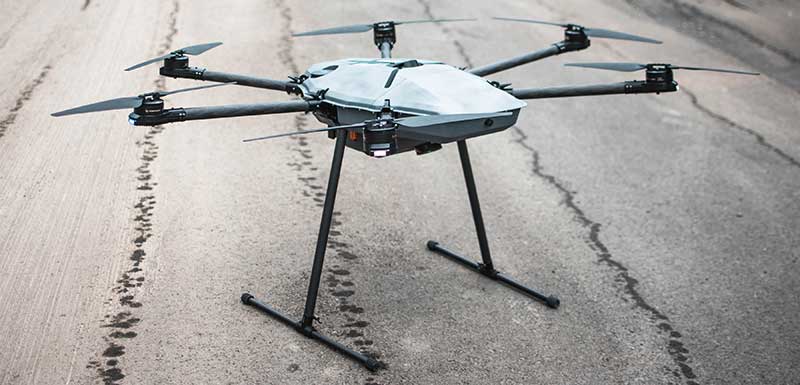
    Fortem Technologies has completed the first phase of the U.S. Department of Transportation’s Unmanned Aircraft Systems Integration Pilot Program (UAS IPP) in North Carolina.

    As part of the program, Fortem is conducting tests to monitor the airspace around WakeMed Hospital in Raleigh, tracking manned flights alongside the UPS Delivery Corridor, and delivering medical test samples via unmanned drones. Fortem has been using its TrueView radar and SkyDome software system to ensure UAS operations and drone deliveries do not interfere with medical helicopters flying in and out of the area, as well as alert drone operators of any potential non-cooperative aircraft in the vicinity.

    According to the company, it was able to accurately and consistently track incoming medical helicopter traffic, providing real-time alerts to Airmap, an unmanned service supplier.

    “By monitoring the airspace and creating a service that ensures the safe use of unmanned air vehicles, we will expand from these initial drone deliveries to greater geographical reach and more sophisticated roles for unmanned drones,” said Adam Robertson, CTO of Fortem Technologies. “With Fortem’s ability to offer real time data and analysis of airborne threats, we can start to see additional support for things like search and rescue operations, first responders, and increased shipments of critical supplies to remote locations. None of this can happen without the trust that our systems are effective and safe.”

    The North Carolina Department of Transportation (NCDOT) Division of Aviation partners, including WakeMed Hospital, are testing drone operations that will soon go beyond a pilot’s visual line of sight to provide efficient and safe drone operations with the ultimate goal of helping to improve healthcare access for all North Carolinians.

    “Ensuring the safety of manned aviation is paramount for unmanned flight operations, yet successful coordination of the two is not an easy task,” said Basil Yap, UAS program manager at NCDOT. “The phase one testing has shown promising results and we are hopeful the phase two operations will provide the information we need to receive a beyond-visual-line-of-sight waiver from the Federal Aviation Administration.”

    Fortem will continue to provide situational awareness and secure the airspace into the next phase of the program, the company said. NCDOT, as part of the USDOT UAS IPP, will continue to support its partners’ operations at WakeMed throughout the year until the program’s conclusion in October.

  • FAA adds two more webinars on new pilot program

    The U.S. Federal Aviation Administration (FAA) is hosting two more webinars to discuss its Unmanned Aircraft Systems (UAS) Integration Pilot Program.

    Each webinar provides an overview of the program, the application process, and the specific criteria and deadlines that companies and research groups will be required to meet. Registration is required; only register for one session as they cover the same content.

    • Tuesday, Nov. 21, 12–1:15 p.m. EST
    • Monday, Nov. 27, 12–1:15 p.m. EST

    The pilot program was launched Nov. 2 to foster innovation and advances the integration of UAS into United States’ airspace to ensure U.S. global leadership in the emerging UAS industry.

    “There’s already been tremendous interest in the program and more than 4300 people registered to attend our online webinars to learn how they can participate,” the FAA UAS Integration Office said in a statement. “It’s facilitating partnerships between state, local, and tribal government entities and private industry to gather operational and other data from advanced operational concepts, such as flights over people and package delivery. The results from the program will help to inform the development of future enabling regulations that will expand safe UAS operations and help to transition many of the new and novel operational concepts that we manage today by exception into routine, commonplace aspects of our everyday lives.”

    Details about applying, timelines, and requirements are at FAA.gov/Go/DronePilot. Those interested can also subscribe to receive email updates from the FAA’s UAS webpage.

  • USDOT launches Drone Integration Pilot Program

    U.S. Secretary of Transportation Elaine Chao has launched an initiative to safely test and validate advanced drone operations in partnership with state and local governments in select jurisdictions.

    The Unmanned Aircraft Systems (UAS) Integration Pilot Program implements a directive signed by President Trump, and the results will be used to accelerate the safe integration of UAS into the national airspace and to realize the benefits of unmanned technology in our economy, according to a U.S. Department of Transportation (USDOT) press release.

    Prospective local government participants are asked to partner with the private sector to develop pilot proposals. After evaluating all of the applications,  USDOT will invite a minimum of five partnerships.

    The department also will publish a Federal Register Notice with more details about how applications will be evaluated and how the program will work.

    More about the program is available on the DOT website.

    The program will help tackle the most significant challenges in integrating drones into the national airspace while reducing risks to public safety and security,  USDOT said. The program is designed to provide regulatory certainty and stability to local governments and communities, UAS owners and operators who are accepted into the program.

    In less than a decade, the potential economic benefit of integrated unmanned aerial systems into the nation’s airspace is estimated to equal up to $82 billion and create up to 100,000 jobs, according to an economic report by the Association for Unmanned Vehicle Systems International (AUVSI).

    The program will help the USDOT and Federal Aviation Administration (FAA) develop a regulatory framework to:

    • allow more complex low-altitude operations;
    • identify ways to balance local and national interests;
    • improve communications with local, state and tribal jurisdictions;
    • address security and privacy risks; and
    • accelerate the approval of operations that currently require special authorizations.

    “This program supports the president’s commitment to foster technological innovation that will be a catalyst for ideas that have the potential to change our day-to-day lives,” Chao said. “Drones are proving to be especially valuable in emergency situations, including assessing damage from natural disasters such as the recent hurricanes and the wildfires in California.”

    The pilot program will evaluate a variety of operational concepts, including night operations, flights over people, flights beyond the pilot’s line of sight, package delivery, detect-and-avoid technologies, counter-UAS security operations, and the reliability and security of data links between pilot and aircraft.

    Industries that could see immediate opportunities from the program include commerce, photography, emergency management, precision agriculture and infrastructure inspections and monitoring.

    “Stakeholders will have the opportunity through this program to demonstrate how their innovative technological and operational solutions can address complex unmanned aircraft integration challenges,” said FAA Administrator Michael Huerta. “At the same time, the program recognizes the importance of community participation in meaningful discussions about balancing local and national interests related to integrating unmanned aircraft.”