Tag: Unmanned Aircraft Systems

  • uAvionix receives FAA order for certified drone GPS receiver

    uAvionix receives FAA order for certified drone GPS receiver

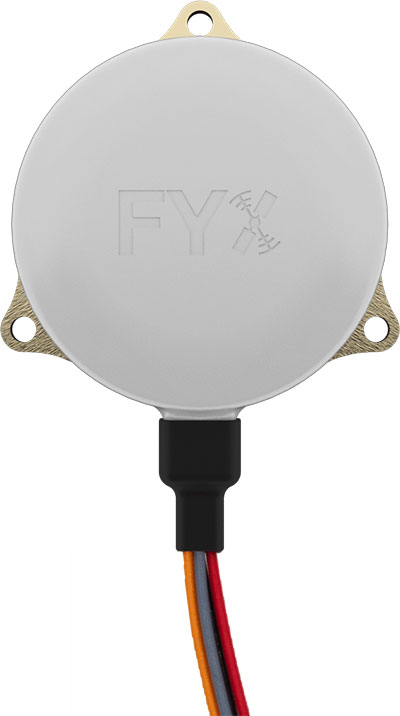
    The truFYX receiver. (Photo: uAvionix)
    The truFYX receiver. (Photo: uAvionix)

    uAvionix Corp. has received a Technical Standard Order (TSO) from the U.S. Federal Aviation Administration (FAA) for its truFYX GPS receiver for unmanned aircraft systems (UAS).

    Capable of receiving satellite-based augmentation system (SBAS) and wide area augmentation system signals, the receiver specifically targets UAS platform navigation and surveillance solutions.

    With an increased regulatory focus on certifiability of UAS for beyond visual line of sight (BVLOS) operations, truFYX provides a critical component to enable safe navigation and airspace integration. A uAvionix’s blog article — “Why Certified GPS with Integrity for UAS Navigation Matters” — describes the importance of GPS receivers for UAS BVLOS operations.

    The TSO-C145e Class Beta 1 GPS weighs 20 grams, which includes the receiver, antenna, DO-160G power supply and interface protection circuits. A Class Beta 1 GPS enables the truFYX to be the primary position source for domestic enroute and terminal navigation, as well as the primary position source for ADS-B OUT solutions.

    The Source Integrity Level 3, System Design Assurance 2 system ensures reception and processing by Air Traffic Control and Traffic Collision Avoidance System when used as a position source for ADS-B. For these reasons, the Airbus Zephyr program was announced as a truFYX launch customer in January.

    A certified position source for UAS navigation reduces position error by implementing a strict Receiver Autonomous Integrity Monitoring (RAIM) / Fault Detection and Exclusion (FDE) engine, and processing advanced SBAS messages designed to improve accuracy and integrity. These systems combine to detect unhealthy GPS satellite transmissions and remove them from the position calculation, providing critical differentiation from a typical commercial GPS receiver.

    Design Assurance Level C software and hardware is achieved through the use of RTCA DO-178C and DO-254 engineering processes. As with all uAvionix TSO certified avionics, truFYX is manufactured in Montana under an FAA Manufacturing Inspection District Office approved quality-control process and facility.

    truFYX technology has been previously TSO-certified in several form factors, including the highly integrated and complex skyBeacon, tailBeacon and tailBeaconX platforms.

  • uAvionix launches enterprise UAS autopilot dubbed ‘George’

    uAvionix launches enterprise UAS autopilot dubbed ‘George’

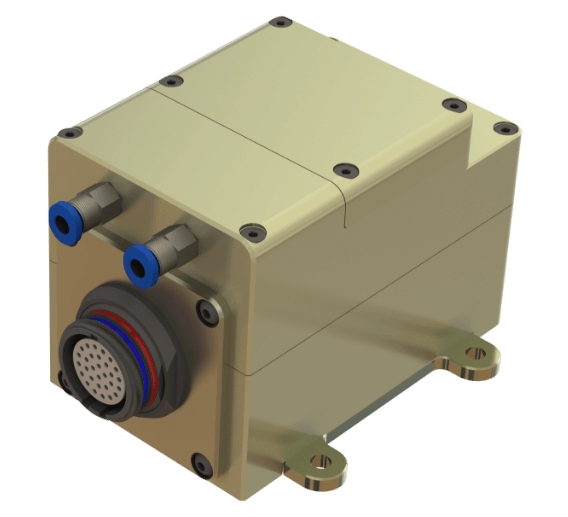
    Photo: uAvionix
    Photo: uAvionix

    uAvionix Corp has launched its first autopilot for unmanned aircraft systems (UAS), named George.

    At 80 grams, George is a low size, weight and power (SWaP) certifiable solution for enterprise operations and those wishing to type certify their UAS. It is manufactured in the United States.

    Built around the open-source autopilot Cube from CubePilot, George combines Cube with Design Assurance Level C (DAL-C) hardware and safety and sensor monitoring, enabling customers to meet the type certification and safety case requirements for beyond visual line of sight (BVLOS) operations.

    George’s triple-redundant inertial measurement unit (IMU) system includes three accelerometers, three gyroscopes, three magnetometers and three barometers, one of which has been TSO-certified under TSO-C88b in other uAvionix products such as skyBeacon, tailBeacon  and ping200X. The hardware platform is designed and built to RTCA DO-254 DAL-C and meets rigorous DO-160G and MIL-810H power and environmental qualifications.

    George is plug-and-play compatible with all of uAvionix’s certified and uncertified products, including

    • truFYX GPS (TSO-C145e)
    • ping200X (TSO-C112e, TSO-C166b, TSO-C88b)
    • RT-2087/ZPX-B (AIMS MkIIB)
    • pingRX Pro dual-band ADS-B receiver for detect and avoid
    • the microLink or SkyLink C-band command and control solutions

    “The flight control capabilities of the Cube are superb, backed by hundreds of thousands of man-hours of engineering and experimentation over the past 10 years,” said Paul Beard, CEO of uAvionix. “But what has been lacking is a hardware platform that matches that capability in robust performance. George brings everything we’ve learned about certified avionics to the autopilot space in a way that outperforms existing enterprise and military autopilots in a lower SWaP package.”

    George will be available for beta test-launch customers in June with production units available in the third quarter.

  • First Fix: Regulation is necessary to advance drone operations

    First Fix: Regulation is necessary to advance drone operations

    Guest column by Brian Wynne
    AUVSI President and CEO

    Brian Wynne, AUVSI president and CEO
    Brian Wynne, AUVSI president and CEO

    A recent analysis found that just 10 percent of the unmanned aircraft systems (UAS) included in the Unmanned Systems and Robotics Database maintained by the Association for Unmanned Vehicle Systems International (AUVSI) can operate beyond the visual line of sight (BVLOS) of its operator.

    While the technology for BVLOS operations has existed for years, under current federal regulations, only the military is permitted to use it. The absence of federal regulation allowing BVLOS operations hinders the full value and benefits that the UAS industry has to offer.

    Regulations that provide guidance and rules for operating unmanned systems are necessary for the industry’s advancement. Earlier this year, the Federal Aviation Administration (FAA) issued a proposed rule for UAS operations over people, and the UAS community is eagerly anticipating the agency will offer an additional rule requiring UAS to be equipped with remote identification.


    “Remote ID is a crucial next step to gain the confidence of federal defense and security agencies, manned aviation users and the public.”


    However, the rulemaking process for remote ID has been delayed by the FAA twice this year and is now slated to be released in December. The need for remote ID cannot be overstated, as the advancement of the UAS industry depends on identifying and tracking UAS flying in the airspace.

    Furthermore, remote ID is a crucial next step to gain the confidence of federal defense and security agencies, manned aviation users and the public. With this confidence, UAS can further integrate into the national airspace to perform important BVLOS operations such as inspection of utility rights of way, widespread search-and-rescue missions, and package delivery.

    A clear, national regulatory framework and the support of the federal government is needed to drive the adoption of unmanned systems technology and its applications. Currently, the UAS industry is working with our government partners on remote ID and tracking standards, but we recognize that more needs to be done and at a faster pace than the regulatory process allows. That is why the UAS industry is stepping up to explore near-term solutions before remote ID regulations are finalized and published.

    In May, AUVSI and the Airports Council International-North America commissioned a Blue Ribbon Task Force on UAS Mitigation at Airports. The task force is working to refine procedural practices and provide a policy framework to address the timely and critical issue of incursions by unauthorized UAS at airports and how best to mitigate this threat, including industry and government recommendations for remote ID. The task force will release a report this year.

    Applications of unmanned systems aren’t limited by technology or imagination; they’re only limited by regulations. We need a streamlined regulatory environment that allows for the safe deployment of unmanned systems into our nation’s transportation infrastructure so we can begin to reap the full benefits of this technology.

  • Congress increases funding for UAS research, airspace integration

    More than $20 million for research on unmanned aircraft systems (UAS) was included in an appropriations package that Congress passed and the president signed into law last week to fund the federal government through the end of the fiscal year on Sept. 30. The funding for UAS research is $2.67 million more than last year’s budget request by the Federal Aviation Administration (FAA) to address a host of research challenges associated with integrating UAS into the national airspace system.

    The measure’s section on appropriations for transportation agencies also includes $20 million above the 2016 budget request for the FAA’s air traffic control organization. The increase will provide for the hiring and training of new controllers and accelerating UAS airspace integration. The agreement also includes $11.5 million more than was requested for aviation safety activities for UAS integration, including the addition of six full-time positions to support the certification of new technologies and advance the FAA’s organizational delegation authorization (ODA) efforts and strengthen safety oversight.

  • FAA reviewing micro UAS report

    The Federal Aviation Administration (FAA) is now reviewing the report and recommendations of the Micro Unmanned Aircraft Systems (UAS) Aviation Rulemaking Committee. The agency had tasked the group to develop recommendations for performance-based regulations that would let certain unmanned aircraft operate over people not directly involved in the flight of the aircraft.

    The rulemaking committee, which began meeting March 8, worked under a tight deadline of April 1 to deliver its report. The task force included a diverse set of aviation stakeholders, including UAS manufacturers, UAS operators, consensus standards organizations, researchers and academics.

    “We commend the committee members for their sincere dedication and for producing a comprehensive report in such a short time,” said FAA Administrator Michael Huerta. “This type of collaborative government and industry partnership is exactly what is needed to keep pace with this rapidly changing industry and will serve as a model for future rulemaking advisory tasks.”

    The ARC’s consensus report recommends establishing four small UAS categories, defined primarily by risk of injury to people below the flight path. For each category, the group recommends assigning a potential risk linked to either weight or impact energy. The report also addresses operational restrictions and standards to minimize the risks associated with each category.

    The FAA will use the information in the report to develop a flexible, performance-based proposed rule. The public will have an opportunity to comment on the proposal based on the ARC’s recommendations.

    View a copy of the report.

  • ENSCO to Demo UAS Training Solution at Unmanned Systems 2015

    ENSCO Inc.VENOM, Unmanned Aerial System Training Suite, ENSCO Avionics IData will display its unmanned aircraft systems (UAS) solutions in booth 1551 at AUVSI’s Unmanned Systems 2015 show, held May 5-7 in Atlanta.

    Used primarily in military operations, ENSCO sees the value of UAS to law enforcement, agriculture, disaster evaluation and other civilian operations. The company is positioned to design, build, certify and support UAS in the National Airspace System based on its experience with the armed forces, the Federal Aviation Administration (FAA), and national security groups merged with its capabilities in avionics software and flight systems, PNT technology and weather forecasting.

    ENSCO will demonstrate its Virtual ENvironment Operations Module (VENOM), a solution for training UAS pilots and payload operators. Fully configurable to match any UAS platform, sensor payload and mission, ENSCO says VENOM provides modeling- and simulation-based training capability based on open architecture and commercial technology.

  • Global Aerospace to Showcase UAS SOP Manual at AUVSI Show

    Global Aerospace has made available a standard operating procedure (SOP) manual for small unmanned aircraft system (UAS) operations through its partnership with the Unmanned Safety Institute (USI). Global Aerospace will be exhibiting at booth 745 at the AUVSI’s Unmanned Systems 2015, held May 4-7 in Atlanta.

    The “Visual Line of Sight SOP” outlines general operating procedures for UAS and will be made available to qualified Global Aerospace customers. USI is a subsidiary company of Global’s SM4 program partner, Waypoint Global Strategies.

    Through the SM4 program, Waypoint and USI provide Global’s UAS customers with discounted consulting and data analytics services and access to flight training.

    “Standard procedures are the foundation of safe operations,” said Alex Mirot, president of USI. “We are excited about offering this SOP manual to Global Aerospace customers as a way to promote safety and reduce errors.”

    USI offers its clients customized workshops, assistance in drafting and adopting policy and procedures, risk assessment and management, safety assurance, and safety promotion.

    Chris Proudlove, senior vice president and team leader, complex risks at Global Aerospace said, “Global Aerospace continues to develop products and tools for the rapidly growing sector of UAS. This comprehensive manual will provide an excellent resource for operators of small UAS.”