Tag: V2I

  • u‑blox, Commsignia and NXP collaborate to drive V2X

    V2X companies u‑blox, Commsignia and NXP Semiconductors announced a strategic collaboration to address the rapidly growing demand for reliable vehicle‑to‑vehicle (V2V) and vehicle‑to‑infrastructure (V2I) technology.

    The adoption of V2X technology in North America and European markets equips new vehicles with the ability to securely and anonymously share information with other similarly equipped vehicles, infrastructure and even pedestrians within a radius of up to 1 km.

    IEEE 802.11p V2X technology is the only proven and production ready technology today that can reliably see around corners, the companies said. V2X information will augment the awareness of drivers to improve safety, reduce congestion and emissions, thereby delivering real savings and benefits to all road users today and in the future for self-driving autonomous vehicles.

    This collaboration builds on the strengths of all three companies to deliver substantial time-to-market advantages and benefits to automotive customers, with future-proof solutions that optimize investments and mitigate risks.

    Automotive manufacturers are looking for ways to bring V2X to market now, ramping up to 100 percent implementation in new cars within the next five years. This collaboration between three of the market leaders will accelerate the adoption of V2X technology thanks to the availability of fully integrated hardware and software solutions in a fully‑fledged and secure (US DOT SCMS compliant) V2X system.

    https://youtu.be/fyGDrtVbUOY

    “This collaboration focuses on delivering production-ready Vehicle‑to‑Vehicle (V2V) and Vehicle‑to‑Infrastructure (V2I) systems like our V2X communication module,” said Costas Meimetis, director of product strategy, u-blox. “We are already present in the market through our THEO module family, this collaboration will strengthen our position and allow u‑blox to innovate faster, bringing new solutions to market starting. Our expertise and this collaboration means we are uniquely positioned to meet the increasing demand from automotive manufacturers, who must meet new legislation in key markets.”

    “NXP’s status as a Dedicated Short‑Range Communication (DSRC) V2X technology leader, is a key reason u‑blox chose NXP’s RoadLINK solution, a complete automotive-grade 2 +105C ambient, V2X system solution with best‑in‑class performance to power their V2X module,” said Rob Hoeben, senior director, V2X segment. V2X is the only ADAS technology that operates in real-time, lowest latency and sees around corners, facilitating self-driving autonomous vehicles.

    V2X, IEEE 802.11p-based, is complementary to 5G versions of V2X and both technologies are expected to co-exist for the foreseeable future. NXP has participated in several V2X demos and trials, including truck platooning, achieving short separation distances between trucks.

    NXP’s RoadLINK solution, which is now in production with a major North American OEM, will help ensure the u-blox module can deliver accurate and reliable communications to and from a vehicle.

    “Commsignia leads the market with the best end‑to‑end V2X software suite for connecting cars and smart city infrastructure,” said Jozsef Kovacs, CEO of Commsignia. “Combined with the NXP RoadLINK chipset and u‑blox module, automotive manufacturers can benefit from the enhanced performance of a secure and fully integrated solution to implement V2X technology in new vehicle designs, so taking the next step towards improving the safety and efficiency of our roads.”

    u-blox, Commsignia and NXP, will be demonstrating live how this collaboration is enabling life-saving V2V applications at the TU-Automotive Detroit Conference and Expo June 7‑8. The demo entitled “Fast track to safe & secure V2X” will show the following use cases:

    • Blind Spot Warning (BSW)
    • Emergency Electronic Brake Light (EEBL)
    • Co-operative Forward Collision Warning (FCW)
    • Lane Change Assist (LCA)
    • Left/Right Turn Assist (LRTA)
    • Control Loss Vehicle Warning (CLW)
    • Intersection Movement Assist (IMA)
  • Spirent, Tata Elxsi V2X automotive test system adopted by researchers

    Spirent, Tata Elxsi V2X automotive test system adopted by researchers

    A V2X test system developed by Spirent and Tata Elxsi has been adopted by CAICT, a scientific research institute directly under the Ministry of Industry and Information Technology of China.

    V2X, or “vehicle to everything,” includes vehicle to vehicle (V2V) and vehicle to infrastructure (V2I) connected technology as well as vehicles to pedestrians, devices or transportation grids.

    Tata Elxsi, based in Bangalore, India, is a design and technology services provider for product engineering in industries including broadcast, communications and automotive.

    The next-generation test system provides a flexible, scalable and comprehensive test environment for testing and performance benchmarking of V2X applications, in various stages of the development cycle, from early research up to pre-production.

    The China Academy of Information and Communications Technology (CAICT) in Beijing.
    The China Academy of Information and Communications Technology (CAICT) in Beijing.

    Using a combination of Tata Elxsi’s patent-pending V2X Emulator software and Spirent’s advanced solutions for GNSS and radio channel simulation, the integrated V2X test bed offers the ability to bring real-world traffic scenarios into the lab, significantly reducing costs and time associated with extensive field testing.

    Various driving scenarios can be emulated under a variety of terrain, wireless channel and atmospheric conditions. The V2X test bed, which supports both WAVE-DSRC (U.S., Asia) and ITS-G5 (Europe) standards, offers a comprehensive platform for both functional and performance assessment of V2V and V2I/I2V safety applications, V2X security testing and test report generation.

    “V2X technology is gaining tremendous interest among global OEMs and tier-1 companies for delivering safer driving experience,” said Nitin Pai, senior vice president of marketing, Tata Elxsi. “With China being the largest automotive market in the world, this latest win with CAICT in China is significant for us and automotive companies targeting this market.”

    The V2X Test System enables multi-standards compliance testing using a single solution. The system has the capability to emulate more than 100 onboard units (OBU) and roadside units (RSUs) on a single hardware, enabling repeatable testing of complex scenarios from early development stages without the high risks and costs associated with live vehicle testing.

    “V2X communication will contribute significantly to making the autonomous car a safe and secure reality,” said Peter Tan, Greater China and East Asia, Spirent. “The U.S. DOT’s [Department of Transportation] newly issued regulation proposal mandating V2V communication for light vehicles is another confirmation of this widely accepted fact. With test solutions for conformance, functionality and performance developed in partnership with Tata Elxsi, Spirent is proud to help our customers ensure that their devices meet all conformance functionality and performance requirements to master these major changes ahead.”

    Tata Elxsi is showcasing the V2X Test System along with an array of other automotive solutions covering integrated e-cockpit, infotainment, ADAS, autonomous vehicle technology and telematics at its booth 6223 at CES 2017, Las Vegas.

  • University of Michigan Opens Test ‘City’ for Connected Vehicles

    University of Michigan Opens Test ‘City’ for Connected Vehicles

    Photo: University of Michigan

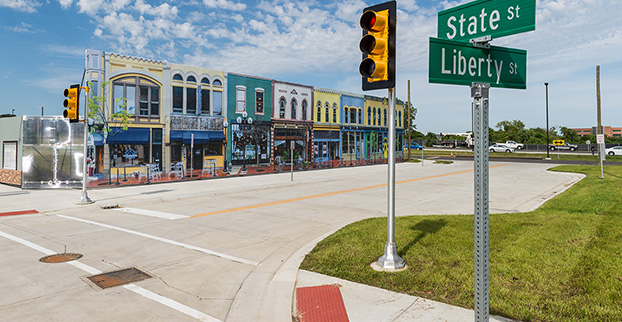
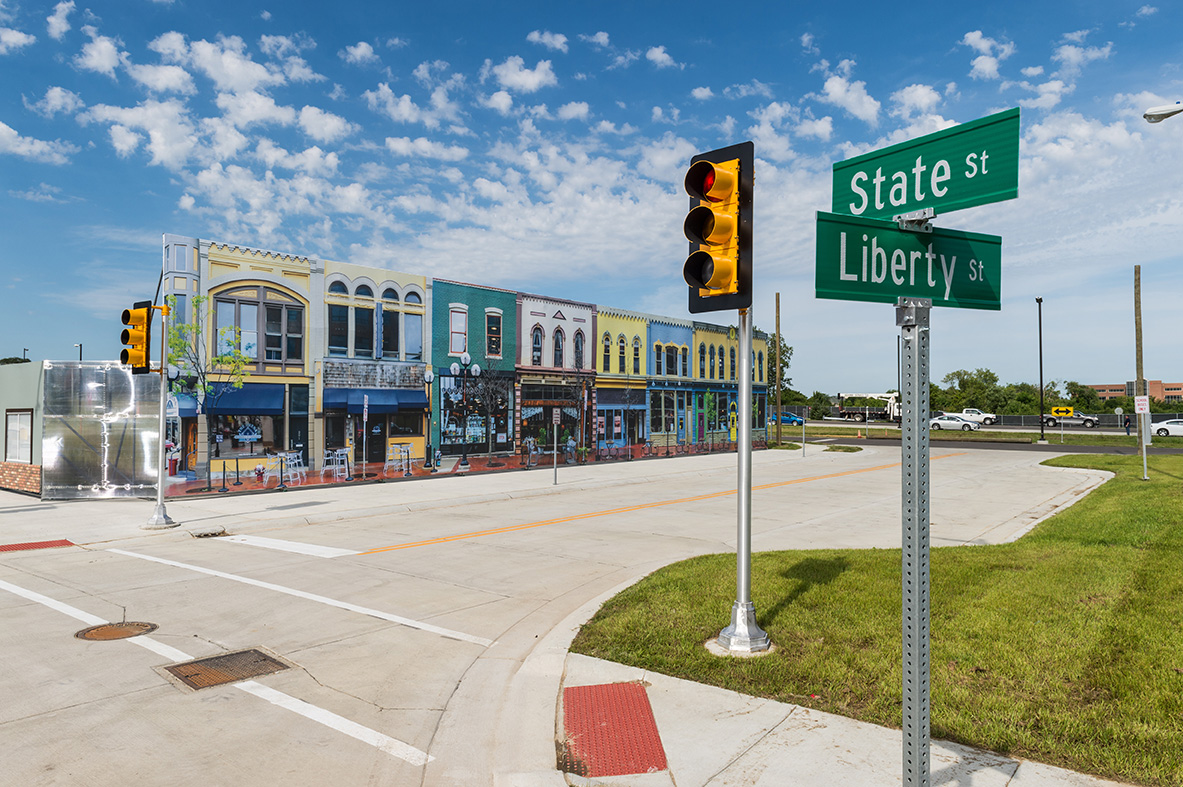
    The University of Michigan (U-M) has opened Mcity, a controlled environment designed to test the potential of connected and automated vehicle technologies that will lead the way to mass-market driverless cars.

    Mcity is a 32-acre simulated urban and suburban environment that includes a network of roads with intersections, traffic signs and signals, streetlights, building facades, sidewalks and construction obstacles. It is designed to support rigorous, repeatable testing of new technologies before they are tried out on public streets and highways.

    “There are many challenges ahead as automated vehicles are increasingly deployed on real roadways,” said Peter Sweatman, director of the U-M Mobility Transformation Center (MTC). “Mcity is a safe, controlled, and realistic environment where we are going to figure out how the incredible potential of connected and automated vehicles can be realized quickly, efficiently and safely.”

    In particular, Mcity allows researchers to simulate the environments where connected and automated vehicles will be most challenged. Even seemingly minor details a vehicle might encounter in urban and suburban settings have been incorporated into Mcity, such as road signs defaced by graffiti and faded lane markings.

    mtc_illust_with_callouts.final

    The types of technologies that will be tested at the facility include connected technologies — vehicles talking to other vehicles or to the infrastructure, commonly known as V2V or V2I — and various levels of automation all the way up to fully autonomous, or driverless vehicles.

    Mcity was designed and developed by U-M’s interdisciplinary MTC, in partnership with the Michigan Department of Transportation (MDOT). It is a public-private partnership among industry, government and academia. The center was established to lay the foundation for a commercially viable ecosystem of connected and automated mobility that will revolutionize the movement of people and goods worldwide.  A key MTC goal is to put a shared network of connected, automated (including driverless) vehicles on the road in Ann Arbor by 2021.

    “We believe that this transformation to connected and automated mobility will be a game changer for safety, for efficiency, for energy, and for accessibility,” Sweatman said. “Our cities will be much better to live in, our suburbs will be much better to live in. These technologies truly open the door to 21st century mobility.”

    The facility also underscores Michigan’s emergence as a leader in advanced mobility, building on the state’s position as the global center of automotive research and development for more than a century, U-M said in a news release. Today, Michigan is home to 375 automotive research centers, and has the highest concentration of industrial and mechanical engineers in the country.

    MTC is a public-private partnership among industry, government and academia. The center was established to lay the foundation for a commercially viable ecosystem of connected and automated mobility that will revolutionize the movement of people and goods worldwide.  A key MTC goal is to put a shared network of connected, automated (including driverless) vehicles on the road in Ann Arbor by 2021.

    MTC’s industry and government partners reflect the diversity of perspectives required to meet the challenges ahead. In the private sector, MTC partners include automakers and top-tier auto suppliers, but also traffic signal and traffic sensing companies, insurance providers, telecommunications, big data, IT and more. On the public side, MTC is working with federal, state and city governments.

    “Mcity represents an important partnership between government at all levels, private industry and academia,” said Kirk Steudle, director of the Michigan Department of Transportation. “State of Michigan officials are thrilled to be part of this vital collaborative, which will ensure that Michigan continues to be the world’s auto leader.”

    In addition to Mcity, MTC has three on-roadway connected and automated vehicle deployments underway. With the help of the Michigan Economic Development Corporation, MTC is building on a nearly 3,000-vehicle connected technology project launched three years ago by the U-M Transportation Research Institute to create a major deployment of 9,000 connected vehicles operating across the greater Ann Arbor area. MTC is also partnering with industry and the Michigan Department of Transportation to put 20,000 connected vehicles on the road in Southeast Michigan. The third piece of the plan calls for deploying a 2,000-vehicle mobility service of connected and automated vehicles in Ann Arbor.

    MTC was launched in 2013 and Mcity construction began last year.  About $10 million has been invested in the test facility, with funding coming from U-M and MDOT. Mcity will be available for use by any organization, but priority will be given to MTC partners and U-M faculty and students.

    MTC is working with 15 Leadership Circle member companies, each investing $1 million over three years, and engaging in thought leadership. Thirty-three Affiliate Members are also contributing, and investing $150,000 over three years. Current Leadership Circle companies are:

    • Delphi Automotive PLC
    • DENSO Corporation
    • Econolite Group, Inc.
    • Ford Motor Co.
    • General Motors Co.
    • Honda Motor Co., Ltd.
    • Iteris, Inc.
    •  Navistar, Inc.
    •  Nissan Motor Co., Ltd.
    •  Qualcomm Technologies, Inc.
    •  Robert Bosch LLC
    •  State Farm Mutual Automobile Insurance Company
    •  Toyota Motor Corp.
    •  Verizon Communications, Inc.
    •  Xerox Corp.