Tag: wearable

  • BDStar unveils chip-cloud integrated business strategy

    BDStar unveils chip-cloud integrated business strategy

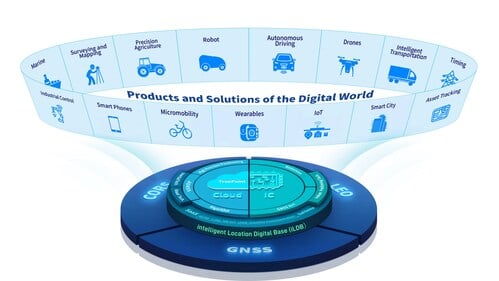
    BDStar Navigation Co. Ltd., a provider of positioning technology solutions, has announced its chip-coud integration strategy and introduced intelligent location digital base (iLDB) in Frankfurt, Germany.

    iLDB leverages a distributed chip-cloud architecture to create a unified technology and service system. Guided by the chip-cloud Integration paradigm, it combines focused R&D with cross-technology synthesis. This approach delivers robust positioning solutions and powers the integration of physical and virtual environments.

    By establishing the iLDB, BDStar has created a closed-loop ecosystem for its positioning products and services, encompassing algorithms, chips/modules, antennas and data services within a unified framework. The company’s solutions deliver on-demand positioning that is all-weather, all-scenario, secure, reliable and intelligently adaptive, serving a wide range of sectors, including intelligent driving, outdoor robotics (such as robotic lawn mowers), unmanned aerial vehicles, and smart wearables across industrial, automotive and consumer markets.

    Positioning for Europe. Aligned with the iLDB strategy, BDStar also introduced its new high-precision positioning data service for the European market. Built on network real-time kinematic (NRTK) technology, the service offers broad coverage across Europe and provides customers throughout the region with centimeter-level, real-time positioning accuracy within seconds.

    Founded in 2000, BDStar ranks among the world’s top ten suppliers of GNSS core components. In 2025, the company’s global GNSS chip/module shipments are expected to exceed 100 million units. Many leading international brands are already integrating BDStar’s GNSS chips, antennas, and data services into next-generation products designed to address changing market demands.

    David Zhou, vice president of BDStar, said the company’s chip-cloud integration strategy delivers multiple benefits through one-stop design, supply and support, enabling reduced cost, enhanced efficiency, assured security, single accountability, and rapid, effective troubleshooting.

    Ruxin Zhou, founder and chairman of BDStar, emphasized the company’s global vision. “With our chip-cloud integrated model, BDStar will strengthen worldwide partnerships and continue building a world-class, globally covered iLDB,” he said. “We are committed to creating long-term value for our customers and driving progress in the intelligent era.”

  • CES 2016: Atmel launches low-power connected platform targeting IoT, wearables

    Atmel_logo
    Logo: Atmel

    Atmel Corporation has launched an ultra-low-power connected platform for cost-optimized applications for the Internet of Things (IoT) and wearable markets, the company announced in a news release. The platform is being showcased at CES 2016, held Jan 6–9 in Las Vegas, in Atmel’s meeting room area, South Hall 2, booth No. MP25760.

    “The new platform features the world’s lowest power ARM Cortex-M0+, the Atmel SMART SAM L21 and BTLC1000 Bluetooth SMART solution, making it the perfect solution for battery-operated applications requiring activity and environment monitoring,” the company said.

    The SAM L21 achieves a ULPBench score of 185, the highest recorded score for any Cortex-M0+ while running the EEMBC ULPBench, the industry marker for low power, with a power consumption down to 35µA/MHz in active mode and 200nA in sleep mode.”

    Atmel’s Bluetooth SMART solution is 25 percent smaller than the closest competing solution packaged in a 2.2 by 2.1 millimeter Wafer Level Chipscale Package, the company says, enabling designers to build ultra-small industrial designs for next-generation connected IoT and wearable applications.

    Embodied in a 30 by 40 millimeter form factor, the platform integrates the Atmel SMART ultra-low power MCU, Bluetooth SMART low-energy connectivity, capacitive touch interface, security solution, complete software platform, real-time operating system (RTOS), a BHI160 6-axis SmartHub motion sensor and a BME280 environmental sensor from Bosch Sensortec. The platform can be powered by a simple coin cell utilizing extremely low power consumption, and manufacturers can also leverage Atmel’s extensive list of sensor partners.

    To simplify the design process, the new platform is compatible with Atmel’s flagship Studio 7, an integrated development environment, along with Atmel Start, a web-based platform for software configuration and code generation.

    “As a leading provider of ultra-low power IoT solutions, we know that out-of-the-box, easy to implement reference platforms are a necessity to help accelerate the adoption of wearable applications and enable a rapid time-to-market for new product ideas,” said Andreas Eieland, director of product marketing for the Microcontroller Business Unit, Atmel Corporation. “Atmel’s new reference platform allows our customers to develop differentiated solutions for cost-optimized, yet competitive, markets including healthcare, fitness, wellness and much more. We continue to help drive the IoT and wearable market with simple, ultra-low power platforms with complete hardware and software solutions.”