Tag: wireless devices

  • CalAmp’s fleet management devices aimed at connected vehicle market

    calamp-logo-WCalAmp, a provider of wireless products, services and solutions, is offering two new high-end telematics devices designed for connected vehicle applications anywhere in the world.

    The new devices address growing global market demand in Europe and Latin America for more connected vehicle technology options and enable a broad range of applications such as fleet management, usage-based insurance, crash notification, stolen vehicle recovery, vehicle finance and auto rental.

    New products include:

    • LMU-2640 – Designed for sophisticated fleet management applications, the LMU-2640 incorporates the flexibility of GSM/GPRS wireless communication along with highly sensitive GPS, a powerful processing engine and a triple-axis accelerometer that detects and communicates driver behavior. The LMU-2640 supports CalAmp’s Instant Crash Notification (ICN) services suite, delivered via email, SMS (text) or through an Application Programming Interface (API).
    • LMU-200 – Ideal for track-and-trace applications, the LMU-200 provides reliable, economical connectivity through GPRS wireless communication. The LMU-200 features highly sensitive GPS, motion detection, remote starter disable and built-in antennas that lower overall deployment cost and simplify installation. Built on CalAmp’s scalable hardware and device management platform suite, each product employs the company’s PEG on-board alert engine and processing environment as well as PULS over-the-air device management and maintenance application. These pioneering systems allow customers to leverage one platform to manage their entire portfolio including remote firmware updates regardless of the vehicle type or use case.

    “The introduction of these two new devices represents our ongoing, strategic investment in solutions that enable the connected vehicle ecosystem in key markets such as Europe and Latin America,” said Justin Schmid, senior vice president and general manager of the Telematics Systems business at CalAmp. “With CalAmp as a leading IoT enablement solutions provider with new technology and a growing product portfolio, customers in these regions now have more options to choose from whether they’re looking for a simple vehicle tracking option or a full solution to support complex mixed fleet applications.”

    CalAmp’s newest products are on display at booth #8.1B71 (Hall 8.1/Upper Level) at Mobile World Congress in Barcelona, Spain, Feb. 27–March 2.
  • IZT Solutions’ over-the-air system tests GNSS receiver performance

    German research organization Fraunhofer Gesellschaft has developed and presented an over-the-air (OTA) wave-field synthesis system for test and certification of GNSS receivers. The testing platform is at its Fraunhofer IIS Facility for Over the Air Research and Testing (FORTE) in Ilmenau, Germany.

    The innovative and complex OTA test system is based on hardware and software solutions from IZT GmbH, such as powerful RF receivers and high-performance signal generators.

    The demonstrated setup to test GNSS receivers represents a new approach that — in contrast to conventional conducted and open-field tests — realistically emulates real-world scenarios under controllable and repeatable conditions, enabling the realistic comparison of receivers and algorithms. The OTA test system is cost-effective, flexible and scalable.

    The newest generations of mobile communication systems employ multiple antennas for transmission and reception, such as LTE, LTE-A, WIMAX and Wireless LAN. Multiple Input Multiple Output (MIMO) OTA test systems are typically deployed for certification, performance testing and product evaluation of broadband wireless devices. The related devices have to be tested in their related environments.

    In contrast to mobile phones, GNSS receivers are extremely susceptible to all types of interference. Hence, the goal was to develop a new testing method for interference robustness of GNSS receivers.

    The OTA Test Approach

    The OTA test laboratory comprises a satellite signal emulator (Spirent) used as signal source, several OTA channel emulators used for wave-field synthesis that are able to emulate any electromagnetic environment in an anechoic chamber, and several OTA illumination antennas. The OTA channel emulators from IZT GmbH support 8 input and 32 phase coherent output channels (up to 256 logical channels) in the frequency range of 1 to 6 GHz, and provide the output signals to the OTA illumination antennas. Note that the final extension of the system based on the IZT components will have 12 x 32 channels.

    The unique test environment developed at FORTE together with IZT GmbH excels in its great flexibility regarding possible applications in communications technology. The new OTA emulation approach enables realistic radio channel emulation taking into consideration multipath propagation, multi-frequency, and multi-user scenarios.

    The OTA system supports emulation of complex channel impulse responses of nearly unlimited length. Besides GNSS equipment, the test system can be applied for LTE and Cognitive Radio (CR), sensor networks (including energy networks and smart metering) or car-to-car and car-to-infrastructure communications.

    The Innovationszentrum für Telekommunikationstechnik GmbH IZT is a spin-off of the Fraunhofer-Gesellschaft, Germany’s leading institution for applied research. Founded in 1997 in Erlangen, the company emanated from the Fraunhofer Institute for Integrated Circuits (IIS). It specializes in advanced digital signal processing and field programmable gate array (FPGA) designs in combination with high-frequency and microwave technology.

  • Antenova Shows GNSS Antenna Integration for Telematics at CTIA

    Antenova Shows GNSS Antenna Integration for Telematics at CTIA

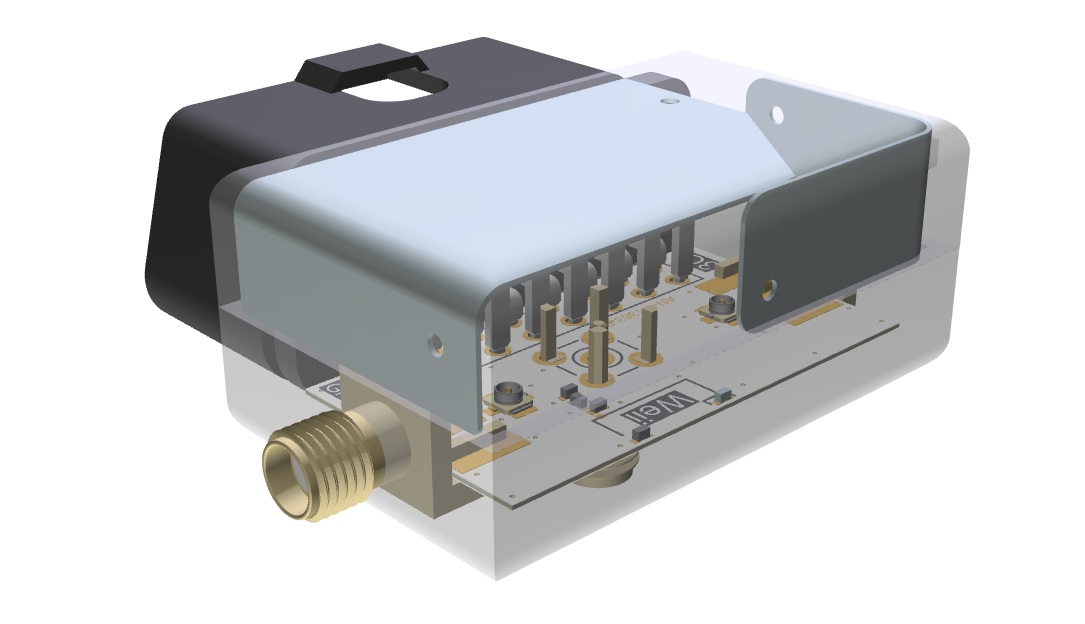
    The Antenova ODB fully assembled.
    The Antenova ODB (on-board devices) design fully assembled.

    Antenova Ltd., manufacturer of antennas and RF antenna modules for M2M and the Internet of Things, has built a model design for on-board devices (OBD) and vehicle telematics, which the company will be showing at CTIA Supermobility 2015.

    The OBD design uses three new antennas inside an OBD housing to link to GNSS satellite, Bluetooth and a terrestrial network, while obtaining optimum performance from all three antennas simultaneously. The design also features a new small GNSS RF module to fix location, which Antenova is showing for the first time.

    Antenova is using the latest antennas from it product ranges in the OBD design:

    • the Armata 3G FPC antenna for penta-band frequencies which operates at 824-960 MHz and 1710-2170 MHz
    • a new GNSS antenna named Bentoni operating at 1559-1609 MHZ,
    • the tiny Weii PCB-mounted antenna, which provides a Bluetooth connection at 2.4GHZ.

    All three are new antennas Antenova released this year.

    The new GPS/GNSS module (Antenova part number M10578) is a complete receiver that provides accurate location tracking for OBDs. It uses the latest MediaTek chipset with an additional LNA to give added performance when mounted under dashboards and out of line of sight with the sky.

    Antenova’s product designers recently introduced the concept of “Design For Integration” (DFI), which considers how the RF antenna will operate when it is embedded with a manufacturer’s product. Antenova’s antennas are always used within a customer’s design, so they are designed to provide superior RF performance from within the device, and to make the integration of the RF elements easier for the designer. In addition to this, Antenova provides its customers with technical support during the design, integration and testing phases.

    “We are demonstrating how a design for an OBD can give great performance, even when new antennas are added to an existing design,” explained Colin Newman, Antenova’s managing director. “OBD devices are growing fast in popularity, and the design of the RF components is critical to the overall performance of a device. In particular, Antenova’s engineers have invested many years in designing antennas that work effectively in very small spaces, whilst maintaining the efficiency of the antenna.”

    Antenova offers a range of antennas for Bluetooth, ZigBee, Wi-Fi, ISM, 802.11, 3G, GSM, GPRS, Edge, UMTS, WCDMA, LTE, GLONASS, BeiDou and Gallileo.

  • Singapore Joins with China to Develop Apps, Protect BeiDou Signals

    Singapore and China are jointly opening a center to develop applications for the BeiDou GNSS, according to a report in Space News. The nations also have signed a commercial agreement to create anti-jamming systems to protect BeiDou signals.

    At a briefing during the CommunicAsia show held in Singapore May 31-June 2, SpaceTime Technology Pte Ltd. and ST Electronics (Satcom & Sensor Systems) Pte Ltd. signed a memorandum of understanding to “develop in Singapore an interference-resistant Beidou satellite positioning system,” SpaceNews report.

    The companies said the goal is to protect BeiDou signals from unintentional jamming in urban environments, where wireless devices occasionally overstep their radio-frequency boundaries.

  • Juniper Research: Smart Healthcare, Fitness Devices to be $1.8B Market by 2019

    smart-watch-im_watch

    Annual revenues from connected healthcare and fitness services will approach $2 billion by 2019, nearly six times the $320 million value estimated for this year, according to a report from Juniper Research.

    The report, “Smart Wireless Devices: CE, Enterprise, Fitness, Healthcare, Payments 2015-2019,” says that connected healthcare devices and the data they generate will offer substantial benefits to both stakeholders and consumers, potentially improving preventative healthcare. However, deployments will initially be constrained by inconsistent regulation, alongside continued privacy concerns surrounding the sharing and security of personal data.

    ‘Quantified Others’ are Key

     
    The research highlights the “quantified others” trend: the use of someone’s data by a professional or concerned party — such as a parent — to provide meaning and/or advice. Companies like GOQii and Filip Technologies are using this to provide services beyond mere data provision.

    Although, this has the potential to be undermined by unreliable data. While medical devices have validation standards, fitness devices have no such benchmark. The development of standards would alleviate consumer and medical professionals’ concerns, driving up adoption.

    Software to Drive Connected Devices Forward

     
    “Connected fitness and health devices provide a way to collect biometric data, not interaction platforms,” said author James Moar. “People want to interact with the devices at the app level – the draw is the information. Because of this, and the omnipresence of sensors, the importance of the hardware will diminish at a much faster rate than other CE market segments.”

    Other Findings from the Report

     
    Other findings were mentioned in a news release from Juniper Research, and are listed below:

    • “Smart Wireless Devices will permeate the enterprise, with smart glasses in particular having a large impact.”
    • “Mobile point-of-sale devices are poised to take off in developing markets, with several key players looking to move into Latin America and Asia Pacific in the coming years.”
    • “Smartwatches will be the most popular consumer electronics connected devices, overtaking more established wearable cameras.”

    The white paper, Smart Wireless Devices & the Internet of Me, is available to download from the Juniper website together with details of the full research and the Interactive Forecast Excel (IFxl).