Tag: workshop

  • EUSPA holds workshop on new Fundamental Elements call

    EUSPA holds workshop on new Fundamental Elements call

    EUSPA logoThe EU Agency for the Space Programme (EUSPA) is set to launch a new Fundamental Elements call, with a dedicated online workshop June 30. The workshop is an opportunity to learn about the new call and hear from successful projects funded during the last call.

    Fundamental Elements is a research and development funding mechanism designed to support the development of innovative chipset, antenna and receiver technologies in which industry would not yet invest on its own initiative. In doing so, the program helps accelerate the integration of European GNSS (EGNSS) into market-ready devices and solutions.

    Projects funded by Fundamental Elements play a key role in EUSPA’s mission of driving the development and market uptake of Galileo-enabled receivers. For example, the GEARS project, which was funded during the initial call, developed a super accurate and highly robust Galileo-enabled receiver capable of providing both time and frequency data for critical infrastructure.

    The new Fundamental Elements call builds on success of projects by:

    • integrating Galileo’s key differentiators into receiver technologies, including OSNMA, high-accuracy frequency, triple frequency, Early Warning Service, CAS and ARAIM
    • leveraging disruptive technologies such as machine learning and artificial intelligence
    • exploring potential synergies with Copernicus and the forthcoming GovSatCom.

    More details about these points and the call in general will be made available during EUSPA’s upcoming Fundamental Elements online Workshop via Webex. Scheduled for June 30, the workshop will include in-depth information on the funding program and the application process.

    The event will also feature project teams funded during the first Fundamental Elements call, who will share their experiences, best practices and advice for putting together a successful project.

    Register for the workshop here.

  • Registration open for AUVSI XPONENTIAL 2022

    Registration open for AUVSI XPONENTIAL 2022

    Xponential 2022 logo

    Registration for AUVSI XPONENTIAL 2022 is now open. The conference will be held April 25-28 at the Orange County Convention Center in Orlando, Florida.

    The XPONENTIAL 2022 theme is “Autonomy Meets Society.” The conference will include keynotes, educational sessions, specialized workshops, and an XPO Hall with 650+ exhibits.

    Sessions will feature concentrated presentations, panel discussions, and audience questions to help drive deeper conversations and solutions to some of the industry’s greatest hurdles.

    Session themes include:

    • Convergence Zone: Intersection w/ Businesses
    • Critical Point: Intersection with Government
    • DRONERESPONDERS Public Safety Forum
    • FULL JOIN: Intersection with Data
    • Interchange: Intersection with Industries
    • Nexus of Future Mobility: Intersection with Individuals
    • Proving Grounds: Enterprise + Government Solutions
    • Technology Crossing: Intersection with Design

    Collaborative workshops will provide XPONENTIAL attendees an in-depth look into targeted topics and the solutions needed to harness the full potential of uncrewed technologies now and into the future.

    Workshops include:

    • Orange you Glad Florida is Investing in Autonomy?
    • Robotics for Conservation
    • Translating Sustainability
    • Assured Autonomy Through Safety Performance Monitoring
    • The Safety Target
    • Connectedness: How Federal-State-Local Governments are Conquering Implementation Challenges Together
    • Accelerating Innovation Through Diversity of Thought
    • DoD Agile Acquisition Workshop – INVITATION ONLY

    To view the XPONENTIAL 2022 schedule and exhibitors list and register for the event, visit XPONENTIAL’s website.

  • Esri to demonstrate Land Administration Software at FIG Congress 2018

    Location intelligence system introduced for nations in need of modernized land governance

    Esri will join this year’s FIG Congress, hosted by the International Federation of Surveyors, taking place May 6–11 in Istanbul, Turkey.

    At the annual event, Esri will showcase its new program for modernizing land administration systems tailored to the needs of developing countries and island nations.

    Good land governance requires effective policies, efficient processes and institutions that can determine, record and disseminate information about the tenure, value and use of land. The new Land Administration Modernization Program allows land administration organizations in developing nations to meet these challenges and lay the foundation for economic success.

    Esri’s program delivers an inexpensive, scalable platform that allows simple field capture, management and publication of parcel data in the cloud, or that can be implemented as an enterprise system meeting the needs of any modern land administration office.

    The software is donated to eligible countries for four years from date of order, and includes maintenance updates and support from Esri.

    At FIG Congress, Brent Jones, land records/cadastre industry manager at Esri, will host the workshop, “Modernize Land Administration Systems: Off-the-Shelf GIS Technology for Modern Cadastral Operations,” May 9, 11 a.m.–12:30 p.m., at Hamidiye Hall, Istanbul Congress Center.

    The workshop will demonstrate how Esri’s ArcGIS platform is a complete, interoperable, open, and purpose-built system for cadastral operations to improve efficiency, manage data integrity, and share data across organizations and with the public. ArcGIS delivers necessary capabilities ranging from fit-for-purpose to enterprise cadastral systems, whether the aim is improve data quality, increase throughput, or enhance spatial accuracy.

    Photo: Esri

  • January workshop looks at safety-critical autonomy

    A free, full-day workshop, titled “Cognizant Autonomous Systems for Safety Critical Applications (CASSCA),” will be held Jan. 29, co-located with the Institute of Navigation’s International Technical Meeting (ITM) in Reston, Virginia. Workshop information will be posted at www.ion.org/cassca as it becomes available.

    Organized by Professor Zak Kassas from the University of California, Riverside, the workshop will feature presentations and panels by experts and leaders from government (National Science Foundation, Office of Naval Research, Air Force Research Laboratory, Department of Transportation), industry (Google, Daimler, and Ford) and academia (The Ohio State University, UC San Diego, University of Southern California).

    The workshop will discuss opportunities and challenges (technical, commercial, ethical, and legal) associated with developing fully autonomous systems that are cognizant and trustworthy for safety-critical applications. Examples include unmanned aerial vehicles (UAVs), self-driving cars and unmanned underwater and surface vehicles.

    Kassas, director of the Autonomous Systems Perception, Intelligence, & Navigation Laboratory (ASPIN), leads a team of researchers developing reliable and accurate navigation that exploits existing signals of opportunity, rather than GPS, to meet the stringent requirements of fully-autonomous systems, such as UAVs and self-driving cars.

    He co-authored two recent cover stories in GPS World,LTE Steers UAV: Signals of Opportunity Work in Challenged Environments” (April 2017) and “Opportunity for Accuracy:Terrestrial SOPs attractive supplement to GNSS” (March 2016).

  • NASA to hold workshop on autonomous navigation, GNSS, PNT

    The National Aeronautics and Space Administration (NASA) published a notice Jan. 26 in the Federal Register on a planned space navigation workshop.

    The Workshop on Emerging Technologies for Autonomous Space Navigation is sponsored by NASA Space Communication and Navigations (SCaN) Program. The Feb. 17 workshop is intended to inform industry on evolving positioning, navigation and timing (PNT) technologies and techniques being developed to enhance the operational efficiency and flexibility of future missions.

    The workshop will include optional one-on-one discussions with industry participants on a space-available basis on Friday, Feb. 17. NASA is soliciting information from all interested U.S. private sector enterprises only.

    Navigation topics to be discussed during the workshop include:

    • Emerging GNSS applications, including the development and use of GNSS in high-altitude applications in the Space Service Volume (SSV), protecting and enhancing the GPS SSV, developing a multi-GNSS SSV, NASA’s current and future missions employing GNSS in the SSV, and GNSS receiver developments within NASA.
    • Emerging navigation technologies, including PNT capabilities envisioned for the Next Generation Broadcast Service (NGBS), innovative timing system developments and techniques such as the Deep Space Atomic Clock (DSAC), optical navigation capabilities and techniques that support rendezvous, landing on objects (near Earth or solar system objects) or docking to vehicles, and navigation and PNT capabilities supporting proximity operations, satellite servicing and formation flying.
    • Other advanced topics to be addressed include the use of optimetrics from laser communications systems to support precise PNT solutions, on-board navigation software and filters, such as the Goddard Enhanced Onboard Navigation System (GEONS), and x-ray navigation capabilities and techniques.

    Registration

    The workshop will be held at NASA Headquarters Auditorium (west lobby) 300 E Street SW., Washington, D.C. 20546.

    U.S. participants will register for the navigation workshop at the door on Feb. 16. To RSVP for the follow-on one-on-one meetings scheduled for Feb. 17, RSVP to James J. Miller by Feb. 8 at [email protected] or 202-358-4417.

    Reservations must be received no later than 5:00 p.m. EST on Wednesday, Feb. 8. A confirmation email will be sent to acknowledge your requested participation. Companies will be notified on or before Friday, Feb. 10 of their assigned one-on-one meeting time.

    Agenda

    The agenda for the workshop and industry meetings is as follows:

    Workshop, Thursday, Feb. 16

    8:30 a.m. to 9:30 a.m., Networking Opportunity

    9:30 a.m. to 12:30 p.m., Introductions & Emerging GNSS Applications

    12:30 p.m. to 1:30 p.m., Lunch Break

    1:30 p.m. to 3:30 p.m., Next-Generation Developing Technologies

    3:30 p.m. to 5:30 p.m., Game-Changing Initiatives

    5:30 p.m. to 6:00 p.m., Wrap-Up

    6:00 p.m. to 8:00 p.m., Networking Opportunity

    One-on-One Industry Meetings with NASA, Feb. 17

    9:00 a.m. to 5:00 p.m., 45-minute information-exchange/discussion

    Attendance limitations: The Navigation Workshop and One-on-One Meeting attendees is strictly limited to four (4) persons per company.

    One-on-One Meeting Description

    To facilitate interactive communication with industry, NASA SCaN representatives will be available for one-on-on emeetings to exchange ideas on areas of synergy and potential collaboration. NASA will hold one-on-one meetings with industry on Friday, Feb. 17, 2016, from 9 a.m. to 5 p.m. EST, to discuss space navigation technologies and techniques as related to Nav Workshop presentations. The meetings will be held with interested parties at scheduled times provided in response to the RSVP on a space available basis. NASA will attempt to prioritize non-local companies with One-on-One meeting times.

    The one-on-one meetings are intended to be private question-and-answer and information-gathering sessions based on industry developments that align with NASA investments for enhanced autonomous space navigation capabilities. Industry presentation packages are acceptable and will be held in accordance with any proprietary or business confidential markings as annotated on the chart package. Meetings will not exceed 45 minutes in length. One appointment per hour will be scheduled. Additional separate meetings can be scheduled later if demand exceeds capacity.
     

  • GeoMobile Innovations hosts ‘Evaluating the Mobile GIS Landscape’ workshop

    Mobile GIS expert GeoMobile Innovations is hosting an Evaluating the Mobile GIS Landscape workshop on Jan. 14, 2016. The inaugural course will provide an extensive overview and best practice assessment for those seeking solutions in an often confusing menu of choices for Mobile GIS.

    The workshop, which will be conducted via live instruction at GeoMobile’s headquarters in Corvallis, Oregon, will be led by GeoMobile’s Technical Director Craig Greenwald. Greenwald is a highly experienced ESRI/Mobile GIS expert and software developer, the company said.

    When asked about the impetus for the class, GeoMobile President Rich Ash responded, “We are hearing about a lot of confusion in the Mobile GIS marketplace. There are many new offerings being aggressively marketed to organizations and it can be tempting to jump in to a new tool without a clear line of decision making. Advancements and new options are exciting, but Mobile GIS tools are not a one size fits all proposition; professional organizations need to adequately assess their project needs, considering multiple criteria.”

    Evaluating the Mobile GIS Landscape is a consultative workshop that is proposed to offer meaningful real-world information without the sales pitch, the organizers said. It will help an organization assess appropriate GIS workflows and ask meaningful questions about deploying software and hardware tools suitable for their projects.

    Lead instructor and mobile GIS software developer Craig Greenwald emphasized his approach in the workshop is helping students in seeking practical solutions. “Having provided consulting and professional software services to organizations large and small, I’m often brought in after decisions have already been made about software and hardware,” Greenwald said. “By being proactive, we can save folks headache and expense in having to make significant adjustments mid-project. The beauty of this course is in that in a short, focused period of time, each student will have a chance to assess their own requirements and we will take them through a decision-making worksheet “

    The class is $195 per participant and includes lunch. More information and a downloadable registration form is available at the event website, or by email if requested from [email protected].

  • UN Seminar on SatNav Explored Sharing, Education

    UN Seminar on SatNav Explored Sharing, Education

    UN-workshop-tour-W
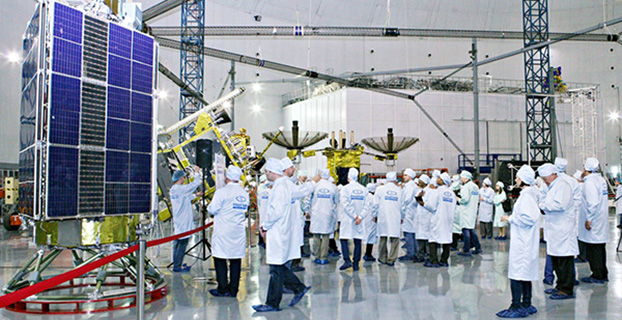
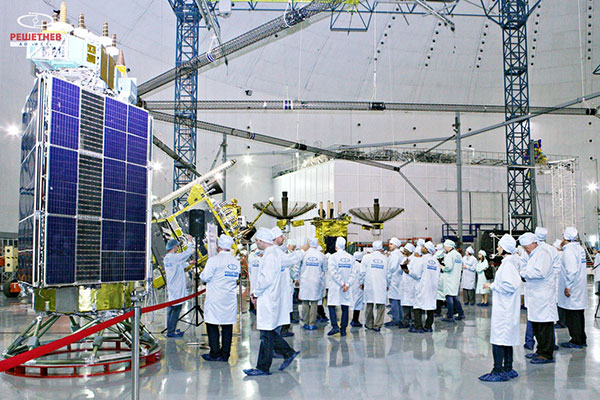
    Seminar participants visit the GLONASS production facility. (Photo: Reshetnev)

    A United Nations workshop held in Krasnoyarsk, Russia, May 18-22 focused on sharing GNSS in various countries, as well as training in GNSS technologies.

    The five-day workshop, organized jointly by the United Nations Office for Outer Space Affairs and the Russian Federal Space Agency (Roscosmos), sought to address the use of GNSS for various applications that can provide sustainable social and economic benefits, in particular for developing countries.

    Titled “The use of global navigation satellite systems, GNSS/GLONASS,” the meeting was hosted by the Reshetnev Information Satellite Systems Joint Stock Company. This is the first time the workshop was held in Russia.

    A key topic of discussion was the sharing of GNSS in different countries, according to the Reshetnev website. Particular attention was paid to training in the use of satellite navigation, with the most important outcome a proposal to create, under the auspices of the Reshetnev company, an international education center in the use of satellite navigation. The center will cooperate with the UN office in Vienna, as well as regional centers in Morocco, Nigeria, India, Brazil and China.

    The seminar was held in nine sections. The sections considered topics such as the formation and development of GNSS, GNSS infrastructure, and national projects on the use of satellite navigation. Representatives from more than 20 countries in Asia, Africa, Europe, North and Latin America shared their experiences implementing GNSS services and spoke about the real and projected benefits of using these technologies for social and economic development.

    During the seminar, participants visited the MFReshetnev satellite production company responsible for the space segment of GLONASS in Russia. Guests were shown current and future GLONASS-M and GLONASS-K satellites, as well as learned about the latest developments for GLONASS.

    UN-workshop-2-W
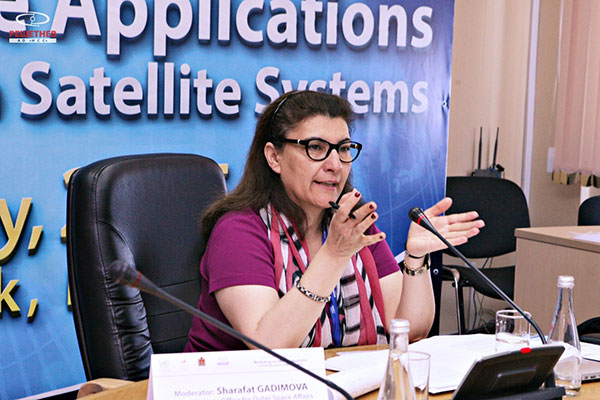
    UN representative Sharafat Gadimova summarizes the workshop. (Photo: Reshetnev)
    UN-workshop-1-W
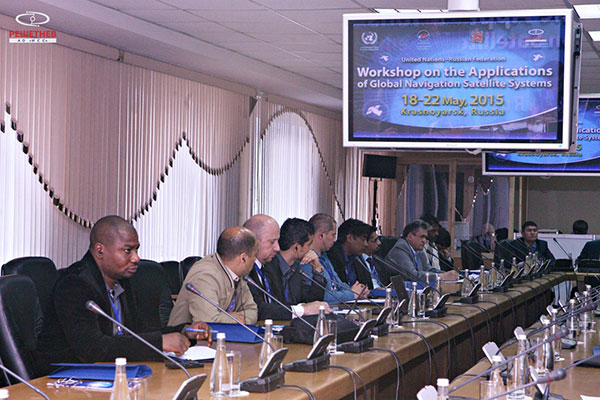
    Participants discuss the uses of satellite navigation. (Photo: Reshetnev)


  • DoT Hosts Third Workshop on GPS Adjacent Band Compatibility

    The U.S. Department of Transportation will host a third workshop to continue discussions of the GPS Adjacent Band Compatibility Assessment on March 12.

    The workshop will focus on the following topics:

    1. Identification of GPS and GNSS receivers to be considered for testing that are representative of the current categories of user applications
    2. Discussion of a GPS/GNSS receiver test plan.

    Anyone interested in presenting on either or both of the above topics should contact Stephen Mackey by March 2.

    The workshop will be held 8:30 a.m.-3:30 p.m. PDT at Aerospace Corporation, 2310 E. El Segundo Blvd., El Segundo, California.

    For more information, see the full Federal Register notice.

  • Survey/GIS Editor Eric Gakstatter to Conduct GPS/GNSS Workshop at East Carolina University May 10, 2012

    GPS World Survey/GIS editor Eric Gakstatter will conduct a one day workshop at the East Carolina University Center for Geographic Information Science in Greenville, NC on May 10, 2012. The workshop is suited for professional GPS/GNSS users in GIS, land surveying, engineering, construction, agriculture, and other high precision applications.

    Workshop Theme:

    “GNSS technology is going to change much more in the next five years than it has in the past five years”

    Workshop Topics:

    1. GPS/GNSS: How does it work and how accurate is it?
    2. What is GNSS and what can it do for me?
    3. Market survey of professional and consumer GPS/GNSS receivers.
    4. The future of GPS/GNSS receivers. New signals? How much? How accurate?
    5. Real-time corrections or post-processing. Which should I use?
    6. Sources of real-time corrections. Free and subscription-based.
    7. Source of post-processing software and data.
    8. GPS/GNSS for high-precision GIS: The value and the headaches.
    9. Evaluating GPS/GNSS equipment: Which one is right for you?
    10. How to measure the accuracy of a GPS/GNSS receiver. Accuracy vs. Precision
    Venue:
    East Carolina University Center for Geographic Information Science
    Greenville, NC USA
    Date/Time:
    Thursday, May 10, 2012. 8:30a – 5:00p
    Click here for details and registration form.