Author: GPS World Staff

  • 8 million GPS/wireless devices in use for fleet management

    Eight million GPS/wireless devices are used to manage fleet vehicles, trailers, construction equipment and mobile workers, according to a new report by C.J. Driscoll & Associates, a supplier of telematics market research and consulting services.

    According to the “2016-17 U.S. Mobile Resource Management Systems Market Study,” by 2019 this market will expand to more than 14 million units, and annual hardware and service revenues will grow to nearly $4.7 billion.

    Growth has been strong in the local service and delivery fleet market, where the use of commercial telematics solutions is expanding at a rate of 15-20 percent per year. However, the trucking sector’s rate of growth is projected to exceed the local fleet market because of the recently issued regulations requiring the use of Electronic Logging Devices (ELDs) by interstate trucking fleets for monitoring driver hours of service.

    While the largest GPS fleet management companies are becoming increasingly dominant, this has not discouraged new players from entering the market, some with considerable success. Overseas suppliers also continue to be drawn to the U.S. market due to its size and rate of growth.

    The 323-page market study provides in-depth information on each major MRM market segment, including the markets for vehicle-installed GPS fleet management solutions for local service and delivery fleets and long haul trucking fleets. The market for driver behavior management systems is also examined, along with the emerging market for managing mobile workers with GPS-equipped smartphones and tablets. In addition, the study covers the markets for monitoring mobile assets, such as fleet trailers and heavy equipment.

    The study assesses the current market penetration of MRM systems and services and projects annual subscriber and revenue growth through 2019. Detailed profiles are provided on more than 140 suppliers of MRM systems and services, including target markets, key features, installed base and pricing.

  • India’s fifth navigation satellite launched

    IRNSS-1E-launch-2
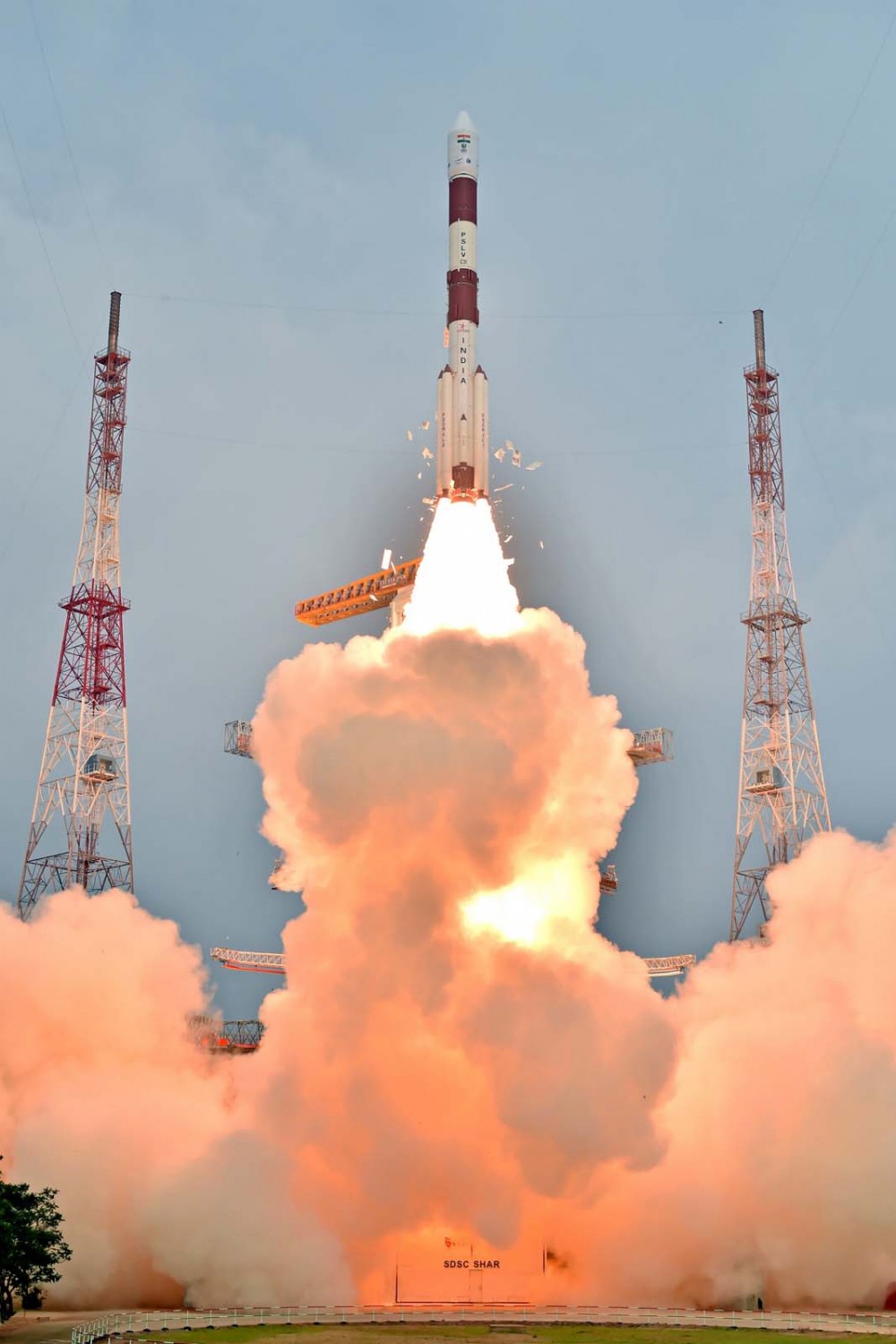
    IRNSS-1E heads for orbit on Jan. 20. (Photo: IRNSS)

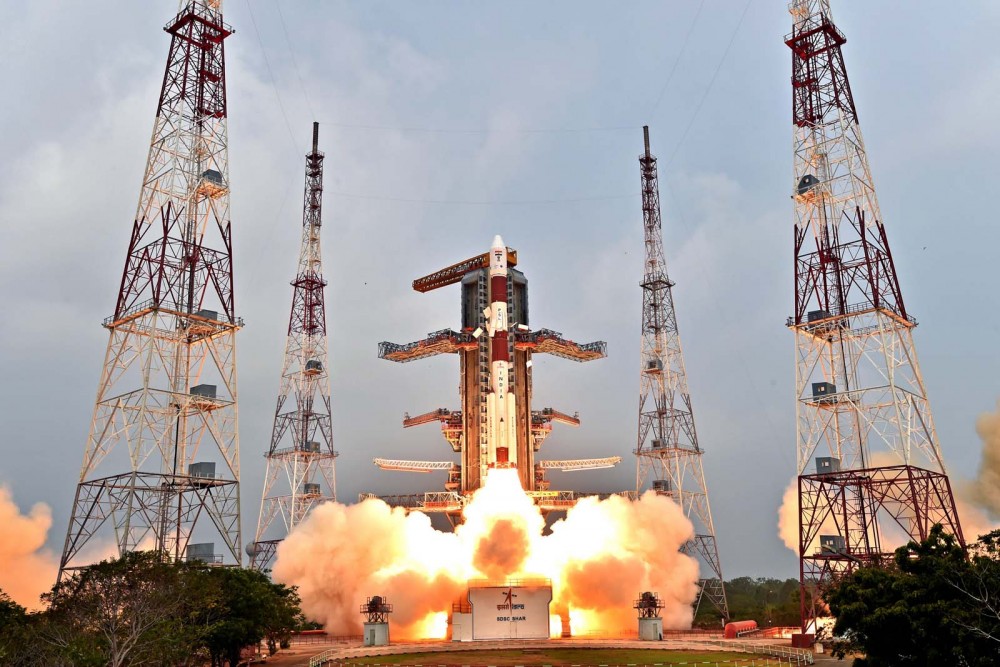
    The fifth satellite in the Indian Regional Navigation Satellite System (IRNSS) constellation lifted off on time Jan. 20 from Satish Dhawan Space Center on Sriharikota Island, on India’s east coast.

    As in the previous four launches of IRNSS satellites, the navigation satellite rode aboard a Polar Satellite Launch Vehicle (PSLV). This is the 33rd launch for the PSLV.

    After the PSLV-C31 lift-off at 0401 GMT Wednesday (11:01 p.m. EST Tuesday) with the ignition of the first stage, the subsequent important flight events — strap-on ignitions and separations, first stage separation, second stage ignition, heat-shield separation, second stage separation, third stage ignition and separation, fourth stage ignition and satellite injection — all took place as planned.

    After a flight of about 18 minutes 43 seconds, IRNSS-1E Satellite was injected to an elliptical orbit of 282.4 km X 20,655.3 km inclined at an angle of 19.21 degree to the equator (very close to the intended orbit) and successfully separated from the PSLV fourth stage.

    After injection, the solar panels of IRNSS-1E were deployed automatically. ISRO’s Master Control Facility (at Hassan, Karnataka) took over the control of the satellite. In the coming days, four orbit manoeuvres will be conducted from Master Control Facility to position the satellite in the geosynchronous orbit at 111.75 deg East longitude with 28.1 deg inclination.

    IRNSS-1E is the fifth of the seven satellites constituting the space segment of the Indian Regional Navigation Satellite System. IRNSS-1A, 1B, 1C and ID, the first four satellites of the constellation, were successfully launched by PSLV on July 02, 2013, April 04, 2014, October 16, 2014 and March 28, 2015, respectively. All the four satellites are functioning satisfactorily from their designated orbital positions.

    IRNSS-1E, the fifth satellite in India's regional constellation, lifted off Jan. 20.
    IRNSS-1E, the fifth satellite in India’s regional constellation, lifted off Jan. 20. (Photo: IRNSS)

    IRNSS is an independent regional navigation satellite system designed to provide position information in the Indian region and 1500 km around the Indian mainland. IRNSS would provide two types of services, namely, Standard Positioning Services (SPS) — provided to all users — and Restricted Services (RS), provided to authorized users.

    A number of ground stations responsible for the generation and transmission of navigation parameters, such as satellite ranging and monitoring, have been established in 18 locations across the country. In the coming months, the remaining two satellites of this constellation, namely, IRNSS-1F and IG, are scheduled to be launched by PSLV, thereby completing the entire IRNSS constellation.


  • AUVSI to host massive trade show, works with US UAV regulators

    The Association for Unmanned Vehicle Systems International (AUVSI) has renamed its major annual conference — XPONENTIAL — and the 2016 edition will be held in New Orleans at the Morial Convention Center on the west bank of the Mississippi, May 2–5. The huge convention center is hosting the event across two large halls, with more than 350,000 square feet of space for up to 600 exhibits.

    With 370 exhibitors already signed up, you might want to decide who to put on your visit list if you’ve never been to one of these AUVSI exhibitions. Because just roaming the show floor without a plan can lead to frustration and exhaustion — the show is huge, not only in square feet, but also in the number and size of the exhibits. Full-size helicopters, Humvee-type vehicles and drones — lots and lots of different types of unmanned air vehicles (UAVs) or drones for any and all applications.

    There is everything a drone manufacturer might need to develop and integrate into the latest small (sUAV), medium or large quadcopter, hexcopter, octocopter, fixed wing or STOL (short take-off and landing) air vehicle. Plus, you’ll find ground vehicles and surface and underwater vehicles of all shapes and sizes.

    Propellers, engines, payloads of all sorts including cameras, radars, IR and lasers, plus connectors and electrical, mechanical and electro-mechanical components and systems, manufacturing systems, 3D printing, modeling, designing, developing — all in all, too much stuff to even mention everything that goes into, onto and processes/tools for manufacturing a UAV.

    But, of course, our interest might be more readily captured by the booths exhibiting flight-control systems, sensors, antennas, autopilots, inertial, satellite and terrestrial radios and services, computing, GNSS and other guidance systems — and even avionics for drones. UAV ground control systems (UAV + ground control system = unmanned air system or UAS) are also present in force, along with all their constituent pieces. A ground control system can be more complex than a larger UAV, or sometimes as simple as an app on a tablet.

    Applications are also featured in exhibit groupings for survey and mapping, air and start-up. Also, a large number of U.S. states and related academic, research, test and development organizations are represented this year, along with dedicated Chinese, French, Canadian and UK exhibit areas.

    There also seems to be some presence for insurance, legal, certification and training organizations aiming to support the emerging commercial opportunities that Federal Aviation Administration (FAA) Section 333 approvals have enabled. The FAA continues to grant Section 333 exemptions, which have allowed commercial, research and agency drones to fly in the U.S. National Airspace System (NAS) on a trial and operational basis.

    The FAA issued a fact sheet in mid-December that outlined safety reasons for federal oversight of aviation and airspace, and explained federal responsibility in this area. The object appears to be to let states know that the FAA has federal jurisdiction, and is therefore in charge of regulating access to and operations in the U.S. NAS. The fact sheet perhaps also aims to slow down recent state and city efforts — such as those in Miami, Albany County and New Jersey — to publish their own ordinances and laws related to UAV activity.

    Meanwhile, the FAA’s recent UAV registration requirements for anything unmanned that takes to the air in the U.S. have met with mixed reactions. U.S. drone operators have indeed already complied and registered more than 181,000 UAVs, but one individual has filed a suit against the FAA alleging Section 333 does not allow the FAA to make any new rules or regulations regarding model aircraft if they’re flown for hobby or recreational purposes. We’ll have to see how this all turns out — AUVSI, which represents a good portion of the UAS industry, has already come out supporting the FAA’s UAV registration program.

    AUVSI continues to call for the FAA to publish regulations that would allow small UAVs to operate in the U.S. NAS. These small UAV regulations have been in the works for several years and have yet to be formally released or implemented by the FAA. AUVSI argues that if these regulations were to be released, the commercial UAV industry would really take off and produce billions in revenue and create thousands of jobs.

    In order to help move UAV integration forward, NASA has been working on traffic management concepts for UAS. The first section of this system was tested in August, looking mostly at topics such as geofencing so drones automatically avoid certain restricted areas, and also trajectory planning.

    Google and Amazon have also been looking into UAS Traffic Management (UTM) systems. Amazon has proposed a high-speed UAS transit corridor between 200 and 400 feet, with slower vehicles flying below, and larger ones above it. Verizon has also been exploring how cellular networks could be used to enhance drone safety in the future. The FAA’s Pathfinder Programs also aim to investigate areas, such as beyond-visual-line-of-sight flights, that may assist in the development of UTM.

    So, XPONENTIAL 2016 is a great UAV show to put in your calendar (May 2-5 in New Orleans) if you have interest in learning more about UAV/UAS, or in moving further into the growing business of UAVs, plus lots of related activity promising growth for actual UAV commercial operations in the U.S. There is always a lot going on nowadays in the world of unmanned vehicles.

    Tony Murfin
    GNSS Aerospace
  • Prize for GNSS opinions

    Geomatics specialist Larry Tinney won the $50 gift card in our January drawing among takers of the Reader Poll. You can win too! Take the poll below by Feb. 22 to answer the question: What is the biggest challenge in simulating GNSS environments for testing products under development? All poll takers will be entered in a drawing for a $50 gift card.

  • NextNav supports metropolitan beacon system for mobile

    The final specification for 3GPP Release 13 will include messaging support for Terrestrial Beacon System (TBS) location technologies, including the Metropolitan Beacon System (MBS).

    NextNav is deploying the MBS positioning technology across the U.S. to allow mobile phones and other devices to reliably determine their location in indoor and urban environments where GPS signals can’t be received.

    NextNav has adopted MBS for its nationwide deployment, which it calls an innovative “terrestrial constellation” bringing GNSS-like positioning performance to indoor and urban environments where satellite-based positioning is either unavailable or significantly degraded. By standardizing the core network information flow in 3GPP, support for MBS will become available across any Release 13-compliant LTE network platforms globally, similar to previously standardized GNSS systems such as GPS, GLONASS, BeiDou and Galileo satellite signals.

    NextNav’s system is complementary to GPS and delivers high precision latitude, longitude and “floor level” altitude in GPS-challenged areas such as indoors and urban locations across an entire metropolitan area. Unlike cellular positioning in LTE, MBS does not consume expensive wireless spectrum to do so.

    “We are gratified, after an especially intensive effort, to see 3GPP add support for Terrestrial Beacon Systems generically and for supporting the NextNav implementation of it — the Metropolitan Beacon System,” said Ganesh Pattabiraman, president of NextNav. “This speaks to the urgent market requirements for ubiquitous, high-quality indoor positioning. MBS availability as an international standard ensures that our location signals can be used in widely deployed LTE (long-term evolution) networks as part of an end-to-end system. It also opens the doors for multi-vendor systems, a critical consideration for our carrier customers and users worldwide.”

    The 3rd Generation Partnership Project (3GPP) unites seven telecommunications standard development organizations (ARIB, ATIS, CCSA, ETSI, TSDSI, TTA, TTC) and provides their members with a stable environment to produce the reports and specifications that define 3GPP technologies.


  • First GPS III satellite completes critical test

    The first GPS III satellite has passed a critical test, according to satellite builder Lockheed Martin.

    Rick Ambrose, executive vice president of Lockheed Martin Space Systems of Denver, tweeted that the satellite has successfully its thermal vacuum test (TVAC).

    Lockheed Martin Space Systems is the prime contractor on the GPS III program to build the next-generation of navigation satellites, a total of eight in the original contract. The contract includes options for up to four more satellites, and the Air Force has told Congress it expects to execute options for at least two of those satellites.

    The first GPS III satellite is expected to launch in 2017.

    The first GPS III satellite completed its thermal vacuum test successfully. (Photo: Lockheed Martin)
    The first GPS III satellite completed its thermal vacuum test successfully. (Photo: Lockheed Martin)
  • Fifth IRNSS satellite on schedule to launch

    fullyintegratedpslv-c31withirnss-1eatsecondlaunchpad
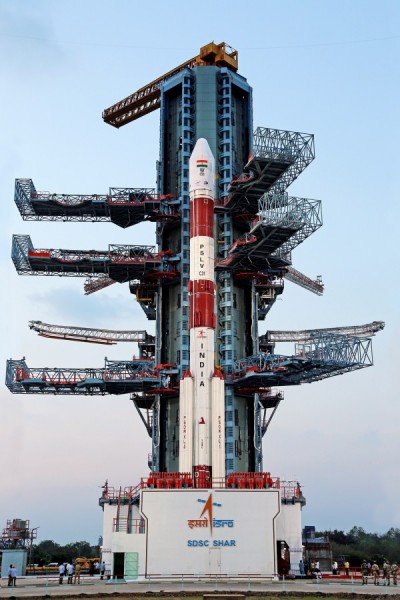
    Fully integrated PSLV-C31 with IRNSS-1E on the launchpad. (Photo: IRNSS)

    The fifth satellite in the Indian Regional Navigation Satellite System (IRNSS) constellation is ready for lift-off. IRNSS-1E will launch at 0401 GMT Wednesday (11:01 p.m. EST Tuesday) from Satish Dhawan Space Center on Sriharikota Island, on India’s east coast.

    As in the previous four launches of IRNSS satellites, the navigation satellite will ride aboard a Polar Satellite Launch Vehicle (PSLV). This is the 33rd launch for the PSLV.

    The IRNSS-E1 satellite will join four previous craft launched for the regional IRNSS navigational system, which is aimed towards South Asia to increase accuracy of navigation, tracking and mapping services. The entire IRNSS constellation of seven satellites is planned for completion this year.

    IRNSS-1E has a lift-off mass of 1425 kg. The configuration of IRNSS-1E is similar to that of IRNSS-1A, 1B, 1C and 1D. IRNSS-1D launched in March 2015.

    IRNSS -1E carries two types of payloads — navigation payload and ranging payload. The navigation payload of IRNSS-1E will transmit navigation service signals to the users. This payload will be operating in L5-band and S-band. A highly accurate Rubidium atomic clock is part of the navigation payload of the satellite.

    The ranging payload of IRNSS-1E consists of a C-band transponder which facilitates accurate determination of the range of the satellite. IRNSS-1E also carries Corner Cube Retro Reflectors for laser ranging.

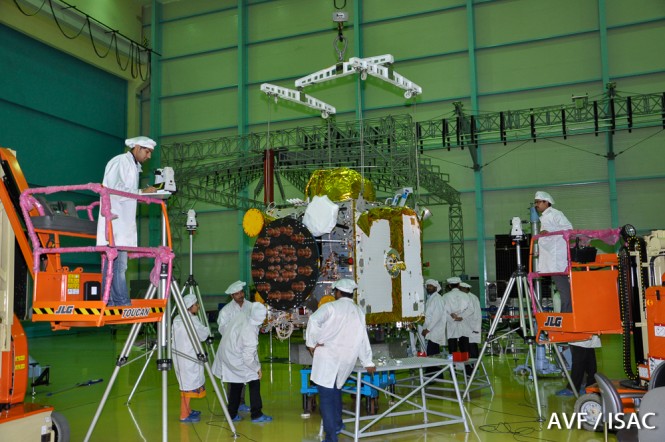
    IRNSS-1E Integration in progress at clean room.
    IRNSS-1E Integration in progress at clean room. (Photo: IRNSS)
    IRNSS-1E spacecraft integrated with PSLV-C31, with the two halves of the heat shields. (Photo: IRNSS)
    IRNSS-1E spacecraft integrated with PSLV-C31, with the two halves of the heat shields. (Photo: IRNSS)
  • Commercial drone sales to rise by 84 percent in 2016

    A new study from U.K.-based Juniper Research has found that annual revenues from commercial drones sales are expected to reach $481 million this year, up 84 percent from last year’s figure of $261 million.

    The new research — “Drones: Consumer & Commercial Applications, Regulations & Opportunities 2015-2020” — found that a low price point had significantly reduced the barrier to entry in many sectors, with high-performance models now available for less than $3,000. It claimed that the reduction in drone price points had in turn resulted in their commercial application within an array of new fields including mapping, inspection and monitoring.

    Agriculture to Lead Growth. The research argued that strongest growth would occur within the agricultural sector, which Juniper expects to account for 48 percent of all commercial drone sales this year. Here, UAVs (unmanned aerial vehicles) help save time and costs over other methods, such as walking fields on foot and using planes for fly-over filming. Furthermore, the ease of use of a UAV created for the sector allows for more regular crop surveying.

    Film and Television. The research also found that demand for UAVs in the film and television sectors is soaring. Drones provide a much cheaper and more flexible alternative to the use of helicopters and other methods to capture footage for the film and TV industry, particularly for action sequences.

    Delivery Drone Concerns. The research cautioned that a raft of privacy, safety and security concerns mean that the usage of drones for delivery purposes is likely to be severely constrained or even prohibited within built-up areas.

    According to research co-author Windsor Holden, regulators would be extremely wary of allowing planned services such as Amazon Prime Air and Google’s Project Wing to be offered, except as a means of delivering to isolated rural communities.

    “Regulators are understandably concerned that the deployment of delivery drones in inner cities would significantly increase the risk of potentially fatal collisions with cars or even pedestrians,” Holden warned.

    Terrorist Concerns. The research also claimed that there was a danger that delivery drones could be hacked by terrorists, conceivably delivering an explosives payload into areas where they would be capable of causing high levels of civilian casualties.

    According to Juniper Research, the report:

    • details and segments the various UAVs available in the market.
    • assesses how drone development will proceed in light of stringent safety and privacy concerns and regulatory hurdles.
    • analyses key market drivers, technological trends and challenges that currently influence market potential.
    • determines scenarios that will impact future demand.
    • provides in-depth forecasts across a range of key metrics.

    Also, a new white paper, “Game of Drones,” is available to download from the Juniper website together with further details of the full research and the attendant Interactive Forecast Excel (IFxl).

  • Intel to acquire German drone company Ascending Technologies

    Intel CEO Brian Krzanich demonstrated the broad capabilities UAV technology during his keynote presentation at the 2016 Consumer Electronics Show Jan. 5, in Las Vegas. Krzanich showcased the Yuneec Typhoon H with Intel RealSense Technology. (Photo: Intel)
    Intel CEO Brian Krzanich demonstrated the broad capabilities UAV technology during his keynote presentation at the 2016 Consumer Electronics Show Jan. 5, in Las Vegas. Krzanich showcased the Yuneec Typhoon H with Intel RealSense Technology. (Photo: Intel)

    Intel has signed a definitive agreement to acquire Ascending Technologies, a drone company located in Krailing, Germany, that produces drone auto-pilot software and algorithms.

    Intel has already partnered to combine Ascending Technologies’ sense-and-avoid algorithms with Intel RealSense technology’s real-time depth-sensing capability. These technologies can improve drone safety, helping them avoid obstacles and collisions.

    With Ascending Technologies, Intel gains expertise and technology to accelerate the deployment of Intel RealSense technology into the fast-growing drone market segment. The Ascending Technologies team is expected to continue supporting its current customers while also collaborating with Intel’s Perceptual Computing team to develop unmanned aerial vehicle (UAV) technology that can help drones fly with more awareness of their environments.

    “Drones are quickly emerging as an important computing platform of the future, writes Josh Walden on an Intel blog. “With practical applications ranging from disaster response, to infrastructure inspection, to delivery of goods, UAVs offer an incredible opportunity for innovation across a multitude of industries. As a result, Intel is positioning itself at the forefront of this opportunity to increasingly integrate the computing, communications, sensor and cloud technology required to make drones smarter and more connected.”

  • US government says it will invest $4B in self-driving cars

    In his final State of the Union address, delivered Jan. 12, President Obama signaled his intent to invest in a 21st century transportation system.

    U.S. Transportation Secretary Anthony Foxx has revealed part of the president’s proposal: a 10-year, nearly $4 billion investment to accelerate the development and adoption of safe vehicle automation through real-world pilot projects.

    Secretary Foxx also announced that the U.S. Department of Transportation (DoT) is removing potential roadblocks to the integration of innovative, transformational automotive technology that can significantly improve safety, mobility and sustainability.

    Secretary Foxx made the announcement at the North American International Auto Show in Detroit, where he was joined by leaders in technology, executives of traditional auto manufacturers, and newcomers to the industry.

    “We are on the cusp of a new era in automotive technology with enormous potential to save lives, reduce greenhouse gas emissions, and transform mobility for the American people,” said Secretary Foxx. “Today’s actions and those we will pursue in the coming months will provide the foundation and the path forward for manufacturers, state officials, and consumers to use new technologies and achieve their full safety potential.”

    The president’s FY17 budget proposal would provide nearly $4 billion over 10 years for pilot programs to test connected vehicle systems in designated corridors throughout the country, and work with industry leaders to ensure a common multistate framework for connected and autonomous vehicles.

    Secretary Foxx also unveiled policy guidance that updates the National Highway Traffic Safety Administration’s (NHTSA) 2013 preliminary policy statement on autonomous vehicles. The new guidance, just released, reflects the reality that the widespread deployment of fully autonomous vehicles is now feasible.

    “NHTSA is using all of its available tools to accelerate the deployment of technologies that can eliminate 94 percent of fatal crashes involving human error,” said NHTSA Administrator Mark Rosekind. “We will work with state partners toward creating a consistent national policy on these innovations, provide options now and into the future for manufacturers seeking to deploy autonomous vehicles, and keep our safety mission paramount at every stage.”

    DOT is committing to the following milestones in 2016:

    • Within six months, NHTSA will work with industry and other stakeholders to develop guidance on the safe deployment and operation of autonomous vehicles, providing a common understanding of the performance characteristics necessary for fully autonomous vehicles and the testing and analysis methods needed to assess them.
    • Within six months, NHTSA will work with state partners, the American Association of Motor Vehicle Administrators, and other stakeholders to develop a model state policy on automated vehicles that offers a path to consistent national policy.
    • Secretary Foxx encouraged manufacturers to submit rule interpretation requests where appropriate to help enable technology innovation. For example, NHTSA responded to an interpretation request from BMW confirming that the company’s remote self-parking system meets federal safety standards. Click here to read this interpretation.
    • When interpretation authority is not sufficient, Secretary Foxx further encouraged manufacturers to submit requests for use of the agency’s exemption authority to allow the deployment of fully autonomous vehicles. Exemption authority allows NHTSA to enable the deployment of up to 2,500 vehicles for up to two years if the agency determines that an exemption would ease development of new safety features.
    • DOT and NHTSA will develop the new tools necessary for this new era of vehicle safety and mobility, and will consider seeking new authorities when they are necessary to ensure that fully autonomous vehicles, including those designed without a human driver in mind, are deployable in large numbers when they are demonstrated to provide an equivalent or higher level of safety than is now available.

    In 2015, Secretary Foxx refocused the national dialogue about the future needs of our transportation infrastructure by releasing Beyond Traffic, a report examining the challenges facing America’s infrastructure over the next three decades. This draft framework has already influenced decisions by elected officials, planners and stakeholders nationwide, the DOT said.

    In December 2015, the Secretary launched the Smart City Challenge, a national competition to implement bold, data-driven ideas that make transportation safer, easier and more reliable. He also worked to accelerate the DOT’s efforts to incorporate vehicle-to-vehicle (V2V) communication technology into new vehicles.

  • GPS World Europe editor chairs session at Munich Summit

    GPS World Europe Editor Tim Reynolds chairs the session GNSS and Sciences for Life at the Munich Navigation Satellite Summit, which will be held March 1-3. Early registration ends on Sunday, Jan. 17.

    Tim Reynolds
    Tim Reynolds

    Reynolds is director of Inta Communication Ltd. and a long-term Brussels observer writing on many aspects of European government policy and implementation for a range of clients and publications. He is the contributing editor for GPS World’s new quarterly e-newsletter, EAGER: the European GNSS and Earth Observation Report.

    The annual summit, held in the historic Munich Residenz, is an conference with global impact dealing with satellite navigation. The one-of-a-kind convention of high-ranking worldwide speakers from industry, science and governments provides the participants with a broad overview and different perspectives on the latest developments in the field of GNSS.

    Reynold’s session, GNSS and Sciences for Life, will cover maritime search and rescue (SAR), precision agriculture and livestock management, personal fitness and emergency medical attention.

    Other sessions include:

    • GNSS Program Updates — Global systems, chaired by Hank Skalski, Department of Transportation, DOT Liasion to Air Force Space Command, Peterson Air Force Base, USA
    • GNSS Program Updates — Regional and augmentation Systems, chaired by Dr. Todd Walter, Stanford University, CA, USA
    • GNSS in the Southern Hemisphere and Equatorial Regions, chaired by Prof. Vidal Ashkenazi, Chief Executive of U.K.-based Nottingham Scientific Ltd, Nottingham, UK
    • Precise Positioning Technology in Agriculture and Forestry, chaired by Dr. Herbert Landau, Managing Director, Trimble Terrasat GmbH, Hoehenkirchen, Germany
    • Legal Issues of GNSS Timing, chaired by Dr. Ingo Baumann and Dr. Oliver Heinrich, Partner, BHO Legal, Cologne, Germany

    Plus, expect a brand-new conference format for this session:

    • The GNSS Knowledge Triangle: Tying the Knot Between Education, Research and Industry, chaired by Dr. Fabio Dovis, Associate Professor, Politecnico di Torino, Turin, Italy

    The summit is part of the efforts of the Bavarian government and the cluster on aerospace and satellite navigation to stimulate applications and services in this high-tech field.


  • Garmin acquires lidar company PulsedLight

    Garmin International has acquired PulsedLight Inc., a privately held designer of optical distance measurement technology in Bend, Oregon.

    PulsedLight makes sensor boards that are highly accurate, small and lightweight. PulsedLight developed and owns the intellectual property that enables this technology, Garmin stated in a news release.

    PulsedLight is the maker of the LIDAR-Lite, an optical distance measurement sensor for automotive blind-spot sensing, smart city traffic monitoring, 3D image scanning, collision avoidance, industrial measurements, security system components and other applications.

    “Optical distance measurement technology fits in nicely with Garmin’s core competencies of location and positioning,” said Cliff Pemble, Garmin president and CEO. “We are delighted to add PulsedLight and their capabilities to the Garmin portfolio.”

    “We are excited to have the support of a technology leader like Garmin. They are able to provide the resources and manufacturing expertise to integrate our technology into incredibly useful new devices that serve a multitude of markets,” said Dennis Corey, president and co-founder of PulsedLight. “We look forward to an exciting future under the Garmin umbrella.”

    The PulsedLight office and its design associates will be retained by Garmin International. Financial terms of the acquisition will not be released.