Author: GPS World Staff

  • European Rail Supported by European GNSS

    European Rail Supported by European GNSS

    bernina-express-on-the-tirano-street-W Photo: European GNSS Agency (GSA)
    Photo: European GNSS Agency (GSA)

    By the European GNSS Agency (GSA)

    As European satellites offer a possibility to improve the efficiency of train control systems, GNSS technology is starting to gain momentum in the rail sector. To promote the role of GNSS in this important sector, the European GNSS Agency (GSA) recently exhibited at Innotrans — a leading rail transport tradeshow.

    EGNOS can and, in the future, Galileo will provide continuous and highly reliable positioning service — helping increase the competitiveness of rail among other modes of transportation. Currently, GNSS in European rail is primarily used within non-safety-of-life applications, including asset management and passenger information services. However, the latest technological developments show that augmented GNSS, together with specific sensors, can help satisfy the stringent CENELEC Safety and Integrity Level requirements.

    As a result, the rail sector has an increasing demand for cost-effective and innovative GNSS applications for both safety critical and non-safety critical purpose. For example, in the safety-critical domain, GNSS-based applications can provide signaling and autonomous train control. In the non-safety critical domain, GNSS is helping improve the performance of asset management and passenger information systems.

    Showcasing the E-GNSS Advantage

    With rail becoming an important market segment for GNSS technology, and to put emphasis on the many benefits E-GNSS can bring the rail sector, for the first time the GSA exhibited at a rail tradeshow. At Innotrans, one of the leading international tradeshows for the sector held September 23-26 in Berlin, the GSA showcased the EGNOS advantage for rail.

    Joining a panel discussion hosted by the European Railways Agency (ERA) entitled “How Heaven Could Support European Train Control System (ETCS),” GSA Head of Market Development Gian-Gherardo Calini explained how European GNSS can serve as a solution to some of the problems the sector currently faces.

    “Although rail will become a major market for E-GNSS, it is already providing benefits, such as helping to improve safety,” he said. “Our role at the GSA is to serve the end user by making sure the technology delivers the necessary solutions.”

    Calini acknowledged there are challenges to the sector’s full adoption of GNSS, but stated that other sectors have overcome challenges and are benefiting from E-GNSS: “It is a successful reality in other transport sectors, especially aviation, and we must focus on building from these experiences,” he said.

    The ERTMS/ETCS is a major industrial project that aims to replace Europe’s different national train control and command systems. The deployment of ERTMS will enable the creation of a seamless European railway system with aligned signalling — essential to increasing the competitiveness of European railways.

    Europe’s GNSS systems — Galileo and EGNOS — are actively contributing to the needed evolution of the ERTMS. One example of this long-term perspective is the Shift2Rail Joint Undertaking, whose objective is also to support the adoption of GNSS in the rail sector. Within this undertaking, it is foreseen that both Galileo and EGNOS will be brought into ERTMS standards and foster European GNSS adoption in the area of Low Density Lines.
  • Red Cross Recruits Volunteers to Map Ebola Outbreak Regions

    Red Cross Recruits Volunteers to Map Ebola Outbreak Regions

    ebola-GIS-screenshot

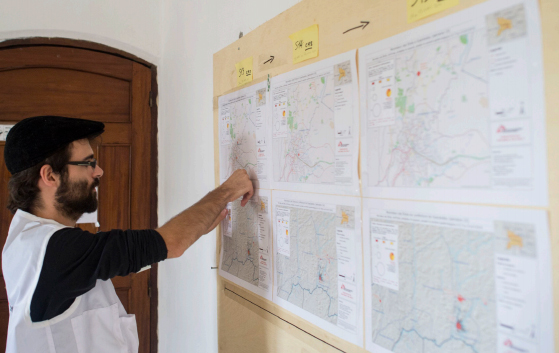
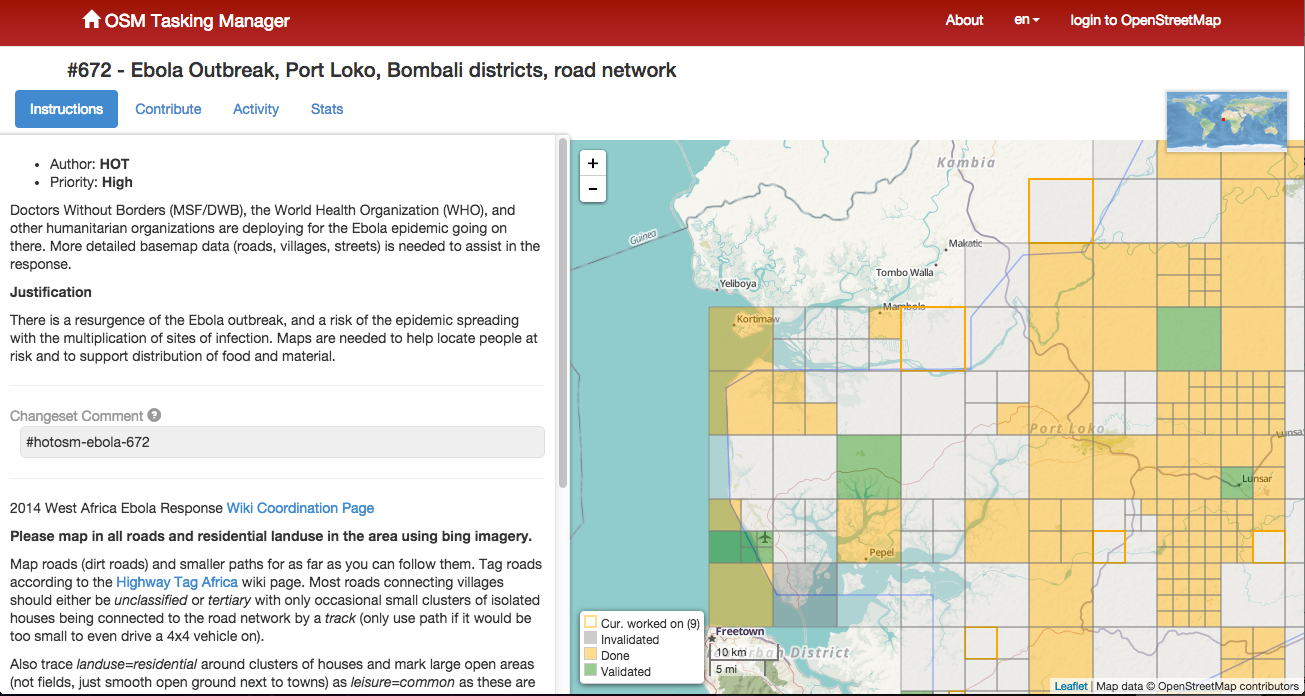
    The American Red Cross Geographic Information System team is enlisting volunteers to help map areas in Africa hard hit by the ebola virus. The Red Cross is attempting to get ahead of the virus by creating detailed maps of rural towns and villages so officials can track the deadly virus as it spreads, according to ABC News. Volunteers have been drafted to study satellite imagery of homes, schools and villages.

    Once the maps are detailed, they are sent to Red Cross partners, including Doctors Without Borders and the International Federation of the Red Cross and Red Crescent, which are working in the field to treat victims and stop the outbreak.

    The maps are useful in a variety of ways. With better maps, epidemiologists can track where the disease is spreading, and find sick individuals in remote areas. In a specific example, the World Health Organization requested that GIS professionals look at cemeteries, a key location where infection can occur.

    The volunteers have been able to fine-tune maps of remote villages which are used by relief workers trying to navigate rural roads, towns and neighborhoods. For instance, the original map for Guéckédou, Guinea, a town near the epicenter of the outbreak, showed just nine roads. After volunteers studied satellite photographs, they were able to add hundreds of roads and streams.

    The project goes both ways, as people working in the remote areas send in GPS locations for villages that have never been mapped before. The maps can be vital to fight Ebola in rural areas where road signs, maps and GPS locations are scarce.

    A GIS expert helps the Doctors without Borders epidemiological team respond to the ebola outbreak. Photo: American Red Cross Geographic Information System
    A GIS expert helps the Doctors without Borders epidemiological team respond to the ebola outbreak. Photo: American Red Cross Geographic Information System

    The effort is similar to an effort by MSF-Switzerland (Doctors without Borders) in March 2014, which deployed a dedicated GIS officer to Guinea in response to the Ebola outbreak in the south of the country. During his eight-week his mission, the GIS officer produced 109 maps for this previously very poorly mapped area. The maps included basic orientation maps that showed roads, landmarks and villages but also specialized maps that visualized population density or the spread of the disease.

    With the help of the newly created database and subsequently produced maps, the GIS officer was able to pinpoint the exact location of villages and identify villages that had the same name but were in different parts of the prefecture. Based on this information, MSF program staff were able to respond to the outbreak faster, in a more targeted way and with fewer resources.

    Plus, the weekly mapping of confirmed and suspected Ebola cases helped translate the progression of the epidemic from technical data into an easy-to-grasp map. As a result, staff at all levels had a better understanding of the emergency.

    Just like the American Red Cross is currently doing, the GIS unit crowdsourced certain mapping tasks, which resulted in a substantial number of overview maps created with the help of close to 250 online volunteers. The volunteers helped to map previously unmapped cities and roads within a few days, and at a granular level, mapping individual buildings. These overview maps then became the foundation of many maps that the GIS officer created for the outbreak response.

    To learn more about that project, download a PDF report, “GIS Support for the MSF Ebola response in Guinea in 2014.”

    For historical context, Esri’s ArcGIS is provides a story map that shows previous ebola outbreaks in Central Africa, 1976–2013, as well as the current outbreak. The interactive story map explores the first known contact with the disease in 1976 in the Democratic Republic of Congo and every outbreak since then, including the ongoing crises in Guinea, Liberia, Sierra Leone, and Nigeria. Users get basic statistics about each outbreak and browse reports from different agencies, all directly within the map.

  • India Launches Third Navigation Satellite, IRNSS-1C

    India Launches Third Navigation Satellite, IRNSS-1C

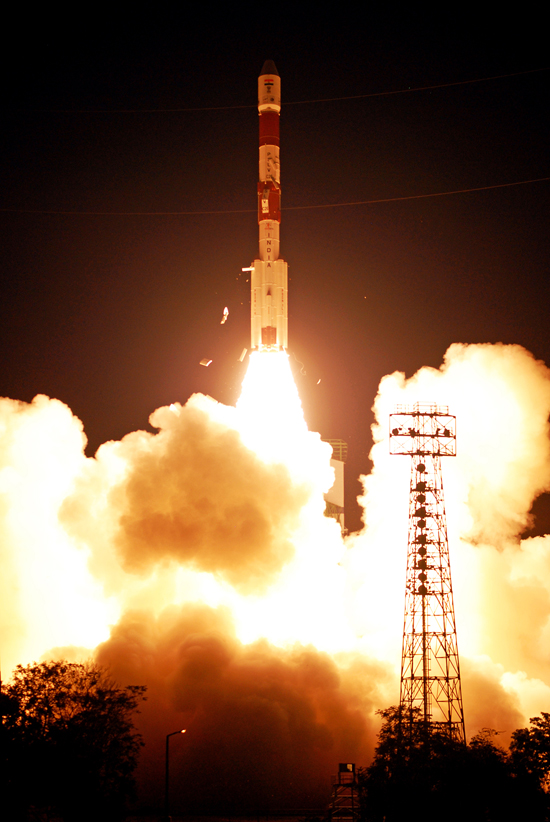
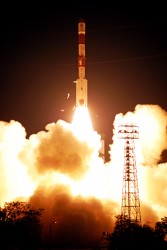
    The third IRNSS satellite heads into orbit. Photo: ISRO
    The third IRNSS satellite heads into orbit. Photo: ISRO

    India has successfully launched IRNSS-1C, the third satellite in the Indian Regional Navigation Satellite System (IRNSS), early on October 16. The satellite was launched aboard the Polar Satellite Launch Vehicle (PSLV) C26 at 2002 GMT (4:02 p.m. EDT) from Satish Dhawan Space Centre, Sriharikota.

    After the lift-off of PSLV-C26 with the ignition of the first stage, the important flight events — namely, stage and strap-on ignitions, heat-shield separation, stage and strap-on separations and satellite injection — took place as planned, according to the Indian Space Research Organization (ISRO). After a flight of about 20 minutes, 18 seconds, the IRNSS-1C satellite, weighing 1425 kg, was injected to an elliptical orbit of 282.56 km x 20,670 km, which is very close to the intended orbit. 

    After injection, the solar panels of IRNSS-1C were deployed automatically. ISRO’s Master Control Facility (at Hassan, Karnataka) assumed the control of the satellite. In the coming days, four orbit maneuvers will be conducted from the Master Control Facility to position the satellite in the geostationary orbit at 83 degrees East longitude. 

    IRNSS-1C is the third of the seven satellites constituting the space segment of the Indian Regional Navigation Satellite System. IRNSS-1A and IRNSS-1B, the first two satellites of the constellation, were successfully launched by PSLV on July 02, 2013, and April 04, 2014, respectively. Both IRNSS-1A and 1B are functioning satisfactorily from their designated geosynchronous orbital positions. 

    IRNSS is an independent regional navigation satellite system designed to provide position information in the Indian region and 1,500 kilometers around the Indian mainland. IRNSS will provide two types of services, namely, Standard Positioning Services (SPS) — provided to all users — and Restricted Services (RS), provided to authorized users.

    A number of ground stations responsible for the generation and transmission of navigation parameters, satellite control, satellite ranging and monitoring, etc., have been established in as many as 15 locations across the country.

    This is the 27th consecutively successful mission of the PSLV, which used the XL configuration of PSLV for the seventh time. Honorable Minister of State (Space) Jitendra Singh, witnessed the launch from the Mission Control Centre at SDSC, Sriharikota.

    The next satellite of this constellation, IRNSS-1D, is scheduled to be launched by PSLV in the coming months. The entire IRNSS constellation of seven satellites is planned to be completed by 2015.

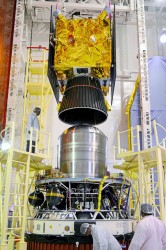
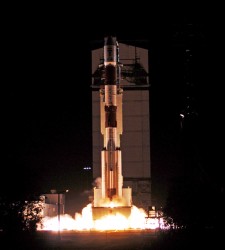
    Below is a slideshow with images from the launch preparations and launch.


  • Supergeo Technologies Showcases its SuperGIS Server, GIS solutions at InterGeo

    Eric Gakstatter, contributing editor of GPS World and Geospatial Solutions, talks with Sarah Liu of Supergeo Technologies, Inc., about the company’s GIS solutions for worldwide users while at InterGeo, held October 7-9 in Berlin.

    See more InterGeo videos at GPS World’s YouTube Channel.

  • Abstracts Deadline for First RIN Conference Is October 24

    There is still time to submit abstracts for the Royal Institute of Navigation’s new conference. The deadline for abstracts is October 24.

    The RIN International Navigation Conference is set for February 24-26 in Manchester, England.

    To submit an abstract and view the full call for papers, visit this link.

    In this first event in a brand-new series of world-class conferences, the conference will highlight the state of the art in fields like GNSS and Galileo, indoor positioning, autonomous transport, security and resilience of navigation in the world of cyber attacks, and new quantum technologies. The conference will be of special interest to the maritime, aviation, PNT, transport, research and development and security communities.

    Confirmed keynote speakers and topics:

    • Privacy in Tracking (smartphones & indoor navigation) — Chandu Thota, Google
    • Security and Resilience — Dana Goward, president and executive director, U.S. Resilient Navigation and Timing Foundation; Professor Todd Humhreys, University of Texas at Austin, USA
    • Multi-Constellation GNSS — Gian Gherado Calini, GSA
    • Multi-Sensor Integration — Professor Dorota Grejner-Brzezinska, Ohio State University
    • Quantum Technologies — Sir Peter Knight, Professor of Quantum Optics and Senior Research Investigator, Imperial College London
    • Emerging Trends and Current Challenges — Colin Beatty FRIN, CBiL
    • Autonomy in Transport — BAE – ASTREA
    • Legal Aspects of Navigation — Professor Frans von der Dunk, Institute of Space Law, Leiden University.

    Visit the website for full conference details, including the exhibition and sponsorship brochure.

  • KVH Receives $19 Million Order for FOG-Based Navigation Systems

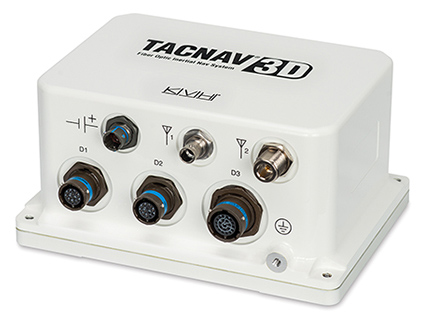
    The TACNAV 3D, by KVH Industries. Photo: KVH Industries
    The TACNAV 3D, by KVH Industries. Photo: KVH Industries

    KVH Industries, Inc., has received a $19 million contract for the delivery of a new fiber optic gyro (FOG)-based tactical navigation system for use by an international military customer in an armored vehicle application. A variant of KVH’s TACNAV FOG product and KVH’s new TACNAV 3D, the system provides continuous high-accuracy position and orientation even when GPS is lost or jammed.

    Work on the contract began in July under a letter contract, and hardware shipments for this order are expected to be made in 2015 and 2016. Program management, engineering services, and out-year support services will be provided as part of this order.

    “KVH’s TACNAV navigation solution is an important tool for U.S. and allied warfighters, providing precision navigation as well as coordination of vehicles in critical situations,” said Dan Conway, executive vice president of KVH’s Guidance and Stabilization group. “The system serves as a crucial resource for navigation and battle management, and even as a backup in GPS-denied environments, keeping soldiers safe and out of harm’s way wherever they travel. This new order reaffirms the value of KVH’s TACNAV products for international militaries, and adds to our backlog for the coming years.”

    All of KVH’s TACNAV military vehicle navigation systems provide unjammable precision navigation, heading, and pointing data for vehicle drivers, crews, and commanders. TACNAV can also serve as a heading and position source for situational awareness. The TACNAV system ordered is a FOG-based navigation and pointing solution, which is designed to ensure precise navigation data regardless of GPS availability as well as automatic “drive and calibrate” capability. It features a compact design, continuous heading and pointing data output, and a flexible architecture that allows it to function as either a standalone navigation module or as the heart of an expanded, multifunctional TACNAV system. The system is designed to integrate with Battle Management Systems (BMS) and is a vital component for effective battlefield management.

    TACNAV systems are currently in use by the U.S. Army and Marine Corps, as well as many allied customers including Canada, Sweden, Great Britain, France, Germany, Spain, Egypt, Botswana, Australia, New Zealand, Saudi Arabia, Taiwan, Romania, Poland, Turkey, Malaysia, Switzerland, South Korea, Singapore, Brazil, and Italy.

  • Javad Ashjaee, Alan Cameron Discuss Design of TRIUMPH-F1 at InterGeo

    Javad Ashjaee, president and CEO of JAVAD GNSS, and GPS World Editor-in-Chief Alan Cameron discuss the design of the TRIUMPH-F1 while at InterGeo 2014, held October 7-9 in Berlin.

    See more InterGeo videos at GPS World’s YouTube Channel.

  • Loctronix IDS Captures Real-World GPS Jamming Interference

    A newly published white paper by Loctronix Corporation presents preliminary test results of its Interference Detection System (IDS), which included capturing two separate incidents of intentional interference caused by a sweep jammer device. On October 23, Loctronix will host a webinar, “Detecting GNSS Interference in the Wild,” based on the findings revealed in the white paper “Catching a Jammer.”

    In recent tests, the IDS ran continuously for 24 hours monitoring for potential interference originating from traffic on a nearby highway, SR-522, passing through Woodinville, Washington. “In a single day, the IDS detected two separate instances of a sweep jammer moving along the highway,” noted Loctronix Founder and CEO Michael Mathews. “These discoveries were unexpected, given the relatively short monitoring period and the fact that SR-522 is not a heavy truck-route.”

    “The two interference events were likely caused by sweep jammers installed within a vehicle’s interior. The intercepted signals exhibited significant variations in amplitude probably caused by the jammer antenna non-uniform radiation pattern as the jammer vehicle passed through the IDS antenna beam pattern,” Mathews added.

    Intentional interference is designed to prevent a GPS receiver from acquiring and tracking signals. The use of jammers is in the U.S. is illegal; however, they can still be purchased for as little as $30. Thousands of GPS jammers are purportedly in use throughout Europe and several parties have been caught illegally jamming GPS in the U.S.

    Loctronix developed the IDS to identify, characterize, and ultimately geolocate GPS interference. When interference is present, the system analyzes the interference for signal structure and notifies operators if the threat is significant.

    The IDS is highly portable, simple to use, and cost-effective, Loctronix said. The system is based upon the Loctronix ASR-2300 software defined radio platform, making it readily configurable (from a single mobile detector to a multi-sensor network array) to monitor additional GNSS bands and, potentially, cellular bands.

    Loctronix’ webinar, ”Detecting GNSS Interference in the Wild,” will be held October 23, 10-11 a.m. PDT.

    In the video below, Michael B. Mathews, Ph.D., CEO and founder of Loctronix, tells GPS World about the IDS at the ION GNSS+ Conference, held September in Tampa, Florida.


  • MOTOsafety Helps Parents Monitor Teen Drivers

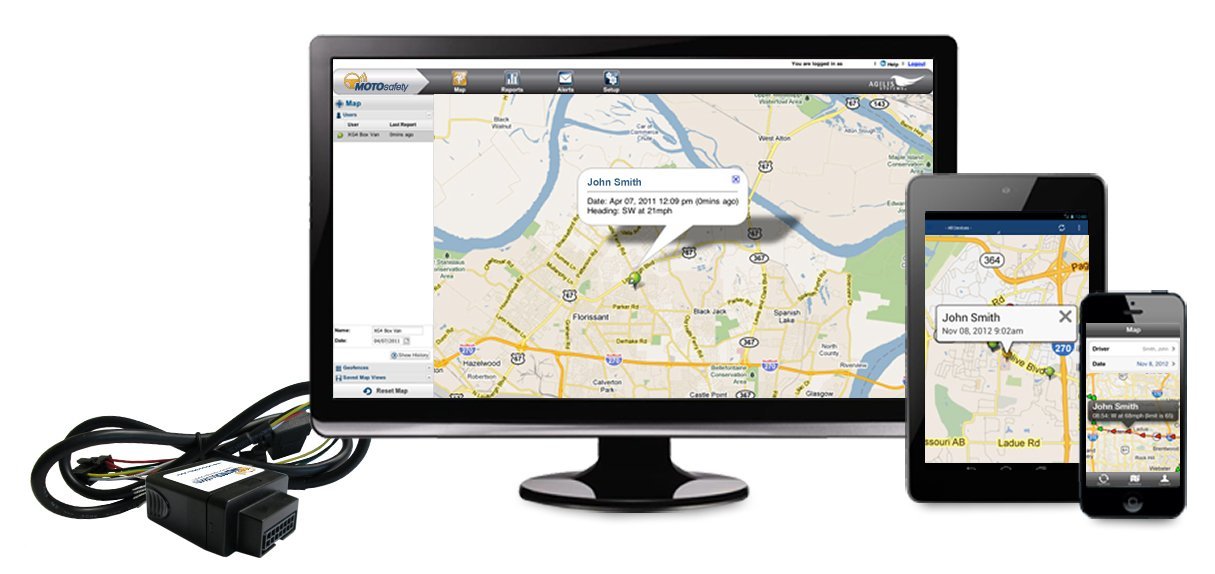
    MOTOsafety-screen Photo: Agilis Systems
    Photo: Agilis Systems

    Agilis Systems, LLC, a provider of GPS-based software solutions for businesses, now offers MOTOsafety Teen Driving Coach — a specialty consumer product designed to help parents monitor location and driving behaviors of their teenage drivers.

    According to the National Highway Traffic Safety Administration (NHTSA), inexperience and speeding are top contributors to teen automobile accidents. The team at Agilis recognized this as an opportunity to leverage the company’s experience improving safety ratings of professional drivers to develop a similar product that would help young drivers become better, safer drivers.

    Expanding Agilis’ product line to include a consumer product that will help teens stay safer on the roads was an easy step to take, says Agilis Systems’ President and CEO, David Barford. “Most of us here at MOTOsafety are parents. I, myself, am the father of four children. I know the stress and worry you feel as a parent the first time you hand the keys to a new driver. So evolving our technology from business use to helping safeguard and teach our kids… absolutely. It was a must-do.”

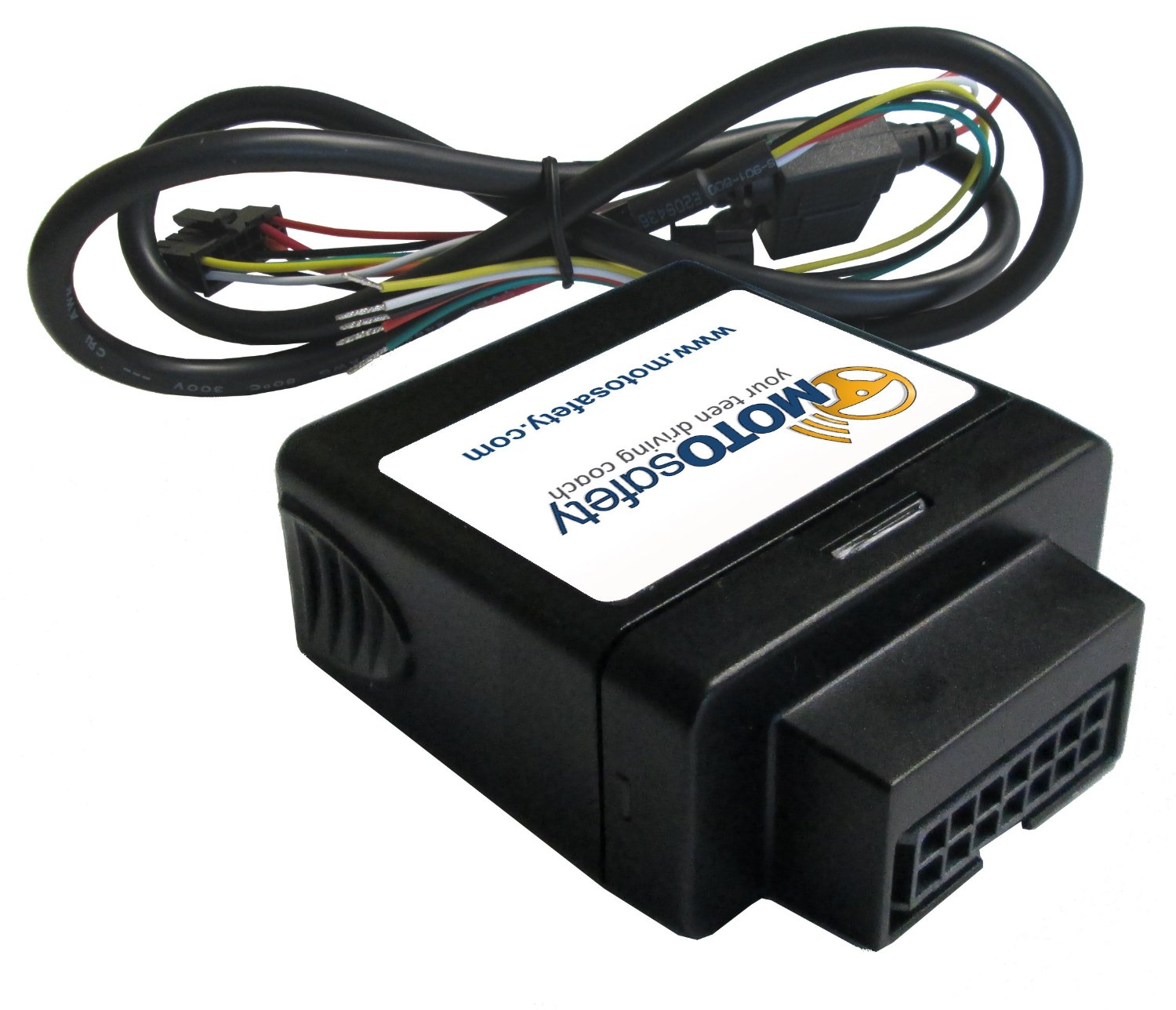
    MOTOsafety-1 Photo: Agilis Systems
    Photo: Agilis Systems

    Agilis Systems developed MOTOsafety in collaboration with a former police officer and driving school owner and an advisory board of parents.

    MOTOsafety was first offered to the public with a soft launch in 2011. Today, MOTOsafety is the largest and most trusted GPS teen-driving product on the market.

    MOTOsafety is a web-based software and mobile app that provides parents with real-time and historical information on their child’s daily driving habits. Data is collected using a small GPS device that installs directly into the vehicle. Customers may choose between a removable plug-in tracker or a hard-wired option. Both devices are small in size, easy to install, and are not visible in most vehicles.

    Parents login to secure web-based software to review daily reports on speed, rapid acceleration, harsh braking, routes traveled, and times and locations of driving activities. The MOTOsafety software also allows parents the option to set approved driving hours and designate geofences — customizable, virtual mapped boundaries where their child may or may not travel. Parents may also opt to receive real-time text or email alerts if their teen driver violates speed limits or other established rules, or if the MOTOsafety device is removed from the vehicle.

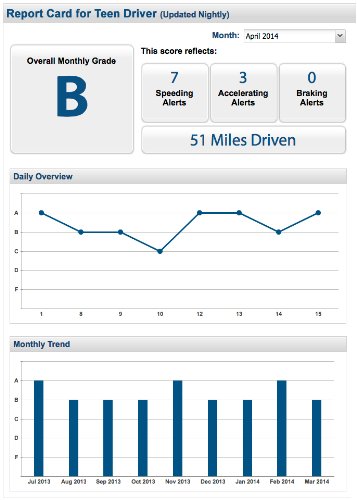
    Another MOTOsafety feature is the Daily Driver Report Card. This specially designed report provides a summary of the prior day’s driving activity in a familiar letter-grade format. The Report Card is automatically emailed each day, and serves as a coaching tool for parents to review with their child and facilitate on-going conversation on his or her driving performance, safe driving practices, and goals for improvement.

    MOTOsafety-ReportCard

  • Installed Base of Fleet Management Systems to Reach 7.1M in Europe by 2018

    According to a new research report from the analyst firm Berg Insight, the number of active fleet management systems deployed in commercial vehicle fleets in Europe was 3.65 million in Q4-2013. Growing at a compound annual growth rate (CAGR) of 14.2 percent, this number is expected to reach 7.10 million by 2018.

    A group of international aftermarket solution providers have emerged as the leaders on the European fleet management market. Masternaut reported an active installed base of close to 350,000 units in July 2014, mainly in France and the UK. TomTom Telematics was the fastest growing vendor also in 2014 and has now surpassed 400,000 subscribers in August 2014.

    The two companies share the number one spot in terms of active installed base in Europe. Digicore has also joined the exclusive group of fleet management providers in Europe having more than 100,000 active devices in the field. Transics is number one in the heavy trucks segment with an estimated 85,000 active units installed.

    A major trend in the past three years has been the announcements of standard line fitment of fleet management solutions among the HCV manufacturers. Scania, Daimler, Volvo and MAN now experience fast growth of telematics subscribers thanks to these initiatives. FleetBoard by Daimler, Dynafleet by Volvo and Scania Fleet Management are the most sold systems with cumulative shipments of 150,000 units, 135,000 units and 100,000 units respectively as of Q4-2013.

    A recent trend is that LCV manufacturers increasingly work together with aftermarket players to offer fleet management solutions. PSA Peugeot Citroën has for instance launched a new fleet management service on the French market in partnership with Orange Business Services in April 2014. Ford and Telogis recently partnered to deliver fleet management solutions to Ford customers in Europe. Teletrac has moreover for a long time collaborated with OEMs on the UK market, including Citroën and Mercedes Benz.

    M&A activities on this market continued with full force in 2014. “Seven major mergers and acquisitions have so far taken place this year among the vendors of fleet management systems in Europe,” said Johan Fagerberg, Senior Analyst, Berg Insight. At the beginning of 2014, Qualcomm finally divested also the majority of the European arm of its fleet business to Astrata Group, a fleet management company headquartered in Singapore.

    Later in February, WABCO acquired Transics and the transaction valued the company at about €100 million. Lysanda acquired UK-based TRACKER Network in February and plans to establish Tantalum Corporation from the combined business.

    In April, TomTom also acquired the French FM provider DAMS Tracking, adding another 27,000 subscriptions to the installed base. Francisco Partners, moreover, divested Masternaut to Summit Partners and FleetCor in the same month.

    In July 2014, Zucchetti Group acquired a majority share of Macnil from its founders. The latest transaction was done in October 2014 when Finder acquired its Polish competitor Autoguard to form the largest FMS provider in Poland. Fagerberg anticipates that the market consolidation of the still overcrowded industry will continue in 2015.

    Download the report brochure.

  • EC, GSA Plan Workshop on GNSS Receiver Technology

    On November 18, a Consultation Event will take place in Brussels on the subject of receiver technology. The event is being held to inform the stakeholders of the European GNSS receiver community about the format and timeline of funding opportunities for the period 2015-2020, and to gather input for the definition of R&D actions in the field of receiver technology.

    The event is being organized by the European Commission’s Directorate-General Enterprise and Industry,  in collaboration with European GNSS Agency (GSA).

    The workshop will consist of one panel session, during which stakeholders from industry, SMEs, academia, and technology institutes will be asked to debate and recommend important lines of research in receiver technology.

    Registration is now open on the Europa website. Interested participants are invited to fill in the registration form and to indicate which application area they are interested in and the fields of research that should be supported.

    The workshop will be held at the Committee of the Regions, Jacques Delors building, rue Belliard 99-101, room JDE 53, Brussels.

  • Massively Online GPS Course Massively Popular

    Coursera-Chart-screenshot-W
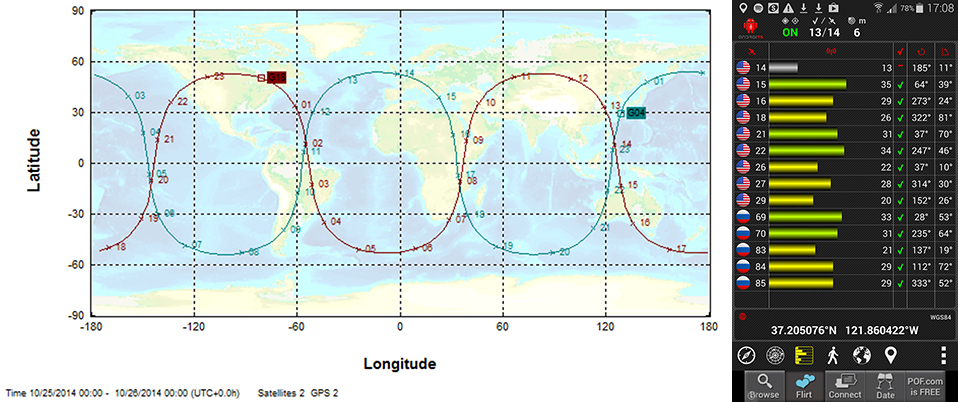
    In this course assignment, the map predicts the satellite paths, and the app is what students use to observe them.

    Final results are not yet in, but early indicators presage that Monday’s inaugural webinar with two Stanford professors will be the largest GNSS public event ever staged. Enrollment surpassed 20,000 some time ago, and the free subscription rolls are still open. It’s massive!

    Per Enge, professor of engineering at Stanford University, where he directs the Stanford Center for Position Navigation and Time, and Frank van Diggelen, vice president of technology at Broadcom Corporation and a consulting professor at Stanford University, are teaching the massively open online course (MOOC) on GPS this fall. The six-week course began October 13 and lasts through November 24, but it’s not too late to enroll.

    The course focuses on GPS basics with the use of smartphones.“This is the first ever MOOC on GPS/GNSS,” said van Diggelen. “It will be carried by Coursera.”

    GPS: An Introduction to Satellite Navigation, with an interactive Worldwide Laboratory using Smartphones

    Explore the fundamentals of the Global Positioning System (GPS) and how it works by conducting “backyard” laboratory experiments on your own mobile device. Learn the basics of satellite navigation and witness the power of a network with planet-wide coverage. Gain a deeper understanding of GPS and its role in our lives, while interacting with a worldwide community of learners and backyard scientists.

    “Online learning, especially with MOOCs, is about to revolutionize teaching, and Stanford is in the vanguard,” van Diggelen added. “We’ve been teaching this course for several years at Stanford, and so this seems a very natural extension. We’re both excited by the possibility of reaching students all over the world, and by being part of the revolution.”

    He provided some sample questions from set of short quiz exercises that will form part of the course.

    • What is the repeat period of the apparent orbit from a fixed point on earth, of a GLONASS satellite with orbit period 8/17 of a sidereal day?
    • What is 27 W in dBm?
    • Why is the bandwidth of the GPS C/A code signal one million cycles/second when it only sends data at 50 bits/second?
    • How precise are the GPS pseudo-range measurements?
    • Why is the fundamental GPS measurement called a pseudo-range?

    There are even lab sessions. Participants will use their own smartphones or tablets.

    A sample lab assignment: Predict which of the two GPS satellites, PRN 20 and PRN 32 will pass closest overhead at your location. Go outside at that time and verify that the GPS in your smartphone can acquire and track this satellite. Post the results on the course site, and watch who saw the satellite before you, and who sees it next.

    “The class as a whole will follow these satellites around the world, as they tie us together in a global laboratory,” van Diggelen concluded, “using online apps that make the worldwide labs work.”

    Frank van Diggelen
    Frank van Diggelen

    Frank van Diggelen is vice president of technology at Broadcom Corporation, a consulting professor at Stanford University, and inventor of coarse-time GNSS navigation, co-inventor of Long Term Orbits for A-GNSS, and author of A-GPS: Assisted GPS, GNSS, and SBAS. He is also a frequent contributor to GPS World.

    Per Enge
    Per Enge

    Per Enge designs navigation systems that are safe and secure. He has worked on such systems for maritime and air applications. Two of these navigation systems have been deployed worldwide. He received his B.S.E.E. from the University of Massachusetts, and his M.S.E.E. and Ph.D. from the University of Illinois. Today, he is the Vance and Arlene Coffman Professor of Engineering at Stanford University, where he directs the Stanford Center for Position Navigation and Time. He was awarded the GPS World 2013 Leadership Award in the Signals category.

    For more information, visit the course page at Coursera.