Category: Mapping

  • Esri Releases Android Mapping App to Open Source Community

    Esri announced in a blog post that they have released an Android-based mapping app, based built entirely on the ArcGIS Runtime SDK for Android V 10.1.1,  to the open source community.


    Today we are proud to announce the app has been released to the open source community on Github.  There have been some design changes and updates to the app since it’s debut including some of the following:

    • Portal API to populate a gridview with basemaps available to change in the map
    • Reverse Geocoding class
    • PopUp API to view and edit popups from a WebMap.

    This is a great starting point for developers who want to create mobile mapping apps like Google Maps & MapQuest.  Some features available now include:

    And there is more to come.  We encourage developers to collaborate with us as we use Github to continue developing this app together with our developer community.  Anyone and everyone are welcome to contribute.  We will review/accept pull requests, submit/fix issues, & use milestones for updates.  Four things you can do now include:

    1. Get Involved
    2. Report Issues/Enhancements
    3. Contribute code
    4. Improve documentation

  • Microsoft to Acquire Nokia’s Devices & Services Business

    Microsoft Corporation and Nokia Corporation today announced that the Boards of Directors for both companies have decided to enter into a transaction whereby Microsoft will purchase substantially all of Nokia’s Devices & Services business, license Nokia’s patents, and license and use Nokia’s mapping services.

    HERE-pod-3-920-USA-jpg

    Under the terms of the agreement, Microsoft will pay EUR 3.79 billion to purchase substantially all of Nokia’s Devices & Services business, and EUR 1.65 billion to license Nokia’s patents, for a total transaction price of EUR 5.44 billion in cash. Microsoft will draw upon its overseas cash resources to fund the transaction. The transaction is expected to close in the first quarter of 2014, subject to approval by Nokia’s shareholders, regulatory approvals and other closing conditions.

    Building on the partnership with Nokia announced in February 2011 and the increasing success of Nokia’s Lumia smartphones, Microsoft aims to accelerate the growth of its share and profit in mobile devices through faster innovation, increased synergies, and unified branding and marketing. For Nokia, this transaction is expected to be significantly accretive to earnings, strengthen its financial position, and provide a solid basis for future investment in its continuing businesses.

    “It’s a bold step into the future – a win-win for employees, shareholders and consumers of both companies. Bringing these great teams together will accelerate Microsoft’s share and profits in phones, and strengthen the overall opportunities for both Microsoft and our partners across our entire family of devices and services,” said Steve Ballmer, Microsoft chief executive officer. “In addition to their innovation and strength in phones at all price points, Nokia brings proven capability and talent in critical areas such as hardware design and engineering, supply chain and manufacturing management, and hardware sales, marketing and distribution.”

    “We are excited and honored to be bringing Nokia’s incredible people, technologies and assets into our Microsoft family. Given our long partnership with Nokia and the many key Nokia leaders that are joining Microsoft, we anticipate a smooth transition and great execution,” Ballmer said. “With ongoing share growth and the synergies across marketing, branding and advertising, we expect this acquisition to be accretive to our adjusted earnings per share starting in FY15, and we see significant long-term revenue and profit opportunities for our shareholders.”

    “For Nokia, this is an important moment of reinvention and from a position of financial strength, we can build our next chapter,” said Risto Siilasmaa, Chairman of the Nokia Board of Directors and, following today’s announcement, Nokia Interim CEO. “After a thorough assessment of how to maximize shareholder value, including consideration of a variety of alternatives, we believe this transaction is the best path forward for Nokia and its shareholders. Additionally, the deal offers future opportunities for many Nokia employees as part of a company with the strategy, financial resources and determination to succeed in the mobile space.”

    “Building on our successful partnership, we can now bring together the best of Microsoft’s software engineering with the best of Nokia’s product engineering, award-winning design, and global sales, marketing and manufacturing,” said Stephen Elop, who following today’s announcement is stepping aside as Nokia President and CEO to become Nokia Executive Vice President of Devices & Services. “With this combination of talented people, we have the opportunity to accelerate the current momentum and cutting-edge innovation of both our smart devices and mobile phone products.”

    Nokia has outlined its expected focus upon the closing of the transaction in a separate press release published today.

    TERMS OF THE AGREEMENT

    Under the terms of the agreement, Microsoft will acquire substantially all of Nokia’s Devices and Services business, including the Mobile Phones and Smart Devices business units as well as an industry-leading design team, operations including all Nokia Devices & Services-related production facilities, Devices & Services-related sales and marketing activities, and related support functions. At closing, approximately 32,000 people are expected to transfer to Microsoft, including 4,700 people in Finland and 18,300 employees directly involved in manufacturing, assembly and packaging of products worldwide. The operations that are planned to be transferred to Microsoft generated an estimated EUR 14.9 billion, or almost 50 percent of Nokia’s net sales for the full year 2012.

    Microsoft is acquiring Nokia’s Smart Devices business unit, including the Lumia brand and products. Lumia handsets have won numerous awards and have grown in sales in each of the last three quarters, with sales reaching 7.4 million units in the second quarter of 2013.

    As part of the transaction, Nokia is assigning to Microsoft its long-term patent licensing agreement with Qualcomm, as well as other licensing agreements.

    Microsoft is also acquiring Nokia’s Mobile Phones business unit, which serves hundreds of millions of customers worldwide, and had sales of 53.7 million units in the second quarter of 2013. Microsoft will acquire the Asha brand and will license the Nokia brand for use with current Nokia mobile phone products. Nokia will continue to own and manage the Nokia brand. This element provides Microsoft with the opportunity to extend its service offerings to a far wider group around the world while allowing Nokia’s mobile phones to serve as an on-ramp to Windows Phone.

    Nokia will retain its patent portfolio and will grant Microsoft a 10-year license to its patents at the time of the closing. Microsoft will grant Nokia reciprocal rights to use Microsoft patents in its HERE services. In addition, Nokia will grant Microsoft an option to extend this mutual patent agreement in perpetuity.

    In addition, Microsoft will become a strategic licensee of the HERE platform, and will separately pay Nokia for a four-year license.

    Microsoft will also immediately make available to Nokia EUR 1.5 billion of financing in the form of three EUR 500 million tranches of convertible notes that Microsoft would fund from overseas resources. If Nokia decides to draw down on this financing option, Nokia would pay back these notes to Microsoft from the proceeds of the deal upon closing. The financing is not conditional on the transaction closing.

    Microsoft also announced that it has selected Finland as the home for a new data center that will serve Microsoft consumers in Europe. The company said it would invest more than a quarter-billion dollars in capital and operation of the new data center over the next few years, with the potential for further expansion over time.

    NOKIA LEADERSHIP CHANGES

    Nokia expects that Stephen Elop, Jo Harlow, Juha Putkiranta, Timo Toikkanen, and Chris Weber would transfer to Microsoft at the anticipated closing of the transaction. Nokia has outlined these changes in more detail in a separate release issued today.

    EXTRAORDINARY SHAREHOLDERS MEETING

    Nokia plans to hold an Extraordinary General Meeting on November 19, 2013. The notice of the meeting and more information on the transaction and its background are planned to be published later this month.

    PRESS CONFERENCE

    Nokia will host a press conference today, Tuesday, Sept. 3, at 11 a.m. EEST in Dipoli, Espoo (Otakaari 24). Registration will start at 10 a.m., and the doors will open at 10.40 a.m. Due to space constraints, only media who show valid press credentials at the registration will be admitted. Media are encouraged to watch a live webcast of the press conference at:http://press.nokia.com/

  • Geospatial on Everything

    By Alan Cameron

    Everything has a geospatial aspect. Everything.

    Over grits, coffee, and the airborne delicacy purveyed at the Flying Biscuit Cafe (right out of the oven, right into your mouth) in Sandy Springs, Georgia, I absorbed this high-tech homily.

    You’ve heard of the European financial crisis. Trace it back to geospatial, from the Greek banking collapse, which in turn had roots in the implosion of the Greek tax system, due to a plethora of gaps, inconsistencies, and exceptions filed in a largely uncontrolled property cadastre — the register of real property, including details of ownership, precise location (by GPS coordinates), and value of land parcels.

    Lose control of your cadastre (your GIS), lose the country. With global interconnections, soon the continent, if not perhaps the world economy.

    For want of a nail, the battle was lost.

    Jump forward, technologically, to flash lidar. Ball Aerospace created this ability to capture continuous rapid multiple laser interferometry detection and ranging (LiDAR) images/point clouds, merged with continuous high-resolution optical images, to create full-color 3D models in real time. Stitched together with GPS, this produces real-time full-motion video: interactive geo-referenced metric 3D models.

    In field application, this can yield time-critical 3D mapping for urgent missions, enhanced situational awareness, battlefield characterization, and tactical mission planning. It can help with disaster-response planning and event forensics. Real-time models could be communicated with the public through easily comprehended moving images via television or the Internet. of the actual progress of a fire or flood, together with evacuation routes.

    Jump again to fabfi. What’s a fabfi?

    FabFi is an open-source, lab-grown system out of MIT using common building materials and off-the-shelf electronics to transmit wireless Ethernet signals across distances up to several miles. Communities can build their own networks for high-speed Internet connectivity, and access to online educational, medical, and other resources.

    Simple, low-cost, and feasible in unstable environments: Afghanistan, Kenya, and any number of countries that leapfrogged telephone landlines to come quickly into the cellular era; now they can leapfrog Ethernet cable networks and even WiFi for virtual connectivity. Implement with locally available materials. Print out a 2D design file and create the pieces out of wood, metal, acrylic, clay, stone, or ice, as long as you can attach a metallic RF reflective surface to the front.

    If you haven’t guessed the geospatial aspect of this, I assure you it’s there, but I’ve run out of room here.

    For these geospatial glimpses, I am indebted to contributing editor Art Kalinski. Read his monthly columns here.


    Alan Cameron is editor-in-chief and publisher of GPS World magazine, where he has worked since 2000. He also writes the monthly GNSS System Design e-mail newsletter and the Wide Awake blog.

  • Agency9 Brings 3D Gaming Effects to Web-Based GIS and Planning

    Agency9 CityPlanner, a web service for 3D visualization, has released support for 3D rendering effects such as real time shadow mapping, ambient occlusion, atmospheric scattering and god rays. These effects, traditionally only seen in high-end video games, elevate even the most simple 3D-model and city model to an astounding visually level and enables shadow studies for planners, Agency9 said.

    CityPlanner is a tool for intelligent 3D-GIS visualization with the combination of a powerful 3D engine and support for traditional GIS data sources and standards such as KMZ, WMS, GeoTiff, ESRI Shape and more.

    Agency9 CityPlanner is a web-based service for 3D visualization of projects within urban development, infrastructure and energy. CityPlanner provides 3D web planning tools for widespread access and collaboration. It is created for urban planners, communicators, consultants and GIS technicians to create, share and publish project and spatial information from a normal web browser. CityPlanner is used by municipalities internationally in their daily work with master and local planning, also involving stakeholders and citizens in the planning process by enabling web publishing of 3D plan visualisations.

    “We are very pleased to announce these exciting features that continue to strengthen the position of Agency9 CityPlanner as the premier 3D visualisation tool for the web. CityPlanner is continuously evolving by being developed in close cooperation with the users to ensure that the product supports their workflows and requirements without compromising user experience and usability,” said Johan Göransson, Product manager.

    Atmospheric scattering and god rays:

    Atmospheric scattering and god rays

    Real time shadows & Ambient Occlusion:

    Real time shadows & Ambient Occlusion


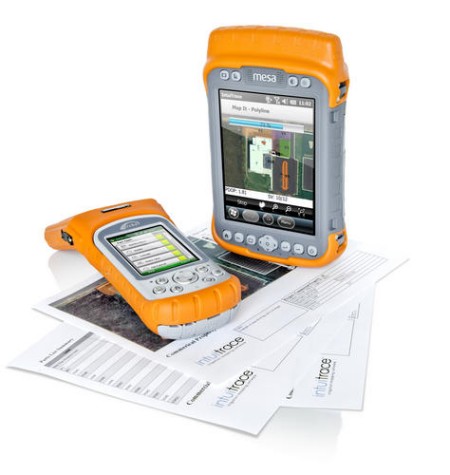
  • Juniper Systems Updates Aspect Field Mapping Software to v1.2

    Juniper Systems Updates Aspect Field Mapping Software to v1.2

    Photo: Juniper Systems

    Juniper Systems has released a new version of its field mapping software, Juniper Aspect 1.2. The release builds upon and adds to its previous strengths as an easy-to-use, versatile mapping tool.

    Juniper Aspect is a field mapping software designed to boost efficiency and productivity, while being simple enough that anyone can quickly learn how to use it, according to Juniper. It places the capabilities of GPS and GIS in the hands of field workers, resulting in more streamlined processes, the company said. Used for any job that requires locating, documenting, and inspecting assets, Juniper Aspect is a flexible solution for many different lines of work.

    Juniper Aspect version 1.2 offers improvements designed to boost worker efficiency and user-friendliness. With a new feature to more extensively filter and organize data, and an ability to more easily import large amounts of data into Excel, Juniper Aspect 1.2 offers greater benefits in time-savings and ease of use, the company said. Furthermore, the software appeals to a  broad audience, as it will now operate on most devices running Windows Mobile 6.0 or higher.

    “At Juniper Systems, our focus is on the customer,” said Jim Benson, Public Works Market Manager at Juniper Systems. “And that’s why we have implemented many of the new changes in Juniper Aspect 1.2—to respond to the requests of our users. This new release is amazingly easy to use, and yet it does more to make jobs easier and workflows run smoother.”

    Current Juniper Aspect customers will automatically receive the new upgrade simply by checking for new updates in their current software version. New customers can contact Juniper Systems to learn more about Juniper Aspect 1.2. They can also download a free preview version of Juniper Aspect.

  • USGS Needs Your Help: Add Your Community’s Landmarks and Buildings to National Mapping Effort

    The U.S. Geological Survey announced that advances in the technology of online map-based data collection platforms have made it possible for citizens of the U.S. to contribute to USGS topographic mapping efforts like never before.

    The USGS is currently seeking volunteers to aid in collecting data for The National Map (TNM), which comprises a variety of products and services that provide the Nation with geospatial information to describe the landscape of the United States and its territories. The National Map Corps (TNMCorps) aims to improve this topographic information by updating existing and gathering previously uncollected data via volunteered geographic information (VGI).

    tnm4
    Blue dots represent locations where citizen-mapping efforts are currently underway. Green states are currently available for editing with remaining states available around September

    The National Map includes hydrographic features such as streams and lakes, elevation contours, geographic names, land cover, and structures. To improve and update The National Map, the USGS is turning to volunteers to map the location of important community buildings – such as police stations, schools, hospitals, post offices, prisons, cemeteries, and fire stations. Adding and verifying the locations of buildings to existing TNM datasets makes significant additions to the USGS’s ability to provide accurate information to the public.

    After citizen input is peer-reviewed by fellow volunteers, the valid data are incorporated into The National Map databases. These databases are used to create many products, including US Topo maps – free and downloadable digital topographic maps that are released every three years.

    Currently, the USGS is in the process of expanding TNMCorps; 35 new states have been added to the volunteer database and need mapping support from volunteers. These states are: Alabama, Arizona, Arkansas, Alaska, California, Colorado, Connecticut, Delaware, Florida, Georgia, Idaho, Illinois, Louisiana, Maryland, Massachusetts, Michigan, Mississippi, Montana, Nebraska, Nevada, New Hampshire, North Dakota, New Jersey, New Mexico, Ohio, Oregon, Pennsylvania, Rhode Island, South Carolina, South Dakota, Utah, Vermont, Washington, West Virginia and Wyoming.

    1tnm
    Web Editor showing downtown Little Rock, AR. Red icons are structures that need to be checked or verified by volunteers. The green icon is an example of a structure that has been verified by a volunteer and which will be added to the National Map after it has gone through peer-review.

    Similar to the way Wikipedia or OpenSteetMap allows users to add and edit information on the site, The National Map Corps web editing interface allows users to easily contribute geographic data that will eventually become part of The National Map.

    A complete list of the types of buildings the USGS is looking to volunteers to verify throughout the country can be found here.

    “Because of a lack of publicly available national authoritative datasets for some municipal buildings and infrastructure throughout the country, we are looking for volunteers who can fill in this information quickly and keep it up to date,” said Volunteer Geographic Information Project Leader Elizabeth McCartney.

    In addition to adding previously unmapped community buildings and landmarks to The National Map database, volunteers are encouraged to remove structures that no longer exist, update existing buildings that have changed, and label correctly marked structures as correct.

    The current platform used by TNMCorps is a customized version of OpenStreetMap, an online platform that enables users to edit, add, and access geographic data.

    “The editor, like OpenStreet Map which has over a billion users worldwide, is meant to be accessible to non-professionals. Users don’t need to be professional scientists in order to contribute. Anyone who wants to volunteer can give it a go. There are a lot of people out there who love maps and are interested in improving information in their communities,” said McCartney.

    Volunteer participants are not required to live within the state they review — the mapping technology used for TNMCorps allows anyone to update geographic data from anywhere.

    Testing the feasibility of collecting VGI for the The National Map began in a series of pilot projects in January 2011. To test the viability of using volunteers to edit TNM map data, students at Colorado universities were asked to map structures in four topographic quadrangles around the Denver area. The results were impressive, as the structures mapped surpassed the quality standard maintained by the USGS. The success of the pilot projects confirmed that VGI is a viable source of data.

    Since its start in Colorado, the program has expanded to 35 states. The National Map Corps hopes to have all 50 states available for mapping by September 2013.

    Volunteer Recognition

    The USGS has created a social media presence to support this program and reach new volunteers. Using Twitter , with more than 2,080 followers, and the USGS Facebook page, volunteers who contribute to The National Map Corps are awarded badges are recognized based on the number of points edited.

    Each badge is represented by a different antique surveying instrument.

    Volunteers can earn each successive badge by contributing structures through the editing or peer review process.

  • Topcon Offers HiPer SR Integrated Receiver for GIS, Mapping

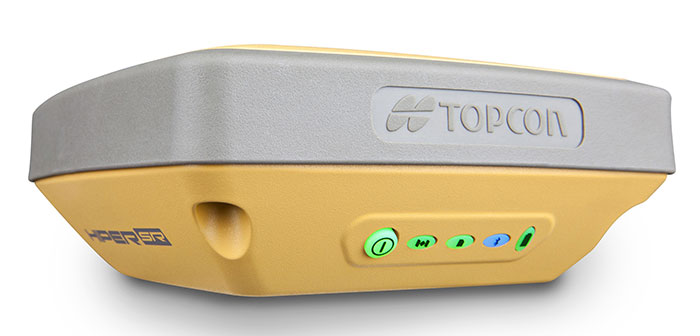
    Topcon Offers HiPer SR Integrated Receiver for GIS, Mapping

    HiPerSR_GIS_Topcon-W Photo: Topcon Positioning Systems
    Photo: Topcon Positioning Systems

    Topcon Positioning Systems has announced the HiPer SR integrated receiver for GIS and mapping applications.

    The HiPer SR for GIS is a compact, integrated GNSS receiver with sub-meter accuracy. Additional, scalable options are available via OAF (Options Authorization File) upgrades, delivering accuracy levels of sub-decimeter and centimeter without the need for additional hardware, Topcon said.

    The HiPer SR for GIS can be paired with a Topcon controller and eGIS software, or used with Topcon’s eGPS utility software to use with a third-party device and application such as ArcPad or ArcGIS mobile running on a Windows tablet or mobile device.

    “The HiPer SR for GIS brings the very finest in Topcon GNSS technology into a compact and rugged housing,” Jason Hooten, TPS sales manager for GIS, said. “Superior tracking and positioning is provided by the HiPer SR’s Vanguard receiver technology with advanced Fence Antenna.”

    “GIS field work is changing as more field workers are using various types of collection devices like smartphones, tablets, and laptops in addition to the traditional data collectors. Unfortunately, the GPS in these devices are not accurate enough for locating buried assets or doing initial inventory collection. The HiPer SR provides this accuracy regardless of job site demands,” Hooten said.

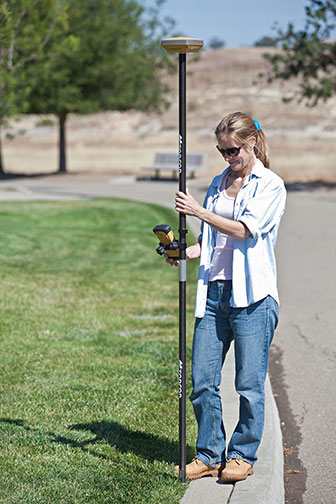
    HiPerSR_Topcon-W Photo: Topcon Positioning Systems
    Photo: Topcon Positioning Systems

    “The new HiPer SR is an adaptable device that can be used to locate utilities within an inch one day and the next provide sub-meter accuracy for an environmental study. This device provides accurate positioning to different applications as needed. The HiPer SR is small in size, but giant in performance and flexibility.”

  • Visual Intelligence Offers iOne Infrastructure Mapping System

    Visual Intelligence unveiled its new geoimaging solution, iOne Infrastructure Metric Mapping System (iOne IMS), which it calls a major technological milestone for infrastructure metric mapping and surveying. iOne IMS allows aerial imaging companies to capture more imagery and data at a fraction of the up-front investment and operating cost of competing products, allowing them to do much more for less, the company said.

    POWERPole12
    Oblique Imagery of Transmission Tower Insulators from iOne IMS Sensor.
    Courtesy: Visual Intelligence

    According to the announcement, when installed on aircraft, the iOne IMS collects ortho, stereo, forward and backward oblique, multispectral 4-band and point cloud product generation—all in a single pass. Visual Intelligence is launching the iOne IMS today at RIEGL LIDAR 2013 during the International Airborne, Mobile, Terrestrial and Industrial User Conference in Vienna, Austria. Visual Intelligence President and CEO Dr. Armando Guevara is a featured speaker at the event where he will present “The Making of the iOne IMS + Riegl: From Design to Delivery.”

    “Sensor solutions for infrastructure metric mapping and surveying have traditionally been expensive, single-purpose devices that are not scalable, not flexible, hard to work with, and difficult to service and maintain,” said Guevara. “But iOne IMS represents a new generation of standards-based, multi-purpose sensor solutions that delivers the performance, quality and precision that mapping and surveying professional need to grow their businesses.”

    The company reports that iOne IMS is based on Visual Intelligence’s award-winning iOne Sensor Tool Kit Architecture (STKA), which is a next-generation software/hardware foundation for high-performing, multi-purpose 2D-3D geo-imaging sensors for aerial, terrestrial and mobile applications. iOne IMS is highly scalable both in terms of collection and functionality. Customers can easily expand from a medium-format iOne system to a large-format system. Customers can also buy only the functionality they need in the short term and then add more functionality as needed later on. Traditional solutions force customers to buy more functionality than they need, which increases capital equipment purchase and maintenance cost.

    iOne IMS can be mounted on airplanes, helicopters and UAVs to support a wide range of projects:

    •           Cadastral inventory
    •           Roads and rails surveys
    •           Construction surveys and monitoring
    •           Oil and gas pipeline corridor mapping
    •           Coastal surveys and environmental monitoring
    •           River and body of water surveys and water quality control
    •           Vegetation inventory and classification
    •           Forest and agricultural monitoring
    •           Disaster rapid response
    •           And many others

    Finally, the company reported that the iOne IMS will be optimized for UAV, UAS and Mobile applications. Miniaturized versions will be usable in interior mapping, Building Information Management (BIM) and other mobile close range photogrammetry (3D) applications that leverage cell phone technology.

  • Trimble Launches Unmanned Aircraft System for Photogrammetric Aerial Mapping

    Trimble Launches Unmanned Aircraft System for Photogrammetric Aerial Mapping

    The Trimble UX5. Photo: Trimble
    The Trimble UX5. Photo: Trimble

    Trimble has introduced its next-generation Unmanned Aircraft System (UAS) — the Trimble UX5 aerial imaging rover with the Trimble Access aerial imaging application. The new solution builds upon the strengths of its predecessor, the Trimble Gatewing X100, to offer enhanced image quality and intuitive workflows. Combined with the Trimble Business Center photogrammetry office software module, the Trimble UX5 is the a complete UAS photogrammetric mapping solution specifically designed for surveyors and geospatial professionals.

    Trimble’s UAS for photogrammetric aerial mapping allows surveyors and geospatial professionals to collect data with an unmanned aircraft for large projects. A wide variety of traditional surveying applications such as topographic surveying, site and route planning, progress monitoring, volume calculations, disaster analysis and as-builts in industries such as surveying, oil and gas, mining, environmental services, and agriculture can now benefit from aerial imaging by allowing professionals to safely collect large amounts of accurate data in a short time.

    “With the recent introduction of the Trimble Business Center photogrammetry module and now the Trimble UX5 and Trimble Access aerial imaging application, Trimble continues to pioneer the development of UAS photogrammetry data collection and integration for geospatial professionals,” said Erik Arvesen, vice president of Trimble’s Survey Division. “The complete solution represents a significant leap in efficiency, transforming traditional workflows with faster data collection, easier processing and enhanced deliverables.”

    The new Trimble Access aerial imaging application is field software for planning UAS missions, performing flight checks and monitoring flights — all with intuitive workflows. The imaging application is used to define the project area, avoidance zones, and flight parameters as well as take-off and landing locations. In the field, it is used to perform pre- and post-flight checks and download the flight data and images after landing. The new wizard-like digital checklists give the operator a complete “to-do list” so critical steps are not bypassed or missed in the field that can enhance reliable and safe flights. The software also includes fixed post-flight procedures to ensure that operators do not leave the field with a dataset that is incomplete or inconsistent.

    The Trimble UX5 can provide a safer method to collect data compared to traditional surveying methods, Trimble said. Flights are fully automated, from launch to landing, and require no piloting skills. The operator facilitates the aircraft’s operation and built-in safety procedures can ensure safe and successful launches. Data collection can be performed remotely without exposing individuals to hazardous terrain, environmental contaminants or heavy equipment and machinery.

    The Trimble UX5 unmanned system in use at a construction site. Photo: Trimble
    The Trimble UX5 unmanned system in use at a construction site. Photo: Trimble

    The Trimble UX5 aerial imaging rover has been designed to follow the latest developments in the “prosumer” camera market, providing optimal image quality along with maximum photogrammetric accuracy.

    Incorporating a mirrorless 16-megapixel camera with a fixed focal-length external lens, the Trimble UX5 provides high-resolution imagery and accurate deliverables. The large field of view from the camera allows the UX5 to cover 50-75 percent more area to enhance efficiency and reduce operational costs. In addition to the increase in flight efficiency, the Trimble UX5 is capable of producing 3D surface deliverables with a ground sampling distance of approximately 2.4 centimeters (approximately 1.0 inch).

    Designed to operate in real-world conditions, the Trimble UX5 is capable of flights between 75 and 750 meters (approximately 246 and 2,460 feet) above ground level and can be flown in light rain and windy conditions, up to 65 kph (approximately 40 mph).

    The Trimble UX5 airframe is comprised of a carbon frame inside expanded polypropylene. Impact-resistant plastics and composite fibers are used for the aircraft components, including winglets and belly plate. This design and choice of materials results in a rigid aircraft with strong torsional stability and the ability to withstand rough landings.

    Performance enhancements also include the ability to execute steep landing approaches and thrust reversal for accurate and repeatable landings. The landing procedure starts 300 meters (approximately 984 feet) from the landing location allowing the UX5 to be used for jobs that have site restrictions such as buildings, towers or trees.

    Orthophotos, contour maps, point clouds, digital surface models (DSMs) and feature maps can easily be created from aerial images using the Trimble Business Center photogrammetry module. Single-click processing for stitching images streamlines the office process for generating powerful deliverables, Trimble said.

    The Trimble Business Center allows surveyors and other geospatial professionals to combine aerial photography with data collected from GNSS receivers, total stations, 3D laser scanners and more. By combining imagery from the Trimble UX5 and any Trimble VISION instruments, users can visualize their project from both aerial and terrestrial perspectives, measure points within the images and create 3D models of the infrastructure and terrain.


  • The Race to Own Mapping

    Mapping turned up the heat in June, becoming a hot topic across the board. Apple ended negotiations to buy Waze, a provider of crowd sourced mapping and traffic, reportedly because the company did not want to relocate from Israel. Google quickly took Apple’s place as Waze’s buyer. With almost 50 million drivers using Waze, many via Apple Maps, Google would get another leg up in the race to own mapping. The connected car industry, gathered in Detroit last week, discussed the need for intelligibility in the market, particularly more organized categories of offerings.  Also of interest this month is the backpack-mounted Google Trekker used to map the world where cars don’t go, as well as the LocationTech working group.

    Surprisingly, reaction to Google’s sweeping design of new personalized maps, now in limited release, has been muted.  The maps show landmarks, restaurants, and other details tailored to the user’s plans, habits, and interests that will become increasingly individualized with usage. One person’s map may include bars and public pools, another’s may include book stores and playgrounds. Google also introduced other map features like blending of Google’s place images, 360 degree views within retail shops, and 3-D satellite images of earth without a plug-in or download needed.

    Connected Car Gathering. At Telematics Detroit last week, the connected car industry tried to reach much-needed clarity on the state of the connected car, with attention to standardization, consolidation, increased collaboration, and partnership. Many are trying to build a smartphone experience in the car but, “compared to a mobile phone, you’re always going to lose,” said Robert Acker of Harman. “The car is another device on the ‘Internet of Things,’ and we need to optimize that thing for consuming content while driving. Don’t make it a bigger smartphone device. That’s all Google or Apple can do. Rather, completely change the paradigm. Make it totally seamless; introduce gesture, head-up displays, steering controls. Make it truly revolutionized for the customer.”

    Auto OEMs Are Changing Really. Smartphone-like capability in the vehicle is revitalizing the staid OEM industry and has encouraged car manufacturers to take more risk and speed up development time. It used to be de rigueur that a car maker would first pick a supplier like Denso to build a component, like a radio. “Now the automotive companies are first choosing a platform and layering on companies to build the solution. Tech companies are specialists,” says David Jumpa of Airbiquity. “We stand in the middle of the platform that makes it all work together.”  Jumpa expects connected car services to get bundled and consumers to pay a subscription fee.

    Freedom to Choose. To the unhappiness of wireless carriers, the automotive industry is planning on building cars with embedded subscriber identity module (SIM). Unlike current SIM cards that are carrier-specific, these are universal SIM cards that would enable customers to pick their vehicle’s wireless carrier and then change it at will. For OEMs, embedding SIM cards creates great efficiency. SIM cards can’t be easily replaced, as they must be soldered into vehicles because of vibration and shock. With OEMs shipping vehicles to multiple countries that have different carriers, a universal SIM card provides great flexibility and cost savings. Apple once tried to pursue an embedded SIM card and the carriers rose against it, but let’s see how the OEMs fare.

    Mapping the World on Your Back. You’ve probably seen cars loaded with GPS and cameras for mapping streets. It is less likely you’ve seen mapping trikes, carts, or new photo-mapping backpack. Google uses the Trekker, a 42-pound backpack equipped with GPS and 15 cameras. Every 2.5 seconds it takes a picture as a person lugs it along trails, narrow streets, alleys, and mountains. Photos are stitched together to create panoramic images for StreetView.

    Location Collaboration. A new initiative, LocationTech, has arrived on the location scene and is dedicated to individual and company collaboration on open-source software with an emphasis on location. The non-profit Eclipse Foundation, has created the working group LocationTech, led by Oracle, IBM, OpenGeo, and Actuate. LocationTech will allow companies to jointly develop and deploy components that bring location awareness to enterprise IT. “No single vendor can address the range of issues our LocationTech working group members are going to solve,” said Mike Milinkovich of Eclipse. “By creating a multi-vendor, open platform for location technologies, we intend to spur even broader adoption of location aware products, devices and services.” LocationTech might sound similar to the Open Geospatial Consortium (OGC) and the Open Source Geospatial Foundation (OSGeo); however, LocationTech offers full-service support and staffing for open-source location-aware technologies.


  • Leica Geosystems Launches Mobile Mapping Solution Pegasus:One

    Leica Geosystems Launches Mobile Mapping Solution Pegasus:One

    Leica_PegasusOne_web-o
    Photo: Leica Geosystems

    Leica Geosystems has launched Pegasus:One, a flexible, mobile mapping platform that offers an intuitive mobile mapping solution for professionals. Pegasus:One allows service providers to use their existing terrestrial scanner in profiler mode for mobile mapping. Pegasus:One is vehicle independent and comes self-contained in two Pelican cases, enabling users to fly in, map, and fly out.

    The Leica Pegasus:One mobile mapping software platform, ArcGDS, draws on synergies resulting from Leica Geosystems’ recent acquisition of Geosoft S.r.l. and is a complete solution from data acquisition to post-processing to database, Leica Geosystems said. It offers users immediate access to their imagery and point cloud data together in the same GUI. Users navigate visually through their images, clicking in their street views, and can add GIS metadata or calculate distances on the fly. Both the imagery and point cloud are calibrated together, so clicking in one immediately provides access to the data in the other.

    With nearly 1 billion stop signs and 3.9 million miles of public road in the United States alone, transportation-related asset management provides substantial opportunities, Leica Geosystems said. Additionally, the introduction of new driver assisted technology for cars is putting tremendous pressure on transportation departments to document their highway systems to enable this technology to work successfully. The Leica Pegasus:One provides a solution for both applications.

    In the United States, more than 700 thousand billboards exist with new laws limiting the total number of billboards allowed and their placement. Ensuring compliance will generate revenue for states and municipalities around billboard placement, and is now cost effective with the Leica Pegasus:One platform – by simply driving by, Leica Geosystems said.

    “Leica Pegasus:One is an enabling product,” said Stuart Woods, vice president for Leica Geosystems’ Geospatial Division. “By providing a single integrated solution and by making our customers’ scanners mobile, we enable our customers to be more efficient.”

    In situations where users want or can only afford to capture images, Leica offers an image-only system without a scanner. This provides the same calibrated camera and leverages photogrammetry software to calculate distances from the images – ideal for GIS applications. No longer is the only option a “video recorder on wheels” — now images can be used for distance calculations, Leica Geosystems said.

  • Manual of Photogrammetry, Sixth Edition Now Available

    The American Society for Photogrammetry and Remote Sensing (ASPRS) announces the Manual of Photogrammetry, Sixth Edition is now available for purchase through the ASPRS Bookstore.

    ASPRS announced that under the leadership of J. Chris McGlone, PhD, CP, as editor-in-chief and George Y.G. Lee, Ph.D., technical editor, the manual covers photogrammetry in depth, as well as its constituent technologies, providing the student, practitioner, or researcher with a single valuable reference resource.

    The topics addressed within the manual include:
    • Mathematics: the perspective geometry which underlies the imaging process and its current usage in computer vision, the statistical modeling of measurement error, and the basic photogrammetric operations of resection, intersection, and triangulation, coordinate transformation
    • Image acquisition: the physics of optical systems and imaging chips, digital airborne and satellite sensors
    • Digital photogrammetry: image processing, computer vision, and their applications in photogrammetry
    • Photogrammetric operations: flight planning and GPS/INS utilization
    • Photogrammetric products: standard product types and formats and their associated accuracy standards
    • Current applications: mobile mapping vans, close-range industrial photogrammetry, space measurements, and forensic photogrammetry
    • Bibliography: each chapter has an extensive bibliography to guide further study

    ASPRS reports that these topics are covered by contributing authors who combine years of experience with many aspects of photogrammetry and familiarity with the state-of-the-art; many of the authors have been pivotal in defining the current state-of-the-art of digital photogrammetry.

    The overall outline of this sixth edition is slightly modified from that of the fifth edition. The emphasis is again on digital methods and products, while material on film cameras and analog plotters has been deleted. The mathematical content has been further expanded, especially the treatment of replacement sensor models, along with discussions of digital image processing and computer vision algorithms.