Category: Transportation

  • SkyTraq Introduces Consumer GPS/GNSS Receiver

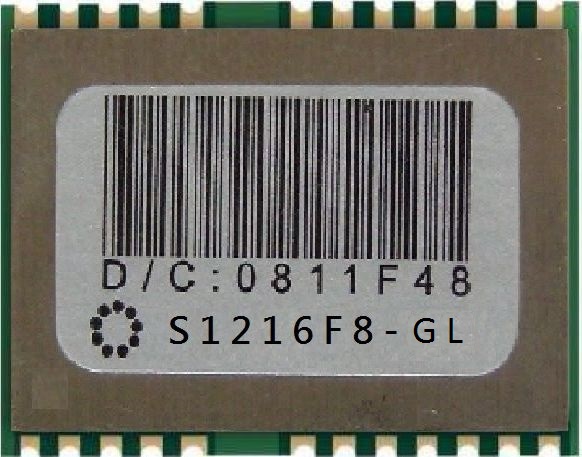
    The S1216F8 receiver by SkyTraq Technology.
    The S1216F8 receiver by SkyTraq Technology.

    SkyTraq Technology, Inc., a fabless GNSS positioning technology company, has introduced its fast consumer-grade 50-Hz update rate S1216F8 GPS receiver module. The module supports GPS, QZSS, WAAS, EGNOS, MSAS, and GAGAN satellite signal reception. The S1216F8 receiver is based on SkyTraq’s newest 55-nm Venus 8 GPS/GNSS chipset.

    The Venus 8 is a low-cost commercial GPS/GNSS chipset incorporating an IEEE-754 compliant FPU. With RISC/FPU running at 100 MHz, the S1216F8 GPS receiver module has industry leading 50-Hz update rate, very fast and accurate position/speed response, suitable for UAV, RC plane flight logging, and high-performance race car or speed boat data logging applications. When running at lower 1 Hz, 5 Hz, or 10 Hz update rate, the S1216F8 receiver can be used as a typical GPS receiver module currently available on the market.

    The S1216F8 GPS receiver module measures 12mm x 16mm and consumes 26mA @ 3.3V during continuous navigation at 50-Hz update rate.

    The S1216F8 is among SkyTraq’s S1216 family of form factor compatible, high-performance, low-cost GNSS modules. The S1216F8-GL GLONASS/GPS module and S1216F8-BD Beidou/GPS module both have a 20-Hz update rate.

    The S1216 family of 50-Hz GPS, 20-Hz GLONASS/GPS, and 20-Hz Beidou/GPS receiver modules are in production. Datasheet, engineering sample, evaluation kit and reference design are available.

  • Qualcomm to Sell Fleet Management Unit for $800M

    Qualcomm to Sell Fleet Management Unit for $800M

    Logo: OmnitracsQualcomm Incorporated has signed a definitive agreement to sell its fleet management and tracking business Omnitracs to Vista Equity Partners for $800 million in cash.

    The acquisition will include all of Omnitracs operations in the U.S., Canada and Latin America, including Sylectus and FleetRisk Advisors, which were acquired by Omnitracs in 2011. The transaction is expected to be completed during the first quarter of Qualcomm’s fiscal 2014.

    Omintracs, formerly known as Qualcomm Enterprise Services, provides integrated fleet management applications, services and platforms to transportation and logistics companies. The company provides solutions for safety and compliance, driver retention, GPS fleet tracking, and fleet maintenance software.

    “In the late 1980s, Qualcomm pioneered the use of commercial vehicle telematics with the introduction of the first mobile information system for transportation and logistics,” said Qualcomm executive vice president Derek Aberle. “As one of Qualcomm’s earliest businesses, Omintracs has maintained a leadership position within the industry for 25 years. Today, the opportunity for fleet management and telematics is evolving rapidly, and we believe Omnitracs is well positioned to continue its leadership position as a stand-alone entity.”

    “We are long-term investors in enterprise software, data and technology-enabled businesses that are committed to being leaders in their fields,” said Robert Smith, chief executive officer and founder of Vista Equity Partners. “We are impressed with the compelling value proposition Omnitracs’ products and services offer their customers. We look forward to working with them and helping them to reach their full potential.”

    The closing of the transaction is conditioned upon, among other things, clearance under the Hart-Scott-Rodino Antitrust Improvements Act of 1976 and other customary closing conditions.

  • Mobile Resource Market Shows Largest Growth in Location Industry

    Mobile resource management has never been a sexy market full of buzz and excitement — we are talking tracking trailers and containers. However, it is on pace to see double-digit growth through 2020. Led by a handful of companies in local fleet, long haul, cellular and trailer tracking, MRM has never faced ups and downs like other location market segments. In fact, acquisitions and growth appear to be in the future for this market segment.

    With more than 5.7 million tracking units nationwide, and 9 million more expected to be sold by 2015, the mobile resource management market continues to be one of the steadiest, and profitable, location businesses.

    In one of the bigger MRM deals earlier this month, Danaher Corp. purchased Garden City, California-based Teletrac, which was owned by Vector Capital. Teletrac, which offers a cloud-based software as a service (SaaS), has units installed in more than 200,000 vehicles in 87 countries.

    In terms of segments within MRM, the local fleet market continues to be the largest, according to Clem Driscoll, president of CJ Driscoll and Associates, who is completing a multi-client study of U.S. fleet operators that is sponsored by two major wireless carriers.  Local fleet operators had more than 3 million units installed in 2012. In 2000, local fleet companies had about 250,000 units installed, according to Driscoll.

    Another growing MRM market segment include cell-phone-based systems with 1 million units.  Long-haul trucking and trailer tracking both have less than 1 million units installed in 2012. The major players in long-haul trucking markets have included Qualcomm, PeopleNet and XRS (Xata), but Qualcomm just announced that it is selling its fleet management and tracking business Omnitracs to Vista Equity Partners for $800 million in cash.

    Driscoll says the largest GPS fleet management company is Fleetmatics, which recently went public, raising $94.3 million. The company has 331,000 units installed worldwide, and had $127.5 million in revenue last year.

    Driscoll has identified several MRM trends: hardware prices are declining, MRM service providers are bundling the hardware; leveling off of equipment purchases for local fleet markets as suppliers transition to third-generation devices; increased integration with Android; smartphones and tablets; and more acquisitions.

    Speaking of acquisitions, the past year was a busy one for MRM. Telogis bought Maptuit and NavTrak. CalAmp bought Wireless Matrix, which is a GPS-cellular tracking company.

    For long-haul trucking acquisitions, the biggest deals came from Trimble, which purchased TMW Systems, ALK Technologies and GEOTrac, an oil and gas monitoring company.

    In Europe, the United Kingdom and France could see growth, but Spain has economic problems. Germany still is a strong long haul market, Driscoll says. In Asia, there should be 9 million potential units sold in the next few years, with China being the dominant player. Korea and Japan are maturing markets.

    Overall, by 2020, MRM could achieve the same level of penetration as the smartphone market.  Today’s smartphone may be the ultimate telematics equipment, and future MRM equipment of choice, as the automotive OEMs have found out by listening to their consumers, Driscoll said.

    Google Maps Already Using Waze 

    In other location industry news, Google Maps this week is using Waze real-time traffic reports on its app for Apple iOS and Android, according to a blog post from Google. The announcement constitutes the first significant use of the Waze app since Google purchased the Israeli startup for $1 billion in June.

    While Google Maps users will be able to use reports about accidents, construction and road closures, Waze consumers will be able to get access to Google search and Street View. According to published reports, more than 15,000 new map editors joined the Waze editing community this month, which is a 43 percent month-over-month increase.

    Intel Shuts Down Telmap

    Late last month, after our LBS Insider deadline, Intel announced it was shutting down Telmap, an Israel-based company it acquired in 2011 for a reported $120 million. The move signals the end of Intel’s navigation business, which had hoped to offer end-user tools and white label technology for developers.

    Telmap employed 150 people at its development center in Herzliya, Israel, and had dozens of other employees at various Intel branches throughout Europe and the United States. Telmap rolled out a free navigation app called M8, which was launched earlier this year. The app drew revenue from advertising and was marketed to wireless carriers for rebranding.

    In Israel, Orange, Cellcom and Pelephone, the country’s largest wireless carriers, all use Telmap’s white-labeled product, according to published reports.

    According to published reports, some of the Telmap employees will be placed in other positions within Intel Israel. The reports said that Intel was too late with its free app and was way behind crowdsourced traffic providers such as Waze.

    Telmap, founded in 2000, was viewed as an up-and-coming player in the location industry. It supported wireless carriers mainly outside of the United States such as Orange FT Group, SingTel, MTS, Vodafone, Vodacom, SFR, Telefonica-02 and others. Its U.S. partners included Nokia (Navteq), MapQuest and Inrix.

    Is the Location Industry Conference Dead?

    After working overseas for nearly a year, I have noticed that there are not a lot of industry events to cover, particularly pure location conferences. There may be a connected vehicle panel at the Consumer Electronics Show or a CTIA trade show.

    However, the location-centric conference appears to have died in the wake of industry consolidation (and Google’s giving navigation away for free). Replacing these conferences are connected vehicle and insurance telematics conferences that feature an occasional wireless, or LBS, panel.

  • iTRAK Integrates Navigation and Wireless GPS Fleet Tracking

    iTRAK Integrates Navigation and Wireless GPS Fleet Tracking

    Photo: iTRAK Corporation

    iTRAK Corporation, a provider of GPS-based wireless fleet tracking, has integrated the patented iTRAK Fleet Executive (iFE) cloud-based software, the iTRAK WebApp software for tablets and smartphones, and iTRAK’s wireless GPS tracking equipment with the Magellan RoadMate Commercial 5190T-LM fleet navigation unit. The combined product will allow remote tracking of vehicles and handsets in the field, while integrating with the Magellan commercial product to provide in-cab navigation voice prompts and terminal text messaging.

    The new product, combined with a heavy duty engine interface, will meet the new and emerging EOBR/ELD standards, while providing customers with the flexibility, efficiency and reduced liability required by today’s professional carriers and heavy duty equipment operators.

    “Magellan is pleased to have iTRAK as a partner integrating the Magellan RoadMate Commercial 5190T-LM in their offer combining navigation, messaging and fleet tracking,” said Mark Perini, associate vice president of Product Marketing for Magellan.

    The combined system provides fleet tracking using iTRAK’s patented iTRAK Fleet Executive (iFE) and iTRAK WebApp to remotely track vehicles and handsets in the field, while integrating with the Magellan RoadMate Commercial 5190T-LM commercial product to provide in-cab voice navigation and terminal messaging through the iFE cloud-based application. Features include:

    • Five-inch WVGA touch screen.
    • Customizable truck routes.
    • The truck road attributes can be turned off, so drivers can use the same navigation device in their personal passenger vehicles.
    • Free lifetime traffic alerts.
    • Multiple stop routing.
    • Hours of service tracking.
    • Optional engine interface: Both OBD-II and J1939 interfaces are supported. Engine data can be transmitted to the office by the iTRAK system.
    • Loud (93-dB) speaker.
    • Messaging to and from the vehicle.
    • Truck-specific POIs such as weigh stations and truck stops.
    • Bluetooth: The navigation device includes Bluetooth capability, to pair with and serve as the speaker for a smartphone.
    • Ability to phase implementation: The system is modular so it can be implemented in stages to help drivers adjust to the new technology

    The combined product will provide affordable and safe fleet tracking, communication and navigation functions for commercial trucking, service vehicles, government, sales fleets and much more.

    For more information contact iTRAK at 719-686-0100, or e-mail [email protected].

  • Trimble Launches AP15 GNSS-Inertial Board Set for Positioning

    Trimble Launches AP15 GNSS-Inertial Board Set for Positioning

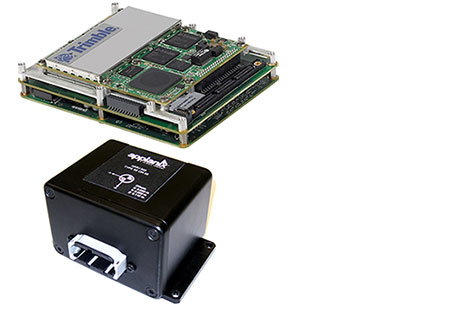
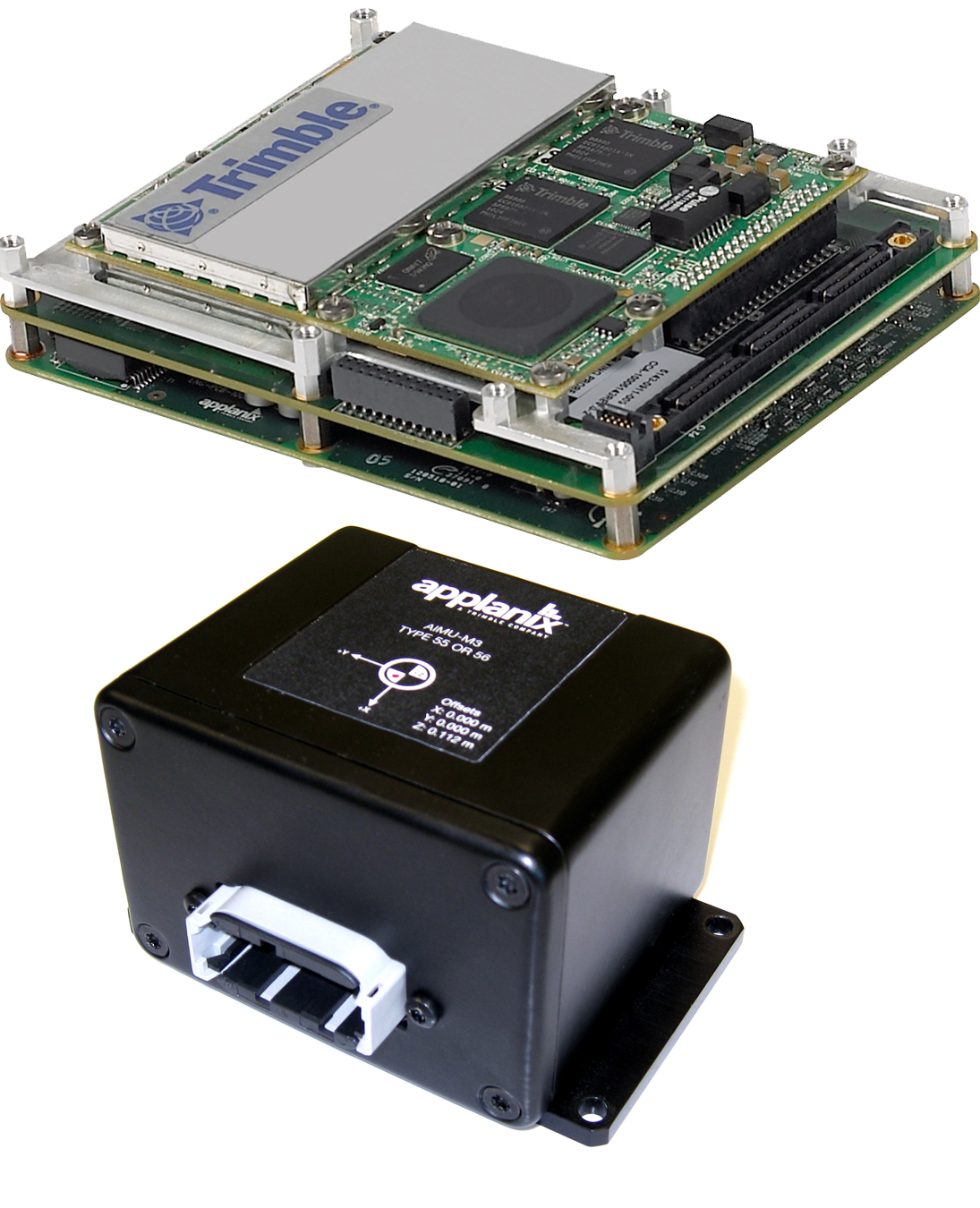
    AP15Trimble introduced today the Trimble AP15, the latest member of the AP series of OEM GNSS-Inertial board sets. The introduction was made at the AUVSI 2013 Conference and Exhibition, being held in Washington, D.C.

    The AP15 uses a custom Micro Electromechanical Machined (MEMS) based Inertial Measurement Unit (IMU). It is the first product to take advantage of Applanix’ proprietary calibration process — Applanix SmartCal, a new software compensation technology that allows Trimble to achieve exceptional performance from IMUs manufactured specifically for mobile mapping applications.

    The AP15 combines high-precision GNSS positioning with Applanix IN-Fusion GNSS-Inertial integration technology, all running on a powerful, dedicated Inertial Engine (IE) board. AP products provide the performance and functionality of Applanix’ POS systems in an embedded form-factor that is specifically designed for third-party manufacturers and systems integrators, Trimble said. The AP Series is designed for a variety of commercial mobile positioning and orientation applications including airborne, terrestrial and marine mapping and guidance for unmanned vehicles.

    Combined with a wheel-mounted Distance Measurement Instrument (DMI), the AP15 provides a full 6-degrees-of-freedom navigation solution for land vehicles that is capable of providing robust position and orientation information regardless of obstructions to GNSS-only positioning such as multipath or complete signal loss. Applanix IN-Fusion technology produces uninterrupted position, roll, pitch and true heading measurements of moving platforms by combining IMU data with raw GNSS observables and DMI velocity.

    GNSS functionality is provided by a Trimble GNSS module, a dual-antenna, 440 channel, multi-frequency survey-grade GNSS receiver that supports a wide range of satellite signals, including GPS L1/L2/L2C/L5 and GLONASS L1/L2 signals. The module also supports Satellite-Based Augmentation Service (SBAS) corrections, including the U.S. Wide Area Augmentation System (WAAS), European Geostationary Overlay Service (EGNOS), Japan’s Multi-functional Satellite Augmentation System (MSAS) and the OmniStar VBS, HP and XP/G2 corrections.

    “Trimble is a leading provider of technology for positioning and orientation solutions and the introduction of the AP15 module continue this tradition,” said Kevin Andrews, product manager. “The AP15 has been designed as a more compact, lighter unit which can deliver excellent performance at lower cost.”

    The Trimble AP15 is expected to be available in October of 2013 through Applanix’ sales channel.


  • Septentrio’s GNSS Heading Receiver Integrates with Tethered Aerostat Systems

    Septentrio’s GNSS Heading Receiver Integrates with Tethered Aerostat Systems

    Raven Aerostar has integrated Septentrio's AsteRX2eH into its tethered aerostat system.
    Raven Aerostar has integrated Septentrio’s AsteRX2eH into its tethered aerostat system.

    Septentrio announced today that Raven Aerostar, a manufacturer of Lighter-Than-Air (LTA) platforms, has successfully integrated Septentrio’s AsteRx2eH, a single-board dual-antenna GPS/GLONASS heading receiver, into its tethered aerostat systems.

    Raven Aerostar recently completed a maritime persistent surveillance solution demonstration, deploying a TIF-25K aerostat system aboard the High-Speed Vessel — SWIFT (HSV-2), during which the AsteRx2eH performed remarkably, according to the companies. Integrating the single-board AsteRx2eH dual-antenna receiver to replace a solution based on two separate GNSS receivers allowed Raven Aerostar to achieve a reliable and accurate heading solution while also decreasing deployment time and total cost of GNSS sensors.

    The AsteRx2eH provides a compact and low-power solution for precise positioning combined with accurate heading information, produced at a high output rate. The tracking of both GLONASS and GPS satellites allows the receiver to improve the availability and robustness of a solution in challenging environments.

    The AsteRx2eH is a globally acclaimed OEM solution with field proven performance for land, marine and aerial applications, Septentrio said. It is used onboard helicopters and aerostats during stabilized flights hovering at low dynamics, where inertial sensors cannot easily provide a drift free solution. Another application is delivering reliable heading information for driverless ground vehicles, even at very low speeds.

    “From its user interface to its accuracy and durability, Septentrio’s AsteRx2eH receiver has proven to be an exceptionally stable system,” commented Patrick Lokken, Engineering Technician at Raven Aerostar. “We have integrated the AsteRx2eH into our lighter-than-air applications in multiple environments including desert and maritime, and have yet to see it falter.”

  • Accord Debuts NexNav GPS Tech at AUVSI Convention

    Accord Technology, maker of NexNav products, is debuting its capabilities for enabling fully FAA compliant GPS for Detect and Avoid at the AUVSI Unmanned Systems annual convention, being held in Washington D.C. August 12-15.

    Known for its certified, U.S. FAA ADS-B fully compliant GPS WAAS/SBAS sensors and receivers for NextGen solutions in the airline, business and general aviation industries, NexNav products include OEM circuit-card assembly receivers the size of a credit card as well as line replaceable sensor units.

    This is the company’s first time exhibiting at the AUVSI conference.

    “We are excited to be exhibiting at this show and I believe our NexNav products will fill a niche that the unmanned aircraft need,” commented Hal Adams, Chief Operating Officer for Accord Technology, LLC. “Our NexNav product already meets FAA requirements and us currently flying on many manned platforms as well as on EU UAS platforms now. I look forward to talking with attendees about the Detect and Avoid GPS solution NexNav can provide them.”

    Accord Technology received TSO-C145c for its NexNav mini in 2010, and fully qualified as GPS source per the U.S. FAA ADS-B Advisory Circular 20-165. The NexNav mini GPS technology was the first GPS WAAS sensor to be authorized U.S. FAA TSO-C145c WAAS Class Beta-1 ONLY. It is a market-breaking hybrid of automotive technology and aviation requirements providing an affordable solution for ADS-B GPS source, Accord said.

  • Trimble TirePulse System Monitors Fleet Health

    Trimble has introduced the TirePulse Tire Monitoring System to assist fleet managers in reducing maintenance costs, increasing overall fleet productivity and promoting site safety. Part of the Trimble Connected Site portfolio, the advanced machine monitoring solution wirelessly reports tire temperature and pressure data from the jobsite to the VisionLink fleet, asset and site productivity management solution from Trimble. Automatic, real-time tire pressure and high-temperature alerts help fleet managers and site supervisors schedule cost-effective preventative tire maintenance, extend the life of tires, increase fuel efficiency and avoid dangerous blowouts.

    Under-inflated tires can reduce fuel economy, increase overheating, tread wear and blowouts that take a machine out of production. Together, these factors can significantly affect fleet productivity and operating costs.

    Trimble TirePulse can improve tire life while also reducing the need for fleet managers to drive to the site and visually inspect inflation, tire wear and temperature. Using a Trimble TP920 Industrial Tire Sensor in the tire valve stem and a Trimble SNM940 Connected Site Gateway for communications, the information is automatically relayed back to the office for analysis by the fleet manager. Accurate data is communicated through VisionLink, so the fleet manager can proactively manage tire maintenance on more machines across construction sites. Better preventative maintenance can result in improved fleet costs.

    The Trimble TirePulse system also promotes increased jobsite safety by reducing the risk of tire blowout and injury to workers. Properly inflated tires improve the performance of vehicle braking systems and allow a faster response time in potentially dangerous conditions. The system is also safer and more accurate than manual visual inspection because it does not require personnel to be in close proximity to overheated tires on heavy machinery.

    VisionLink automatically alerts the fleet manager or site foreman when a tire experiences a 20 percent drop in pressure and becomes a potential hazard. It can also provide a high-temperature alert to indicate that jobsite conditions are likely to accelerate tire breakdown.

    “Preventative maintenance is more cost effective than a machine going down suddenly with a blown tire. But with equipment moving around so much from site to site, fleet managers struggle to stay ahead of the game,” said Julian Dann, business area director for machine control. “TirePulse is priced for installation across the entire fleet of on- and off-road machine tires, regardless of make, model or manufacturer. Increased wear or breakdown can be reported and acted upon proactively. The system can often pay for itself by preventing just one blowout.”

  • Underwater Inertial Navigation Features GPS and Sensors

    Underwater Inertial Navigation Features GPS and Sensors

    Photo: Advanced Navigation

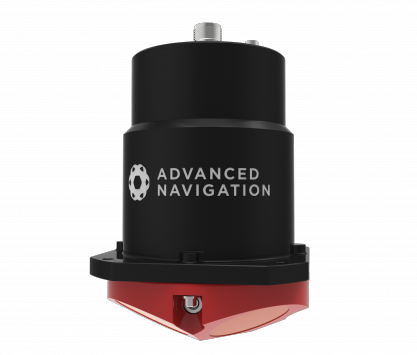
    The Sublocus underwater inertial navigation system by Advanced Navigation features high-accuracy north-seeking fiber-optic gyroscopes and accelerometers with a GPS receiver and pressure depth sensor, fused to deliver positional accuracy of 0.08 percent of distance traveled. The system also provides highly accurate roll, pitch, heading, heave, depth, and altitude.

    Sublocus is also available with an integrated RDI Workhorse Navigator DVL for combined acoustic and inertial navigation in the one product. Both models are supplied with a subsea GPS antenna and are rated to 3,000 meters depth.

  • SeeControl Announces ThingTracr GPS Tracking Tool

    SeeControl Announces ThingTracr GPS Tracking Tool

    SeeControl-trackr
    Source: SeeControl

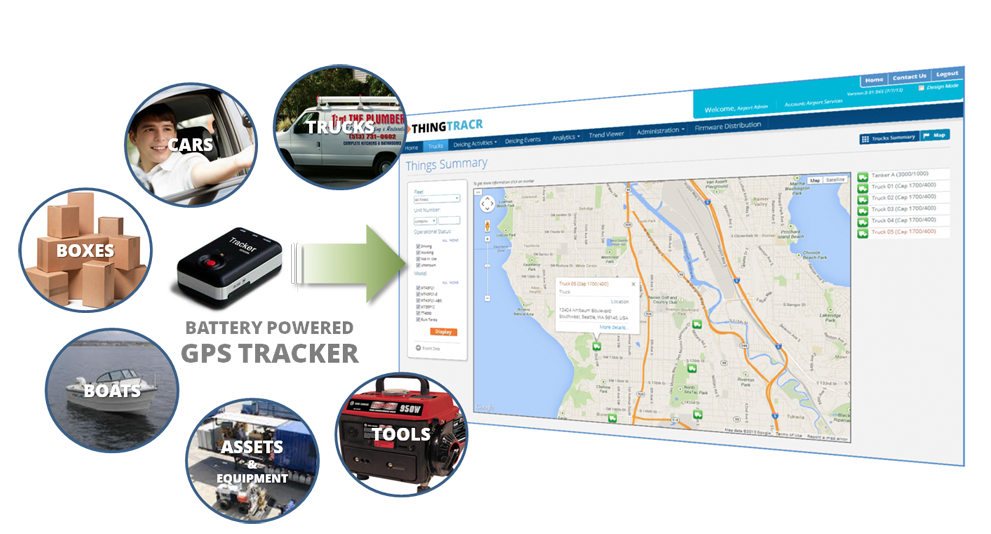
    SeeControl is announcing the roll out of ThingTracr, a hosted SaaS GPS tool for monitoring anything that needs to be tracked. The simple-to-use solution offers precise location tracking and historical analytics reporting for things of interest using a small and attachable GPS unit that requires no tools or wiring. The tracking service can be up and running in less than five minutes.

    Using web browsers or mobile devices, a user can easily monitor the status of the tracked asset. It can be used for cars, trucks, trailers, packages, site equipment or anything else.

    “There are several unique features that set ThingTracr apart from other tracking services,” said Bryan Kester, CEO of SeeControl. “One is a modifiable modern dashboard that allows users to personalize how they view the tracking information in the most convenient way for them. Another is the ability to upgrade and expand to new GPS trackers globally as they come on the market.”

    Other features of ThingTracr include:

    •     90-day location history
    •     User customizable dashboards
    •     Low battery alarms
    •     Satellite / hybrid map views
    •     Multiple reports
    •     Data export – CSV/ PDF
    •     Trip Reports
    •     Range of pre-certified hardware
    •     Trip replays on maps

    ThingTracr uses various battery-powered GPS devices, which can also notify users of several alarms including motion detected, speeding, and information regarding battery life.

    The ThingTracr GPS tracking tool is just one of many vertical solutions available from SeeControl M2M ( Machine 2 Machine ) cloud platform. The ThingTracr solution is available through SeeControl partners including M2M distributors, Network Operators and Systems Integrators.

  • GPSTrackIt Announces Financial Incentives for Acquiring Fleet Tracking Systems

    GPSTrackIt announces new financing options that significantly reduce the initial cost of implementing its Fleet Manager system and GPS tracking devices. The new “No Pay Until 2014” financing plan program postpones hardware payments until January. This includes documentation fees and the monthly payment, reducing the cost of entry to a flat $24.99 per unit for service. This offer applies to deals of $2,500 or more. Credit must approve the transaction and any term length over 36 months.

    Also, the Internal Revenue Service’s Section 179 offers tax incentives for businesses, enabling owners to deduct equipment costs and by providing rebates. The deduction limit for Section 179 is now $500,000. The 2013 Section 179 deduction threshold for total amount of equipment that can be purchased is now $2,000,000. Most new and used equipment, as well as some software, qualify for the Section 179 deduction. Only new equipment purchased in 2013 qualifies for the “50% Bonus Depreciation.”

    For more information about GPSTrackIt, their new financing options, or their Fleet Manager vehicle tracking system, visit their website at gpstrackit.com.

  • SBG Systems Offers Dual-Antenna GNSS Inertial System

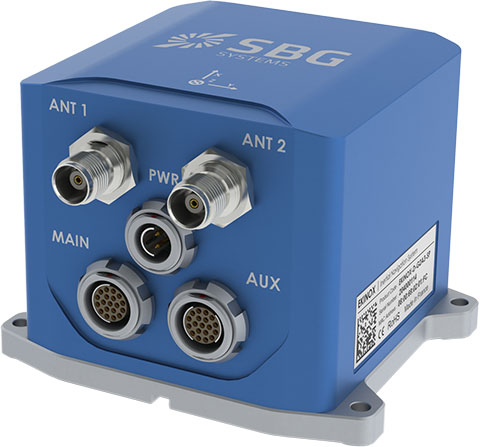
    The Ekinox-D.
    The Ekinox-D. Photo: SBG Systems

    SBG Systems has added a new inertial system to its Ekinox Series. With integrated Dual Antenna GPS + GLONASS receiver, the Ekinox-D is a ready-to-use survey-grade inertial navigation system that provides consistent true heading (0.05°), SBG Systems said.

    The Ekinox-D is a high-performance inertial navigation system that embeds a dual-antenna L1/L2 GNSS receiver to deliver more robust heading and position, while increasing satellite reception availability. Ekinox-D is an integrated system: GNSS data and inertial information are fused by an Extended Kalman Filter (EKF) to improve data integrity. This computation allows the system to achieve 0.05° roll, pitch, and true heading; 5-cm heave; and 2-cm RTK GNSS position.

    The Ekinox-D is an all-in-one Solution for demanding applications. Instead of mounting separate GNSS receiver and inertial systems on a boat, car, or plane, the Ekinox-D can be installed and connect it to a  camera, SONAR, or LiDAR system. With its 8-GB datalogger and its high output rate (200 Hz), Ekinox-D joins simplicity and performance for applications where robust heading is required such as surveying and hydrographic applications, unmanned system navigation, and auto testing.

    The IP68 Ekinox Series brings robust, maintenance free, and cost-effective MEMS to the next level thanks to a drastic selection of high-end MEMS sensors, an advanced calibration procedure, and powerful algorithm design, SBG Systems said, adding that compromise is no longer required between high accuracy and cost.