Category: Transportation

  • Taxi Booking App Comes to U.S.

    myTaxi, a taxi booking smartphone application, today launched in Washington, D.C., its first introduction into the U.S. marketplace. The announcement was made during a live-streaming press conference given directly in a moving taxi.

    myTaxi was first launched in Germany in June 2009. It connects 2.3 million users to more than 18,000 taxis worldwide. Today marked the first time consumers in the U.S. will have access to the app. myTaxi’s services offer consumers a personal, transparent and convenient way to travel with features such as:

    • Peer-to-peer connection between driver and passenger, including driver photos, information and phone numbers.
    • A ratings system for selecting and reviewing your taxi driver and a favorites list to save your favorite drivers for future pickups.
    • Live tracking of taxi approach on display including arrival time, fare calculator, distance and automatic positioning via GPS.
    • View of every myTaxi in the area on the taxi radar.
    • myTaxi Payment – a direct billing process in the taxi via smartphone.

    “Americans took more than 10 billion trips on public transportation last year,” said Niclaus Mewes, co-founder and CEO, myTaxi. “Smartphones can have an immense impact on urban mobility. At myTaxi we want to rethink and reshape how taxi trips are taken. Passengers and drivers want something convenient, transparent and tailored to their needs. We want to deliver on that.”

    Every driver using myTaxi has the ability to become a contractor and build their own client base by consistently providing passengers with good service and earning high customer ratings. myTaxi offers a driver-side version of its app allowing taxi drivers to efficiently monitor the locations of customers and receive basic information on each customer once an order is placed.

    “The DC Taxicab Commission welcomes any electronic reservation company such as myTaxi, bringing technological advancements to the District of Columbia,” said Ron Linton, DC Taxicab Commission Chairperson. “We are delighted that passengers using DC public vehicles-for-hire will enjoy the enhanced quality of service.”

    During its press conference, myTaxi outlined a voucher system that will be provided to the app’s early adopters. The voucher campaign is one of the many programs and features myTaxi will continue to roll out in the D.C. marketplace. myTaxi will also bring new payment facility into the D.C. taxi market. The implemented feature “myTaxi Payment” provides users with the ability for cashless, card-less payments on all myTaxi rides by registering a credit card to their account. The myTaxi application is available in stores for free download to iOS and Android devices.
  • Septentrio Announces First GNSS Receiver with Full Support of TerraStar Services

    Septentrio announces the full support of TERRASTAR wide-area differential and Precise Point Positioning (PPP) capabilities in some of its receivers. The Septentrio AsteRx2eL is an all-in-view dual-frequency GPS/GLONASS receiver, featuring an integrated L-band modem to receive TERRASTAR data transmitted by satellite and field-proven dm-accurate positioning using this data. AsteRx2eL also features GNSS+ technology, a unique combination of industrial grade performance algorithms, to better serve high-precision positioning needs even in the most severe conditions, Septentrio said.

    Support of TERRASTAR-M and TERRASTAR-D allows precise position calculation anywhere on the globe, Septentrio said. TERRASTAR services achieve accuracy levels down to 10 cm without the use of extra communication such as radio or mobile. Powered by TERRASTAR services, AsteRx2eL provides a high level of flexibility for consistent dm-level accuracy everywhere on earth and cm-level where local RTK corrections are available. Septentrio multi-constellation receivers will provide position accuracy and high-availability independently of local infrastructure for the various applications in any of the markets that they traditionally serve:

    • Land and aerial survey and mapping
    • Machine control for agriculture, construction and mining
    • Precise navigation for land, sea and air

    ‘The introduction of support for TERRASTAR offers our customers an important additional option for accurate positioning, notably in the absence of local infrastructure,” Peter Grognard, founder and CEO of Septentrio Satellite Navigation, said. “It has been a pleasure for us at Septentrio to closely collaborate with the great team at TERRASTAR to develop and deliver a strong new value proposition with robust industrial performance everywhere on the globe.”

  • GSAT-10 Satellite Placed in Geosynchronous Orbit

    The Indian Space Research Organization has announced that the orbit-raising maneuvers of GSAT-10 satellite have been successfully completed from ISRO’s Master Control Facility, Hassan. GSAT-10 was launched September 30. The third and final orbit-raising maneuvers was performed October 3 to place the GSAT-10 in an orbit with 35,734 km apogee (farthest point to earth), 35,585 km perigee (nearest point to earth), and an inclination of 0.172 degree with respect to the equator. Currently, the orbital period of GSAT-10 is 23 hours 50 minutes.

    According to the announcement from the Indian Space Research Organization, the two solar panels and the two dual gridded reflector antennas were also deployed later in the day. Currently, the satellite is in final orbital configuration at 70.18 degree East longitude. In the coming days, the satellite will be moved towards its designated location of 83 degree East and in-orbit testing of its communication and navigations payloads will be performed.

    As is often the case, NORAD/JSpOC has temporarily “lost” the satellite following one of its orbital maneuvers. The last published two-line orbital element set for the satellite is dated September 30.

  • u-blox Launches u-blox 7 GPS, GLONASS and QZSS Modules

    u-blox, the Swiss positioning and wireless module and chip company, has announced its latest multi-GNSS receiver modules MAX-7, NEO-7 and LEA-7 in u-blox’s form factors. They support all satellite positioning systems in operation today: GPS, GLONASS, QZSS and SBAS. The modules target telematics applications such as asset and fleet management as well as portable tracking devices.

    “Each MAX-7, NEO-7 and LEA-7 variant delivers fast, accurate and reliable GLONASS and GPS positioning with the industry’s lowest power consumption.” said Daniel Ammann, executive VP of positioning product development at u-blox. “Both GPS AND GLONASS modes perform even better than combined GPS/GLONASS solutions available on the market today.”

    All u-blox 7 generation modules are pin-to-pin compatible with previous u-blox 6 and u-blox 5 families allowing easy upgrade from existing designs. Each module is available in cost-effective variants (such as MAX-7C; NEO-7M) as well as performance optimized variants (MAX-7Q, MAX-7W, NEO-7N, LEA-7N).

    u-blox 7 modules use GPS/GNSS chips qualified according to AEC-Q100 and are manufactured at ISO/TS 16949 certified sites. Each module is intensively inspected and tested during production. The modules are fully qualified according to ISO 16750 – “Environmental conditions and electrical testing for electrical and electronic equipment for road vehicles” to provide high durability and reliability.

    All modules comply with green/halogen free standards.

    First variants available will be NEO-7N (November 2012) and MAX-7C (December 2012).

  • LiveViewGPS Vehicle Tracker Supports Verizon CDMA Network

    LiveViewGPS, a GPS tracking company for business, government and individuals, is now shipping its VLS 300VZ GPS vehicle tracker that operates exclusively on Verizon’s CDMA wireless system. The hard-wired unit features a three-wire hookup and can be configured to update vehicle locations at 1-, 2- and 5-minute intervals.

    The VLS 300VZ GPS vehicle tracker is based on LiveViewGPS’ VLS platform, an Internet-based GPS tracking system for small businesses that need powerful monitoring at a lower price, the company said. It includes a fully-featured, real-time, on-demand GPS tracking system with no software and no contracts required.

    Users log on via their web browser or web-enabled mobile device. Once connected, the intuitive, user-friendly interface lets them locate multiple vehicles via a high-resolution satellite map. Users have the option of calling a special phone number instead of using a mobile device. The system automatically texts or emails alerts whenever it detects a vehicle speeding, entering restricted zones, deviating from routes and more. Automated detailed reports include starts/stops, excessive idling, mileage and speeding. State-to-state mileage reporting is also available.

    “The VLS 300VZ GPS vehicle tracker is a low-cost entry device for small fleets, company vehicles and personal vehicles in areas with poor GSM coverage,” said George Karonis, LiveViewGPS CEO, “and it’s even programmed to store and forward information whenever a vehicle loses CDMA coverage, so users never have to worry about data loss.”

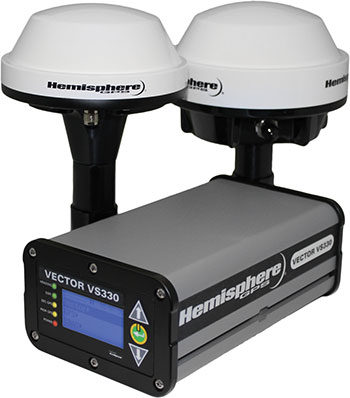
  • Hemisphere GPS Offers Vector Compass Products for Marine Applications

    Photo: Hemisphere
    Photo: Hemisphere

    Today, Hemisphere GPS introduces the Vector VS330 and Vector VS131 GPS compass products that provide high performance heading, position, heave, and attitude data. The new Vector products are designed for professional marine applications such as hydrographic and bathymetric surveys, dredging, oil platform positioning, and buoys that demand a high level of 3D positioning accuracies.

    Based on Hemisphere GPS’ Eclipse GNSS technology, Vector VS330 uses the most accurate differential corrections including RTK, L-band, SBAS, and beacon. The smart intelligence from our MFA firmware  provides differential solutions by automatically switching to the next best differential source if the original source is no longer available, Hemisphere GPS said.

    Vector VS330 is Hemisphere GPS’ flagship receiver and computes heading information with better than 0.01 degrees accuracy when using a 10-meter antenna separation. Positioning accuracy is better than one centimeter in RTK mode or four centimeters when using OmniSTAR HP corrections. Vector VS330 also provides five-centimeter RTK heave and 0.01 degree pitch and roll accuracies.

    Combining Hemisphere GPS’ Crescent Vector and LX-2 receivers with two separate antennas, the Vector VS131 computes heading information with better than 0.03 degrees accuracy when using a five-meter antenna separation and better than 50 centimeter position accuracy when using L-band, SBAS, or beacon corrections. Vector VS131 accepts most differential correction signals for unparalleled flexibility to obtain sub-meter positioning in all regions.

    The ruggedness of the new Vector enclosure also makes it suitable for more harsh environment installations like machine-control applications, including agriculture, heavy construction equipment, mining equipment, unmanned vehicles, cranes, and other machinery or industries that require very accurate heading and positioning solutions. The Vector’s versatility for providing heading, position, heave, and motion makes it directly compatible with the most popular hydrographic and side scan survey packages. Vector VS330 and VS131 include an intuitive and easy-to-follow user interface to facilitate fast installations.

    “Vector VS330 and Vector VS131 are premium additions to Hemisphere GPS’ Vector series product line,” said Phil Gabriel, vice president and general manager, Precision Products, for Hemisphere GPS. “As the demand for more rugged and precise GPS equipment increases, we are meeting this demand by exceeding the accuracy of competitors’ products while being significantly more affordable.”

    Vector VS330 and Vector VS131 will be featured by Hemisphere GPS in hall 9, stand B.62 at the INTERGEO Conference and Trade Fair in Hanover, Germany, from October 9-11. Both products will be available for shipping in November through the Hemisphere GPS Precision Products global dealer network.

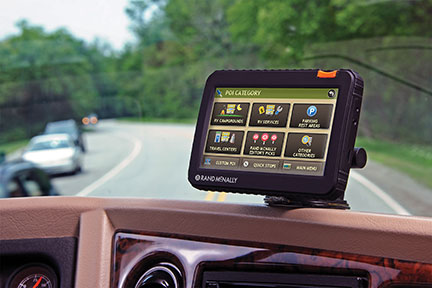
  • Rand McNally GPS for RVers Includes Weather, Rear-View Camera Capability

    Photo: Randy McNally GPS
    Photo: Randy McNally GPS

    Rand McNally today introduced the RVND 7720, a 7-inch RV GPS device with Wi-Fi connectivity allowing for real-time weather information and display, and new hardware with rugged casing, video input, and brighter screen.

    The new device — shipping now to stores, online retailers, and RV dealers and distributors — joins Rand McNally’s line of RVND GPS devices for RVers. Rand McNally pioneered RV-specific navigation by launching the first GPS device designed specifically for RVers and campers, the company said.

    RV-specific navigation is necessary to route large vehicles and towables around road restrictions, low bridges and other physical hazards. However, like all Rand McNally RV GPS devices, the RVND 7720 can be used as a car GPS by changing a simple setting.

    One of the key new features of the RVND 7720 is Wi-Fi connectivity, which enables the transmission and display of weather as well as other real-time information. With updated weather information, RVers will be able to anticipate delays and make plans by viewing current and predicted conditions displayed on the map and along the route, the company said. Besides weather, other RV-specific connected services will be coming soon for this device.

    The RVND 7720 has a new hardware platform as well, with a rugged design with ridged casing for added protection, a brighter screen that adjusts for low and strong light, and video input compatible with a range of back-up and rear-view cameras, Rand McNally said.

    The base maps and overlaying content, such as campgrounds, parks, RV service and other RV points of interest, also have been updated for the RVND 7720.

    The new device ships with Lifetime Maps, so owners will be able to update their devices at no additional cost.

    The RVND 7720 GPS includes the following additional new features:

    • Fully updated road data, including RV-specific information such as speed limits, legal and physical restrictions, and all Rand McNally proprietary RV data
    • Fully updated points of interest necessary for safe and convenient routing, including travel centers and RV parking information at rest stops, exits, and other locations
    • Fuel logs, which are accessible from the Virtual Dashboard or via RV Tools; the feature enables drivers to record fuel purchases for a trip
    • Additional routing options such as “Avoid State or Province” and “Avoid Smaller Roads”
    • Address book icon enhancement, which enables unique icons to be created by group and shown on the map for imported locations; address book items can be sorted by name, distance from current location or date added
    • Text-to-speech alert details for user-imported custom points of interest, such as red light cameras, to reduce driver distraction

    The RVND 7720 also has these features: Virtual Dashboard; junction view with lane assist; free downloads of Rand McNally’s proprietary construction information and software updates; Exits Quick View, which shows RV parking and amenities at exits; RV Tools, RV amenities and locations such as campgrounds, RV services, and dumps; Woodall’s Campground information with searchable amenities; Rand McNally exclusive pre-planned trips with photos and video; and routing for 11 types of RVs as well as for cars.

  • Topcon’s MG-A8 Antenna Designed for Accurate Maritime Applications

    Topcon Positioning Systems announces the MG-A8 antenna for navigation and precise positioning in marine applications. According to Topcon, the new MG-A8 marine antenna provides exemplary GNSS signal tracking while not being susceptible to signal jamming from other sources, such as Inmarsat communications.

    The MG-A8 antenna can be used in DGPS mode for meter-level navigation purposes but can also be used for RTK centimeter level positioning in areas where there is a network of reference stations available to support this level of precision. With its RTK capabilities, the MG-A8 is a “preferred solution for applications such as dredging in inland river channels and waterways,” said Tom Morris, TPS senior product development manager.

    “This antenna is designed with challenging marine applications in mind.  It is accurate, rugged, reliable and affordable.”

  • NVS Technologies Launches Embedded Mini GNSS Receiver


    NVS Technologies AG announces today, from the ION-GNSS 2012 Conference in Nashville, the launch of the NV08C-Mini PCI-E Embedded Mini PCI Express GNSS Receiver.

    The NV08C-Mini PCI-E is a fully integrated GNSS receiver module, optimized for Mini PCI Express (Mini-PCIe) based applications. Its key feature is its full compatibility with GPS, GLONASS, Galileo, QZSS, COMPASS (GNSS), and EGNOS, WAAS, MSAS, and GAGAN (SBAS). It is specifically designed for use in a wide range of mobile computing, in-vehicle and rugged handheld computer equipment, for the security/public safety, telematics/fleet management, and precision GIS/survey, machine control, and agriculture markets. Features include:

    • Embedded mini PCI Express GNSS receiver
    • Very quick and simple integration
    • GPS, GLONASS, Galileo, QZSS, COMPASS, SBAS L1
    • Precise navigation, positioning, and timing
    • 32 GNSS tracking channels / 200K correlators — Ensuring fast TTFF and high signal sensitivity
    • NMEA 0183 / IEC 61162-1, binary (BINR) and RTCM SC-104 v2.3 data protocols
    • Raw Data output — Pseudorange, Carrier phase and Doppler
    • Individual GLONASS group delay calibration — Assuring very high accuracy
    • Receiver Autonomous Integrity Monitoring (RAIM) / Assisted GNSS (A-GNSS) interface
    • 64 KB EEPROM for firmware upgrade and data storage
    • Industrial operating temperature range ‐40 to +85°C

    The NV08C-Mini PCI-E offers high sensitivity, high-performance acquisition and tracking, NMEA and raw data outputs, plus Differential (D-GNSS) and Assisted GNSS (A-GNSS) functions. Tracking satellites from multiple GNSS constellations ensures much higher availability of navigation signals, when compared to single constellation alternatives, and provides increased performance, accuracy, and reliability, NVS Technologies said. It features two RF channels (GPS and GLONASS), three-stage SAW filtration for high noise immunity, and several protocol interfaces and a supply voltage source for an active antenna. This fully featured embedded Mini PCI-e GNSS receiver is the quickest-to-market solution for mobile computing applications, the company said.

  • Toyota, Denso Develop Device for Real-time Vehicle Data Collection

    Toyota Motor Corporation and DENSO Corporation are jointly developing an on-board communications network device, CAN-Gateway ECU, that can take data gathered while driving and apply it to create a virtual simulation that enables a new way to enjoy driving.

    The CAN-Gateway ECU captures driving data — including GPS data, accelerator pedal strokes, steering angles, brake operation signals, gear shift signals, engine rpm count, water temperature, and vehicle speed — from a dedicated on-board GPS as well as CAN information exchanged among on-board ECUs. The device can wirelessly transmit (by Bluetooth) the data to software installed on smartphones or other devices for real-time monitoring. As this data is accumulated, it can serve as a driving coaching guide.

    Furthermore, software makers can use the data to create games or a wide variety of other software using standard creation tools, with no need to deal with the complicated nature of the onboard CAN protocol.

    The CAN-Gateway ECU can be fitted to the Toyota “86” rear-wheel-drive compact sports car. It is scheduled to be tested in Japan in spring 2013 by people active in car racing, before the scheduled Japan launch at the end of 2013.

    Further development is under way to enable vehicle data from drives on major circuits in Japan such as Fuji Speedway to be recorded onto USB flash drives for input into the racing game Gran Turismo, a PlayStation 3 home entertainment console title. Driving scenarios can then be recreated with the data and run simultaneously with other data to enjoy real-time, side-by-side track-run comparisons. Additionally, the user can reproduce aspects of a drive on a circuit such as the steering path taken, and where and when the brakes and accelerator were used, in the game for analysis and critique.

    USB memory data format and Bluetooth transmission protocol will be finalized after Toyota and DENSO review feedback with Polyphony Digital Inc., Densan System Co., Ltd. and other software makers, taking their expertise into account before specifications are finalized. Following this, information necessary for connecting to the CAN-Gateway ECU will be gradually made available to other software makers, DENSO said, thereby allowing for even broader development of software that explores new ways of enjoying cars.


  • GreenRoad to Offer Advanced Fleet Tracking from GPS Insight

    GreenRoad, a driver performance management company, and GPS Insight, a fleet GPS tracking provider, have announced that GreenRoad will offer advanced fleet tracking capability, provided by GPS Insight, as part of its GreenRoad driver performance management service. GreenRoad will integrate the GPS Insight solution and offer it to customers as GreenRoad Advanced Tracking.

    “GreenRoad delivers the best drivers on the road — safe, fuel-efficient and green,” said Jim Heeger, chief executive of GreenRoad. “As we’ve collected feedback about what more we can offer, we’ve consistently heard requests for integrated, advanced GPS tracking. The comprehensiveness, flexibility, and effectiveness of the GPS Insight service are truly impressive. Now, with the GPS Insight partnership, we can offer the tools to also create the most efficient fleets on the road. It is a powerful combination.”

    “GPS tracking is a natural complement to the GreenRoad driver performance management offering,” said Robert Donat, CEO of GPS Insight. “With the combination of these two capabilities, fleet operators will have all they need to optimize fleet efficiencies and maximize driver productivity.”

    The integrated solution, GreenRoad Advanced Tracking, will be available in the U.S. UK and Canada by the end of the year.

  • Trimble Expands Functionality of ThingMagic RFID Readers

    Trimble announced the availability of a number of new capabilities for its ThingMagic Mercury 6e (M6e) embedded UHF RFID module and Mercury 6 (M6) finished UHF RFID reader. Available through a firmware upgrade, the added functionality helps users develop and deploy reliable, high-performance RFID-enabled solutions for a broad range of traditional and innovative applications. Trimble also introduced a redesign of its Universal Reader Assistant, a graphical user interface developed to simplify the use and deployment of ThingMagic RFID readers.

    According to the announcement, this upgrade delivers significant enhancements including an increase in tag read rate of up to 75 percent and greater data acquisition rates with every tag read. Several application-specific features designed to read RFID tags in diverse and challenging conditions have also been introduced, including:

    • A new “fast search” tag reading mode
    • The ability to obtain up to 128 bytes of data with every tag read
    • ISO 18000-6B performance enhancements
    • Support for IDS Micro SL900A Gen2 Class 3 Sensor Tags

    Driven by increased demand for RFID-enabled solutions in the transportation, supply chain, retail and healthcare markets, Trimble reports these new features offer several application specific improvements:

    The ThingMagic M6e embedded module now includes a ‘fast search’ algorithm which forces tags to respond rapidly and repeatedly for optimal read performance across diverse use cases. This feature supports applications such as tolling, vehicle management and race timing where fast moving tags need to be distinguished from each other with a high degree of accuracy. Operational up to 200 kilometers per hour, ‘fast search’ supports both Gen2 and ISO 18000-6B tags.

    Superior receive sensitivity, higher tag read rates, and better adaptation to changing tag populations enhance the ability of the ThingMagic M6e and M6 readers to read RFID tags in varied environments and on more items. For example, in a retail supply chain, manufacturers can track high volumes of items on densely packed pallets across multiple distribution points and retailers can inventory tagged items rapidly and with predictable accuracy. In addition, the ability to read more data from every tag supports emerging retail uses such as anti-counterfeiting, brand protection and other security-sensitive applications, without impacting the performance of tag inventory or tag encoding activities.

    This upgrade also adds support for the full cool-Log command set for IDS SL900A sensor tags, addressing increased demand for temperature and state monitoring within utilities, food/cold-chain, healthcare and other markets. The IDS 900A is an EPC global Class 3 tag IC which can be operated in either semi-passive or passive mode.

    “This release represents a significant step in optimizing our portfolio of high-performance embedded RFID modules and finished RFID readers for use across industries,” said Tom Grant, general manager of Trimble’s ThingMagic Division. “Superior performance and versatility continue to be primary differentiators for our products. Equally important are advancements in ease of use which are fundamental to the growth of RFID-enabled solutions and driving better business results across a growing number of connected enterprise applications.”

    With a key goal of driving the barriers for deploying RFID technology as low as possible, this update improves the out-of-the-box experience for solution developers and end users of ThingMagic M6 readers. An improved Web interface includes a reorganization of configuration and management screens, new performance tuning settings, and enhanced tag data access and displays. Enhancements also include zero configuration support for automating network connectivity, Web-based device discovery and management and advanced testing capabilities.

    Trimble reports that a redesign of the ThingMagic Universal Reader Assistant is also available. Supported by all ThingMagic readers, this utility is used to initialize readers and perform common tasks, including selecting application specific performance settings. With a focus on ease-of-use, this redesign meets the needs of an expanding customer base by reducing complexity for novice users while permitting low-level control for advanced users.