Category: Transportation

  • How to prepare and organize a fleet during the COVID-19 pandemic

    How to prepare and organize a fleet during the COVID-19 pandemic

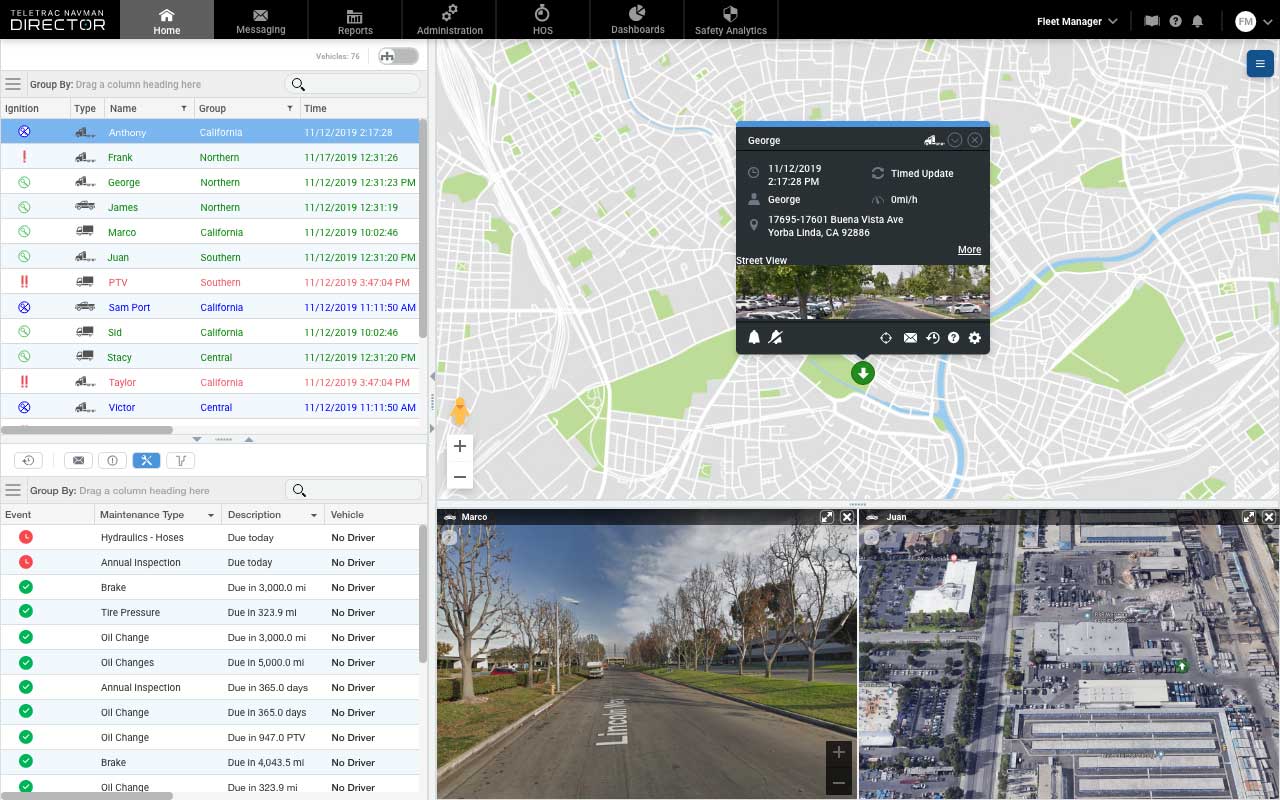
    Full Fleet View in the Director program. (Photo: Teletrac Navman)
    Full Fleet View in the Director program. (Photo: Teletrac Navman)

    By Marco Encinas, Senior Product Manager, Teletrac Navman

    In times of global crisis, the world relies on the trucking industry to transport essential items across the country. From medical supplies to restocking the shelves at local grocery stores, truck drivers play an integral role in maintaining the supply chain.

    To keep these essential items moving during the COVID-19 crisis, the U.S. Department of Transportation (DOT) has suspended most of the Hours of Service (HOS) regulations for trucks that are transporting these essential goods.

    Commercial truck drivers have had their driving hours extended from 11 to 14 hours depending on the goods being carried. With so much going on and so many depending on trucking and freight transportation organizations during this global crisis, fleet managers and owners need to be extremely organized to handle current and future industry needs.

    With that in mind, here are a few ways in which you can keep track of your fleet during a time of heightened demand and uncertainty.
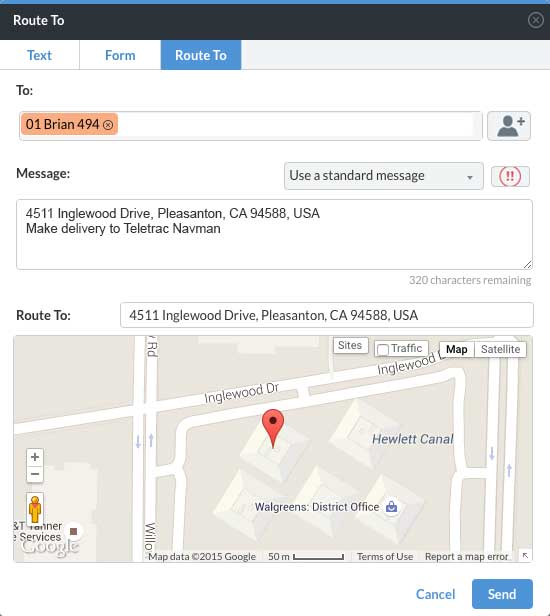
    The "Route to" feature in Director. (Photo: Teletrac Navman)
    The “Route to” feature in Director. (Photo: Teletrac Navman)

    Communication is key

    The visibility that essential telematics technology brings can be incredibly helpful. Being able to stay in constant communication with your drivers via messaging and dedicated contact forms — as well as knowing their locations at all times — allows fleet managers to make informed decisions. With things being so hectic right now, knowing where your assets are, who is available for the next load, who is nearest to the depots, and who has encountered longer detention times is critical in a time when efficiently maintaining your fleet on the road is more important than ever.

    Most likely due to shelter-in-place orders reducing the traffic overall, many of the states experiencing the highest level of COVID-19 spread are seeing a reduction in travel times for drivers. According to the American Transportation Research Institute (ATRI), freight trucks are clocking faster times overall in these areas, particularly in regularly congested areas.

    That being said, because of additional route changes, border regulations and detention delays, freight is taking much longer to transport. Having access to accurate telematics and open lines of communication with drivers will be key in planning and tracking routes.

    Documentation should continue

    While logs are not mandatory to be kept while under the Federal Emergency Declaration, continuing to make notes and annotate the daily log with the reason for non-compliance is a good practice. This will make sure that logs are current when the Emergency Declaration is lifted. It’s a good idea to integrate a route planner or add-on the service if it isn’t included by your telematics provider to facilitate the planning of loads and tasks. With so much on the fleet manager’s plate and the additional hours drivers are logging, any opportunity for automation should be embraced.
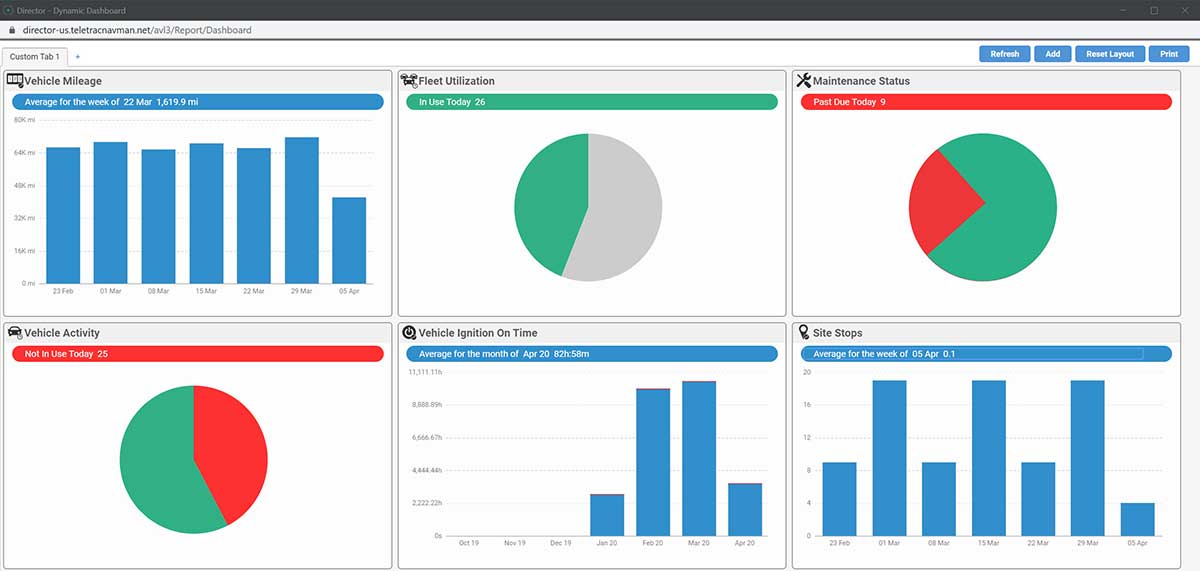
    The Dynamic Dashboard of Director. (Photo: Teletrac Navman)
    The Dynamic Dashboard of Director. (Photo: Teletrac Navman)

    Driver safety

    For all fleet managers, the safety of your drivers should be the top priority. DOT HOS regulations are there for a reason. The guidelines, of course, are there to make sure that drivers are not being overtaxed, reducing the possibility of accidents. Giving your team ample time to rest before taking the next load is imperative.

    And while its required that drivers receive at least 10 consecutive hours off if they let their company know they need immediate rest, they may be inclined to push themselves given the current situation, feeling a responsibility to their fleet manager and the community at large.

    Plus, with people practicing social distancing, it’s likely there will be an uptick in eCommerce purchases, adding additional strain to fleet capacity. A fleet tracking tool will allow managers to review driver’s time, how often they have completed a 14-hour shift, and allow for properly scheduled rest periods to avoid exhaustion and potential accidents.

    Tracking rig maintenance

    While drivers are putting in the extra miles, so are their rigs! Keeping track of oil changes, tire rotation and other regular maintenance items can keep your drivers and trucks safely on the road. While you may think a global crisis is not the time to stop for regular maintenance, these quick care items are much easier and more cost effective to complete than larger complications they could cause going unaddressed.

    An oil change can help engines run more efficiently and reduce a fleet’s cost per mile. Taking time to examine tires could reveal a small leak or puncture which could lead to a popped tire on the road, leaving your driver stuck for hours or even cause them to lose control of the truck from the blowout. Addressing these regular maintenance items will boost efficiency and save time in the long run.

    Invest in add-ons

    During times of global crisis, the supply chain can change at a moment’s notice. Add-ons such as a brokerage provider integration can help keep the lines of communication open with your customers and help you keep track of where the loads are and when they will arrive. With demand high, and lives on the line while carrying freight like medical supplies, these up-to-the-moment notices can be key in providing your team and customers with the proper support.

    Driving demand

    There’s no doubt about it: the trucking industry is a key player in combating this global crisis. Delivering everything from medical supplies, to food to other eCommerce purchases for those in quarantine, the country is demanding quite a bit from our fleets.

    By staying organized and using helpful telematics tools, fleet managers and owners will be able to meet this challenge with the knowledge they need to make smart decisions. Staying in constant communication with drivers and customers will also help manage expectations and make sure everyone is on the same page.


    Marco Encinas, Senior Product Manager at Teletrac Navman, plans the product strategy and roadmap releases globally for all of Teletrac Navman’s software platforms. He gains industry insights from customers, integration partners and R&D to improve current Teletrac Navman product features and tools, and drive development of new product requirements. Before joining the Teletrac Navman team, Encinas planned product strategy and roadmap releases for both commercial and consumer product lines, developed sales training tools and product curriculum at Magellan GPS and Mitsubishi.
  • Spirent SimHIL tests GNSS/sensor fusion for auto industry

    Spirent SimHIL tests GNSS/sensor fusion for auto industry

    New hardware-in-the-loop application programming interface (API) for GNSS simulators enables greater accuracy, integrity and control for growing sensor fusion testing needs

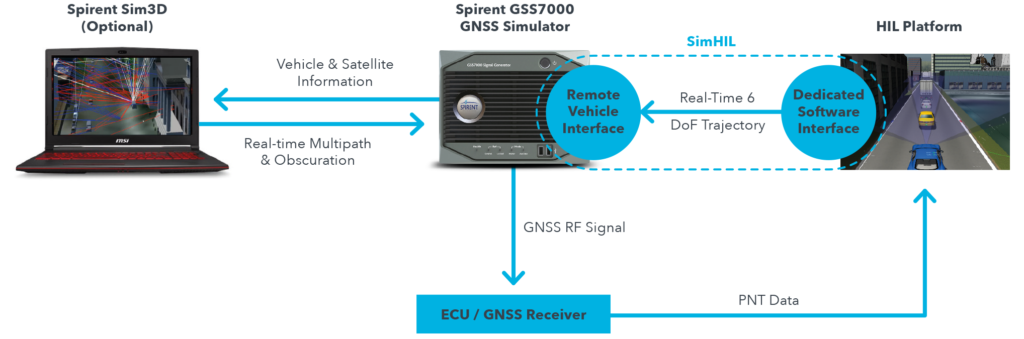
    Spirent Communications plc has released SimHIL, an integrated hardware-in-the-loop (HIL) testing software API for Spirent GNSS simulators.

    SimHIL brings high-fidelity GNSS signal simulation with low latency to automotive industry HIL testbeds, the company said.

    Image: Spirent
    Image: Spirent

    Spirent’s SimHIL software has been developed to meet the automotive industry’s growing need for realistic positioning, navigation and timing (PNT) testing for sensor fusion. As customers apply increasing pressure on car manufacturers for more advanced driver-assistance system (ADAS) features and advanced infotainment systems, test labs need to be able to combine Wi-Fi, camera, lidar, radar, inertial and GNSS data that power these advanced automotive systems.

    SimHIL helps test engineers bring accurate, controlled and coherent data from GNSS and inertial sensors to their sensor-fusion algorithms within HIL test environments. Facilitating the ultra-low latency, complete control, enhanced realism, and ease of use and setup of Spirent GSS7000 and GSS9000 GNSS simulators, SimHIL is suitable for OEMs and tier-one suppliers developing ADAS, V2X and sensor-fusion engines.

    The new SimHIL API enables:

    • external motion input – real-time direct motion and trajectory data input from simulators
    • sensor fusion – introducing GNSS signals into sensor-fusion engines
    • V2X testing – validation and performance benchmarking of V2X applications
    • infotainment system testing – real-time scenario feedback to system and driver responses
    • vehicle-in-the-loop (VIL) – final production form product testing
    • accurate testing – reliable results supported by ultra-low latency simulation. Criticality of ADAS features, such as lane assist and automatic braking, mean that 3+ metres of uncertainty introduced by higher latency systems is not sufficient.

    “With our SimHIL software and GNSS simulators, test engineers can bring realistic, controlled GNSS simulation to their HIL testing environments – a vital requirement in a world where ADAS features are relying more heavily and critically on accurate positioning,” said Martin Foulger, general manager of Spirent’s PNT business.

    Spirent has worked with leading suppliers to ensure SimHIL is compatible with their HIL platforms, and because of its open API, there’s broad scope for additional custom third-party integrations.

    “When used with our GSS7000, SimHIL latency is less than 40 ms from motion command to RF output and supports all GNSS and SBAS signals,” said Ricardo Verdeguer Moreno, product manager for Connected and Autonomous Vehicles at Spirent. “SimHIL is also compatible with all the options and features available in Spirent’s GNSS simulators, including ionospheric and tropospheric modeling, antenna patterns, date and time settings, and obscuration and multipath effects via Sim3D.”

    Users can easily configure and control both the GNSS scenarios, and signal generation and vehicle motion from within the HIL simulator graphical user interface — saving time and the possibility of error.

    Spirent is also offering three service packages alongside SimHIL to help customers mitigate project risk and reduce the time from delivery to useful deployment.

    For more information about Spirent’s SimHIL integrated testing for Spirent GNSS simulators, visit the SimHIL information page.

  • Regulus Cyber’s GPS protection becomes part of Harman Shield

    Regulus Cyber’s GPS protection becomes part of Harman Shield

    Photo: Regulus
    Photo: Regulus

    Regulus Cyber, creator of what it calls “anti-virus” software to protect GPS navigation and timing across a wide range of applications, is collaborating with Harman, a connected-car company.

    The software-based cybersecurity solution will be part of Harman Shield, the company’s risk-management offering for vehicle manufacturers and mobility companies.

    “We are looking forward to joining forces with Harman, a Tier 1 supplier to the automotive industry, a trusted partner to more than 50 global vehicle manufacturers. Coming together with Harman is a great testament to the necessity of GPS protection measures in our industry,” said Yonatan Zur, CEO of Regulus Cyber.

    “We’re seeing our OEM customers expand into the digital and mobility spaces, offering added-value services to consumers by leveraging connectivity and mobile applications,” said Asaf Atzmon, vice president and general manager, Automotive Cybersecurity at Harman. “Through Harman Shield, we offer full visibility, analytics and risk management capabilities into cyber threats, and Regulus Pyramid GNSS solution complements our offering with another layer of protection against GPS hacking. We’re excited about the possibilities of this new collaboration with Regulus.”

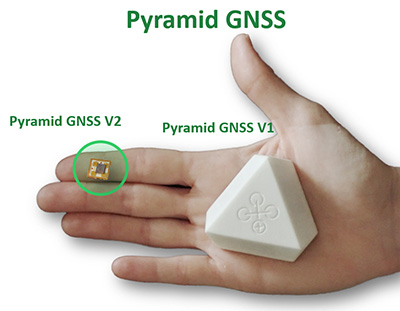
    The Regulus Pyramid GNSS is a software solution that uses machine learning to detect spoofing and defend any GNSS receiver, device or chipset against it — ensuring the security and reliability that are essential to safe and accurate navigation. GPS spoofing attacks are becoming more common and are often difficult to detect and protect against.

    Pyramid GNSS uses a combination of patented algorithms, developed over years of spoofing experiments to protect against attacks at the firmware, operating system, or application level. This deal is further proof of the market demand for resilient navigation and positioning at a time when GPS hacking is a growing concern.

  • Aceinna ships high-precision navigation module for autonomous vehicles

    Aceinna ships high-precision navigation module for autonomous vehicles

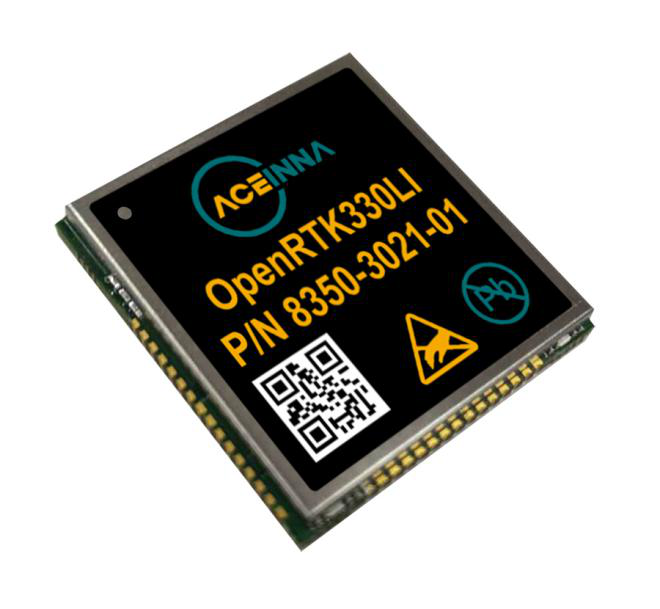
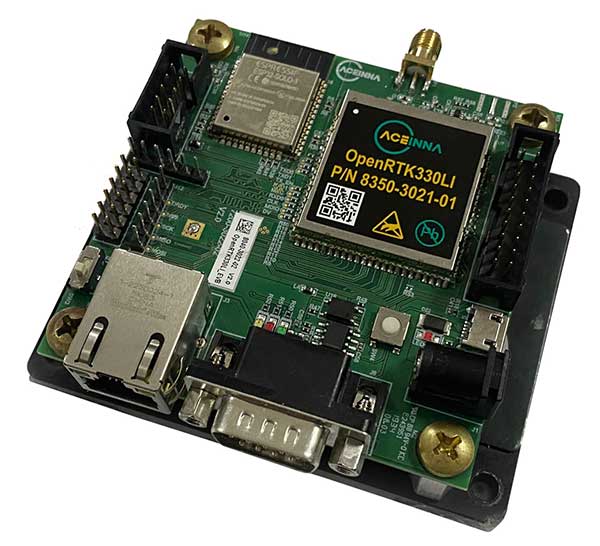
    The Aceinna OPENRTK330L integrates a triple-band RTK/GNSS receiver and a triple-redundant inertial sensor to enhance the safety of autonomous systems.

    Photo: Aceinna
    Photo: Aceinna

    Aceinna is now shipping its OPENRTK330L, a cost-effective module designed for developers creating mission-critical guidance and navigation systems for autonomous vehicles, including robots, drones, industrial, construction and agricultural machinery.

    Aceinna designed the OPENRTK330L to replace expensive and bulky precision RTK/INS systems used in today’s autonomous systems.

    The OPENRTK precise positioning engine optimizes satellite tracking and high RTK fixes rates while integrating seamlessly with Aceinna’s open-source Open Navigation Platform.

    In January 2020, the Aceinna test vehicle drove from the Bay Area to the CES 2020 event in Las Vegas using the new module. Along the way, Aceinna engineers tracked its path and accuracy.

    ACEINNA’s OPENRTK330L includes a triple-band RTK/GNSS receiver coupled with redundant inertial sensor arrays to provide centimeter-level accuracy, enhanced reliability and superior performance during GNSS outages. It integrates a precise 1.5-degree/hour inertial measurement unit (IMU) to offer 10 to 30 seconds of high accuracy localization during full GNSS denial.

    The OPENRTK330L’s embedded Ethernet interface allows easy and direct connection to GNSS correction networks around the world. OPENRTK330L’s CAN bus interface allows simple integration into existing vehicle architectures.

    The multi-band GNSS receiver can monitor all global constellations (GPS, GLONASS, BeiDou, Galileo, QZSS, NAVIC, SBAS) and simultaneously track up to 80 channels. The module has RF and baseband support for the L1, L2 and L5 GPS bands and their international constellation signal equivalents.

    By integrating a triple-redundant IMU array, the OPENRTK330L is able to recognize and utilize only valid sensor data, ensuring high-accuracy protection limits and certifiability under ISO26262 standards. ACEINNA’s triple redundant 6-Axis IMU array uses a total of 9 accelerometer and 9 rate gyro channels.

    The OPENRTK330L is supported by ACEINNA’s Open Navigation Platform, allowing custom-embedded application development on top of the positioning engine and dead-reckoning algorithms.

    OPENRTK330L hardware also includes Ethernet, UART, SPI and CAN interfaces for versatile integration into a host system. Additional specifications include operating temperature range of -40C to +85C, and qualification to standard automotive shock and vibration levels.

  • StreetDrone releases autonomous vehicle safety report

    StreetDrone releases autonomous vehicle safety report

    Logo: StreetDrone
    Logo: StreetDrone

    StreetDrone published a report titled “Putting Safety First in Autonomous Vehicles.” The report is designed for anyone interested in the development of autonomous vehicle technologies, especially public transport and delivery companies, civic authorities and universities.

    According to StreetDrone, the report contributes to the connected and autonomous (CAV) industry safety debate, as well as adds perspective to conventional CAV safety wisdom.

    The purpose of the 30-page report is to make an experience-based contribution to the safety debate to enable the CAV industry to accelerate corporate, institutional and public confidence in self-driving technology, so the benefits of new autonomous services can be realized more quickly, StreetDrone said.

    The report is based on the company’s experience in operating autonomous vehicle trials in urban environments, including those with high population densities and complex infrastructures. It also covers other areas for the safe operation of autonomous vehicles, including the definition of a safe operating environment, minimum operating standards for safety drivers, and a set of open data protocols for effective error tracking and rectification.

    “While we’ve had to make some changes to our operations due to COVID-19, we’ve also had the opportunity to write our Safety Report based on the experience of building and running autonomous vehicles over the past three years of StreetDrone’s operations,” said Mike Potts, CEO of StreetDrone. “This experience spans the full stack of AV disciplines, from hardware and mechanical design through to AI and software, as well as a deep insight into city centre public highway trials. For an organization focused on ‘zone 1’ urban trials, we have necessarily been safety-led, so our report encapsulates much of this knowledge. We believe that industry collaboration and knowledge-sharing are essential prerequisites for CAV technology to achieve wide-scale adoption, and we’re therefore delighted to make our own contribution to this growing body of knowledge.”

    StreetDrone’s own hardware platforms range from the L7e class Renault Twizy heavy quadricycle to the flexible Nissan eNV200, which comes in taxi, delivery van or 7-seater passenger variants.

    Check out the report here.

  • USDOT seeks university to help secure automated navigation

    USDOT seeks university to help secure automated navigation

    The U.S. Department of Transportation (DOT) announced competitive grant solicitation for a new University Transportation Center (UTC) specifically on Highly Automated Transportation Research.


    Photo: Resilient PNT Foundation
    Photo: Resilient PNT Foundation

    “People will not be comfortable getting into an automated vehicle or with platooning driverless trucks heading down the highway if they think… their GPS might be spoofed,” according to Diana Furchtgott-Roth, Deputy Assistant Secretary at the U.S. Department of Transportation at a recent presentation. She believes getting robust and resilient navigation right is a prerequisite for success with automated and autonomous systems.

    As part of this effort, her office is looking for a U.S. non-profit institution of higher learning to become a University Transportation Center (UTC) focusing on “Highly Automated Transportation Research.” A critical component of this new center’s efforts will be work on resilient positioning, navigation and timing (PNT) services.

    From the abstract:

    “Progress on the path toward integrating automated systems into the transportation domain for all modes of transportation (surface, aviation, and maritime) will be aided by additional research addressing challenges associated with ensuring resilient Positioning, Navigation, and Timing (PNT) services to support automated systems.

    “This University Transportation Center will complement the new Center of Excellence for Highly Automated Transportation Systems being implemented within the USDOT. Among the critical needs is research to support securing cyber resilient PNT receivers for use in automated systems. This UTC will carry out research to support the development of standards and or prototypes and incorporate existing U.S. Government guidance.“

    The department is also looking for UTCs for Communications Technology and E-Commerce Effects on Travel Demand; Implications of Accessible Automated Vehicles and Mobility Services for People with Disabilities; and Strategic Implications of Changing Public Transportation Travel Trends.

    According to a press release issued March 30, one institution will be selected in each of the four areas. The total initial funding available to is just shy of $5 million.

    Interested parties can find the opportunity here, and can call Nancy Wilochka at (202) 366-5128.

  • USDOT seeks to create 4 new university transportation centers

    USDOT seeks to create 4 new university transportation centers

    Photo: adamkaz/E+/Getty Images
    Photo: adamkaz/E+/Getty Images

    The U.S. Department of Transportation (DOT) has announced competitive grant solicitation for nearly $5 million for four new University Transportation Centers (UTCs).

    Through the Notice of Funding Opportunity, DOT intends to fund one UTC in each of the following specific topic areas:

    • Highly automated transportation systems research
    • Communications technology and e-commerce effects on travel demand
    • Implications of accessible automated vehicles and mobility services for people with disabilities
    • Strategic implications of changing public transportation travel trends.

    Only U.S. non-profit institutions of higher education are eligible to apply or to be members of a proposed UTC consortium. Non-profit institutions of higher education may include qualifying two-year institutions.

    “Our University Transportation Centers are not only the seeds of our future transportation system, they serve as living labs, bringing research to reality. Four new UTCs will address a variety of important 21st century transportation topics,” said Deputy Assistant Secretary Diana Furchtgott-Roth.

    Thee Tier 1 UTCs will support research needs that DOT has identified under two of the FAST Act research priorities (49 U.S.C. § 6503(c)(1)): “Promoting Safety” and “Improving Mobility of People and Goods.”

    The Notice of Funding Opportunity (NOFO) is available now. For more information on the UTC program, contact Nancy Wilochka, (202) 366-5128.

  • US Coast Guard protests GPS disruption to UN body: ‘urgent issue’

    US Coast Guard protests GPS disruption to UN body: ‘urgent issue’

    The International Maritime Organization headquarters in London. (Photo: Anastasia Yakovleva/iStock Editorial / Getty Images Plus/Getty Images)
    The International Maritime Organization headquarters in London. (Photo: Anastasia Yakovleva/iStock Editorial / Getty Images Plus/Getty Images)

    Responding to a plea from 14 maritime organizations in the fall of 2019, the U.S. Coast Guard has protested disruption of GPS and GNSS signals to the International Maritime Organization (IMO).

    IMO is the United Nations body that coordinates and sets standards for international maritime operations and safety.

    In a paper dated March 10, the service said that GNSS signals are “essential to safe and efficient navigation and an integral component of all maritime operations.” Interfering with them “jeopardizes the safety of life at sea.”

    Deliberate disruptions in the eastern Mediterranean and the Black Sea, the paper says, affect vessels operating in international waters and engaged in innocent passage through territorial seas.

    While nations typically have a right to do as they wish in their sovereign territory, they are also obliged to not have that intrude into other nations’ territory or international waters. This is also true for vessels passing through their waters but not calling at their ports, known as “innocent passage.”

    The International Law of the Sea Treaty stipulates that, in the absence of some clear wrongdoing such as piracy, drug smuggling or discharging oil, vessels be allowed to pass through territorial seas unmolested by the coastal state.

    The Coast Guard paper also points out that nations have other treaty obligations that prohibit this kind of activity. International Telecommunication Union Radio Regulations prohibits “All transmissions with false or misleading identification…”

    Citing a March 2019 report in GPS World, the paper also documents that GNSS disruption is a global problem not confined to just one or two areas. A study by the German Aerospace Center (DLR) found interference during every phase of a vessel’s voyage between Europe and the Far East.

    The Coast Guard paper was submitted for consideration at IMO’s Maritime Safety Committee that had been scheduled to meet on May 13, but has been postponed due to the COVID-19 emergency.

    This planned consideration at IMO follows a resolution by the UN’s International Civil Aviation Organization (ICAO) in May 2019. In a paper entitled “An Urgent Need to Address Harmful Interferences to GNSS,” the International Federation of Air Traffic Controllers’ Association (IFATCA), the International Federation of Air Line Pilots’ Associations (IFALPA), and the International Air Transport Association (IATA) had introduced the issue.

    This resulted in a resolution describing the eliminating interference as an urgent need.

    About the same time the U.S .Coast Guard paper was due to be considered, IMO was to engage in the early stages of considering rules for autonomous vessels. Its Facilitation Committee was scheduled hold a “Regulatory scoping exercise for the use of Maritime Autonomous Surface Ships (MASS)” at a meeting the end of April. This meeting has also been postponed.

    While not specifically mentioned, navigation issues will undoubtedly be part of the considerations when discussion of rules for autonomous shipping eventually takes place.

    Public input to these international meetings is always sought in advance. For example, the U.S. State Department had announced a meeting for April 6 to receive public input on U.S. positions for the various issues to be discussed at the Facilitation Committee.

    While we understand that this meeting will also be also be postponed, comments can be submitted to the points of contact listed in the Federal Register announcement as well as be raised during the eventual meeting.

    Image: IMO Headquarters Wikimedia Commons

  • GPS tracking shows critical truck deliveries continue despite COVID-19

    GPS tracking shows critical truck deliveries continue despite COVID-19

    Photo: RichLegg/E+/Getty Images
    Photo: RichLegg/E+/Getty Images

    The American Transportation Research Institute released data showing that trucks are continuing to move — in many cases faster than usual — to respond to the demands placed on the industry by the COVID-19 pandemic.

    “ATRI’s real-time GPS data comes from more than a million trucks, allowing us to analyze freight flows, and so far in March, what we are seeing is an unprecedented level of truck movement,” said ATRI President and COO Rebecca Brewster. “Not only are trucks continuing to move, but they are doing so at speeds well in excess of normal traffic patterns.”

    For example, according to ATRI’s data, at the intersection of I-85 and I-285 in Atlanta, known locally as Spaghetti Junction, afternoon rush hour truck speeds are typically less than 15 MPH due to congestion. Last week, truck speeds averaged 53 MPH.

    “Spaghetti Junction is typical of what we’ve seen across the country, especially in areas hit hard by the virus and subject to quarantines and lockdowns,” Brewster said. “As other traffic dissipates, trucks continue to move, delivering much-needed relief supplies to markets, hospitals, gas stations and other essential businesses.”

    Among the hardest hit states, New York, California and Illinois, the data is showing similar changes.

    • In New York, along I-495 in Queens, the afternoon rush hour typically sees average truck speeds of 16 MPH. Speeds have now more than doubled, averaging 38 MPH, still below the posted speed limit but certainly an improvement.
    • In Los Angeles, at the intersection of I-710 and I-105, truck speeds during highly congested morning rush hours are normally less than 25 MPH between the hours of 6 and 8 a.m. Truck speeds are now averaging 53 MPH in the morning as Californians stay home but truck deliveries increase.
    • At the Byrne Interchange in Chicago, where I-290 intersects with I-90/I-94, morning truck speeds are now averaging 43 MPH, more than twice the typical morning rush hour speed of 20 MPH.

    According to ATRI’s analysis, the results can be explained by several COVID-19 related factors:

    1. The dramatic reduction in commuter traffic allows trucks to operate at higher speeds, particularly during traditional rush hours.
    2. Continuous 24/7 truck operations generate higher average truck speeds across nearly all hours of the day.

    ATRI’s analysis used truck GPS data from more than a million heavy-duty trucks and the locations examined included some of the nation’s top truck choke points.

    “Normally, ATRI’s bottleneck data is used to show us where the problems are on our highway system,” said American Trucking Associations President and CEO Chris Spear, “but during this period of extreme uncertainty, the data is showing us where the solution is — in the back of America’s trucks as professional drivers continue to quickly and safely deliver life-sustaining medical supplies, food, fuel and other essentials to Americans when they need it most.”

    ATRI is the trucking industry’s 501c3 not-for-profit research organization. It is engaged in critical research relating to freight transportation’s essential role in maintaining a safe, secure and efficient transportation system.

  • Qualcomm makes progress on C-V2X introduction in Europe

    Qualcomm makes progress on C-V2X introduction in Europe

    Photo: Ficosa
    Photo: Ficosa

    Qualcomm Technologies’ 9150 C-V2X Platform, among several other products from automotive and infrastructure suppliers, has completed certification in accordance with the European Radio Equipment Directive (RED) Certification in Europe, a requirement for placing radio equipment on the market.

    This is a major step forward toward the commercial introduction of cellular vehicle-to-everything (C-V2X) in Europe, the company said. C-V2X is a global solution for vehicle-to-vehicle and V2X communication, designed to enhance road safety and facilitate smart transportation systems. C-V2X establishes the foundation to support safety use-cases with a path for integration into next generation 5G technologies, while tapping into the broader 3GPP ecosystem to drive wider adoption. With its evolution to 5G New Radio, C-V2X offers rich and differentiated experiences consumers continue to demand as we usher in the world of 5G and autonomy, the company added.

    A new European Standard defining the use of C-V2X as an access layer technology for Intelligent Transportation System (ITS) devices was recently approved through the European Telecommunication Standardization Institute (ETSI). According to Qualcomm, all the ETSI standards and specifications that define other ITS protocols above the access layer have been updated to support utilization of C-V2X as the underlying access layer. These standards and specifications have been included in the ETSI ITS Release 1 specification set and provide the basis for development of interoperable C-V2X ITS implementations and devices from multiple vendors.

    Several products, all of which feature the Qualcomm 9150 C-V2X chipset solution, have achieved RED certification, including the Commsignia On-Board Unit, Commsignia Roadside Unit, Ficosa OBU, Kapsch RSU, Savari MobiWAVE 2000 OBU, Savari StreetWAVE SW2000 RSU and WNC module.

    “By being one of the very first to achieve the OBU RED certification in June 2019, Ficosa continues its commitment to accelerating and expanding C-V2X as a path to 5G,” said Joan Palacin, business unit director of Ficosa Advanced Communications. “Not only in Europe but also China, USA and globally, we see C-V2X as a key technology to achieve automotive industry challenging safety goals by significantly reducing fatalities on our roads.”

    Qualcomm expects early product availability to accelerate adoption of the solution in the region.

  • French hydro office selects SBG Systems for inertial fleet

    French hydro office selects SBG Systems for inertial fleet

    Shom, the French national hydrographic and oceanographic office, selected SBG Systems’ inertial navigation systems to renew its fleet.

    The office chose the Navsight Apogee inertial navigation systems (INS) for its speedboats and survey vessels for both shallow and deep-water real-time bathymetric surveys and Qinertia PPK software for post-processing tasks.

    As a public institution, Shom (Service hydrographique et océanographique de la marine) has three major objectives: national hydrography and cartography, defense support in hydro-oceanographic fields, and support in maritime geospatial products and services for public policies on the sea and the coast.

    Shom’s fleet is based in Brest. It is composed of eleven boats, including seven speedboats, and three 59-meter long BH2 survey vessels. They operate on shallow and deep water in France, Africa, the Indian Ocean and in the Caribbean Sea. Shom also uses a fleet based in New Caledonia composed of two boats, one speedboat and a buoy-laying vessel used part of the time for hydrographic surveys.

    French agency Shom's survey vessel. (Photo: Shom)
    French agency Shom’s survey vessel. (Photo: Shom)

    Renewing the fleet. When it came to renewing the fleet’s INS, Shom looked at INS complying with standards set by the International Hydrographic Organization (IHO) for bathymetric surveys, with a focus on roll and heave that have the biggest impact on the multibeam echo-sounder data compensation.

    After having conducted several tests in their official test zone where each element’s location is strictly and precisely known, Shom selected SBG Systems for replacement of its INS.

    Shom first acquired a Navsight Ekinox (0.02° roll) for shallow-water survey in New Caledonia, and then decided to outfit the fleet in Brest with the Apogee (0.008° roll).

    “The BH2 is highly versatile; it fits both deep and shallow water requirements. Having a homogenized fleet of sensors for speedboats and the BH2 is easier to maintain,” said Rémi Labonde, who is in charge of positioning and hydrographic equipment at Shom.

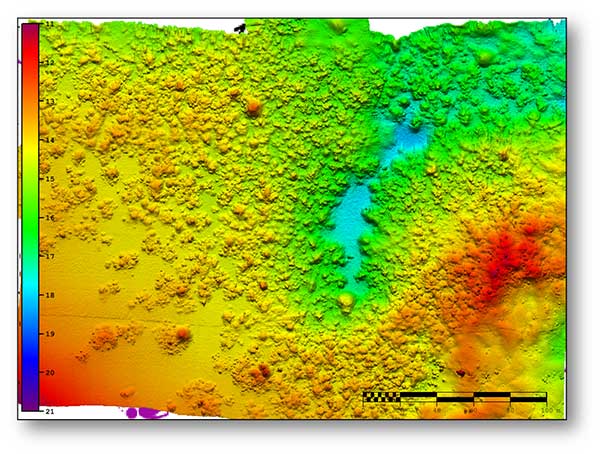
    A seafloor survey conducted by Shom. (Image: Shom)
    A seafloor survey conducted by Shom. (Image: Shom)

    Navsight Apogee INS

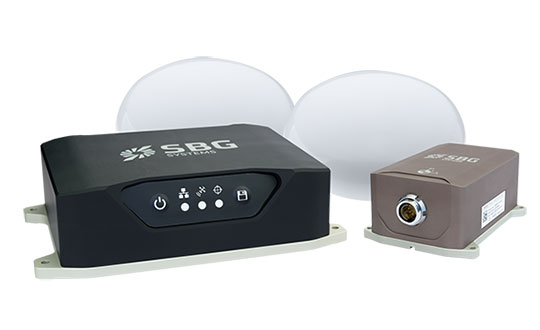
    Designed for hydrographers, the Navsight Apogee is composed of a GNSS receiver and a processing unit enabling real-time fusion of inertial and navigation data.

    Navsight provides connections to external equipment such as echo sounders and computers. With its titanium enclosure, the Apogee sensor can be installed in the floodable engine compartment, close to the multibeam echo sounder.

    Navsight marine solution. (Photo: SBG Systems)
    Navsight marine solution. (Photo: SBG Systems)

    Navsight Apogee is a high-performance cost-effective inertial navigation system based on state-of-the-art micro-electrical mechanical (MEMS) technology, and therefore requires no annual maintenance. The SBG solution includes free unlimited firmware updates and technical support.

    Once connected through Ethernet, the Navsight web interface guides the installation. For example, a 3D view of the boat shows the entered parameters so that the user can check the installation in real-time.

    The embedded filter also controls and validates lever arms and antenna alignment during this procedure, which can be a plus if the Shom needs to calibrate a new system abroad. “We are big fans of SBG’s web interface. It is modern, extremely clear, and easy to use; it really makes a difference in our team’s work,” Labonde said.

    Qinertia post-processing software. Navsight Apogee INS accepts real-time corrections from real-time kinematic (RTK) or precise point positioning (PPP).

    In its daily surveys, Shom uses PPP positioning, which doesn’t require installation compared to RTK. It also allows offshore surveying, or even near shore when no RTK correction is available.

    SBG Systems’ in-house post-processing software Qinertia fixes data issues due to communication cut-outs. The onboard team checks the data and corrects it with Qinertia if needed.

  • Launchpad: New modules, UAVs take flight

    Launchpad: New modules, UAVs take flight

    A roundup of recent products in the GNSS and inertial positioning industry from the March 2020 issue of GPS World magazine.


    OEM

    NavIC modules

    Support both L1 and L5 bands

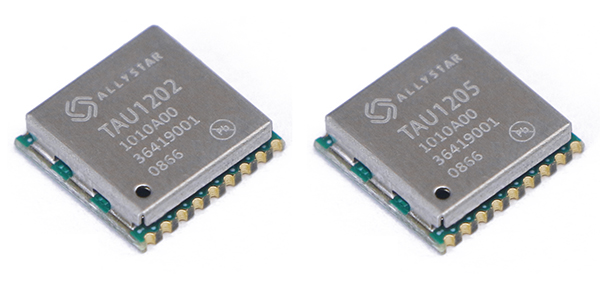
    Photo: Allystar
    Photo: Allystar

    The dual-band multi-GNSS modules TAU1202 and TAU1205 support both the L1 and L5 bands to enhance sub-meter positioning accuracy. Constellations received include GPS, Galileo, GLONASS, BeiDou, QZSS and NavIC. Besides the L1 band, TAU1202 and TAU1205 also support L5/B2a/E5a, which are expected to have lower noise and significantly reduced multipath mitigation because of the higher chipping rate of L5 signals relative to L1 C/A code. TAU1205 supports NavIC (IRNSS), improving navigation in India and the Middle East. Powered by the Cynosure III GNSS chipset and with built-in low-noise amplifier and surface acoustic wave (SAW) filter, TAU1202 and TAU1205 provide higher sensitivity, ensuring exceptional acquisition and tracking performance even in weak signal areas.

    Allystar Technology, allystar.com

    L5 mass-market module

    Dual-Frequency chip uses new signals

    Photo: Broadcom
    Photo: Broadcom

    The BCM47765 dual-frequency GNSS module is capable of using the BeiDou-3 constellation’s B2a signals (the Chinese indicator for L5). It can track 30 new L5 signals (60% more) with a significant impact on accuracy. End users will experience much higher reliability of the submeter accuracy inherent to dual-frequency L1/L5. The enhanced L5 signal improves the accuracy of GNSS in an urban scenario by mitigating reflections from nearby buildings (multipath). It also improves GNSS in an open-sky scenario, allowing for submeter accuracy. Second generation dual-frequency GNSS will enable lane-level driving navigation, allowing applications to know in which highway lane a vehicle travels.

    Broadcom, broadcom.com

    Atomic clock

    Next-gen timing in a tiny package

    Photo: Microchip
    Photo: Microchip

    The MAC-SA5X miniaturized rubidium atomic clock is a high-performance atomic clock that delivers a wide thermal range, critical performance improvements and other enhancements over previous clocks. The MAC-SA5X produces a stable time and frequency reference that maintains a high degree of synchronization to a reference clock, such as a GNSS-derived signal. Its low monthly drift rate, short-term stability and stability during temperature changes allows the device to maintain precise frequency and timing during extended periods of holdover during GNSS outages or for applications where large rack-mounted clocks are not possible. Operating over a temperature range of –40 to +75 Celsius, the MAC-SA5X is designed to quickly achieve atomic stability performance with a fast lock.

    Microchip Technology, microchip.com

    Correction receiver

    Centimeter-level accuracy for consumer devices

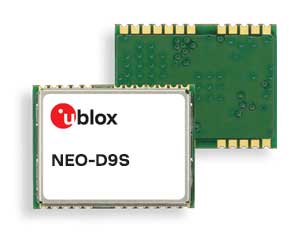
    Photo: u-blox
    Photo: u-blox

    The NEO-D9S GNSS correction data receiver module provides an affordable approach to bringing centimeter-level accuracy to GNSS receivers. The NEO-D9S receives corrections from correction service providers broadcast on the L-band (1525–1559 MHz). A host processor can then decrypt this correction data and provide it to a high-precision GNSS receiver, combining corrections directly with readings from the satellite constellations to enable much more accurate position readings than those offered by GNSS signals alone. Use of the NEO-D9S will also increase the availability of high-precision GNSS positioning data in areas with limited connectivity and reduce the amount of cellular data consumed by positioning receivers. Expected customers are Tier 1 and OEM carmakers, industrial system integrators, and any other applications that rely on very accurate positioning at low cost. The NEO-D9S module is a correction-only receiver. Based on the latest u-blox ninth-generation (D9) platform, it will integrate easily with the u-blox F9 RTK GNSS receivers from u-blox, or can be used as part of a modular product roadmap.

    u-blox, u-blox.com

    Mobile platforms

    Dual-frequency systems on chip

    Image: Qualcomm
    Image: Qualcomm

    The Qualcomm Snapdragon 720G, 662 and 460 enable enhanced user experiences across connectivity, gaming and entertainment. The new mobile platforms support dual-frequency (L1 and L5) GNSS to improve location positioning accuracy and robustness. The system-on-chip solutions also support NavIC. For the first time on mobile, the Qualcomm Location Suite supports up to seven satellite constellations concurrently, including NavIC.

    Qualcomm Technologies, qualcomm.com


    UAV

    Survey drone

    VTOL option available

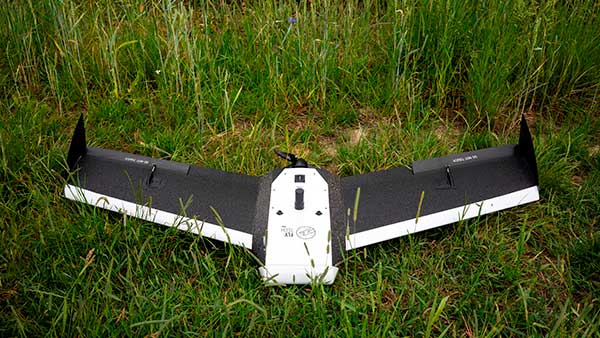
    Photo: FlyTech UAV
    Photo: FlyTech UAV

    Dedicated to surveying and agriculture, the UAV Birdie is tailor-made, combining intuitive use and high-quality data through precise sensors and GPS RTK L1/L2 onboard. Features include a 24-megapixel camera or optional full-frame 42-megapixel camera; flight time up to 60 minutes; and coverage up to 8 square kilometers in one flight. A vertical-takeoff-and-landing (VTOL) upgrade is available.

    FlyTech UAV, flytechuav.com

    Inspection drone

    Five-hour flight time

    Photo: Skyfront
    Photo: Skyfront

    Skyfront’s Perimeter 8 drone is equipped with Silvus Technologies’ SteamCaster Radio system, a powerful user-customizable radio system for the military, police and broadcast. The new long-range drone will allow operators to inspect pipelines and other assets as well as conduct long-range surveillance missions. The octocopter can fly for five hours and travel up to 100 kilometers without losing connection from the ground station. Currently, five models are available to suit uses including mapping, lidar and medium, long, or extra-long surveillance. SteamCaster radio system uses the latest beam-forming technology, spatial multiplexing, and space-time coding to ensure the drone can be controlled in environments in which other radio systems are likely to fail. The combination of the technologies allows the range to be increased from 40% to 100%. SteamCaster comes with SteamScape, a network management interface to allow for key metrics and statistics to be viewed and collected in real time. The system also allows the drone to be overlayed onto a map showing the current location and path of the drone.

    Skyfront, skyfront.com
    Silvus Technologies, silvustechnologies.com

    Transformable drone

    Delivers critical tools on the ground or in the air

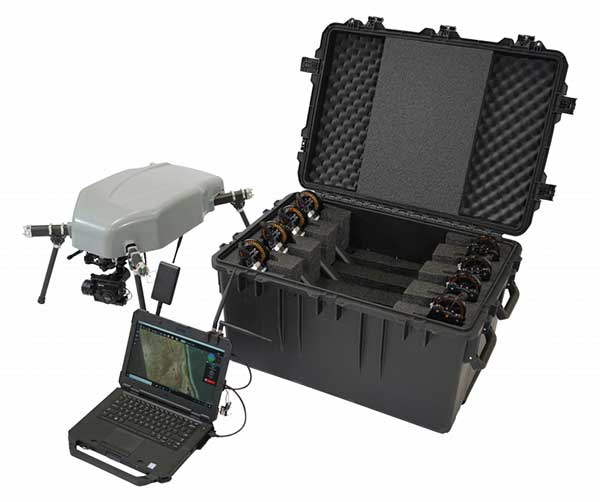
    Photo: Robotic Research
    Photo: Robotic Research

    The Pegasus Mini is a smaller version of the Pegasus, a hybrid unmanned aircraft system/unmanned ground vehicle. The Pegasus hybrid UAS/UGV configuration delivers advanced GPS-denied mapping with fully autonomous high-speed flying and driving capabilities. Pegasus Mini is designed to provide the extra reach that a UAV or UGV alone cannot provide. Uses include inspection, rescue, rapid response, and applications that strongly benefit organizations in oil and gas, public transportation, law enforcement, public safety, and more.

    Robotic Research, roboticresearch.com

    Electric drone

    ISR UAV designed for long flight

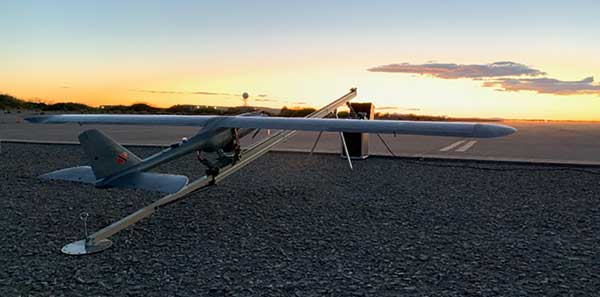
    Photo: Silent Falcon UAS Technologies
    Photo: Silent Falcon UAS Technologies

    The Silent Falcon E1 UAV has completed 500 hours of successful flight testing and operations. It’s maker, Silent Falcon UAS Technologies (SFUAS), is based in Albuquerque, New Mexico. The E1 solar-electric, fixed-wing UAV is noise free, emission free, and provides long-range, low-cost intelligence, surveillance and reconnaissance (ISR) capability. It has a payload capacity of 20 pounds and a ceiling of 20,000 feet above ground level. SFUAS has an application pending before the FAA for type certification of the E1. The 500-hour milestone confirms for federal regulators that it is safe and durable. Silent Falcon aircraft have operated in eight foreign countries and are not ITAR restricted.

    Silent Falcon UAS Technologies, silentfalconuas.com


    High-definition GNSS

    Enables submeter positioning

    Image: HERE Technologies
    Image: HERE Technologies

    The High Definition (HD) GNSS cloud-based solution enables mass-market devices to achieve sub-meter accuracy across the globe. HD GNSS enables lane-level navigation, augmented reality and virtual reality. It combines precise point positioning (PPP) and real-time kinematic (RTK) positioning methods, allowing for fast convergence time, high availability and global coverage. It also supports off-the-shelf mobile devices and internet of things (IoT) trackers equipped with dual-frequency chipsets.

    HERE Technologies, here.com

    GNSS/INS module

    Open design for developers

    Photo: Aceinna
    Photo: Aceinna

    The OpenRTK330L GNSS/INS module is designed for developers creating guidance and navigation systems for autonomous vehicles, robots, drones, industrial, construction and agricultural machinery. OpenRTK330L is a low-cost, high-performance triple-band RTK/GNSS receiver coupled with redundant inertial sensor arrays to provide cm-level accuracy, enhanced reliability, and superior performance during GNSS outages. The module is aimed at automotive, robot, drone, construction and agriculture systems. The multi-band GNSS receiver can monitor all global constellations (GPS, GLONASS, BeiDou, Galileo, QZSS, NavIC, SBAS) and simultaneously track up to 80 channels. The module has RF and baseband support for the L1, L2 and L5 GPS bands and their international constellation signal equivalents.

    Aceinna, aceinna.com