Category: Mapping

  • LizardTech certified by US Army for GeoExpress and Express Server

    LizardTech, a provider of software solutions for managing and distributing geospatial content, has received Certificates of Networthiness (CoN) for GeoExpress 9.x and Express Server 9.x from the U.S. Army Network Enterprise Technology Command (NETCOM).

    The CoN signifies that GeoExpress and Express Server are configured to the current Army Golden Master (AGM) baseline and comply with all U.S. Army and Department of Defense (DoD) standards for security, compatibility and sustainability.

    A CoN is required for all enterprise software products in the Army Enterprise Infrastructure Network and applies to the U.S. Army as well as National Guard, Army Reserve and DoD organizations using the Army network.

    GeoExpress is LizardTech’s flagship software product, enabling geospatial professionals to manipulate digital satellite/aerial image and lidar data and compress them to industry-standard MrSID or JPEG2000 files for easy and cost-effective processing, storage and transmission.

    Express Server software is the LizardTech solution for high-performance cataloguing, delivery and publication of geospatial data that lets users access geospatial data on any device with any connection.

    “Receiving Certifications of Networthiness for our most recent geospatial software products is a significant achievement and a testament to LizardTech’s continued engagement with the U.S. Army and other U.S. DoD user communities,” said Terry Ryan, LizardTech federal government sales manager. “These CoNs give our users confidence that LizardTech solutions will meet their IT safety and stability requirements, and we look forward to supporting our users at home and abroad.”

    The current CoN applies to all 9.x releases of the GeoExpress and Express Server software. LizardTech has pursued and received CoNs for earlier versions of GeoExpress and Express Server, demonstrating a long-term commitment to ensuring U.S. Army forward-deployed personnel have rapid access to geospatial imagery and related data when and where they need it.

  • Esri releases new Arctic elevation data

    Esri releases new Arctic elevation data

    ArcticDEM provides insight into effects of climate change and enables communities to take early action

    The ArcticDEM project is a collaboration between government agencies, the Polar Geospatial Center and Esri to achieve goals set by a 2015 executive order by President Barack Obama calling for enhanced coordination of national efforts in the Arctic to reverse the trend of climate change.

    Coupled with the accessibility of Esri’s online platform, ArcticDEM can meet the need for high-quality elevation data in remote locations and provide accurate measurement of topographic change.

    ArcticDEM Strip Density.
    ArcticDEM Strip Density. Photo: ArcticDEM

    “This new Arctic elevation data is another demonstration of the power of technology and innovation in deepening the ways we can appreciate the immense value of our shared Arctic,” said Ambassador (ret.) Mark Brzezinski, executive director of the Arctic Executive Steering Committee at the White House.

    New elevation models on Esri’s public online portal show stunning surface detail from Baffin Island, Svalbard Islands and Iceland. In many locations, the models are created images collected on multiple dates, allowing anyone to see the landscape changes over time, such as the rate at which glaciers are receding.

    Since the Arctic region is uniquely challenged by the effects of climate change, including melting ice, this elevation data provides a great resource for enabling better planning and adaptation. For instance, elevation models can help local communities monitor coastal erosion in order to identify important structures at high risk of storm damage.

    “Esri is excited to provide this continually updated elevation data as easy-to-access web services and apps,” said Peter Becker, ArcGIS product manager, Esri. “These new detailed surfaces, which provide a much better picture of how the Arctic region is rapidly changing, allow more effective risk management for Arctic communities.”

    Explore visualized data from the ArcticDEM project at the ArcticDEM Explorer.

    ArcticDEM Explorer.
    ArcticDEM Explorer.  Photo: ArcticDEM
  • New defense signals offered, new defense editor sought

    New defense signals offered, new defense editor sought

    Two important new signals — or rather, one signal and one group of signals — became available for military users worldwide last week. Satelles made an exciting announcement of what amounts to a new dimension in satnav: a whole new constellation in low-Earth orbit, bringing global coverage and most critically, a signal strength hitherto unknown to GNSS users. The satellite time and location (STL) has primary application in the timing realm, which is vital in many applications.

    Higher in the sky, Europe’s GNSS satellites constituting the Galileo system officially began offering their services, and the multiple frequencies available here mean robustness, greater availability in obstructed environments, and — some say, though this is controversial — greater positioning accuracy, largely through more precise timing onboard.

    Meanwhile, GPS World seeks a new defense editor for this column, and adopting the concept of “promoting from within,” now turns to its readership for interested parties to volunteer.

    A New SatNav That’s Not GNSS

    A strategic alliance announced on Dec. 15 between companies Orolia and Satelles includes will provide positioning, navigation and timing (PNT) solutions provided by the Iridium satellite constellation, independent of GPS/GNSS signals. The companies intend to provide PNT solutions to military, defense, government and commercial customers worldwide. Their new satellite timing and location (STL) service can supply much-needed robustness to GPS-dependent operations.

    Orolia, the parent of GNSS-active companies Spectracomm, McMurdo, and  Spectratime, has extensive experience in the defense realm. The company says it is #1 worldwide in the manufacture of military beacons outside the U.S. with a 60% market share, and #2 within the U.S., and that it is the first-ranked provider of Medium-altitude Earth Orbit Search and Rescue system (MEOSAR) worldwide.  In partnership with Satelles, it will provide the STL service independent from traditional GPS and other GNSS satellite signals. STL is reported to be less susceptible to vulnerabilities such as spoofing, interference and jamming that are associated with GPS/GNSS — and the stronger signal penetrates buildings where GPS/GNSS cannot reach.

    Iridium satellite, courtesy Iridium.

    Iridium satellite, courtesy Iridium.

    Based on the low-Earth orbit (LEO) Iridium satellite constellation, STL signals are up to 1,000 times stronger than GPS/GNSS; this signal strength, due in part to the constellation’s closer proximity to users, helps to prevent jamming and enables signal reach into buildings and other difficult locations. STL’s additional cryptographic security also enhances performance, productivity and security.

    For further background on Iridium, see the June 2016 Defense PNT column by Don Jewell,“Iridium and GPS revisited: A new PNT solution on the horizon?

    Projected key applications and use cases include energy/utility grids, enterprise data networks including financial systems, maritime/aviation navigation, fleet/asset tracking management, search and rescue and data center management.

    “The timing signal is very accurate and close enough to GPS for most timing applications, although the positioning accuracy is lower than what GPS users are used to,” said Orolia CTO Jean-Yves Courtois. “It is an augmentation for timing primarily, and secondarily for positioning.”

    “In terms of timing accuracy, it provides on the order of tenths of microseconds in accuracy, and this covers a lot of timing applications, very familiar to us and to our customers. This is an ideal timing backup or augmentation of GPS. As number 2 worldwide in high-precision timing, we know this market and its applications very well.”

    “In positioning it’s closer to fifty meters or more. Much better for fixed objects than for mobile objects. The more mobile, the faster the vehicle, then the lower the positioning accuracy. It’s not directly usable for GPS applications that require a few meters accuracy, but it can be associated with inertial navigation for much better results.”

    “The signal is encrypted, so you have to subscribe to a service to receive a key, allowing access to the signal. Applications are developing based on equipment that will be STL-enabled. For the user it will be transparent. The user will have a different antenna.”

    “We are also active in tracking and emergency location devices, where this is also of interest. It has some authentication capability, to guarantee that the person who accesses the signal is in the location that he pretends to be.”

    Galileo, live at last!

    Also on Dec. 15, the European Commission issued the Galileo Initial Services Declaration. The Declaration of Initial Services means that the Galileo satellites and ground infrastructure are now operationally ready. These signals will be highly accurate but not available all the time, since the constellation is not yet complete and users cannot always count on four satellites being visible at one time at all points on the Earth.

    Galileo has a significant role to play in military operations. It adds multiple frequencies to the GNSS palette, important for resistance to jamming. It adds satellites, and will add more in the new future, very important for signal availability.  And its Public Regulated Service (PRS) is specifically designed with special features for security, defense and military operations.

    I attended a GNSS Symposium recently in Australia where an academic expert repeated the oft-made assertion that Galileo is the only GNSS that is civil-designed and civil-controlled. At which point an industry expert leaned over, grabbed the microphone and growled “Yeah, right.”

    No matter how you look at it, Galileo add important benefits to GPS for  the suitably equipped warfighter.

    This Newsletter Enters a New Era

    Beginning in January 2017, this Defense PNT newsletter will combine with our GeoIntelligence Insider e-newsletter to offer broad coverage of both hardware and software matters, driven by GPS/GNSS, and enhancing the capabilities of security, defense, military and other government forces. Readers of both newsletters will receive the new combined edition as a matter of course.

    Many readers will know of  the recent passing of Don Jewell, the longtime editor of Defense PNT.  We must soldier on, and GPS World hereby extends an invitation to readers of this newsletter — many of whom, we know, are military experts in your own right — who may wish to volunteer to fill Don’s position.  Please write to [email protected] to request details, and please provide a brief outline of your background and experience.

    Until next time,

    Happy Navigating.

  • Esri ArcGIS 10.5 helps make sense of real-time information

    Esri ArcGIS 10.5 helps make sense of real-time information

    Esri has released Esri ArcGIS 10.5, its next-generation analytics technology for innovative organizations.

    Organizations worldwide are challenged to make sense of real-time digital information. Esri ArcGIS 10.5 helps them glean insight from enterprise data, big data and the Internet of Things and share that insight in intuitive ways.

    The heart of Esri ArcGIS 10.5 includes:

    • Improved capabilities for handling large-scale analytics and big data.
    • A drag-and-drop interface that streamlines the creation of spatial analysis through maps, charts, and graphs.
    • Collaboration features to connect and analyze information across the enterprise.

    “If organizations are not looking at data spatially — as it exists in the world around them — they will overlook patterns and trends that impact their business and clients,” said Jack Dangermond, founder and president of Esri. “ArcGIS provides the tools to accelerate their digital transformation, helping them master the analysis of big data, real-time data, and information from the Internet of Things.”

    The new release is powered by Esri ArcGIS Enterprise, a significant evolution of the technology formerly known as ArcGIS for Server. ArcGIS Enterprise has been updated to meet the needs of today’s information-dependent organization, with improved power to process and analyze large, disparate datasets. Data that once required hours of processing can now be analyzed in minutes, delivering quick insight from billions of data records.

    Another feature of ArcGIS 10.5 is Esri Insights, a drag-and-drop interface that streamlines spatial analysis of geographic and enterprise data through intuitive maps, charts and graphs. In addition, enhanced collaboration tools allow users to break down silos and deliver insight across departments and agencies.

    Organizations can deploy Esri ArcGIS in the manner that best fits their business needs — on premises, in the cloud or as software-as-a-service — with industry-standard security and scalability.

    In addition, Esri ArcGIS helps users analyze big data with these new capabilities:

    • Improved integration of social media feeds, allowing users to integrate Facebook and Google accounts using their own logins.
    • Ready-to-build, sharable solutions for raster, vector and tabular data.
    • Streamlined deployment to cloud providers including Microsoft Azure, Amazon Web Services and IBM Cloud.
    • Enhancements to Esri ArcGIS Pro and Esri ArcGIS Online — batch-analytic toolsets, vector tile basemaps and code-free app building — that bring 3D data from drones and unmanned aerial vehicle (UAVs) to mobile devices.

    Esri ArcGIS 10.5 makes it easier for organizations to discover and deliver insight from important data. Through this platform, organizations can leverage the world’s most powerful spatial analysis technology anywhere, on any device, behind the firewall or in the cloud, and can easily discover the spatial insight that matters to them — more quickly, more efficiently, and with more confidence.

  • NASA launches micro satellites with GNSS receivers for remote weather sensing

    NASA launches micro satellites with GNSS receivers for remote weather sensing

    Surrey Satellite Technology’s Space GNSS Receiver Remote Sensing Instrument (SGR-ReSI) is the primary payload onboard NASA’s CYGNSS constellation, launched today, Dec. 15, from Cape Canaveral Air Force Station in Florida.

    The Cyclone Global Navigation Satellite System (CYGNSS) mission is part of the NASA Earth System Science Pathfinder Program that aims to improve extreme weather prediction by studying how tropical cyclones form.

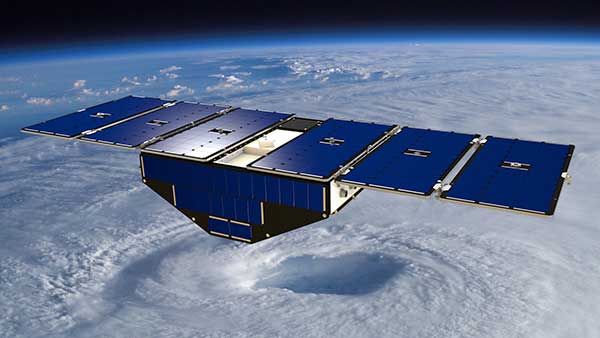
    Artist's concept of one of the eight CYGNSS satellites in orbit. (Image: NASA/University of Michigan)
    Artist’s concept of one of the eight CYGNSS satellites in orbit. (Image: NASA/University of Michigan)

    The CYGNSS space segment consists of a constellation of eight micro satellites, each carrying the Surrey SGR-ReSI as the observatory payload in the form of a delay Doppler mapping instrument (DDMI). Making use of reflected global positioning signals, the DDMI collects ocean surface roughness data using a technique called GNSS reflectometry, providing CYGNSS with a new method for looking inside hurricanes. Wind speed will be estimated from this reflectometry data.

    “At the end of last year, we delivered the SGR-ReSI flight models, low-noise amplifiers, and antennas to Southwest Research Institute for final integration into the CYGNSS observatories — marking a significant hardware shipment out of our Englewood, Colorado, manufacturing facility,” said Clare Martin, vice president of programs at Surrey Satellite Technology U.S.. “All of us at Surrey are proud that our instrument is playing an integral role in this mission, and we will watch with great interest as the satellites are put to work.”

    The CYGNSS team is made up of the University of Michigan Department of Climate and Space Sciences and Engineering, Southwest Research Institute (SwRI), Surrey Satellite Technology and Sierra Nevada Corporation.

    Surrey Satellite Technology demonstrated the concept of GNSS reflectometry for the first time on its UK-DMC mission launched in 2003, and subsequently developed the SGR-ReSI, which is currently flying on Surrey’s TechDemoSat-1 mission.

    CYGNSS is NASA’s first Earth science small satellite constellation, designed to help improve forecasting hurricane intensity, hurricane tracks and storm surges.

    CYGNSS will measure previously unknown details crucial to accurately understanding the formation and intensity of tropical cyclones and hurricanes.

    “This is a first-of-its-kind mission,” said Thomas Zurbuchen, associate administrator for NASA’s Science Mission Directorate at the agency’s headquarters in Washington. “As a constellation of eight spacecraft, CYGNSS will do what a single craft can’t in terms of measuring surface wind speeds inside hurricanes and tropical cyclones at high time-resolution, to improve our ability to understand and predict how these deadly storms develop.”

    The CYGNSS mission is expected to lead to more accurate weather forecasts of wind speeds and storm surges — the walls of water that do the most damage when hurricanes make landfall.

    Using the same GPS technology that allows drivers to navigate streets, CYGNSS will use a constellation of eight micro satellite observatories to measure the surface roughness of the world’s oceans. Mission scientists will use the data collected to calculate surface wind speeds, providing a better picture of a storm’s strength and intensity.

    Unlike existing operational weather satellites, CYGNSS can penetrate the heavy rain of a hurricane’s eyewall to gather data about a storm’s intense inner core. The eyewall is the thick ring of thunderstorm clouds and rain that surrounds the calm eye of a hurricane. The inner core region acts like the engine of the storm by extracting energy from the warm surface water via evaporation into the atmosphere.

    The latent heat contained in the water vapor is then released into the atmosphere by condensation and precipitation. The intense rain in eyewalls blocks the view of the inner core by conventional satellites, however, preventing scientists from gathering much information about this key region of a developing hurricane.

    “Today, we can’t see what’s happening under the rain,” said Chris Ruf, professor in the University of Michigan’s Department of Climate and Space Sciences and Engineering and principal investigator for the CYGNSS mission. “We can measure the wind outside of the storm cell with present systems. But there’s a gap in our knowledge of cyclone processes in the critical eyewall region of the storm — a gap that will be filled by the CYGNSS data. The models try to predict what is happening under the rain, but they are much less accurate without continuous experimental validation.”

    The CYGNSS small satellite observatories will continuously monitor surface winds over the oceans across Earth’s tropical hurricane-belt latitudes. Each satellite is capable of capturing four wind measurements per second, adding as many as 32 wind measurements per second for the entire constellation.

    CYGNSS is the first complete orbital mission competitively selected by NASA’s Earth Venture program. Earth Venture focuses on low-cost, rapidly developed, science-driven missions to enhance our understanding of the current state of Earth and its complex, dynamic system and enable continual improvement in the prediction of future changes.

  • SBG Systems focuses on INS/GPS, robust data at Intergeo 2016

    SBG Systems Chief Technology Officer Alexis Guinamard discusses the company’s full line of inertial sensors at Intergeo 2016, which was held Oct. 11-13 in Hamburg, Germany. SBG Systems featured its mobile mapping, aerial survey and georeferencing solutions at the trade fair.

  • TomTom extends multi-year deal with MapQuest

    TomTom has extended its the multi-year partnership with AOL Inc. to power its core mapping services for MapQuest, a subsidiary of AOL.

    In addition to providing access to TomTom’s extensive digital map database, across all digital platforms including MapQuest.com and its iOS and Android apps, and MapQuest for Business API solutions, the new deal now includes TomTom’s leading traffic solution.

    “Every day, millions of people depend on MapQuest for maps, driving directions and location information to make their lives easier and thousands of business depend on MapQuest’s suite of geospatial solutions to meet their needs,” said Brian McMahon, senior vice president and general manager at MapQuest. “We truly value the partnership with TomTom, and we look forward to continuing to build upon and evolve our product suite with TomTom data. By expanding our agreement with TomTom, we are continuing our commitment to provide MapQuest users and business customers with the most innovative products and solutions.”

    “We are delighted to enhance our partnership with MapQuest,” commented Anders Truelsen, Managing Director of Licensing for TomTom. “Integrating TomTom’s mapping and traffic data into MapQuest products ensures millions of people can make better and more informed decisions about every journey.”

  • TomTom extends multi-year deal with MapQuest

    TomTom has extended its the multi-year partnership with AOL Inc. to power its core mapping services for MapQuest, a subsidiary of AOL.

    In addition to providing access to TomTom’s extensive digital map database, across all digital platforms including MapQuest.com and its iOS and Android apps, and MapQuest for Business API solutions, the new deal now includes TomTom’s leading traffic solution.

    “Every day, millions of people depend on MapQuest for maps, driving directions and location information to make their lives easier and thousands of business depend on MapQuest’s suite of geospatial solutions to meet their needs,” said Brian McMahon, senior vice president and general manager at MapQuest. “We truly value the partnership with TomTom, and we look forward to continuing to build upon and evolve our product suite with TomTom data. By expanding our agreement with TomTom, we are continuing our commitment to provide MapQuest users and business customers with the most innovative products and solutions.”

    “We are delighted to enhance our partnership with MapQuest,” commented Anders Truelsen, Managing Director of Licensing for TomTom. “Integrating TomTom’s mapping and traffic data into MapQuest products ensures millions of people can make better and more informed decisions about every journey.”

  • Aqua Map app released for water navigation

    aquamap-wAqua Map is an iOS and Android app for GPS marine navigation, aimed at boaters and fishermen.

    The app integrates official nautical charts for many areas in the world, including the NOAA, CHS (Canadian Hydrographic Service), British Admiralty and Bundesamt für Seeschifffahrt und Hydrographie as well as S-57 and raster cartography.

    The app provides users with a clear chart using the full power of the Retina display, intuitive realistic symbols and colors. No experience in water navigation is needed.

    Most of the functions are accessible with simple gestures on the map, and all are clearly described in the Aqua Map Tutorial and Help.

  • What3words adopted by 6 national mapping agencies

    Six national mapping agencies have adopted what3words, a location reference system that uses three-word addresses. Used to input and share locations within national online geoportals, what3words is making it simpler for businesses, governments, and citizens to find, share and remember addresses, the company said.

    Based on a global grid of 57 trillion squares, what3words gives a unique three-word address to every 3 square meters in the world. Available in 13 languages, what3words is used by consumers, delivery companies, navigation tools, governments, logistics firms, travel guides and NGOs. Its creators say it’s more precise than traditional addresses, simpler than descriptions, and easier to communicate and remember than long strings of GPS coordinates.

    Geoportals are an integral part of any national, cadastral or commercial mapping agency’s offering, providing businesses and consumers with vital geographic information, the company said. The datasets range from information about land ownership, taxing of land parcels and defining borders, to providing population statistics, changes in land use and integration of transport networks.

    Whilst geoportals offer a wealth of detail, the user experience can be complicated and confusing. Integrating what3words into geoportals systems makes it easier for individuals and businesses to share precise locations with a simple three-word address, the company said.

    “Geoportals provide users with a huge amount of data that can sometimes alienate all but the mapping expert,” said Chris Sheldrick, CEO and co-founder of what3words. “What3words is making it simpler and easier for individuals and businesses to discover and share locations, helping unleash the power of geographic data.”

    What3words has been adopted by Switzerland’s Federal Office for Topography, the French Institut Géographique National International (IGN), the Norwegian Mapping Authority (Kartverket), Finland’s Maanmittauslaitos (the National Land Survey), Geo-System Poland and Suriname’s MI-GLIS.

    As three-word addresses are fixed and unique, meaning they can always be found. The system works offline, using GPS without needing mobile data, and has built-in error detection to ensure the user always selects the location they intended.

    Since its launch in 2013, what3words has experienced tremendous success and with over twenty major awards has become one of the most lauded UK startups in recent times. In 2015, the company was awarded the prestigious Cannes Lions Grand Prix for Innovation and was named in the Nominet 100 alongside the likes of Google’s Project Loon. Earlier this year the business was awarded an exclusive D&AD Black Pencil, two prestigious Webby Awards and CEO Chris Sheldrick was named EY’s British Accelerating Entrepreneur.

  • Phase One highlights aerial product range at Intergeo 2016

    Phase One Industrial discusses its recently launched products at Intergeo 2016, which was held Oct. 11-13 in Hamburg, Germany. Steve Cooper details the iXU-RS aerial camera system, which also is being released with a dual-camera option.

  • Asteri Navigation launches X-series of wearable GNSS receivers

    Asteri Navigation launches X-series of wearable GNSS receivers

    Asteri Navigation will introduce a new line of rugged, compact and fully integrated GNSS receivers on Nov. 15 at the 2016 Autodesk University in Las Vegas, Nevada.

    Photo: Asteri NavigationSuitable for geospatial field data collection and inspection applications that require high accuracy positioning, the Asteri X-Series receivers are light enough to be mounted to external sensors or worn on the body or arm.

    Asteri Navigation will debut the affordable X-1 and X-2 receivers in booth No. 1783 at Autodesk University, which runs from Nov. 15-17 at The Venetian in Las Vegas. The X-3 is scheduled for release in December.

    The compact Asteri receivers were designed with safety and ease of use in mind. Each device weighs just 11.3 ounces with the 12-hour lithium battery. Their 2.8-inch by 5.4-inch size allows them to fit safely in shoulder or arm pouches.

    The internal single-frequency antenna enables users to capture accuracies of well under 10 centimeters with RTK/VRS corrections. This integrated design allows users to work in difficult terrain without worrying about equipment and antennas getting snagged or broken.

    Engineered to provide centimeter-level accuracy with Real-Time Kinematic (RTK) or Virtual Reference Station (CRS) correction when connected to an external antenna, the Asteri GNSS receivers support a generic NMEA 0183 GNSS data protocol. This makes them compatible with data collection and field mapping applications supporting the same protocol and ideal for users who want to develop their own software applications for inspection and GIS data capture activities.

    The new receivers can communicate via Bluetooth or cable with most popular devices used for field data collection, including utility line locators, ground penetrating radar, data loggers, laser rangefinders, smartphones, and tablets.

    Asteri expects the X-Series will be used extensively in mapping and survey applications related to asset management, pipeline operation, utility construction, forestry, electric staking, and underground utility location.

    For users needing higher accuracy, an external multi-frequency antenna can be added to the provided port on the receiver. In addition, the Asteri X-3 will be compatible with Atlas GNSS satellite-based real-time correction services worldwide.

    The three products in the X-Series provide varying levels of accuracy:

    • X-1 provides sub-meter accuracy out of the box.
    • X-2 offers accuracy of 1 meter down to 1 centimeter with RTK/VRS.
    • X-3 will achieve 1 centimeter with RTK/VRS, 30 centimeters with Atlas H30, 4-10 centimeters with Atlas H10.