Category: Transportation

  • Apple Chooses TomTom for Mapping Services, Setting Up Battle with Google

    Apple signed TomTom for mapping services, and is apparently jettisoning Google Maps, to set up a potential collision between the two industry giants.  The deal between the media giant and TomTom came after Apple rolled out mapping options for its new operating system at a conference in San Francisco.

    The deal can’t come soon enough for TomTom, which provides maps for Google. However, that deal is ending soon, according to published reports.

    “Apple’s choice of TomTom is a marriage of necessity on both sides. From Apple’s perspective, they needed a worldwide, navigation-quality digital map that was not built by a competitor,” said Marc Prioleau, principal Prioleau Advisors and author of industry blog, prioleauadv.com. “That leaves only TomTom. From Tom Tom’s perspective, they needed a toehold in the mobile mapping business which was otherwise going to Google and Nokia. The partnership was needed by both parties.”

    Prioleau said it be interesting to see if the relationship involves deeper cooperation between the two companies than is typical. “That will likely determine if this is a long term arrangement,” he said. “Google obviously has a new, well-resourced competitor in Apple. I doubt they cared whether Apple chose TomTom or someone else. They are reducing Tom Tom’s role on Google Maps anyway.”

    What will be more interesting to Google will be whether Apple will share traffic and user data with TomTom to improve and maintain the maps, Prioleau said.

    Until perhaps now, Google has dominated all phases of the location and navigation industry. Google Maps software not only runs on the Android operating system, but also on Apple’s iOS platform.

    Both Apple and TomTom have been tight-lipped about the new licensing agreement. Industry observers believe that the deal will be a windfall for TomTom, though how much of one remains to be seen. TomTom, along with other navigation companies, has seen a huge drop in the sale of portable navigation devices


  • Aviation Receiver/Sensor

    Accord Technology LLC was recently authorized TSO-C145c for its latest receiver/sensor in the NextNav product family, the NextNav MAX GPS WAAS Class Beta-1, -2, -3. This successful GPS development is a key solution in a series of Accord Technology’s affordable civil aviation GPS receivers and sensor, the company said.

    Available as circuit card receivers (CCA) for avionics OEM hosting or as line replaceable sensor units (LRU) for aircraft installations, MAX is affordable and meets the latest standards, worldwide. It supports ADS-B (Automatic Dependent Surveillance-broadcast), all normal GPS procedures, as well as precision approach requirements such as LPV (Localizer Performance with Vertical Guidance) and RNP AR (Required Navigation Performance with Authorization Required).

    The NextNav MAX GPS technology is the most advanced in the world and is compatible with Satellite Based Augmentation System (SBAS) solutions such as the United States’ WAAS, the European EGNOS, Japan’s MTSAT, and GAGAN in India.

    “This TSO authorization for the NextNav MAX gives us greater flexibility to serve our customers with WAAS Beta 1 Only or Beta 1, 2, 3 LRU’s and CCA’s to fit their need,” commented Hal Adams, chief operating officer for Accord Technology. “The NextNav MAX is another important first for Accord Technology and we are anxious to move forward now with our AC 20-165 approved GPS sensor,” added Adams.

    Accord Technology received TSO-C145c for its NextNav mini in 2010. The NexNav mini GPS technology was the first GPS WAAS sensor to be authorized by the Federal Aviation Administration TSO-C145c WAAS Class Beta-1 Only. The NexNav mini solution is a market-breaking hybrid of automotive technology and aviation requirements providing an affordable solution for ADS-B GPS source.

    NextNav MAX’s DO-229D compliant aerospace GPS-SBAS receiver is certified by the FAA for TSO-C145c Class Beta-3 operation and is the enabling technology for several key applications, including:

    • Primary means of navigation
    • Localizer Precision with Vertical guidance approaches (LPV)
    • Airborne spacing assurance
    • Airborne Collision Avoidance (Non-TCAS System)
    • Constant descent approaches
    • Surface area movement management
    • Current and advanced Terrain Avoidance Warning System (TAWS)
    • Advanced Air Traffic Management (ATM)
    • Required Navigation Performance enhancements (RNP AR)

    “Whether it’s a need for LP/LPV approach precision or highly reliable PVT, NextNav MAX offers standard and custom solutions according to what our customers need,” Adams said. Designed around a small form-factor, the NextNav MAX CCA is delivered ready to integrate into host avionics systems, an LRU sensor or as a standalone module to ARINC 743 requirements. “We can even package the CCA in a module, tailored to your application,” Adams said.

  • GPS for Truckers

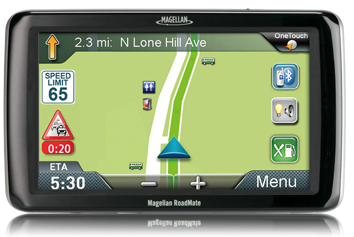
    Magellan, maker of innovative GPS devices for vehicles, outdoor and mobile navigation, has announced the newest addition to its Magellan RoadMate Commercial GPS family for truckers and commercial drivers providing improved safety and productivity before, during and after their on-the-road trips. The compliance-ready Magellan RoadMate Commercial 9270T-LM GPS device is specifically designed for the needs of truckers including an extra-large GPS display, customizable truck-specific routing, hands-free communication, and trip logging.

    To prepare for their trips, truck drivers can use the Magellan RoadMate Commercial 9270T-LM to set up customizable routes based on the height, weight, width, and length of the vehicle, as well as applicable hazmat restrictions. Multi-destination routing allows drivers to plan their stops and optimize routes to help them save time and gas, Magellan said.

    While on-the-road, the Magellan RoadMate Commercial 9270T-LM helps drivers navigate on an extra-wide 7-inch high-definition touchscreen display that adjusts color and contrast for easy night-viewing. The large display also makes maps and other content easy to read when the GPS Navigator is mounted in large vehicles with deep dashboards. The integrated Bluetooth wireless technology, when paired with a compatible Bluetooth phone, enables drivers to safely talk hands-free while keeping their eyes on the road.

    At the end of their trip, the Magellan RoadMate Commercial 9270T-LM facilitates preparing required compliance reports including hours and state mileage for IFTA fuel records. A comprehensive log of trip information by each driver is retained in the Magellan GPS device for easy exporting into reports.

    “We expanded our family of Magellan RoadMate Commercial GPS Navigators to further meet the unique navigation needs of commercial and truck drivers who need a comprehensive solution to efficiently perform their jobs from the initial trip planning stage to their on-the-road requirements and managing required log reporting after their trip,” said Stig Pedersen, Associate Vice President of Product Management for Magellan. “The Magellan RoadMate Commercial series of GPS Navigators are designed to make drivers’ jobs safer and less stressful plus improve productivity, reduce costs and ultimately increase profits.”

    The Magellan RoadMate Commercial 9270T-LM functions as an “information dashboard” that not only navigates, but provides elevation and truck speed limit warnings. The 9270T-LM GPS device includes several valuable safety and convenience features:

    • Highway Lane Assist that shows realistic highway signs and guides truck drivers towards the correct lane when approaching complex highway interchanges and exits;
    • Free Lifetime Traffic Alerts that help drivers avoid traffic incidents on their route by offering an alternative solution;
    • Spoken Street Name guidance that announces the street name and gives turn-by-turn directions;
    • Highway Exit Points-of-Interest and a Truck Stop Directory help drivers find services including gas stations, restaurants, ATMs, rest areas and showers, truck services, Wi-Fi availability;
    • OneTouch lets truckers bookmark and assign a button to their favorite destinations or searches for faster access;
    • Heavy-duty extended windshield mount, designed for deep dashboards, is included to provide fully-adjustable, personalized comfort and safe viewing;
    • An A/V input for easy connection to external devices such as the Magellan Wireless Back-up Camera or a DVD player;
    • Free downloadable Lifetime Map Updates keep the pre-loaded maps of the United States, Canada and Puerto Rico up-to-date.

    The Magellan RoadMate Commercial GPS family now includes two models — the new 7-inch Magellan RoadMate Commercial 9270T-LM ($399.99 MSRP) and the 5-inch Magellan RoadMate Commercial 5190T ($379.99 MSRP). Both models are available in June at truck stops and through Magellan’s consumer electronics and online partners.

  • Location-Sharing App Glympse to Be Put in Mercedes A-Class

    Today from the Detroit Telematics Conference, location-sharing app maker Glympse announced it is teaming up with Mercedes-Benz to give users real-time location sharing in their cars by integrating Glympse into the new Mercedes-Benz A-Class.

    Drivers will be able to use the in-dash Mercedes DriveStyle to select a recipient, set a timer, and “send a Glympse” to anyone they choose. The recipient of the Glympse will receive a text or email link, which will show the driver’s real-time location on an interactive map.

    Consistent with Glympse’s approach to location sharing, when the timer expires, the location sharing will automatically stop. Because Glympse is a universal sharing solution, the recipient doesn’t require any special software or device, just a web browser.

    With its smart phone apps, Glympse shares location with others in real time. Users on iPhone, Android, Blackberry, and Windows phones can send a Glympse to others via email, SMS, Facebook, or Twitter. Now, that functionality is being integrated right into the A-Class.

  • Magellan Truck GPS Navigator Helps Truckers Plan Routes, Drive Safely

    Magellan Truck GPS Navigator Helps Truckers Plan Routes, Drive Safely

    Photo: MagellanMagellan, maker of innovative GPS devices for vehicles, outdoor and mobile navigation, today announced the newest addition to its Magellan RoadMate Commercial GPS family for truckers and commercial drivers providing improved safety and productivity before, during and after their on-the-road trips. The compliance-ready Magellan RoadMate Commercial 9270T-LM GPS device is specifically designed for the needs of truckers including an extra-large GPS display, customizable truck-specific routing, hands-free communication, and trip logging.

    To prepare for their trips, truck drivers can use the Magellan RoadMate Commercial 9270T-LM to set up customizable routes based on the height, weight, width, and length of the vehicle, as well as applicable hazmat restrictions. Multi-destination routing allows drivers to plan their stops and optimize routes to help them save time and gas, Magellan said.

    While on-the-road, the Magellan RoadMate Commercial 9270T-LM helps drivers navigate on an extra-wide 7-inch high-definition touchscreen display that adjusts color and contrast for easy night-viewing. The large display also makes maps and other content easy to read when the GPS Navigator is mounted in large vehicles with deep dashboards. The integrated Bluetooth wireless technology, when paired with a compatible Bluetooth phone, enables drivers to safely talk hands-free while keeping their eyes on the road.

    At the end of their trip, the Magellan RoadMate Commercial 9270T-LM facilitates preparing required compliance reports including hours and state mileage for IFTA fuel records. A comprehensive log of trip information by each driver is retained in the Magellan GPS device for easy exporting into reports.

    “We expanded our family of Magellan RoadMate Commercial GPS Navigators to further meet the unique navigation needs of commercial and truck drivers who need a comprehensive solution to efficiently perform their jobs from the initial trip planning stage to their on-the-road requirements and managing required log reporting after their trip,” said Stig Pedersen, Associate Vice President of Product Management for Magellan. “The Magellan RoadMate Commercial series of GPS Navigators are designed to make drivers’ jobs safer and less stressful plus improve productivity, reduce costs and ultimately increase profits.”

    The Magellan RoadMate Commercial 9270T-LM functions as an “information dashboard” that not only navigates, but provides elevation and truck speed limit warnings. The 9270T-LM GPS device includes several valuable safety and convenience features:

    • Highway Lane Assist that shows realistic highway signs and guides truck drivers towards the correct lane when approaching complex highway interchanges and exits;
    • Free Lifetime Traffic Alerts that help drivers avoid traffic incidents on their route by offering an alternative solution;
    • Spoken Street Name guidance that announces the street name and gives turn-by-turn directions;
    • Highway Exit Points-of-Interest and a Truck Stop Directory help drivers find services including gas stations, restaurants, ATMs, rest areas and showers, truck services, Wi-Fi availability;
    • OneTouch lets truckers bookmark and assign a button to their favorite destinations or searches for faster access;
    • Heavy-duty extended windshield mount, designed for deep dashboards, is included to provide fully-adjustable, personalized comfort and safe viewing;
    • An A/V input for easy connection to external devices such as the Magellan Wireless Back-up Camera or a DVD player;
    • Free downloadable Lifetime Map Updates keep the pre-loaded maps of the United States, Canada and Puerto Rico up-to-date.

    The Magellan RoadMate Commercial GPS family now includes two models — the new 7-inch Magellan RoadMate Commercial 9270T-LM ($399.99 MSRP) and the 5-inch Magellan RoadMate Commercial 5190T ($379.99 MSRP). Both models are available in June at truck stops and through Magellan’s consumer electronics and online partners.

  • Digital Matter Embedded Introduces GPS Log Book Based on u-blox Technology

    Digital Matter Embedded Introduces GPS Log Book Based on u-blox Technology

    Photo: Digital Matter Embedded

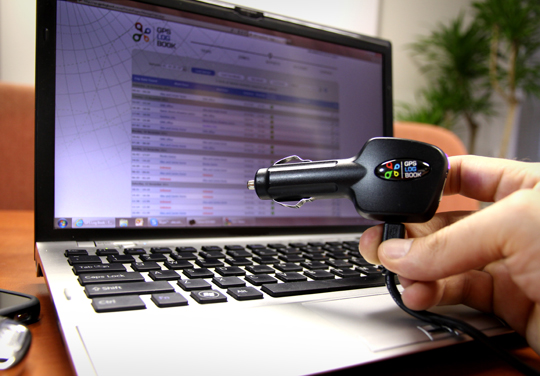
    Digital Matter Embedded, a South African based provider of innovative technology providing electronic and software solutions for a wide range of Industry applications, has launched a compact GPS logging device which plugs into any vehicle’s cigarette lighter. The device, the GPS Log Book, is designed around u-blox’ NEO GPS receiver module to provide an easy way for drivers to automatically keep an accurate travel log book which can be securely accessed later from anywhere via a web interface. Information logged includes route, speed, and distance traveled. The device is targeted at businesses where tracking of vehicle usage is an important part of their cost control and accounting: taxi, emergency, and delivery services, as well as for traveling sales personnel.

    “The GPS Log Book takes advantage of u-blox’ extremely sensitive GPS receiver technology to provide a simple and useful way to keep an accurate overview of vehicle usage,” said Alex Soldatos, general manager at Digital Matter Embedded. “The GPS Logbook provides a simple, cost-effective way for businesses to keep track of one of their most valuable assets: their cars.”

    “The GPS Log Book takes full advantage of u-blox’ leading positioning technology: it requires fast satellite acquisition and re-acquisition speeds, small module size, and high sensitivity to allow the use of a very small GPS antenna,“ said Huub Robroek, regional sales manager at u-blox. “Basing their design on our NEO GPS module has resulted in an impressive, compact device that delivers useful and reliable vehicle usage data.”

    The GPS Log Book uploads its log data on both PC or Mac via USB where a web interface application allows users to manage their devices, view trips, and add locations as well as many other useful functions including creating powerful, informative reports. Most notably, the log book can be generated for use with income tax return for individuals. Data is stored for more than five years and can be viewed at any time if required.

  • GSA Releases 2012 SatNav Market Report

    The European GNSS Agency (GSA) has published its second Global Satellite Navigation System (GNSS) Market Report, providing key information to entrepreneurs in the satellite navigation sector.

    GNSS market forecasting is of great interest to private and public GNSS stakeholders, for business and strategic planning and policymaking, according to the GSA. According to the 2012 GSA Market Monitoring Report, the worldwide GNSS market is growing fast and the total market size is expected to increase at an average of 13 percent per year until 2016.

    The total enabled GNSS market size is expected to stabilise in the latter half of the decade due to market saturation, price erosion and platform convergence. Global shipments of GNSS devices are lower than previously forecasted up until 2015 yet are forecasted to continue growing to over 1.1 billion units per year.

    Expanding coverage. Following up on the first GNSS Market Report published in 2010, the GSA’s 2012 Report includes an analysis of two new sectors: maritime and surveying. Relevant examples from EU research projects have also been included for each sector.

    2012 Report Highlights

    Road and location-based services (LBS) still in the lead. Road and LBS dominate GNSS device sales (54% and 44% respectively). LBS constitutes 87% of the total GNSS market in terms of units sold and GNSS penetration in smartphones is set to increase from 30% today to almost 100% in 2020. For road navigation, traditional Personal Navigation Devices (PNDs) will gradually disappear from the European market yet remain present in other regions in the form of low cost OEM products. Smartphones and in-vehicle devices will be the preferred means of navigation.

    Commercial aviation use will grow. In the Aviation sector, the segment that will see the greatest growth in terms of GNSS equipment revenues will be Commercial Aviation, surpassing general and business aviation by 2018.

    GNSS use in agriculture continues to rise. In agriculture the current positive growth trend will continue; low cost precision agriculture solutions based on EGNOS are driving GNSS adoption by farmers in Europe.

    Surveying: a growing opportunity. In surveying, the construction segment is dominating the market in terms of units and value. North America is leading in terms of market penetration but the other regions will catch up by 2020 as GNSS is rapidly replacing the traditional surveying and mapping methods in Europe and around the world.

    Safer seas with GNSS. In the open sea segment, shipments of search-and-rescue (SAR) beacons will exceed those of other categories making the SAR segment the largest in terms of shipments and second largest in terms of market size.

    The 2012 GSA Market Monitoring Report can be downloaded for free.

  • Rand McNally Upgrades TND 760 Mobile Comm/Fleet Management System

    Rand McNally Upgrades TND 760 Mobile Comm/Fleet Management System

    Photo: Rand McNally

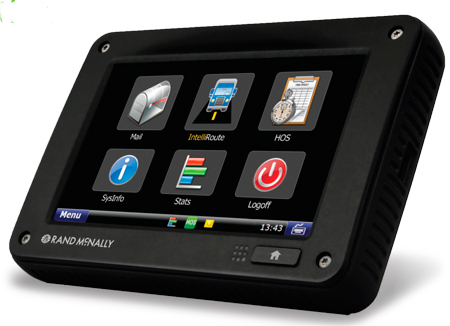
    Rand McNally has announced a new pricing plan, new features, and a new warranty program for its single-box compliance solution for fleets. The TND 760 Fleet Edition is a next-generation in-cab electronic on-board recorder (EOBR) device that installs in less than 30 minutes, is low cost, and is easily adopted by drivers, the company said.

    For as little as $649 for the hardware, and $19.95 per month for service, trucks can be equipped with a fully compliant EOBR solution. For $799, the device also comes loaded with Rand McNally’s navigation. Lease options are available for as low as $39 per month for qualifying fleets.

    Among the new items announced today, three monthly service plan options are now available. The EOBR plan, offering electronic hours of service and vehicle inspection reporting, for $19.95/month; the Basic plan, which layers on vehicle positioning and online mapping, text and form messages, driver email and attachments, as well as integration access via Rand McNally Connect, for $29.95; and the full Enterprise plan that layers on a driver scorecard, vehicle performance, critical event reporting and vehicle maintenance, for $39.95. These service plan prices are based on a three-year commitment.

    A three-year warranty is now standard on the TND 760 hardware, providing customers peace of mind for the term of the agreement that their hardware is covered under warranty. This is an upgrade from the standard one-year warranty typically offered in the industry.

    And, Rand McNally announced a group of new features coming on stream in the next few months. By the end of June, a new back-end mapping portal with upgraded geofencing, alerting, and route replay will be up and running. This feature will be part of the Basic and Enterprise monthly plans. Also in development are significant enhancements to the IntelliRoute TND GPS navigation software, including the ability for fleets to send, and for drivers to receive, routes on the TND 760.

    “As we roll out the TND 760 to more fleets and transportation companies, we’re finding that there are a number of items they’re responding to,” said Dave Muscatel, CEO of Rand McNally. “The low cost, the quick installation, and the fact that Rand McNally is well regarded among professional drivers is key. When drivers accept the device, they use it.”

    The Rand McNally TND 760, Fleet Edition, first available Q4 of 2011, integrates with a truck’s on-board computer and sends and receives information via both Wi-Fi and cellular modes. The TND 760, manufactured in the U.S.A., is designed to be set up in less than 30 minutes and does not require the installation of a separate “black box” monitoring unit like traditional mobile communication systems.

    Despite its compact design, the TND 760 features a broad array of capabilities including fleet communications via email, driver and vehicle performance monitoring, electronic hours of service (HOS) compliance, and truck-specific navigation. Information on fleet activity is managed via Rand McNally’s significantly enhanced FleetWatcher web-based portal.

    For more information and product demonstrations, potential customers should call 1-800-641-RAND (7263) or go to randmcnally.com/tnd760.

  • New INRIX Traffic App for iPhone and iPad Helps Drivers Avoid Gridlock

    INRIX, a provider of traffic information and driver services, has introduced a new app for the iPhone and iPad that helps drivers take control of their commute and avoid traffic. The company said that INRIX Traffic helps cut the cost of gridlock with the following features:

    • Fastest Routes to Home and Work: Drivers can easily decide which route is the best choice to get around traffic, as the app analyses the effect accidents, sporting events, concerts, and other events have on traffic to deliver the fastest routes with the least delay.
    • Recommended Departure and Travel Times: The INRIX Traffic Forecast Slider shows drivers the best options for avoiding frustrating delays now and in the future.
    • Share INRIX Arrival Times: Users can send their INRIX Arrival Time instantly to any contact with just a few taps.
    • Personalized Traffic Alerts: Drivers can tune their app to alert them to accidents and other incidents causing delays along their route.

    “We’re putting 100 million traffic reporters into the palm of your hand,” said Kevin Foreman, INRIX vice president of Consumer Applications. “Our latest release helps drivers never be late again.”

    The new INRIX Traffic App is available as a free, ad-free download for iPhone; iPad and iPod Touch from the Apple App Store.

  • Trimble Introduces New DR+GPS Module for Vehicle and Asset Tracking Applications

    Trimble has introduced the Aardvark DR+GPS module that combines dead reckoning (DR) with GPS technology on a single, compact board. The Trimble Aardvark DR+GPS module provides positioning information when GPS signals are limited or not available, such as in urban canyons and tunnels. The Aardvark DR+GPS module is being marketed as a solution for system integrators or OEMs who are adding dead reckoning capabilities to vehicle navigation, fleet management and asset tracking systems.

    Dead reckoning estimates position based on heading and distance traveled since the last known position. The more accurate the speed, time and heading inputs, the more accurate the dead reckoning. GPS contributes to accuracy by continuously calibrating the gyro and speed sensors to produce optimal dead reckoning.

    The 19 x 19 millimeter surface-mount module has an on-board gyro and collects speed and forward/reverse data from the vehicle’s sensors. Its DR+GPS algorithm automatically calibrates the gyro and external sensors’ inputs and blends this information with GPS measurements to produce accurate position and velocity outputs in hostile GPS environments such as urban canyons.

    The Aardvark DR+GPS module is available in two configurations: model number 88788-30 for flat installations; and model number 88788-50 with a feature supporting variable mounting installations. The 88788-50 self-determines the module’s orientation allowing the ultimate in installation flexibility.

  • Massive GPS Jamming Attack by North Korea

    Large coordinated cyber attacks from North Korea near its border with South Korea produced electronic jamming signals that affected GPS navigation for passenger aircraft, ships, and in-car navigation for roughly a week in late April and early May. To date, no accidents, casualties, or fatalities have been attributed to jammed navigation signals aboard 337 commercial flights in and out of South Korean international airports, on 122 ships, including  a passenger liner carrying 287 people and a petroleum tanker. One South Korean driver tweeted “It also affects the car navigation GPS units.  I am getting a lot of errors while driving in Seoul.”

    South Korea experienced similar electronic attacks in March 2011, and in August and December of 2010, all of which were blamed on the North. The South Korean Defense Ministry said it is developing anti-jam programs to counter the attacks, which are being launched by what it termed a regiment-sized electronic warfare unit near the North Korean capital Pyongyang, and battalion-sized units closer to the inter-Korean border.

    “Despite disruption in GPS, there is no serious threat to the safety of flights because planes are using other navigation devices,” claimed a Transport Ministry spokesperson. Officials say planes can use other navigation devices like  very-high-frequency omni-directional range (VOR) and inertial navigation systems.

    “We have traced the jamming signals to the direction of Kaesong,” said a Korean Communications Commission deputy director. Kaesong lies roughly 10 kilometers from the border between the two countries, and roughly 50 kilometers from downtown Seoul, Incheon International Airport, and the Yellow Sea.

    It is unknown how long the jamming may continue, or when it might resume if halted. In March 2011, GPS jamming signals from the North lasted for 10 days during an annual U.S.-South Korea joint military drill. The motivation for North Korea to develop and employ anti-GPS technology would appear to come from its fear of attack by GPS-guided cruise missiles that might target key sites within the country. Clearly, any such military capability would require regular testing.

    China is well known as a source of mass-produced small GPS jammers widely available over the Internet, but equipment on this scale would not be capable of jamming at the distances stated above. “At least one, or possibly more Russian companies are selling fairly powerful GPS jamming equipment,” said one knowledgeable source.

    The source also alluded to Iran’s reported use of GPS spoofing to mislead and capture a U.S. surveillance unmanned aerial vehicle (UAV). Such an effort would similarly require large and sophisticated equipment, for which the most likely source is Russia.

    “Receivers which cannot tolerate LightSquared will get in trouble in North Korea!” commented one well-known GPS manufacturer. “Today’s receivers don’t have protection. We just completed our ad [for the June issue of GPS World] which somewhat covers this.”

    Other sources pointed to much wider potential threats than those in the Korean peninsula or areas of strategic conflict such as Afghanistan-Iran. Local jamming attacks can be anticipated almost anywhere, anytime: harassment by insurgent groups against established governments or armed forces, or GPS-denial actions by pirates in high-density commercial shipping lanes.

    Since aviation is increasingly and in some cases exclusively dependent on GPS and regional GNSS augmentations or equivalents, jamming represents a growing concern for the aviation industry, including commercial airlines. In March of this year, the U.S. Federal Aviation Administration published an updated report on “Concept of Operations for NextGen alternative positioning, navigation and timing (APNT).”  It advocates GPS backup by transponder-based distance-measuring equipment (DME), supported by onboard inertial reference systems, and assisted in places by low-powered GPS-like pseudolites and wide-area multilateration. The report concludes that any GPS/GNSS backup must be multi-modal, unjammable, provide GPS-like timing, have signals extending from the ground up to all altitudes, be unaffected by line-of-sight restrictions and, preferably, have reasonably long range to keep down the number of transmitting stations required.

    Commenters have pointed out that eLoran meets those requirements, except for a vertical component, limiting it non-precision approaches. The system currently does not operate in the United States, although it is undergoing limited testing. The United Kingdom has a more active program. See upcoming GPS World webinar, Alternative PNT – Backing Up Critical Infrastructure with eLoran, on May 17.
  • SeaZone Introduces SeaZone HydroSpatial 2

    HydroSpatial announced it has released the first in a new series of marine mapping layers to sit within the new HydroSpatial 2 Product Family. Benefits include an enhanced data model, allowing for intuitive feature filtering; geo-processing and spatial analysis to create customised data outputs and map views using both real world and abstract feature types. Mapping is delivered in themed tiers with improved symbology, and licensed as a complete package, delivering an exceptional user experience in both desktop, and web GIS.

    According to the announcement, SeaZone HydroSpatial Base provides users with a definitive worldwide marine reference map incorporating large-scale, authoritatively sourced, marine geographic datasets. The content is processed to form a continuous vector layer dataset, with a well structured and defined feature and attribute model, providing the best possible marine mapping experience. SeaZone HydroSpatial Base is ideal for use as a marine spatial planning aid and as a primary decision support tool. It has a global reach and is available for regions where content is captured to scales greater than or equal to 1:1,500,000. The feature attribution for SeaZone HydroSpatial Base is comprehensive and serves a wide range use scenarios. For the high end technical user, HydroSpatial Base performs well when interrogated by vigorous and complex geo-processing or spatial analysis in GIS. For less demanding requirements, HydroSpatial Base represents an excellent high-resolution selectable back-drop with flexible filtering and styling.

    SeaZone reports that the HydroSpatial Base provides decision makers with accurate information to make effective decisions in the marine environment. SeaZone HydroSpatial Base was delivered as a result of an extensive consultation with our HydroSpatial customers about how they would like the product to evolve, the improvement content they needed and the prices they would like to pay. SeaZone acknowledges the support of EU Interreg IVB Bringing Land and Sea Together (BLAST) Project in developing and testing the HydroSpatial Base concept.