Tag: 3D modeling

  • Fugro partners with Skyline on oblique imagery, 3D modeling

    Fugro is enhancing its mapping services with the introduction of an integrated software package that creates realistic, yet spatially accurate, high-resolution 3D building models using oblique imagery.

    The product will benefit emergency responders during critical infrastructure planning, as well as those involved in infrastructure development, utilities and property management.

    Fugro, partnering with Skyline Software Systems, Inc., provides infrastructure management professionals with robust new capabilities in oblique mapping, including detailed 3D models and view shed studies for advanced visualization and analysis.
    Fugro, partnering with Skyline Software Systems, provides infrastructure management professionals with robust new capabilities in oblique mapping, including detailed 3D models and view shed studies for advanced visualization and analysis.

    Announcing a strategic partnership with Skyline Software Systems Inc., Mike Wernau, Fugro’s Oblique program manager explained, “We are now able to take a 2D oblique product and deliver a realistic 3D environment with enhanced viewing, query, analysis and reporting options. The value that users are going to discover as a result of this software fusion is something the market has really never seen before.”

    The new partnership offers clients an integrated oblique viewing and 3D modeling software. The integration of TerraExplorer and PX Mapper transforms the application of 3D environments by using 2D oblique imagery to create high-resolution building models that are both realistic and spatially accurate.

    Fugro’s oblique mapping solution includes high-resolution 360-degree oblique imagery and the PX Mapper visualization and analysis software. The Fugro/Skyline alliance allows oblique customers to experience Skyline’s automated modeling technology along with TerraExplorer’s optimized analytics capabilities including terrain analysis for flooding, contours, slope and volume metrics, lines of sight and view shed queries and shadow analysis.

    “By combining oblique imagery with our high-quality 3D modeling tool and integrating those models with the unlimited capabilities of TerraExplorer Pro, we’ve created the optimal environment for GIS infrastructure,” said Eatay Ben Shechter, director of production at Skyline. “This versatile product supports countless real-world applications, where time-critical decision making is required, from urban planning to real-estate management, and multiple different emergency response scenarios.”

    A flagship project employing this integrated 3D environment is already underway with completion in Summer 2017.

  • eyesMap3D software provides high-quality 3D models

    3D-Model-with-eyesMap3D-W
    3D model created using eyesMap3D software.

    Technology company eCapture has launched a new software program, eyesMap3D, to generate accurate 3D models and point clouds, measured directly from images.

    EyesMap3D allows users to create high-density points clouds with textures achieving a realistic 3D model appearance. In addition, eyesMap3D is able to measure accurately on the images, generate true orthophotos, and geo-reference and scale the results.

    eyesMap3D users can use their cameras, mobile phone or camera drone to capture images. It is compatible with most popular software packages on the market.

    The goal of the company is to allow the user to easily generate and work with 3D models and photogrammetric tools, while maintaining data quality.

    In 2015, eCapture launched the eyesMap tablet for modeling 3D scenes indoors and outdoors. The EyesMap tablet is a versatile instrument for users who needs results directly while working in the field.

    eyesMap3D software is offering three licenses: educational, public organizations and business. The software can be downloaded from the eCapture website.

    3D model of small object (a bracelet) made using eyesMap3D software.
    3D model of small object (a bracelet) made using eyesMap3D software.
  • CyberCity 3D interactive maps help cities visualize the future

    A 3D rendering of London. (Image: CyberCity 3D)_
    A 3D rendering of London. (Image: CyberCity 3D)_

    CyberCity 3D has developed a 3D Smart Cities mapping platform to help municipal authorities and planners visualize their towns and cities in 3D. Existing and future city plans, proposed developments and schemes, can all be visualized together with relevant data using a simple, out-of-the-box solution, with streaming to any web connected device.

    The CyberCity 3D Smart City maps can be used for a host of applications including planning, transport, environment and tourism. The models are fully interoperable and will perform on most proprietary software applications such as GIS and 3D design packages and can be streamed via the web. The live streaming uses Cesium open architecture, a cross-platform virtual globe designed for dynamic-data visualization, allowing the 3D models to be viewed on tablets, phones, desktops and laptops.

    CyberCity 3D employs patented 3D modeling process to generate high resolution building models from stereo imagery. The smart buildings automatically contain valuable measurement data, such as height and roof slope, with up to 12.5 cm accuracy. Cities across the world have employed CyberCity 3D technology to support work such as urban planning, economic development, flood risk assessment, transportation planning and line-of-sight studies.

    In the UK, CyberCity 3D has teamed up with aerial mapping company Bluesky, which provides a huge data library covering 150,000 sq km of digital aerial photography, allowing CyberCity 3D to gain access to urban centers across the UK for 3D modeling. CyberCity 3D also has access to Bluesky’s National Tree Map, a digital map detailing more than 300 million trees across the UK, which adds a useful dimension to the 3D Smart City projects, the company said.

    CyberCity 3D has a large smart 3D GIS building library, covering more than 80 cities around the world. Applications include master planning and proposed construction maps, stakeholder, management, engagement and communication, flood analysis visualization, leisure and tourism. CyberCity 3D data is also used in applications such as 3D gaming and augmented reality.

  • New Speakers Announced for Thursday’s Street Smart Webinar

    New Speakers Announced for Thursday’s Street Smart Webinar

    Three new speakers have been announced for Thursday’s GPS World Market Insights Webinar. The webinar, “Street Smart: City Modeling and Other New Geospatial Techniques in Urban Mapping and Navigation,” will be held July 16, 1 p.m. EDT/ 10 a.m. PDT/ 5 p.m. GMT. Registration is free.

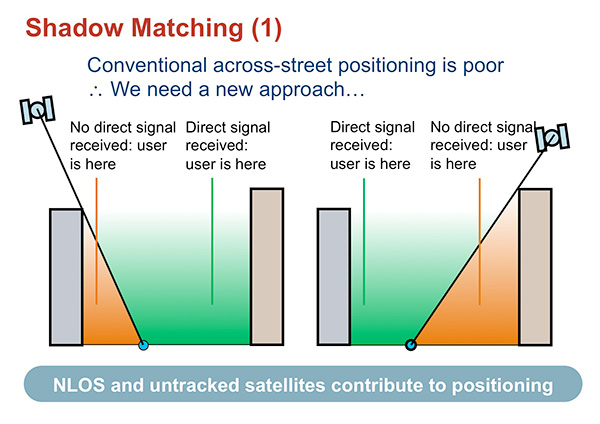
    The webinar provides a high-level overview of the latest enhancements to computerized geometric city models, which can help overcome data gaps and inaccuracies created by signal obstruction, to improve GNSS positioning in dense urban areas. The webinar will focus on use of 3D mapping to aid GNSS in three different ways: shadow matching, height aiding and non-line-of-sight (NLOS) detection for conventional positioning.

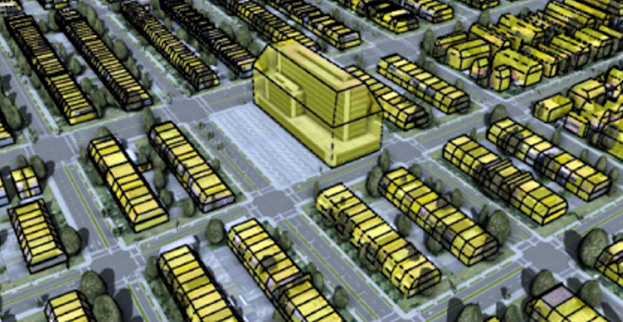
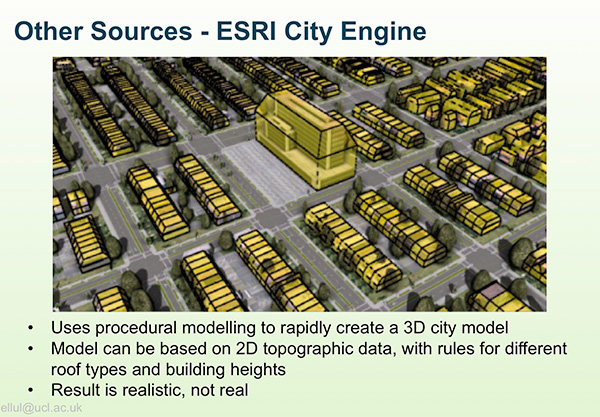
    Claire Ellul, University College London, will discuss creating 3D datasets from photogrammetry, LiDAR, building information models (BIMs), Esri City Engine, Sketch Up, Google Earth and Open Street Map.

    A page from Claire Ellul's upcoming webinar presentation.
    A page from Claire Ellul’s upcoming webinar presentation.

    Also speaking are Rahul Gupta, Spirent Communications, and Gregory Moura, OKTAL Synthetic Environment, who leads the development of SE-NAV, a RayTracing simulator computing the propagation of GNSS signals in urban environments. The new version of this software can be embedded in a hardware in the loop process with Spirent’s SimGen to assess the performances of HW receiver in constrained environments.

    Paul Groves will discuss “Better GNSS Positioning in Cities using Enhanced 3D Mapping,” addressing the problems of poor GNSS geometry in urban canyons, showing how 3D mapping improves GNSS positioning in several ways: height aiding,  non-line-of-sight prediction, model-aided ranging and shadow matching.

    A page from Paul Grove's upcoming webinar presentation.
    A page from Paul Grove’s upcoming webinar presentation.

    Visit our webinar page for full biographies of the speakers, and more information about our webinars.

  • Capturing Reality Forum Combines SPAR Europe, ELMF

    The Capturing Reality Forum has issued a call or papers. The event will incorporate the best of SPAR Europe and European LiDAR Mapping Forum (ELMF). Taking place at the Salzburg Congress, Austria, November 23-25, the Capturing Reality Forum will focus on the technologies of laser scanning, LiDAR, 3D data capture and modeling to provide an inspiring platform for professionals to meet, learn and share ideas with industry’s best.

    Industry leaders are invited to submit technical papers to be considered for presentation. Abstracts can be submitted online until August 11. “We welcome international papers which will address recent project examples and the key commercial and technical issues but most importantly those that highlight pioneering research and developments that will impact the future development of the industry. Each abstract will be peer reviewed and we will announce the final program in September,” said Conference Chairman Alastair MacDonald (director of TMS International).

    Headed up by the Diversified UK team, the forum will include a conference featuring leaders from all sectors of the industry, with an international exhibition of the latest technologies running in parallel. The event management team headed by Versha Carter, group director, has previously managed the ELMF and ILMF events and successfully launched the GEO Business show. “We are excited to be involved with the rebranding of these two very established events, which has been received as a very positive next step for the industry,” Carter said. “SPAR Europe and ELMF co-located two years ago, but continued to have separate conference programs. By merging into one, the synergy between the two events and the shared interests, challenges and opportunities will be fully realized.”

    “If you are interested in data capture and imaging on the inside or outside of facilities, the tracking of utilities and monitoring of transport, or modeling external effects on the national coastline or landmass, the Capturing Reality Forum has all the ingredients of a must-attend event,” MacDonald said. “Delegates will be in the company of colleagues from all sectors of the geospatial data capture, visualization and imaging industry. And this will all be happening over three days in the wonderful atmosphere of Salzburg.”

    Papers could include reports on subjects such as: Building Information Modeling (BIM); 3D for asset and facilities management; 3D data capture for as-built conditions; point cloud processing; managing and sharing large data sets; 3D/intelligent modeling; augmented reality and visualization tools; airborne, terrestrial and bathymetric LiDAR; coastal zone, defense and flood plain LiDAR; corridor and utilities mapping; data classification, GIS, data modeling/management; mobile mapping; technology development and trends; and small Unmanned Aerial Systems (sUAS).

    Running alongside the Capturing Reality forum conference will be an exhibition of more than 50 stands displaying manufacturers, software developers and service providers of 3D imaging, laser scanning and LiDAR products. As an extra benefit to delegates, many of the exhibiting companies will host workshops, providing an opportunity for more in-depth discussion.

    Centrally located in mainland Europe, Salzburg is easily accessible from northern, southern, eastern and western European countries. Salzburg Congress is situated in the center of the city and provides a special dimension socially with its seasonal events and Christmas markets.

    “This is an outstanding venue, which has always earned a flood of positive feedback,” Carter said. “The move to Salzburg has been welcomed by the industry and we look forward to hosting the Capturing Reality Forum in the heart of such a beautiful historic city.”

  • Icaros to Demonstrate Measuring Tool for Oblique Imagery at InterGeo

    Icaros_Intergeo

    Icaros Inc., a provider of advanced aerial remote sensing and 3D visualization solutions, will demonstrate the Icaros Measurement Tool (IMT) at the 2014 InterGeo Conference in Germany. Designed for use with oblique aerial imagery, IMT is a simple but powerful photogrammetric visualization application based on ArcGIS technologies, the company said.

    To view a demonstration of the IMT, visit Icaros in stand #A4.009 Hall 4.1 at the InterGeo Conference and Trade Fair being held in Berlin on October 7-9.

    The IMT is a universal oblique measurement tool. It enables customers working within Esri’s GIS environment to view and measure structures in oblique aerial imagery captured by any commercial oblique sensor system, including those from Pictometry, Vexcel/Microsoft, IGI, Leica, and Midas. IMT works equally well measuring images captured by oblique sensors mounted on unmanned aerial vehicles (UAV).

    “Icaros is opening the oblique market to all GIS users by enabling them to purchase imagery from any of the growing number of aerial oblique data providers,” said Richard Baumgartner, vice president of Business Development at Icaros. “For too long, the purchase and use of oblique imagery have been limited by proprietary collection systems and metadata formats.”

    Access to additional oblique vendors will reduce data costs in the long run, Icaros said. In addition, IMT lets users unlock the full potential of their imagery by combining 3D analysis capabilities with their GIS data. The tool is specifically designed to make highly accurate vertical and horizontal 3D measurements of structures and surfaces, including calculating distances, areas, slopes, and azimuths in complex 3D features.

    Baumgartner explained that oblique imagery is already used extensively in tax assessment and public safety applications, but many other markets are waiting to be served by off-nadir image data. The Icaros vision is to expand the use, visualization and analysis of oblique aerial images into the entire spectrum of GIS markets. Oblique analysis of structures can be beneficial to a host of new applications such as facility management, pipeline corridor infrastructure monitoring, energy audits, economic development, and asset management.

    “Asset and facility management are the next big applications for oblique imagery within the emerging 3D GIS market,” said Baumgartner.

    As GIS users continue the move to 3D, oblique imagery will be critical for constructing accurate image-based realistic 3D models. IMT enables users to manipulate and view oblique imagery while leveraging other geospatial data layers within their GIS environment. This capability allows users to navigate multi-image scenes in three dimensions while zooming and panning.

    The IMT software also provides an optional Icaros Digitizer Tool (IDT) for generating 3D models. “IDT provides additional tools to extract physical building structures and digitize them into open format models, such as Collada, Obj, and Ply, textured from the source imagery,” Baumgartner said. “Automated 3D model generation from oblique imagery is at the intersection between imagery and GIS.”

  • GEOINT Coverage, Day 3: Interview with USGIF CEO, New Tech

    Kalinski-Ball-Aerospace-GEOINT-O
    Roy Nelson of Ball Aerospace discusses real-time 3D models created with flash LIDAR. See video below.

    GEOINT 2013* –  Day Three

    I had the opportunity to interview Keith Masback, CEO of USGIF, about GEOINT 2013*. He discusses new technology, future combat systems, and plans for the 2015 conference. Watch the interview here:

    I spent a good part of the day touring the GEOINT EXPO. Here are a few video clips that show technology I found especially interesting, from these exhibitors. (Scroll down to see each video.):

    Ball Aerospace: Roy Nelson of Ball Aerospace discusses real-time 3D models created with flash LIDAR.

    Consolidated Resource Imaging (CRI): Dr. Gregg Wildes discusses the company’s system of wide-area surveillance, including the WAMI, or wide-area motion imagery system.

    Solid Terrain Modeling: Mark Fisher talks about how his company creates 3D models of terrain using geospatial data sets with its special inkjet printer.

    TerraGo: Scott Lee shows off new developments with GEOPDFs on a mobile device, using the Terrago Edge application.

    Thermopylae Sciences & Technology: Jamel Monroe, engineer at Thermopylae, demonstrates the Occulus Rift 3D virtual reality glasses, with the game Half-Life 2.

  • Real-Time 3D Models

    The Penultimate Visualization System?

    By Art Kalinski, GISP

    Last month we looked at old and new providers of oblique imagery.  I mentioned what a strong proponent I am of oblique imagery because it’s such a powerful visualization tool, easily comprehended by non-GIS users. My experience with police, firefighters and the Atlanta Regional Commission demonstrate that many first responders and politicians have difficulty reading blueprints, technical drawings or maps, but can visualize an area of interest much faster with oblique imagery.

    Jack Maguire, a colleague and GIS Manager for Lexington County South Carolina, coined a very descriptive phrase. He said that most non-GIS people have “map blindness,” in that they have difficulty comprehending maps even if merged with ortho imagery. However, those same users will have no difficulty getting oriented viewing an oblique image. (See my July article for a more detailed explanation). That’s why both Google Earth and MS Bing now include oblique views and even some interactive 3D models for a growing number of urban areas.

    Most oblique imagery data sets are generally limited to four cardinal directions along with an ortho view. That’s why I believe 3D models are a notch above, because they offer infinitely adjustable oblique views for even better visualization. It’s the oblique views that are the key attraction of 3D models. If you observe someone using an interactive 3D model, they almost always look at multiple oblique views. I’ve never seen a 3D model user navigate to the ortho view and stay there as they navigate around a city.

    PLW Modelworks

    There are many ways to create 3D models, ranging from manually produced models using CAD/CAM/BIM/GIS programs to fast simple 3D modeling tools such as Google Sketch Up. Over the years there have been many vendors in the business of building 3D models, some extremely detailed and sophisticated. In my opinion the best 3D models being produced are from PLW Modelworks.  Their models are very detailed, photo realistic and photo accurate. There is a precision and “correctness” to their models that is missing from many other models I’ve seen.

    Most of their models are built from measurements taken directly from Pictometry metric oblique imagery. The same oblique imagery is then “draped” on each building face resulting in 3D models that are true to life and fully measurable, including length, width, height and even angular measurements from one building roof to another. This YouTube video will give you an appreciation for their models.

    One aspect of PLW models important to first responders and military operators is that no part of any building in their models is cloned, textured or faked. The buildings are draped with the actual building image. If all or part of a building is occluded, then the PLW people indicate that as a black “no-data” area that looks like a black shadow. That way operators know that any window or door that is visible on a building is actually there and measurable.

    Street Factory

    A recent addition to 3D modeling is Street Factory by Astrium Services, which does automated 3D models as complex TINs built from existing oblique imagery. The process is advertised as photogrammetrically corrected for high accuracy with a quick turn-around in the range of several hours. Unlike PLW models where each building is a separate object in the database, Street Factory models are one continuous surface requiring extra processing tools to extract individual buildings/features and link to attributes. See the brochure for additional information. I hope to personally see their system and products soon and will let you know what I learn and observe.

    Although PLW and Street Factory models are the state of the art, there are some limitations. It does take time to build the models ranging from hours to weeks if the area is large and complex. If new imagery has to be captured, the aerial flights can add significantly more time to the entire process. So, for my GIS budget, the ultimate “holy grail” of visualization would be accurate, high resolution, full color, interactive and measurable 3D models that are easy to produce and close to real time.

    Well, hang on to your surveyor’s helmet; that time has arrived.

    Ball Aerospace FLASH LiDAR

    For several years, I’ve observed refinements of a technology developed by Ball Aerospace called FLASH LiDAR. Simply put, Ball Aerospace created the ability to capture continuous rapid multiple LiDAR images/point clouds merged with continuous high-resolution optical images to create full-color 3D models in real time. Yes, real-time full motion video resulting in interactive geo-referenced metric 3D models.

    Shown here are screen shots of the system software showing the LiDAR data colored by height, the optical image captured at the same time, and the resultant full-color 3D model of the merged data in real time.

    The first time I saw the system was at GEOINT 2010 where the Ball engineers had their FLASH LiDAR running in sync with a video camera creating continuous 3D fused images. That first demonstration was somewhat crude but I could see the significant potential. They’ve continued to refine the system to a point where the models now look extremely good. This is one technology that needs to be viewed as video clips which you can access through the Ball Aerospace website.

    Since the capture process is fully automated, complexity is not an issue as both simple buildings and complex trees are modeled at the same speed. Since the resultant 3D model is assembled from multiple views, trees look like trees and not like bushes. Additionally, since the very accurate LiDAR point cloud is an intrinsic part of the capture process, relative and real positional accuracy suitable for targeting is continuously maintained. Another benefit of the integrated system design is that mounting the camera pod is not complex nor does the aircraft have to be modified. Installation is quick and easy on large or small fixed-wing aircraft and helicopters.

    The optical sensor can be a RGB, IR, low light, night vision or multi-spectral cameras. The resultant models can be down-linked to ground computers or hand held devices for real-time viewing and analysis.

    According to Roy Nelson, Ball’s Senior Advanced Systems manager, FLASH LiDAR is tailor made for time critical 3D mapping for critical missions, enhanced situational awareness, battlefield characterization, tactical mission planning and improved targeting. For emergency responders it can help with disaster response planning and event forensics. Roy also cited a discussion he had with an EOC manager who indicated that the real-time models could be a valuable tool to communicate with the public via television, kiosks or the Internet. Since the real time 3D/oblique images are easily comprehended by the public, he could show the actual progress of a fire or flood and communicate to the public evacuation needs and routes.

    The Future

    So, what will be the ultimate word in visualization? I saw two possibilities at recent GEOINT conferences. First, immersive virtual reality and augmented reality keep improving and are making deep inroads in many different applications. Second, Zebra Imaging, producers of compelling 3D holograms, may eventually have the real “killer” visualization product. Their ZScape holographic motion displays are full motion holographic 3D video displays that are still in the early stages of development. I can easily imagine where this Star Wars technology will be in five years when combined with real-time full motion 3D models.

  • Autodesk Introduces ReCap, a Free Tool to Create 3D Images from Digital Photos

    Autodesk announces ReCap, a free, key addition to the complete 2014 portfolio of Suites which is a family software and services on the desktop and in the cloud to create intelligent 3D data from captured photos and laser scans in a streamlined workflow. Autodesk ReCap brings together laser scanning and photogrammetry into one streamlined process. In addition, it provides the visualization quality and scalability to handle extremely large data sets.

    AutodeskReCap

    According to the announcement, the Autodesk ReCap product line comprises two main offerings – Autodesk ReCap Studio and Autodesk ReCap Photo. Autodesk ReCap Studio makes it easy to clean, organize and visualize massive datasets captured from reality. Autodesk ReCap Photo helps users create high-resolution textured 3D models from photos using the power of cloud computing. Rather than beginning with a blank screen, Autodesk ReCap now enables any designer, architect or engineer to add, modify, validate and document their design process in context from existing environments.

    For example, a civil engineer can bypass an existing bridge or expand the road underneath digitally and test feasibility. At construction phase, builders can run clash detection to understand if utilities will be in the way. Urban planners can get answers to specific design questions about large areas, such as how much building roof surface is covered by shadow or vegetation.

    ReCap Studio is a data preparation environment that runs on the desktop. Users can import captured data directly into Autodesk design solutions, such as AutoCAD, Autodesk Revit, Autodesk Inventor, etc., to conduct QA and verification of data. The data can come from non-intelligent, black and white sparse point clouds to intelligent, visually high appealing content. ReCap Studio will ship in Autodesk product and suite installers or be available for free on the Autodesk Exchange Apps store.

    ReCap Photo is an Autodesk 360 service designed to create high resolution 3D data from photos to enable users to visualize and share 3D data. By leveraging the power of the cloud to process and store massive data files, users can upload images on Autodesk 360 and instantly create a 3D mesh model. ReCap Photo is available with Standard Suites entitlement and higher.

    Key features of Autodesk ReCap include:

    Visualize and edit massive datasets: On the desktop, ReCap users can view and edit billions of points to prepare them for use in Autodesk portfolio products to enable realistic in context design work
    Professional-Grade Photo to 3D Features: ReCap unlocks the power of ubiquitous cameras to capture high-quality 3D models, bringing reality capture within reach of anyone with a camera. ReCap supports objects of any size and range, full resolution for high-density meshes, survey points and multiple file exports.
    Photo and Laser: ReCap incorporates the best of both photo and laser data capture so that customers can use photos to fill in holes or augment laser scan data. Users can both increase photos scene accuracy with laser points and add photo-realistic detail to laser scans. Create point clouds from photos, align scans and photos and convert professional grade photo to 3D models.
    Autodesk continues to invest in developing sophisticated, easy-to-use reality capture technologies. The company has made several key acquisitions including Alice Labs and Allpoint Systems as well as applied its own research and development resources to accelerate the mainstream adoption of these technologies. As customers are looking for ways to easily and accurately capture the world around them, Autodesk ReCap streamlines Reality Capture workflows, making working with Reality Capture data easy, quick and cost effective.

    Autodesk reports that it combines laser scanning data and photogrammetry into one product family to address and streamline the entire workflow. Whereas traditional point clouds appear as dots, Autodesk technology can now visualize truly massive point clouds as realistic surfaces. Unique to Autodesk is that users can interact with these huge data sets doing CAD-like operations such as selection, tagging, moving, measuring, clash detection, and object extraction, all with native points. Laser scanning and photogrammetry are historically very expensive and data intensive. Autodesk’s goal is to democratize the process of reality capture so that anyone can capture the world around them to create high quality 3D models.

  • Trimble Acquires Google’s SketchUp 3D Modeling Platform

    Trimble announced that it has entered into a definitive agreement to acquire SketchUp, one of the most popular 3D modeling tools in the world, from Google. The transaction is expected to close in the second quarter of 2012, subject to customary closing conditions and expiration of the waiting period under the Hart-Scott-Rodino Antitrust Improvements Act. While financial terms are not being disclosed the transaction is not expected to be material to 2012 earnings per share.

    According to the announcement, as part of the SketchUp platform, Trimble will also partner with Google on running and further developing SketchUp’s 3D Warehouse, an online repository where users can find, share, store and collaborate on 3D models. The site enables users to create collections of models, including 3D Buildings, and share them with fellow modelers around the world. Individual models can be loaded, saved and viewed in 3D from within SketchUp or a web browser. For the foreseeable future, Google will host and operate the 3D Warehouse for Trimble and together the companies will continue to offer the same capabilities, functions and services that are offered today. The ability for users to submit 3D Buildings for potential acceptance and viewing in Google Earth will be maintained. Currently the 3D Warehouse has almost two million user-generated models.

    “SketchUp and the corresponding 3D Warehouse provide an important element of our long term strategy by enhancing the integration of our field presence with the wider enterprise,” said Bryn Fosburgh, Trimble vice president. “Trimble has already created the de-facto standard for field data models and project management tools for our key markets. SketchUp, together with these existing capabilities, will provide a stand-alone and enterprise solution that will enable an integrated and seamless workflow to reduce rework and improve productivity for the customer. Users will be able to collect data, design, model, and collaborate on one platform. The combined capability will enhance our ability to extend our existing market applications including the cadastral, heavy civil, and building and construction industries. In addition, the SketchUp platform will enable Trimble, third-party developers and our distribution partners to efficiently develop new applications.”

    “Since its inception, the SketchUp team has been committed to providing a robust, user-centric solution to its community and we look forward to engaging their talent and expertise. Beyond extending the reach of the product into Trimble’s commercial markets, we are committed to continuing to provide SketchUp as a free version to millions of users. Trimble and Google will also continue to collaborate on utilizing other Google tools for Trimble’s markets that, along with SketchUp, will provide our customers innovative and productive tools that transform their work,” concluded Fosburgh.

    “In Trimble, we found a partner that will grow SketchUp in a way that best supports the SketchUp team and our users,” said Brian McClendon, Google’s vice president of engineering. “While at Google, the SketchUp community grew significantly because the team put users first, and we are confident they will continue to do so at Trimble. We at Google look forward to a continued partnership with Trimble and the SketchUp team.”

    Trimble reports that SketchUp will continue to support all of its current users through its Web site at: http://sketchup.google.com. Concurrently, the SketchUp engine will be integrated into Trimble’s current solutions in its Engineering and Construction, Field Solutions and Mobile Solutions segments.