Tag: ABI Research

  • GNSS chipset shipments to hit 2.4B by 2029

    GNSS chipset shipments to hit 2.4B by 2029

    Demand for GNSS chipsets is rising globally, driven by growth in key verticals such as automotive and transportation, consumer electronics, and asset tracking applications. According to global technology intelligence firm ABI Research, global GNSS chipset shipments are projected to grow to 2.4 billion by 2029. 

    China is expected to lead this growth with the highest Compound Annual Growth Rate (CAGR) of 7.2% between 2024 and 2029, followed closely by Western Europe at 6.7% and the rest of the Asia-Pacific region at 5.6%. In contrast, the Middle East and Africa is anticipated to see slower growth, with a CAGR of 2.7%.

    “We are seeing a growing demand for consumer electronics, especially in countries like India, Indonesia, Vietnam and Thailand,” explains Rachel Kong, research analyst at ABI Research. “This is fueled by the rapidly growing middle-class populations and smartphone penetration rates, which are boosting the adoption of GNSS-enabled smartphones, wearables and tablets. In particular, the Sport & Wearables category – which includes devices such as smartwatches, smart glasses, fitness and wellness trackers, and wearable cameras – is forecast to see the highest CAGR of 13.2% between 2024 and 2029.”

    Increased E6 band support

    Another key technology experiencing rapid growth is GNSS chipsets supporting the E6 band, an emerging GNSS frequency designed for high-precision applications. These chipsets are expected to achieve a strong CAGR of 36.7% between 2024 and 2029, largely driven by high-precision applications such as autonomous driving, aerospace, critical infrastructure monitoring, land surveying, and new location-based services.

    With increasing global interoperability and integration of multiple GNSS solutions, worldwide demand for seamless, high-precision navigation continues to rise.

    “Manufacturers are more willing to adopt multi-constellation chipsets to support a broader range of applications and geographies,” said Kong.

    In addition, vendors such as Quectel, Unicore, Trimble and ComNav Technology are increasingly launching and developing products that support the E6 band. Recent updates, including Trimble’s firmware enabling Galileo High Accuracy Service (HAS) on its devices, and Unicore introducing the UM981 high-precision positioning model, demonstrate the growing traction of this frequency band. Multi-frequency bands are also gaining significance by offering enhanced positioning accuracy, improved signal reliability, and better resistance to interference.

    “These bands are already widely used in sectors such as aviation, maritime and automotive, and their adoption will continue to grow as new use applications emerge and evolve over time,” Kong said.

    These findings are from ABI Research’s Outdoor/Wide Area Location Technologies market data report, part of the company’s Space Technologies and Innovation research service, which includes research, data and ABI Insights.
  • OriginGPS and Broadcom introduce L1 + L5 chip at MWC19 Los Angeles

    OriginGPS and Broadcom introduce L1 + L5 chip at MWC19 Los Angeles

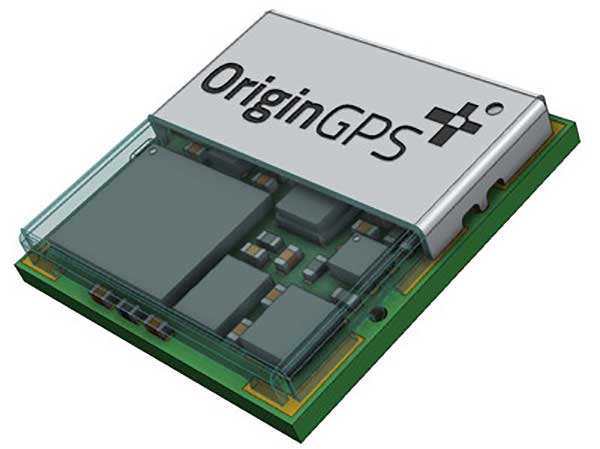
    OriginGPS has collaborated with Broadcom to create a new miniature module with L1 + L5 support provided by the BCM47758 chip, enabling ultra-accurate GNSS positioning. The module was developed for solutions requiring super-precision GNSS and a dual-frequency combination.

    Photo: OriginGPS
    Photo: OriginGPS

    The ORG4600-B01 is OriginGPS’ first dual-frequency GNSS module. The module enables customers to build solutions with sub-1-meter accuracy without implementing external components.

    Measuring 10 x 10 mm, the ORG4600-B01 module supports L1 + L5 GNSS reception with one RF port, enabling the use of a low-cost, dual-band antenna delivering sub-1-meter accuracy performance in real-world operating conditions.

    Alternate Build. An alternate build option allows for separate L1/L5 RF outputs when dual antennas are required. The ORG4600-B01 is suitable for solutions requiring ultra-accurate positioning, such as telematics, the Internet of Things (IoT) and auto OBD applications.

    When GPS World reported that dual-frequency chips were about to hit the mass market in December 2018, OriginGPS stated in a press release, it was clear that long-awaited dual-frequency infrastructure support had arrived. ABI Research predicted that dual-frequency chips would account for more than a billion chipset shipments in 2023.

    “This year has seen several satellites launched into orbit every month, most of them fitted with L5/E5 capabilities, and the Chinese and European Union governments plan to have their satellite constellations fully operational by 2020.” said Haim Goldberger, CEO of OriginGPS.

    Developing the ORG4600-B01 module with the BCM47758 GNSS receiver chip by Broadcom Inc. was the fastest and surest way to add a high-quality dual-frequency module to our portfolio and meet our customers’ increasing requirements for ultra-accurate GNSS modules,” Goldberger said.

    “Size is a crucial parameter in GNSS dual-frequency solutions,” said Prasan Pai, product marketing director for the Wireless Communications and Connectivity Division at Broadcom. “The collaboration with OriginGPS has created the industry’s smallest dual-frequency module with ‘no compromise’ quality. For our customers seeking an ultra-accurate GNSS solution in a compact form factor, the ORG4600-B01 fits the bill. The collaboration enables Broadcom to reach new markets, such as precision agriculture, security, children tracking and fleet management.”

    “OriginGPS is interested in additional partnerships to enable bringing advanced solutions to market quickly,” said Haim Goldberger, CEO of OriginGPS.

    OriginGPS is presenting its products with real-life demonstrations at MWC 2019, Los Angeles, Oct 22-24, Booth S2938.

  • Dual-band GNSS market moving from insignificant to billions in less than 5 years

    Dual-band GNSS market moving from insignificant to billions in less than 5 years

    After many years of development at the fringe of the GNSS industry, dual-frequency GNSS devices are finally ready to hit the mass market and will account for more than a billion chipset shipments in 2023, according to a new market data report by ABI Research.

    ABI Research is a market-foresight advisory firm.

    The report finds that the bulk of this growth will come from the adoption in the smartphone market with consumers hungry for better location accuracy.

    Dual-band GNSS can mitigate the multipath interference effects, which are especially present in areas with a high density of buildings, like urban canyons, and deliver significantly higher accuracy than single-frequency devices.

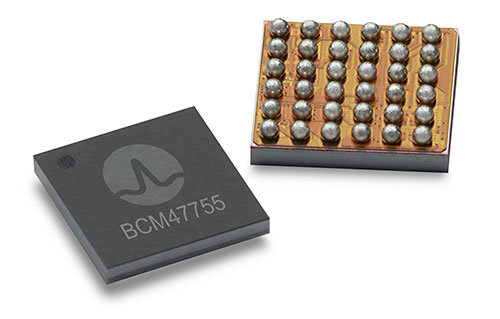
    Broadcom's BCM47755 chip. (Image: Broadcom)
    Broadcom’s BCM47755 chip. (Image: Broadcom)

    However, several obstacles prevented widespread adoption of dual-band GNSS until now, including insufficient satellite coverage of a second band, which could be L2 or L5/E5, high chipset prices, and challenges in fitting these integrated circuits and related antennas into small devices such as smartphones.

    “On the availability side, this year has seen several satellites launched into orbit every month, most of them fitted with L5/E5 capabilities, and the Chinese and European Union governments plan to have their satellite constellations fully operational by 2020. L5/E5 devices will not be left in the dark,” said Henrique Rocha, a research analyst for Location Technologies at ABI Research.

    Furthermore, new breakthroughs from key chipset manufacturers are disrupting this market by overcoming the barriers to mass dual-frequency adoption. With Location-Based Services (LBS) applications in mind, Broadcom has released the BCM47755 dual-band location hub, claiming the system’s architecture achieves the synergistic benefits that cannot be reached by multiple integrated circuits (ICs), thereby reducing its overall size and power consumption.

    Other important players in this market have also come forward with dual-frequency solutions, including Qualcomm with the Snapdragon X24 LTE modem and HiSilicon with the Kirin 980 system-on-a-chip. Both attribute their superior energy efficiency and form factor to intelligent data processing and a FinFET transistor design. Other chipset manufacturers such as MediaTek are expected to follow suit and present their own dual-band products for LBS.

    Photo: Xiaomi
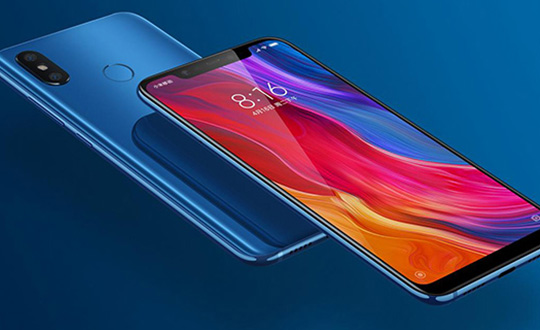
    The Xiaomi Mi 8. (Photo: Xiaomi)

    At the consumer level, considering the handset market is the largest GNSS segment, accounting for 85 percent of all GNSS chipset shipments in 2018, the launch of the dual-frequency Xiaomi Mi 8, Xiaomi Mi Mix 3 and the Huawei Mate 20 following such breakthroughs in the chipset industry is a significant development because it opens a new lane of competition between smartphone manufacturers.

    It is expected that dual-frequency devices will dominate the high-end smartphone market in a matter of a few years, and by 2023 dual-band GNSS ICs will comprise 36% of total GNSS LBS IC shipments worldwide.

    Triple-frequency chips. In other significant markets for multi-frequency GNSS, such as surveying and automotive applications, triple-frequency chipsets are being released, including STMicroelectronics’ TeseoAPP and u-blox’s F9. Adding a third frequency allows for better noise correction and higher accuracy compared to dual-frequency.

    Image: u-blox
    Image: u-blox

    ABI Research believes that triple-frequency devices will see, at least for now, a relatively shy adoption as manufacturers will need to justify the cost and overcome the power issues they tackled for dual-frequency devices.

    “For LBS the comparatively small accuracy gain going from dual- to triple-frequency GNSS is not worth the extra effort — for now. However, we will probably see triple-frequency GNSS take off when cars fitted with advanced driver assistance and autonomous driving systems begin to ship in large quantities,” added Rocha.

    With full satellite operability of the main GNSS bands on the horizon and chipset manufacturers overcoming past hurdles for implementing dual-frequency solutions, it is likely a matter of time before most major companies in the segment scramble for a piece of this promising market. OEMs now need to show customers that dual-frequency GNSS can indeed deliver the accuracy they have promised so new location use cases can be sustained and introduced to the market.

    These findings are from ABI Research’s Outdoor/Wide Area Location Technologies market data report. This report is part of the company’s Location Technologies research service, which includes research, data and Executive Foresights.

  • PNT Roundup: Wi-Fi offers in-store advertising, analytics

    Coming to a store near you: Wi-Fi’s unparalleled reach means it will locate shoppers

    i80-Construction_chc-nav-T
    Marketing graphic for Cisco Mobile Concierge shows retail businesses how to engage with their customers “in a targeted contextual manner through their mobile devices within specific venues… Customers can now receive relevant information based on their location” within the store. (Courtesy of Smart Wi-Fi Systems)

    Wi-Fi indoor location application revenues will reach $2.5 billion by 2020, according to a report from ABI Research. Wi-Fi Indoor Location Applications and Revenues was released in Q4 2015.

    “Wi-Fi, as an indoor location and analytics tool, is in a very precarious position,” said Patrick Connolly, Principal Analyst at ABI Research. “Apple continues to create roadblocks, while Bluetooth low-energy (BLE) beacons have not only taken mindshare but also budgets. However, Wi-Fi is ubiquitous on smartphones and available in over 50 percent of major retail stores in the U.S., giving it unparalleled reach. Previously, it was an expensive and inaccurate technology, but Wi-Fi access point vendors like Zebra and Cisco have all upped their game on retail analytics, while start-ups like Euclid have helped to drive adoption worldwide.”

    Wi-Fi’s superior penetration means it is a much better technology than BLE beacons for in-store analytics today, according to ABI. While location-based advertising is stealing the headlines, retailers are finally waking up to in-store analytics, which represent a major evolution on people counting and loyalty programs. This data will streamline store layouts, improve staff management, measure advertising campaign performance, enhance loyalty/reward programs, and form the backbone of new smartphone services.

    One company active in this space, Cisco Mobil Concierge, promotes its location capabilities for retail, hotels, transport hubs, museums and more. Its Mobility Services Engine API offers such services as “track-and-trace interferers, rogues, Wi-Fi clients and RF tags; Geofencing and zone-based alerts; Thinksmart Localtion Analytics.”

    The latter software suite offers such data as shopper cluster points, dwell times, typical paths and crowding. From the shopper’s viewpoint, the experience begins when a smartphone automatically discovers the venue’s services; a “service available” and a media-access-control service access point (MSAP) pops up. The user clicks on the MSAP icon to view a list of services and can opt in to be tracked within the venue, presumably in exchange for special offers.

    According to Cisco, this means “new experiences, new revenue and opportunities for businesses everywhere.”

  • u-blox joins Qualcomm and Broadcom as top three GPS/GNSS IC vendors

    ABI Research’s competitive analysis evaluates GNSS IC vendors across innovation and implementation parameters

    The GNSS market is slowly shifting in new directions, according to ABI Research. While the smartphone market continues to grow, new opportunities are also emerging in automotive, insurance, wearables, unmanned aerial vehicles (UAVs) and the Internet of Things (IoT).

    Overall, the GNSS market is forecast to continue to grow strongly, with ubiquitous location and market-specific IC design as key differentiators.

    In its latest competitive analysis of GNSS IC vendors, ABI Research evaluates a variety of innovation and implementation parameters to determine emerging competitive threats and technologies, the companies best positioned for success and those in danger of losing out.

    Unchanged for the past three years, the market’s two top IC vendors remain Qualcomm and Broadcom, soon to be acquired by Avago. Both companies continually illustrate the ability to lead the way on cutting-edge innovation, which in turn drives their dominant market-share position, ABI Research said.

    Beyond just GNSS, both companies also offer comprehensive location technology platforms in HULA (Broadcom) and Izat (Qualcomm), which will enable smartphone OEMs to begin offering ubiquitous location in 2016. Qualcomm’s work on LED/VLC and LTE Direct illustrates the gap that now exists between it and pure-play GNSS IC vendors.

    u-blox, a well-established GNSS IC company, has shown continuous growth each year by implementing  new technologies and making  acquisitions, culminating in its first ever third place ranking, ABI Research said. The company continues to lead the way in its core markets, while also expanding into the emerging IoT space.

    “The big surprise this year has been MediaTek dropping to fourth place,” said Patrick Connolly, principal analyst at ABI Research. “This is primarily due to a lack of new GNSS or indoor location products. However, this did not affect its IC market share, or its ability to win an important GNSS IC win with Fitbit in wearables. MediaTek has a history of delivering when its customers need new innovation. As a result, ABI Research expects new product announcements from the company in 2016, especially around indoor location.”

    Ranking fifth, STMicroelectronics is seeing customers migrate to its TESEO III platform. Its modular, high-performance approach should also enable it to move beyond its traditional markets of automotive and recreational/fitness, especially as it has begun to leverage the company’s expertise in sensor fusion.

    As new opportunities for GNSS continue to develop in markets such as wearables, IoT, personal tracking and UAVs, there will also be a number of new or emerging companies looking to claim a share in the stakes. Analysis findings point to the Chinese regional market as one such area that has potential to demonstrate strong growth trends in future years.

    “There’s big opportunity for emerging Chinese start-ups, such as CEC Huada, to meet new, indigenous, market demand over the next 10 years, while also working their way toward becoming major international competitors,” concluded Connolly. “Additionally, Galileo Satellite Navigation, an emerging company focused in software GPS, is reporting impressive results in trials. As consumer electronics start supporting software GPS, it will be interesting to watch whether or not it can achieve volume shipments in 2016.”

    These findings are part of ABI Research’s Location Devices Service, which includes research reports, market data, insights and competitive assessments.

  • ABI Research: Third Generation of LBS to Capitalize on Location-Based Advertising

    The LBS market continues to grow strongly and with the arrival of always-on ubiquitous location, ABI Research believes that the market is ready to truly support location based advertising efforts. In Western Markets, a third generation of location-based services is now underway. It has forecast retail/shopping, ambient intelligence, hyperlocal social and personal asset tracking/BLE beacon applications to emerge as the next wave of important location based services over the next five years, with ABI Research forecasting a four-fold increase in revenues by 2019.

    In emerging regions the value of location is not lost with strong local deals/offers markets already emerging. Senior analyst Patrick Connolly comments, “In Asia, ABI Research sees LBS downloads breaking 4 Billion in 2019. In China, major Internet companies can see the necessity of location and are acquiring/integrating as they move to mobile. Tencent, the Chinese Internet giant, has spent approximately $200 million to acquire an 11.28% stake in mapping company NavInfo. This follows Alibaba’s acquisition of AutoNavi. Tencent has also invested in the Chinese Yelp, Dianping, which is one of the top three players in the local deals market, which is estimated to have reached $1.2 Billion in 1Q14. Sina Weibo, which floated on the NASDAQ in April also has its own Places application.”

    Furthermore, in a reversal of previous LBS application trends, ABI Research expects to see many of these companies expanding into international markets in the future. Momo is such an app, with 20 million subscribers, which is using location to go local and generate advertising revenues. It has used a round of investment to launch an English version of the application, which it hopes will enable it to expand.

    These findings are part of ABI Research’s Location Based Services Market Research.

  • $2.6 Billion GPS Fitness Device Market Overshadowed by Smart Devices and Wearables

    ​Despite major GPS fitness device OEMs announcing new fitness products at January’s International Consumer Electronics Show in Las Vegas, it looks like an increasingly difficult battle between smart devices and wearables, according to analysts at ABI Research.

    Garmin launched its Vivofit fitness band and Vivoki/Vivahub corporate wellness solution. Magallen is one of the few companies in the GPS device OEM space that continues to show flashes of innovation, opening up its Echo watch platform to a range of third-party smartphone application developers.

    At the high-end of the GPS fitness watch market, Polar has launched a new multi-sport watch, which features a barometric pressure sensor, support for new features such as a cycling power pedal. TomTom has launched an iOS application that links its current GPS watch range to an iPhone via Bluetooth.

    In ABI Research’s quarterly GPS/GNSS Device tracker, the impact of these new device categories on dedicated GPS fitness device growth can be fully seen. Senior analyst Patrick Connolly comments, “Our forecasts for the overall GPS-enabled fitness area remain strong, hitting $2.6 Billion in 2018, but as was the case with turn-by-turn navigation, converged devices and wearables will take an increasing part of the available market. The adage of keeping what we have is important here, retaining a firm eye on growth in professional users, with hardware and in particular eyewear, a major distinguisher.”

    Practice director Dominique Bonte adds, “Of the announcements, Garmin’s move into corporate wellness was the most striking. We are about to see a huge technological shift in the corporate/business sector, around BYOD, BYOW, wellness, security, and efficiency. What is interesting is that Garmin does not include a location element, which will be a core enabler in this sea change.”

    The findings are part of ABI Research’s Location Devices Research Service.

  • 1 Billion Smartphones with Location-Based Sensor Fusion Expected by 2016

    As smartphones embrace always-on, ubiquitous location, location-based sensor fusion will become a standard feature. ABI Research’s report, “Location-based Sensor Fusion: Companies, Technologies, and Revenue Opportunities,” outlines how sensor fusion will evolve to support indoor location and the companies best placed to succeed in this space. Location-based sensor fusion will enable the dawn of the quantified self, ambient intelligence, as well as provide huge potential around advertising and retail, ABI Research said.

    Senior analyst Patrick Connolly comments, “Sensor fusion is vital in enabling a consistent location experience, RF mapping, and the industry to scale rapidly. Unfortunately, it is not just a case of putting in a 9-axis sensor to achieve this. Highly complex algorithms are required to optimize sensor outputs, integrate with other location technologies and combine with machine learning and data-fusion algorithms. Sensor fusion will surpass Wi-Fi and BLE as the most important handset-based indoor location technology by 2017.”

    ABI Research has forecast the adoption of different indoor location technologies, and the companies best placed to be successful. “We see a significant trend towards hybridization, with Wi-Fi, BLE, and senor fusion proving to be vital. By 2014, hybrid solutions will have already surpassed standalone indoor location technologies on smartphones. Longer term, technologies around optical light, object recognition, and LTE-direct are all forecast to offer differentiation,” continues Patrick Connolly.

    VP and practice director Dominique Bonte adds, “The market is largely divided between Sensor IC OEMs, GPS/connectivity IC OEMs, and a group of really interesting start-ups. Companies like Movea, HillCrest, indoo.rs, and Senionlab are creating some intriguing solutions and will represent the next generation of acquisitions and partnerships in indoor location.”

    These findings are part of ABI Research’s Location Devices Research Service, which includes Research Analyses, Market Data, Insights, Presentations, and Competitive Assessments focused on the indoor location market.

  • ABI Research: MEMS Sensors and Hands-Free Interfaces Will Revolutionize Mobile Devices

    ABI Research: MEMS Sensors and Hands-Free Interfaces Will Revolutionize Mobile Devices

    Photo: ABI Research

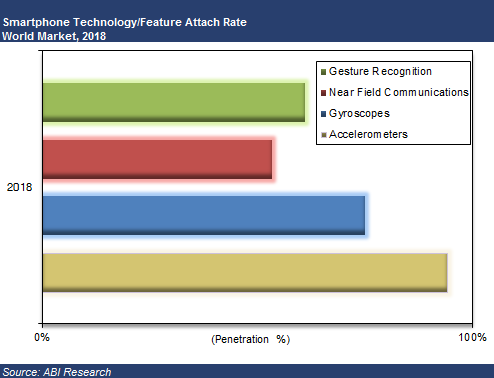
    Accelerometers, gyroscopes, near field communications (NFC), and gesture recognition are predicted to be the big winners in mobile devices. These mobile technologies are projected to make the greatest penetration gains over the coming years, according to a recent study by market intelligence firm ABI Research.

    “Hands-free operation or gesture recognition is soon going to become a key differentiator in high-end flagship smartphones, media tablets, and smart glasses,” says senior analyst Joshua Flood. “Samsung’s latest Galaxy S4 has already incorporated the technology within its handset and has received significant plaudits for its new innovative user experience. Furthermore, with a host of new smart glass products soon to be released, it is easy to imagine the usefulness of the interface with this product.” In 2013, almost 12% of smartphones shipped will have vision-based gesture recognition capabilities.

    Accelerometers and gyroscopes play a crucial role with today’s mobile devices, enabling devices to be more intuitive and take action without a user pressing a button. Simple actions like switching from portrait to landscape when a smartphone is tilted are made possible by including these components. Additionally, the fast growing mobile gaming market is highly dependent upon smartphones including gyroscopes, which enhance gaming experience. Nearly half of the smartphones shipped this year will include these MEMS sensor types.

    NFC has been one of the most talked about mobile technologies that has not quite taken off. The technology has primarily been focused around mobile payments; however, mobile OEMs have begun to see other potential capabilities for the technology such as photo-sharing and location information tag points that could open a huge market for advertising and marketing campaigns. Within three years, it is anticipated one in two smartphones shipped will include NFC and have gesture recognition capabilities. Furthermore, accelerometers and gyroscopes will be the “norm” with most smartphones.

    These findings are part of ABI Research’s Next Generation Mobile Devices and Mobile Handset Go-to-market Strategies Research Services.

  • Mobile Application Storefronts Distributed 81 Billion Apps through September

    Mobile application storefronts had collectively distributed a cumulative total of 81 billion smartphone and tablet apps as of the end of September 2012, according to a recent market study from ABI Research. Of these, 89 percent were downloaded from native storefronts that come with the device’s operating system.

    “The current status quo is based on storefronts that the operating system vendors provide as part of the OS experience, and there is no evidence that this would change in the future,” said ABI Research senior analyst Aapo Markkanen. “A year ago it still looked like that, for example, mobile operators could find a viable business case in the curation of Android apps, but that opportunity evaporated once Google got its storefront act together. Today, it makes sense for operators to distribute apps only under special circumstances, such as the ones that we’re seeing in China.”

    Similarly, it’s unlikely that the universal, catch-all nature of app distribution would start breaking up into smaller niche storefronts. There is a certain demand for specialist stores, but even then the niche players should position themselves as recommendation channels driving traffic to native storefronts and not actual distributors. Markkanen explains, “Running a user-friendly app distribution channel is expensive. Besides the adequate hosting and billing systems it takes quite a lot of human labor, since successful app discovery requires some form of editorial approach. The opportunity for smaller storefronts built around selected categories is therefore limited.”

    Practically the only exceptions are B2B apps and the consumer categories that the universal storefronts don’t want to be associated with — most notably adult content. Mikandi is a real-life storefront example that has built a business out of the distribution of such outcast apps and content.

    These findings are from ABI Research’s Mobile Application Markets Research Service which focuses on the distribution and the economics of mobile apps, providing data-driven insights on areas such as download volumes, revenues and business models, plus trends within different applications categories.

  • ABI Research: In-Car Nav Market Bottoms out at $22 Billion, New Services Key to Rebound

    ​The total in-car navigation market has been in continual decline for the last three years, but ABI Research believes it has now reached its lowest ebb. While pure navigation is unlikely to reach the highs of 2008 again, the overall market is reaching a revenue plateau, creating a solid platform on which connected in-car services can bring a new generation of revenue growth, the market research firm concluded.

    Senior analyst Patrick Connolly stated,” When we look at the decline from 2008 to 2011, there is a perfect storm of economic conditions, low-cost/free smartphone navigation, the decline of PNDs, and falling car sales. The market is forecast to reach a low of $22 billion this year, before fluctuating around the $22-$24 billion mark, as a new period of growth for factory-fitted solutions, coupled with smartphone solutions, will take in-car navigation towards saturation point in many regions by 2017.”

    Factory-fitted solutions will bring new revenue opportunities, especially for PND manufacturers, ABI Research said. But the real growth opportunity will be the additional revenues that in-car connectivity will bring. Companies are fighting for a near-30 million connected car platform market in 2017, with many of the winners and losers decided over the next two years.

    Practice director Dominique Bonte added, “The opportunity is there to leverage navigation, to bring a host of new services around driver performance, infotainment, car diagnostics, and insurance.”

    These findings are part of ABI Research’s GPS & GNSS Research Service, which includes additional Competitive Analyses, Vendor Matrices, Market Data, and Insights. In ABI Research’s quarterly service, “GPS&GNSS”, all forms of in-car navigation are considered, including factory fitted, aftermarket, PNDs, and smartphones.

  • ABI Research: Total GPS/GNSS IC Market to Reach 1.8 Billion Shipments by 2016

    GPS/GNSS is now moving beyond cellular and traditional navigation markets, representing a market worth more than $3.3 billion in 2016, according to a new report by ABI Research.

    GPS/GNSS has always been strongly tied to navigation in the in-car, PND, and cellular space, ABI Research said. However, GPS/GNSS is now finding applications in cameras, gaming, and tablets. Furthermore, femtocells and small cells represent huge volume opportunities, with companies like u-blox, Fastrax, and iPosi all developing specific GPS/GNSS solutions to meet the unique requirements of this market.
    Location technologies such as Wi-Fi, Bluetooth, MEMs, and proprietary technologies from companies such as NextNav and Boeing will all see strong penetration. For example, the tablet market will be dominated by Wi-Fi location over the forecast period.
    “Ultimately, GPS/GNSS manufacturers will need to combine an increasing number of technologies, supporting ubiquitous indoor and outdoor location,” said Patrick Connolly, senior analyst, telematics and navigation. “In 2012, CSR, Broadcom, and Qualcomm have all made announcements around increasing convergence of location technologies in the handset. This will meet the outdoor requirements of today, as well as supporting the emerging precision indoor location market.”
    ABI Research’s market data, “GPS IC and Devices Forecasts, Global,” provides forecasts of GPS/GNSS ICs and market shares across nine key CE devices. It also provides forecasts for alternative/hybrid location technologies, providing a complete picture of the future location market.

    It is part of ABI Research’s Location Platforms and Enablers Research Service.