Tag: ADS-B

  • A new era begins with geospatially based aviation

    At any given moment, more than 5,000 airplanes are flying over the United States. In a single year, nearly 778 million passengers will take to the skies — more than twice the population of the U.S., and the number increases each year. Aviation is the safest form of transportation. It is 100 times safer than driving. For every 100 traffic deaths, only one aviation related fatality occurs; and the Federal Aviation Administration (FAA) is working hard to make aviation even safer.

    Safety is the FAA’s primary focus. The FAA Strategic Plan FY 2019– 2022 states its mission is to provide the safest, most efficient aviation system in the world. To achieve this goal, the FAA is implementing several initiatives. The technical aspects of these efforts fall under a framework called NextGen designed to modernize the nation’s air traffic control system. NextGen began in 2003 in the VISION 100 – Century of Aviation Reauthorization Act. At its core, NextGen is a geospatial framework with satellite navigation as its backbone.

    The Geospatial Data Act (GDA) became law when President Trump signed the FAA Reauthorization on Oct. 5, 2018. You might have wondered how the GDA came to be included in the bill. It makes sense in the context of technology advancements towards a smart transportation network, specifically in aviation.

    The smart transportation concept integrates all forms of transportation to provide economic and environmental benefits as well as increase safety and reduce wait times and congestion. A large part of smart transportation is based on geographic information technology. The aviation component of this smart transportation initiative falls within the FAA’s authority under the overarching framework named NextGen.

    NextGen is an integrated concept improving the efficiency and safety of flight operations both on the ground and in the air. The use of geospatial technology enables precision time-management for controlling air traffic. The system allows each airplane to digitally coordinate with other aircraft in the area, taking into account such things as terrain and other known hazards to safely reroute air traffic as necessary. The FAA refers to this as trajectory-based operations. Those with a knowledge of GIS will recognize it as four dimensional: it calculates direction, speed, distance and time relative to position in x-y-z, and coordinates that information with other known data. Additionally, the system uses historical flight data and predictive analytics to maximize airspace for routing air traffic such as what is experienced during the holidays.

    NextGen also uses a system called Optimal Profile Descents (OPD), which allows an airplane to trim its engines and descend along a glide slope from flight level into the airport. The point at which a plane begins its descent is a geospatial calculation to determine the precise point in space for the airplane based upon its altitude, weight, glide slope and distance to the airport. The benefits of OPD are reduced engine noise, fuel savings, less carbon emissions and a positive economic impact. NextGen is an across-the-board win for the airline industry, airline passengers, the economy and the environment.

    According to an interview with Michael Whitaker, former deputy administrator of the FAA who was the Chief NextGen Officer, NextGen revolutionizes aviation by enabling digital data communication. It replaces radar-based navigation and tracking with satellite-based air traffic control. The cornerstone of NextGen is the Automated Dependent Surveillance Broadcast (ADS-B) system.

    ADS-B is an aviator’s version of Waze, but with a lot more information. ADS-B(out) broadcasts an airplane’s Flight ID, ICAO Code, speed and location in three-dimensional space to air traffic controllers and to everyone who is equipped with ADS-B(in). The combination of ADS-B(out) and ADS-B(in) greatly increases situational awareness for aviators. On Jan. 1, 2020, all airplanes operating in controlled airspace needed to have ADS-B(out) installed. ADS-B transforms the entire National Airspace System into a satellite-based geospatial network. It integrates multiple sources of real-time data, such as weather, pilot reports, aircraft positions, 3D airspace information, and other sources of data, which can be overlaid on top of various basemaps and terrain elevation models, allowing pilots to make more informed and safer decisions.

    Switching to ADS-B opens up more capacity in already crowded skies by decreasing the required vertical and horizontal separation distances between aircraft. At Hartsfield-Jackson International Airport, the busiest airport in the world, changing to performance-based operations allowed 8 to 12 more departures per hour; and in Memphis International Airport, one of the busiest airports for cargo operations, arrivals increased by 20%.

    Rune Duke, senior director of government affairs, Airspace, Air Traffic and Aviation Security for the Aircraft Owners and Pilots Association (AOPA), said that ADS-B will allow much faster update rates for air traffic controllers on the order of once every second, compared to legacy radar systems that report positions every 8 to 12 seconds. For an airplane traveling at 350 knots, that is about 1 mile. A lot can change in a mile in densely packed airspace.

    If you are reading this because of your love of maps and aviation, then I highly recommend the FlightAware and ForeFlight smartphone apps. FlightAware turns the phone into an ADS-B(in) receiver showing the location and flightpath of each aircraft in the immediate area on a basemap. I sit on my back deck and watch airplanes coming and going because I live under the flightpaths for Dulles International Airport, Reagan International Airport, Leesburg Executive Airport, the Montgomery County Airpark and the TERPZ waypoint. On occasion I see helicopters flying to Camp David because I am under that flight path as well.

    So, I get to see a variety of aircraft. You can select the airplane icon to see information such as aircraft type, airline, Flight ID, departing and arrival airports, altitude, and groundspeed. Even more information is available by selecting the pop-up window. This is ADS-B information. ForeFlight, on the other hand, is a pilot’s flight bag on a tablet.

    In the future, ADS-B will integrate Aircraft Hazardous Areas (AHA): temporary no-fly zones due to commercial space launches. Because of ADS-B, planes will automatically reroute around the AHA, and when the AHA expires, airplanes will be routed back through the area.

    ADS-B supports evolving technologies such as remote towers, another significant change to air traffic control. Remote towers allow air traffic controllers to be at a location other than the actual airfield. Remote towers use a suite of sensors mounted at the airfield, including high-definition video, thermal and night vision that can be combined with the digital information provided by ADS-B, all of which is displayed on widescreen panels in a room duplicating the experience of being at the airport and directing aircraft. This allows smaller airports that cannot afford the huge expense of building and staffing an air traffic control tower to be part of a remote tower network. One remote tower center will be able to support several airfields. Leesburg Executive Airpark recently finished successful testing of one of the first remote tower operations in the United States.

    “Over the next 10 years, we are going to see logistics and transportation open up, from being limited by currently rigid road infrastructure to operating on fully flexible and responsive aerial transportation networks,” said Patrick Watson, director of business development for Animal Dynamics.

    The envisioned Platform Unmanned Cargo Aircraft. (Photo: PUCA
    The envisioned Platform Unmanned Cargo Aircraft. (Photo: PUCA)

    ADS-B will also support the integration of unmanned aerial systems (UAS) into the airspace, specifically unmanned cargo aircraft (UCA). In the not too distant future, carrier air fleets without pilots or aircrew will be taking to the skies. UCAs do not require crews, so there will be no need for water, toilets, sewage containment, kitchens or a cockpit (in the traditional sense). Taking those out will allow for more space in the plane to carry cargo and fuel. Plus, without crews on board, there will be no time restrictions on crew hours — planes will be able stay aloft longer and travel further. ADS-B greatly enables the success of this technology.


  • uAvionix receives FAA qualification for ADS-B transmitter

    uAvionix receives FAA qualification for ADS-B transmitter

    Photo:
    Photo: uAvionix

    uAvionix has received U.S. Federal Aviation Administration (FAA) approval for the Vehicle Tracking Unit (VTU-20) Automatic Dependent Surveillance – Broadcast (ADS-B) transmitter for airport surface management.

    uAvionix is a designer and manufacturer of communications, navigation and surveillance (CNS) equipment for unmanned and manned aircraft.

    Adhering to the performance and design assurance specifications of FAA-E-3032, the externally mounted VTU-20 ensures integration and interoperability with Airport Surface Detection Equipment, Model X (ASDE-X), Airport Surface Surveillance Capability (ASSC) and ADS-B receiver surveillance solutions for airport
    surface control and situational awareness.

    The VTU-20 can be permanently or magnetically mounted to all airside vehicles, including utility, emergency, snow-removal and maintenance equipment. Each vehicle is clearly and uniquely identified, providing an essential addition to any surface movement guidance and control system.

    The VTU-20 implements FAA-approved Squitter Transmission Maps to automatically enable transmission on airport movement areas and disable transmission in low-risk areas or outside airport airside operations.

    “Ground vehicle incursions into critical safety and movement areas is on the rise. With this achievement, uAvionix continues to promote safety and common situational awareness not only in the airspace but also on the airport surface,” states Christian Ramsey, uAvionix president.

    This recent uAvionix achievement will be made available through an exclusive relationship with L3Harris Technologies, Inc., a leader in surveillance and air traffic management known for the Symphony product line of airport operations and environmental compliance solutions — to promote and sell the VTU-20 in the United States.

    For sales inquiries or questions, contact L3Harris Symphony VTU-20 sales at [email protected], or uAvionix at [email protected].

  • Spire Aviation launches AirSafe API for ADS-B tracking

    Spire Aviation launches AirSafe API for ADS-B tracking

    Image: Spire Aviation
    Image: Spire Aviation

    Spire Global has released the company’s first product from Spire Aviation with the launch of its new AirSafe API (application program interface).

    Spire Aviation’s AirSafe product uses low-Earth orbit ADS-B technology combined with ground-based collection to provide detail on global aircraft position reports for the world’s aircraft fleet operations.

    With more than 70 million position reports every day and growing, AirSafe is positioned to provide best-in-class data over land and the world’s oceans.

    The AirSafe product solves the industry’s need for flight tracking data covering both land and oceans at a competitive cost, illuminating trends in aircraft operations, the company said.

    Airsafe enables a fixed-based operator to analyze historical data to safely increase productivity by better positioning resources in the future, and then using real-time data to create a proactive alerting system for diversion or air turnbacks.

    Spire Aviation is building towards full surveillance of all remote areas of the globe and continues to grow its satellite constellation. Spire’s aggressive roadmap includes launch campaigns to ultimately provide an equatorial ICAO 4D/15 compliant method of aircraft tracking (+/- 15 degrees latitude) and global coverage enabled by inter-satellite links. These satellite launches will produce the an advanced nanosatellite constellation for aviation ADS-B and aviation weather forecasting.

    Spire AirSafe also offers Spire’s proprietary weather forecasting products, enabling customers to benefit from fused aircraft location positional data and global winds aloft (Every 1,000 feet MSL) and clear air turbulence forecast.

    Learn more about the benefits of working with Global ADS-B data and Spire’s Aviation Weather Forecast during an upcoming webinar.

  • UAvionix offers free receivers for Hurricane Dorian recovery efforts

    UAvionix is offering free pingRX unmanned aircraft system (UAS) ADS-B receivers to first responders and UAS service organizations participating in rescue and recovery efforts associated with Hurricane Dorian.

    Hurricane Dorian is expected to travel along the Eastern coast of the U.S. northward at a slow pace, creating extensive damage from winds and flooding.

    UAvionix is a designer and manufacturer of communications, navigation and surveillance (CNS) equipment for unmanned and manned aircraft.

    The pingRX. (Photo: uAvionix)
    The pingRX. (Photo: uAvionix)

    PingRX is a dual-frequency ADS-B receiver designed for use onboard a UAS. Retailing for $249 and weighing 5 grams, pingRX can provide the operator with a digital view of ADS-B-equipped aircraft in the airspace up to hundreds of miles away.

    When integrated with a compatible autopilot — such as ARDUPILOT, Pixhawk, PX4 or the Cube — local ADS-B traffic is displayed on the ground control station (GCS) display.

    Image: National Weather Service
    Image: National Weather Service

    The FAA’s mandate for ADS-B OUT equipage on manned aircraft has a deadline of Jan. 1, 2020, so equipage levels are currently high. Users are cautioned, however, that equipage is not at 100%, so reliance on ADS-B as a sole means of detect and avoid (DAA) is not advised.

    In 2017, in response to Hurricane Harvey’s landfall in Houston, Texas, UAS were used extensively for the first time in recovery and rescue efforts. The use of UAS has continued to grow in response to hurricane efforts ever since.

    Photo:
    Photos: NOAA

    “Over the past few years, the use of drones in hurricane and natural disaster recovery efforts has increased significantly due to the value of the real-time data collected in combination with ease of deployment,” said Christian Ramsey, uAvionix president. “First responders and recovery crews will undoubtedly work tirelessly for weeks in response to Dorian. We hope to make these efforts just a bit safer and encourage good airspace safety practices with the use of the pingRX systems.”

    The FAA has published guidance for UAS operators, urging strict adherence to Notices to Airmen (NOTAMS) and Temporary Flight Restrictions (TFR). The airspace in these areas can be crowded and unpredictable.

    First responders and UAS service organizations are encouraged to contact uAvionix at [email protected] for details on the offer.

    Grand Bahama Island before Hurricane Dorian. (Photo: ICEYE)
    Grand Bahama Island before Hurricane Dorian. (Photo: Google)
  • U.S. Navy to conduct GPS interference tests off Savannah

    U.S. Navy to conduct GPS interference tests off Savannah

    Photo:
    CSG4 19-03 GPS interference testing. (Image: FAA)

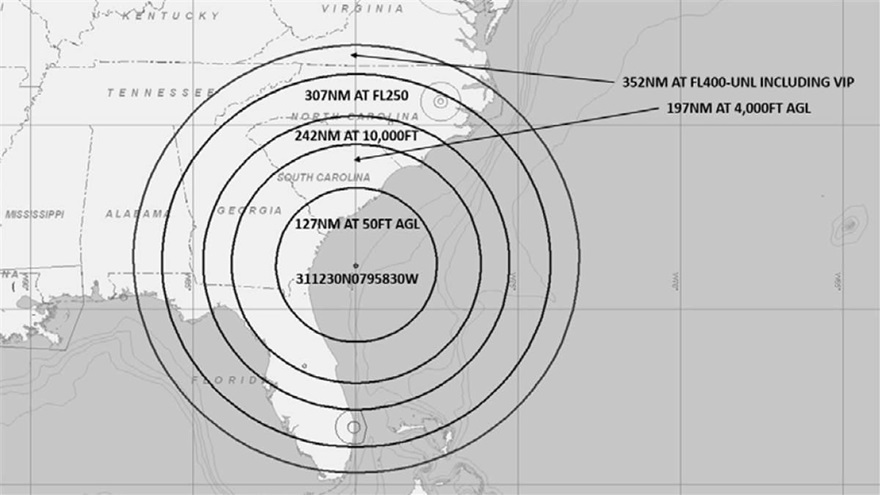
    A U.S. Navy exercise in the southeastern United States will involve GPS interference testing that could make aircraft navigation unreliable or unavailable on Aug. 30 and Sept. 5.

    The Federal Aviation Administration issued an advisory about the testing, which will be centered in the Atlantic off the coast of Savannah, Georgia, on the SAV VOR 139-degree radial at 84 nautical miles.

    It could affect GPS reliability — including WAAS, GBAS and ADS-B — centered at 311230N 0795830W (SAV139084):

    • within a 352-nautical-mile radius at Flight Level 400
    • within 307 nautical miles at Flight Level 250
    • within 242 nautical miles at 10,000 feet
    • within 197 nautical miles at 4,000 feet above ground level
    • within a 127-nautical-mile radius at 50 feet above ground level.

    The tests are scheduled for 1800 Zulu to 2200 Zulu on Aug. 30, and 1600 Zulu to 2000 Zulu on Sept. 5.

    The FAA advisory states that GPS interference notices to airmen may change with little or no notice, and encourages pilots to check regularly for updates. NOTAMs will be published at least 24 hours in advance of any GPS tests.

  • Garmin’s GPS 3000 enables ADS-B and WAAS/SBAS operational capability

    Garmin’s GPS 3000 enables ADS-B and WAAS/SBAS operational capability

    Photo: Garmin
    Photo: Garmin

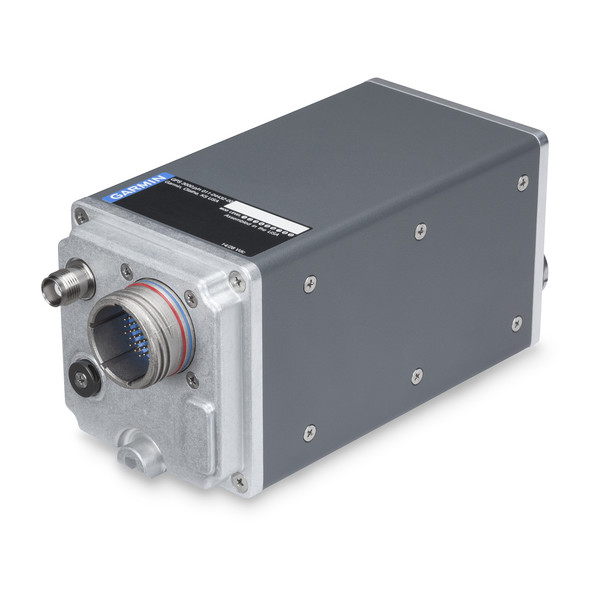
    Garmin International Inc., a unit of Garmin Ltd., has launched the GPS 3000, a high-integrity GPS position sensor that interfaces to existing avionics to help meet Automatic Dependent Surveillance-Broadcast (ADS-B) Out requirements.

    Also, targeting the air transport and defense markets, the GPS 3000 is designed as a WAAS/SBAS position source for select Flight Management Systems (FMS).

    Aircraft that are eligible to utilize the GPS 3000 as an ADS-B position source include the Embraer E135/E145 and the Legacy 600/650. Supplemental Type Certification (STC) for the GPS 3000 in these aircraft is currently available from FTI Engineering, in cooperation with Atlas Air Service in Germany, and can be installed throughout the entire Garmin dealer network.

    “Garmin continues to lead the industry with the most fielded ADS-B solutions that span all segments of aviation, including a wide-range of commercial, defense, regional and business aircraft,” said Carl Wolf, vice president of aviation sales and marketing. “We are thrilled to provide these aircraft with a solution that is cost-effective and is an easy to install alternative to the existing avionics manufacturer’s service bulletin.”

    A rugged, stand-alone and certified Wide Area Augmentation System (WAAS)/Satellite-Based Augmentation System (SBAS) GPS, the GPS 3000 meets DO-160 and DO-178B standards and is designed specifically for the harsh environmental conditions encountered by commercial aircraft.

    This compact and remote-mount solution utilizes enhanced WAAS/SBAS GPS satellite signals to provide precise position data through a standard interface. It also meets applicable high-integrity ADS-B position source standards, including TSO-C145d Class 3, the company said.

    The GPS 3000 is also designed to interface with select FMS to support GPS guidance throughout terminal, enroute and approach navigation. When configured appropriately, the GPS 3000 is capable of providing position information to an existing FMS to meet requirements for Required Navigation Performance (RNP) and can support GPS-based vertical approach navigation, such as Localizer Performance with Vertical (LPV) approach guidance.

    European Aviation Safety Agency (EASA) STC of the GPS 3000 in the Embraer E135/E145 and Legacy 600/650 is available from FTI Engineering, in cooperation with Atlas Air Service, as well as Garmin dealers. FAA validation of the STC is pending.

  • Collins Aerospace Bombardier upgrade given FAA certification

    Photo: Collins Aerospace
    Photo: Collins Aerospace

    Features include enhanced ADS-B, SBAS and georeferenced charts.

    Collins Aerospace’s Pro Line Fusion avionics upgrade for Pro Line 4-equipped Bombardier Challenger 604 series aircraft has been certified by the U.S. Federal Aviation Administration (FAA).

    Working closely with Bombardier as the original aircraft manufacturer and Nextant Aerospace as the installation design certification lead, this sole all-in-one solution complies with pending mandates while modernizing the flight experience for pilots.

    The Pro Line Fusion upgrade enhances the operational capabilities of the Challenger 604 aircraft to a similar level as that of the Challenger 605 and Challenger 650 jets equipped with Collins Pro Line 21 Advanced, while providing Challenger 604 operators with a solution to meet future regulatory requirements.

    Among these enhancements, the upgrade replaces the factory-installed CRT displays with three 14.1-inch widescreen LCD displays with configurable windows. Features designed to improve situational awareness and reduce pilot workload for Bombardier Challenger 604 aircraft owners include:

    • A fully loaded package of baseline equipment for operation in modernizing global airspace — beyond ADS-B mandate compliance, offering SBAS-capable GNSS, localizer performance with vertical guidance (LPV) approaches, radius-to-fix (RF) legs and more
    • Geo-referenced electronic navigation charts that display own-ship aircraft position
    • Synthetic vision as a standard feature
    • Optional FANS 1/A technology providing more preferred, wind efficient transatlantic routing

    The Challenger 604 Pro Line Fusion retrofit solution, which is already available for several Beechcraft King Air and Cessna Citation CJ aircraft, is part of our ongoing effort to provide owners with modern technology, enhanced situational awareness and compliance with airspace mandates,” said Christophe Blanc, vice president and general manager, business and regional systems for Collins Aerospace. “The Challenger 604 business jet is a highly-valued, long-haul aircraft that will be able to continue flying well into the future with this upgrade.”

    The upgrade is available exclusively throughout Bombardier’s extensive network of service centers and Nextant Aerospace.

  • FreeFlight SBAS/GNSS receiver chosen for USAF helicopter fleet

    FreeFlight SBAS/GNSS receiver chosen for USAF helicopter fleet

    A FreeFlight Systems SBAS/GNSS receiver has been selected to provide ADS-B position source information as a part of an upcoming ADS-B modification and compliance program for the United States Air Force HH-60G helicopter fleet.

    Strategic Enterprise Solutions Corp. (SESC) of Warner Robins, Georgia, was awarded the modification program, which includes installation of the 1203C SBAS/GNSS receiver and the AN/APX-119 Mode S Extended Squitter transponder with Mode 5 capability to provide a complete ADS-B Out solution for more than 100 helicopters.

    An HH-60 Pave Hawk helicopter lands in Afghanistan; a UH-60 Blackhawk is in the background. (Photo: (U.S. Air Force photo/Senior Airman Brian Ferguson)
    An HH-60 Pave Hawk helicopter lands in Afghanistan; a UH-60 Blackhawk is in the background. (Photo: U.S. Air Force photo/Senior Airman Brian Ferguson)

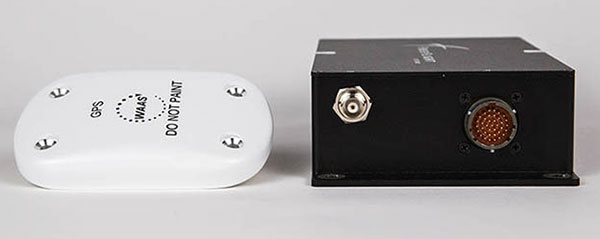
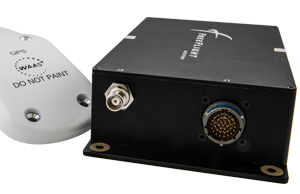
    The FreeFlight Systems 1203C SBAS/GNSS receiver is a certified, high-integrity position source in a compact, lightweight package that was designed to be modular and able to be integrated with various other avionics.

    The 1203C pairs seamlessly with certified Mode S Extended Squitter transponders for a fully rule-compliant ADS-B Out system, FreeFlight said.

    More than a war hawk. The primary mission of the HH-60G Pave Hawk helicopter is to conduct day or night personnel recovery operations into hostile environments to recover isolated personnel during war.

    The HH-60G is also tasked to perform military operations other than war, including civil search and rescue, medical evacuation, disaster response, humanitarian assistance, security cooperation/aviation advisory, NASA space flight support, and rescue command and control.

    The 1203C in service. With several hundred 1203Cs in service across airline transport, military, business aviation and rotorcraft platforms, these receivers are known for their high performance, ease of installation, operational reliability and longevity, FreeFlight said.

    The 1203C SBAS/GNSS receiver and antenna (Photo: FreeFlight Systems)
    The 1203C SBAS/GNSS receiver and antenna (Photo: FreeFlight Systems)

    The 1203C can also serve as the approved position source for select manufacturers of TAWS/FMS, RNP and other NextGen applications, and allows customers to take advantage of the operational and safety benefits provided by the NextGen airspace transformation without the need for extensive and costly avionics upgrades.

    With the ADS-B mandate now only 17 months away, aircraft operators need to prioritize ADS-B installations.

    Significant portions of today’s airline, business, and military aircraft fleet will remain in service long after 2020, and in many cases an STC’d retrofit solution comprising of a transponder upgrade and the addition of a dedicated SBAS/GNSS receiver like the 1203C is the simplest and most cost-effective way to achieve mandate compliance, FreeFlight said.

  • Becker helicopter transponder receives ADS-B certification

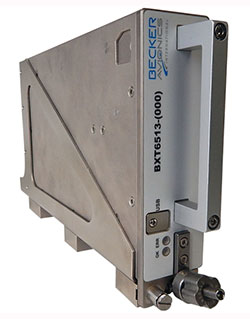
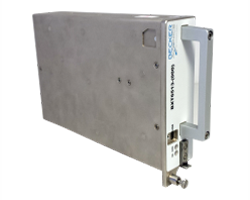
    Becker Avionics has received certification for the its BXT65XX Mode S transponder, designed specifically for the rigorous flying environment characteristic of helicopter operations.

    Paired with a FreeFlight Systems’ 1203C SBAS/GNSS sensor, the remote-mounted solutions provide helicopter operators a complete and cost-effective way to equip with ADS-B Out to meet the Jan. 1, 2020, mandate.

    The system is a part of the company’s robust BXT65XX line of ADS-B Mode S transponders. Manufactured with a standard ARINC 429/743 output, this transponder easily integrates with the FreeFlight Systems Model 1203C SBAS/GNSS sensor for complete ADS-B Out compliance, the company said. It can also be installed either as dual installation for primary transponder interrogations or as single install for a dedicated ADS-B transmission.

    The transponder can be installed on aircraft not equipped with a traffic collision avoidance system. Its enhanced privacy settings can disable both ADS-B and Mode S transmissions.

    “We are pleased to announce this new milestone in our transponder product line,” said Forrest Colliver, Becker Avionics’ managing director. “This new system showcases how we tailor our compact, robust, and durable avionics to our clients’ requirements in order to provide the best solution for where and how they fly.”


  • ADS-B system for helicopters gets boost from Becker Avionics

    Becker Avionics Diversity Mode S Transponder with ADS-B certified.

    Avionics technology provider Becker Avionics has received certification for the company’s BXT6500 family Mode S transponder, designed for the rigorous flying environment characteristic of helicopter operations.

    Paired with a FreeFlight Systems’ 1203C SBAS/GNSS sensor, the remote-mounted solutions provide helicopter operators a complete and cost-effective way to equip with ADS-B Out for the upcoming Jan. 1, 2020, mandate.

    The Becker BXT6500 family Mode S transponder is diversity-capable and available for installation on non-TCAS equipped aircraft. A non-diversity option is also available.

    The FreeFlight SBAS/GNSS (WAAS/GPS) 1203C sensor.

    In addition to providing clients with ADS-B compliance, the system features enhanced privacy settings that can disable both ADS-B and Mode S transmissions — a feature unique to the BXT6500 family.

    “We are pleased to announce this new milestone in our transponder product line,” said Forrest Colliver, managing director. “This new system showcases how we tailor our compact, robust and durable avionics to our clients’ requirements in order to provide the best solution for where and how they fly.”

    The system is a part of the company’s robust BXT6500 line of ADS-B Mode S transponders. Manufactured with a standard ARINC 429/743 output, this transponder easily integrates with the FreeFlight Systems Model 1203C SBAS/GNSS sensor for complete ADS-B Out compliance, and can be installed either as dual installation for primary transponder interrogations or as single install for a dedicated ADS-B transmission.

    For more information, visit with Becker Avionics at booth C4935 and FreeFlight Systems at booth C1137 during HAI’s Heli-Expo happening this week in Las Vegas, Nevada.

  • uAvionix demonstrates dime-sized ADS-B for high-traffic drone operations

    uAvionix demonstrates dime-sized ADS-B for high-traffic drone operations

    uAvionix Corporation, an unmanned aircraft system (UAS) avionics provider, has developed and is testing a tiny ADS-B transceiver for UAVs.

    Weighing less than 1 gram, a dime-sized ADS-B prototype module for drones with transmission power between 0.01-0.25 Watts could provide visibility to any aircraft equipped with ADS-B “IN” avionics from 1 to 10 miles away, and is small enough to integrate directly into professional and consumer-level drones.

    uAvionix is working with the Federal Aviation Administration (FAA) and other partners under a Cooperative Research and Development Agreement (CRADA) to test the unit, along with other uAvionix products.

    uAvionix Ping ADS-B transceiver.
    uAvionix Ping ADS-B transceiver. Photo: uAvionix 

    A recent study published in January 2017 by The MITRE Corporation’s Center for Advanced Aviation System Development (CAASD) imagined a future of high-traffic densities of drones operating with ADS-B onboard, and then sought to understand the implications of that.

    The study suggests that there is a nominal transmission power output between 0.01 and 0.1 Watts that when coupled with limited drone traffic densities can result in a compatible operation with the system as a whole.

    “We developed this product to show the world the art of the possible,” said Paul Beard, CEO of uAvionix. “We can’t yet sell this device because the standards that were developed for ADS-B did not take into account the value of air-to-air ADS-B communications between small drones or between small drones and manned aircraft. It’s literally not legal to transmit at these low power outputs. We aim to lead the discussion and development of those standards, and will work with any regulatory body to do so.”

  • Indian government warns airlines to use GAGAN

    The government of India has warned domestic airlines of “consequences” if they do not use GAGAN, the state’s GPS-Aided Geo Augmented Navigation system, reports the Mumbai Mirror.

    The warning came during a meeting called by the Directorate General of Civil Aviation (DGCA) in December with all stakeholders, including the airlines. Most aircraft registered in India are still not equipped with the technology two years after its launch.

    While smaller aircraft such as ATRs and Bombardiers in the Indian carriers’ fleet are already equipped with the GAGAN system, bigger planes need to be retrofitted at the airlines’ expense, including Airbus A320, A330, Boeing 737, B777 and B 787. Eight major domestic carriers — Air India, Air India Express, Jet Airways, JetLite, IndiGo, SpiceJet, GoAir, Vistara and AirAsia — have 427 such planes in service, Mumbai Mirror reports.

    The National Civil Aviation Policy, announced by the government in June, makes it mandatory for all aircraft registered in India  to be GAGAN-enabled by Jan. 1, 2019.

    Jointly developed by Indian Space Research Organisation (ISRO) and Airports Authority of India (AAI), the GAGAN system was officially launched by Civil Aviation Minister Ashok Gajapathi Raju in July 2016. It is said to make airline operations more efficient and cut down costs as it reduces separation between aircraft, increases air safety and fuel efficiency.

    GAGAN’s footprint extends from Africa to Australia and has expansion capability for seamless navigation services across the region. The system is inter-operable with other international satellite based tracking systems such as the WAAS (US), EGNOS (Europe) and MSAD (Japan).