Tag: Antenova

  • Antenova Shows GNSS Antenna Integration for Telematics at CTIA

    Antenova Shows GNSS Antenna Integration for Telematics at CTIA

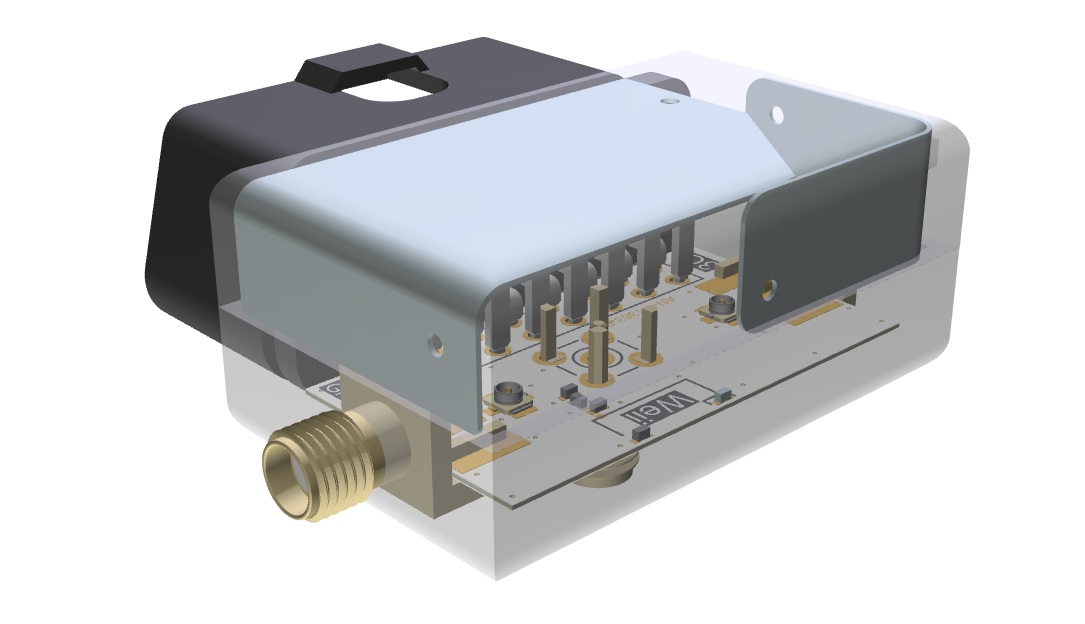
    The Antenova ODB fully assembled.
    The Antenova ODB (on-board devices) design fully assembled.

    Antenova Ltd., manufacturer of antennas and RF antenna modules for M2M and the Internet of Things, has built a model design for on-board devices (OBD) and vehicle telematics, which the company will be showing at CTIA Supermobility 2015.

    The OBD design uses three new antennas inside an OBD housing to link to GNSS satellite, Bluetooth and a terrestrial network, while obtaining optimum performance from all three antennas simultaneously. The design also features a new small GNSS RF module to fix location, which Antenova is showing for the first time.

    Antenova is using the latest antennas from it product ranges in the OBD design:

    • the Armata 3G FPC antenna for penta-band frequencies which operates at 824-960 MHz and 1710-2170 MHz
    • a new GNSS antenna named Bentoni operating at 1559-1609 MHZ,
    • the tiny Weii PCB-mounted antenna, which provides a Bluetooth connection at 2.4GHZ.

    All three are new antennas Antenova released this year.

    The new GPS/GNSS module (Antenova part number M10578) is a complete receiver that provides accurate location tracking for OBDs. It uses the latest MediaTek chipset with an additional LNA to give added performance when mounted under dashboards and out of line of sight with the sky.

    Antenova’s product designers recently introduced the concept of “Design For Integration” (DFI), which considers how the RF antenna will operate when it is embedded with a manufacturer’s product. Antenova’s antennas are always used within a customer’s design, so they are designed to provide superior RF performance from within the device, and to make the integration of the RF elements easier for the designer. In addition to this, Antenova provides its customers with technical support during the design, integration and testing phases.

    “We are demonstrating how a design for an OBD can give great performance, even when new antennas are added to an existing design,” explained Colin Newman, Antenova’s managing director. “OBD devices are growing fast in popularity, and the design of the RF components is critical to the overall performance of a device. In particular, Antenova’s engineers have invested many years in designing antennas that work effectively in very small spaces, whilst maintaining the efficiency of the antenna.”

    Antenova offers a range of antennas for Bluetooth, ZigBee, Wi-Fi, ISM, 802.11, 3G, GSM, GPRS, Edge, UMTS, WCDMA, LTE, GLONASS, BeiDou and Gallileo.

  • Antenova Launches Sinica Embedded Antenna for GNSS Devices

    Antenova Launches Sinica Embedded Antenna for GNSS Devices

    Antenova logoAntenova Ltd., manufacturer of antennas and RF antenna modules for M2M and the Internet of Things, has announced a new embedded GNSS antenna named Sinica, which operates on the 1559-1609 MHz satellite bands. The Sinica antenna uses a novel design approach and new materials to achieve high performance from an ultra low-profile antenna, Antenova said.

    Sinica is suitable for all positioning applications on the 1559-1609 MHz bands. It operates with all of the public satellite constellations — GPS, GLONASS, Baidou and Gallileo — which means it can provide accurate positioning combined with global coverage.

    The Sinica antenna is created from FR4 materials and new dielectric constant laminate substrates. It uses a new approach to antenna design, which has enabled the company to create an antenna with the high performance of a ceramic patch antenna, in a low profile part that can be placed neatly within a small printed circuit board, Antenova said.

    Sinica is designed for devices that need accurate positioning or tracking globally, which means it is suitable to use in drones, network devices and wearable electronics, or any other portable device or tracking application.

    Antenova’s product designers recently introduced the concept of “Design For Integration” (DFI), which considers how the antenna will operate when it is embedded with a manufacturer’s product. Antenova’s antennas are used within a customer’s design, so they are designed to provide superior RF performance from within the device, and to make the integration of the RF elements easier for the designer, the company said. In addition to this, Antenova provides its customers with technical support during the design, integration and testing phases.

    Earlier this year, Antenova announced three new families of antennas for the fast growing M2M, wireless and IoT sectors. Sinica belongs to the lamiiANT family of new antennas for these market sectors.

    The antennas are supplied on tape and reel and are available through distributors worldwide. Go to www.antenova-m2m.com for more details, or to request an evaluation board for the Sinica antenna.

  • Antenova’s Tiny Weii Antenna Designed for Consumer Applications

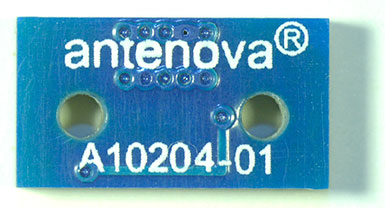
    Antenova announces its first antenna for consumer applications — the tiny Weii 2.4-GHz ceramic antenna. Measuring 1 mm x 0.5 mm x 0.5 mm, the company believes the Weii could be the smallest antenna in the world.

    The new Weii miniature ceramic antenna is designed for 2.4-GHz, Bluetooth, Wi-Fi, Zigbee and industrial, scientific and medical (ISM) applications.

    While all of Antenova’s antennas and antenna module products are small surface mounted devices, this antenna is the smallest that Antenova has created so far. It is designed specifically for the consumer, Internet of Things (IoT) and machine-to-machine (M2M) markets.

    Colin Newman, Antenova’s director and vice president of sales, explains how Antenova has miniaturized the antenna. “Ceramic antennas offer low dielectric losses and high isolation. Our engineers have used this technology to greatly reduce the antenna volume without sacrificing performance. The challenge in building antennas for today’s small consumer devices is to achieve high isolation and frequency selectivity while maintaining good efficiency. This antenna is resistant to detuning from environmental effects, and combining this with its ultra-small size, makes it ideal for today’s wearable products.”

    The Weii is an omni-directional, surface-mount device (SMD) mounted dielectric antenna that can be used to add wireless connectivity to any small electronic device, such as wearables, headsets, medical devices, personal navigation devices, dongles and sensors.

    A ceramic antenna offers several advantages for these emerging applications. Its tiny footprint is designed for the new, scaled-down printed circuit boards (PCBs) that are being developed for consumer devices in M2M. It offers a highly efficient antenna that is powerful over indoor ranges, and that performs well when sited close to the human body, Antenova said.

    Antenova says it takes a unique approach to the design of antennas, which it calls “Design For Integration” (DFI). Because the antennas are always embedded within a customer’s design, the successful operation of the customer’s device depends upon obtaining the correct performance from the antenna when it is placed on the PCB; therefore, Antenova is designing its antennas with this difficult RF integration in mind.

    The Weii is designed to be easily integrated into all kinds of PCB designs and various ground plane sizes — it has been engineered so that it can simply be dropped into the design, using CAD footprint files, which are provided free of charge. To ensure that customers can harness the antenna successfully and achieve the optimal performance of the antenna, Antenova provides engineering assistance along with advice on RF design layout and the integration of the antenna, and customer support.

    The antennas are available through distributors worldwide. See www.antenova-m2m.com for more details, or to request a sample board for the Weii antenna.

  • Antenova M2M Showcases Brevis GNSS Tracking Antenna

    Antenova M2M Showcases Brevis GNSS Tracking Antenna

    Antenova Brevis
    Antenova Brevis antenna is tiny at 11mm x 6mm.

    The Brevis GNSS antenna is the latest addition to Antenova’s gigaNOVA family of miniature antennas. The small antenna is designed to be used in portable handheld devices that have GNSS receivers — for example, in devices and applications that have a tracking capability or location accessories such as in transport, navigation, wearables and eHealth.

    The multi-GNSS antenna is designed for embedded applications, with a high efficiency-to-size ratio. It is intended for use in applications where there is no ground beneath the antenna. It has near omni-directional characteristics which will provide good performance for any device.

    The Brevis operates with the following GNSS bands: GPS, GLONASS, Galileo and BeiDou. Brevis GNSS is a low-profile, small-footprint antenna designed for surface-mount device (SMD) mounting, so it can simply be placed on a printed circuit board (PCB) to add wireless connections to any device.

    Full technical specifications for the Brevis GNSS antenna and contact details for regional distributors are available on Antenova’s website.