Tag: atomic clocks

  • Timing center to protect UK from risk of satellite failure

    Timing center to protect UK from risk of satellite failure

    The UK’s emergency service responders and other critical services could be set for more resilient time systems through the National Timing Centre.

    The United Kingdom has established a new timing center to reduce reliance of public services and its economy on GNSS satellites. The center uses a network of atomic clocks housed at secure locations, and consists of a team of researchers based at sites across the U.K.

    The National Timing Centre will provide additional resilience for accurate timing, which underpins many everyday technologies including emergency response systems, 4G/5G mobile networks, communication and broadcast systems, transport, the stock exchange and the energy grid — all of which depend on precision timing from GNSS.

    A large-scale GPS failure would cause a £1 billion a day economic impact to the UK. Loss of this accurate data would also have severe and life-threatening effects, such as on getting ambulances to patients or getting power to homes around the country. The center’s land-based technologies will improve the UK’s resilience and provide important back-up.

    The UK’s current dependence on satellite technologies has been identified by the government as a potential security risk if a satellite were to experience a failure. The Blackett Review in 2018 looked at the UK’s vulnerabilities to over-reliance on Global Navigation Satellite Systems (GNSS).

    The Blackett Review, published in January 2018 by the UK Government Office for Science, identified an over-reliance on GNSS.

    National Timing Centre to add resilience

    The government is investing £36 million to create the National Timing Centre, which will ensure the UK economy and public services have additional resilience to the risk of satellite failure. The investment will build a resilient network of clocks across the UK. It includes £6.7 million which will be made available via Innovate UK funding calls to SMEs and industry to innovate around timing and clocks.

    Science Minister Amanda Solloway announced the center on Feb. 19. “Our economy relies on satellites for accurate timing,” she said. “Without satellites sending us timing signals, everything from the clocks and maps on our phones, to our emergency services and energy grid would be at risk. I’m delighted that this world-first centre will see our brightest minds, from Surrey to Strathclyde, working together to reduce the risks from satellite failure.”

    “The failure of these systems has been identified as a major risk, and The National Timing Centre programme will help to protect both vital services and the economy from the disruption this would cause while delivering considerable economic benefits,” said UK Research and Innovation Chief Executive Professor Sir Mark Walport.

    “We are proud to be leading the way in providing trusted and assured time and frequency,” said National Physical Laboratory CEO Pete Thompson. “The work undertaken by the team here has ensure the National Timing Centre programme will provide huge benefits to society, whilst underpinning secure applications in the future.”

    The center also includes researchers at the University of Birmingham, the University of Strathclyde, University of Surrey, BT Adastral Park, Suffolk, BBC, Manchester, and the National Physical Laboratory in Teddington.

    The £76 million investment furthers the government’s commitment to significantly boost R&D investment across every part of the UK, including funding transformational technologies and increasing the number of researchers.

    The funding is provided through the Strategic Priorities Fund, which supports high-quality discipline research and development priorities, with investment also going towards autonomous systems and national collections.

    Alongside investment in the new center, the UK government is investing a further £40 million in a new research programme, Quantum Technologies for Fundamental Physics.

    Total investment through the National Quantum Technologies Programme is set to pass £1 billion since its inception in 2014.


  • Microchip’s new atomic clock improves performance, yet stays small

    Microchip’s new atomic clock improves performance, yet stays small

    Microchip releases MAC-SA5X, enhancing its miniature atomic clock (MAC) technology to deliver wider temperature range and rapid warm-up time

    As reliance on precise frequency and timing increases due to GNSS enabling 5G communication networks, data centers and other mission critical infrastructure, smaller size and high-performance atomic clock technology has become essential to supporting both military and commercial applications.

    To meet demand for a small-footprint atomic clock, Microchip Technology released a higher performance atomic clock for its size and power. The new device also delivers a wider thermal range, critical performance improvements and other enhancements over previously available technology, the company said.

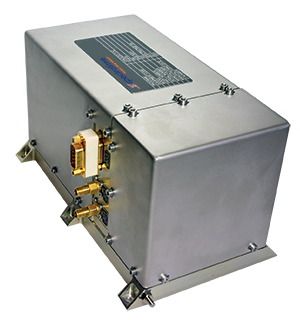
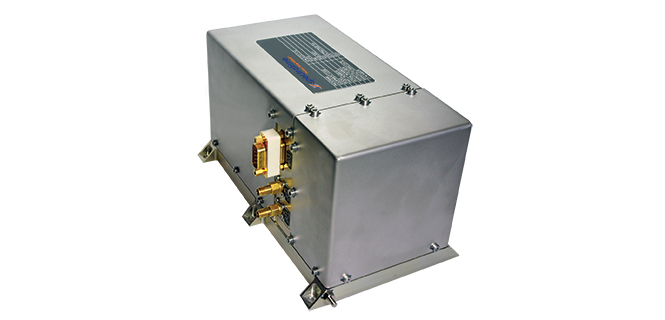
    Next-Gen Timing. Microchip’s next-generation MAC-SA5X miniaturized rubidium atomic clock produces a stable time and frequency reference that maintains a high degree of synchronization to a reference clock, such as a GNSS-derived signal.

    Its combination of low monthly drift rate, short-term stability and stability during temperature changes allows the device to maintain precise frequency and timing requirements during extended periods of holdover during GNSS outages or for applications where large rack-mount clocks are not possible.

    Image: Microchip
    Image: Microchip

    Operating over a wider temperature range of -40 to +75 Celsius, the MAC-SA5X was designed to quickly achieve atomic stability performance by taking less time to lock compared to some of the existing clock technology, Microchip said. In an aircraft application, for example, these attributes enable faster power up of critical communication and navigation systems in extreme climates.

    The MAC-SA5X allows system developers to avoid the need for extra circuitry by integrating a one pulse per second (1PPS) input pin for fast frequency calibration, saving time and development cost. In addition, the MAC-SA5X is designed with the same footprint as previous generation miniature atomic clock technology, reducing the development time to transition to the newer, higher performance device.

    “As an industry leader, Microchip continues to invest in next-generation atomic clock technology for Department of Defense programs, mission-critical infrastructure and networks that require a high degree of accuracy in timekeeping and synchronization,” said Randy Brudzinski, vice president and general manager of Microchip’s frequency and time business unit. “The MAC-SA5X adds several performance and feature enhancements while retaining the same footprint as the previous generation MAC-SA.3X products, enabling customers to easily transition to the new technology.”

    Designed and manufactured in the U.S., the MAC-SA5X operates to the following additional specifications:

    • <5.0E-11 frequency stability over operating temperature;
    • <5.0E-11 per month aging rate; 6.3-watt power consumption;
    • 47 cc in volume.

    The MAC-SA5X provides backward compatibility with its predecessor MAC-SA.3Xm family and comes in an ovenized crystal oscillator (OCXO)-sized package of 50.8 mm x 50.8 mm.

    Microchip has delivered more than 275,000 rubidium clocks, 120,000 chip-scale atomic clocks (CSACs), 12,500 Cesium clocks and 200 active hydrogen masers to customers worldwide.

    Development Tools. The MAC-SA5x family of atomic clocks is supported by evaluation kit 090-44500-000.

    Availability. The MAC-SA5X atomic clock is available now for pre-sampling, and will be available for deliveries in February. Microchip supports the MAC-SA5X with technical support services as well as an extended warranty.

  • China’s super-thin atomic clocks achieve mass production

    China’s super-thin atomic clocks achieve mass production

    Photo: Beidou constellation
    Photo: Beidou constellation

    China’s super-thin rubidium atomic clock, which is just 17 millimeters thick, has been put into mass production, according to Xinhua News Agency.

    The clock, developed in 2018 by a research institute under the China Aerospace Science and Industry Corp. Ltd, (CASIC) is the key to the positioning and timing accuracy of BeiDou navigation satellites.

    In 2015, Chinese scientists developed a rubidium clock that is tiny enough to fit in the palm of your hand but was almost 40 millimeters thick. The new clock, with a length of 76 millimeters and width of 76 millimeters, is only 17 millimeters thick.

    Compared with the previous generation, the new clock is smaller in size but performs better. It adopts a plug-in design, making it easy to insert and remove on circuit board. With stronger resistance to high temperatures, it can work at 70 degrees Celsius (158 degrees Fahrenheit).

    In addition, it has a taming function, enabling the clock to be automatically recognized and tamed by the pulse per second (PPS) signal provided by navigation satellite systems, improving the accuracy of local frequency.

    The clock can be used in fields such as aviation, aerospace and telecommunications. According to its developers, the ultra-accurate clock will have a broader market prospect in the future.

    Atomic clocks are the most accurate time and frequency standards. They use vibrations of atoms to measure time. Due to its small size, low cost and high reliability, rubidium clock is the most widely produced atomic clock.

    A large number of self-developed rubidium and hydrogen atomic clocks have been carried by satellites that provide accurate positioning for China’s BeiDou Navigation Satellite System.

    The atomic clocks are the workhorses that send synchronized signals so sat-nav receivers can triangulate their position on Earth.

    China began to construct the BDS in the 1990s. The system started serving China with its BDS-1 satellites in 2000 and started serving the Asia-Pacific region with its BDS-2 satellites in 2012. China will complete the BDS global network by 2020.

  • Mercury-ion atomic clock holds promise for greater GPS accuracy

    Mercury-ion atomic clock holds promise for greater GPS accuracy

    The National Aeronautic and Space Administration (NASA) is readying for an ultra-precise atomic clock that could not only transform the navigation of deep space missions, it could also improve the accuracy of GPS timing and thus GPS positioning. It is expected to launch in June.

    DSAC graphic: NASA:
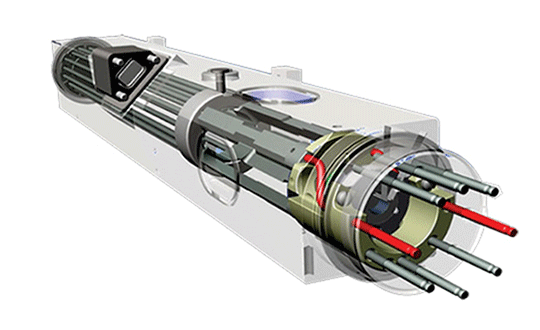
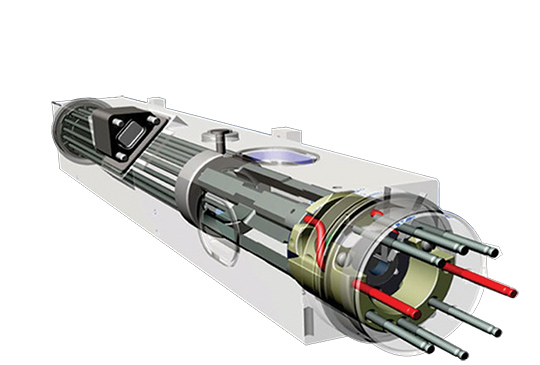
    Drawing of the DSAC mercury-ion trap showing the traps and the titanium vacuum tube that confine the ions. The quadrupole trap is where the hyper-fine transition is optically measured and the multipole trap is where the ions are “interrogated” by a microwave signal via a waveguide from the quartz oscillator. (Image: NASA.)

    The Deep Space Atomic Clock (DSAC) is a very small (the size of a toaster) mercury-ion atomic clock that is as stable as a highly precise ground atomic clock, yet small enough to fly aboard a spacecraft, and rugged enough to operate in deep space. Current ground-based atomic clocks that locate and navigate deep space missions are too massive to fly in space themselves.

    Thus, tracking data from the far-flung spacecraft must be collected and processed on Earth, meaning a two-way tracking link. DSAC will enable NASA to improve tracking data precision by an order of magnitude for its deep space missions out to Jupiter, Saturn — and beyond.

    It could also be used to improve the accuracy of GPS. DSAC is more stable and accurate than the atomic clocks currently aboard GPS satellites. As system modernization proceeds, use of a DSAC aboard future satellites holds out many promises. DSAC technology uses the property of mercury ions’ hyperfine transition frequency at 40.50 GHz to steer the frequency output of a quartz oscillator to a near-constant value.

    The clock confines the mercury ions with electric fields in a trap and protects them by applying magnetic fields and shielding. It is anticipated that DSAC would produce only 1 microsecond of error over 10 years.

    For further details on NASA’s Deep Space Atomic Clock project and detailed callouts on the diagram above, look here.

  • Orolia technology synchronizes black hole photo telescopes

    Image: Event Horizon Telescope Collaboration
    Image: Event Horizon Telescope Collaboration

    Atomic clocks support world’s first black hole photo

    Orolia, through its joint venture company T4Science Inc. in Switzerland, supported the ground-breaking scientific initiative to capture the world’s first photo of a black hole, conducted by the Event Horizon Telescope (EHT) project.

    As a leader in maser atomic clock technology, Orolia provided the critical timing solution to synchronize telescopes around the world and create a virtual telescope the size of Earth to observe this deep space, supermassive object.

    Some of the world’s most advanced telescopes, located at challenging high-altitude sites, were synchronized with T4Science Masers to capture the sharpest image possible. Locations included volcanoes in Hawaii, Arizona mountains, the Spanish Sierra Nevada, the Chilean Atacama Desert and Antarctica.

    T4Science masers deliver ultra-precise time synchronization in the most challenging environments on Earth and in Space.

    The EHT project uses very long baseline interferometry (VLBI). This technology requires synchronization, phase stability and phase coherence between different telescopes within a few femto-seconds, and leverages the Earth’s rotation to form one Earth-size telescope.

    VLBI enables the EHT to achieve an angular resolution of 20 micro-arcseconds — enough to read a newspaper in New York from a sidewalk café in Paris.

    Orolia delivers this critical VLBI technology through its T4Science iMaser-3000 hydrogen masers. The iMaser-3000 is a VLBI atomic clock, supporting other mission-critical timing programs such as military and commercial satellite applications.

    “Orolia has been a proud supporter of space research and missions for more than forty years,” said Orolia CEO Jean-Yves Courtois. “As the world leader in resilient positioning, navigation and timing solutions, we develop precise, ultra-reliable technology for environments where failure is not an option.”

    Orolia’s proven timing solutions support many space agencies and research institutes worldwide, including ESA, NASA, Jet Propulsion Laboratory, SpaceX, the Centre National d’Étude Spatiales (CNES France), the National Physics Laboratory (UK), Deutsches Zentrum für Luft-und Raumfahrt (DLR Germany) and the Japan Aerospace Exploration Agency (JAXA), among others.

  • Frequency Electronics awarded $5.9M Lockheed contract for GPS IIIF clock qualification

    As a risk reduction effort for the U.S. Air Force’s GPS III Follow On (GPS IIIF) satellite program, Frequency Electronics Inc. has received a contract from Lockheed Martin Space, valued at $5.9 million, for the qualification of FEI’s Digital Rubidium Atomic Frequency Standard (DRAFS).

    The contract’s intent is to qualify FEI’s DRAFS for potential use on the new GPS IIIF satellites, securing the industrial base for high-accuracy GPS atomic clocks.

    To help the Air Force modernize its GPS satellite constellation with new technology and capabilities, Lockheed Martin Space designed and built the most powerful GPS satellite, GPS III. With 10 satellites under contract, in 2018, the Air Force selected Lockheed Martin to build up to 22 additional GPS IIIF satellites, adding new features and resiliency to the flexible satellite design. The Air Force began launching GPS III satellites in December 2018. Today, more than 4 billion users rely on GPS.

    “We are extremely pleased to be awarded this contract and the opportunity to play a significant role in the GPS IIIF program,” Stanton Sloane, FEI’s CEO commented. “This award is the culmination of 50+ years of research and development of advanced quartz and atomic clocks based on FEI’s proprietary technologies. We are also pleased to continue our long-standing relationship with Lockheed Martin Space on critical national security programs.”

    Martin Bloch, FEI’s Executive Chairman added, “I congratulate the FEI team on the development of this digital Rubidium clock for GPS IIIF program. FEI will continue the development of advanced clock technologies for future generations of Satellites and Terrestrial applications.”

    Frequency Electronics designs, develops and manufactures high-precision timing, frequency control and synchronization products for space and terrestrial applications. Its products are used in satellite payloads and in other commercial, government and military systems including C4ISR and EW markets, missiles, UAVs, aircraft, GPS, secure radios, energy exploration and wireline and wireless communication networks.

    Its subsidiaries and affiliates include FEI-Zyfer, which provides GPS and secure timing (“SAASM”) capabilities for critical military and commercial applications; and FEI-Elcom Tech, which provides subsystems for the Electronic Warfare markets and added resources for RF microwave products.

  • Teledyne helps build new generation of atomic clocks

    Teledyne helps build new generation of atomic clocks

    Teledyne e2vAs a member of the European Quantum Technologies Flagship, Teledyne e2v will collaborate with a team of science and industry experts on the iqClock project to commercialize high-precision atomic clocks. This is one of the first of 20 projects being funded by the European Commission.
    According to Teledyne e2v, clocks are a critical component of modern society, especially in scientific and engineering applications where precision time measurement is vital. Teledyne e2v’s role in this project is to build the atomics package including the vacuum and control system. Teledyne e2v’s Quantum Group, which is comprised of more than 30 scientists and engineers, will be taking on the project.

    The iqClock consortium is made up of both academic and industrial partners who share the same goal of bringing optical clocks closer to the market. Teledyne e2v’s partners include Chronos and British Telecom in the United Kingdom, Toptica in Germany, NKT Photonics in Denmark and Acktar in Israel. Its academic partners include the University of Amsterdam, University of Birmingham, Nicholas Copernicus University Torun, University of Copenhagen, TU Wien (Vienna) and Innsbruck University.

    “Optical atomic clocks are the most precise time-telling tools known to man,” said Ole Kock, technical authority for Quantum Technologies at Teledyne e2v. “The challenge is their size and complexity that restricts them to laboratory use. Now, by using superradient laser technology we can help bring optical atomic clocks into the everyday world.”

    According to Teledyne e2v, project has received funding from the European Union’s Horizon 2020 research and innovation program under grant agreement No. 820404.

  • Orolia to supply clocks for 12 more Galileo satellites

    Orolia to supply clocks for 12 more Galileo satellites

    Orolia’s atomic clock solutions have been selected for the Galileo Global Navigation Satellite System (GNSS) under contracts totaling 26 million euros for an additional 12 Galileo satellites.

    This latest initiative builds on Orolia’s long-standing role in providing precise timing technology for satellite programs, including Galileo.

    Each satellite will carry two rubidium atomic clocks and two passive hydrogen masers, considered the most stable clock in the world. Under these contracts, Orolia will supply its Spectratime Rubidium Atomic Frequency Standard and its passive hydrogen masers physics package.

    Orolia's Space Rubidium Atomic Frequency Standard. (Photo: Orolia)
    Orolia’s Space Rubidium Atomic Frequency Standard. (Photo: Orolia)

    “We’re honored to continue supporting the European Commission with precise timing for Galileo,” said Orolia CEO Jean-Yves Courtois. “These new contracts further emphasize Orolia’s position as the world’s leading provider of resilient positioning, timing and navigation (PNT) solutions.”

    In addition to serving as Europe’s independent PNT source, Galileo can also serve as a secondary signal source for systems such as GPS, GLONASS or BeiDou in the event of service disruption. Galileo’s quadruple clock redundancy designed into each satellite ensures that even if a failure occurs, overall system performance will not be compromised.

    More than 150 Orolia Spectratime atomic clocks are flying to support Galileo, IRNSS, BeiDou, GAIA and other missions, some for more than 10 years. Orolia provides the expertise necessary to design solutions for highly reliable space applications.

    Orolia is a designer and manufacturer of a full range of high-performance, low-cost GNSS synchronized crystal solutions, rubidium and maser sources, smart integrated GNSS reference clocks, rugged PNT devices, GNSS simulation and clock testing systems. Orolia’s PNT solutions support a variety of critical applications including defense, government, space, maritime, enterprise networks, aviation and telecommunications.

  • Galileo ground segment keeps constellation on track

    Galileo ground segment keeps constellation on track

    News from the European Space Agency

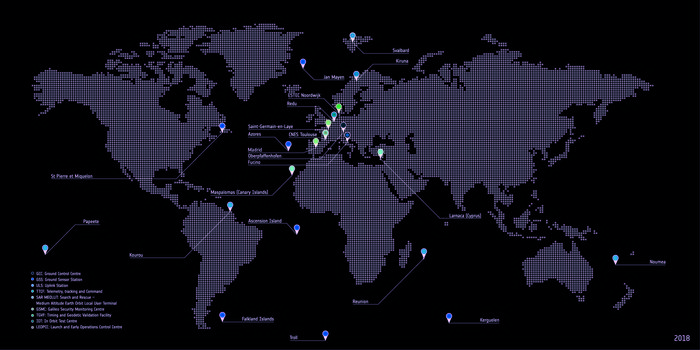
    Galileo’s initial services have been running for more than 15 months now, and signals from the satellites in space are routinely serving users all across the world. The functioning of Galileo is dependent on a global network of ground stations, its current extent shown in the map here.

    The constellation in orbit is only one element of the overall satellite navigation system – the tip of the Galileo iceberg. At the same time as satellites were being built, tested and launched, a global ground segment has been put in place, extending to some of the world’s loneliest places, from Svalbard in the High Arctic to storm-engulfed Jan Mayen Island, Ascension Island in the Mid Atlantic to Noumea in the South Pacific, Kerguelen in the southern Indian Ocean to Troll base in the Antarctic interior.

    Galileo’s global ground segment. (Image: ESA)

    Among the latest developments are updated control and mission software for the two Galileo control centres that sit at the heart of this global web: Fucino in Italy generates the accurate navigation messages that are then broadcast through the navigation payloads, and Oberpfaffenhofen in Germany controls the constellation of satellites. A new telemetry, tracking and command station last year arose in Papeete on Tahiti, in the South Pacific.

    Establishing Galileo’s ground segment was among the most complex developments ever undertaken by ESA, having to fulfill strict levels of performance, security and safety. Formal responsibility for the operations of this Galileo ground segment was last year passed to ESA’s partner organization, the European Global Navigation Satellite System Agency, or GSA, but ESA continues to be in charge of its maintenance and growth.

    Galileo’s Nouméa ground station’s Sensor Station and Uplink Station. (Photo: ESA)

    Users don’t have to worry about this ground segment, but it is essential to keeping Galileo services running reliably. The atomic clocks aboard the satellites are accurate to a few nanoseconds, delivering metre-scale positioning precision, but they are prone to drift over time.

    Similarly, the orbits of the satellites can be slightly nudged by the gravitational tug of Earth’s slight equatorial bulge and by the Moon and Sun. Even the slight but continuous push of sunlight itself can affect satellites in their orbital paths. The quality of signals received on the ground can be affected by their transit through the ever-changing ionosphere, the electrically active outer layer of Earth’s atmosphere.

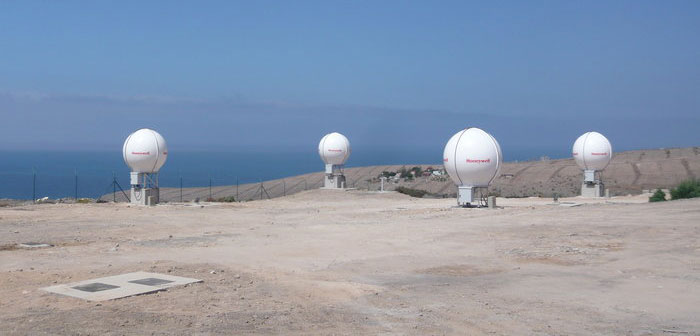
    Galileo sensor stations, with small omnidirectional receiving antennas around just 50 cm high, are on place around the globe to check the accuracy and signal quality of individual satellites in real time, and work together to pinpoint the current satellite orbits.

    These measurements are transmitted via secure satellite communications to Fucino, where they serve as the basis of a set of corrections — accounting for timing or orbital slips — to be uplinked to the satellites via a network of 3-metre-diameter uplink stations for rebroadcast within navigation messages to users, currently updated every 50 minutes.

    Considering Galileo is Europe’s largest satellite constellation, timely control of the satellites is essential, enabled by 13 m-diameter telemetry, tracking and command stations in Kiruna, Sweden and Redu, Belgium as well as the equator-hugging Kourou, French Guiana, Reunion, Noumea in New Caledonia and now Papeete sites.

    Galileo Station on Gran Canaria. (Photo: ESA)

    The ground segment also comprises a set of four Medium-Earth Orbit Local User Terminals serving Galileo’s search and rescue service, at the corners of Europe and facilities for testing Galileo service quality and security — the Timing and Geodetic Validation Facility and two Galileo Security Monitoring Centres.

    The Launch and Early Operations Control Centres have the task of bringing new satellites to life, to be handed over to the main Satellite Control Centre in Oberpfaffenhofen within typically a week after launch. Redu in Belgium, set up as Galileo’s In-Orbit Test Centre, then puts these satellites through a complex set of testing and checkouts ahead of them joining the working constellation.

  • Using GPS, NASA tests atomic clock for deep space navigation

    Using GPS, NASA tests atomic clock for deep space navigation

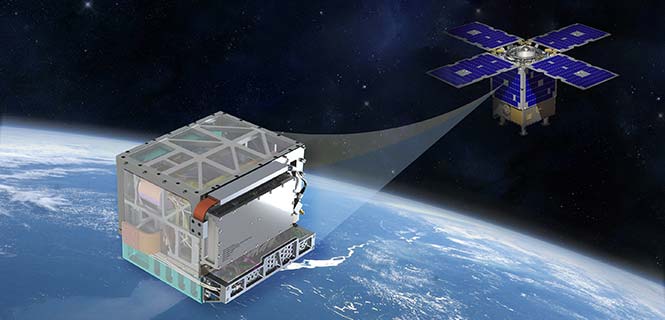
    While in orbit, the Deep Space Atomic Clock (DSAC) mission will use the navigation signals from GPS coupled with precise knowledge of GPS satellite orbits and clocks to confirm DSAC’s performance.

    News from the Jet Propulsion Laboratory, NASA

    In deep space, accurate timekeeping is vital to navigation, but many spacecraft lack precise timepieces on board. For 20 years, NASA’s Jet Propulsion Laboratory in Pasadena, California, has been perfecting a clock. It’s not a wristwatch; not something you could buy at a store. It’s the Deep Space Atomic Clock (DSAC), an instrument perfect for deep space exploration.

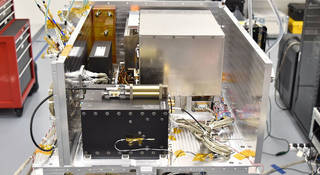
    The atomic clock, GPS receiver and ultra-stable oscillator that make up the Deep Space Atomic Clock Payload, following integration into the middle bay of Surrey Satellite US’s Orbital Test Bed Spacecraft.
    (Photo: Surrey Satellite Technology)

    Currently, most missions rely on ground-based antennas paired with atomic clocks for navigation. Ground antennas send narrowly focused signals to spacecraft, which, in turn, return the signal. NASA uses the difference in time between sending a signal and receiving a response to calculate the spacecraft’s location, velocity and path.

    This method, though reliable, could be made much more efficient. For example, a ground station must wait for the spacecraft to return a signal, so a station can only track one spacecraft at a time. This requires spacecraft to wait for navigation commands from Earth rather than making those decisions on board and in real-time.

    “Navigating in deep space requires measuring vast distances using our knowledge of how radio signals propagate in space,” said Todd Ely of JPL, DSAC’s principal investigator. “Navigating routinely requires distance measurements accurate to a meter or better. Since radio signals travel at the speed of light, that means we need to measure their time-of-flight to a precision of a few nanoseconds. Atomic clocks have done this routinely on the ground for decades. Doing this in space is what DSAC is all about.”

    The Deep Space Atomic Clock in the middle bay of the General Atomics Orbital Test Bed spacecraft. (Image: NASA)

    The DSAC project aims to provide accurate onboard timekeeping for future NASA missions. Spacecraft using this new technology would no longer have to rely on two-way tracking. A spacecraft could use a signal sent from Earth to calculate position without returning the signal and waiting for commands from the ground, a process that can take hours. Timely location data and onboard control allow for more efficient operations, more precise maneuvering and adjustments to unexpected situations.

    This paradigm shift enables spacecraft to focus on mission objectives rather than adjusting their position to point antennas earthward to close a link for two-way tracking.

    Additionally, this innovation would allow ground stations to track multiple satellites at once near crowded areas like Mars. In certain scenarios, the accuracy of that tracking data would exceed traditional methods by a factor of five.

    DSAC is an advanced prototype of a small, low-mass atomic clock based on mercury-ion trap technology. The atomic clocks at ground stations in NASA’s Deep Space Network are about the size of a small refrigerator. DSAC is about the size of a four-slice toaster, and could be further miniaturized for future missions.

    The DSAC test flight will take this technology from the laboratory to the space environment. While in orbit, the DSAC mission will use the navigation signals from U.S. GPS coupled with precise knowledge of GPS satellite orbits and clocks to confirm DSAC’s performance. The demonstration should confirm that DSAC can maintain time accuracy to better than two nanoseconds (.000000002 seconds) over a day, with a goal of achieving 0.3 nanosecond accuracy.

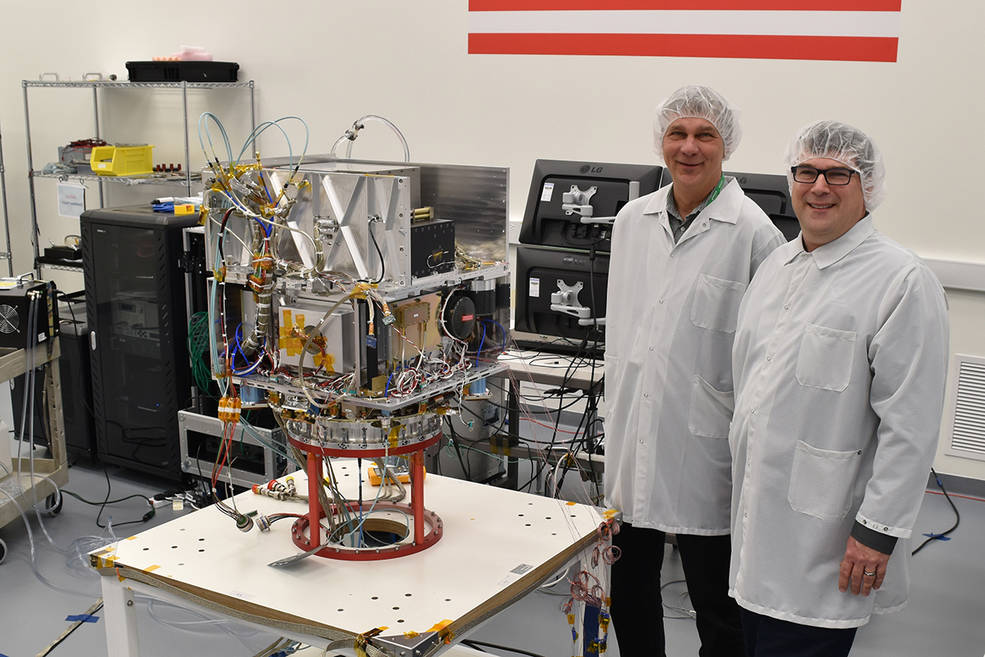
    Tom Cwik, the head of JPL’s Space Technology Program (left) and Allen Farrington, JPL DSAC project manager, view the integrated atomic clock payload on Surrey Satellite US’s Orbital Test Bed Spacecraft.
    (Photo: Surrey Satellite Technology)

    Once DSAC has proved its mettle, future missions can use its technology enhancements. The clock promises increased tracking data quantity and improved tracking data quality. Coupling DSAC with onboard radio navigation could ensure that future exploration missions have the navigation data needed to traverse the solar system.

    Technologies aboard DSAC could also improve GPS clock stability and, in turn, the service GPS provides to users worldwide. Ground-based test results have shown DSAC to be upwards of 50 times more stable than the atomic clocks currently flown on GPS. DSAC promises to be the most stable navigation space clock ever flown.

    “We have lofty goals for improving deep space navigation and science using DSAC,” said Ely. “It could have a real and immediate impact for everyone here on Earth if it’s used to ensure the availability and continued performance of the GPS system.”

    DSAC is a partnership between NASA’s Space Technology Mission Directorate and the Space Communications and Navigation program office, a program under the Human Exploration and Operations Mission Directorate. DSAC will launch in 2018 as a hosted payload on General Atomic’s Orbital Test Bed spacecraft aboard the U.S. Air Force Space Technology Program (STP-2) mission.

  • PNT Roundup: Scaling down GPS-reliant devices

    By Ramki Ramakrishnan

    In many respects, the story of innovation in electronics has been about miniaturization: designers pack more features, functionality and performance into electronics that are smaller, lighter and more power-efficient. However, this has traditionally been applied only to a limited extent to atomic clocks, which electronic devices employ to maintain correct time if their GPS signal is lost.

    Atomic clocks have significant limitations in terms of scalability and portability, so until recently the best designers could use were ovenized crystal oscillators (OCXOs), which were smaller, lighter and consumed less power than atomic clocks.

    However, they were also less accurate and precise. Now, micro-atomic clocks enable addressing an entirely new range of use cases. A miniature atomic clock (MAC) is not the same clock made smaller; it’s a different clock.

    Timing Quality Measurements. A clock is accurate if its time agrees with a standard such as cesium reference or GPS. A clock is precise if its interval between ticks — its frequency of oscillation — is the same as a reference clock’s interval, even if the reference clock is inaccurate.

    A stern measure of precision is syntonicity, which is a measure of consistency in the occurrence of ticks within the environment. Radar requires syntonicity. To obtain a clear image of a scanned object, the receiver of the signal bounced off the object needs to know the exact instant the associated pulse was sent from the transmitter.

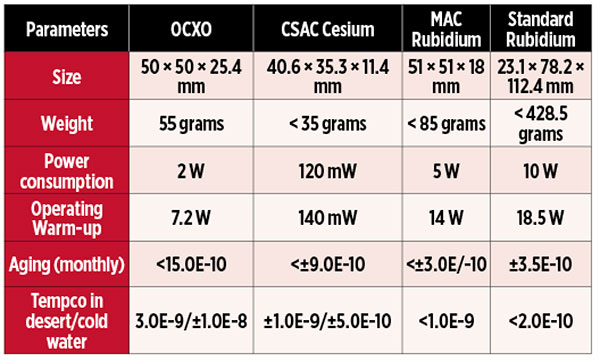
    It’s All About SWaP. One challenge of any timing miniaturization is whether the clock’s size, weight and power (SWaP) meet the needs of a given application. For example, a cesium chip-scale atomic clock (CSAC) is the smallest sized atomic clock in the current market; see the table below. By contrast, the rubidium MAChas the lowest power consumption after the CSAC (that is, 40 times more than CSAC). Before the introduction of the MAC, the standard rubidium clock was the clock with the lowest power consumption and with similar performance.

    Performance metrics of clock technologies.

    Benefits of small SWaP values are easily seen. Devices that required an external power source can now operate on batteries, without a heat sink. A person or a drone can now carry devices that were stationary or required a truck.

    Improvements in SWaP only matters if application requirements for accuracy and precision are also met. What happens if an application’s GPS access is lost? All clocks tend to drift once they no longer reference an external time source. This is known as aging. A key factor that affects aging is temperature. While operating in extreme environments (such as, deserts, high altitudes or under sea), the rate of timing error increases due to temperature variation; the amount of temperature-related error is called tempco.

    The availability of clocks with tight specifications signifies that designers can now employ accurate and precise timing in many ways and places. However, one must specify, analyze and select the clock carefully to meet the requirements of the application. For example, replacing the OCXO with a standard rubidium clock is typically not an option because the standard rubidium clock does not fit in to the OCXO form factor. Designers may consider replacing an OCXO with a CSAC or MAC if greater portabiity and better timing accuracy and precision are the key requirements.

    The choice often comes to one between the CSAC’s lower power consumption and weight versus the MAC’s superior aging performance in the event of GPS loss. The difference between the two clocks lies in how gas atoms trapped into resonance by a microwave synthesizer are excited and then interrogated, a concept known as coherent population trapping.

    Applications suitable for rubidium atomic clocks (MAC) include the following.

    Cellular Base Stations. Rubidium atomic clocks can meet the tight timing requirements for 4G-/LTE-base stations up to 24 hours (even longer for 3G and 4G). Moreover, rubidium’s superior aging ensures longer holdover, meaning the network can remain operational for longer even if the sync reference is lost. The MAC’s lower power consumption compared to a standard rubidium clock also contributes to a lower power and heat density overall, potentially reducing the need for external cooling while increasing the electronic reliability and reducing its size. Low tempco is also critical, considering the environments in which these stations often operate.

    Radar Base Stations. Radars require highly precise synchronization between transmitter and receiver signals. MACs are increasingly replace OCXO in these applications, which also benefit from the technology’s lower power.

    Applications suitable for CSACs include these.

    IED Jammers. Low-power consumption is critical in dismounted intelligent electronic devices (IED) jammers, which must be small, light and battery-powered. Yet they must be precise enough to tightly synchronize and allow pre-defined time slots in the signals (known as look windows) to allow friendly communications through.

    Dismounted Military Radios. Portability and precise synchronization are critical, especially given the higher bandwidth waveforms required to handle encoded video and other data-rich signals.

    Tactical Unmanned Aerial Vehicles (UAVs). In addition to relying on GPS (or clock holdover) for navigation, unmanned aircraft drones also require precise timing for their encoded data-rich and video communications. They also present challenges in terms of the size, weight and power consumption of payloads.

    Undersea Seismic Sensing. Differences in time measurements of acoustic pulses across sensor nodes are used to map subterranean formations such as oil deposits. In the absence of GPS under water, precise synchronization and very good aging performance are critical to harvesting reliable data during the duration of a survey deep under the ocean.

    More innovation lies ahead! Low-powered SWaP-friendly atomic clocks are revolutionizing the world without compromising clock performance, enabling many mission-critical applications.


    RAMKI RAMAKRISHNAN is director of product line management and business development, Clocks Business Unit, Microsemi Corporation.

  • 3 atomic clocks fail on 1 Indian satellite, replacement prepped

    3 atomic clocks fail on 1 Indian satellite, replacement prepped

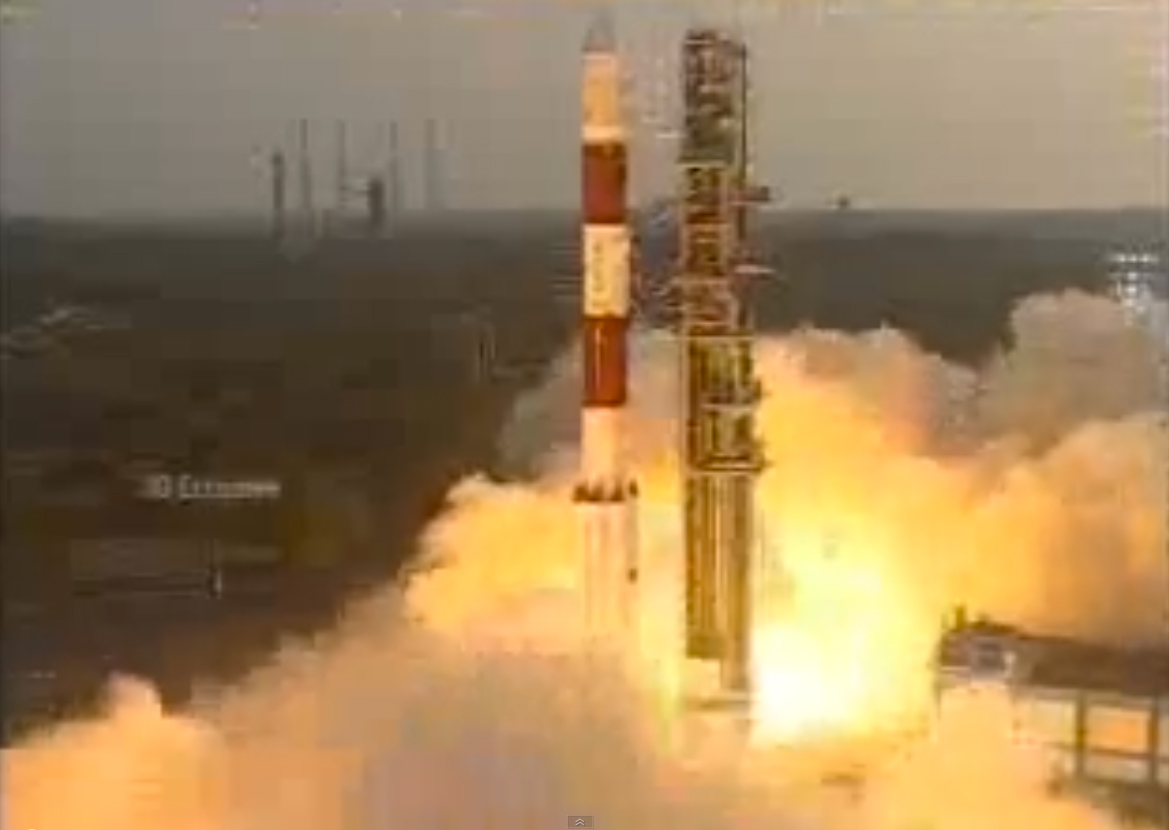
    IRNSS-B was launched April 4, 2014.
    IRNSS-1B, launched April 4, 2014.

    Three atomic clocks onboard a single satellite of the NAVIC Indian regional navigation satellite system have failed.

    Indian Space Research Organization (ISRO) Chairman A.S. Kiran Kumar told The Hindu newspaper that the agency is trying to restart the clocks. Kumar said the affected satellite, IRNSS-1A, is otherwise healthy, and the rest of the constellation is performing its core function of providing accurate position, navigation and time.

    Last week, the European Space Agency discussed clock failures on board Galileo satellites. Rubidium atomic clocks onboard both constellations were manufactured by Spectratime of Switzerland, but the cause of the failures has not been identified and could involve factors other than clock design.

    IRNSS-1A is equipped with one primary and two back-up clocks. At this time, it “will give a coarse value. It will not be used for computation. Messages from it will still be used,” Kumar said. “There are some anomalies in the atomic clock system on board. We are trying to restart it. Right now we are working out a mechanism for operating it.”

    The ISRO is readying one of the two back-up navigation satellites — IRNSS-1H — to replace it in space in the second half of this year. IRNSS-1A was launched in July 2013 and has an expected lifespan of 10 years.

    The Indian Regional Navigation Satellite System (IRNSS) constellation was completed April 28, 2016. It was then renamed NAVIC — Navigation Indian Constellation, by India’s Prime Minister Narendra Modi.

    With seven satellites in orbit, the constellation’s primary focus is to provide information in the Indian region and 1,500 kilometers around the mainland.