
Tag: autonomy

  • From animals to autonomy: RIN gathers experts for top conference

    From animals to autonomy: RIN gathers experts for top conference

    RIN logoThe Royal Institute of Navigation: International Navigation Conference will take place Nov. 18-21 at the Edinburgh International Conference Centre in Edinburgh, U.K.

    Navigation and Societal Benefits: From Animals to Autonomy
    The International Navigation Conference (INC) offers a unique format, with keynotes morning and afternoon each day, to set the scene for the more in-depth session papers.

    Resilient position and precise time are enabling the modern world. INC enables sharing of knowledge and experience to maximize the potential and positive impact of the industry.


    Plus:

    Pre-INC Training Seminar: Securing Positioning and Timing
    On Monday, Nov. 18, RIN is offering a one-day short course to build understanding of satellite navigation vulnerabilities and threats, plus steps to toughen and augment systems.

    Learn more, including presenters and to register.


    At INC, technology, system and application experts meet with cognitive neuroscientists, human factors, legal, ethical and regulatory experts. Participants feed insights from RIN’s world-leading animal navigation forum and conference, offering insights, perspective and contacts to improve attendees impact and effectiveness.

    INC creates value by bringing disciplines together to share knowledge, perspectives and insights. The RIN strives to make INC an enriching experience for all delegates, with a program designed to include plenty of time for networking, including social events on Monday, Tuesday and Wednesday evenings.

    RIN aims for each delegate to leave INC with new insights, ideas and contacts.

    Session Themes

    • Autonomy and Innovations in Robotics
    • Animal Navigation
    • Resilient PNT
    • Neuroscience and Cognition
    • Human Factors and Wayfinding
    • Innovation: Integrated Sensors and Indoor Navigation
    • Innovation: Artificial Intelligence
    • Innovative Navigation Solutions
    • User Sector Updates: CNI and Maritime
    • Scottish-led Innovation in Positioning, Navigation and Timing
    • Drone Regulation and Protection
    • UK Space and GNSS

    For more information, including the programme and keynote speakers, visit the event website.
  • Quectel’s new C-V2X module supports autonomous driving

    Quectel’s new C-V2X module supports autonomous driving

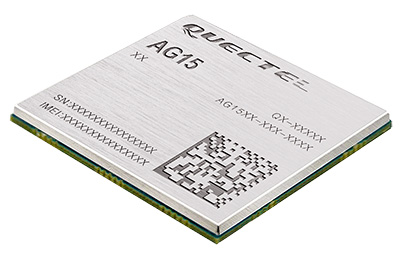
    Quectel Wireless Solutions has launched the automotive-grade C-V2X module AG15, which features the Qualcomm 9150 C-V2X chipset solution from Qualcomm Technologies, a subsidiary of Qualcomm Incorporated.

    Image: Quectel
    Image: Quectel

    The module is now sampling to the automotive industry for the development of commercial C-V2X products.

    The AG15 C-V2X module is manufactured in accordance to IATF 16949:2016 quality management system standard for the automotive sector, and it fully complies with the automotive product quality processes, including APQP and PPAP.

    Pairing with the Quectel automotive-grade LTE module AG35, Quectel’s AG15 is designed to meet the telematics and vehicle-to-everything (V2X) connectivity requirements of the next-generation automotive applications, such as autonomous driving and road safety.

    Also known as LTE-V2X, C-V2X is the V2X communication technology based on the globally recognized Third Generation Partnership Project (3GPP) Release 14 specifications. The PC5-based direct communication mode of C-V2X supports vehicle-to-vehicle (V2V), vehicle-to-infrastructure (V2I) and vehicle-to-pedestrian (V2P) communications on the 5.9-GHz intelligent transport system (ITS) spectrum.

    In addition, C-V2X paves a strong evolution path toward 5G new radio (5G NR) and plays an essential part of the future of safe autonomous driving with its capabilities including non-line-of-sight (NLOS) sensing to support high-speed mobility and high vehicular density deployments, the company said.

    For positioning function, the AG15 features a built-in multi-constellation high-precision GNSS (GPS/GLONASS/BeiDou/Galileo/QZSS) receiver, with additional support from satellite-based augmentation systems (SBAS) and Qualcomm 3D dead-reckoning technology, which greatly improves the positioning accuracy and speed while simplifying customer designs.

    Based on C-V2X technology, the Quectel AG15 module adopts the 3GPP Release 14 C-V2X PC5 protocol. It is designed to allow low-latency, highly reliable and highly dense data exchange between vehicles and their surroundings, enabling effective information sharing among road users in avoidance of collisions, thus improving automotive safety, automated driving and traffic efficiency.

    Without the need for a subscriber identity module (SIM), cellular subscription or network assistance, the C-V2X direct communication mode helps reduce complexity and cost for customers.

    Additionally, the Qualcomm 9150 C-V2X chipset solution has a built in A7 application processor (1.5 GHz), which could be potentially utilized to run ITS stack and associated C-V2X applications.

    “We are very pleased to introduce our first batch of automotive grade C-V2X modules based on the Qualcomm 9150 chipset solution. Automated driving has unique requirements for V2X connectivity, such as lower latency, higher reliability and wider bandwidth, all of which could be addressed by C-V2X technology,” said Patrick Qian, CEO of Quectel. “Built upon Quectel’s expertise in connected vehicles and Qualcomm Technologies’ high-performance C-V2X chipset solution, the AG15 module is expected to help automakers and Tier 1 suppliers to effectively accelerate their efforts towards automated driving.”

    “Quectel is a global leader in cellular modules with rich experience in commercial automotive products,” said Nakul Duggal, vice president of product management, Qualcomm Technologies. “We are pleased to work closely with Quectel again to support its modules with our 9150 C-V2X chipset solution to help create safer and more efficient V2X solutions and to help empower road safety and autonomous driving. We look forward to working with Quectel in delivering the solutions required to address the needs of the next generation automobiles.”

  • IGNSS focuses on autonomy in February Sydney conference

    The upcoming annual conference sponsored by the IGNSS Society will take a close look at autonomy and provide GNSS constellation updates.

    IGNSS is the southeast Asian region’s premier conference on GNSS and related position, navigation and timing (PNT) technologies.

    This year’s conference theme is “Trusted Positioning: From Here to Autonomy.” The event, sponsored by Lockheed Martin, takes place Feb. 7-9 on the campus of the University of New South Wales in Sydney, Australia.

    At the conference, leaders in GNSS and PNT will gather to examine the latest technology, present cutting-edge research and discuss in open forums the implications for policy, market development and positioning infrastructure deployment.

    IGNSS 2018 will showcase a number of contemporary topics, including

    • the role of PNT in automated land, aerial and marine vehicles;
    • the growing range of commercial precise positioning services;
    • hard infrastructure issues such as space based augmentation systems; and
    • soft infrastructure issues such as datum modernization and mitigation of system vulnerabilities.

    These topics will be discussed in the context of the latest system developments fueling the multi-GNSS era.

    Running over two days immediately prior to IGNSS2018 is a meeting of the RTCM SC-104; all attendees are invited to attend.

    Also running one day before IGNSS2018 is the Japan-Australia Quasi-Zenith Satellite System Industry Utilisation Workshop. IGNSS delegates are also welcome to attend this free workshop.

    The IGNSS conference takes place on the UNSW campus in Sydney. (Photo: University of New South Wales)
    The IGNSS conference takes place on the UNSW campus in Sydney. (Photo: University of New South Wales)

    IGNSS2018 Highlight Sessions

    • Global GNSS service provider updates
    • SBAS Testbed overview and project updates
    • Panel: positioning autonomous systems

    Keynote Speakers

    • Air Vice-Marshall Kym Osley, Department of Defence
    • Kent Rosser, Discipline Leader Aerial Autonomous Systems, DST Group
    • Dorota Grejner-Brzezinska, The Ohio State University
    • Joe Burns, Sensurion
    • Rod Bryant, u-blox
    • Kendall Ferguson, RTCM Board of Directors & SC-104 Chair
    • Representative from the Expert Reference Group conducting the Review of Australia’s Space Industry Capability
    • Representative from the iMove CRC

    The IGNSS Association runs the SE Asian region’s premier conference on Global Navigation Satellite Systems and related Position, Navigation & Timing technologies. This year’s IGNSS is hosted in conjuction with the Australian Centre for Space Engineering Research at UNSW Sydney.