Rockwell Collins has awarded a contract to Systron Donner Inertial (SDI) for an inertial measurement unit (IMU) needed for the new Boeing 777X Integrated Flight Control Electronics (IFCE) fly-by-wire system.
The SDI300 aviation-grade inertial measurement unit by Systron Donner Inertial.
The core of SDI’s solution is its SDI300 aviation-grade IMU, which delivers reliable high performance and stability over full temperature and vibration environments, the company said.
The compact, low-power, high-quality SDI300 IMU enables efficient and smooth aircraft maneuvers through the most complex flight scenarios and challenging environments, while improving total system cost-effectiveness, reduced obsolescence and increased sustainability.
“SDI is honored to be selected and partnered with Rockwell Collins, BAE Systems, and Boeing for the 777X IFCE Program. The collaboration, teamwork and support provided by Rockwell Collins and the IFCE program team has been outstanding,” said David Hoyh, director of sales and marketing for SDI. “Systron Donner Inertial has a strong execution and service record on today’s B777.
“The new, smaller, lighter SDI300 aviation IMU will leverage SDI’s next generation quartz gyros and system architecture and be certified to DO-160/DO-254 Level A requirements, creating an innovative MEMS solution for the 777X’s advanced fly-by-wire system,” Hoyh said.
For more information and specifications on the COTS SDI300 or for information on the complete SDI product line, call +1 925-979-4500, e-mail: [email protected]; or go to www.systron.com.
The United States Federal Aviation Administration (FAA) is incentivizing general aviation aircraft owners to equip their aircraft with required NextGen avionics technology before the Jan. 1, 2020, deadline.
On Sept. 19, the FAA’s Automatic Dependent Surveillance-Broadcast (ADS-B) rebate website will go live, and general aviation aircraft owners will have the opportunity to apply for a $500 rebate to help offset the cost to equip eligible aircraft in a timely manner, rather than waiting to meet the mandatory equipage date.
“NextGen has played and will continue to play an important role in ensuring that our airspace is safe and efficient for the American people, and we are focused on achieving its full potential,” said U.S. Transportation Secretary Anthony Foxx. “This incentive program is an innovative solution that addresses stakeholder concerns about meeting the 2020 deadline, and will make a huge difference in helping the general aviation community equip.”
ADS-B is a foundational NextGen technology that transforms aircraft surveillance using satellite-based positioning. ADS-B Out, which is required by Jan. 1, 2020, transmits information about a plane’s altitude, speed, and location to air traffic control and other nearby aircraft.
ADS-B In allows aircraft to receive traffic and weather information from ground stations and to see nearby aircraft that are broadcasting their positions through ADS-B Out. Owners can choose to install only ADS-B Out equipment to meet the 2020 requirement, or they can purchase an integrated system that also includes ADS-B In.
On June 6, Secretary Foxx and FAA Administrator Michael Huerta announced that the rebates would be available starting this fall, and that only installations performed after the program launched would be eligible for the rebate. Previously equipped aircraft will not be eligible.
The $500 rebate will help offset the cost of purchasing required avionics equipment, which is available for prices as low as $2,000.
Beginning this month, the FAA will issue 20,000 rebates on a first-come, first-served basis for one year or until all 20,000 rebates are claimed — whichever comes first. The rebate is available only to owners of U.S.-registered, fixed-wing, single-engine piston aircraft that were first registered before Jan. 1, 2016.
The FAA will not provide rebates for software upgrades on already equipped aircraft, or for aircraft for which the FAA has paid or committed to upgrade. The FAA estimates that 160,000 aircraft need to be equipped by the deadline.
“We promised that we would help aircraft owners equip with ADS-B, and I am pleased to say that today we are honoring that commitment and we are delivering on our target date,” said Huerta. “We are encouraging aircraft owners to start equipping now. Do not wait until the last minute, because you may not be able to get an appointment with a certified installer.”
Aircraft owners who have a standard airworthiness aircraft may have a repair station or an appropriately-licensed A&P mechanic install the ADS-B equipment. Owners of aircraft certificated as experimental or light sport must adhere to applicable regulations and established standards when installing ADS-B equipment.
Owners are only eligible for the rebate if they install the avionics after September 19, 2016 and within 90 days of the rebate reservation date. Aircraft owners will have 60 days after the scheduled installation date to validate their equipage by flying their aircraft, and will then be able to claim the rebate.
The reservation system will require an N number, installation date, and the planned ADS-B equipment being installed. The reservation system will be available at the ADS-B Rebate website.
The FAA published a final rule in May 2010 mandating that aircraft flying in certain controlled airspace be equipped with ADS-B Out by January 1, 2020. That airspace is generally the same busy airspace where transponders are required today. Aircraft that fly only in uncontrolled airspace where no transponders are required, and aircraft without electrical systems, such as balloons and gliders, are exempt from the mandate.
The FAA has been working with stakeholders, including the Aircraft Electronics Association, the Aircraft Owners and Pilots Association, the Experimental Aircraft Association, the General Aviation Manufacturers Association, and others to inform and educate the aviation community about the ADS-B requirements.
The Federal Aviation Administration (FAA) is offering a $500 rebate for aircraft to install Automatic Dependent Surveillance – Broadcast (ADS-B) surveillance technology ahead of a 2020 deadline.
Today on a national press call, U.S. Transportation Secretary Anthony Foxx and Deputy Administrator Michael G. Whitaker announced the $500 rebate incentive for General Aviation (GA) aircraft owners who equip their aircraft with required avionics technology.
Accelerating compliance is critical to ensuring that pilots, manufacturers and retail facilities have adequate time and capacity to equip aircraft ahead of a 2020 regulatory deadline, the FAA said.
ADS-B is a foundational element of the FAA’s NextGen program, which consists of a suite of technologies that are modernizing the nation’s air traffic control system. ADS-B transforms aircraft surveillance using satellite-based positioning.
“This announcement signals our commitment to NextGen, which has played an important role in ensuring that our airspace is safe and efficient for the American people,” Secretary Foxx said. “We are focused on achieving its full potential, and by working with our General Aviation community, I’m confident we can successfully integrate aircraft and technology into the national airspace system.”
The rebates will be available this fall, and the FAA will announce the specific date soon.
In the meantime, the FAA has published information regarding the goals and structure of the program and is encouraging aircraft owners to look at the available equipment on the market and to schedule an installation appointment with a qualified installer starting in the fall of 2016. Aircraft owners will only qualify for the rebate if the installation is scheduled after the FAA begins offering the rebates.
The FAA published a final rule in May 2010 mandating that aircraft flying in certain controlled airspace be equipped with ADS-B by Jan. 1, 2020. That airspace is generally the same busy airspace where transponders are required. Aircraft that fly only in uncontrolled airspace where no transponders are required, and aircraft without electrical systems, such as balloons and gliders, are exempt from the mandate.
“We’re calling on all aircraft owners who plan to fly in busy airspace to equip with ADS-B before the deadline,” Administrator Huerta said. “Owners who wait too long to equip may not be able to get an installation appointment before the deadline. This limited-time rebate provides an incentive for early retrofitting, and will help draw attention for the urgent need for owners to comply so that they can continue to fly their aircraft in 2020.”
The $500 rebate will help offset an owner’s cost to equip U.S.-registered, fixed-wing, single-engine piston aircraft with avionics that comply with FAA technical standard orders and meet the rule requirements. The FAA is not offering rebates for software upgrades for aircraft already equipped, for new aircraft or for aircraft for which the FAA already has paid or committed to upgrade.
The FAA will be able to distribute 20,000 rebates — one rebate per aircraft owner. The FAA is encouraging owners of fixed-wing, single-engine piston aircraft to apply as soon as the program is launched this fall because the rebates are available on a first-come, first-served basis for one year, or until all 20,000 rebates are claimed, whichever comes first. The FAA estimates that as many as 160,000 aircraft need to be equipped by the deadline.
“ADS-B provides the General Aviation community with increased safety, efficiency, and situational awareness,” said Whitaker. “We’re getting closer to the 2020 deadline, and we need 100 percent equipage in the required airspace to realize the full benefits of this NextGen technology.”
General aviation and air taxi aircraft equipped with ADS-B Out enjoy more efficient spacing and optimal routing in some non-radar environments, including busy airspace in the Gulf of Mexico, mountainous regions of Colorado, and some areas in Alaska. ADS-B improves life-saving search-and-rescue with accurate and timely last-reported positions. General aviation pilots may also benefit from air traffic control services outside radar coverage.
The FAA is continuing to work with stakeholders such as the Aircraft Electronics Association, the Aircraft Owners and Pilots Association, the General Aviation Manufacturers Association, and others to inform and educate the aviation community about the ADS-B requirements.
Aircraft are required to be equipped with ADS-B by January 2020 as part of the agency’s effort to implement the satellite-based NextGen system to improve the nation’s air traffic control.
ADS-B technology, which costs around $2,000 to install, can save lives because it improves situational awareness, allows real time weather and traffic updates and improves communication where radar is limited. It also has the ability to improve route efficiency and air traffic.
CMD Flight Solutions has received U.S. Federal Aviation Administration (FAA) approval on its third Collins TDR-94/94D Transponder and GPS pairing, the FreeFlight Systems WAAS 1203C.
CMD Flight Solutions develops, markets and provides FAA-certified modifications to support NextGen avionics mandates and assists service and installation facilities with modification solutions to satisfy FAA-mandated requirements. The company provides Automatic Dependent Surveillance-Broadcast (ADS-B) Out on more than 5,000 business and personal aircraft.
The supplemental type certificate (AML STC) of its ADS-B OUT solution for Part 25 airplanes covers installation of FreeFlight’s 1203C SBAS/GNSS GPS position sensor with Rockwell Collins TDR-94/94D transponders. According to FreeFlight, “The pairing is a cost-effective way to help aircraft owners meet the ADS-B mandate.”
ADS-B OUT compliance is due Jan. 1, 2020, in the United States.The 1203C, a 15-channel GPS sensor, is also an approved position source for NextGen applications such as CPDLC, TAWS/FMS, RNP and others.
Australia’s Civil Aviation Safety Authority (CASA) has implemented a GNSS equipment mandate for all aircraft flying in the country, regardless of state of registry. The mandate is designed to align Australian operations with global standards set by the International Civil Aviation Organization (ICAO) for Communications, Navigation, Surveillance and Air Traffic Management (CNS/ATM).
The changes include the requirement that all aircraft operating under instrument flight rules (IFR) must now be equipped with GNSS avionics meeting TSO C129, which enables compliance with Required Navigation Performance (RNP) 1 terminal area and RNP 2 continental en route operations that begin May 26.
GNSS is the enabling technology for both performance-based navigation (PBN) and automatic dependent surveillance-broadcast (ADS-B) in Australia and will affect all IFR aircraft. Applying both PBN and ADS-B over the whole of Australia will permit:
Increased safety as air traffic control surveillance will be available over the whole of Australia at higher levels, and with substantial coverage at lower levels.
Flexi-route—a system that optimizes aircraft routes according to the latest weather and location of other aircraft
Reduced separation distances, greater fuel efficiency, lower flight times and reduced congestion at busy aerodromes.
To help foreign-registered aircraft operators in meeting the new requirements, transition arrangements are available for a two-year period. Operators who need the extension must complete an online form before their first flight in Australia on or after May 26.
To facilitate RNP operations within Australia, CASA has developed an acceptable means of compliance document.
The GNSS mandate will see ground-based navigation capability reduced by about 50 percent, with the decommissioning of about 190 ground-based navaids. The remaining network of navaids will form the GNSS backup navigation network.
Aspen Avionics has acquired Accord Technology LLC from Accord India. Accord Technology will operate as an Aspen Avionics company continuing to supply Federal Aviation Administration (FAA) -approved OEM GPS solutions to the aerospace industry. Support of its current client base will carry on as usual with licensed production.
“Accord’s expertise to design and develop solutions that meet NextGen and other performance-based navigation requirements, coupled with Aspen’s display offering, create the opportunity to provide unique solutions for all aerospace segments,” said John Uczekaj, president and chief executive officer, Aspen Avionics.
“This is a perfect blending of two companies known for their innovative culture. Aspen and Accord share the same passion to develop aviation solutions that improve situational awareness and promote flight safety at an affordable price,” said Shenoy Raghavendra, Accord Technology chief executive officer.
The transaction, announced today, was completed on June 19 using a combination of cash and securities. NEXA Capital Partners provided merger and acquisition financial advisory services to Aspen Avionics. Also acquired was AvValues LLC, also based in Phoenix. Accord Technology LLC is a joint venture of Accord Software & Systems Pvt. Ltd., Bangalore, India, and AvValues.
Hal Adams, founder of AvValues, has been named executive vice president of business development for the combined companies. He will be driving new business to include growing the successful NexNav product line.
“Our combination of innovation and capabilities is unmatched in the aviation industry with the potential to deliver even more affordable, intuitive fight deck and avionics solutions. This translates into meaningful benefits to owner/operators in all areas of manned and unmanned aviation,” said Adams, executive vice president of business development.
Aspen Avionics is a leader in manufacturing glass cockpit displays for general aviation. Founded 10 years ago, more than 9,000 Aspen cockpit systems have been installed worldwide. Aspen Avionics is globally recognized for providing the general aviation marketplace with innovative and affordable products including its Evolution Flight Display System and Connected Panel — the first certified wireless technology that communicates with onboard avionics systems.
Founded in 2008, Accord Technology’s expertise lies in design, manufacture and support of GPS, with Satellite Based Augmentation Systems (SBAS) such as the USA’s Wide Area Augmentation System (WAAS), receivers and sensors for OEMs for all aerospace segments, on manned and unmanned platforms. Its NexNav GPS SBAS WAAS multiple-solutions product line revolves around three key receivers: NexNav Mini, NexNav MAX and the recently introduced NexNav Micro.
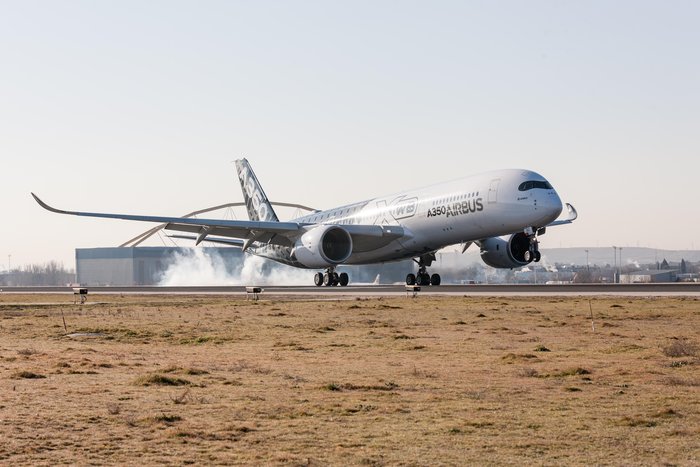
The twin-engine, wide-body Airbus A350 XWB, seen here at Spain’s Adolfo Suárez Madrid-Barajas airport, comes with EGNOS capability.
News by the European Space Agency
The EGNOS system, developed by the European Space Agency (ESA) for sharpening the accuracy of satnav across Europe, has been adopted by a growing number of airports to enable satellite-guided landing approaches. The new Airbus A350 airliner, currently entering service, comes fitted with it as standard.
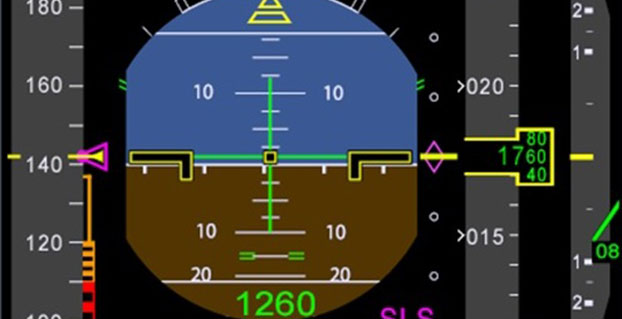
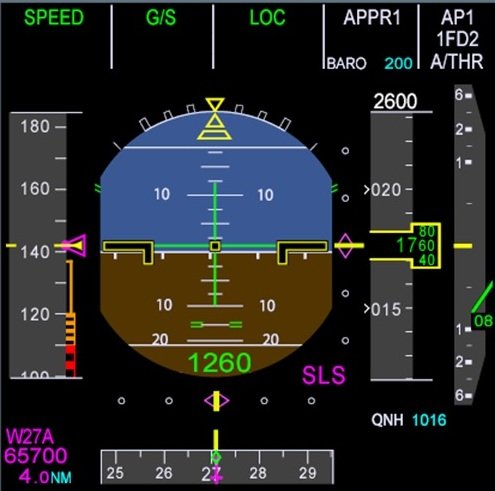
“For the first time on the A350 we have a new system called the Satellite Landing System,” explained Jean-Francois Bousquie, an Airbus flight-test engineer focused on avionics. “This allows pilots to perform precision landing approaches guided by EGNOS or its U.S. equivalent, WAAS, offering vertical guidance down to a minimum of 60 meters before the pilot sights the ground to make the go/no-go decision on the final landing descent.”
The A350’s Satellite Landing System allows pilots to perform precision-landing approaches guided by EGNOS or its U.S. equivalent, WAAS. The capability offers vertical landing guidance down to a minimum of 60 miles before the pilot sights the ground to make the go/no-go decision on the final landing descent.
The European Geostationary Navigation Overlay System, or EGNOS, can provide horizontal and vertical guidance to anywhere in Europe, without the need for any additional airport-hosted infrastructure. By using three geostationary satellites and a 40-strong network of ground stations, EGNOS improves the accuracy of GPS signals over European territory, while also providing continuous updates on their integrity.
The result is that the EGNOS-augmented signals are guaranteed to meet the extremely high performance standards set out by the International Civil Aviation Organisation standard, adapted for Europe by Eurocontrol, the European Organisation for the Safety of Air Navigation. The signals from space can therefore be relied on routinely for the safety-critical task of vertically guiding aircraft during landing approaches.
A total of 131 airports in Europe offer some 225 EGNOS-based approach procedures. By 2020, 582 landing procedures are expected across 20 European countries. The largest international airports use Instrument Landing System (ILS) infrastructure, with radio beams offering a truly precision landing capability, including the ability to autoland when visibility is at its worst.
But ILS is expensive to install and maintain, so smaller regional airports often forego it. The same is true of many new or expanding airports. Even with larger airports, in many cases only their busiest runways are equipped with ILS. So EGNOS offers a cost-effective way of safely increasing use of remaining runways, boosting the flexibility of any given airport.
“By reducing the value of the minima — the lowest safely guided altitude — for non-ILS runways, EGNOS increases the efficiency and safety of aircraft landings,” added Bousquie. “The take-up of EGNOS by European airports remains relatively low for now, but this should change over time. And with the A350, we are really designing for the long term — each aircraft will have a working life of 25 to 30 years.”
“Every qualified commercial airline pilot has been trained on ILS, to follow its radio beam,” Bousquie said. “So the Satellite Landing System works by having them follow the same type of cues as much as possible on a ILS ‘look-alike’ basis, employing all available navigation data including EGNOS.”
A pair of onboard Multi Mode Receivers manage the A350’s radio sensors, compute the deviations and ensure interface with display and guidance systems.
Who is MicroPilot? For almost anyone in unmanned aerial vehicle (UAV) electronics — or, rather, avionics — MicroPilot is probably a familiar name. The company makes the autopilots that basically fly the vehicle. An autopilot is the business-end of the navigation guidance system on a UAV. It takes input from sensors — typically GPS, air data, and inertial/gyro, which can be internal or external to the autopilot — and provides signals that adjust the flight controls to null out errors between the planned flight track and the actual flight profile that the UAV is flying.
A typical UAV autopilot uses GPS/inertial/air data to generate position information for route and waypoint navigation as well as hold modes where altitude and heading are maintained. In addition, it will accept commands from a remote ground-control station to modify the waypoints and route, to go to a specific waypoint, or to land, circle or fly a particular pattern. Telemetry data is also sent to the ground station to monitor status and flight progress. The autopilot acts as a central point within the UAV, communicating to and controlling onboard equipment such as pan-tilt cameras and transponders. The autopilot is also responsible for handling a variety of error conditions, such as loss of communication link or GPS.
MicroPilot was started 20 years ago by Howard Loewen, who is the sole owner and CEO. A licensed pilot, Loewen decided to make a model plane fly all by itself. With a bunch of aero textbooks, a couple of model airplanes, a single-board computer, gyros and a GPS receiver, he basically taught himself how aircraft fly and how to model (simulate) an aircraft. He developed autopilot software and a basic six-degree-of-freedom (DOF) simulator. Linking the simulator software to the autopilot software, he could test fly the autopilot on his PC. This same architecture is still in use at MicroPilot today and enables much more efficient development and testing of autopilot systems.
After many thousands of hours of simulated flight, actual flight testing was, at first, quite difficult for him to master. However, he gained lots of experience during a successful flight test campaign. Then Loewen put together a web page describing what he was doing. Not too long after the web page went live, the phone began to ring, and not long after the phone calls started, orders began to come in. MicroPilot wasn’t the only company selling autopilots at that time, but it may be the only one from that time that is still around.
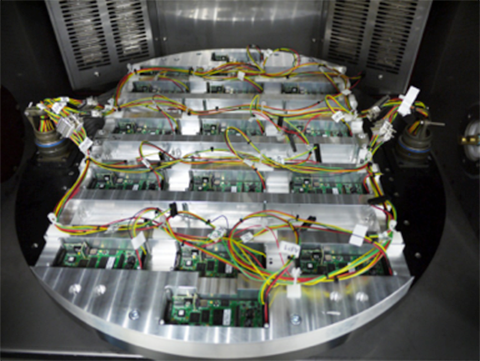
The company staff jointly decided that they should focus on the high-end commercial UAV market, so there had to be significant investment in production and development processes. Early on, an automated sensor calibration system was developed, which has recently been upgraded to use a two-axis rotating temperature chamber. This system allows MicroPilot to load up a couple dozen autopilots, and a few hours later fully calibrated and tested autopilots emerge! So, peak demand is readily accommodated, and MicroPilot staff is able to focus on product and process improvement rather than on labor-intensive manual testing.
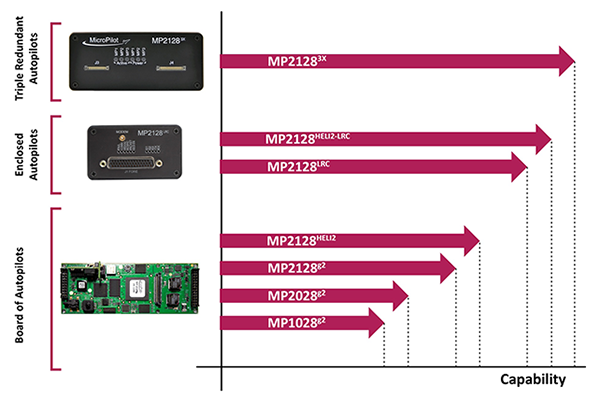
The professional market is a more challenging customer base because customers fly much more expensive vehicles. While there is currently a lot of focus on low-cost hobby autopilots, these are seen as an interim step until there are proper regulations. In the end, UAVs are aviation products, and for many applications they require a high level of reliability and availability. No one is going to be flying 55-pound helicopters over a city without an autopilot that has undergone vigorous validation and verification processes. MicroPilot autopilots have a large number of options that enable configuration of the control system for the type of vehicle — for instance, fixed wing, multi-rotor, helicopter, or aerostat/blimp. Once the type of vehicle has been selected, the gains of the various feedback loops that control the vehicle are configured. There are also quite a few options for payloads and other onboard devices such as transponders and cameras.
MicroPilot is based in Winnipeg, Manitoba, Canada. The city is large enough to have a pool of talented engineering and computer science graduates. While the winter climate can be quite harsh, the city is not so large that there is much trouble finding a place to test fly. The MicroPilot facilities are about six miles outside the city, and the staff is able to test fly right outside their building under a Transport Canada special flight operations certificate. MicroPilot has 27 employees, ships in the order of 1,000 autopilots per year, and has 850 customers in 70 countries.
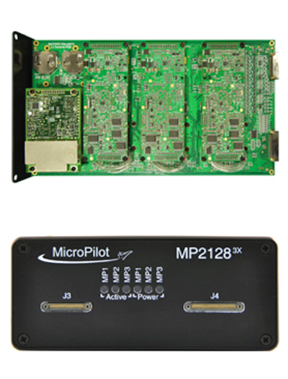
Regulation is the key to moving the commercial UAV market forward — a huge market is already flying sophisticated, expensive sensor payloads over cities. Even a moderate-size Multirotor UAV poses some safety risks, and it is important that regulators quickly devise rules to allow safe flight of these sensors over populated areas. MicroPilot has been working on improving its product offerings so that when regulations finally appear, the company will have products with the right capability and implemented correctly, so regulators should be able to readily establish that its products are safe. To this end, the first triple-redundant autopilot was introduced four or five years ago. It is still the only triple-redundant UAV autopilot available. Triple redundancy implies that two out of three channels could totally fail, and no failure will carry over from one channel to another, so autopilot functionality for the vehicle would still be maintained.
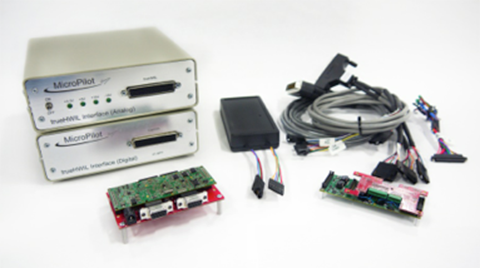
trueHWIL is a high-fidelity simulator that MicroPilot has developed where the sensors are stripped from the autopilot and the sensor inputs are simulated electrically. The simulator also reads control-position information from the autopilot. Under this simulator, the autopilot receives sensor data as if it is in the air. The code paths that the autopilot software executes are identical to those in a real autopilot in flight. Customers use this tool to build “iron-bird” simulations of the vehicle on the ground to validate the configuration prior to flight. It enables week-long or longer instrumented flight tests to be performed that would be difficult or dangerous to perform in real life.
trueHWIL high fidelity simulator. Photo: Micropilot
Finally, the xtender validate product has been developed. This requirements capture system allows customers to link system requirements to autopilot or ground control system (GCS) settings. It also allows the system designers to develop electronic flight-test cards linked to requirements. After flight test, the resulting data logs can be linked back into the xtender validate database and will also be automatically linked to the requirements used to define the flight-test card. This simplifies the flight-test process and allows managers to see that the system requirements have been completely exercised by flight testing.
MicroPilot integrates a number of different GPS receivers into its autopilots, including Trimble, u-blox and Novatel.
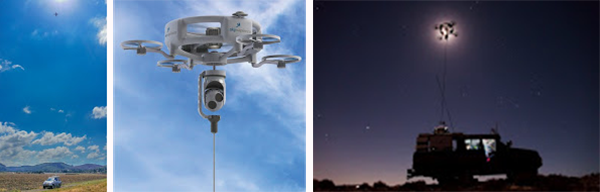
Sky Sapience in Israel has developed a unique HoverMast-100 solution for short-range, over-the-horizon reconnaissance. This UAV on a tether requires a high level of stabilization, which the MicroPilot autopilot enables. The tether allows for deployment up to a height of 50 meters within seconds, and the UAV can carry a 13-pound payload for a video camera, IR sensor, laser rangefinder, RF relay or other sensor — real-time data is transmitted to users over a wideband radio link. Armed forces in the United States, Israel and Asia are using the HoverMast-100. Commercial applications include power-line inspection, oil and gas pipelines, security, perimeter security, oil rigs, boats, agriculture, communication, sports events and disaster relief.
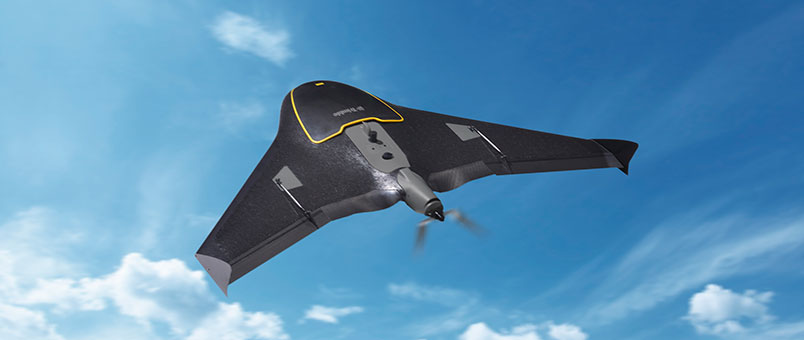
MicroPilot’s customer base is worldwide, with almost 1,000 different organizations having dealt with the company over the years. The range of applications goes from researchers flying a very odd vehicle with the ailerons split into a dozen segments (each controlled separately) all the way to customers using the system for traditional intelligence, surveillance, and reconnaissance (ISR), such as Bluebird Aero Systems. There are also customers that make multi-rotors (the proS3 in Italy) for a variety of data-collection needs; customers that fly targets (Avartek of Finland); customers that fly helicopters for video filming and emergency responders (Bertin in France and Helicam Pro in Italy); and customers that use UAVs in aerostats (Top I Vision in Israel). There are also a bunch of universities doing research using UAVs, and a couple of customers flying turbine powered UAVs.
So, for a significant number of UAV manufacturers and operators spread around the world, MicroPilot has become the supplier they rely on for autopilot solutions. And with the FAA now issuing what seems to be daily exemptions that allow commercial use of UAVs, it’s good to know that at least one autopilot supplier is already working towards the reliability and availability that certified applications of these vehicles will ultimately require.