Tag: CES

  • Qualcomm Showcases Connected Cars at CES

    qualcomm-concept-car-maserati-W
    Source: Qualcomm Technologies

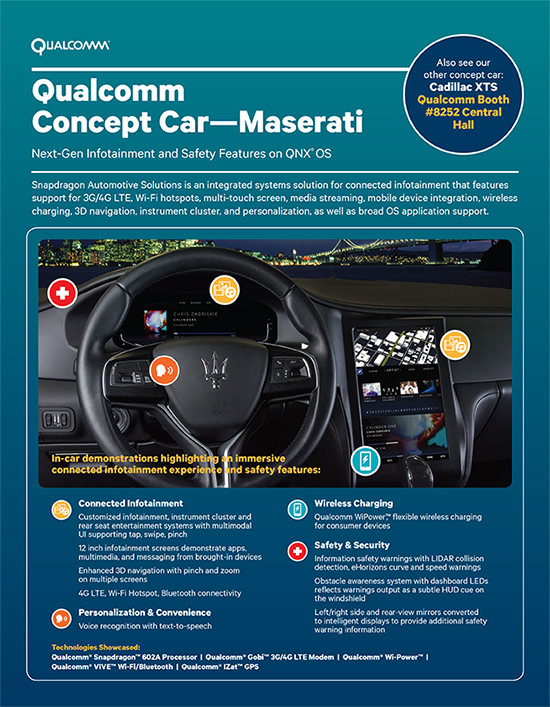
    Qualcomm Technologies will demonstrate two new full technology concept cars that integrate Qualcomm Technologies’ latest in vehicle technology and connectivity at the 2015 Consumer Electronics Show, being held this week in Las Vegas. The technology concept cars are based on the 2015 Maserati Quattroporte GTS and the 2015 Cadillac XTS and have been customized to bring the full Snapdragon Automotive Solutions experience to life, including the Qualcomm Snapdragon 602A automotive-grade processor, Qualcomm Gobi 3G/4G LTE wireless modems and Qualcomm VIVE QCA6574 Wi-Fi and Bluetooth module, and Qualcomm IZat RGR7640 GNSS module. Qualcomm Snapdragon and Qualcomm Gobi are products of QTI, and Qualcomm VIVE and Qualcomm IZat are products of QCA.

    The Qualcomm Concept Car – Cadillac demonstrates pre-integrated support for Android, including the latest Android L and Kit Kat; high resolution infotainment displays for visually stunning graphics for cluster and infotainment; integrated in-vehicle features, including navigation, music, live streaming of sports, news and entertainment content via LTE-Broadcast; enhanced safety features such as lane detection with integrated navigation, driver distraction avoidance notification, gesture recognition, car personalization via the AllSeen Alliance’s AllJoyn open source framework; wireless audio streaming from personal devices via the Qualcomm AllPlaysmart media platform;  smartphone integration and Qualcomm WiPower flexible wireless charging for consumer electronics and; 4G LTE multimode Internet connectivity including WiFi hotspot and Bluetooth profile support.

    The Qualcomm Concept Car – Maserati features pre-integrated support for the latest versions of the QNX Neutrino OS and the QNX CAR Platform for Infotainment from QNX Software Systems, a subsidiary of BlackBerry Limited. Highlights include an instrument cluster with speed recommendations, collision warnings, and intelligent parking assist; an infotainment system with 3D navigation, smart phone integration, rear seat entertainment with easy-to-use multimodal UI supporting gestures (tap, swipe, pinch), and voice recognition; an immersive driver experience with rear and side view mirror/displays, complete with refitted cameras and informational safety features; WiPower flexible wireless charging for consumer electronics; and 4G LTE multimode Internet connectivity, including WiFi hotspot and Bluetooth profile support.

    Integrated into the technology concept cars are:

    • Elektrobit’s EB street director navigation software and the latest version of its EB Assist eHorizon Solution with audible and visual warnings and recommendations about the road ahead
    • TomTom advanced navigation and map services
    • Jungo’s MediaCore smartphone connectivity and multimedia playback
    • Rightware’s software and user interface for the instrument cluster
    • Ricardo’s integrated hardware, controls and electronics
    • Streaming Internet radio services from Pandora via HTML5 and iHeartRadio via Android
    • Voice recognition and speech-to-text services powered by Nuance’s Dragon Drive
    • NXP’s SAF775x AM/FM radio tuner support
    • QNX Neutrino OS and QNX CAR Platform for next-generation safety and infotainment features

    The concept cars are on display at CES, located at the Las Vegas Convention Center, Central Hall, Booth 8252 and Central Plaza, Booth CP21A.
  • Nexcom’s Telematics Support Fleet Management

    Nexcom introduces in-vehicle computers VTC 7230 and VTC 7240 to foster the growth of connected vehicles in the IoT (Internet of Things), which aims to offer safer and more efficient driving experience. Featuring fifth-generation Intel Core processors, the in-vehicle computers have numerous telematics features to support fleet management, security features to protect vehicles in the IoT, and performance to drive ADAS (Advanced Driver Assistance Systems) and stream multiple video surveillance feeds.

    For fleet management, VTC 7230 and VTC 7240 feature built-in GPS for vehicle tracking and navigation, and a CAN bus 2.0B interface with optional OBD II function for vehicle diagnostics. To enable remote monitoring of vehicle diagnostics, store and exchange data of video surveillance feeds and IVI (In-Vehicle Infotainment) services, VTC 7230 and VTC 7240 feature four mini-PCIe expansions with dual WWAN support and dual external HDDs, providing high cellular bandwidth for fast connections and ample storage for large video and media files.

    “The pursuit of driving safety and efficiency has been the driving force for advancements in in-vehicle technologies,” said Steven Wu, general manager of Nexcom’s Vertical Industry Platform (VIP) Business Unit. “Using fifth-generation Intel Core processors i3-5010U and i7-5650U respectively, VTC 7230 and VTC 7240 provide signal processing, machine vision, and video transcoding capabilities required of ADAS, ANPR (Automatic Number Plate Recognition) and video surveillance, giving abilities to sense and to think to fleet transport, public transport, police vehicles, ambulances and more.”

    “The fifth-generation Intel Core processors utilizing Intel’s new 14nm process has integrated Intel HD graphics 5500 and 6000 and expanded hardware security. Its excellent performance adds multitasking capability for compute-intensive applications such as Advanced Driver Assistance Systems (ADAS), while the Intel Quick Sync Video provides fast transcode time. Furthermore, hardware security design, Intel OS Guard and Intel AES-NI, helps protect systems against malware intrusions and helps accelerate data encryption.” said Samuel Cravatta, IOTG product line director, Intel.

    For added physical security, the pre-alarm function on the in-vehicle computers features two DI and DO channels and an event button signal that can both operate in power-off state, ensuring alarms and emergency notifications are constantly available at times of intrusion or urgent conditions.

    For fleet management, VTC 7230 and VTC 7240 feature built-in GPS for vehicle tracking and navigation, a CAN bus 2.0B interface with optional OBD II function for vehicle diagnostics. Furthermore, to enable remote monitoring of vehicle diagnostics, store and exchange data of video surveillance feeds and IVI (In-Vehicle Infotainment) services, VTC 7230 and VTC 7240 feature four mini-PCIe expansions with dual WWAN support and dual external HDDs, providing high cellular bandwidth for fast connections and ample storage for large video and media files.

  • Trackimo Launches in North America at CES

    Trackimo
    Photo: Trackimo

    Tracking device maker Trackimo will make its official North American debut at a press conference on Jan. 7 during the 2015 Consumer Electronics Show in Las Vegas. At the press conference Trackimo will showcase its new line of tracking devices that will be introduced throughout 2015.  Trackimo will also announce its partnership with Trackimo North America as an exclusive U.S. and Canadian distribution partner.

    Trackimo was founded and is based in Israel. The company already has distribution deals in Latin America, Europe and Israel. The new distribution partnership in North America will offer its product to the mass market, according to Trackimo.

    “We are very excited to be able to provide Trackimo’s cutting-edge technology at an entirely new price point that virtually sets a new mass market segment for tracking devices,” said Shai Bar-Lavi, CEO and Chairman of Trackimo, Inc. “We offer a whole new approach to tracking that enables consumers to use our products and services in ways that were not possible before.”

    “We’re very excited to be part of the Trackimo Worldwide team and to be launching Trackimo into the North American market,” says Jim Prandine, vice president of sales, Trackimo North America. “Trackimo Universal covers dozens of applications in various channels, and our new upcoming products will broaden consumer demand even further.”

    Bar Lavi added,  “We are very excited about this new partnership with Trackimo North America as it opens up limitless opportunities for the Trackimo brand.”

    Debuting at CES:

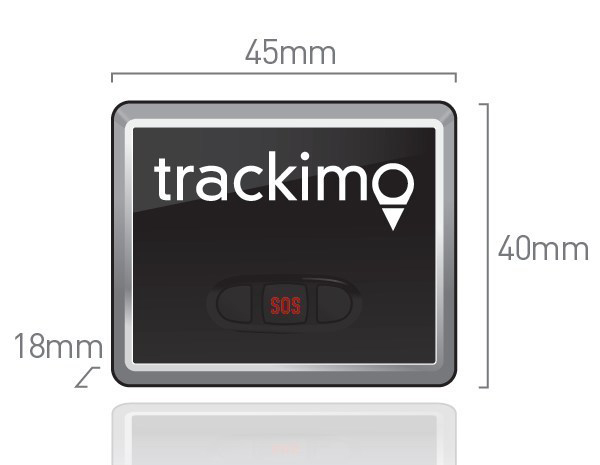
    • Trackimo Universal: A compact (45 x 18 x 40 millimeter), lightweight device with long-lasting battery life and worldwide service. Included accessories allow users to secure Trackimo device to different objects, including backpacks, bikes, belts and luggage. Trackimo Universal can also be hardwired in a car, eliminating the need for charging. Designed for outdoor use, the Trackimo device also includes accessories for waterproofing.
    • The Trackimo app offers a single-point login for both computers and mobile platforms to allow effortless management of tracking units. It offers multiple device management under a single account, as well as, a variety of remote settings options.

    Highlights of Trackimo’s products include:

    • Dynamic Tracking Frequency: User-controlled location sampling enables optimized energy consumption.
    • Smart Alerts: User alerts via text, email and app notifications for location change, speed thresholds, sudden movement or impact, or SOS button press.
    • Dynamic History: All tracking history is stored; user can recall any time period and select from a variety of time resolutions.
    • GPS Tracking: Highly accurate locations when GPS reception available, but capable of accurate tracking wherever cell phone reception is available.
    • Virtual Fences: User-defined “geofences” give notifications when specific boundaries are crossed.
    • Multiple Devices: Multiple devices can be simultaneously tracked and managed on a single account.
    • Coming soon: Emergency Voice Channel: Voice channel can be opened automatically when SOS button is pressed, allowing remote user to hear what’s happening on site.
  • Unmanned Systems Take Flight at 2015 International CES

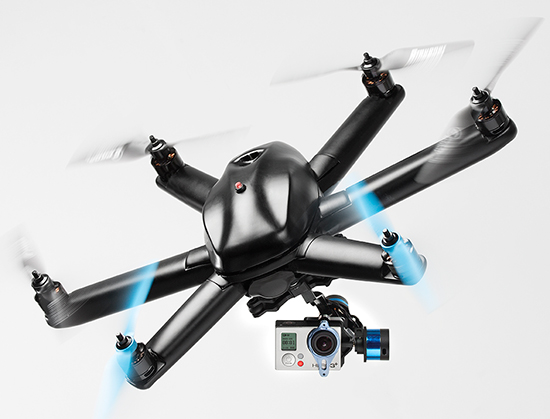
    HEXO+, an autonomous flying camera system, by Squadrone Systems will exhibit at CES 2015. Photo: Squadrone Systems
    HEXO+, an autonomous flying camera system, by Squadrone Systems will exhibit at CES 2015. Photo: Squadrone Systems

    The Consumer Electronics Association today announced the debut of the Unmanned Systems Marketplace at the 2015 International Consumer Electronics Show (CES). Owned and produced by CEA, the International CES is a gathering place for those who thrive on the business of consumer technologies. The 2015 CES is scheduled to run January 6-9, 2015, in Las Vegas, Nevada.

    The Unmanned Systems Marketplace highlights the burgeoning technology in drones, unmanned aerial vehicles (UAVs), and other unmanned systems controlled by onboard computers or remotely from the ground. In its first year at the CES, the Unmanned Systems Marketplace is expected to cover 6,500 square feet of exhibit space with room for about 16 high-end commercial and consumer UAV technology companies.

    According to CEA research, the global market for consumer drones will approach $130 million in revenue in 2015, increasing by 55 percent from 2014, with unit sales of consumer drones expected to reach 400,000. The revenue from drone sales is expected to easily exceed $1 billion in just five years.

    “Drones and unmanned systems are being used to assist in a variety of applications, from aerial coverage for sports and real estate, to assistance in search and rescue and disaster relief missions,” said Karen Chupka, senior vice president, International CES and corporate business strategy, CEA. “We’re excited to introduce the Unmanned Systems Marketplace at the 2015 CES and witness how these unique tools are revolutionizing the way we capture and monitor our world.”

    The Unmanned Systems Marketplace will be located at CES Tech East, in the Las Vegas Convention and World Trade Center (LVCC), South Hall 2. Tech East includes the LVCC, the Westgate Las Vegas , and Renaissance Las Vegas. Major exhibitors located within the Unmanned Systems Marketplace include AirDog, Squadrone, Trace, DJI, iRobot, Trace, Torquing Group DBA ZANO, Ecovacs, EHang, Autel, Pelican Products, and other brands.

    The 2015 CES will feature 20 category-specific marketplaces highlighting innovation across diverse product areas. Companies interested in exhibiting in the Unmanned Systems Marketplace should contact Oleg Burdo at [email protected] or 703-907-5257.

    Registration for the 2015 CES is open. For more information on the 2015 CES, visit CESweb.org.

  • Samsung CEO to Talk Connected Devices, IoT at CES

    The Consumer Electronics Association (CEA) has announced that Boo-Keun Yoon, president and CEO of Samsung Electronics, will deliver the keynote address at the 2015 International Consumer Electronics Show. The International CES will take place in Las Vegas, January 6-9, and Yoon will talk at 6:30 p.m. January 5 in the Palazzo Ballroom at the Venetian.

    Yoon will discuss connected devices, the future of the Internet of Things (IoT), and the vision of the smart home. He also will focus on Samsung’s vision of strategic partnerships that will drive the next wave of technology breakthroughs.

    “Samsung is widely-known for its disruptive technologies and business models, and has been one of the fastest growing CE brands in the world,” said Gary Shapiro, president and CEO, CEA. “Samsung amazes at each CES with its innovative products spanning the entire tech ecosystem. We welcome Boo-Keun Yoon back to the keynote stage for the 2015 CES.”

    Yoon began his career at Samsung Electronics in 1978. After serving in a number of leadership positions at Samsung Electronics, Yoon headed Samsung’s Visual Display Business from 2007, seeing its revenue double while maintaining the company’s No. 1 global TV market share for eight consecutive years. Currently, Boo-Keun Yoon serves as the president and CEO of Consumer Electronics at Samsung Electronics, leading Samsung’s Visual Display, Digital Appliances, Printing Solutions and Health & Medical Equipment Business. In addition, Yoon also acts as the company’s Chief Design Officer.

    According to CEA/GfK research, global consumer technology spending will top more than $1 trillion in 2015. Lauded for its innovative design and technology across its diverse portfolio of products, Samsung Electronics is a leading global brand for high-tech electronics and digital media.

    The 2015 CES will feature more than 3,500 exhibitors unveiling the latest consumer technology products and services across the entire ecosystem of consumer technologies. For more information on the 2015 CES, visit CESweb.org.

  • Association Says Indoor Location Technology Not Ready

    Association Says Indoor Location Technology Not Ready

    Kevin Dennehy
    Kevin Dennehy

    Not everyone is talking up the accuracy of indoor positioning. Arlington, Virginia-based Telecommunications Industry Association says the technology, which is seen as the one way location-based services providers will be able to capture consumer interest, is not ready. In other LBS news, AT&T has come out with data pricing for its connected vehicle initiatives.

    In a recent FCC filing, the Telecommunications Industry Association said that indoor positioning technology is not sufficiently developed to support ongoing wireless E-911 location accuracy requirements.

    While TIA supports the FCC’s goal to improve location accuracy, “Imposing location accuracy mandates at this time would be premature, given the nascent stage of the technology that will be needed to accomplish the Commission’s objectives, and should neither favor nor disfavor specific technologies,” said the association in its filing.

    The NPRM proposes a requirement to achieve “rough” indoor location information, TIA said. It proposes to require providers to provide horizontal information for wireless 911 calls that originate indoors, specifically a caller’s location within 50 meters.

    TIA also disagrees with an FCC proposal to require mobile operators to provide z-axis, which is vertical location within 3 meters of a caller’s location, for 67 percent and 80 percent of indoor wireless 911 calls — ranging from three to five years after adoption. Again, TIA says that the technology is not fully developed.

    TIA quoted AT&T’s filing: “[The] time [is] right to begin discussing Indoor Location Accuracy for E-911” but the “FCC should be careful to ensure that any proposed rules on location accuracy are aligned with proven capabilities of the current state of technology and they should set realistic accuracy benchmarks that the industry and public safety can embrace.”

    The location industry has been counting on indoor positioning, with its beacons and Wi-Fi enhancements, to jump-start a location-based services market that always seems to have tremendous potential, but the numbers don’t back it up. Some big-time analysts have said that while the promise of indoor positioning is huge, it just isn’t there technically yet.

    In fact, one analyst said that the biggest technological breakthrough last year was indoor mapping. Such major retailers as Home Depot and Lowes launched indoor maps with product search locators. These same analysts say that indoor Wi-Fi positioning is not accurate enough for macro location.

    The big deal coming up is how FCC positioning accuracy regulations will affect beacons or Bluetooth low energy for micro location and proximity services.

    TIA said it supports initial FCC location accuracy requirements back to 2007. However, don’t ask TIA for more location regulation. “To date, the development of 911 and E911 location accuracy technologies and applications has been fostered by a voluntary and consensus-based standards process. This process has proven quite successful to date, and the Commission should refrain from imposing regulations that could slow additional development,” the association said.

    AT&T Announces Connected Car Pricing

    AT&T Mobility said standalone pricing for new LTE-enabled OnStar service will be $5 or $10 per month, depending on whether the driver is an OnStar subscriber. The company said it will allow customers, with a GM LTE-capable vehicle, to add the car as another device for $10 — which is the same price as a tablet.

    OnStar subscribers will get coverage ranging from $5 for 200 MB of data per month to $50 for 5 GB. GM is also allowing customers to buy one-time data packages.

    At this year’s CES, General Motors announced its first LTE-enabled vehicles — in which AT&T Mobility is powering the LTE network for GM’s OnStar service. The first LTE-enabled vehicles, which will be available this summer, are Impala, Spark, Volt, Orlando, Spark RV, Silverado, Silverado HD, Malibu, Equinox and Corvette Stingray. GM plans to have 30 Chevrolet, Buick, GMC and Cadillac vehicles LTE-equipped by the end of the year.

    AT&T also made recent deals to provide connectivity for Ericsson Connected Vehicle Cloud which connects to the AT&T Drive platform for automakers.

    CEA Hosts CES on the Hill

    Members of Congress and their staff had the opportunity to observe location technology during the Consumer Electronics Association’s recent CES on the Hill event in Washington. Exhibiting companies include Origo Safe, distracted driving; AT&T Drive; DashIt; Qualcomm, which showed off a geofencing product around schools; and RideScout.

    Washington-based Ridescout is a cool, and free, mobile app that allows a user to find the nearest subway, bus, taxi, bikeshare, sedan service, carshare, pedi-cab or carpool. A user can choose from a list of options by proximity, cost or arrival time.

    “We launched in November in Washington, D.C. We are in Austin, San Francisco, Boston, Chicago and planning several new markets,” said Steve Carroll, Ridescout vice president of operations.

    The app, which is on the iOS and Android platforms, generates revenue by sharing with the ride providers, large organizations and universities and the public transport network, Carroll said.

    Some of Ridescout’s partners include Mozio, RidePost, Metro of Washington, Bandwagon, Sidecar, Car2Go, Arlington Transit, Capital Bikeshare, Yellow Cab, DC Circulator and Dash.

    RideScout, founded by two Army veterans, was hatched when founder and CEO Joseph Kopser wanted an application to show him the best way to get to work in the Washington area. He could not find one and started the company with Craig Cummings. The company initially launched an alpha product at South by Southwest in 2013.

    Though it was the first to combine all modes of transportation in a single application, the company has some competition. Of course this competition is from the 800-pound location gorilla, Google.

    Google, with its Google Maps platform, shows the directions to the nearest transportation mode. Now it is incorporating Uber, which is an on-demand transportation provider.

    This is not the first time Google has launched a product in an effort to dominate a market place or niche. When it launched Google Maps in 2009, it put the hurt on many companies in the location industry, which underwent a three-year period of consolidation, company closings and layoffs.

  • Record Number of Automakers at International CES

    It’s a daunting task — trying to find the big location story in a maze of 150,000 attendees and thousands of exhibitors at the International Consumer Electronics Show in Las Vegas. Aside from every automaker touting their connected vehicle efforts, the big deal this year at CES is wearable technology (last year it was 3D printing? Yawn). Despite sore feet from walking football-field lengths of booths, CES is still a cool show, blaring stereos, walls of TV screens, robots…and connected cars. 

    LAS VEGAS — Although the largest number of worldwide auto manufacturers attended this year’s International CES here, many industry experts believe that technology giants Google and Apple will swoop in and grab not only the market, but will control what will go into the connected automobile in the future.

    “Leading IT, consumer electronics and Internet companies will marginalize specialist vendors. I’m worried that Internet companies will take over the [connected car] market — away from the auto manufacturers,” said Thilo Koslowski, Gartner vice president at the Consumer Telematics Show, held the day before CES

    Koslowski’s fears have been partially validated as Google launched a partnership, called the Open Automotive Alliance, with automakers to bring the Android operating system into cars. The Google move comes after a similar announcement by Apple, which was launched to get its iOS platform into connected cars.

    Initial Open Automotive Alliance members include Audi, General Motors, Honda, Hyundai and Nvidia. Apple, in its group, has Jaguar Land Rover, Volvo, Mercedes-Benz, Honda, Ferrari, Nissan, Chevrolet, Infinity, Kia, Hyundai, Opel and Acura.

    “We think [Google] is a strong content partner — the deal gives [you] perspective on where we as a company are heading. Same on the Apple side,” said Charles Koch, Honda manager, new business development, at the Consumer Telematics Show.

    Despite standing room-only crowds at CES during most of the connected and automated car session, Koslowski said companies need to keep the right focus on the future. “[Connected vehicles] still are not a definite market, but we will see if it is in the next 3-4 years,” he said. “HMI and user interface will be biggest differentiators. Personalization will be important, but it will also be an expected feature.”

    Koslowski said the Holy Grail for connected vehicles in the future is the transition to autonomous capability. “It’s progressing very quickly. Automakers have to avoid the gold rush mentality as it may not be the treasure trove,” he said.  “They have to meet expectations [about the the technology] and avoid the creepiness factor that you know too much about the consumer.”

    Regardless of the future, Koslowski believes the connected vehicle is a disruptive opportunity.  “I can see carriers offering a car for free in exchange for lifetime data. Less dramatic would be with an eight-year data plan,” he said. “This would probably be a smaller, less expensive vehicle than a Ferrari or Audi.”

    Overall, the telematics market has gone through several market changes in the past 10 years, said Kevin Link, senior vice president and general manager, China, for Verizon Telematics.  Link said that Telematics 1.0 included door unlock, navigation, automatic collision notification, call centers and navigation. “It all began with GM and Mercedes becoming springboards for the industry. Initially, there was low consumer awareness; now, it is something like 88 percent in the United States,” he said.

    Outside the U.S., however, the consumer awareness for telematics drops into the single digits. “The business model, especially in the U.S., is a burden on the consumer. In China, it’s a business-to-business play, which is not a burden on the consumer, which also explains the high usage rate,” Link said.

    At CES, a record nine automakers attended and exhibited:  Audi, BMW, Chrysler, Ford, General Motors, Kia, Mazda, Mercedes and Toyota.

    AT&T Mobility Makes Big Announcements at CES

    In a pre-CES press conference, General Motors announced its first LTE-enabled vehicles — in which AT&T Mobility is powering the LTE network for GM’s OnStar service. The first LTE-enabled vehicles, which will be available this summer, are Impala, Spark, Volt, Orlando, Spark RV, Silverado, Silverado HD, Malibu, Equinox and Corvette Stingray.

    AT&T also announced it will provide connectivity for Ericsson Connected Vehicle Cloud which connects to the AT&T Drive platform for automakers

    “We expect about 50 million cars to be connected by 2020. The car will be another device in your life,” said Glenn Lurie, AT&T president, emerging enterprises and partnerships. “LTE in a car will get another set of application developers involved — how will they differentiate the car?  It’s a global opportunity.”

    Magellan and Navigation Solutions’ Nav System Features Proximity Capability

    Navigation Solutions, owned by Hertz, said it is working with Magellan to offer the NeverLost 6 navigation device that features connected services — many of which offer a consumer choices based on businesses and attractions near their current location.

    A number of new systems, including Magellan’s new models and Pioneer’s five NEX models, which consist of four navigation and an A/V receiver, feature connected services that allow access to navigation — even when the phone isn’t connected to a data source. This has been a sore subject for users of the free Google Maps on a phone — no Internet, no navigation.

    Magellan also announced a new line of RoadMate Personal Navigation Device (PND) units featuring Easy Touch screens and an underlying Android OS to improve navigation capabilities and features.

    In other CES news:

    • Broadcom continues to make strides in indoor and Wi-Fi position with several new product rollouts. The company also is rolling out its BCM47531 GNSS chip that can grab signals from five satellite constellations at the same time (GPS, GLONASS, QZSS, SBAS and BeiDou), said Mohamed Awad, Broadcom director, product marketing.
    • Alpine rolled out the aftermarket’s first 9-inch navigation system, which will cost $2,600 and be available in June.  The company is targeting used trucks and other vehicles as they are staying on the road longer, said Melvin Diaz, Alpine product planning manager.
    • In its press conference at CES, Kenwood said its navigation units are selling well.  Its flagship, a $1,500, 7-inch system, features INRIX traffic and Garmin navigation.
    • In the LBS Insider February blog, several industry experts will be interviewed about the future of the autonomous vehicle.
  • How New Devices May Affect the GIS Community

    The Consumer Electronics Show (CES 2013) and GIS

    By Art Kalinski, GISP

    Years ago when ArcView II first hit the street, I had one of those “eureka” moments at the Esri User Conference Poster Session. I saw a poster of the human circulatory system created with ArcView Network Analyst. I did a double take at first because until then all previous network maps I saw were road or stream networks. I thought, of course, a network is a network regardless of size or composition.

    I’m having the same kind of reality adjustment with the technologies demonstrated at the 2013 Consumer Electronics Show, held in Las Vegas in January. It seems like technologies are overlapping in ways we don’t expect — computers, electronics, CAD/CAM, GIS, topology, BIM, medicine, and manufacturing to name a few.  Technology paths are no longer direct and simple, but complex and interconnected. With more than 3,000 exhibitors at CES, it’s hard to make sense of it all, so I’ll focus on technologies that may potentially have impact on our GIS community and how we evolve.

    Displays

    UHD and OLED

    Big screen TV’s are always the show grabbers at CES, and there were several examples of OLED (organic light emitting diode) and 4K UHD (Ultra High Definition) TVs from Sony and Samsung that had four times the resolution of current HD TVs — some as big as 110 inches. I don’t believe that UHDs will make a big difference in our ability to present GIS data or imagery, but OLED technology may. Two years ago I wrote about the promise of OLED displays. OLEDs would be big, bright, inexpensive and energy efficient, since the light comes from the OLEDs and not from a light panel behind an LCD screen, like current flat-panel displays. OLEDs are now available, but as you would expect, this new technology is not cheap.  However, most experts agree that OLED displays will eventually get to be very cheap. (See my July 2010 OLED article for more details.)

    PaperTab is a flexible paper tablet PC.
    PaperTab is a flexible paper tablet PC.

    PaperTab

    Related technology from Plastic Logic was PaperTab, a completely flexible “paper tablet PC.” PaperTab combines the feel of paper with the speed and convenience of digital imagery. It looks very much like the Harry Potter Daily Prophet moving pictures newspaper.  Work is underway to ultimately work in OLED technology to produce large, cheap roll-up screens that would be very bright and eliminate the need for LCD projectors.

    Oculus virtual reality.
    An Oculus virtual reality prototype fascinates a viewer.

    Oculus Virtual Reality

    Oculus VR is so new that only prototype units are being shipped to software developers. The combination of stereoscopic vision and very effective head-tracking sensors make this device possible. Unlike other VR displays, Oculus has very high resolution plus a 110-degree field of view. 110 degrees provides very broad peripheral vision so users feel totally immersed. The head tracking is so precise and rapid that there is no lag time or motion sickness. Users claim to get adjusted very quickly to the point of forgetting that they are wearing a VR device. This places the Oculus head and shoulders above any other VR system, even six-figure military hardware.

    Much work remains to be done by software developers, primarily in the gaming industry. Although gamers will be the biggest customers, I can envision strong use in geospatial applications such as walking through CAD/BIM models or viewing complex GIS data such as environmental or geologic models. I predict that even mundane tasks such as visualizing the location of buried utility lines prior to excavation will become practical.

    Control
    Tactus provides a soft 3D feel to the touchscreen keyboard.
    Tactus provides a soft 3D feel to the touchscreen keyboard.

    Tactus

    Tactus Technology has taken flexibility to a micro level by producing touch screens that morph small raised buttons under the displayed buttons to provide a soft 3D feel to the touchscreen keyboard. The tactile feel of the buttons is supposed to help speed data entry and usability. We may see this technology in GIS data collection devices soon.

    The "Minority Report" technology is on the way.
    The Minority Report technology by Oblong Industries.

    Oblong, Leap Motion and Tobii Gaze

    Last year at GeoInt I saw a demonstration of Oblong Industries Seismo, a hand gesture technology to control computer operation.  The technology was used in the movie Minority Report, but its usefulness goes well beyond the glitz factor. Interacting with very complex data sets such as USGS earthquake data demonstrates its value. Users claim that once the technology becomes second nature, working with a complex data matrix becomes easier and, most importantly, more understandable.

    With the Leap Motion 3D interface, you can control your computer with your fingers at a distance.
    With the Leap Motion 3D interface, you can control your computer with your fingers at a distance.

    Two other related technologies at CES promise to improve on the capability. The first is Leap Motion, which could quickly transform how we use computers. The device is the size of a USB drive and is a 3D interface with sensors that let you control your computer with small precise finger movements in the air. Unlike earlier technology, there is no need to wear special gloves. “We’ve created a technology that could fundamentally change how people interact with computers,” said Michael Zagorsek of Leap Motion.  The device will sell for $70 and there are currently over 100,000 pre-orders.

    Tobii Gaze is the second company to watch. This company developed a very accurate eye-tracking system that lets you use your eyes as a mouse. Your eye movements and keyboard taps navigate computer interfaces with great speed, precision and accuracy. The Tobii Gaze technology is a single bar that sits above the keyboard. After a quick calibration, users can control Windows 8 with their eyes and a single button push. This could also be a big help to users with paralysis or related disabilities. Will it be possible to combine Tobii Gaze and Leap Motion? It would be interesting.

    Robotics

    CES showed a number of robot toys, including Lego’s Mindstorm kits along with a flying swarm of robot helos. Don’t discount the serious use of swarm robots. Last year at a special operations tech day, I saw a demonstration of swarm robots that could be dropped in a hostile location to inspect a potential ad hoc runway for potholes. After inspecting the runway, the robots lined up on either side of the runway, turned on bright LEDs, and served as runway lights for the incoming pilot. We may find significant geographic data-collection capabilities from these low cost devices in the near future.

    The CubeX 3D printer makes 3D printing a revolutionary new industry.
    The CubeX 3D printer won a Best of CES Award.

    Solid Output Devices

    3D printing has been around for many years. Early printers could create solid terrain models by building layer after layer of a powder substrate that was solidified by binders printed in the appropriate spots. The unprinted unsolidified powder was brushed away, revealing the model. The models were not very durable, not very big, and took a long time to create. Very quickly, solid output devices have become a revolutionary new industry with precise laser measurement, using the powder build-up or additive manufacturing by building up and fusing material from a filament. Two big players are 3D Systems with the CubeX 3D printer and MakerBot’s Replicator 2 and forthcoming dual-color Replicator 2X 3D printers. Starting at $2,499, the CubeX boasts a 10.8 x 10.45 x 9.5-inch build area.

    3D printers or additive manufacturing have seen an explosion in research and development. Objects can now be produced that are durable and intricate, including complex gears and moving parts using plastics, metal and even organic materials to replicate some human body parts such as ear cartilage. AutoDesk is a big player in the field, and I can see the technology being used for simple 3D terrain models to very complex BIM models and even intricate bridge and overpass construction models. Cornell Professor Hod Lipson, a leader in the field, stated that “3D printing is going to disrupt everything around us” and that “Complexity is free.” By that, he means that with the additive layering of materials, it is just as easy to create a complex object as it is to create a simple object.

    This complex titanium part would be impossible to create with traditional machining techniques but was easily created with a 3D printer. (Image courtesy of 3D Systems Corp., Rock Hill, South Carolina.)
    This complex titanium part would be impossible to create with traditional machining techniques but was easily created with a 3D printer. (Image courtesy of 3D Systems Corp., Rock Hill, South Carolina.)

    An interesting aspect of 3D printing / additive manufacturing is the importance of our GIS mathematics underpinning topology. Topology optimization is the key to additive manufacturing and part of every design process. The results of topology optimization are structures that have outward dimensions identical to normal load-bearing elements such as beams, yet have interior designs that look very different from traditionally manufactured parts. In place of triangular or circular voids, these parts have organic, almost bone-like shapes. This results in parts that are as strong as nature and use materials very efficiently.

    The 3,000 exhibitors of CES provided much to ponder. I believe that GIS professionals have core skills and knowledge that position them well to work with many of the new technologies, so career paths may not evolve as many expect. My guess is that someone starting his or her career in GIS today will not end that career making maps.

  • CES Continues to Showcase Connected Car Products

    Kevin Dennehy
    Headshot: Kevin Dennehy

    CES is big, loud and happens every year. For the past three or so years, the largest tradeshow in the United States has become a showcase for automobile manufacturers’ product rollouts…which is a far cry from the traditional car stereos and mega-huge flat-screen TVs you see walking the several football field-sized show floors. CES may not be everyone’s idea of a good time — hotels are expensive, you can’t get a cab as lines are a quarter-mile long, and much of the action for location may not even be in the show itself anymore. But it would be hard to say it’s a boring week.

    The Consumer Electronics Show in Las Vegas had lot of everything: 150,000 people, nearly 3,300 exhibitors and almost 2 million square feet of exhibit space. What it didn’t have was a ton of location-based services news.

    Most of that action came at off-site meetings such as the AT&T Developer’s Summit and other venues. Still, a lot of auto manufacturers, partnered with the wireless carriers, use the nation’s largest trade show as a launching pad for infotainment units that feature two-way connectivity.

    This connectivity will be important for hybrid navigation, both automotive and fleet management users and service providers who want the best of both worlds, said Kim Fennell, deCarta president and CEO. “[This means] off-board search and navigation to get real-time content, traffic, search along a route for current information such as parking spaces near a theater, as well as proper on-board capabilities when no wireless connection is available,” he said. “Companies ‘talk’ a good story, but the ability to do real hybrid is difficult technologically and so this conversation will gain prominence [this year].”

    Ford and GM both touted their developer programs at CES. Ford’s developer program allows users to work with SYNC and AppLink application programming interface. GM plans to offer developers an SDK.

    At CES, not a lot of new handsets were launched, as many manufacturers use their own events or other trade shows for launch. One of the biggest trends of 2013, Fennell believes, is the movement by handset manufacturers to launch their own LBS apps and services. “Of course, Apple made a mess of it — and the result is that companies now recognize that geospatial is hard to do…well,” he said. “This will get some companies to back off doing their own, while it will get others to continue, but with more care and attention to what it takes to do it right.”

    CES always announces what companies think is going to be the next big thing. Unfortunately, consumers sometimes don’t always agree. A year ago, the big deal was Ultrabook computers, which were supposed to be the one-up to tablets and smartphones, but lackluster sales have diminished that fledgling market.

    Two years ago, the big thing was 3D TV, which turned out to be expensive and lacked content. “3D is overblown. Not at scale yet,” Fennell said.

    Maybe the PND Isn’t Dead Yet

    The lag in portable navigation sales and the rise of the smartphone as the navigation platform of choice signaled that maybe the end was near for PNDs. In fact, many companies said consumers would rather pay the extra money for manufacturer-installed infotainment products with two-way connectivity than a PND.

    This means that PNDs couldn’t traditionally receive current traffic, weather or new driving information on roads, restaurants and other services.

    To start competing with the auto manufacturers, at CES such companies as Magellan rolled out PND models with Bluetooth that connects to a customer’s smartphone. The $249 SmartGPS uses a consumer’s cell phone data connection to receive social and LBS. It will soon offer Foursquare alerts and Yelp restaurant reviews.

    Another PND giant, TomTom, partnered with Telenav at CES to provide its Live Traffic service to Telenav, which makes Scout, an application for iPhone, Android and Windows mobile devices.

    In other CES news:

    • Garmin rolled out the K2 platform, a customizable unit that offers digital displays, voice control, infrared buttons, and smartphone integration. The unit features navigation, vehicle diagnostics, music and real-time information.
    • Subaru introduced Starlink, a new in-car connectivity product. The unit includes Aha by HARMAN integration that allows drivers to access tens of thousands of stations of Web-based content, from radio stations, podcasts, and weather sites to social media feeds.
    • Chrysler upgraded its Uconnect infotainment system with dealer-activated navigation, which allows Chrysler Group dealers to activate the navigation functions in vehicles equipped with certain systems.
    • One question mark at CES was the absence of Microsoft, which didn’t exhibit for the first time in years. In years past, reporters would stand in line to listen to Bill Gates, who usually opened the conference with a speech or product roll-out the day before.

    End of an Era

    One of the pioneer companies to integrate GPS into wireless devices, as well as take a big chunk of the enterprise market has been sold. As GPS World reported, Princeton, N.J.-based ALK Technologies was purchased by Trimble for an undisclosed figure.

    ALK’s transportation, logistics and mobile workforce products are going to Trimble’s Transportation and Logistics division. No word about what is happening to ALK’s consumer products.

    ALK’s two flagship products, CoPilot and PC Miler were sold in North American and overseas. Approximately 64 percent of North American for-hire motor carriers use ALK products, the company said.

    ALK Technologies founder and long-time industry veteran, Alain Kornhauser, said last year that location markets had been good for the company. The company’s CoPilot Live had been seeing good sales in Europe, he said.

    Kornhauser was a dynamic speaker at the GPS-Wireless conference for 13 years, informing and enraging attendees alike with his great quotes. One favorite:  “Telematics is a Stalinist term.”

    Barry Glick, former MapQuest executive who was hired in 2011 as CEO, ran the company’s day-to-day operations. In December 2012, ALK established a new group, Enterprise Solutions, which combined its PC Miler, CoPilot Truck and CoPilot Live Professional Product lines plus supporting map data, software tools and professional services.

  • Connectivity and In-Vehicle Apps Highlights of CES

    Consumer Electronics Show 2013 (CES) was all about the hot pursuit of the in-vehicle dashboard by mobile advertising, content, and electronic providers. In the race to distinguish their models by adding more apps and connectivity, automakers are making it easier for apps to talk to cars. Automakers also showcased autonomous vehicles, including a self-driving car; and Inrix has made finding parking spaces easier. But CES isn’t the only place making news. The mapping battles, of course, continue, and the European Parliament is considering privacy measures that would make it difficult for digital content and service providers to subsist on ad revenue.

    CES wasn’t about the wireless carriers or the handset makers. Not wanting to be left in the dust of the Google driverless car, Audi jumped on the bandwagon and is focusing on piloted driving and parking technology. Audi introduced self-driving car technology that it claims will enable a car to seek out a parking space in a garage and park, all without a driver. Audi received the second license from the State of Nevada to test autonomous vehicles on the state’s public roads. Google was the first company to obtain a license, and Audi has acquired the first license by a car maker. Toyota is taking a different tack and is focused on providing intelligent pre-collision systems, and not a car that drives itself, but may eventually do so.

    Park your car? INRIX, known for traffic data, announced a parking service that provides real-time information on the number of available spaces at off-street parking locations, as well as current parking fees. The parking database includes more than 18,000 parking facilities in North America and 42,000 in Europe (36 countries). The data are sourced from ParkMe (formerly Parking in Motion) and Parkopedia.  Kenwood will include INRIX parking in new in-dash DVD entertainment receivers, along with INRIX real-time traffic information, fuel and weather services.

    Have you programmed a Ford Lately? Ford continues to lead in-vehicle mobile connectivity. The company has further opened up APIs to make it easier for developers to access in-car controls and the vehicle display. Those that want to share from the road are in luck. Ford has also added a location-sharing app from Glympse. With the Glympse smartphone app and Ford SYNC AppLInk, drivers can share their whereabouts or estimated time of arrival via a real-time dynamic map. Glympse also has a partnership with Mercedes Benz.

    Bump in the road for contextual advertising? Companies that depend on mobile and online advertising in the European Union (EU) may be in for a tailspin. EU Europeans may have the strongest control of their online identities if a bill is passed by the European Parliament to overhaul data protection laws. Web tracking and profiling would not be allowed without consumer consent. With app and content providers depending on personalized advertising to provide revenue, alternate means of revenue would be needed as many consumers will be reticent. We’d see a return to a more subscription-based world and a smaller industry. The proposal, if approved, would create a European Union agency charged with enforcing a full series of privacy measures to give Internet users greater control of online information. The agency would be empowered to levy fines of up to two percent of a company’s revenue.

    Update on the patent wars.  Industry is falling over itself in pursuit of intellectual property. Although it is about the quality and not size, patent numbers are revealing. IBM was granted more patents in 2012 than any other company, the 20th year the company has taken first place.  Archenemies Google and Apple posted the biggest increases in 2012, but were trounced by another rival, Samsung, who was second to IBM with more than 5,000 patents granted last year. Apple was awarded 1,236 patents in 2012, 68 percent more than the preceding year. Google posted a 170 percent jump in patents granted in 2012, with 1,151 patents. Google and Apple will continue to rocket fuel their intellectual property collection with acquisitions.

    Turn at which Starbucks?  Garmin unveiled a range of new personal navigation devices (PNDs).  The new products include Natural Guidance from Navteq, re-branded as “Real Directions.” Directions include recognized landmarks, buildings, traffic lights and stop signs. On some models, traffic information and alternate routes are provided by voice.

    Mapping skirmish. Google has been reportedly blocking Windows phones from using Google Maps from Microsoft’s Internet Explorer (IE) browser in a ploy to convert IE users to Google Chrome. Microsoft cried foul and Google provided a flimsy excuse of compatibility issues and reversed course.

  • TI’s Wi-Link 8Q Provides Wireless Connectivity for Auto Infotainment

    Wireless connectivity is becoming a key feature in automobiles for sharing and viewing content from smartphones and tablets to in-car systems, easy pairing of devices, navigation and replacement of expensive cables for in-car communication. To answer this need, today Texas Instruments Incorporated (TI) introduced the WiLink 8Q family of wireless automotive connectivity solutions.

    “GNSS technology combines GPS and GLONASS signals with the on-chip positioning engine producing a more accurate fix of your location, making “urban canyons” non-existent,” according to the TI Behind the Wheel blog. TI is demonstrating WiLink 8Q and other technologies at the Consumer Electronics Show this week in Las Vegas.

    With its multi-radio technology, the WiLink 8Q family reaches new levels of cross platform scalability and delivers advanced features including in-car multimedia streaming video in parallel with Bluetooth hands-free calling and advanced audio distribution profile (A2DP) stereo sound. Additionally, with near field communications (NFC) for easy Wi-Fi and Bluetooth pairing, WiLink 8Q solutions enable an easy connection between a smartphone or tablet and the automobile, providing a seamless user experience, according to TI.

    The WiLink 8Q family is designed for Wi-Fi Certified Miracast operation. With an integrated power amplifier (PA) and complete software reuse across all family members, WiLink 8Q solutions provide a full range of products for wireless automotive infotainment including:

    • Super-combo SoCs with Wi-Fi, Bluetooth, Bluetooth low energy, NFC, and GNSS support.
    • Combo-connectivity system-on-chips (SoCs) with Wi-Fi and Bluetooth support.
    • More integrated combo-connectivity SoCs with Wi-Fi, Bluetooth, Bluetooth low energy and NFC.

    “Delivering the familiar experience consumers have with smartphones and the tablets into the automobile to share information and content from drivers’ and passengers’ devices is driving the need for strong wireless connectivity solutions. Wi-Fi, Bluetooth, NFC and GNSS have to work together seamlessly as integrated parts of the entire system,” said Mattias Lange, automotive connectivity product line manager, Wireless Connectivity Solutions, TI. “The WiLink 8Q family takes our expertise in wireless connectivity and automotive applications to the next level with support of four different RF technologies on one SoC – a truly integrated approach to automotive infotainment.”

  • CES Turning into Big Tech Auto Show

    Navigating your way through thousands of booths and 140,000 attendees is a challenge in itself at the 2012 Consumer Electronics Show. While there was a huge amount of location-based services news, the big deal was the presence of just about every automobile manufacturer. Such off-site meetings as the Consumer Telematics Show, Showstoppers and AT&T Developer’s Conference also highlighted the connected car.

    images

    LAS VEGAS — It took several years, but most major automobile manufacturers are onboard with the idea that a vehicle needs to be connected. Most automobile manufacturers came to the Consumer Electronics Show here to show off their connected devices and explain where they think the market is going.

    “The connected vehicle has arrived, though it is not a smart phone on wheels. This the year we are seeing a lot of growth — and I have been doing this a long time,” said Thilo Koslowski, Gartner vice president. “From 2008 to 2012, the majority of car manufacturers have installed connected vehicles. From 2013 to 2016, we will see really major market adoption. A mature market expects connected vehicles — and that’s right around the corner.”

    Koslowski says that automakers shouldn’t be locked into one specific market strategy. “They aren’t going to make it if they do.  Technology and business approaches evolve in parallel,” he said. “The traditional value and supply chains may not be the best way to market these systems…and you will see some consolidation.”

    The aftermarket will take over the connected marketplace if the car makers won’t adjust their strategies, Koslowski said. He said in 2004, the CRM opportunity seemed to be more important to auto makers, but now it’s somewhere in the middle of importance. “We are primarily in the product differentiation phase now,” he said. “It is an open playing field right now, but it will be a challenge for companies who think they have it all figured out.”

    Gartner’s research has found that consumers want wireless map updates, real-time weather and traffic, remote software updates and parking availability. What they don’t like are family and friend location information, creating and reading e-mail in a car, anon-demand music book, and such social networks as Twitter in the vehicle.

    TomTom Signs Deal With Samsung

    One of the bigger announcements in the location space at CES, and maybe the one with the most LBS tie in, was TomTom’s deal with Samsung. TomTom’s maps and location content will power Samsung’s Wave 3 smartphone. The deal basically allows the phone to have LBS, said Charles Cautley, TomTom managing director, automotive licensing.

    The business-to-business market has been a strong one for TomTom, which estimated that around 40 percent of its earnings came from that segment, said Cautley, who spent considerable time at General Electric in the commercial vehicle market before coming to TomTom three years ago.

    To cap off a big week, TomTom rolled out three portable navigation devices, Start, Via and Go Live. It also signed a licensing agreement with high-end automaker Fisker Automotive. Through a three-year-deal, TomTom will provide map and location data for the Fisker Karma electric sedan. “We absolutely think the electric vehicle market is going to grow,” Cautley said.

    TomTom competitor Magellan also rolled out some new PNDs, including the RoadMate 9055-LM and back-up camera. “Overall, the PND is becoming less a novelty and more a utility,” said Magellan’s Stig Pedersen, senior director of marketing strategy. “We are moving more towards safety features in the next year.”

    Auto Companies Announce Offerings At CES

    Some in the automobile industry are now saying that CES is the place where car makers are rolling out the new technology, not at the concurrent Detroit Auto Show, which is used to roll out new cars.

    Chrysler Group’s Uconnect now has a website that allows its users to get in-car updates for their in-vehicle system through a mobile phone, said Joni Christensen, Uconnect head of marketing.

    After the initial cost of Uconnect, all that a car owner needs to pay for, after a year’s free service, is the Sirius radio, Christensen said. The navigation system, like Ford’s Sync, is tied to one system — and like Cadillac’s Cue, can be switched from one screen to a view that is incorporated into a car’s speed gauge.

    OnStar will give “selected” developers access to a proprietary application program interface (API) to create mobile apps designed with OnStar’s suite of services, the company said. The first partner to use OnStar’s API will be RelayRides, a peer-to-peer car sharing marketplace.

    In other company news, OnStar and Verizon Wireless are working on a second-generation connected research vehicle. The Chevrolet Volt research will receive streaming content from the Cloud enabled by the Verizon 4G LTE network and building on OnStar’s Advanced Telematics Operating System (ATOMS).

    Audi said it is also offering a 4G LTE capability for its Audi Connect services. The company will continue to use Google Earth maps and will show a driver their destination in 3D imagery.

    Telenav launched a new product called Scout at CES that can work with Ford’s SYNC connected unit. Scout provides customized navigation, entertainment, and convenience features for connectivity between a smart phone, vehicle, or a computer.  Scout Key features turn-by-turn directions, real-time traffic, and estimated drive times to specific destinations at different hours of the day. Scout also provides personal local search based on a user’s preferences for entertainment, restaurants, and other points of interest once they arrive at a destination.

    “It’s free on iTunes right now, but we plan to launch it on other platforms,” said Sooner Heath, Telenav customer solutions manager.

    Indoor Positioning Looking to Get Bigger

    Soon all malls, shopping centers, airports, sporting venues and other businesses will feature indoor maps, which could be the boost LBS needs, particularly if big businesses come on board and advertise. At CES, CSR said it is working with Micello, Google and Nokia Location and Commerce on indoor positioning, that combines Wi-Fi and GPS.

    Some of the capabilities include being able to see what floor in the building you are walking in, pedestrian dead reckoning, and turn-by-turn walking directions, said Blake Bullock, CSR product manager.

    Fernando Villasol, Nokia Location and Commerce director of content, says the advent of indoor positioning will soon open up new market opportunities for developers.

    In other CES news:

    • Kenwood says its marketing agreements with Garmin continue to produce great aftermarket sales. The company rolled out its $1,500 DNX7180 Navigation/Multimedia Receiver, which features navigation from Garmin, including Lane Assist with Junction View. A built-in free feature is the Navteq Live Traffic for the life of the product.
    • Location Labs’ new Safely line of services include phone controls to allow parents to lock kids’ phones, a family locator, a teen phone lock during drives that is available on Sprint and T-Mobile phones, and a social monitor for Facebook.
    • Like TomTom’s discontinuation of the Tele Atlas name, Nokia has basically done away with the Navteq company name, though many in the industry still say “Navteq” when talking about the mapping side of the business.
    • There was an LBS and Safety Zone at CES that was in a terrible area in the back of North Hall. While there was a lot of foot traffic, looks like smaller and international companies were thrown in the back — not near the bigger auto players which would have generated more attention to the booths/companies. Overall, CES is more of a connected vehicle show than LBS…a change that has been happening for two years.