Tag: EASA

  • EASA, EuroControl publish action plan on safety during GNSS interference

    EASA, EuroControl publish action plan on safety during GNSS interference

    The European Union Aviation Safety Agency (EASA) and EuroControl have published a joint action plan designed to strengthen the safety and resilience of European aviation operations amid the growing challenge of GNSS interference.

    GNSS provides aircraft with precise positioning, navigation and timing information that is essential for a wide range of functions. Interference with the signals has become a regular occurrence, in particular on the edge of conflict zones, and poses a threat to safety. The action plan focuses on maintaining safety in the near term while limiting impacts on airspace capacity and containing the threat of GNSS interference. It sets out short, mid- and long-term measures to mitigate the threat with harmonized operational procedures and to strengthen the robustness of GNSS‑based operations by clearly defining who needs to act, and by when.

    “While the potential threat to aviation safety from GNSS interference has so far been mitigated by short-term actions such as raising pilot awareness, it is clear that more needs to be done,” said Florian Guillermet, EASA executive director. “This action plan lays out and prioritizes short, mid and longer-term actions and, importantly, also assigns roles to the various aviation actors. By working together with EuroControl and pooling our expertise, we have been able to create a strong plan that will enable the wider sector to come together to counter this threat.” 

    “GNSS interference remains a significant and evolving challenge for European aviation, making today’s action plan an important step forward in our collective response,” said Raúl Medina, director-general, EuroControl. “The action plan concretely supports our Member States and aviation partners as we work together to ensure the evolution and resilience of aviation’s critical infrastructure — one of the core goals of EuroControl’s Trajectory 2030 strategy. I welcome the strong cooperation and close coordination with EASA and all our partners across the aviation sector on this plan, which demonstrates our shared commitment to safety, and aims at delivering tangible benefits for the network, operators and passengers by making GNSS‑based operations more robust.”

    Key elements of the joint action plan
    The action plan is built on several core pillars designed to strengthen Europe’s ability to detect, manage and mitigate GNSS interference.

    Through joint monitoring and data-sharing, EASA and EuroControl aim to establish a common, validated operational picture of GNSS interference events across Europe, enabling more accurate detection, reporting and situational awareness. By pooling expertise and operational data, the two organisations will deepen their understanding of interference patterns, operational impacts and associated safety risks, with the aim of delivering consistent and harmonized guidance to air navigation service providers (ANSPs), airlines, and national authorities to ensure rapid and aligned responses to interference incidents.

    In close partnership, EASA and EuroControl will develop updated operational guidance for flight crews and air traffic controllers to help them manage disruptions effectively and maintain safe operations in degraded navigation environments and join forces and expertise for investigations into ongoing GNSS interference.
    The two organisations will also promote improved mechanisms for timely information exchange through Member States, ensuring that events with both civil and military dimensions are addressed in a coordinated and transparent manner to minimize disruption and preserve airspace capacity.

    The action plan envisages close collaboration with A/C manufacturer and avionics industry to support the development of more robust, interference‑resilient avionics solutions over the longer term. It addresses the concerns expressed in a letter sent on June 6, 2025, by 13 EU Member States to the European Commission that called for immediate and coordinated European action to address the growing number of Radio Frequency Interference (RFI) events affecting GNSS‑based systems. The action plan also integrates proposals and guidance from international partners including the International Civil Aviation Organization (ICAO), and the International Air Transport Association (IATA).

    Background
    GNSS enables more efficient flight paths, reduces fuel consumption, and supports the implementation of Performance-Based Navigation (PBN), which allows aircraft to fly more direct routes and operate safely in areas with limited ground-based infrastructure.

    However, the growing challenge of RFI — whether intentional (jamming or spoofing) or unintentional — poses a threat to the resilience of these systems. The most severe interference typically occurs near conflict zones, but GNSS performance may be affected well beyond these areas. Although aircraft can operate safely without GNSS, disruptions can reduce resilience and the continuity of operations.

  • EASA, IATA release 4-point plan to mitigate GNSS interference risks

    EASA, IATA release 4-point plan to mitigate GNSS interference risks

    The International Air Transport Association (IATA) and the European Union Aviation Safety Agency (EASA) have published a comprehensive plan to mitigate the risks stemming from GNSS interference. The plan was among the conclusions of a jointly hosted workshop on the topic of GNSS interference.

    Given the continued rise in frequency of interference with GNSS signals, the workshop concluded that a broader and more coordinated approach is needed. focusing on four key areas: improved information gathering, stronger prevention and mitigation measures, more effective use of infrastructure and airspace management, and enhanced coordination and preparedness among relevant agencies.

    Reported incidents of interference with GNSS signals have been increasing across Eastern Europe and the Middle East in recent years. Similar incidents have been reported in other locations globally. The initial response focused only on containing those GNSS interference incidents.

    “GNSS disruptions are evolving in terms of both frequency and complexity,” said Jesper Rasmussen, EASA Flight Standards director. “We are no longer just containing GNSS interference — we must build resilience. The evolving nature of the threat demands a dynamic and ambitious action plan. Through collaboration with partners in the European Union and IATA, and by supporting the International Civil Aviation Organization (ICAO), we are committed to keeping aviation safe, secure and navigable.”

    The number of GPS signal loss events increased by 220% between 2021 and 2024, according to IATA’s data from the Global Aviation Data Management Flight Data eXchange (GADM FDX). “With continued geopolitical tensions, it is difficult to see this trend reversing in the near term,” said Nick Careen, IATA senior vice president, Operations, Safety and Security. “IATA and EASA are working together to reinforce the redundancies that are built into the system, to keep flying safe. The next step is for ICAO to move these solutions forward with global alignment on standards, guidance and reporting. This must command a high priority at the ICAO Assembly later this year. To stay ahead of the threat, aviation must act together and without delay.”

    Detailed Workshop Outcomes

    The workshop concluded that four workstreams are critical.

    1. Enhanced Reporting and Monitoring

    • Agree on standard radio calls for reporting GNSS interference and standardized notice to airmen (NOTAM) coding, i.e. Q codes.
    • Define and implement monitoring and warning procedures, including real-time airspace monitoring.
    • Ensure dissemination of information without delays to relevant parties for formal reporting.

    2. Prevention and Mitigation

    • Tighten controls (including export and licensing restrictions) on jamming devices.
    • Support the development of technical solutions to:
      • reduce false terrain warnings;
      • improve situational interference with portable spoofing detectors; and
      • ensure rapid and reliable GPS equipment recovery after signal loss or interference.

    3. Infrastructure and Airspace Management

    • Maintain a backup for GNSS with a minimum operational network of traditional navigation aids.
    • Better utilize military air traffic management (ATM) capabilities, including tactical air navigation networks and real-time airspace GNSS incident monitoring.
    • Enhance procedures for airspace contingency and reversion planning so aircraft can navigate safely even if interference occurs.

    4. Coordination and Preparedness

    • Improve civil-military coordination, including the sharing of GNSS radio frequency interference (RFI) event data.
    • Prepare for evolving-threat capabilities, also for drones.

    The workshop was held at EASA’s headquarters in Cologne, Germany, on May 22-23, and was attended by more than 120 experts from the aviation industry, research organizations, government bodies and international organizations.

  • IATA and EASA release joint strategy to counter GNSS interference risks

    IATA and EASA release joint strategy to counter GNSS interference risks

    The International Air Transport Association (IATA) and the European Union Aviation Safety Agency (EASA) have published a comprehensive plan to mitigate risks stemming from GNSS interference. The plan was part of the conclusions from a jointly hosted workshop on the topic of GNSS interference.

    With incidents of GNSS signal jamming and spoofing rising, especially in Eastern Europe and the Middle East, the workshop called for a broader, more coordinated response. The plan focuses on four areas: improving information gathering, strengthening prevention and mitigation, making better use of infrastructure and airspace management, and enhancing coordination among agencies.

    “GNSS disruptions are evolving in both frequency and complexity. We are no longer just containing GNSS interference — we must build resilience,” said Jesper Rasmussen, EASA Flight Standards Director. “Through collaboration with partners in the European Union and IATA and by supporting the International Civil Aviation Organization, we are committed to keeping aviation safe, secure, and navigable.”

    According to IATA, the number of GPS signal loss events increased by 220% between 2021 and 2024. “With continued geopolitical tensions, it is difficult to see this trend reversing in the near term,” said Nick Careen, IATA senior vice president for operations, safety, and security. “The next step is for ICAO to move these solutions forward with global alignment on standards, guidance, and reporting. This must command a high priority at the ICAO Assembly later this year.”

    Detailed Workshop Outcomes

    The workshop concluded that four workstreams are critical:

    1. Enhanced Reporting and Monitoring

    • Agree on standard radio calls for reporting GNSS interference and standardized notice to airmen (NOTAM) coding, i.e. Q codes.
    • Define and implement monitoring and warning procedures, including real-time airspace monitoring.
    • Ensure dissemination of information without delays to relevant parties for formal reporting.

    2. Prevention and Mitigation

    • Tighten controls (including export and licensing restrictions) on jamming devices.
    • Support the development of technical solutions to:
      • reduce false terrain warnings;
      • improve situational interference with portable spoofing detectors; and
      • ensure rapid and reliable GPS equipment recovery after signal loss or interference.

    3. Infrastructure and Airspace Management

    • Maintain a backup for GNSS with aminimum operational network of traditional navigation aids.
    • Better utilize military air traffic management (ATM) capabilities,including tactical air navigation networks and real-time airspace GNSS incident monitoring.
    • Enhance procedures for airspace contingency and reversion planning so that aircraft can navigate safely even in the event of interference.

    4. Coordination and Preparedness

    • Improve civil-military coordination, including the sharing of GNSS radio frequency interference (RFI) event data.
    • Prepare for evolving threat capabilities, including those related to drones.

    The workshop was held May 22-23 at EASA headquarters in Cologne, Germany, and included more than 120 experts from the aviation industry, research organizations, government and international bodies

  • Aerodata AG secures EASA certification for GPS anti-jamming and spoofing technology

    Aerodata AG secures EASA certification for GPS anti-jamming and spoofing technology

    Aerodata AG has been granted a Supplemental Type Certificate (STC) by the European Union Aviation Safety Agency (EASA) for its advanced GPS anti-jamming and anti-spoofing solution. The certification applies to installations integrated with Garmin 5000 avionics in a Cessna Citation Latitude jet.

    With the growing threat of GPS jamming and spoofing in both civil and military aviation, Aerodata has developed a robust solution to offer continuous GPS availability. As attacks on GPS systems continue to increase, this anti-jamming and anti-spoofing technology is crucial in maintaining safe and reliable aviation operations.


    Aerodata’s solution seeks to enhance its special mission capabilities, especially in Intelligence, Surveillance and Reconnaissance (ISR) missions and flight inspection, where continuous, highly accurate navigation is crucial.

    Aerodata’s GPS Anti-Jamming and Spoofing Solution also positions Aerodata to reduce the vulnerability of its unmanned solutions to GPS interference, ensuring operational integrity across a wide range of manned and unmanned platforms. The newly certified system has undergone comprehensive testing and validation, and Aerodata is working on extending its capabilities to other aircraft platforms, targeting both civil and military applications.

  • EASA updates advisory on navigation interference

    EASA updates advisory on navigation interference

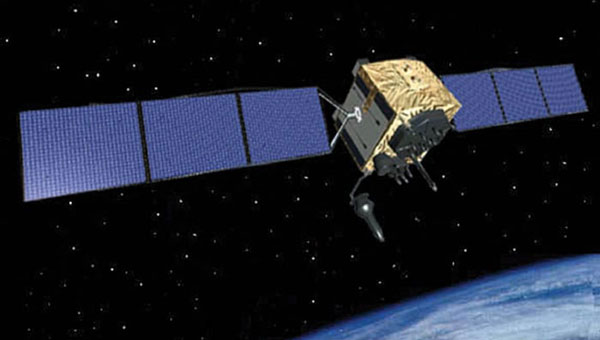
    Photo: GPS IIIF
    Photo: GPS IIIF

    The European Union Aviation Safety Agency (EASA) has updated its Safety Information Bulletin (SIB) to address the growing number of GNSS outages and disruptions.  

    This updated advisory, SIB No. 2022-02R3, highlights the increasing sophistication and impact of GNSS jamming and spoofing, which have become significant concerns for aviation safety. 

    The bulletin is directed at competent authorities, Air Traffic Management/Air Navigation Services (ATM/ANS) providers, air operators, aircraft and equipment manufacturers and organizations involved in the design or production of ATM/ANS equipment. It aims to inform these stakeholders about the risks and necessary precautions related to GNSS interference. 

    Since February 2022, there has been a notable increase in GNSS jamming and spoofing, particularly in regions surrounding conflict zones and other sensitive areas such as the Mediterranean, Black Sea, Middle East, Baltic Sea and the Arctic, reports the EASA. These interferences can disrupt the accurate reception of GNSS signals, leading to various operational challenges for aircraft and ground systems. 

    Tackling jamming and spoofing  

    The bulletin addresses jamming and spoofing. Jamming involves intentional radio frequency interference that prevents GNSS receivers from receiving satellite signals, rendering the system ineffective or degraded, while spoofing involves broadcasting counterfeit satellite signals to deceive GNSS receivers, resulting in incorrect positioning, navigation and timing (PNT) data. Jamming typically results in immediate and noticeable effects, whereas spoofing is more difficult to detect and poses a higher safety risk. 

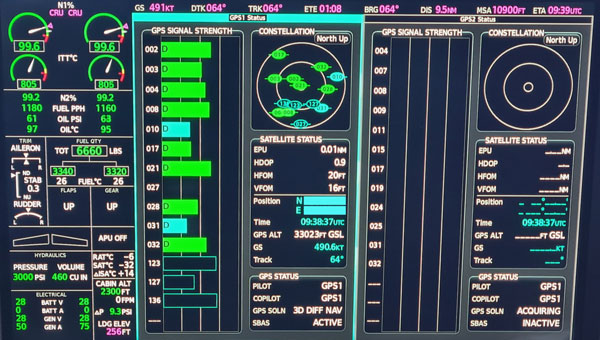
    Some symptoms of suspected GNSS spoofing include incoherence in navigation position, abnormal differences between ground speed and true airspeed, time and date shifts and spurious Terrain Awareness and Warning System (TAWS) alerts. These disruptions can lead to significant operational issues, such as re-routing or diversions, loss of Airborne Collision Avoidance System (ACAS) and misleading surveillance data. 

    EASA recommends several measures to reduce the risks associated with GNSS interference. These measures include establishing coordinated procedures between authorities, ATM/ANS providers and airspace users. The agency also suggests utilizing complementary PNT infrastructure and encourages users to implement a process to collect and report information on GNSS degradation. 

    Specific recommendations 

    For air operators:  

    • Train flight crews to recognize and respond to GNSS interferences. 
    • Promptly report any GNSS anomalies. 
    • Assess operational risks and maintain alternative navigation procedures. 

     For ATM/ANS providers:  

    • Establish monitoring and reporting processes for GNSS degradations. 
    • Ensure ground navigation infrastructure supports non-GNSS procedures. 
    • Provide navigation assistance and maintain communication coverage in case of GNSS jamming or spoofing. 

    For manufacturers:  

    • Assess the impact of GNSS interference on products and guide users. 
    • Support operators with instructions for managing GNSS-related issues. 

     Stakeholders are urged to implement the recommended measures to mitigate the impact of GNSS jamming and spoofing on aviation safety. 

    For further details, read the full EASA Safety Information Bulletin and visit the EASA website for updated information on affected regions. 

  • Another Orolia ELT receives Cospas-Sarsat certification

    Another Orolia ELT receives Cospas-Sarsat certification

    New-generation aircraft ELT meets new European Union Aviation Safety Agency (EASA) and U.S. Federal Aviation Administration (FAA) requirements

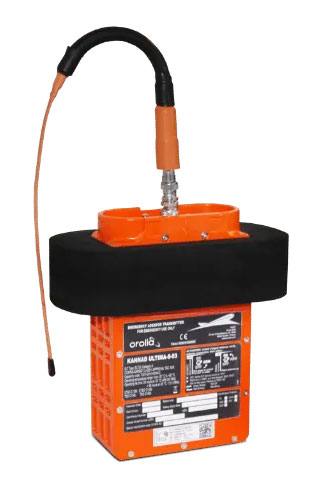
    Photo: Orolia
    Photo: Orolia

    Orolia has received certifications for yet another survival emergency locator transmitter (ELT), the Ultima-S.

    The news follows Orolia’s announcement that it had received certification for the Ultima-DT model, as well as a personal locator now shipping to the U.S. Army.

    The Ultima-S is a new generation ELT installed in either the cabins or liferafts of aircraft. It relays accurate aircraft location information to search-and-rescue teams.

    Once activated, a 406-MHz distress signal is transmitted and includes the ELT’s location thanks to the Ultima-S internal GNSS receiver. This built-in GNSS capability increases both probability and speed of detection of the distress signal.

    “With these key certifications for the Ultima-S, Orolia brings a long-awaited solution to the industry,” said Jérôme Ramé, Orolia’s Aviation & Military Product Line Director. “We have developed strong partnerships with several of the leading aircraft manufacturers that will enable operators worldwide to benefit from the Ultima-S for both their linefit and retrofit needs, allowing fleet standardization.”

    The Ultima-S provides free, global coverage service through the dedicated Cospas-Sarsat infrastructure while meeting the highest aviation safety standards. Orolia offers non-rechargeable lithium batteries compliant with the latest FAA and EASA special conditions standards, also known under TSO-C142b/DO227A. The Ultima-S also meets the most recent ELT performance and environmental standards through TSO-C126c.

    “What makes the Ultima-S unique is a new feature called the Return Link Service (RLS),” said Ramé. “Through this capability, the user is automatically notified when the distress signal is detected and located by the Cospas-Sarsat ground infrastructure. The Ultima-S links directly to the European Galileo GNSS satellite constellation, providing the most reliable and timely information for reaching aircraft crew members in distress.”

    In addition to being available on a linefit basis on major aircraft programs, Orolia has launched an exchange program to make retrofit activities easier for airlines, especially those upgrading to safer battery technology.

  • European agency warns of GNSS outages near ukraine

    GNSS jamming and possible spoofing has intensified in areas surrounding Ukraine, according to the European Union Aviation Safety Agency (EASA).

    The agency issued a bulletin on March 17 warning of a GNSS outage leading to navigation and surveillance degradation. According to the bulletin, which was directed at national aviation authorities and airlines, reports analyzed by EASA indicate that, since Feb. 24, GNSS spoofing and jamming has intensified in four key geographical areas:

    • the Kaliningrad region, surrounding Baltic Sea and neighboring states
    • Eastern Finland
    • the Black Sea
    • the Eastern Mediterranean area near Cyprus, Turkey, Lebanon, Syria and Israel, as well as Northern Iraq.

    “The effects of GNSS jamming and/ or possible spoofing were observed by aircraft in various phases of their flights,” the bulletin stated, “in certain cases leading to rerouting or even to change the destination due to the inability to perform a safe landing procedure.”

    Potential issues include:

    •  loss of ability to use GNSS for waypoint navigation
    • loss of area navigation (RNAV) approach capability
    • triggering of terrain warnings
    • inconsistent aircraft position on the navigation display
    • loss of ADS-B, wind shear, terrain and surface functionalities
    • failure or degradation of ATM/ANS/ CNS and aircraft systems that use GNSS as a time reference
    • airspace infringements and/or route deviations due to GNSS degradation.
  • Offshore deliveries, carrying people are new UAV developments

    Offshore deliveries, carrying people are new UAV developments

    A new offshore service opportunity for an already proven mini-helicopter UAV, a possible alternative to flying cars, and bulking up UAVs to carry cargo – just a few of this month’s new developments in unmanned aircraft.

    Oil Services UAV?

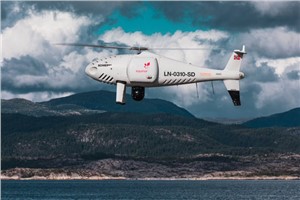
    S-100 Camcopter. (Photo: Schiebel)
    S-100 Camcopter. (Photo: Schiebel)

    If you’ve ever gotten close to the Schiebel Camcopter S-100, such as at a trade show, or if you’ve worked with one, you’ve probably noticed that it’s a rugged, weather-hardened vertical take-off UAV.

    It would seem that both military and maritime operations would be natural applications — so it’s not surprising that the United Arab Emirates (UAE) Army and German Navy have both bought S-100s.

    The U.S. Air Force Research Laboratory (AFRL) also investigated use of the S-100 for detection of improvised explosive devices (IED).

    The S-100 is a vertical take-off and landing, unmanned mini-helicopter with a top speed of around 138 mph, a range of just over 100 miles, with two payload bays, an electronics bay, and the ability to carry underslung loads — the all-up payload is 110 pounds. Sensors include an electro-optical/infrared (EO/IR) camera, an electronic support measures (ESM) system for detection and identification of electronic signatures, and synthetic-aperture radar (SAR).

    So it’s no surprise that a recent trial demonstrated the S-100’s long-range, high-speed capabilities to deliver parts to a Norwegian offshore oil rig.

    Nordic Unmanned and Schiebel flew a demonstration S-100 for rapid delivery of a 3D-printed replacement part from Mongstad out 55 miles to the gas production platform Troll A in the North Sea. This is said to be the first full-scale offshore UAV delivery from shore to an active oil and gas installation.

    The demonstration simulated an urgent requirement for a nozzle holder for injecting diesel fuel into the platform’s lifeboat engine. Maintaining safety regulations and production flow from these offshore platforms is essential, but both ship and helicopter emergency trips out to platforms can be risky and downright dangerous in bad North Sea stormy weather — so the UAV option may save lives, time and cost.

    Before flying back to base on the mainland, the S-100 also demonstrated its ability to closely inspect the operational platform, and even carried out a simulated search and rescue, locating a dummy in the water and providing live video and location data from its L3 Harris EO/IR camera and an Automatic Identification System (AIS).

    Do we really need flying cars?

    Where are we with people-carrying drone taxis and cars? To get them in the air for demonstration flights is tricky — there are a lot of  i’s to dot and T’s to cross before agencies like the U.S. Federal Aviation Administration (FAA) allow them to fly. There are also plenty of restrictions on where they can fly — certainly not over populated areas. It will undoubtedly happen eventually, but time is money, and regulations will likely outlast the financial supply for most start-ups.

    Because of this, one outfit with significant credentials has taken another tack — automating aircraft that have already earned their certified wings.

    The original Cessna 172 Skyhawk test flights and certifications successfully culminated in June 1955. The Cessna 208 Caravan gained FAA approval in October 1984. Both General Aviation aircraft have flown since then with established safety and reliability records. The FAA knows what makes a safe airframe, power plant and aircraft flight controls — what’s needed to qualify a remotely piloted, automated flight control system is surely a lot less than the complete aircraft and its existing systems.

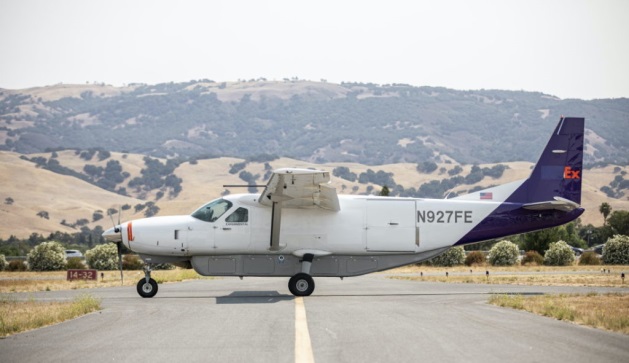
    FedEx Cessna 208 Caravan. (Photo: Reliable Robotics)
    FedEx Cessna 208 Caravan. (Photo: Reliable Robotics)

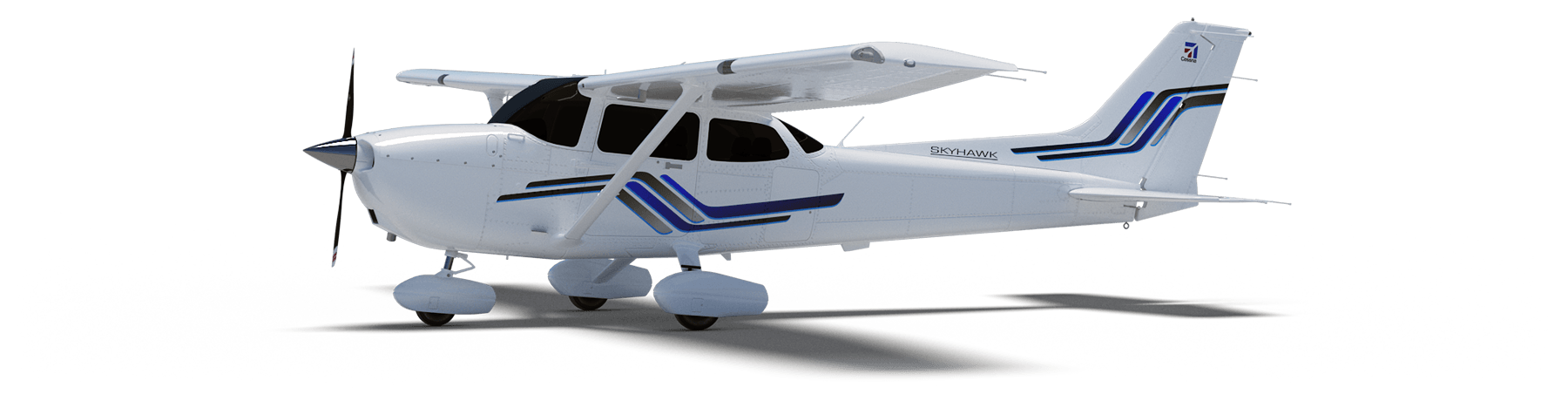
    Cessna 172 Skyhawk. (Photo: Cessna)
    Cessna 172 Skyhawk. (Photo: Cessna)

    Ex-SpaceX software systems director Robert Rose decided that getting his autoflight system past FAA scrutiny would actually be an easier job. He started Reliable Robotics to get drone aircraft flying sooner.

    The company has now developed an autonomous platform that can be retrofitted into virtually any fixed-wing aircraft. The system comprises avionics, flight control software, a mechanical hook-up, and a communications system which enables remote command and control, along with a reversionary backup system.

    The autonomous system was integrated into a four-passenger Cessna 172 Skyhawk, and was used in an automated, unmanned gate-to-gate demonstration flight. The system underwent a full system safety analysis and test and the unmanned test flight included automatic taxiing, takeoff and landing.

    The Skyhawk was flown without a pilot on board over a populated area, which was an essential part of qualifying the Reliable Robotics platform for safe civil use on an already certified passenger aircraft.

    For the next test flight of a larger 14-passenger Cessna 208 Caravan, the integrated system again demonstrated full automatic remote landing of the aircraft. Reliable Robotics hopes that continuing certification efforts with the FAA will soon enable them to sell their automation system for certified unmanned passenger aircraft operations.

    Cargo UAV

    The majority of unmanned aircraft have been small. There’s even a category called small unmanned aircraft systems (sUAS) — so hanging a pizza on one for delivery by suppertime is about the most cargo you might imagine these things could carry.

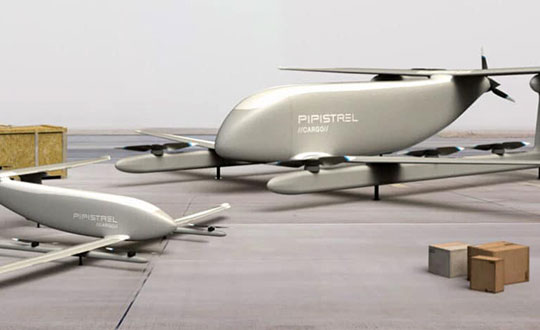
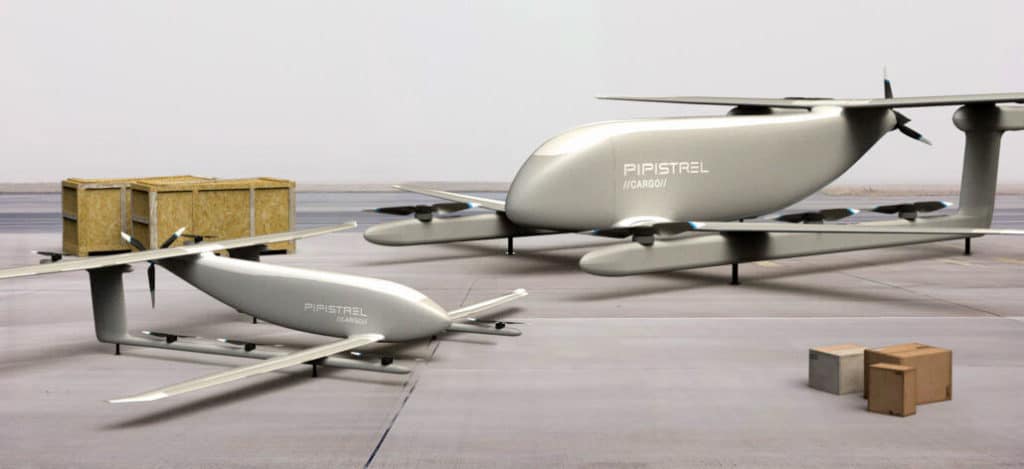
    V20 and V300 cargo UAVs. (Artist's concept: Pipistrel)
    V20 and V300 cargo UAVs. (Artist’s concept: Pipistrel)

    One way to overcome this limitation — as we just saw — is to hook up a sophisticated auto-flight system to a passenger aircraft. Another way could be to build a large cargo-carrying UAV — like the Pipistrel (Slovinia) Nuuva V300, which is claimed to be able to carry up to 1000-pounds of cargo over impressive distances.

    The vehicle has eight identical electric motors for vertical take-off and landing, and a gas engine powers a pusher propeller for cruise. The vertical lift electric motor has apparently been certified for airborne use by the European Aviation Safety Agency (EASA).

    If the V300 cargo is reduced to 110lb, it looks feasible for it to fly over 1500 miles at up to 8,000ft. Pipistrel claims this operational cargo envelope to be 10 times more efficient than for an equivalent helicopter. Pipistrel has also launched a smaller V20 cargo version with the same offset wing set up and smaller electric lift and cruise propulsion — aimed at last-mile deliveries.

    Seems the V20 is available fairly soon, but the V300 still has work to do — presumably certification effort – and won’t be available till 2023.

    Until next time

    So potential oil-platform service deliveries for the S-100 Camcopter, turning already certified aircraft into passenger carrying unmanned vehicles, and UAVs coming for cargo carrying — all are new, promising and different UAV exploits. Let’s hope they all become commonplace in the coming years.

  • McMurdo Gets FAA, EASA Nods for Commercial Aircraft Locator

    McMurdo Group, maker of end-to-end search and rescue solutions, has received formal certification from the U.S. Federal Aviation Administration (FAA) and European Aviation Safety Agency (EASA) for its Kannad Integra ARINC 429 Navigation Interface.

    Based on the ARINC 429 GPS communications standard for most commercial aircraft, the interface, when used with the Kannad Integra Emergency Locator Transmitter (ELT), provides dual GPS redundancy that can result in aircraft being found much faster compared to standard ELTs in event of an emergency. The solution has already been selected by aircraft manufacturers including Pilatus, Embraer and Airbus Helicopters.

    Traditional ELTs rely on an aircraft’s external antenna and GPS equipment, which is subject to failure in the event of an emergency. The Kannad Integra ELT, however, can operate independently of the aircraft to provide key positioning data through its built-in internal antenna and embedded GPS receiver. The Integra ARINC 429 navigation interface stores the latest known position of the aircraft based on the aircraft navigation system data. This data is then used by the built-in Integra GPS for better location accuracy and a higher chance of rescue.

    In March, McMurdo introduced an Integra Smart Pack bundle, which provides similar redundancy for general aviation aircraft using the standard NMEA interface.

    The Kannad Integra ELT and Integra ARINC 429 Navigation Interface are suitable for commercial aircraft, helicopters, business jets and airlines. Once activated, the Integra ELT transmits a distress signal to alert international rescue services to the emergency location via the global Cospas-Sarsat Search and Rescue satellite system, which has helped to save more than 37,000 lives since 1982.

    “McMurdo’s Kannad products have been chosen by the world’s leading aircraft manufacturers and airlines for their quality, reliability and innovation,” said Christian Belleux, head of McMurdo’s Kannad Aviation Business Unit. “This new ARINC 429 interface is yet another example of how we are helping to shape the present and the future of aviation safety.”