Tag: Embedded World

  • Telit Cinterion adds dual-band L1+L5 GNSS modules for trackers and high-precision IoT

    Telit Cinterion adds dual-band L1+L5 GNSS modules for trackers and high-precision IoT

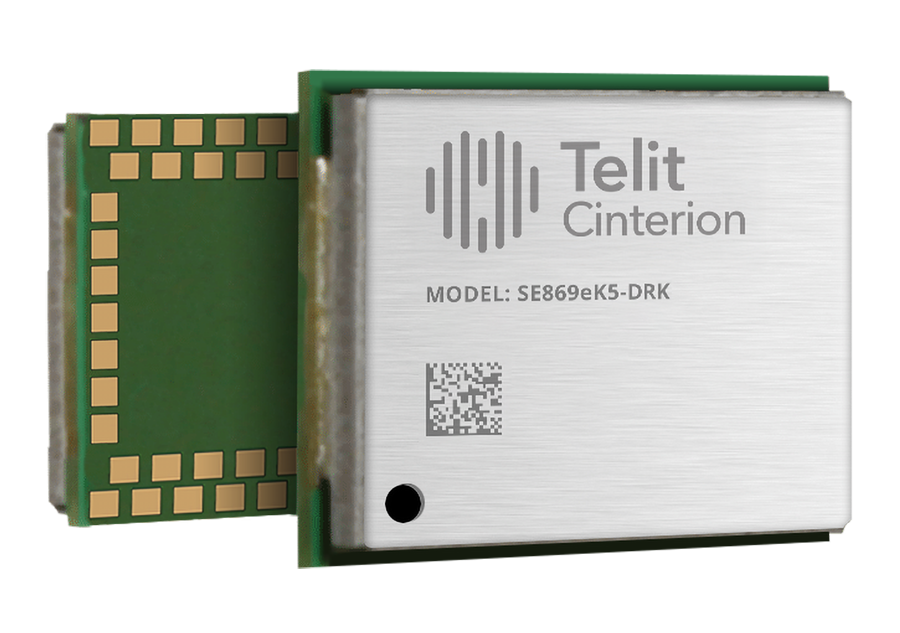
    Telit Cinterion, an end-to-end IoT solutions enabler, has expaned its GNSS portfolio with two dual-band positioning modules: the ultracompact SE873K5-D and the high-end SE869eK5-DRK

    Built on the AG3335 chipset series from long-time partner Airoha, the new modules support space- and power-constrained internet of things (IoT) devices and use cases that require continuous, ultraprecise positioning. 

    The SE873K5-D and SE869eK5-DRK provide a scalable path to adopt dual-band L1 + L5 GNSS. Device manufacturers can add advanced correction technologies and resilient positioning architectures without redesigning hardware.  

    When combined with Telit Cinterion cellular connectivity solutions, the modules support the injection of RTCM corrections worldwide. This feature enables higher accuracy across connected IoT deployments.

    SE873K5-D
    The SE873K5-D expands the established SE873K5 family with a dual-band L1 + L5 variant. It is designed for size- and power-constrained applications.  

    This new module maintains the same 7 x 7 mm footprint and pin-to-pin compatibility as the single-frequency SE873K5. OEMs can scale performance without changing hardware designs.
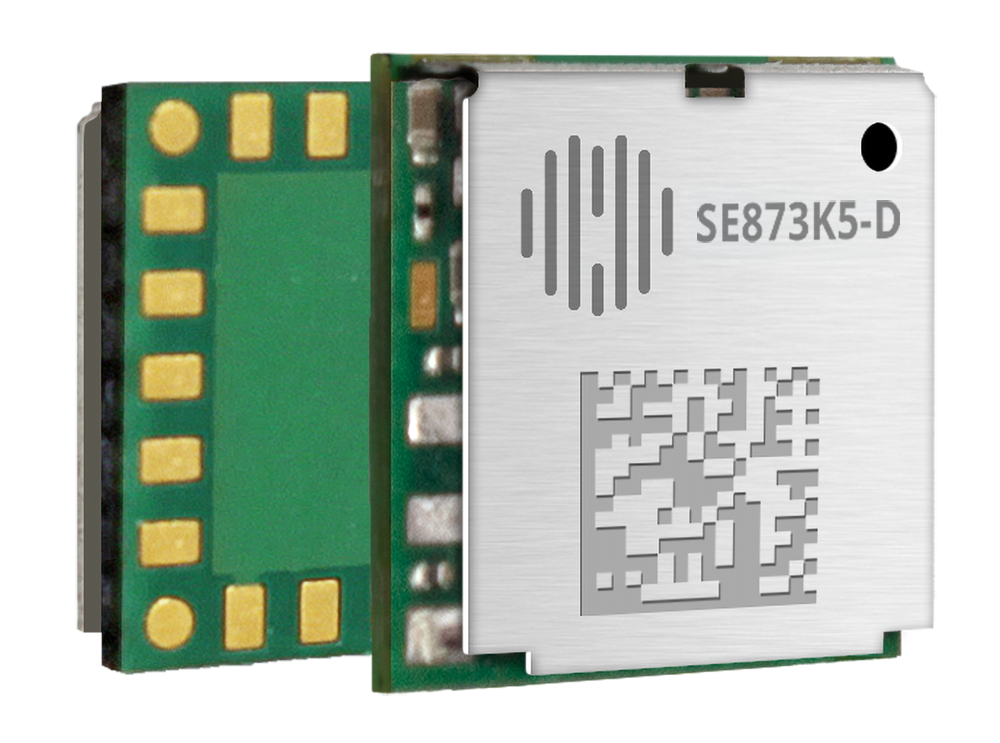
    The SE873K5-D supports multiconstellation GNSS across the L1 and L5 bands. Compared to single-frequency solutions, it improves accuracy and robustness against interference and multipath effects.  

    With DGNSS support via RTCM corrections, the module enables submeter accuracy. It is ideal for myriad use cases, from wearables to fleet management.  

    Two power supply variants enable designers to optimize for either minimal size or ultralow power consumption in battery-operated devices. Multiple configurable usage profiles, such as tracking and drone modes, provide added flexibility across IoT verticals.  

    SE869eK5-DRK
    The SE869eK5-DRK is the next evolution of Telit Cinterion’s high-end GNSS offering. Based on the upper tier of the AG3335 chipset family, this module builds on the previously announced SE869eK5-DR. It adds support for RTK positioning with untethered dead reckoning. 

    This powerful combination enables uninterrupted, centimeter-level positioning. It maintains performance even when GNSS signals are degraded or unavailable due to interference or signal blockage.  

    The SE869eK5-DRK has an embedded inertial measurement unit. This feature helps maintain accurate position fixes in environments like tunnels and dense urban areas. The module supports DGNSS for submeter accuracy when RTK corrections are unavailable or when centimeter-level precision is not needed. 

    The SE869eK5-DRK is designed in an industry-standard 16 x 12.2 mm form factor. It introduces a proprietary extended pinout while remaining backward-compatible with existing designs. The added pins enable future-proof implementations and customization. OEMs can expand capabilities over time without redesigning their products.

    Engineering validation testing samples of the SE873K5-D are available now. Design validation testing samples are expected soon. Mass production is planned for Q2 2026.  

    Design validation testing samples for the SE869eK5-DRK are available now. Mass production is planned for Q2 2026.  

    For more information about the SE873K5-D and the SE869eK5-DRK, visit Telit Cinterion at Embedded World at Booth #3-620. The event runs March 10-12 at the Exhibition Centre Nüremberg. 

  • Qualinx launches reconfigurable GNSS chip and developer kit

    Qualinx launches reconfigurable GNSS chip and developer kit

    Qualinx will showcase its market-ready 1 mW QLX3Gx Series GNSS chip with its dynamic reconfigurable architecture, along with a developer evaluation kit (EVK), at Embedded World 2026 taking place March 10-12 in Nuremberg.

    The QLX3Gx EVK enables OEMs to directly validate Qualinx’s power-to-performance leadership and integration readiness in real-world device environments across IoT, UAVs, wearables, asset tracking, mobility and infrastructure applications. Additional demos include ultra-low-power GNSS powered by Dragonfly Digital RF, on-chip Galileo authentication with EUSPA’s OSNMA, QLX3AX AFE flexibility, beacon-to-beacon communication and sustainable smartwatch integration.

    1 mW GNSS Powered by Dragonfly

    Qualinx’s patented Dragonfly Digital Radio Frequency (DRF) architecture is at the core of the QLX3GX chip and shifts traditionally analog RF functions into the digital domain, an approach that brings RF back in line with Moore’s Law and, as such, significantly reduces power consumption without compromising performance.

    Market-ready and built for scale, the highly integrated chip combines an ultra-low-power digital RF front end with an advanced GNSS digital baseband engine, ready for high-volume production and OEM deployment.

    Additionally, the Dragonfly architecture enables dynamic, over-the-air (OTA) reconfiguration of the device throughout its lifecycle, eliminating substantial cost and complexity from customers’ supply chains and sparking new cycles of downstream product innovation, all from a single chip.

    Supported by a European-designed GNSS architecture engineered for industry-leading power-to-performance versatility, hardware-level security and resilience, tracking is performed natively on-chip rather than in the cloud, further improving resilience to spoofing, jamming and interference.

    Live demonstrations planned

    Live demos at Embedded World 2026 highlight Qualinx’s performance and agility, and reinforce the company’s strategy to redefine connectivity by ensuring ultra-low-power, secure, and reconfigurable GNSS is accessible at scale:

    • QLX3Gx developer evaluation kit (EVK). Hands-on validation of real-world power consumption, reconfigurability and integration readiness.
    • Ultra-low-power GNSS powered by Dragonfly Digital RF. The 1 mW operating mode reduces one of the largest energy drains in connected systems, enabling longer battery life, smaller form factors and lower carbon footprint.
    • Qualinx Transmit. Qualinx will demonstrate that the same chip used for beacon-to-beacon collaboration can enable a range of new applications in which devices work together as an intelligent swarm, accelerating the deployment of ambient IoT.
    • Galileo OSNMA authentication with EUSPA. With more than 4 billion devices connected to Galileo, Qualinx on-chip navigation message authentication strengthens protection against spoofing among connected devices while reinforcing alignment with Europe’s sovereign Galileo infrastructure.
    • QLX3AX analog front end (AFE). A dynamic OTA reconfigurable AFE supporting multiple radio technologies for specialized receivers and custom systems.
    • Wearable integration display. Smartwatch-class form-factor readiness, validating compact footprint and suitability for IoT and wearable devices.

    The availability of the QLX3Gx GNSS chip and EVK follows the recent announcement of a €20M investment round to support and accelerate Qualinx’s growth and international expansion. As governments and enterprises reassess their exposure to fragile, globally concentrated semiconductor supply chains, Qualinx stands out as a European deep-tech company that combines European IP and manufacturing, with hardware-level security that delivers resilient, ultra-low-power connectivity and does not rely on cloud-based processing.

    All Qualinx chips, including the QLX3Gx GNSS chip, are designed and manufactured in Europe, anchoring production within the EU and reducing supply chain risk.

    OEMs are invited to register their interest in the Qualinx developer EVK at Embedded World, from 10-12 March at the Exhibition Centre Nuremberg, Hall 3, Booth 2211, to secure hands-on evaluation of the QLX3Gx GNSS chip for upcoming consumer, industrial, and mobility applications ahead of mass production this year. Contact [email protected] to schedule a media interview.

  • Quectel launches high-performance GNSS positioning module

    Quectel launches high-performance GNSS positioning module

    Photo: Quectel
    Photo: Quectel

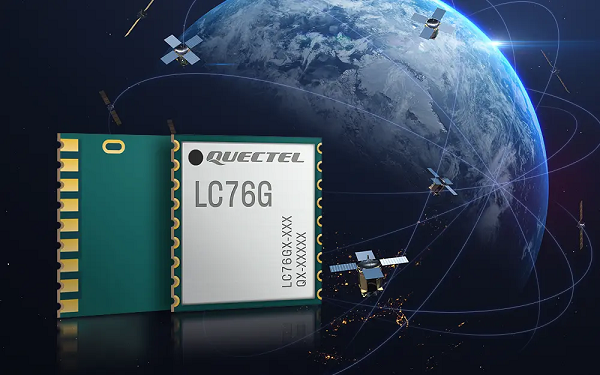
    Quectel Wireless Solutions, a global IoT solutions provider, has released the LC76G module, a single-band compact GNSS module featuring fast and accurate location performance as well as ultra-low power consumption.

    The LC76G is on display at Embedded World Nuremberg, Booth No 171, Hall 5, June 21- 23.

    The LC76G has already entered mass production with sufficient supply to meet the needs of the global positioning market. Based on the Airoha AG3352 platform, the LC76G can concurrently receive and process signals from all four global constellations and the regional QZSS.

    The LC76G module can receive signals from up to 47 satellites and achieve 1.5 m (CEP50 open-sky) positioning accuracy representing a 40% improvement over previous generations of devices.

    Available in a cost-optimized version as well as a low-power version, the LC76G low-power version consumes less than 9 mA@3V with all four constellations enabled, allowing for a 72% reduction in power required compared to what was previously possible.

    This makes the LC76G suitable for battery-operated devices such as wearable personal trackers, wildlife and livestock tracking, toll tags, portable container trackers and a host of traditional markets such as shared mobility and low-cost asset trackers.

    Featuring an internal SAW filter and integrated LNA, the LC76G can be connected directly to a passive patch antenna and provides filtering against unwanted interference, ensuring excellent performance even while driving through dense urban canyons.

    EPO and EASY improve TTFF

    Integrated assisted-GNSS technology Extended Prediction Orbit (Quectel’s EPO) is supported on the LC76G module. EPO reduces the time to first fix (TTFF) with a hot start taking less than 1 second, a warm start within 2 seconds, while the cold start can obtain accurate tracking fixes within 15 seconds. The faster GNSS fixes make it possible to use accurate positioning and navigation services anytime and anywhere with a smaller power budget than previously possible.

    While EPO requires manual download of predicted orbits, the LC76G also supports the Embedded Assist System (EASY), where predicted orbit information is collected directly from the satellites and provides for up to three days of accelerated fixes.

    Both EPO and Easy are available for each constellation, allowing for faster TTFF and reduced dependency on any particular constellation.

    Featuring an LCC form factor and an ultra-compact size of 10.1 × 9.7 ×2.4 mm, the footprint of the LC76G is compatible with other industry solutions as well as Quectel’s legacy L76 and L76-LB modules, allowing for a smooth migration of existing designs to the latest low-power GNSS technology.

    In addition, Quectel offers a wide range of off-the-shelf and customized high-performance antennas which boost wireless connectivity significantly. The C76G can be combined with a selection of GNSS L1 antennas to enable various positioning requirements. Customized connector type and cable length as well as comprehensive antenna design and test support are also available.

  • OriginGPS showcases new modules, tracker at Embedded World

    OriginGPS showcases new modules, tracker at Embedded World

    New products include a low-profile GPS module, a new-gen dual-frequency GNSS module and a super-mini IoT tracker

    Photo: OriginGPS
    Photo: OriginGPS

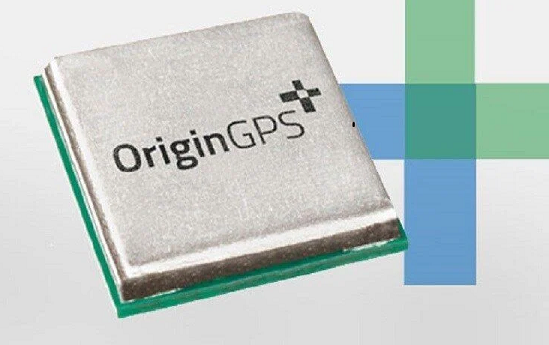
    OriginGPS will showcase new GPS and GNSS modules and a tiny tracker at Embedded World, Nuremberg, June 21-23, and at Electronica, Munich, Nov. 15-18.

    Among products exhibited are:

    • the 7 x 7 mm ORG4572-MK05 GNSS module with a 10-Hz update rate
    • the new generation dual-frequency L1+L5 ORG4600, which provides centimeter-level accuracy with RTKLIB and NMEA with raw data in parallel
    • a low-profile GPS antenna module, the ORG1511-MK05
    • a new waterproof super-mini tracker measuring 4.9 x 2.7 x 1.4 cm and equipped with magnetic charging
    • high-performance solutions for a myriad of industries, from fish finders and oil and gas monitors to cargo tracking and gun control.

    OriginGPS specializes in miniature GNSS modules and cellular internet of things (IoT) systems. Its high-performance solutions are suitable for every type of device designed to monitor and track valuable assets, whether stationary, in motion or both.

    OriginGPS today offers a broad range of high-efficiency solutions, including traditional miniature GNSS modules and cellular IoT systems and devices to dramatically shorten time to market.

    “When we realized that the component shortage was here to stay a while, we revisited our roadmap and added two GNSS modules, the ORG1510-MK05 and the ORG4572-MKO5,”said Amir Benyamini, vice president of research and development, OriginGPS. “These new models are based on available chipsets and boast a lead time of just 12 weeks. We also offer a similar lead time for our dual-frequency module.”