Tag: European Navigation Conference

  • Galileo Update, Ionospheric Model Shared at ENC

    This year’s European Navigation Conference (April 7–10 in Bordeaux, France) got underway with “Good news from up there .…”

    Galileo’s seventh and eighth satellites launched successfully in late March, the European Space Agency (ESA) plans four more satellites to reach orbit in 2015, and space maneuvers for Galileo 5 and 6 have been completed, with a recovery plan currently under study. ESA also happily confirms that satellites 7 and 8 are in good position, under control, and behaving very well.

    Fiammetta Diani, deputy head of Market Development for the European GNSS Agency (GSA) followed her keynote opener with “ . . . some good news also from down here.”
    Photo: European GNSSThe GSA has just published a new document on the NeQuick Ionospheric Model, used to compensate ionospheric errors on Galileo and other GNSS signals. The document, titled “European GNSS (Galileo) Open Service Ionospheric Correction Algorithm for Galileo Single Frequency Users,” and downloadable, contains detailed description and results from years of intense research.

    Ionospheric Model

    The NeQuick model improves accuracy levels globally when using single-frequency services, even during hyperactive periods of the 11-year solar cycle, according to the GSA.

    (Last year, authors from the European Space Research and Technology Centre (ESTEC) at the European Space Agency (ESA) published an article in GPS World magazine, “Innovation: the European Way,” as the Innovation column edited by Richard Langley. From Langley’s introduction to the article: “The ionosphere is a dispersive medium for radio signals, so by making measurements simultaneously on two frequencies transmitted by a satellite, most of the effect of the ionosphere can be removed. However, single-frequency devices such as most vehicle navigation and handheld receivers don’t have the luxury of dual-frequency correction. These devices must rely on a single-frequency correction model. The coefficients for such a model are included in the navigation messages transmitted by all GPS satellites. Known as the Ionospheric Correction Algorithm or Klobuchar Algorithm, it removes at least 50 percent of the ionosphere’s effect.

    “The Galileo satellites also include the parameters of an ionospheric algorithm, called NeQuick G, in their navigation messages. In this month’s column, the Galileo system design team describes the novel European way for modeling the ionosphere for single-frequency users and compares its performance to the current GPS approach.”

    The online version of the Innovation column contains an extensive Further Reading list, including resources on the GPS (Klobuchar) ionospheric model.)

    Receivers operating in single-frequency mode may use a single-frequency ionospheric correction algorithm,which is given in the report in the form of two equations, to estimate the ionospheric delay on each satellite link. The Effective Ionisation Level, Az, is determined from three ionospheric coefficients (broadcast within the navigation message) and the Modified Dip Latitude (MODIP) at the location of the user receiver. MODIP is expressed in degrees and a table grid of MODIP values versus geographical location is provided together with NeQuick G model. The receiver then calculates the integrated Slant Total Electron Content along the path using NeQuick G and converts it to slant delay using a stated equation for ionosphere group delay (delay on the pseudo-range or signal code phase), neglecting higher order terms.

    A further section of the report describes practical guidelines for the implementation of the single-frequency ionospheric model within Galileo user receivers, with sub-sections detailing:

    • Zero-valued coefficients and default Effective Ionisation Level;
    • Applicability and coherence of broadcast coefficients;
    • Effective Ionisation Level boundaries;
    • Integration of NeQuick G into higher level software;
    • Computation rate of ionospheric corrections.

    In a document annex titled “Performance Results,” the performance of the model is compared with that of the GPS Ionospheric Correction Algorithm (ICA) algorithm, also known as the Klobuchar model.

    “As an example of the behavior of the two models as a function of the time of day, the delay computed using Klobuchar and NeQuick G are plotted as a function of the satellite elevation and of UTC in Figure 5. For this example, in order to have a direct comparison between the two models, the delays computed using Klobuchar and NeQuick are compared with respect to the delay estimated using Global Ionospheric Map (GIM). The plots have been computed for a station in latitude [deg] 40.8234, longitude [deg] 14.2161, altitude [m] 122.6590 m, using GPS satellite PRN 11 and for day 16 of year 2010 characterized by quiet geomagnetic activity.”
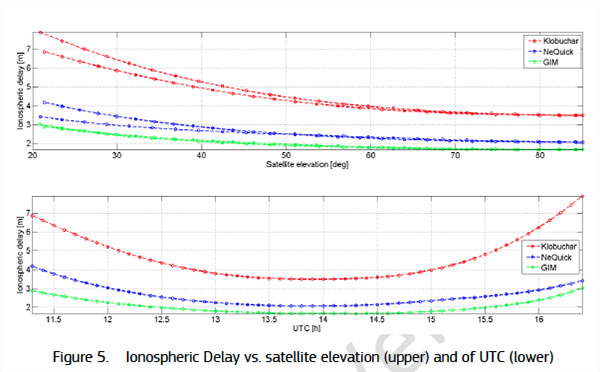
    GNSS-D&T-Figure-5

    Several further figures and tables within the document annex give more details on the performance results obtained.

    The NeQuick electron density model was developed by the Abdus Salam International Center of Theoretical Physics (ICTP) and the University of Graz. The adaptation of NeQuick for Galileo single-frequency ionospheric correction algorithm (NeQuick G) has been performed by the European Space Agency (ESA) involving the original authors and other European ionospheric scientists under various ESA contracts.

    GNSS Market

    In market forecasts, Diani related some high-level results from the GSA’s 2015 GNSS Market Report.  Among other insights, the GSA predicts that the installed base of GNSS devices will triple by 2023, with per capita rates of 2.5 in North America (currently 1.4), and 2.3 in Europe and Russia (now 1.1 and 0.8, respectively). Around the rest of the world, in eight years nearly every person, on average, will possess a GNSS device. Currently rates are 0.5 in South America, 0.2 in Africa, and 0.4 in the Middle East and non-Russian Asia.

    Galileo Services: Proposal for an Industry Policy

    Axelle Pomies of Galileo Services, an association of industry players active in GNSS applications, stressed the need for a comprehensive, assertive industry policy to support the development of EGNOS/Galileo downstream sector, leading to growth, job creation, and autonomy for Europe.

    As stated in her presentation, GNSS market trends do not currently favor Europe, as the continent aggregately currently holds a market share of less than 20%, whereas the usual European market share in other high-tech sectors is around 33%. European GNSS downstream industry suffers from a competitive disadvantage vis-à-vis industry from other regions, because dedicated national programs/strategy in the United States, Russia, China, and Japan support competitiveness of their respective industries and enhance GNSS market take up, including funding from R&D to manufacturing capabilities; regulation; and massive public procurement. Europe has none of these, or at least not to the same degree.

    Among the risks this entails for European Union autonomy are that Galileo may not be used as intended; there is little predicted interest for most user applications to track four constellations. Meanwhile GPS, GLONASS and BEIDOU are already in place.

    She cited a number of key GNSS application markets where European industry must position itself strongly and securely. In her view, the most promising markets in terms of growth potential and strategic placement include:

    • Road (intelligent transport systems, connected vehicles, and advanced driver asisstance systems, or ADAS)
    • agriculture
    • autonomous/unmanned vehicles
    • rail
    • timing
    • critical infrastructures
    • multimodal logistics
    • defence
    • Internet of Things.

    In that regard, Pomies posited the necessity of a comprehensive and assertive industry policy to support the development of EGNOS/Galileo downstream sector, with the goals of  fostering the use of European GNSS infrastructures; encouraging European Industry to develop EGNSS equip/apps; fostering the manufacturing of E-GNSS based solutions in Europe; and supporting the European industry competitiveness in the GNSS global market and fostering the emergence of European champions.

    Support from European and national institutions is necessary for the full success of the EGNOS programmes, she said, and she previewed the mid-May publication of a draft position paper from Galileo Services in this regard, for wide consultation within the European downstream sector.

    Follow www.galileo-services.org for its first appearance.

    Key Issues in Intelligent Transport and Location-Based Services

    Concluding the ENC plenary, Florence Ghiron of Topos Aquitaine, a regional council of satnav and intelligent transport companies in southwest France, focused on opportunities and risks for small-to-medium enterprises. One of her key points regarding the intelligent transport systems market: the long development paths of public and regulatory policy do not help SMEs grow.

    Today, several GNSS-based road schemes are already operational, but they tend to be limited to specific applications, to regional areas and/or to specific classes of vehicles, for example, trucks above a certain weight !

    Moreover, each country tends to work with their national champion. This has led to fragmentation of the targeted markets all over Europe. Thus, the need for interoperability between schemes is an increasingly important factor.

    Among her major recommendation for supporting application and business development:

    Support GNSS stakeholders at promoting their innovative GNSS applications towards the largest possible community. This encompasses:

    • Visibility of GNSS mature solutions/applications

    • Cost-benefit analyses for already developed GNSS-applications

    • Identification of the best ways/means to help SMEs  promote their offers towards public purchasers

    • Development of a Directory of European regional and national contact points

    She further proposed additional funding mechanisms for SMEs to bridge the gap between the R&D step and the industrialization/market development phase.

    Finally, help medium/small regions and cities to purchase or procure the innovative GNSS-ITS applications they need to answer their public transportation/mobility needs.

    Further information on the Topos project SUNRISE (Strengthening User Networks for Requirement Investigation and Supporting Entrepreneurship), a European project managed by the GSA, may be found at www.topos-aquitaine.org.

    Back to Bordeaux in October

    Both Diani and Ghiron closed their presentations with invitations to return to Bordeaux in October for the Intelligent Transport Systems World Congress, themed “Towards Intelligent Mobility: Better Use of Space.” GNSS looks to take a more central role than ever in this far-reaching economic segment.
  • eDLoran Surprise: European Navigation Conference 2014

    eDLoran Surprise: European Navigation Conference 2014

    At the ENC-GNSS Conference in Rotterdam, we delved into actions necessary to officially use EGNOS (giving me déjà vu from WAAS’s early days), heard sage words from Brad Parkinson, the father of GPS, and, on the last day, saw amazing proof of a claim many of us initially thought was outrageous — that differential (DLoran) with modern monitoring can result in consistent horizontal accuracies approaching five meters on a moving platform.

    When I was asked if I could cover the European Navigation Conference 2014 (ENC-GNSS) in Rotterdam, The Netherlands, it took me about two seconds to answer in the affirmative. Let’s see… Travel to Europe in the spring, visit The Netherlands — my old stomping grounds where my daughter was born — see miles and miles of beautiful Tulips in bloom, and visit with some old friends. Gee, what a tough decision. Oh, and of course, cover the ENC. Almost forgot that

    Seriously, my primary purpose, of course, was to cover the ENC and associated events such as the Resilient PNT Forum and a meeting of the European Maritime Radionavigation Forum (EMRF), but literally miles and miles of brilliant red, white, and yellow tulips interspersed with ancient windmills are hard to ignore. But I digress.

    In past years the ENC, with approximately 400 attendees, has been naturally dedicated to European PNT matters, and in reality it concentrated almost exclusively on Galileo with a slight mention of EGNOS. That was about it. This year, the venue was the same, but the program was more open, with presentations on PNT augmentations such as EGNOS and DLoran, and maritime navigation to include radar and inertial systems.

    For those of us that have been in the PNT (positioning, navigation and timing) or merely the navigation business, say, for the past 40+ years or so, in some respects it was more than slightly reminiscent of times past. As the great American octogenarian baseball philosopher and malapropism aficionado extraordinaire, Yogi Berra, once said, “It was déjà vu all over again.”

    European Maritime Radionavigation Forum

    The Port of Rotterdam today (2014).
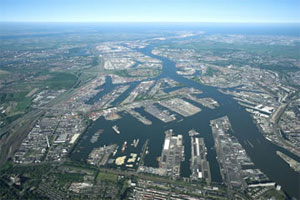
    The Port of Rotterdam today (2014).

    The EMRF was the first official function to kick off in Rotterdam. When you consider that Rotterdam is one of the busiest ports in Europe and had been around since 1340, you would naturally expect one of the main conversations at the EMRF to concern the port of Rotterdam and navigating in less-than-perfect conditions. The Netherlands is known as the Low Country, and that is as an apt description since most of the country is below sea level — hence the persistent fog, dikes, sea walls, and windmills that pump water and grind grain and all those good things. Today, the modern versions of those windmills are huge — twenty stories tall — and generate electricity. Many of them are close to shore so precise navigation in foggy conditions is even more critical than in times past.

    The main topic of conversation at the EMRF revolved around the actions necessary to officially use EGNOS (the European Geostationary Navigation Overlay Service) as a precision and official safety-of-life augmentation for GPS (similar to WAAS, Wide Area Augmentation System) and Galileo.

    During those discussions, I swear when I closed my eyes, except for the accented English, I was propelled backward almost 20 years to discussions of WAAS as a safety-of-life system, not for maritime but for aviation purposes. Still, the dialogue and heated discussions echoed down through the years almost verbatim. The main difference, of course, being that in the U.S. it was 20 years earlier, we were embarking on virgin territory, and we had only ourselves, one nation, to debate. Whereas the Europeans are fighting the same battles two decades later, with a system that is purposefully almost an identical copy of WAAS technically, and they are working for maritime and aviation certifications simultaneously. And not with just one nation but the entire European Union. A truly daunting task.

    The EMRF website is sponsored by Trinity House in London, which is responsible for the safety of [English and European] shipping and the well being of seafarers, which have been their prime concerns ever since Trinity House was granted a Royal Charter by Henry VIII in 1514. I planned to list the EMRF website for your further edification, but since the latest news on the site concerns the upcoming January 2011 EMRF meeting in Paris, I thought it was best left to molder in obscurity. The website, not the EMRF.

    The bottom line for the EMRF is that while it fills an important role where EGNOS and maritime navigation are concerned, it still has a lot to learn and could benefit greatly by lessons learned from WAAS. However, I personally see no indication that will happen, so we wish them luck. Many of us are standing by to assist if asked. Even if it is only, “Been there, tried that, and here is why it did or did not work.” Quod homo non sit Island.

    Resilient PNT Forum

    I was happy to see Dana Goward (USCG Ret), the head honcho at the Resilient Navigation and Timing Foundation, which conducted the Resilient PNT Forum at ENC 2014. Dana’s forum, which took place just before the official ENC 2014 kickoff, concentrated on the need for and strategies to achieve resilient position, navigation and timing (PNT) services. The event was well attended, and was jointly hosted by the European Group of Institutes of Navigation, the International Association of Institutes of Navigation, and the International Association of Marine Aids to Navigation and Lighthouse Authorities. There was no charge to attend the event, and the collaboration proved interesting, especially since Dana really wanted to talk eLORAN and GPS/Galileo augmentations.

    Dana is retired U.S. Coast Guard and worked many years supporting LORAN-C and the USCG Navigation Center. Dana showed a brief video of his recent testimony before the U.S. Congress, where he lobbied for a cessation of the destruction of LORAN-C towers and their associated infrastructure. If recent congressional actions are any indication, he has been somewhat successful in that regard. Now all that is left is to help the U.S. Congress, services, and agencies realize how badly the United States needs LORAN as a backup, enhancement, and augmentation to GPS and other space-based PNT services on a global basis. No small task, but it is a task that Dana Goward and the Resilient Navigation and Timing Foundation have strapped on, and we wish them the best. Plus, as you will see later, a surprise presentation at ENC-GNSS may have given Dana and his cause just the boost they need. Keep reading.

    As it turns out, many others thought these non-Galileo presentations were timely topics as well, and the discussions were enlightening, especially the Resilient PNT Forum keynote address by Professor David Last. Among many other titles he holds, Last is a consultant engineer and expert witness specializing in radio navigation and communications systems. He is a professor emeritus at the University of Bangor, Wales, and past president of the Royal Institute of Navigation. He acts as a consultant on radio-navigation and communications to companies and to governmental and international organizations and is active as an expert witness, especially in forensic matters concerning GPS.David and I are old friends, and it is always enlightening and entertaining to hear him speak. On this occasion, Professor Last spoke eloquently and authoritatively concerning the ubiquity of GPS/PNT and the resultant and inherent vulnerabilities of space-based systems. David made the essential point that while GPS remains the sine qua non of PNT, it is still vulnerable and subject to failures as are all space-based PNT systems, the recent GLONASS debacles being prime examples. More on these unfortunate Russian examples of PNT vulnerability at a later date.

    David pressed the issue, as he has many times, that we desperately need a ground system or many different ground-based augmentations, backups, and enhancements to ensure that the user is never without navigation and timing data at a critical juncture, such as navigating through an insanely busy commercial port in thick fog.

    This theme was carried forward in the ENC-GNSS very adroitly by none other than Dr. Bradford Parkinson, the Father of GPS. Dr. Parkinson spoke at length on the need to “Protect, Toughen, and Augment GNSS” against all enemies, be they manmade or natural. Brad made the point, with all due credit to Will Rogers, that “Rumors of GPS’ death are greatly exaggerated.” Indeed, the GPS constellation has never had more satellites on orbit, in residual status, and spares in the barn than we do today. The SIS or Signal In Space has never been more accurate, and the GPS atomic reference systems have never been more stable than today, and yet GPS remains incredibly vulnerable. But take heart, as Dr. Parkinson is convinced “There are actions such as PTA that can be taken to safeguard PNT for all users.” We will cover Dr. Parkinson’s 60+-slide presentation in depth at a later date.

    Surprise! Loran Is the Answer

    The big surprise came on the last official day of the conference during a group of alternate PNT presentations co-chaired by Dr. David Last. The rather startling enhanced differention LORAN (eDLoran) presentation was given by Professor Durk van Willigen, representing his colleagues René Kellenbach and Cees Dekker of the Dutch consulting firm Reelektronika, and Wim van Buuren of the Dutch Pilots’ [ed. maritime] Corporation, who helped with the DLoran research and authoring of the paper for the ENC presentation.

    Professor van Willigen made what many of us initially thought was an outrageous claim, and then amazingly went on to prove that enhanced differential Loran with modern monitoring produced consistent horizontal accuracies approaching five meters on a moving platform. Needless to say, Professor van Willigen, who teaches at the Delft University of Technology in The Netherlands, was mobbed at the end of his presentation, but I did manage to catch him for a few minutes afterwards. Since then, GPS World Editor-in-Chief Alan Cameron has spoken with Professor van Willigen at length, and the result is the first of what I am sure will prove to be numerous articles on eDLoran in GPS World.

    Shipboard DLORAN receiver installation (orange boxes on rails).
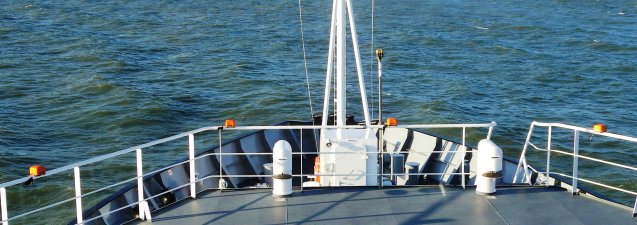
    Shipboard DLoran receiver installation (orange boxes on rails).

    One would hope that with this rather startling improvement in differential Loran accuracy and the decision by the U.S. Congress to halt the destruction of Loran-C infrastructure in North America, that there might once again be a future for Loran, especially eLoran and/or DLoran in North America, and hopefully globally as well.

    As Professor David Last in his best imitation of John Cleese might say, “It is the answer to a maiden.s prayer.”

    Until next time, happy navigating. I hope to see you all at the 30th Space Symposium May 19-22 in Colorado Springs at the Broadmoor Resort. More than 10,000 attendees are expected, and I hope you will be one of them. Stop by the GPS World booth and say hello.


  • ENC GNSS 2014 Program Now Online

    The European Navigation Conference (ENC) will be held April 15-17, 2014, in the World Trade Center in Rotterdam, The Netherlands. The conference aims at technology, innovation, and business in the PNT domain (positioning, navigation, and timing). The conference program is now available for review online.

    Satellite navigation and positioning, using current operational systems like GPS and GLONASS, will be major topics. The conference will also highlight recent developments on emerging GNSS like the European Galileo and the Chinese BeiDou.

    More than 100 presentations will be given at ENC GNSS 2014. Here are a few highlights:

    Keynote speeches

    • Prof. Bradford Parkinson (Stanford University): Assured PNT – assured world economic benefits.
    • Prof. Erik Theunissen (Netherlands Defence Academy): So you think you are safe.

    Invited lectures

    • Prof. Cathryn Mitchell (University of Bath): Space weather effects on GNSS.
    • Ignacio Fernández-Hernández (European Commission): The Galileo commercial service: current status and prospects.
    • Jaron Samson (European Space Agency): An introduction to interference in GNSS bands.
    • Prof. Peter Teunissen (Curtin University/Delft University of Technology): Multi-GNSS: combining GNSSs for precise positioning and navigation.
    • Prof. Frank Van Graas (Ohio University): Disruptive technologies and GNSS aircraft landings.
    • Prof. Qile Zhao (Wuhan University): Positioning performance and precise applications of Beidou navigation satellite system.

    Special sessions

    • The European Space Agency will organize a dedicated session on Galileo IOV results.
    • Anwendungszentrum GmbH Oberpfaffenhofen (AZO) will chair the kick-off meeting of the European Satellite Navigation Competition 2014.

    Prior to the conference, on April 14, there will be a Resilient PNT forum and a meeting of the European Maritime Radio Forum (EMRF).

    To register, go to the ENC GNSS 2014 website.

  • Europe’s Spring Season for GNSS

    Europe’s Spring Season for GNSS

    EUResidencePermit-WThe hounds of spring are on winter’s traces. As Galileo emerges from its long, cold slumber, the energy of a new constellation radiates through the skies to encourage blossoms across Europe. ESA’s recent declaration of in-orbit validation means the downstream satnav market can now truly get going.

    If a lot of demand has yet to be demonstrated, certainly a lot of pioneer applications have been developed, and the pent-up current is about to flow. Witness a plethora of GNSS and geospatial conferences in March, April, May, and June, from Munich to Rotterdam to Geneva to London, and on to Prague. The presentations at these gatherings no longer lean so heavily on academic and technical projections and predictions, but embody real-world applications and actual products. Long awaited, Europe’s GNSS spring has finally sprung.

    Brad Parkinson, the chief and original architect of GPS, fittingly kicked off the season this month in London, where he told a UK conference that GNSS needs to be made more robust to ensure worldwide availability of services to users. His concerns over signal availability relate to threats such as the loss of authorized frequency spectrum (implicitly creating licensed jammers), space weather due to hyperactive ionospheric conditions, and deliberate or inadvertent jamming of GNSS signals. Parkinson made his remarks as the keynote speech at GNSS Vulnerabilities and Resilient PNT 2014, hosted by the Royal Institute of Navigation.

    Coming up soon, Dr. Parkinson will also deliver the keynote address for the European Navigation Conference on April 15 in the Netherlands — but more on that anon.

    Munich Satellite Navigation Summit, Munich, March 25–27

    The scene now shifts southward to Bavaria, where the long-running Munich Summit gathers government, financial, industrial, and scientific dignitaries for high-level perspective on all GNSS, certainly with a Galileo emphasis but prominently featuring GPS, GLONASS, BeiDou, QZSS, IRNSS, and SBAS.

    The technical program of the Munich Satellite Navigation Summit includes a multitude of panel discussions involving invited speakers on further topics such as the legal issues of privacy devices and GNSS re-transmitters, achieving precise point positioning (PPP) on a global scale, the role of other autonomous sensors in future navigation, monitoring of climate and natural disasters, and integrated applications of GNSS and Earth observation.

    The summit will also officially open the European Satellite Navigation and provide a parallel track on Copernicus, the European Commission´s Earth observation program.

    GPS World’s contributing editor Tony Murfin will file a complete report on the Munich Summit in the inaugural issue of EAGER, the European GNSS and Earth Observation Report. Subscriptions are free to this new quarterly email newsletter at the preceding link.

    EAGER will feature news of European industry, agency, and scientific developments in satellite-based positioning, navigation, and timing; geospatial technology; Earth observation from space; digital mapping; and location-based services. EAGER focuses on the EU programs Galileo, EGNOS, and Copernicus along with their applications, but also encompasses European involvement in the other GNSSs and their geospatial applications of all kinds. Knowledgeable reporting from European sources, and interviews with and articles by European GNSS/geospatial community leaders. The latest technologies, launch schedules, applications, equipment, and industry and policy developments.

    ENC GNSS 2014, Rotterdam, April 14–17

    More than 120 technical papers will be presented at the European Navigation Conference (ENC 2014), under the thematic header Technology, Innovation, Business. As previously mentioned, Bradford Parkinson will deliver one of the two keynotes on “Assured PNT – Assured World Economic Benefits,” joined on the podium by Prof. Erik Theunissen of Delft Technical University, speaking on “So You Think You Are Safe.”

    The program continues with a Galileo session, in which ESA will present the latest results of Galileo IOV and future plans for FOC.

    Preliminary meetings will be held by the European Maritime Radionavigation Forum (EMRF), the Resilient PNT Forum, EUGIN, IAIN, and European Journal of Navigation. On Tuesday, another kick-off (!!) of the European Satellite Navigation Competition (ESNC) 2014 will take place.

    The Netherlands Institute of Navigation’s organizing committee chair Jac Spaans (also a long-time Editorial Advisory Board member of this magazine, and furthermore a knight in the Order of Orange-Nassau) is pleased to invite all satnav enthusiasts to the conference, taking place the week before Easter, allowing you to extend your stay and enjoy the tulip fields, the windmills, and other objects of interest in The Netherlands. Host-city Rotterdam, one of the biggest ports in the world, gives proof the Dutch saying, “In Rotterdam they do not sell shirts with long sleeves, because they roll them up anyway.”

    Another of GPS World’s contributing editors, Don Jewell, will attend and report on the conference, either in his Defense PNT newsletter in May or as a guest columnist in this GNSS Design & Test newsletter of that month. To be sure, his column will also appear prominently in the second (June) issue of EAGER, the European GNSS and Earth Observation Report. Subscriptions are free to this new quarterly email newsletter at the preceding link.

    Geospatial World Forum, Geneva, May 5–9

    Geo-World-ForumNow in its sixth edition, the Geospatial World Forum concentrates on geographic information systems (GIS) in mapping, remote sensing, satellite navigation as applied to the electricity sector and energy distribution; architecture, engineering, and construction; sustainable agricultural industrialization; smart cities, municipal management; disaster preparedness and coping, natural hazard monitoring; big data as a competitive business asset, business intelligence, and market analysis; multi-sensor integration for monitoring; geospatial’s role in healthcare; global peace and prosperity; and last but by no means least, in fact probably the most important in our long term, climate change.

    If I’m lucky, I’ll make it there myself. Did I mention that coverage will surely feature in EAGER, the European GNSS and Earth Observation Report? Subscriptions are free!

    GEO Business 2014, London, May 28–29

    Next up on our busy travel schedule — and nothing says an industry is growing like the launch of another new conference — comes GEO Business, primarily an exhibition but also conference featuring industrial training and demonstrations featuring the technology and services used by those working with spatial data.

    GEO Business boasts that it was born out of consultation with key industry leaders, and as a result the show is organized in collaboration with the Chartered Institution of Civil Engineering Surveyors (ICES), the Royal Institution of Chartered Surveyors (RICS), The Survey Association (TSA), and the Association for Geographic Information (AGI). This is a joint cooperative event involving major players, both organizational and industrial, in the geospatial community.

    Presentations will be given by Leica Geosystems (Mobile GIS), Esri UK, Carlson Software, Fugro (Advanced airborne survey), Trimble, GeoPlace (spatial addressing), Altus Positioning Systems (single- and dual-frequency data collection), Topcon (global-scope monitoring), Spectra Precision, Ordnance Survey (geospatial data management), iXBlue, and others.

    GPS World publisher Steve Copley will attend, and you can bet I will lean on him for reportage in the June issue of EAGER, the European GNSS and Earth Observation Report.

    By this point, I should start charging a subscription fee to anyone who has failed to sign up for EAGER.

    European Space Solutions 2014, Prague, June 11–13

    EuropeanSpaceSolutions
    photo: European Space Solutions

    Finally, the European Space Solutions conference in Prague has yet to be formally announced by the European GNSS Agency, but a pre-registration page is open.

    The 2013 generation of this conference featured sessions on indoor location-based services and solutions, environmental protection, emergency response and disaster management, mobile applications, sustainable energy, road and traffic management, and the future of the Galileo Public Regulated Service, an encrypted navigation service designed to be more resistant to jamming, involuntary interference and spoofing, designated for authorized users.

    Tim Reynolds, GPS World’s newest contributing editor, will likely report from Prague on this, as he will from several of the earlier spring shows. Based in Brussels for the last decade-plus, Tim will provide in-depth and up-close perspective on Galileo, Copernicus, and all things Europe connected with space and satellite navigation. His main public forum will be EAGER, the European GNSS and Earth Observation Report, but he will also furnish regular stories for the Navigate! e-newsletter and this one.

    Turn on and tune in!

    For winter’s rains and ruins are over,

    And all the season of snows and sins;

    The days dividing lover and lover,

    The light that loses, the night that wins;

    And time remember’d is grief forgotten,

    And frosts are slain and flowers begotten,

    And in green underwood and cover

    Blossom by blossom the spring begins.

     Algernon Charles Swinburne, 1837–1909

  • Father of GPS Brad Parkinson to Deliver Keynote at ENC 2014

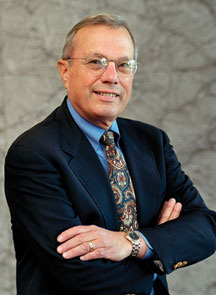
    Brad Parkinson
    Brad Parkinson

    Bradford Parkinson, who is known as “the father of GPS,” will give a keynote speech during the opening session of the European Navigation Conference 2014. The conference will be held April 15-17, 2014, in Rotterdam, The Netherlands.

    Parkinson’s speech is titled “Assured PNT – Assured World Economic Benefits.” Representatives of the European Commission, the European GNSS Agency, and the European Space Agency will also present keynotes in the opening program.

    The conference focuses on technology, innovation and business. Special sessions are scheduled on the Galileo IOV, Galileo PRS, alternatives and back-ups to GNSS ,and PNT applications in the various sectors of land, sea and air.

    The conference program will be complemented with an icebreaker party on April 14 at WTC and a conference dinner on board the paddle steamer De Majesteit on April 16. The City of Rotterdam has invited conference delegates to a reception at Rotterdam City Hall on April 15. Accompanying persons are welcome to join these events, as well as the guided walking tour on Tuesday.

    With Easter following the conference, there is a good opportunity to visit Rotterdam, tulip fields, windmills, museums and other attractions in The Netherlands.

    Deadline for abstracts is December 31. Early bird registration is possible until February 15, 2014.


  • European Nav Conference Extends Early Bird Registration to March 15

    Because of widespread interest in European Navigation Conference 2013, organizers have decided to extend Early Bird Registration until March 15.

    “The interest of the navigation community for the European Navigation Conference 2013 is tremendous. We have received more than 150 oral presentations and 50 poster presentations that will be showcased in 32 sessions,” said Susanne Fuchs, organizing committee member. Among those who are taking part as keynote speakers or panelists are:

    • Paul Weissenberg (Deputy Director General of the DG Enterprise and Industry of the European Commission),
    • Didier Faivre (Director of Galileo Programme & Navigation Related Activities, European Space Agency),
    • Carlo des Doride (Executive Director of the European GNSS),
    • Frank Salzgeber (Head of Technology Transfer Office, ESA),
    • Gard Ueland (Chairman of Galileo Services),
    • Bernhard Hofmann-Wellenhof (Vice Rector for Academic Affairs, TU Graz) or Harald Posch (Austrian Space Agency)

    The European Navigation Conference 2013 will be the seventeenth conference in the GNSS series held under the auspices of the European Group of Institutes of Navigation (EUGIN). The conference will be hosted by the Austrian Institute of Navigation (OVN) and will take place from 23-25 April 2013 in Vienna, Austria.

    Each year the conference attracts researchers, policy makers, manufacturers, users and service providers from around the world. “Thanks to the wide variety of topics in navigation and the outstanding expertise of the attending speakers, we will be able to bring together more than 600 experts,” Fuchs said.

    The conference will focus on the present status as well as on future developments in navigation systems, with special emphasis on Galileo. Thus, the ENC 2013 will be a showcase for state of the art technology and, more importantly, for innovations in the field of terrestrial and satellite navigation. The implementation of new technologies in navigation will be illustrated in the industry exhibition, running in parallel to the conference.

    For more events, visit our Events page.

  • European Navigation Conference Set for April in Vienna

    The European Navigation Conference 2013 will be the 17th conference within the ENC series held under the auspices of the European Group of Institutes of Navigation (EUGIN). The conference will be hosted  by the Austrian Institute of Navigation (AIN) and will take place April 23-25, 2013, in Vienna, Austria. The conference venue is located at  the Austria Center Vienna next to the Vienna International Center.

    Registration is now open.

    The scientific program will be a combination of plenary lectures, parallel sessions and poster presentations. Each year the conference attracts researchers, students, policy makers, manufacturers, users, and service providers from all over the world. With the wide variety of topics in navigation and the expertise of the attending speakers, the aim is to bring together more than 600 experts.

    The conference will focus on the present status as well as on future developments in navigation technologies and systems. The ENC 2013 will be a showcase for state-of-the-art technology and, more importantly, for innovations in the field of terrestrial and satellite-based navigation regarding positioning, trajectory determination, routing, guidance, surveillance, and other areas.

    The program schedule will include ample time to visit the industrial and commercial exhibition which will run in parallel to the conference.

    The official language of the symposium will be English. No simultaneous translation will be provided.

    Preliminary Conference Topics (Sessions):

    • GNSS Development and Interoperability
    • Certification and Standardization
    • GNSS Receiver and Antenna Technology
    • Specific Navigation Applications
    • Space-based Augmentation Systems
    • Space-based Augmentation Systems – Applications
    • Integrated Navigation
    • Intelligent Transportation Systems
    • Business and Economic Aspects of GNSS
    • Non-GNSS Navigation Sensors and Infrastructure
    • Modern Applications and Future Developments
    • Technology Transfer
    • Integrated Applications
    • Location-based Services
    • Navigable Maps
    • Indoor Positioning
    • Time & Frequency Transfer
    • GNSS Network RTK
    • Precise Point Positioning (PPP)
    • Galileo Masters
    • Security and GNSS
    • Scientific GNSS Applications
  • Our Man in the Baltic: Report from the European Navigation Conference

    GDANSK, POLAND — Poland has emerged as a regional leader for Eastern Europe. Among all European countries, it ranks fourth in population and ninth in the size of its national economy. This year, the European Navigation Conference (ENC), which rotates each year to a different host country, has convened in Gdansk, Poland — its first time in Eastern Europe.

    Gard Ueland, president/CEO for Kongsberg Seatex and the chairman of Galileo Services, opened his keynote address at the 2012 European Navigation Conference with the statement “GNSS applications and services are the best growth opportunity for Europe.”

    Was anyone from the European Space Agency (ESA) or the European Union’s GNSS Supervisory Agency (GSA) listening? They were not, because neither body bothered to attend this ENC — the first time I can recall either organization absenting themselves from this important, top-level technical conference. ESA and GSA presented themselves in significant numbers and seniority at the Munich SatNav Summit in March, on the stage and in the audience. But then money, influence, and visibility (they may all amount to the same thing) are more in circulation at Munich. The ENC merely gathers the researchers and application developers who are doing the real work that will eventually field users and grow markets.

    Ueland of Galileo Services was careful to differentiate his topic as separate from satellite-system development per se. He focused on developing applications, the downstream segment that will lead, he said, to new business activities, jobs and wealth creation, and a bigger GNSS market share.

    According to a GSA study completed in 2011, the 2010 global GNSS market was 130 billion euros, and of that amount, the European market share in the GNSS sector was 20 percent.  “A little bit less than what Europe is used to,” Ueland remarked; that accustomed share is 1/3 of the market.  Naturally, Ueland called for further public-sector investment in satnav R&D, which has been the rallying cry of Galileo Services.

    In 2020, global GNSS market is estimated to reach 240 billion euros. “Europe will be challenged even to maintain its current share of 20 percent. If we were to succeed in reclaiming the 1/3 share, it would translate into 400,000 jobs in Europe. This is something that Europe needs.”

    A position paper, “Satellite Navigation Applications,” goes into further details and is available at www.Galileo-services.org.

    Ueland concluded that at the EU level there is a need for a dedicated budget line within Horizon 2020 for GNSS application R&D.

    In subsequent talks at the ENC plenary session, Prof. Janusz Zielinski of the Space Research Center of the Polish Academy of Sciences discussed Polish activity in EGNOS and the Galileo program.

    Dr. Heidi Kuusniemi of the Finnish Geodetic Institute gave a presentation on the effects of GNSS Jammers on consumer-grade satnav receivers, showing the initial results from research started this year.  Jammers, though illegal in most countries, are gaining popularity for financial reasons, to avoid road tolling and insurance billing, as well as personal privacy reasons, to avoid tracking and location-based monitoring.

    The Finnish Geodetic Institute analyzed the effects of a $130 L2 and L5 jammer and a $14 L1 jammer on two ublox and two Fastrax consumer-grade reciever, a receiver found inside a Nokia smartphone, and a high-precision professional-grade NovAtel OEM4 L1/L2 receiver.

    Horizontal errors up to 130 meters were observed on the consumer grade receivers, and availability decreased to 16 percent in 24 hours. Effects on the one combined GPS/GLONASS consyumer receiver, from Fastrax, were not as pronounced as on the other consumer-grade receivers. In the professional case, accuracy was degraded up to 80 meters, and availability decreased to around 26 percent over 24 hours.

    After outlining some jamming detection and mitigation solutions, Kuusniemi concluded that in-car jammers are a serious threat, and steps must be taken against the use of jammers.  Future GNSS will have improved resistance to interference, for several reasons.

    Davide Margaria of the Institute Superiore Mario Bella (NavSAS group) presented on research regarding “Acquisition and Tracking of Galileo IOV E5 signals,” which are important for the safety-of-life service planned by Galileo.

    The Galileo satellite system currently consists of GIOVE-A and  B, the two experimental satellites dating from 2005 and 2008, and the two in-orbit validation (IOV) satellites launched in November 2011, the Proto-Flight Model (PFM), and the Flight Model 2 (FM2).

    The FM2 satellite has started transmitting E5 navigation signals in recent weeks. E5 is an alternative binary offset carrier: AltBOC(15,10) modulated signal, multiplexing 4 channels in two adjacent sidebands, E5a and E5b: two data channels and two pilot channels. Each sideband can be separately demodulated as a QPSK-like signal.

    Using a flexible experimental E5a/E5b COTS front end, NavSAS researchers separately received each sideband, with IF samples transferred for real-time processing, and stored for post-processing.  Signals were acquired and tracked for multiple satellite passes of all four satellites.

    In an analysis of the E5b signals, both data and pilot channels, they found estimated C/N0 values to be consistent with the satellite elevation patterns and with expected values from the Galileo ICD specifications.

    The PFM and FM2 signals were received at approximately 3 dB stronger than the GIOVE-A and B signals. The team further found the presence of secondary code chips and successfully decoded the I/NAC navigation message on the data channels. Their future activities include checking the F/NAV data pages transmitted on the E5a band, and setup of a wideband experimental front-end for coherent E5 processing.

    In technical sessions on the first afternoon, I found the following presentations of  salient interest.

    Byung Hyun Lee from Konkuk University in Korea presented “Performance Analysis of Doppler-Aided GPS/QZSS Precise Positioning for Land Vehicles,” designed for which-lane positioning in urban environments.  Using Doppler measurements to compensate for restrictions of carrier-phase measurements, traditional RTK techniques, for precise positioning.  Needed for this application are reliable single-epoch measurements and velocity estimation. Double-differenced Doppler measurements yield this quality enhancement.

    Using NovAtel FlexPack 6 equipment for rover and reference station, the author and colleagues found sufficient accuracy results with GPS-only in a relatively benign environment, with an HDOP of 1.505 and 7 available satellites. In a difficult or “bad” environment, GPS –only had a HDOP of 6.84 and insufficient accuracy for the which-lane requirement.

    However, using GPS and QZSS in the same “bad” situation brought an HDOP of 1.564 and sufficient accuracy for lane-specific car navigation.

    Pawel Kicman of the Warsaw University of Technology presented the TALOS Navigation Research Electric Car using COTS components. The vehicle was developed for land-border surveillance using one autonomous robot to monitor industrial perimeters, and a second robot to intercept intruders. The adapted golf cart has a suite of installed sensors: satellite (NovAtel SPAN for GPS/GLONASS integrated with tactical grade IMU), inertial (low-grade IMUs), magnetic, visual (cameras and laser rangefinders), and odometric.


    The researchers, including a student team, obtained sufficient accuracy for the application, provided hands-on experience, and offers many prospective research projects, leading to development of autonomous driving on the vehicle, since all the sensors and control capabilities are there.

    Robert d’Aystetten from Sprint in Poland (the company is not the same nor is it a subsidiary of the U.W. wireless carrier Sprint) described an eco-driving algorithm for fleet applications to promote safe and efficient driving habits, using car-tracking data from a number of sensors to construct a driver’s profile and detect “overlimits.” The application assigns motivational points to every driver in the company (it has a fleet of nearly 500 vehicles) for eco-driving — efficient acceleration, braking, and cornering — speed, and generated alerts. In addition to maintaining and improving organizational driving standards, the data can be used by insurance companies to prepare better insurance offers based on actual profiles and driver performance.

    The VIZAN SOFIT tracking device employs real-time GPS tracking and positioning; GPRS location data transfer to the server; smart algorithm of data acquisition (time, distance and angle based); acceleration detection (e.g. in case of sudden braking); speed measurement; internal memory for location data storing in case of GSM signal loss; accurate distance counter (independent from track points settings); digital and analogue inputs and outputs (fuel level, door status etc.); 1-Wire iButton for driver identification; voice communication; multiple geofence zones; eco-driving algorithms; and driver’s profile data.

    Ciro Gioai of the Parthenope University of Naples discussed Aided GPS/GLONASS navigation in urban environments.  February 2012 tests of pedestrian subjects carrying a NovAtel FlexPak-G2 with an Antcomm antenna, using least-squared and Kalman-filter techniques, obtained accuracies in the range of 5 to 7 meters in difficult urban environments, and good vertical accuracy as well, with as few as three visible satellites from the combined systems. Future works will incorporate Galileo measurements in addition to GPS and GLONASS.

    Prof. Jacek Januszewski of Gdynia Maritime University rhetorically asked how many Galileo satellites will provide achieve sufficient accuracy and availability for the user? In particular light of the fact now that, according to ESA, 18 satellites on orbit will constitute initial operational capability (FOC) of the system, predicted for 2015.  He also presented results with 22 and 26 satellites.

    The results were disheartening, to say the least.

    He concluded that with 18 satellites, minimum satellite availability cannot be obtained in all geographic zones, in different latitudes, at 10 degree and 5 degree masking. In a 25-degree masking zone, 26 satellites yielded only 3 satellites, not sufficient for positioning; only a 27-satellite constellation proved satisfactory.

    In European latitudes (50 to 60 degrees latitude), distribution of satellite azimuths is practically the same for different numbers of satellites. The percentage of satellite visible above angle H is for all constellations is practically the same for different numbers.

    For 18 satellites, 3D positioning is only available in the zone 80-90 degrees latitude, with a masking of 0 degrees.

    For a 22-satellite constellation, positioning depends on zero masking, 3D position in all zones.  With 5 degree masking, 3D is avaialable in some zones only, 2 dimension positioning in all zones.

    With 26 satellites, if masking is less than or equal to 15 degrees, there is 3D positioning in all zones. If masking is 25 degrees, 3 D in zone 80-90 degrees only.

    With 27 satellites, 3D position is provided in all zones, for up to 25 degree masking.

    In one of the last presentations of the day, Ted Driver of AGI discussed Operational Considerations for Improved Accuracy with an IOC Galileo Constellation.  He told the audience that during Galileo’s IOC phase, the dilution of precision (DOP) will not be ideal and indeed may have severe spikes several times during the day, globally.

    His paper focused on two components of navigation accuracy that the Galileo Control Center can manipulate to improve overall accuracy for users: selectively timing uploads of the orbital ephemeris and clock state predictions.  That is, doing so with great regularity. Ideally, these orbit and clock predictions would be updated continuously, but that cannot be achieved operationally.

  • Live Coverage of ENC-GNSS 08

    Don Jewell
    Don Jewell

    NEWS FROM THE EUROPEAN NAVIGATION CONFERENCE

    By Don Jewell

    Day 3: Map Matching and Floating Cars

    Here are highlights of presentations I attended today.

    Improving GPS Accuracy for Urban Pedestrians, presented by Jean-Baptiste Prost of Pole Star

    A standing-room-only crowd packed the room to hear about map matching, a software program designed to help pedestrians use GPS-based positioning in urban areas. GPS-based positioning for pedestrians in dense urban areas suffers from a lack of accuracy and integrity. Pole Star’s solution combines GIS database containing geometrical descriptions of buildings with raw data from the receiver, then restricting the area of possible locations by matching GPS measurements with the environment and behavioral models. Tests in several cities shows dramatic improvements to the accuracy of GPS-based positioning for pedestrians, especially in areas with tiny streets. Jean-Baptiste said the product is ready under the name of NAO City.

    Real-Time Information on Road Traffic Based on Floating Car Data, by Laurent Brecheret

    The SINERGIT project has developed a cooperative information system for road and urban networks. The system aims to optimize traffic management means, and provide real-time info on driving conditions to all drivers who use personal navigation devices. The three data sources used are data from existing traffic monitoring systems, data from telecom operators tracking cell-phone use, and tracking of PNDs and GNSS-enabled smartphones. This final category is called floating car data, and is used to measure average speed of traffic and to estimate overall traffic conditions. A central system merges the three sets of data to create the best traffic information which can then be shared with drivers in real time.

    Navigation Applications Supporting the Mobility of Disabled People, by Francesca Neccia of Thales Alenia Space

    The Navigation for Disability Applications (NADIA) Project aims to improve safety and security for the disabled, while giving them increased autonomy. Using GPS, EGNOS, and eventually Galileo, a blind or wheelchair-bound individual will have supports unavailable now, with access to sports, leisure pursuits, and education. The project is now in the system engineering phase, and once system tests and validation are completed, a prototype will be demonstrated.


    Evening 2: Space Walk

    Being a fan of space exploration, the Gala Evening at the Cite de l’Espace was right up my alley. Guests toured the Mir space station, ate “space food” (served in test tubes), and enjoyed an eye-popping 3D Imax movie about the International Space Station.

    Day 2: eLoran for Europe

    eLoran for Europe: The European eLoran Forum makes a case for European support of eLoran in its new policy document. The document sets out the strategic importance of positioning, navigation, and timing (PNT) systems in Europe, and emphasizes the role of Enhanced Loran as a way of making European PNT foundations robust and resilient. “The development and operation of the European eLoran infrastructure is currently being undertaken on an ad-hoc basis,” according to the executive summary. “The importance of eLoran’s supporting role to GPS and Galileo needs to be assessed within the context of a European Radio Navigation Plan. Using these three PNT systems together will protect our critical infrastructure and allow our European service providers and users to retain the safety, security, and economic benefits of GPS that they currently enjoy even when their satellite services are interrupted.”

    Seeking the GRAIL: Hoping to hear the final results of the GRAIL project was met with slight disappointment—May is the new target date. GRAIL is a Galileo Joint Undertaking project to study how best to introduce GNSS to railways throughout Europe, in line with the European Rail Traffic Management System (ERTMS) project. ERTMS is an overall effort to make all European trail systems compatible, because each country has its own rail “language” for managing the movement of the trains on its network. Over the past decade, industrial giants and European governments have strived to attain rail interoperability, so that trains can cross borders without stopping. ERTMS has been set up to create unique signaling standards throughout Europe. Alvaro Urech from INECO described the four applications the GRAIL project is aiming for: enhanced odometry (measuring the speed and position of the trains, and possibly increasing speed); train awakening (trains knowing where each other are positioned); absolute positioning; and train integrity to ensure the trains are whole and not “broken.” So far in the project, specifications for these applications have been agreed on, along with performance requirements. A prototype for demonstrating these applications is being developed for tests in the lab or on a real high-speed line. Train awakening has been tested, but it’s too early to report results.

    Time for a New Partnership: In business news, two timing companies have announced a strategic partnership. Orolia, parent company for timing providers Spectracom and Pendulum Instruments, and Rapco Electronics (Basingstoke, Hampshire, UK), a high-precision timing provider, announced today that they’ve formed a partnership. In a multi-phased approach, Orolia Group companies Spectracom and SpectraTime will join the existing alliance between Pendulum Instruments (recently acquired by Orolia) and Rapco Electronics to cooperate on several fronts to leverage global distribution channels, operations, and new product development efforts.

    Rapco Electronics will represent and distribute Spectracom and Pendulum products in the UK and Ireland. Together with its own products, Rapco will provide a comprehensive range of high-precision time and frequency products for governmental, military, telecom, broadcasting and scientific customers. Outside of this region, both Pendulum and Spectracom will distribute key Rapco products under their own respective brands.


    Day 1: Comic Books and Space Tunes

    Toulouse is a beautiful city — pink-hued buildings with red roofs, narrow pedestrian-friendly streets, a sense of history and time. Quite a contrast to high-tech science, the subject of the Toulouse Space Show. Upon registering, I was given a bag heavier than the luggage I left back at the hotel. I’ve been to numerous conferences, both scientific and artistic, but I’ve never received such a sheer quantity of literature. I felt like a college student stocking up on the term’s textbooks.

    Inside, I discovered three inch-thick spiral-bound abstracts for all three conferences encompassed by the Toulouse Space Show: ENC-GNSS (my main focus), EFTF, and Space Applications Days, all in both English and French.

    I also discovered a beautifully designed program (or, I should say programme), and, the most quixotic item, a Galileo comic book — err, graphic novel? — published by Thales Alenia Space. Finally, a document written for me and the other non-scientists! (Edited to add: Having now read the book, some of the contentions put forth are questionable. such as the contention that the GPS signal might be turned off by the military, or that Galileo will naturally prove superior.)

    I just had time to get these goodies before settling in for the opening ceremony, a multi-media affair involving speeches, music, slideshows, and lighting effects. The speeches from local and regional officials communicated how passionate the people here are about all things space-related, in business, research, and education.

    Between the speeches, a duo dressed in flight jumpsuits sang space-themed songs such as “Fly Me to the Moon,” “Walking on the Moon,” and the Beatles’ “Across the Universe” — you get the idea. As an aside, in February NASA broadcast “Across the Universe” to Polaris, the North Star, in the first-ever beaming of a radio song by the space agency directly into deep space, to celebrate the 40th anniversary of the song, the 45th anniversary of NASA’s Deep Space Network, and the 50th anniversary of NASA. Europe’s space program isn’t as old, but it makes up for age in enthusiasm. Each tune sung by the musicians was accompanied by a huge screen showing clips of moonwalks and space-related images of planets, nebulae, and our favorite, satellites. As a long-time fan of the space program, it certainly got me in the mood for the conference.

    Tomorrow, technical sessions begin, followed by an evening gala to be held in the Cite de l’Espace, the premiere space museum. I can’t wait!