Tag: geodata

  • Fugro delivers seabed geodata, employs wind lidar buoys

    Fugro delivers seabed geodata, employs wind lidar buoys

    Fugro has completed a geotechnical site characterization project for DRA Global as part of the proposed expansion of the port of Richards Bay in South Africa.
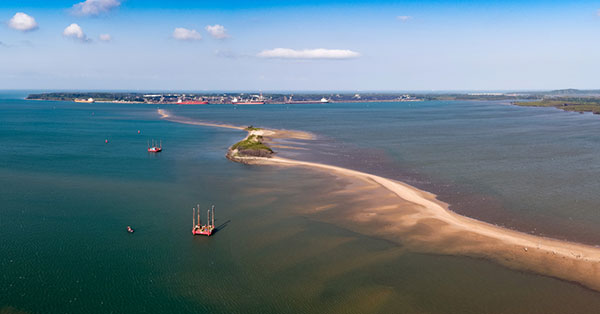
    Fugro’s self-elevating platforms being positioned in Richards Bay ready for their geotechnical site characterization for the planned port expansion. (Photo: Fugro)
    Fugro’s self-elevating platforms being positioned in Richards Bay ready for their geotechnical site characterization for the planned port expansion. (Photo: Fugro)

    DRA Global contracted Fugro to acquire critical seabed geodata required for the completion of preliminary engineering and design works. The project began with a cross-continental mobilization of marine assets from Bangladesh and UAE to Richards Bay and was safely delivered despite challenging ground conditions and ongoing COVID-19 restrictions.

    The very soft soils encountered at depths of more than 40 meters below the seafloor required an innovative solution for positioning the two geotechnical drill rigs safely, so Fugro mobilized two bespoke modular self-elevating platforms (SEPs) to acquire high-quality geodata in a wide range of water depths. Their experienced staff, combined with adaptable marine assets and tooling, enabled Fugro to deliver DRA Global’s requirements in full and avoid any data gaps that could have led to an over-engineered design and ultimately higher construction costs.

    “Fugro performed well under difficult circumstances, including challenging site conditions and intense focus on environmental management in sensitive areas, all while working in an operational port,” said Cobus Rossouw, principal marine engineer at DRA Global. “Their robust safety management systems resulted in an investigation completed without a single lost-time incident.”

    Energinet contract for wind lidar measurements
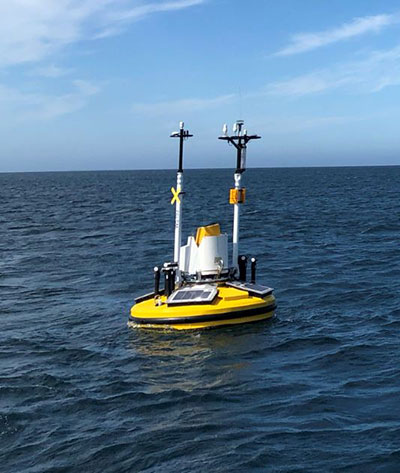
    Fugro’s Seawatch lidar buoys will record continuous wind measurements to support wind-resource mapping for Denmark’s Energy Island development. (Photo: Fugro)
    Fugro’s Seawatch lidar buoys will record continuous wind measurements to support wind-resource mapping for Denmark’s Energy Island development. (Photo: Fugro)

    Fugro has secured a contract with Energinet to provide floating wind lidar measurements for what an offshore artificial energy island, which is being constructed for the Danish Government.

    Fugro will install and operate four SEAWATCH wind lidar buoys at two locations, Energioe Nordsoen and Energioe Baltic, that will act as hubs connecting several offshore wind farms.

    Starting this month October, the buoys will record continuous wind measurements for a minimum of one year to support wind-resource mapping for the two islands, and the engineering and design of the future wind farms. Fugro is already performing geophysical surveys for the Energy Island project under a separate contract to provide Energinet with a reliable de-risked site interpretation.

    The SEAWATCH wind lidar buoy can record wind measurements up to 250 meters above sea level, and wave measurements and current profiles down to the seabed. The buoy also acts as a multipurpose platform for additional metocean sensors and, on this project, will be fitted with sensors to capture geodata on environmental impact parameters.

    Contract for erosion off Indian coast

    OCS Services Pvt. Ltd (OCS), one of India’s marine service providers, has awarded Fugro a two-year contract to support its asset integrity and corrosion management operations off the west coast of India.

    Fugro will help OCS deliver on ONGC’s Protective Coating of Process Platform Project 1, an infrastructure project to maintain and refurbish 32 offshore platforms in seven clusters. The project is expected to be completed by May 2023.

  • European project researches automated map creation for cars

    European project researches automated map creation for cars

    Image: DedMityay/iStock/Getty Images Plus/Getty Images
    Image: DedMityay/iStock/Getty Images Plus/Getty Images

    A new European project is researching automated collection of geodata and production of high-definition maps.

    The GAMMS project is funded by the European Union Agency for the Space Programme (EUSPA), and will take place until the end of 2023. Galileo will be the main enabler of GAMMS, given its precise, multipath-resistant measurements and its upcoming high-accuracy service (HAS).

    A European consortium, led by the French map service provider GEOSAT, will investigate how the combination of self-driving mapping cars (autonomous mobile-mapping systems) and artificial intelligence-based mapping software can automate the production of high-definition maps.

    These maps are used by driverless vehicles and need to be provably accurate, complete and up to date. Fast, sustainable production of trustworthy maps is the goal.

    Consortium members include:

    • GEOSAT — map-making and machine learning
    • GeoNumerics — multi-sensor fusion and accurate navigation
    • Sensible4 — robotics and autonomous driving
    • DEIMOS Engenharia — GNSS and Galileo receiver development
    • EPFL — sensor and vehicle dynamic modelling
    • Solid Potato — multi-spectral laser scanning
    • PILDO Labs — regulatory specialists
    • ENIDE — communication specialists

    “It is as challenging as interesting to bring together the geodetic estimation methods with the navigation ones in multi-sensor systems powered by EGNSS and its differentiators, VDMs (vehicle data management systems) and visual features,” said Marta Blázquez, responsible for GAMMS at GeoNumerics. “GAMMS will boost the development of NEXA, our trajectory determination platform, and GENA, our adjustment platform for dynamic networks, in the direction of trustworthy navigation.”

    GeoNumerics is responsible for computing the mapping vehicle trajectory (a time series of position, velocity and attitude coordinates) by integrating the manifold of sensors available in a mapping vehicle.

    Measurements of inertial units and atomic clocks will be fused with measurements of all available navigation satellites (GPS, GLONASS, Galileo and BeiDou), odometers, cameras and laser scanners. For this purpose, GeoNumerics’ GENA and NEXA systems will be further developed to include new sensor mathematical models and to improve its robust estimation methods.

  • Intergeo 2019 to highlight geodata

    Intergeo 2019 to highlight geodata

    Logo: Intergeo 2019

    Intergeo 2019, which is set to take place Sept. 17-19 in Stuttgart, Germany, will cover a number of key geodata topics. The main topics highlighted during the conference will include smart cities, campus geoinnovation, digitalization, building information modeling, emphasis on local authorities and UAVs.

    More than 680 exhibitors will be providing insights into the highly dynamic geospatial sector, event organizers added.

    “Geodata forms the foundation for our digital society and is thus becoming the currency of the future,” said Hansjörg Kutterer, president of the German Society for Geodesy, Geoinformation and Land Management. “These developments are exciting and our industry is not just affected by them — it is actively shaping them.”

    According to event organizers, the show will show what digital change in the field of geoinformation means. Keynote speakers for Intergeo 2019 include Dr. Markus Kerber, state secretary at the Federal Ministry of the Interior, Building and Community; Dr. Juergen Dold, president, of Hexagon’s Geosystems Division; and Hashem Al-Ghaili, director of content at Futurism.

    Kerber will cover smart homeland and how digitalization can help achieve equal standards of living. Dold will discuss opportunities through digital business models. Finally, Al-Ghaili will present new ways of communicating science.

    Click here for a free three-day ticket to Intergeo 2019.

  • How geospatial data can improve US elections

    Image: iStock.com/YinYang
    A voter enters a polling place. (Image: iStock.com/YinYang)

    With the mid-term elections coming ever nearer, states are turning to geographic information systems (GIS) to help manage them.

    Digital geographic representation of precinct boundaries within a GIS allow for transparency and ease of use for voters, candidates and electoral management, according to the National States Geographic Information Council (NSGIC).

    GIS also enables the optimal siting of polling places for both voter access and the cost efficiency of operating polls.

    Finally, GIS provides a platform for automated quality-control processes that ensure accurate voter precinct assignments.

    “An electoral system with integrity — enhanced by accurate, authoritative geographic data and presented clearly and transparently — has never been more important,” said NSGIC President Andy Rowan.

    Why GIS is an improvement over address files

    NSGIC’s Geo-Enabled Elections project brings together geographic information systems (GIS) leaders in state government, local elections officials and state elections offices, national GIS and elections organizations, and federal partners to identify opportunities to integrate GIS into elections systems across the country.

    The overall goal is to strengthen elections management and citizen engagement. The project aims to provide the impetus for replacing non-spatial “address file” tables with the visual and analytical advantages of election precinct and voter data in a natively GIS format.

    Geo-enabled elections overcome the four fundamental challenges with the existing address list approach to precinct management, according to Rowan.

    In the address list approach, Rowan said,

    • No actual boundaries are stored explicitly in the systems,
    • Quality control is difficult without a method to visualize precinct assignment using aerial photography and boundary information that can change frequently,
    • There is no efficient method for applying large-scale precinct boundary updates, and
    • The process is usually not aligned efficiently with other state and local address or boundary-management processes.

    To this end, the project conducted a nationwide survey on elections data in the first half of this year. More than two-thirds of states responded.

    Here are key takeaways from the baseline survey.

    Addresses

    The survey found that 55 percent of responding states confirm voter registration addresses against a database of known addresses such as a driver’s license or state ID database, a statewide point address set, a master address database used for 911 call routing, or a commercially available address database.

    “The results indicate a need to advocate for coordination between state agencies (such as the state elections department and the department of motor vehicles) and encourage integration of the voting system and other systems,” said Jamie Chesser, the Geo-Enabled Elections project manager.

    Election Precincts

    More than half of responding states indicated they maintain statewide mapping of precincts. Within this group, 40 percent also maintain a layer of sub-precincts in digital mapping systems.

    “There remains a need to develop local precinct data content and procedural standards to examine the relationship between precincts, local and state boundaries, and residential structures,” Chesser said.

    Other Data

    In all, 82 percent of states keep up-to-date spatial data of city and county boundaries, which is essential for computer-based mapping of precincts.

    “Statewide spatial data — especially city, county, school, and special district boundaries – are essential to mapping precinct boundaries across the state,” Chesser said. “The survey reflected, however, that accuracy of current city and county boundary mapping varies
    considerably.”

    A substantial majority, 79 percent of respondents, confirm their mapping of state-level district-based elected offices are accessible online in a digital mapping format.

    Survey responses were coordinated by state government representatives who focus on the development and deployment of mapping data and systems across state agencies and local governments.

    Later this year, NSGIC will release the results of a study probing the spatial approach to elections management from the perspective of state elections officials.

    The two-year Geo-Enabled Elections project, underwritten by the bipartisan Democracy Fund Voice, convenes a wide variety of stakeholders to explore ways geographic information systems and related processes can enhance elections management and citizen engagement across the U.S.

    Download the full report here.

  • Geodata key to new business world, says Intergeo report

    Geodata key to new business world, says Intergeo report

    Geodata is key to the digital future and a 4.0 business world, according to a new report released at InterGeo in Hamburg, Germany. At the heart of this business vision is the networking of sensors that must have location data in order to fulfill their value.

    ausgabeThe 116-page Intergeo Report, in parallel German and English, includes sections on smart cities, public participation, autonomous driving with live mapping, and surveying on the open seas. An eight-page GNSS Update section features CEOs answering questions market focus of their GNSS products, the role of geo-referencing in the Internet of Things, the coming-of-age of precise point positioning (PPP), and the opportunities for GNSS opened up by autonomous driving.

    Access to company-specific geodata offers managers in the automotive industry a competitive ad- vantage. Apps show today’s motorists the way to the nearest electrical charging station. Soon, the same motorists will talk to their on-board computer to find a parking space. It will guide them instantly to the nearest free space. Geoinformation will then no longer just be found in the satnav but also in the integrated sensor in the road paving infrastructure and in the status reports of other road users.

    Networking Everything. The Internet of Things is taking shape and permeating all areas of life. At its center are the tiny pieces of information that assign coordinates to a parking space, a loading berth for a container ship, a screw in the shelves of a supplier’s warehouse, or the alarm system of a family home. Degrees, minutes and seconds show people the way, answer a range of questions and help make informed decisions. Geoinformation is both an asset and an essential source of information.

    Content Is King. Key companies in the geoinformation sector have naturally taken onboard the value of geoinformation. It forms the basis of their business activities. The use of geodata as added value for their products is still very new. Esri realized early in the sector that selling software is no longer sufficient on its own. Only data enables customers to harness the value of products. Cloud solutions store the mountains of data, while platforms deliver the answers.

    Such new business leading lights as AirBnB, Uber, Facebook and Google could not survive without geoinformation. It is part of increasingly intelligent systems that make users’ lives a little easier and more comfortable, optimizing processes and enabling people to operate and participate in ways that were previously impractical or impossible.

    The examples are myriad. Consider just a few. Digitally aided planning and construction in building information modeling not only streamlines processes and reduces costs, it enables public participation in planning procedures, using digital models of planned reality. Aerial surveys and data gathering by UAV, not only for traditional survey needs but for growing requirements in natural resource planning and management, infrastructure inspection and maintenance, surveillance and security, and more. Guidance systems for the blind.

    All require location data. GNSS (satnav) is the core supplier of this data, but must be augmented by other technologies in special environments.

    Releasing Geodata Pays Dividends. Managers of geodata realize they need to release it in order for it to lead them to “more” – more value, more benefits, more transparency, more importance. Geoinformation and digitization are inextricably interlinked, and this is just the beginning.