Tag: GLONASS-M

  • Russia launches GLONASS-M 51 into orbit

    Russia launches GLONASS-M 51 into orbit

    GLONASS-M-51-launch-7

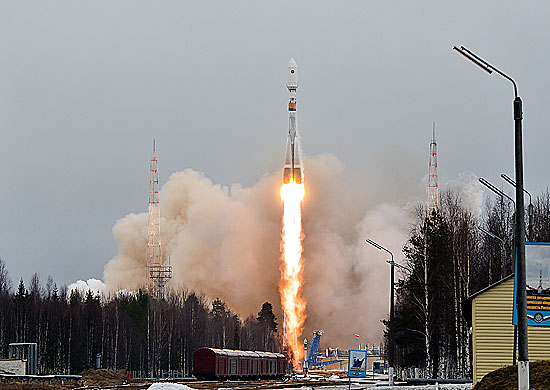
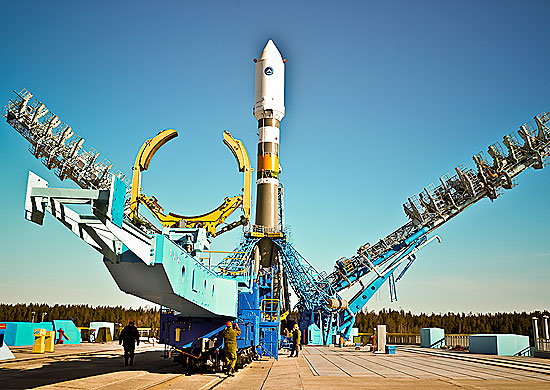
    A GLONASS-M satellite was launched into orbit on Feb. 7 at 03:21 Moscow time from the Plesetsk Cosmodrome spaceport, reports the Russian space agency Roscosmos.  The Russian Defense Ministry successfully launched GLONASS-M 51 (known as 751 in orbit) aboard a Soyuz-2.1b rocket with a Fregat upper stage.

    Three and a half hours after lift-off, the satellite separated from the upper stage and ground control established communications with it. The stable telemetry link shows that onboard satellite systems are functioning normally.

    According to the telemetry data received from GLONASS-M 51, the satellite is in good health. With all its mechanical subsystems successfully deployed, the satellite completed Earth and Sun acquisition. The Moscow-based System Control System and ISS-Reshetnev’s Information and Computation Center have begun satellite’s performance check-out.

    Status of the GLONASS constellation, shown here, indicates that the satellite is now in the commissioning phase.

    GLONASS-M 51 will replace a GLONASS satellite now operating three years past its design life.

    Based on the GLONASS system’s stable operation, there has been no need to launch new satellites to augment the system, said the satellite manufacturer. The most recent launch of a GLONASS satellite was performed in 2014.

    Eight GLONASS-M navigation satellites are being stored at ISS-Reshetnev Company awaiting launch.

    GLONASS orbital grouping provides a solution to problems of global positioning in the interests of the Russian Defense Ministry and civilian users. Access to civilian navigation signals of global navigation satellite system GLONASS is provided to Russian and foreign consumers free of charge and without restriction.

  • Directions 2016: GLONASS priorities — improved accuracy and reliability

    Directions 2016: GLONASS priorities — improved accuracy and reliability

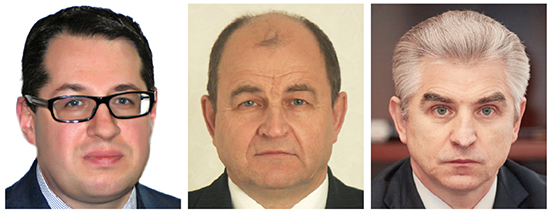
    Sergey Karutin, GLONASS designer general (left); Nikolay Testoyedov, director general, SC Information Satellite Systems (center); and Andrey Tyulin, director general, SC Russian Space Systems.
    Sergey Karutin, GLONASS designer general (left); Nikolay Testoyedov, director general, SC Information Satellite Systems (center); and Andrey Tyulin, director general, SC Russian Space Systems.

    By Sergey Karutin, Nikolay Testoyedov and Andrey Tyulin

    Currently, Global Navigation Satellite Systems (GNSS) are widely used in transportation, power systems, agriculture, communication, banking and the service sector. Humankind has very rapidly realized the benefits of GNSS use and therefore its dependence on the “artificial navigation field” is constantly growing. That is why at the present stage of GLONASS development, the major research and development foci include not only activities aimed at enhanced accuracy, availability and integrity of navigation, but also theoretical and practical efforts focused at ensuring resilience of navigation (interference mitigation).

    These activities logically evolve from the changes GLONASS has experienced over the last decade, establishing the essential groundwork to boost the demand in its services. In 2011, the fully operational constellation of 24 GLONASS-M satellites was deployed. For the first time, civil users got the benefit of navigation signals in two frequency bands (L1 and L2) for positioning.

    The GLONASS-K satellite launched the same year transmits a new navigation signal in the L3 frequency band. Its onboard atomic clocks include two Cesium and two Rubidium frequency standards. Implementation of these onboard frequency standards with long-term relative stability less than 5×10-14 provides better accuracy without reliance on ground control. The program of onboard atomic frequency standards development also includes design of a hydrogen maser with relative daily stability of 5×10-15 and its in-orbit validation onboard GLONASS-K satellites in 2017–2018.

    Simultanesously, the high reliability of GLONASS-M satellites operating beyond their design lifetime, 1.5 times longer in some cases, led to a change in the constellation replenishment strategy. In 2012, the launch-on-demand approach was adopted for future satellites. Currently, nine GLONASS-M satellites are in ground stock, scheduled for launch in 2015–2017 timeframe.

    These factors caused a three-year delay in constellation modernization and launch of new GLONASS-K satellites.
    Nevertheless, in 2014 GLONASS-K No. 12 was put into orbit with the single phased antenna array for the L1/L2/L3 signals. GLONASS-M satellites No. 55–61 also have the enhanced functional capabilities due to additional L3 navigation payload. The string structure of navigation message digital information provides for a higher rate of data update in case of necessity.

    We contribute to the user navigation equipment interference mitigation capabilities by developing GLONASS signals at the frequency bands different from the common frequencies accepted for GPS, Galileo and BeiDou. It is common knowledge that, in some cases, low-end personal jammers made to jam the L1 band with the center frequency of 1575.42 MHz and installed in vehicles may cause severe problems to critical infrastructure. In similar situations, use of 1600.992 MHz and 1248.02 MHz center frequencies (new GLONASS CDMA signals) allows improving the reliability of navigation.

    Efforts on the global network of the radio and laser-ranging stations for precise orbit determination and time synchronization (ODTS) are also of note. Six GLONASS measuring stations have been established abroad so far. Further expansion of the network is scheduled for 2015–2016 to ensure ODTS accuracy of up to 0.1 meter in real time during the next few years.

    Global use of GLONASS is impossible without international cooperation, and we pay special attention to the recommendations of the UN International Committee on GNSS. In particular, we are finalizing the GLONASS Open Services Positioning Performance Standard and developing the national GNSS Performance Monitoring and Assessment System to be used to continuously monitor quality of the GLONASS services and its compliance with the standard.

  • Next-generation GLONASS-K2 won’t launch until 2017 at earliest

    The test flight of the first GLONASS-K2 satellite — a new generation GLONASS satellite with a design life of 10 years — is expected to take place from late 2017 to early 2018, RIA Novosti reports. The Russian news agency quoted Nikolai Testoyedov, CEO of Information Satellite Systems—Reshetnev, speaking at the 2015 Dubai Air Show.

    According to Testoyedov, the GLONASS-K2 satellites had difficulty being equipped following international sanctions imposed on a number of electronic components. The first unit of the series has been built, he said.

    Nine GLONASS-M satellites are currently in reserve, and another nine GLONASS-K1 satellites are in production, Testoyedov said. Mass production of GLONASS-K2 satellites is expected to take place following the test, so that by the end of 2018 GLONASS-K2 satellites would be subsequently mass produced, while maintaining the regular structure of the orbital group.

    With a GLONASS-M lifetime of seven years, and GLONASS K-1 and GLONASS-K2 of 10 years, the GLONASS system will be updated through 2028-2030, concluded Testoyedov.

  • Final GLONASS-M Satellite Passes Tests

    Final GLONASS-M Satellite Passes Tests

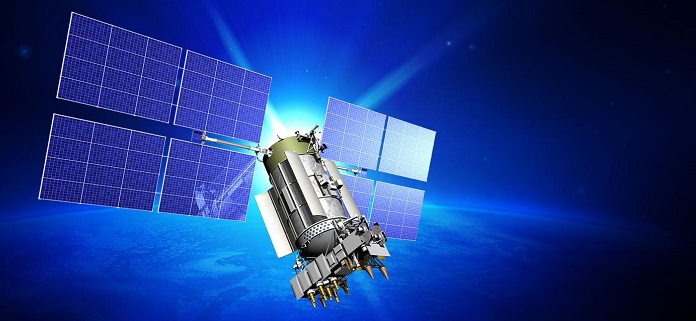
    Artist's rendering of the GLONASS-M satellite.
    Artist’s rendering of the GLONASS-M satellite.

    News courtesy of CANSPACE Listserv.


    The last of the GLONASS-M satellites (serial number 61) has been built and has passed all acceptance tests, reports the July 20 issue of Sibirskii Sputnik (Siberian Satellite), the internal newspaper of ISS Reshetnev. It will join eight other GLONASS-M satellites in storage on the ground awaiting launch between now and 2017.

    Following the launch of the last GLONASS-M satellite, 11 GLONASS-K1 satellites will be launched through 2020. The GLONASS-K2 model is currently under development and will be launched beginning in 2017, according to a presentation made by ISS Reshetnev at the Workshop on the Applications of Global Navigation Satellite Systems held in Krasnoyarsk in May 2015.

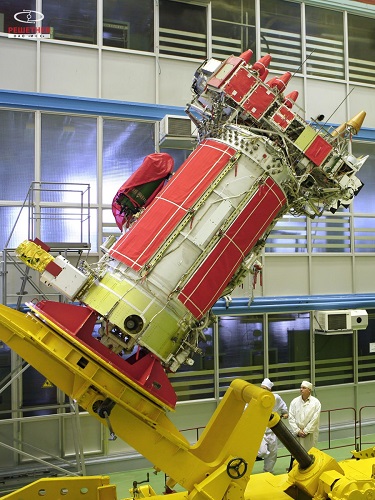
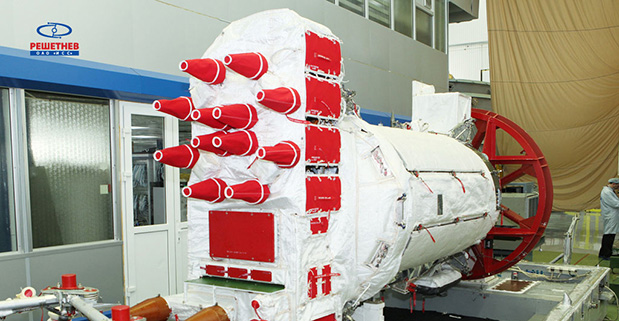
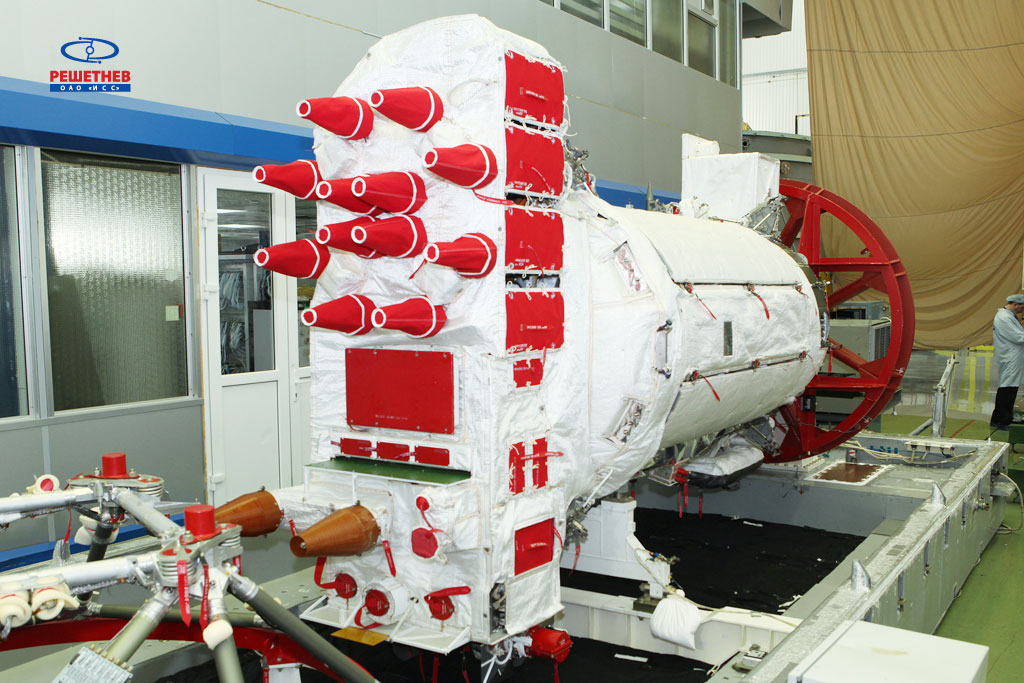
    Photo: GLONASS-M

  • GLONASS-K1 to Replace an Existing GLONASS-M in Six Months

    News courtesy of CANSPACE Listserv.

    According to the December 10 issue of Sibirskii Sputnik (Siberian Satellite), the internal newspaper of ISS Reshetnev, the GLONASS-K1 No. 12 satellite (GLONASS 702K) will be brought into service after a six-month test period and replace an existing GLONASS-M satellite, which will subsequently become a reserve satellite.

    In news reported by the Russian magazine Vestnik GLONASS, Information Satellite Systems Reshetnev, the manufacturer of the GLONASS satellites, will now produce nine GLONASS-K1 satellites.

    “For a smooth transition to a multi-functional group and due to issues with the very complex GLONASS-K2 satellites, we decided to continue with the GLONASS-K1 intermediate range of satellites and we are preparing for the launch of nine units of this series,” said Nikolai Testoyedov, CEO of Information Satellite Systems Reshetnev.

    Testoyedov recalled that the original plan was to launch only two GLONASS-K1 satellites and then move on to the GLONASS-K2 satellites. “In the beginning, really, we wanted after the two GLONASS-K1 satellites No. 11 and 12, to go for the launch of more advanced GLONASS-K2 devices. But, unfortunately, the plans had to be adjusted somewhat because of the sanctions restricting the delivery of radiation-resistant electronic components from the West. We have to put a hold on the in-depth development of technical and technological documentation and that delays us in terms of moving ahead by at least a year or two.”

  • GLONASS-M Satellite to Launch June 14

    GLONASS-M Satellite to Launch June 14

    glonass_150514-2bGLONASS-M satellite number 55 is planned for launch on June 14 from the Plesetsk cosmodrome, said the first deputy director Viktor Kosenko as reported by Interfax.ru.

    Kosenko said that through 2020, 25 more GLONASS satellites are planned: 11 GLONASS-M, 10 Glonass-K1, and four Glonass-K2. At the same time, he said, one GLONASS-K1 spacecraft is in orbit undergoing flight tests.

    GLONASS-M number 55 is equipped with experimental apparatus emitting navigation signal in the frequency range L3. The experiment flight qualification of this equipment and accuracy characteristics of the navigation software. Using the third frequency band along with the L1 and L2 bands comprising GLONASS satellites is directed to improving the competitiveness of the system as a whole.

    A Soyuz2.1b rocket will be used for the launch. This is the second launch campaign for the development of the GLONASS system this year.

    glonass_150514-1b


  • GLONASS-M Satellite Shipped to Launch Site

    GLONASS-M Satellite Shipped to Launch Site

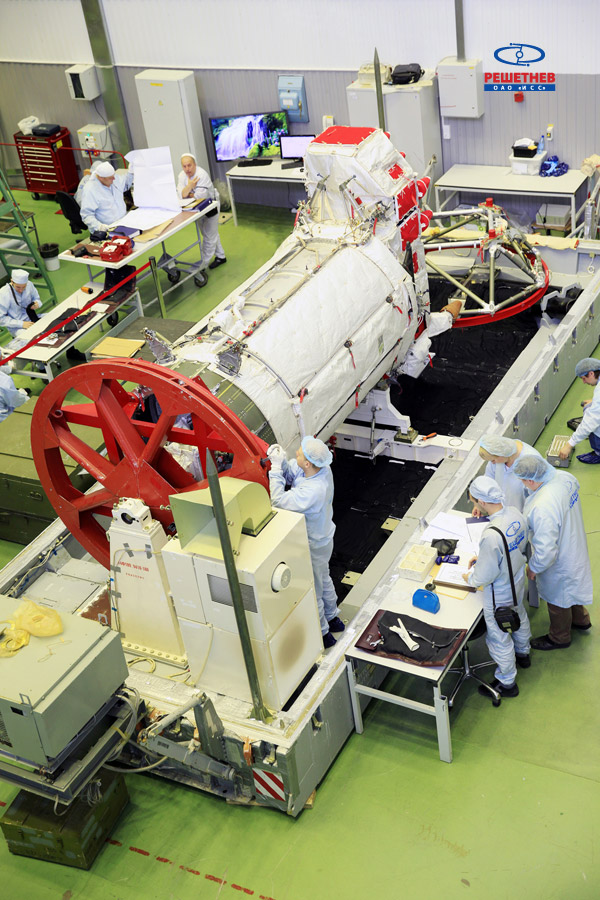
    GLONASS-M54

    On the night of February 12-13, the GLONASS-M #54 spacecraft left ISS-Reshetnev’s facilities in Zheleznogorsk, Russia, and was transported by air to the Plesetsk cosmodrome.

    A Soyuz 2.1b / Fregat rocket with the navigation satellite GLONASS-M #54 on board is scheduled for launch in mid-March. The exact launch date is due to be set at a meeting of the state commission.

    As soon as the satellite arrived to the spaceport, the joint team of ISS-Reshetnev specialists and the cosmodrome’s staff members started the launch preparation campaign.

    Five satellites of the GLONASS-M series are planned for launch in 2014 to maintain GLONASS in its full operational capability. Three satellites will be launched in a single batch, while the other two will fly into orbit in two single launches.

    GLONASS-M #54 will also carry an additional instrument – a high-accuracy thermal stabilization unit that was installed on the spacecraft to undergo testing and flight qualification. Next-generation spacecraft intended for the GLONASS system are going to be equipped with this instrument to provide increased positioning accuracy.

    Three more GLONASS-M spacecraft have already been built by ISS-Reshetnev and are being stored at the company’s premises waiting for launch.

    GLONASS-M54-2

  • Launch of Three GLONASS-M Satellites Set for July 2

    Launch of Three GLONASS-M Satellites Set for July 2

    News courtesy of CANSPACE Listserv.

    The launch of the next three GLONASS-M satellites is scheduled for July 2, according to an announcement by Roscosmos, the Russian Federal Space Agency.

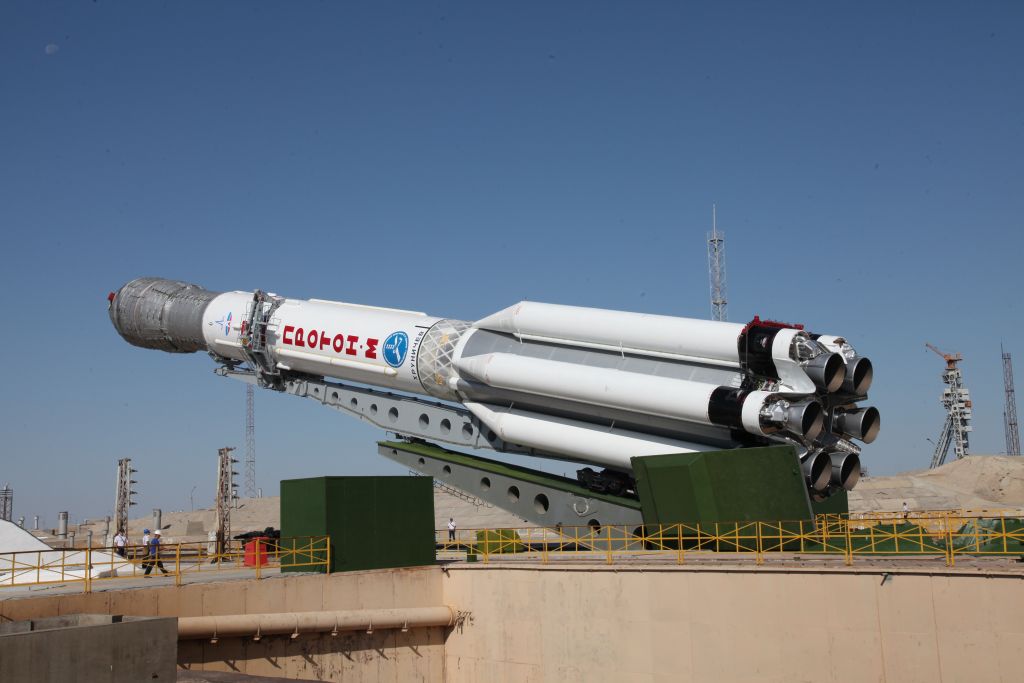
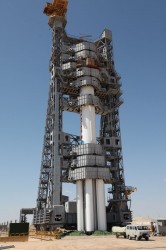
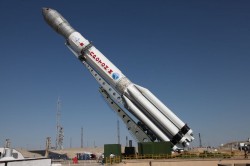
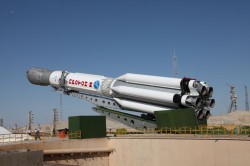
    A Proton-M launch vehicle with the upper stage DM-03 and three satellites was rolled out from Baikonur Cosmodrome’s assembly and test facility site 92A-50 on June 28  to launch pad 81. The decision was made to transport the launch vehicle at a meeting of the technical guidance of the State Commission, held the day before.

  • Russia Launches GLONASS-M Satellite

    News courtesy of CANSPACE listserv.

    GLONASS-M satellite No. 47 was launched from the Plestesk Cosmodrome on April 26 at 05:23:41 UTC by a Soyuz 2-1b rocket.

    “At 12.55 [08:55 UTC] the GLONASS-M spacecraft was taken under management by the Titov Main Test and Space Systems Control Centre. The spacecraft is installed [in orbit] and has maintained stable telemetry, and its onboard systems are operating normally,” said Colonel Alexei Zolotukhin of the Russian Aerospace Defence Forces.

    The satellite, also known as Kosmos 2485 and GLONASS 747, was placed in orbital plane 1 and is drifting to its designated slot.

    Initial two-line element set for the satellite:

    1 39155U 13019A   13117.72709898  .00000014  00000-0  00000+0 0    85
    2 39155 064.8833 235.0937 0113505 116.3660 245.7001 02.09126432    35

    ISS Reshetnev, the manufacturer of the satellite, reported that the first communication session confirmed that the spacecraft is operating as designed, its mechanical systems deployed, and Sun and Earth acquisition was completed successfully.

    According to the CEO – Chief Designer of ISS Reshetnev, Nicholas Testoedova, this GLONASS-M satellite will be a reserve. The following year, after the completion of the examinations and tests, it will replace one of the older exhausted units.

    After reaching a designated orbit, likely slot 2 in orbital plane 1, the satellite will complete several weeks of commissioning and testing before entering regular service. There are currently 24 operational GLONASS satellites. The GLONASS-M satellite is the second generation GLONASS satellite.

    DSC_6623s2 DSC_6571s3 DSC_3787s1

  • The Good, the Bad, and the Really Ugly

    The Good, the Bad, and the Really Ugly

    The Good

    This month there is good news — great news, actually — where GPS and PNT (Position, Navigation and Timing) systems are concerned. On October 22, a Russian Soyuz rocket placed in orbit the first two validation satellites, built by EADS Astrium Germany, in the Galileo PNT constellation after making its maiden launch from Kourou. Don’t confuse these recent satellites with the earlier experimental satellites, GIOVE-A launched in 2005 followed by GIOVE-B launched in 2008. These initial satellites served to preserve the Galileo ITU frequency filings and test the first-ever space borne Hydrogen Maser atomic clock, which by all accounts is proving to be extremely accurate.

    21102011-_SCO3184-W-1
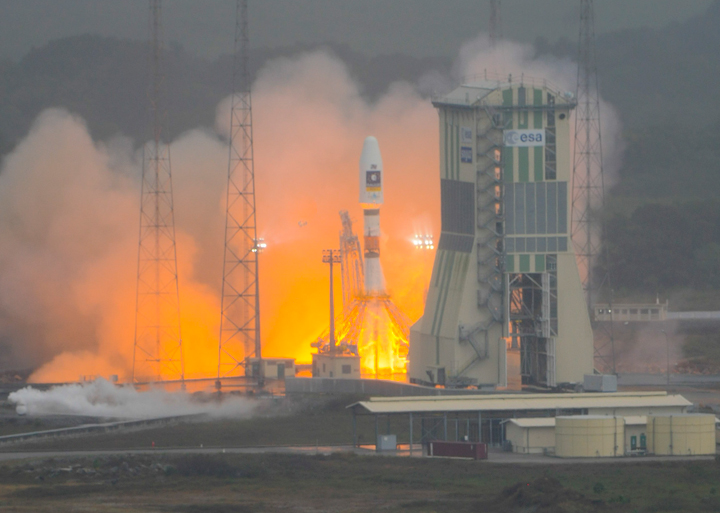
    The Soyuz launch of two Galileo IOV satellites.

    While it is interesting the Europeans decided on a Russian vehicle for the first Galileo dual launch, the U.S. recently pinned its hopes on a European Ariane Five (pictured at right) to launch a commercially hosted U.S. government payload known, appropriately enough, as the “Commercially Hosted Infrared Payload” or CHIRP sensor, which was specifically developed by the U.S. government as a test payload to test both the payload sensor capability and the commercially hosted options for sensor payloads in GEO. The CHIRP sensor features a fixed telescope that can view one quarter of the Earth from geosynchronous orbit. So it appears that hosted payloads and international launch cooperation efforts are growing and are apparently working successfully.

    The two newest Galileo satellites deployed four hours after the Soyuz rocket lifted off from Kourou, in French Guiana.

    The Soyuz launched the first two of four validation Galileo satellites designed to validate the Galileo concept by testing both space and ground operations. Two additional validation satellites are scheduled to follow in the summer of 2012. Once the In-Orbit Validation (IOV) phase is completed, an additional 12 satellites will be launched to reach an Initial Operational Capability (IOC) of 16 satellites sometime in 2014, and that date looks extremely doubtful.

    According to our own Richard Langley, “During initial operations, the [Galileo] satellites will be controlled by a joint ESA and CNES French space agency team in Toulouse, France. Once that week-long phase ends, the satellites will be handed over to the Oberpfaffenhofen Galileo Control Centre near Munich, [Germany], operated by the DLR German Aerospace Center, which will be responsible for routine operations. Operating the satellite payloads to provide navigation services will be the task of the Fucino Control Centre, near Rome, operated by Telespazio.”

    Now, does that sound like a confusing and expensive ground support system? Everybody and every country insist on their piece of the pie, regardless of efficiency and continuity of operations. Who knows this might work; only time will tell.

    The approximately $7.5 billion Galileo constellation will eventually, hopefully, comprise a retinue of 27 operational satellites with three on orbit spares by 2020.

    The PNT business is obviously good for the Russian launch business. Russia successfully launched a GLONASS-K1 test satellite back in February, followed by three GLONASS-M satellites this month into a constellation that finally, after 29 years, accounts for 23 operational and three hopefully soon-to-be operational satellites. The first operational GLONASS-K1 is not scheduled to be launched until sometime early in 2012. GLONASS satellites have historically proven to be fragile affairs with extremely short lifespans; it remains to see how long this number and capability will be maintained. Hopefully the new K1 and M generation GLONASS satellites have resolved many of the longevity issues. Only time will tell when and if the Russian GLONASS will ever regain Full Operational Capability (FOC), which requires 24 simultaneously operating satellites. The Russians were briefly FOC in December 1995, but unfortunately only for a few months. The word “simultaneous” is important as Russian scientisst frequently state they have 25 or 27 GLONASS satellites in orbit, but unfortunately only 22 or 23 of them are operating. But it is possible, miracles still happen, that by the time you read this GLONASS may actually legitimately have achieved FOC once again.

    Now on the Boeing IIF side of the house, more good news as it was announced this week that the second IIF satellite (IIF-2), which has been operational with an elevated signal strength for several months, now has its signals back within the specified signal strength and is good to go. GPS IIF-3 was originally scheduled for launch this coming summer, but the latest launch schedules show the launch in September 2012, about 11 months from now. With 30+ operational GPS satellites on orbit plus residuals, hopefully this will be soon enough.

    Apple & GLONASS

    Always betting on the come, we now know that the late genius Steve Jobs directed his enterprising engineers to include GLONASS PNT software in the latest iPhone 4S; the latest version iPhone that sold 1.3 million units in one day. This effectively gives the iPhone 55 potential satellites to choose from for PNT information as well as the Wi-Fi, cellular tower, and SkyHook Wireless PNT information. With the addition of the GLONASS PNT resources, the iPhone may now well be the most versatile and capable general-purpose PNT platform that exists today. Is that a sad commentary for other GPS and mobile phone providers, a marketing challenge, or merely a positive sign of the technologically advanced times in which we live? It may in fact simply be a true reflection of the capabilities of the most recognized and profitable corporation in the world today. Apple is doing many things right, and one of them is listening to the consumer and giving them more than they expect. Consequently, customers are loyal and Apple Inc. surpassed Microsoft in market capitalization in 2010, and in 2011 became the most valuable consumer-facing brand in the world. Apple is a company Fortune magazine has named the most admired company in the United States for the last three years running. Apple iPhones and numerous PNT applications are certainly in use by thousands of our warfighters in and out of theater. Interesting, to say the least, plus food for thought and a topic for a future column.

    The Bad

    The bad news not surprisingly comes via the U.S. government and no, it is not about LightSquared, because that situation continues to be worse than merely bad. No, the bad news comes in the form of a recently released but curiously out-of-date publication concerning GPS by the Congressional Budget Office (CBO).  In late October 2011, the CBO released a publication entitled The Global Positioning System for Military Users: Current Modernization Plans and Alternatives.

    I was unfortunate enough to receive both a soft and hard copy; and to make matters worse I don’t own a parakeet. The good news is we do have several fireplaces in our home and winter is rapidly approaching. Truthfully, the report is that bad and out of date, but at least it is boring and long. Fortunately hardly anyone is likely to actually endure the pain and suffering required to read through the entire document. However if you are a masochist and/or suffering from acute insomnia I highly recommend this CBO report as a possible cure. Some of you might justifiably complain I have no business giving medical advice because I am not a medical subject matter expert (SME) and I wholeheartedly agree, just as I agree that the CBO is definitely not a GPS SME and should stay with what they do know. Whatever that is.

    I can assure you when and if the military needs advice concerning future GPS operations and options the last place they will or should turn is to the CBO. For example, the preface of the document clearly states, “In keeping with CBO’s mandate to provide objective, impartial analysis, this study makes no recommendations.” Contrary to what you may think this is actually good news, since now we don’t have to waste valuable time dealing with flawed recommendations; garbage in, garbage out. Now if only the analysis were impartial or objective, which it is decidedly not. I would even settle for accurate, which it is definitely not. The information in this document is in some cases, as in M-Code satellites, erroneous and confusing; it is out-of-date where the GPS III nomenclature and options are concerned, especially the spot-beam; and it is always misleading concerning objectivity that presents facts not in evidence. There is so much erroneous and misleading information in this report that I sincerely hope no one else reads it, especially our military users.

    Seriously, all kidding aside, if you must read this document, consider it to be retitled as: The Global Positioning System for Military Users: Outdated Modernization Plans and Alternatives Not Currently Being Considered by the DoD.

    Against my better judgment I am including a link to the CBO document for those of you who practice self-flagellation. I truly regret the number of tree lifespans cut short to produce this confusing, misleading, out-of-date, and totally unnecessary document. Sometime I will tell you how I really feel.

    The Really Ugly

    The “really ugly,” as you have probably surmised by now, refers to LightSquared and the clueless FCC. Can you believe we have been dealing with this fiasco for more than 12 months? You are probably tired of it all, I know I am, but I see that as a true danger signal. The situation is very clear technically, the LightSquared signals, both from the terrestrial transmitters and receivers, will significantly impair and jam GPS signals to the detriment of all GPS users. Of course the political and business ineptness continues apace so who knows how long we will be dealing with this issue, but we cannot afford to let down our guard. Although this is exactly what LightSquared, the FCC, and the current administration, in an upcoming Presidential election year, obviously hope will happen. They hope we will all just get tired of dealing or even hearing about this LightSquared mess and then they win by default. We all have more important matters demanding our attention, right? Of course we cannot and are not going to allow that to happen. We will continue to use LightSquared as a verb when necessary and keep the real facts front and center, right here in GPS World, until all aspects are resolved. You can count on it.

    Until next time, happy navigating.


  • The System: GLONASS Heaves Three Aloft

    The Russian space agency Roscosmos launched a venerable Proton rocket carrying three GLONASS-M satellites into orbit on December 14. Each 3,000-pound satellite is designed to last seven years. They join a constellation numbering 19 satellites, although only 16 are healthy.

    Russian politicians and satnav system managers had hoped to launch six satellites between September and December, to attain a global service level, which requires 24 satellites, eight each in three orbital planes.

    However, a payload glitch found aboard one recent satellite after its launch into space forced a return to the factory of three satellites scheduled for launch in September. The three put into orbit this week will now only bolster continuing GLONASS coverage of Russian sovereign territory, which requires 18 operating spacecraft.
    The next GLONASS launch is now scheduled for a February 11–20, 2010, window.

    The Block 41 GLONASS-M satellites (Nos. 30, 33, and 34) have been placed in Plane 1, which currently has only four healthy satellites. According to Roscosmos, communication has been established with all of the satellites and performance is nominal.

    Next Up. Nikolay Testoedov, head of the Reshetnev satellite manufacturing company, said his enterprise plans to produce 17 more GLONASS-M satellites between now and 2013.
    “The preproduction flight tests of new series of GLONASS satellites, GLONASS-K, will start in 2011,” said Andrei Buravin, vice head of Russian Institute of Space Device Engineering. The preproduction flight tests of GLONASS-K will be performed together with Reshetnev company.

    It is still unclear whether the next-generation of GLONASS satellites will be launched via blocks of three satellites with Proton rockets from Baikonur, or via blocks of two satellites with Soyuz rockets from Plesetsk.

    RTCM Supports Loran

    It may be moot by the time you read this — the U.S. Coast Guard (USCG) could unplug Loran on January 4 — but the Radio Technical Commission for Maritime Services (RTCM) wrote to Secretary of Homeland Security Janet Napolitano in support of continuing and enhancing Loran service.

    The letter asserts that it cannot be accurately certified that termination of the operation of the Loran-C signal will not adversely affect the safety of maritime navigation — counter to opinion issued by the USCG Commandant. The RTCM president states that the Loran-C infrastructure is needed to complete the eLoran system to serve as a backup to the U.S. Global Positioning System (GPS).

    New Technique. Researchers have developed a technique to demonstrate a low-cost backward-compatible way to exploit eLoran to make GPS more robust. The method paves a way for the average GPS user to become a GPS+eLoran user. Go to env-gpsworld-integration.kinsta.cloud/loran for the letter and other Loran stories.

    Galileo Contract Award Imminent

    A contract award for at least eight of the in-orbit validation satellites had been promised for the end of this year by the European Commission (EC), but as this magazine goes to press on December 16, no official announcement has surfaced.

    An unconfirmed report in early December claimed that the European Commission and European Space Agency had awarded a contract for eight Galileo satellites to underdog bidder OHB Technology of Germany. However, this report was privately denied and in fact refuted by an EC representative.

    The OHB-led consortium includes small-satellite specialist Surrey Satellite Technology Ltd. of Britain, which built and continues to operate the GIOVE-A satellite, Galileo’s first launch. The competing Astrium-Thales Alenia consortium built the second Galileo satellite now in orbit, GIOVE-B.

    The report, published on December 4 on the Space News website, asserted that “the European Commission has selected OHB Technology of Germany to build at least eight Galileo navigation and positioning satellites for about 350 million euros ($525 million) in a decision that postpones any award to competitor Astrium Satellites pending further negotiations with Astrium.” Reporter Peter de Selding cites industry officials as his sources.

    An EC representative privately denied the report, asserting “it is not true.” An industry source said “It is not confirmed, we are waiting for the decision.”

    The rumor created an uproar in the German state of Bavaria, a center for that country’s aerospace industry and government-aided research. Astrium had reportedly planned to perform much of its Galileo work in that region, and the Space News story holds out the expectation that “political pressure will be applied to reverse the ruling in the coming days.” The region is already home to the Galileo Control Center at a German Aerospace Agency (DLR) site.

    Block Approach. The two consortia have been negotiating their bids on the contract with the commission and its technical adviser, the European Space Agency (ESA), for 15 months. Initially, the two European Union bodies set a contract ceiling of 840 million euros to build 28 Galileo satellites; un the past few months they revised the total order to 22 satellites and asked for bids for eight, 14, and 22 satellites. Reportedly, there are price ceilings for each of the three potential order sizes — around 400 million euros for eight satellites, 650 million euros for 14 satellites, and 840 million euros for all 22.

    Repeatedly postponed throughout its conceptual phase, the Galileo system now — officially, at least — hopes to achieve initial operational capability by 2014.

    Whether or not the Space News report is eventually substantiated, the central European government has already signaled in multiple ways its dissatisfaction with its various member states’ aerospace industry giants, whom it holds responsible for the protracted dysfunctionality of the now-abandoned public-private partnership to build Galileo. The EC has largely wrested control of the satellite award process away from its space agency, and indicated that it intends to maintain a firm grip on the purse strings.

    Application Days: Galileo Application Days are set for March 3–5, 2010, in Brussels, Belgium, with live demonstrations of cutting-edge applications developed for GNSS under the European Union’s 7th Research Framework Programme (FP7), former ESNC Competitions, the ESA Technology Transfer Programme, and national and regional initiatives. See www.application-days.eu for details.

    Opinion: GPS L2P(Y) Phase Shift Causes Needless Consternation

    Roughly three years ago, the U.S. military conducted the first flex-power test on the L2 GPS codeless signal. Almost immediately, the civilian GPS community expressed concern that future changes to the L2P(Y) signal power levels might cause a signal phase shift; such a phase shift would be incompatible with equipment using the P(Y) signals in a codeless/semicodeless fashion for extremely accurate positioning applications.

    Civilian users were naturally upset because they had invested millions of dollars in systems that might not be usable — even if the unusable periods were of a very short duration.
    The National Positioning, Navigation, and Timing (PNT) Executive Committee responded by tasking the National PNT Engineering Forum (NPEF) to look at the problem. Within a few months, the NPEF announced a solution: flex power could be used in such a manner that it would not cause a phase shift. At the same time, the military reminded civilian users that the codeless use of L2P(Y), as accurate as it might be, was never intended and should not be a long-term solution.

    An agreement was reached between the U.S. government and civilian users that the civilian users of this codeless/semicodeless technique would migrate from using the L2P(Y) carrier to using the new L2C signal to achieve not only the same, but better results. To codify this agreement, a Federal Register Notice was issued in 2008 identifying the terms of this agreement, which guaranteed the phase stability of the current L2P(Y) signal until 2020. This gives civilian users 12 years to figure out a migration plan and to obtain adequate use of the equipment they already have on hand.

    In addition, 2020 is not a drop-dead date, but a date when the use of L2P(Y) codeless signals will no longer be guaranteed, though may well still work. Who knows what PNT advancements will take place between now and then? This could very well be a moot point by then, and in my opinion should be one now.

    Problem Solved? Apparently not. A lag between the issuance of this national policy and analogous adjustments to interface specifications caused consternation within the civilian community. Misunderstandings added to this perceived impasse. Various solutions were identified to work around this looming quandary. However, given the national policy to support codeless/semicodeless use until 2020, the Air Force Space Command commitment to that policy, and the recommendations of the NPEF, these solutions seem wholly unnecessary to me.

    The U.S. government has gone well beyond what is required to insure civilian codeless and semi-codeless users are accommodated.

    For the foreseeable future, users will be able to employ L2P(Y) codeless/semicodeless techniques for very accurate position determination and will not have to worry about phase shifts disrupting their work.

    — Don Jewell, GPS World Defense PNT Contributing Editor