Tag: GNSS boards

  • MIKROE unveils Click Board for precision applications

    MIKROE unveils Click Board for precision applications

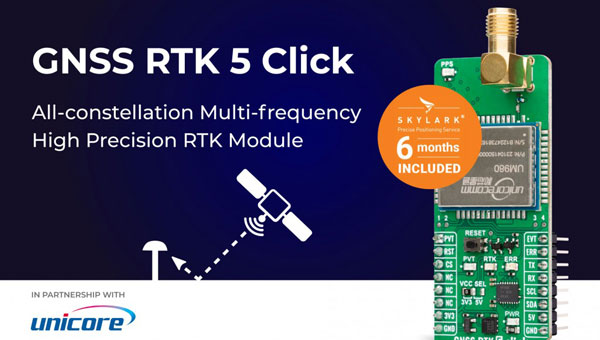
    MIKROE has unveiled the GNSS RTK 5 Click, a compact add-on board for high-precision positioning and navigation demands. It features the UM980, an all-constellation multifrequency RTK positioning module from Unicore, with the advanced NebulasIV SoC for enhanced performance.

    It supports Swift Navigation’s Skylark precise positioning service, multiple GNSS constellations, and RTK positioning for centimeter-level accuracy. The board also features JamShield technology for robust performance in challenging environments, USB connectivity for easy configuration and visual status indicators for module status and GNSS signal reception.

    It can be used for a variety of applications, including surveying and mapping, precision agriculture, UAVs, autonomous robots and autonomous driving.

  • Hemisphere GNSS launches Vega board with Lyra II, Aquila chipsets

    Hemisphere GNSS launches Vega board with Lyra II, Aquila chipsets

    Logo: Hemisphere GNSSHemisphere GNSS has announced another Vega heading and positioning OEM board using the Lyra II and Aquila chipsets.

    The Vega 60 GNSS board fits industry-standard 46 x 71 mm form factors with a 60-pin connector. It can be used to replace more expensive and lesser abled 60-pin boards with either single- or dual-antenna capabilities.

    Hemisphere’s Lyra II and Aquila application-specific integrated circuit (ASIC) designs provide the ability to simultaneously track and process more than 1,100 channels from all GNSS constellations and signals including GPS, GLONASS, Galileo, BeiDou, QZSS, NavIC, SBAS and L-band. The ASIC technology offers Vega 60 scalable access to every modern GNSS signal available.

    Cygnus interference mitigation technology is also a standard feature, providing built-in digital filtering capabilities and spectrum analysis. This provides enhanced anti-jamming as well as interference detection and mitigation.

    “We are excited for the opportunity to introduce our Vega 60 board,” said Miles Ware, director of marketing at Hemisphere. “Vega 60 brings our industry-leading heading and position solutions to an OEM board footprint with very few affordable upgrade paths.”

  • NavCom releases Onyx software-upgradeable GNSS OEM board

    NavCom releases Onyx software-upgradeable GNSS OEM board

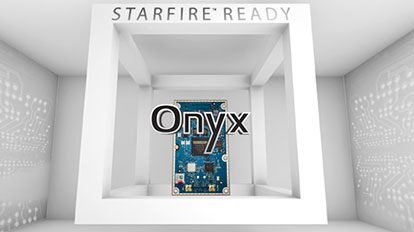
    NavCom Technology Inc., a wholly owned subsidiary of Deere & Company, has released the Onyx multi-frequency GNSS OEM board.

    Offering integrated StarFire/RTK GNSS capabilities, Onyx features 255-channel tracking, including multi-constellation support for GPS, GLONASS, Beidou and Galileo. It also provides high-performance in GNSS receiver sensitivity and signal tracking as well as patented multipath mitigation, interference rejection and anti-jamming capabilities.

    Photo: NavCom
    Photo: NavCom

    The new Onyx GNSS OEM board is a fully upgradeable GNSS receiver, allowing the receiver to be upgraded from free differential GPS signal sources such as WAAS to increased accuracy services with integrated features with StarFire, through software optioning alone.

    The software-enabled features are sold in convenient software bundles, but can also be purchased individually, to suit changing application needs. Integrated StarFire is now simply activated via an over-the-air licensing system that sends a StarFire license via satellite directly to the StarFire-capable receiver from NavCom’s StarFire operations center.

    StarFire, NavCom’s global satellite-based augmentation system (SBAS), provides real-time global 5-centimeter accuracy without a base station.

    “The release of Onyx advances NavCom’s ability to grow products and services meeting the customer driven demands of uptime, accuracy, and feature rich capabilities,” said Steve Ault, NavCom’s GNSS product marketing manager. “NavCom continues to innovate the StarFire technology through the advanced capabilities inherent to Onyx which will be fully realized over the life of this new product.”

  • Unicore introduces UB4B0M GNSS board at Intergeo 2018

    Unicore Communications’ Liyang Dao offers GPS World an overview of the company’s UB4B0M BDS/GPS/GLONASS/Galileo multi-system multi-frequency compact high precision board at Intergeo 2018 in Frankfurt, Germany. According to the company, the board features low-power consumption design and offers millimeter-level carrier phase observation value, as well as centimeter-level RTK positioning, supporting chip-level multi-path mitigation.

  • Septentrio launches AsteRx SB compact, ruggedized GNSS receiver

    Septentrio launches AsteRx SB compact, ruggedized GNSS receiver

    Photo: Septentrio
    Photo: Septentrio

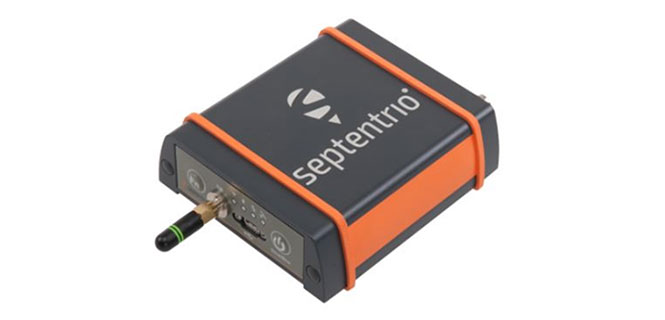
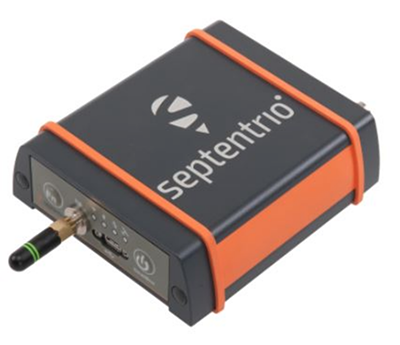
    GNSS receiver manufacturer Septentrio is introducing its AsteRx SB at two industry shows: Expomin in Santiago, Chile (April 23-27), and Intermat in Paris, France.

    According to the company, the AsteRx SB delivers Septentrio’s quad-constellation real-time kinematic (RTK) positioning in a low-power, IP68 compliant housing. Built around the AsteRx-m2 GNSS receiver engine, the AsteRx SB features Wi-Fi, Bluetooth, USB, Ethernet and serial connectivity.

    Septentrio’s GNSS+ suite of positioning algorithms converts difficult environments into good positioning: LOCK+ technology to maintain tracking during heavy vibration, APME+ to combat multipath, and IONO+ technology to ensure position accuracy during periods of elevated ionospheric activity.

    The AsteRx SB also features the AIM+ interference mitigation and monitoring system, which can suppress the widest variety of interferers, from simple continuous narrowband signals to the most complex wideband and pulsed jammers.


    Key benefits for users:

    • Quad-constellation, multi-frequency, all-in-view RTK receiver
    • Robust and compact IP68 weatherproof housing
    • AIM+ interference monitoring and mitigation system
    • L-band PPP, RTK, scalable accuracy
    • High-update rate, low-latency positioning
    • Base and rover operation
    • Bluetooth, Wi-Fi, Ethernet, serial and USB communications

    Whether exposed to the elements or inside a vehicle cab, operating alone or as a core component of a sensor-fusion system, the AsteRx SB is straight-forward to set up and integrate into any new or existing application. Using Wi-Fi or micro USB, the AsteRx SB can be configured and monitored using any device with a web browser.


    “We believe the AsteRx SB is the best all-rounder on the market today. We’ve produced a small and low-power device with zero compromise on performance,” said Gustavo Lopez, product manager at Septentrio. “From machine control to sensor-fusion applications, manned or unmanned, the compact size and low power of the AsteRx SB along with its range of communications options make it ideal for any project requiring reliable high-precision positioning.”

    At Intermat in Paris, Septentrio will exhibit at Booth 6H-041 and at Expomin in Santiago, Chile, at Booth 1K-30.

  • Launchpad: Spoofer detection for surveyors

    OEM

    RF front-end board

    7-channel multi-GNSS multi-band for software-defined receiver
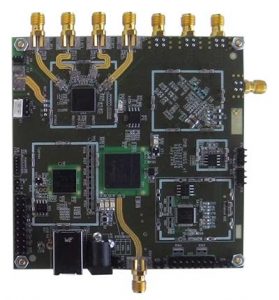
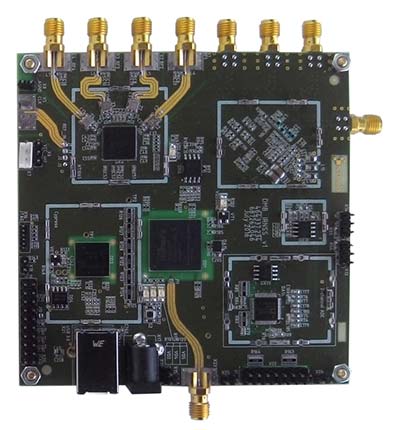
    The NT1065/66_USB3 multi-channel GNSS RF front-end board is based on NTLab’s RF ICs: NT1065 (four channels for GPS / GLONASS / Galileo / BeiDou / IRNSS / QZSS, L1/L2/L3/L5 bands) and new NT1066 (two channels for all previously mentioned GNSS signals, plus one extra-channel for IRNSS S-band). The board supports USB3 connection, allowing users to process captured satellite signals on a PC or DSP platform. The board is accompanied by comprehensive software and manuals. Features include six channels for L1/L2/L3/L5-band signals + one channel for S-band signals simultaneous reception; up to four coherent channels; IF bandwidth up to 32 MHz; acquisition of wideband signals up to 64 MHz (such as Galileo E5) by two coherent channels; USB3 interface (up to 800 Mbit/s); ability to connect four x CRPA. NTLab offers an academic discount program for universities, colleges and institutes, allowing them to purchase this powerful research tool with significant savings.

    NTLab, www.ntlab.com

    GNSS OEM RTK boards

    With rover radio for wireless applications

    Three new Tersus GNSS HRS kits feature high-precision BX305, BX306 and BX316 GNSS RTK boards. The kits consist of RTK receivers, GNSS antennas, RS05R radio station modems, radio station antennas, and related cables and converters. Embedded in the receivers are the Tersus RTK boards. They are compact-design, energy-efficient, centimeter-level accurate GNSS real-time kinematic (RTK) boards that bring high-precision positioning accuracy to the market. Different from the standard BX305/306/316 GNSS kits, the new HRS versions are equipped with the RS05R lightweight and robust UHF rover radio for wireless applications. It provides reliable data communication for demanding conditions that require a combination of stability, high performance and long-range operation. The kits can be used in a variety of applications, such as unmanned aerial vehicles (UAVs), surveying, mapping, precision agriculture, construction engineering and deformation monitoring.

    Tersus GNSS, www.tersus-gnss.com

    SURVEY & MAPPING

    Spoofer detection

    Spoofing alerts for surveyors

    Spoofer detection is now available on all JAVAD GNSS original equipment manufacturer (OEM) boards. When a receiver equipped with a JAVAD board detects more than one correlation peak for any PRN code, it warns the user of the presence of spoofing (false signals) and identifies the spoofed satellites. The receivers then switch to other signals and sensors that are not being spoofed to maintain accurate positioning. The user can also employ the receiver to try to identify the direction from which the spoofing signals are originating.

    JAVAD GNSS, www.javad.com

    Laser scanner

    Scanning range reaches 1 kilometer
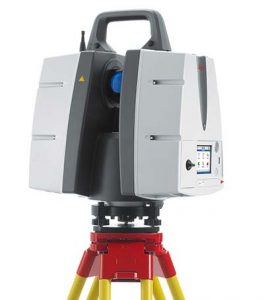
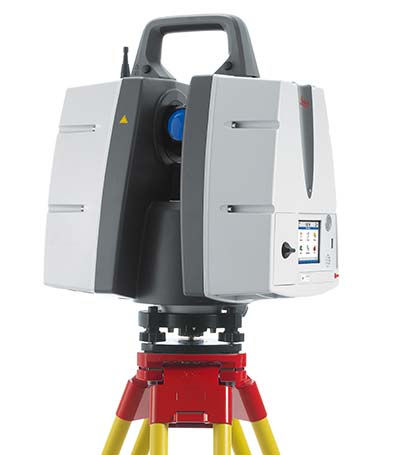
    The ScanStation P50 combines all the features of the P40 plus a longer range scanning capability of more than 1 kilometer. The rugged, versatile laser scanner enables professionals to 3D capture at great distances with angular accuracy paired with low-range noise and survey-grade dual-axis compensation. The ScanStation P50 opens new business opportunities for reality-capture professionals, helping them to scan what was previously unreachable such as big mine pits, long bridges, dams and skyscrapers. With its range, the P50 enables users to scan any tall or wide infrastructure or dangerous sites from a remote and safe position. This newest member of the P-Series provides the highest quality 3D data and high-dynamic range (HDR) imaging at an extremely fast scan rate of up to 1 million points per second and ranges of more than 1 kilometer.

    Leica Geosystems, leica-geosystems.com

    TRANSPORTATION

    Smartphone data analysis

    Integrates gamification and real-time data

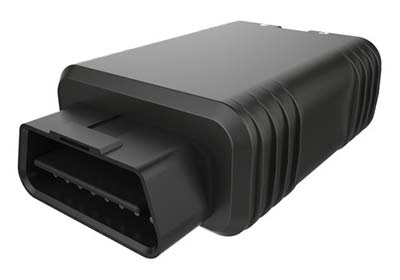
    Azuga FleetMobile: Standalone Smartphone Edition (SSE) is a smartphone-based solution for driver behavior monitoring, mobile timecard management and GPS tracking. Azuga FleetMobile SSE leverages data analysis components of the original Azuga FleetMobile application, including driver behavior monitoring, location-based timestamps for timecards, gamification and driver rewards, without requiring separate hardware installation via a vehicle’s OBD port. Azuga’s GPS fleet-tracking offerings feature a driver rewards program to help fleets reduce accidents by up to 70 percent. The standalone application, which works on both Android and iOS smartphones, integrates gamification and real-time data to encourage self-coaching and healthy competition. Azuga’s data science team can then leverage information about driving behaviors and combine them with route patterns, fleets’ vehicle health information and environmental factors to identify opportunities for performance improvements in fleet operations.

    Azuga, azuga.com

    Vehicle tracker

    Able to receive MobileEye ADAS alerts
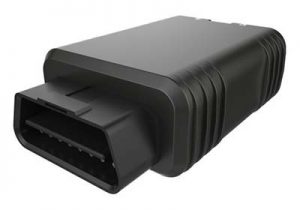
    The RIFA series of full-featured GPS trackers have built-in gyro and G-sensors, and supports OBDII and J1939 protocols. In addition to 4G/3G communication, it provides options to use low-power wide-area networks (LPWAN) such as NB-IOT or LoRa, which can reduce communication costs significantly. The unique CAN-to-ADR (automotive dead reckoning) function provides accurate positioning in situations of weak GPS signals, such as driving in tunnels, indoor parking facilities, urban canyons or when GPS signal obstruction hinders positioning, without additional cabling for wheel speed input.

    Antzer Tech, www.antzer-tech.com

    UAV

    Thermal imaging payloads

    Ethernet/IP-Based connectivity
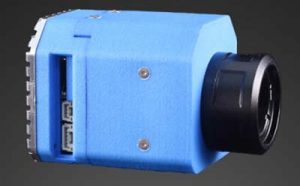
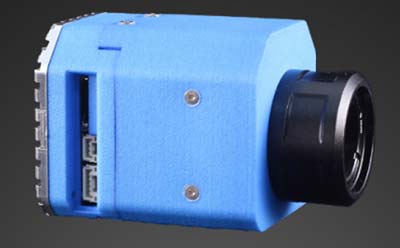
    The ThermalCapture IRnet provides an Ethernet interface for live data streaming to new and existing FLIR Tau 2 drone cores and FLIR Vue Pro/R cores. The market has increased its demand for connectivity by Ethernet, with professional drone manufacturers choosing Ethernet for communication on board UAVs. The ThermalCapture IRnet allows for real-time access via Ethernet while recording radiometric data to microSD, bringing real-time access in drone flight operations to thermal imaging data. It stores the full 14-bit radiometric thermal data on a microSD card. Real-time access remains available while radiometric data are being recorded; operators can also control the camera and settings via Ethernet. Using Ethernet also offers data privacy.

    TeAx, thermalcapture.com

    Airborne lidar mapping

    Centimeter-level accuracy for 3D mapping products

    The Think 3D Stormbee multicopter integrated with Trimble’s AP15 provides efficiency, accuracy and performance for lidar surveys from unmanned vehicles. The Stormbee is a directly georeferenced UAV lidar solution for 3D industrial mapping applications, designed to collect survey-grade spatial data more cost effectively and efficiently than static lidar. Stormbee’s 3D mapping technologies include Faro’s Focus 130 laser scanner, Trimble’s AP15 high-performance GNSS/inertial receiver, Applanix’s POSPac UAV GNSS/inertial post-processing software and Stormbee Beeflex software for lidar point-cloud generation. By using the high-performance Trimble AP15 with two antennas and the Applanix post-processing software (POSPac MMS) for georeferencing the lidar data, Stormbee provides an accurate real-time and post-mission solution for all motion variables.

    Think 3D, think3d.be

    Applanix, applanix.com
  • Tersus announces BX316D to extend GNSS OEM board offering

    Tersus announces BX316D to extend GNSS OEM board offering

    Tersus GNSS Inc. has announced the BX316D to extend its GNSS OEM RTK PPK board and offer more compatibility to the market.

    BX316D is a GNSS real-time kinematic (RTK) OEM board for accurate positioning and heading. It is able to integrate with other host devices or to serve as an independent positioning system. The versatile interface and log/command formats make it compatible with major GNSS OEM boards in the market, the company said.

    Key Features

    • Supports RTK positioning mode or RTK positioning+ heading mode, and modes are software configurable
    • Up to 20Hz RTK solution and raw data output
    • Supports IMU raw data output
    • Pin-to-pin compatible with Novatel OEM617D
    • LOG & Command compatible with Novatel Protocol
    • Supports PPS output and event mark input
    • Serial ports with LVTTL level
    • External antenna input through MMCX connectors
    • Data output: NMEA-0183 and Tersus Binary format
    • Correction: RTCM 2.x/3.x/CMR/CMR+
    • Easy to integrate with Pixhawk and other autopilots
    • Compact design
  • Septentrio launches AsteRx-m2a, AsteRx-m2a UAS boards

    Septentrio launches AsteRx-m2a, AsteRx-m2a UAS boards

    Septentrio debuted the AsteRx-m2a and AsteRx-m2a UAS GNSS OEM engines at Commercial UAV 2017, held Oct. 24-26 in Las Vegas.

    The two new OEM boards provide precise and reliable multi-frequency, all-in-view real-time kinematic (RTK) positioning and heading — along with interference technology — with low power consumption, the company said.

    Both boards are smaller than a credit card and feature Septentrio’s AIM+ interference mitigation and monitoring system. AIM+ can suppress a wide variety of interferers, from simple continuous narrowband signals to the most complex wideband and pulsed jammers.

    The AsteRx-m2a board by Septentrio. Photo: Septentrio

    Increasing levels of radio-frequency pollution, coupled with the intrinsic danger of self-interference in compact systems such as UAS, makes interference mitigation a vital element in any UAS system that uses GNSS positioning.

    Both boards are designed to bring high-precision positioning and attitude to any space-constrained application. According to the company, both receivers are designed to serve as core components in any multi-sensor application.

    The AsteRx-m2a UAS is aimed specifically at unmanned applications, bringing plug-and-play compatibility for autopilot systems such as ArduPilot and Pixhawk. Event markers accurately synchronize camera shutter events with GNSS time. The board can be powered directly from the vehicle power bus via its wide-range input.

    The AsteRx-m2 UAS board by Septentrio. Photo: Septentrio

    The AsteRx-m2a UAS works seamlessly with GeoTagZ software, providing offline re-processed RTK accuracy without the need for either ground control points or a real-time datalink.

    “We’ve taken the hugely successful AsteRx-m2 and added a second antenna input for high-precision GNSS heading,” said Gustavo Lopez, OEM product manager at Septentrio. “No need to manoeuvre around in a figure of ‘8’ trying to initialise INS heading or find space or additional power for a separate INS module now. All you need is a second antenna and you’re good to go.”

    Septentrio is located at booth 206 of Commercial UAV Expo 2017.

  • Hemisphere GNSS releases Crescent Vector H220 OEM board

    Hemisphere GNSS (hall 2.1 / stand C2.008) has released the Crescent Vector H220, the next offering in a line of new and refreshed, low-power, high-precision, positioning and heading OEM boards.

    The announcement was made at the Intergeo trade show, being held this week in Berlin, Germany. Hemisphere is showcasing the board at its booth in Hall 2.1, Stand C2.008.

    The Multi-GNSS H220 by Hemisphere GNSS.

    The single-frequency, multi-GNSS H220 provides added benefits over the prior generation H200 with a more robust positioning and heading solution and integrates Atlas GNSS Global Correction Service.

    Designed with a new hardware platform, it offers true scalability with centimeter-level accuracy in either single-frequency mode or Atlas-capable mode that supports fast RTK initialization times over long distances, the company said.

    The H220 offers fast accuracy heading of better than 0.30 degrees at 0.5-meter antenna separation in ideal conditions and aiding gyroscope and tilt sensors for temporary GNSS outages. The 109 x 71 millimeter module with 34-pin header is a drop-in upgrade for existing designs using the H200.

    The latest technology platform enables simultaneous tracking of all L1 constellations including GPS, GLONASS, BeiDou, Galileo and QZSS, making it robust and reliable. The updated power management system efficiently governs the processor, memory and ASIC, making it ideal for multiple integration applications.

    The H220 offers flexible and reliable connectivity by supporting Serial, USB and CAN for ease-of-use and integration. Optional output rates of up to 50 Hz are also supported.

    Advanced Features. The H220 offers integrated L-band support for Atlas corrections providing global sub-meter position accuracy while Hemisphere’s Tracer technology helps maintain position during correction signal outages.

    Integrators, developers and OEMs can maximize their performance by including the H220 in their systems for antenna pointing, marine survey, machine control, and any application where high-accuracy positioning and heading is required.

  • Trimble introduces lower power GNSS-inertial boards

    Trimble has introduced a new family of Trimble BD GNSS boards for high-precision guidance and control applications.

    The BD boards’ simple connectivity and configuration allow system integrators and OEMs to easily add GNSS positioning and orientation — with the ability to upgrade its capabilities — using the same board footprint, connectors and software interface for specialized and custom hardware solutions, the company said.

    The compact Trimble BD boards include a broad range of receiver capabilities, from high-accuracy GNSS only to full GNSS-Inertial features for positioning and 3D orientation. Firmware options are upgradeable, allowing functionality to be added as requirements change.

    Product manufacturers in markets such as unmanned aerial vehicles (UAVs), autonomous vehicles, fleet management and aviation now have the ability to offer customers an extensive range of capabilities to meet all their needs.

    According to Trimble, the low-power BD family of boards includes the BD940 GNSS and GNSS-Inertial boards and new top-of-the-line BD990 GNSS, GNSS-Heading and GNSS-Inertial boards, enabling customers to choose the most appropriate receiver for their applications.

    In addition, the BX940 and BX992 are available in a rugged enclosure for applications used in harsh environments.

    Integrating Trimble RTX technology, which enables precise and robust location worldwide without the use of a base station, the BD boards are ideal for flexible positioning. Trimble RTX technology enables users to subscribe to a complete portfolio of real-time correction services that deliver varying levels of accuracy depending on the user’s application requirements.

    The new BD family incorporates the latest Trimble Maxwell technology with advances in high-precision GNSS-Inertial positioning. By integrating inertial sensors onto the GNSS boards, users can experience more robust performance in a variety of challenging environments such as urban canyons, tunnels, heavy canopy or other GNSS-denied environments.

    Robust centimeter-level, real-time kinematic (RTK) positioning is achieved through the combination of multi-frequency GNSS — full triple-frequency support of all available GNSS satellite constellations—and onboard inertial sensors.

    System integrators and OEMS also have the ability to detect interference with the included RF Spectrum Monitoring and Analysis tool embedded in the receiver. The GNSS engine with 336 channels is capable of tracking L1/L2/L5 frequencies from the GPS, GLONASS, Galileo and BeiDou constellations.

    “The OEM and system integrator communities demand high performance, reliability and support for their positioning solutions,” said Elmar Lenz, general manager of Trimble’s Integrated Technologies Division. “The new BD family of boards deliver the latest GNSS and inertial technology in an easy-to-integrate form factor.”

    The new Trimble BD OEM GNSS family is available now through Trimble’s Integrated Technologies Precision GNSS Sales Channel.

  • NovAtel’s OEM7 7.03.00 firmware offers new and enhanced features

    NovAtel’s OEM7 7.03.00 firmware offers new and enhanced features

    NovAtel’s OEM7 v7.03.00 firmware is now available on all OEM7 receivers. The OEM7700, OEM719 and OEM729 can be updated to the 7.03.00 firmware, which supports new features like the SPAN Land Vehicle technology, direct inertial measurement unit (IMU) connections and tracking of the NavIC Indian regional satellite system on the L5 frequency.

    The SPAN Land Vehicle feature provides performance benefits specifically for extended loss of GPS signals, robust alignment routines and improved attitude performance for fixed-wheel land vehicle applications. During extended periods of GNSS outage, typically in low-dynamic operating environments or in dense urban canyons, the SPAN Land Vehicle feature optimizes integrated GNSS+INS performance to maintain accurate position, velocity and attitude.

    To achieve this, NovAtel uses intelligent vehicle dynamics modeling and its patented Antenna Phase Windup Technology. Intelligent vehicle modeling identifies IMU errors in the integrated GNSS+INS system that accumulate after extended GNSS outages and reduces the impact of those errors within the SPAN solution.

    NovAtel’s Antenna Phase Windup technology is used to sense changes in direction and, when combined with intelligent vehicle modeling, corrects for IMU errors in attitude (roll, pitch, yaw).
    Users can now connect SPAN enabled OEM7 receivers directly to the ADIS-16488 and Epson G320N IMUs using an SPI interface, and to the STIM300 IMU using RS422, without the need for an interface card.

    OEM7 receivers with NavIC L5 frequency tracking enabled will be able to access the test signals of the Indian Regional Navigation Satellite System (IRNSS) before it becomes operational (targeted for early 2018).

  • Tersus GNSS launches Precis-BX306 RTK board

    Tersus GNSS launches Precis-BX306 RTK board

    The Tersus GNSS Precis-BX306.
    The Tersus GNSS Precis-BX306.

    Tersus GNSS Inc., a GNSS real-time kinematic (RTK) manufacturing company, has launched its new GNSS RTK board, the Precis-BX306.

    The launch of Precis-BX306 aims at facilitating the applications that need centimeter positioning accuracy and dynamic operation mode, enforcing effective observation data logging and management, and popularizing the adoption of high precision in aerial mapping and drone-related integration.

    Compared with previous Precis GNSS RTK boards, Precis-BX306 further improves the reliability and continuity of positioning performance in challenging environments. It supports GPS L1/L2, GLONASS G1/G2 and Beidou B1/B2 with 192 tracking channels.

    The Precis-BX306 can easily integrate into Pixhawk and other autopilots. The event mark and PPS features of the new board provide more possibilities for shutter synchronization.