Tag: GNSS industry

  • The World of GNSS: What’s Next?

    As the world of GNSS moves forward and begins to absorb the new signals which are coming on line, it might be helpful to consider where we are going with all this. Maybe its time to ask ourselves to hold on a second — where is this all leading and what do we actually need? Let’s take a quick look at where we’ve been with GPS and GLONASS and what’s in store for these systems and what the impact might be for us users. Then if we consider the changes coming with Galileo, COMPASS, QZSS and the augmentation and regional system around the world, how can we as consumers cope with what’s coming and what impact will these things have on us? And what direction should manufacturers take to accommodate and lead consumers?


    When GPS first became operational, at least the surveyors breathed a sigh of relief and recognized that their work had become easier. No need to get out of bed in the middle of the night to catch a better configuration of satellites, which would only be around for two or three hours in the early hours of the morning. Now we had 24/7 coverage; while DOPs would ebb and flow a little, we still had pretty good position measurements just about any time.

    Then the Russians also grew GLONASS into an operational system and we had the luxury of two constellations to work with; that is, if we could find dual-function receivers with high enough precision. Sure enough, a couple of manufacturers began to sell GPS/GLONASS receivers and we had virtually doubled the number of visible satellites in the sky, which allowed us to work when we wanted. And RTK using two constellations seemed like precision heaven!

    Unfortunately GLONASS decayed, and designers and researchers worked a lot harder to extract the maximum they could get out of GPS alone. But now GLONASS is back, and even though we have some individual satellite idiosyncrasies to manage, and frequency diversity complexity means we have quite an overhead in RF bandwidth and added interference rejection — well, getting twice the number of satellites is worth it. And most manufacturers have come up with later generations of dual-function receivers that have very good, if not excellent, performance.
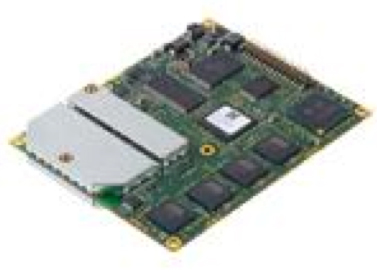
    Novatel . Credit: Tony Murfin
    NovAtel OEMV-1G GPS/GLONASS receiver.     
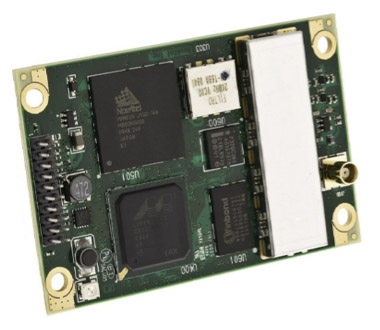
    Ashtech . Credit: Tony Murfin
    Ashtech MB 500GPS/GLONASS receiver.

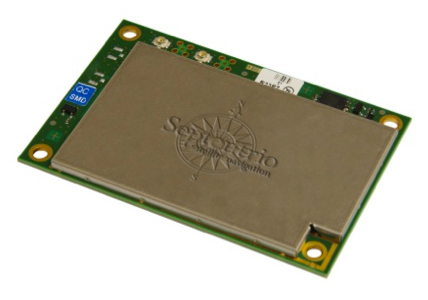
    Septentrio .  Credit: Tony Murfin
    Septentrio AsterRx-m GPS/GLONASS receiver.

    So what’s next? Should manufacturers wait for Galileo to get a usable constellation before they start trying to persuade customers that they need a new receiver that can get even better performance than the dual-function GPS/GLONASS receivers a number of users just bought? Or are these receivers just good enough? What about COMPASS?

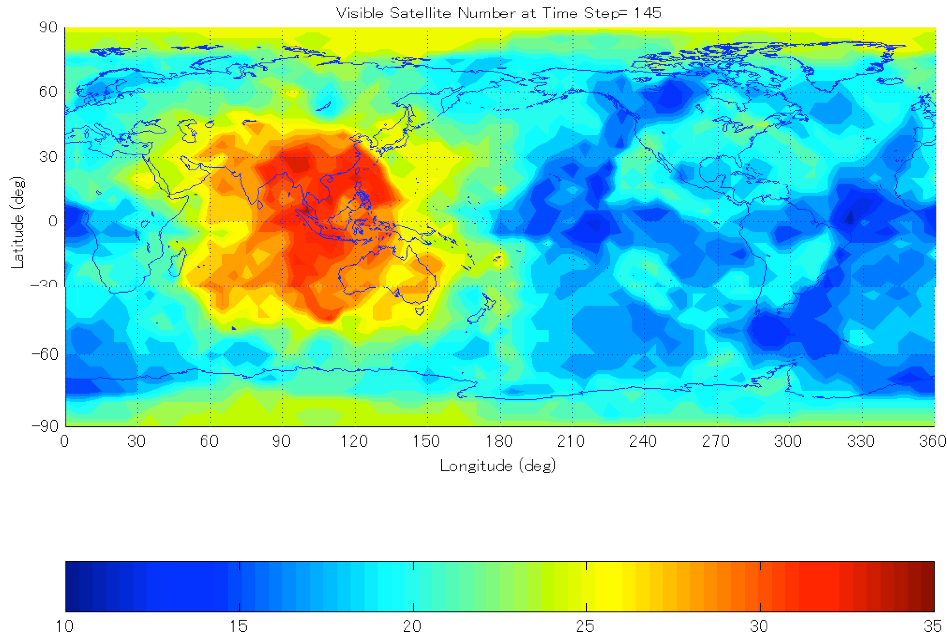
    And those customers in Asia who can even see one or more COMPASS GEOs and/or “wobbly-GEO” satellites, and who might have the prospect of receiving added QZSS signals, or even IRNSS regional signal spill-over into their geographic areas — what should manufacturers provide to those customers? And what happens when COMPASS becomes truly global?
    Poem-fig .  Credit: Tony Murfin
    Asian multi-constellation illustration, courtesy of Hiroaki Tateshita – JAXA (Click to enlarge).

    Well, it all depends on what the customer wants, right? That might apply for iPhones and their clones, for high fashion clothes, or for 60-inch plasma TVs, or the huge choice in high-performance cars — but GNSS seems a little different. “Accuracy is addictive,” someone said — well, higher performance GNSS receivers do create their own demand in the marketplace, and if you have something that is better, people seem to be prepared to pay for it.

    And there was a phase, which we might actually still be in, where all the manufacturers claimed that they had Galileo, and receivers were already upgradable so you could get what’s coming when you bought your next-generation receivers. Buy the latest receivers and be ready for when there are enough satellites to also get Galileo. Not sure that worked as a sales strategy, because what’s hot now are GPS/GLONASS receivers, which work better than anything else we’ve had before.

    Could be Galileo didn’t come on line when we expected it, so manufacturers backed off the “buy now, upgrade later” strategy. But Galileo is now “around,” and in the coming couple of years, we might just have enough SVs to make the investment worth making in a receiver with Galileo capability. But do you buy Galileo now, or will COMPASS get there first? And in Asia, wouldn’t it be more useful to use a few COMPASS extra SVs now?

    This is exactly the same dilemma that the GNSS developers, designers and manufacturers now face. Admittedly the Galileo Open Service ICD is available and contains sufficient detail, which is more than you can say for the somewhat skimpy COMPASS ICD. And developers are now building Digital Signal Processing (DSP) ASICs which have “generic” reconfigurable channels — but RF front-end hardware and signal processing software are commodities that require serious R&D effort. And these generic DSP channels and their associated software decoding algorithms may not be generic enough for all the things that you may discover in the more esoteric Binary Offset Carrier BOC (x,y) or Multiplexed BOC (x,y) modulation schemes which have still to come on line.

    And what schemes might be hidden deep inside the COMPASS signal structure when we get to see more details — what modulation might we find on other frequency signals?

    You can download the Japanese QZSS ICD from the JAXA website, but as the disclaimer says, the data transmitted from the QZS-1 satellite ’is provided without any warranty, including but not limited to accuracy, usefulness, Positioning Signal continuity, and fitness for a particular purpose of use of the Signals.’ I seem to remember similar disclaimers in the released Galileo ICD. The phrase “including but not limited to” is great legal terminology that basically says you are on your own if you should be so bold as to make a receiver using the information provided in the ICD — basically anything could happen to you, including maybe even being zapped by Martian death rays… The legal guys can caveat just about anything! But I couldn’t find any disclaimers in the released draft COMPASS ICD — it’s just missing essential stuff like the navigation messages.

    So, as a manufacturer, you need to balance the real desire you have to sell so many receivers that you control the entire GNSS marketplace, with the knowledge that if you use compatibility with the new constellations as your sales gimmick, there may be some risks. As consumers, we need to be aware that although these new constellations will be great to have to improve GNSS performance, the data to which manufacturers currently have access to make receivers that include Galileo, COMPASS, QZSS or even other developing augmentation or regional systems, this data is still somewhat preliminary — which means it could change — or assumptions have to be made to fill the gaps. So manufacturers have to be very smart, and use flexible hardware design approaches which allow them to update receivers through future software changes. This might not always be the most optimum approach for signal processing, which may be more efficient when optimized and implemented in silicon; tuning on mature/stable signals might eliminate or simplify components and high-powered processors might run a little less intensely with software work-arounds.

    So, as usual it’s a compromise — if you want to have the early implementation to gain a competitive advantage for your application, you may get ahead and win market share, but just be aware that more efficient, possibly less costly offerings may be available later, and then you’ll have to buy that too to keep up.

    The analogy could be — go ahead and buy that hybrid gas/electric car now because you want to save the environment. But be aware that there is a huge amount of research ongoing into how to make lighter, more efficient and more compact vehicle batteries, and there will be even more fuel-efficient vehicles in the future — its just how soon will they be available? And should you wait to get more benefits? Most people want better stuff now — so GNSS manufactures will offer more GNSS for your buck, even though right now the advantages are somewhat limited. And when we’ve waited and we know if Galileo or COMPASS is the way to go, its not outside the realms of possibility that we may have to ultimately replace what we buy today. That’s the price of progress.

    In the meantime, GPS/GLONASS receivers are very good and getting better as manufacturers refine and improve things. So as far as multi-constellation receivers go — we already have ‘em.

    Tony Murfin
    GNSS Aerospace
  • The Economics of Disruption: $96 Billion Annually at Risk

    The Economics of Disruption: $96 Billion Annually at Risk

    The Economic Benefits of Commercial GPS Use in the United States and the Costs of Potential Disruption” was presented by Nam D. Pham, Ph.D., of NDP Consulting, during a June 21 webinar sponsored by the Coalition to Save Our GPS.

    The author stated that his study concentrated on GPS use in precision agriculture, construction, and surveying. It explicitly does not encompass GPS use in aviation, nor in the consumer sector, nor in timing or financial infrastructure.

    The report states: “The direct economic benefits of GPS technology on commercial GPS users are estimated to be over $67.6 billion per year in the United States. In addition, GPS technology creates direct and indirect positive spillover effects, such as emission reductions from fuel savings, health and safety gains in the work place, time savings, job creation, higher tax revenues, and improved public safety and national defense. Today, there are more than 3.3 million jobs that rely on GPS technology, including approximately 130,000 jobs in GPS manufacturing industries and 3.2 million in the downstream commercial GPS-intensive industries. The commercial GPS adoption rate is growing and expected to continue growing across industries as high financial returns have been demonstrated. Consequently, GPS technology will create $122.4 billion benefits per year and will directly affect more than 5.8 million jobs in the downstream commercial GPS-intensive industries when penetration of GPS technology reaches 100 percent.

    Further, “the GPS industry directly creates jobs and economic activities, which spur economic growth. Evidence shows that innovative industries, such as the GPS industry, create both high- and low-skilled jobs during economic expansions and downturns, pay their employees higher-than-national-average wages, raise output and sales per employee, increase U.S. competitiveness, which is reflected in increased exports and reduced U.S. trade deficits, and spend large sums on R&D and capital investment. In addition to creating these direct economic benefits, innovative industries create productivity benefits to the downstream industries, including increased sales, profits, and investment returns. Empirical studies have shown sustained productivity benefits support further growth and job creation in downstream industries and the U.S. economy as a whole.”

    Finally, “The direct economic costs of full GPS disruption to commercial GPS users and GPS manufacturers are estimated to be $96 billion per year in the United States, the equivalent of 0.7 percent of the U.S. economy. This annual total cost is the sum of $87.2 billion and $8.8 billion imposed on commercial GPS users and commercial GPS manufacturers, respectively. GPS user costs consist of $67.6 billion per year in foregone GPS benefits — increased productivity and input cost savings — and another $19.6 billion book value of investment losses in GPS equipment. GPS manufacturer costs consist of $8.3 billion per year in foregone commercial GPS equipment sales and an additional $0.55 billion per year in R&D spending and associated costs to attempt to mitigate the so-called LightSquared Problem.Systemn

    “If the operation of LightSquared will disrupt 50 percent of commercial GPS equipment, the direct economic impacts are expected to be $48.3 billion per year. Except the R&D spending and the opportunity cost of R&D spending performed by GPS manufacturers to find attempt to mitigate interference, direct economic costs to commercial GPS users and foregone GPS equipment sales are assumed to be half of total direct costs under the scenario of 100 percent degradation. In addition to direct economic impacts, there are other forgone direct and indirect economic and social benefits that are threatened by the LightSquared Problem. On the macroeconomic level, GPS disruption would reduce productivity and, consequently, hinder the competitiveness of GPS downstream users.”

    figure1
    Figure 1. Revenue shares of GPS equipment in North America, 2005–2010, according to Bone, Dominique and Stuart Carlaw, 2009, “Global Navigation Satellite Positioning Solutions,” ABI Research; and authors’ estimates.


    figure2
    Figure 2. Commercial GPS equipment revenues in North America, 2005–2010, according to Bone, Dominique and Stuart Carlaw, 2009, “Global Navigation Satellite Positioning Solutions,” ABI Research; and authors’ estimates.


  • Trimble Enters into Definitive Agreement to Acquire OmniSTAR Assets for Land Applications

    Trimble today announced that it has entered into a definitive agreement to acquire certain assets related to the OmniSTAR GNSS signal corrections business from Fugro N.V. The acquisition is expected to significantly expand Trimble’s worldwide ability to provide corrections services for land based agriculture, construction, mapping, and geographic information system (GIS) and survey applications.

    Trimble and Fugro also entered into a multi-year service agreement which includes Fugro’s ongoing operation of its correction network and satellite service broadcast systems that power the OmniSTAR service. Fugro’s offshore marine business is unaffected. Closing of the transaction, anticipated in the first quarter, is subject to certain closing conditions. Financial terms were not disclosed.

    OmniSTAR provides space-based GNSS correction services that can improve the accuracy of a GNSS receiver for precise positioning applications. These are the four levels of OmniSTAR service:

    • VBS offers sub-meter positioning.
    • XP service delivers better than 20-centimeter accuracy.
    • HP service delivers greater than 10-centimeter accuracy.
    • The new OmniSTAR G2 service combines GPS-plus-GLONASS-based corrections to provide decimeter level positioning.

    Trimble pioneered RTK technology in the early 1990s, which enabled high-accuracy corrections for field applications. RTK is now recognized as the industry leading technology for centimeter-level positioning. To further improve accuracy, Trimble subsequently introduced VRS technology in 2000 and shortly after that Trimble VRS Now Service.

    “With the addition of the OmniSTAR services and our strong relationship with Fugro, we will offer a full range of high-precision positioning capabilities which now includes satellite-delivered corrections,” said Patricia Boothe, general manager of Trimble’s newly-formed Positioning Services Division. “Today, our agriculture customers use OmniSTAR services to perform planting, harvesting, variable rate application and many other operations. Our expanded portfolio will provide not only farmers, but also surveying, construction, and GIS professionals with more options to satisfy their particular accuracy, delivery, and financial needs.”

    “Trimble and OmniSTAR have enjoyed a long standing relationship,” said John Waits, president of OmniSTAR. “The transfer of land-based GNSS signal corrections assets marks the next phase of our efforts to bring a broader range of positioning services to our combined customer base, on land and offshore. The OmniSTAR and Fugro teams remain committed to providing industry leading corrections services for customers who own a variety of GNSS receivers.”

    The OmniSTAR business will be reported as part of Trimble’s Engineering and Construction segment.

  • CES Continues to Highlight Navigation’s Market Supremacy

    It appears that the Consumer Electronics Show is back to its pre-2009 doldrums as hotels, restaurants, cab lines, and registration numbers were up. Despite large wireless carrier presence, CES seemed to continue to be a place where aftermarket navigation providers are hawking their new units. Either way, it still is possible for LBS players, after fighting their way through miles of 3D-capable TV screens, car speakers, and dozens of entities hawking electronic tablets, to find companies still adding location to their consumer electronics offerings.

    LAS VEGAS — The Consumer Electronics Show here has historically been a place where companies rolled out new navigation systems–or enhanced existing ones. Despite wireless carriers touting how their next generation services can benefit consumers, the idea that CES is a location-based services show is misleading.

    Whether folks with a fancy location-finding social network want to believe it or not, navigation still is king when it comes to consumer awareness and sales.  In fact, most of the bigger news came from automobile manufacturers talking about their new electronics and vehicles with navigation as a prominent part of the unit.

    Ford’s honcho, Alan Mulally, said that its Sync unit is now in 3 million vehicles. He touted INRIX’ traffic services for road information.  Ford also rolled out a fully electric Focus that will have Sync and a full complement of regular systems.

    OnStar announced it was offering an aftermarket product for vehicles other than GM products. Best Buy will begin to offer the unit, the company said. However, the price, $299, plus installation, and the $18.95 a month price point, may be steep, said Thilo Koslowski, Gartner vice president. “It is cool [OnStar] is doing this. Something they should have done a while ago,” he said. “However, they are going to have to come down in price.”

    While navigation seems to be a big component in new automobiles, there still is this “oh yeah, we offer Google maps” mantra rather than explain how location-enhancement helps sell the vehicle. Rupert Stadler, chairman of the board of management of Audi AG, mentioned his company offers navigation with Google maps, while rolling out an electric car.

    Brian Inouye, Toyota’s national manager of advanced technologies, said the embedded navigation device did not die, despite the glut of portable navigation and other aftermarket devices. “When we were selling in-dash units for $3,000, and PNDs were coming out at $300 a few years ago, we were concerned,” he said. “However, people are interested in the connectivity [embedded] units have, the few wires going into the unit they have [compared to PNDs] and new personalization.”

    INRIX, fresh off a recent 60 Minutes interview with its company president, had a number of announcements at CES.  Toyota and INRIX announced the automaker will use INRIX’s real-time traffic information for the new Entune multimedia system on select audio headunits.

    INRIX also showed off its XD Traffic in a Volkswagon Passat at CES. The unit was built on Continental’s AutoLinq platform to show routes, recommended departure times and ETAs. “User personalization is one thing we have been working on.  This information includes aggregation of community routes that integrate routes and weather,” said Ken Kranseler, INRIX vice president of product management.

    Navteq, in addition to being listed as partners in a number of CES products, had location-enable device offerings such as map data for geotagging and GPS positioning for cameras and camcorders. “We are integrated into the Panasonic Lumix and Fujifilm cameras,” said Toru Yoshimura, NAVTEQ senior manager, customer marketing

    Navteq is high on its Discover Cities products for mobile device and pedestrian navigation.  “The market is larger in Europe for [pedestrian navigation]. People are walking large distances in urban areas,” said Nicki Harada, Navteq product marketing manager.    

    Aftermarket Navigation Systems Still in Spotlight at CES

    Most of the bigger aftermarket electronics manufacturers still are offering navigation in their in-dash systems. Kenwood is in top three highest selling in-dash navigation systems for 2011, said Keith Lehmann, Kenwood senior vice president. Lehman touted its partnership with Garmin and iBiquity as reasons for the company’s navigation success.

    The systems are still for the high-end buyer, with the Kenwood Excelon DNX9980HD going for $2,000.  The unit features 3D Garmin navigation and Navteq traffic data service.

    Lehmann also said Kenwood is working with Garmin, for the fourth year, to offer a rebate program.

    Pioneer announced that it was rolling out a location-based Smart Cradle that has an external GPS receiver, gyroscope/accelerometer for smartphones. Ted Cardenas, Pioneer Car Electronics Division director of marketing, said that Smart Cradle will make smartphone better at getting quality GPS signals.  Pioneer is big on putting connectivity in vehicles. “There are some limitations of smartphones — they have small screens and require a user’s complete attention,” Cardenas said, driving home the notion that Pioneer can come up with products and applications that allow users to get all of their mobile information safely without the smartphone being the end all to be all device.

    For the PND market, Magellan, Garmin and TomTom all rolled out new units with different features. Magellan’s RoadMate 9055 features lifetime traffic and Bluetooth connectivity to mobile devices. Magellan’s Stig Pederson said that the PND market will concentrate on future consumer personalization to remain competitive. “Sharing data and relevant information is something the consumer wants,” he said.

    The connected GO 2505 M LIVE comes fully-loaded with powerful LIVE services, including the award-winning TomTom HD Traffic.  The TomTom GO 2505 M LIVE will be available at retail stores and from online retailers in mid-2011 for $349 MSRP. A trial subscription of LIVE services will be available for free with each purchase.

    “The traffic is very personalized.  It looks at all considerations of the road—actual speed of traffic, rather than posted traffic speed,” said Tom Murray, TomTom’s senior vice president of market development.

    TomTom also rolled out the VIA Series PNDs into the United States and Canada markets. The PNDs are slim with a new mounting system that limits exposed wires.

    Also at CES, Nike and TomTom unveiled a new sports watch. The new running watch, which has CSR’s SirfSTAR IV GPS installed, is tied to Nike’s online running community that has four million members.

    Other CES Observations:

    • Actor Seth Rogen stopped by a Sony reception to plug the new movie, The Green Hornet, and ran down a list of things his crime-fighting car has:  Machine guns, flame thrower…and “Sony GPS navigation system, of course.”
    • CES management had an LBS zone in North Hall with 25 exhibiting companies, many international.  The goodness is, while there was not a single CES-sponsored LBS panel (though there were two in-vehicle panels), the LBS zone had great booth traffic near anchor companies OnStar and Audi.
    • AT&T Location Information Services was rolled out at their developer’s conference a day before CES.  AT&T’s partners include LOC-AID Technologies and TechnoCom.
  • GSA Releases First GNSS Market Monitoring Report

    The European GNSS Agency (GSA) has published a 2010 GNSS Market Monitoring report, providing key information in support of entrepreneurship in the satellite navigation sector.

    GNSS market forecasting is of great interest to private and public GNSS stakeholders, for business and strategic planning and policymaking, said the GSA. According to the new report, the market for GNSS will grow significantly over the next decade, at a compound annual growth rate (CAGR) of 11 percent, reaching €165 billion for the core GNSS market in 2020. Delivery of GNSS devices will exceed one billion per year by 2020.

    “This Report confirms that the market potential of GNSS is significant,” said Gian Gherardo Calini, head of the GSA Market Development Department. “The information should be useful to researchers, market players and decision makers who want to grasp the GNSS market opportunities today and tomorrow.”

    Report Highlights

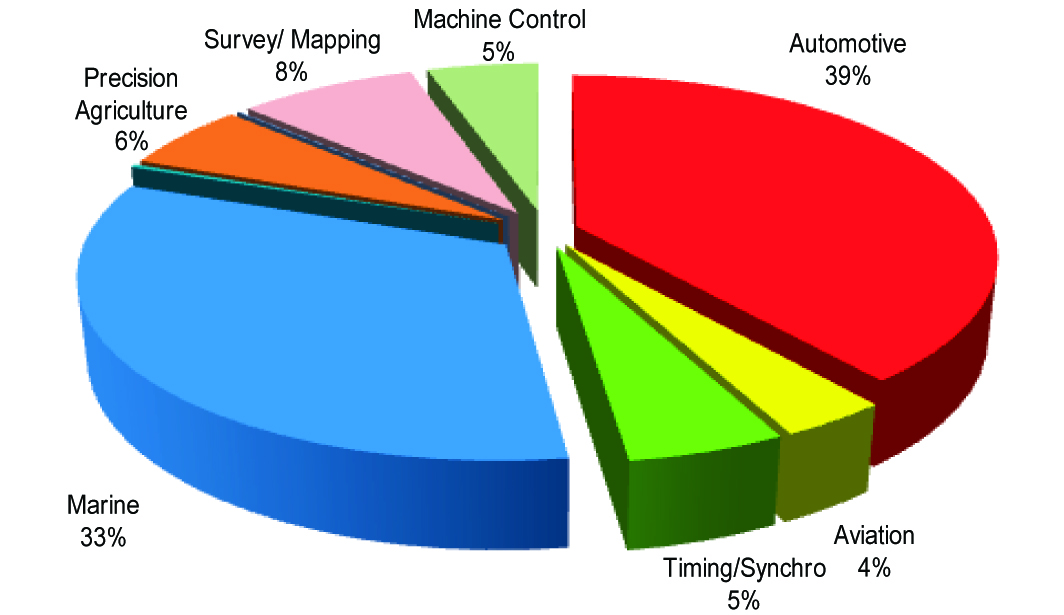
    Road leads the way: The report shows that the road transport sector is still the leading GNSS segment, accounting for more than 50% of market share. The penetration of receivers in road vehicles, today at 30%, will exceed 80% over the next decade. However, after a period of fast growth, market saturation and competition in the form of ‘smartphones’, often equipped with free navigation capabilities, have resulted in a slowdown in the car-based navigation market.

    Price erosion has been high, driven by declining costs and strong competition. Vendors are using innovation as a differentiator resulting in ‘converged’ products with both communication and multimedia functionalities. Some Personal Navigation Device (PND) vendors are also tapping into new distribution channels, including car dealerships and smartphone application stores.

    GNSS for road transport: The road transport sector is facing major challenges, such as the demand for increasing safety and for reduced congestion and pollution. These problems are particularly acute in highly populated zones, including big cities and suburban areas. GNSS represents a powerful tool for improving road transport. Not only does it help get drivers where they want to go more quickly and efficiently, but it also promises fairer road-pricing schemes, for example, to automatically charge drivers for the use of road infrastructure.

    GNSS in your hands. Mobile location-based services (LBS) are taking off as progress is being made in different areas. More and more mobile phones now have GNSS capabilities, the result of both increasing consumer and developer awareness and an improvement in navigation services and performance.

    All major mobile phone operating system vendors now provide application programming interfaces (API) with location functions. In 2009, in the UK, France and Germany, 5 out of the 10 best-selling iPhone applications were related to navigation or location-based applications. Also, 30% of Android developers’ contest winners used location capabilities in their applications.

    A promising future for location-based services.
    The integration of accurate hand-held positioning signal receivers, within mobile telephones, personal digital assistants (PDAs), mp3 players, portable computers, even digital cameras and video devices, brings GNSS services directly to individuals, making possible a fundamental transformation of the way we work and play. The penetration of GNSS in mobile phones is therefore expected to increase very quickly, from some 20% today to above 50% within the next five years.

    The GSA says Galileo in the future and EGNOS today open up new and exciting prospects for economic growth, benefiting citizens, businesses and governments throughout the EU and beyond.

    Just the beginning. The GSA underlines that the GNSS Market Monitoring process is ongoing and future reports are planned to update information presented in this first report and to cover other sectors. The Agency welcomes stakeholder contributions.

    The 2010 GSA Market Monitoring Report can be downloaded free.


  • Global Trek Xploration, Deeas Resources Enter Merger

    Global Trek Xploration, a provider of embedded miniaturized GPS technologies, has completed a share exchange transaction merger with Deeas Resources Inc.

    In conjunction with the transaction, the combined public entity is operating as GTX Corp. Global Trek Xploration is now wholly owned by GTX Corp, a publicly-held company, with shares quoted on the Over-The-Counter Bulletin Board (OTCBB : GTXO.OB). Patrick Bertagna, founder, current CEO, chairman of the board, and president of Global Trek Xploration, assumed those same duties for GTX Corp. while Jeffrey Sharpe, CEO and president of Deeas Resources Inc., joined GTX Corp’s board.

    “The next logical step was for us to become a publicly traded company,” Bertagna said. “The influx of new capital gives us the ability to launch our unique, miniaturized GPS technologies on to the global stage. We look forward to continuing the momentum we have achieved and sharing our successes with our shareholders.”

    Concurrent with the share exchange, GTX Corp. also completed an equity financing through a private placement of its common stock and stock purchase warrants for an aggregate amount of $8 million. The proceeds from the first tranche of financing will support the continued development of its miniaturized GPS real-time tracking technology and the licensing of its gpVector technology to branded consumer product partners.

  • Another GPS Chip Merger: NXP to Acquire GloNav

    European chip maker NXP Semiconductors plans to acquire U.S.-based fabless GPS chip maker GloNav Inc., the companies announced today.

    NXP will purchase the company for $85 million in cash plus up to $25 million more, contingent upon GloNav reaching certain revenue and product development milestones over the next two years. The transaction will give NXP immediate access to GloNav’s GPS products and technology, including its single-chip and 90nm design capability, the company said. It expects the deal to close in Q1 2008.

    “This is the second major acquisition that we have made this year to strengthen our Mobile and Personal Business Unit that quickly adds complementary technologies to our existing portfolio and meets our customers’ demands for innovative products,” said Frans van Houten, NXP CEO. “We are a leader in cellular system solutions. Combining GloNav’s GPS expertise with NXP’s FM Radio, Bluetooth, USB and NFC leadership, enables us to offer a broader connectivity suite to the mobile phone market.

    “We already turned the cell phone into a multimedia wallet,” he continued. “It’s only natural that we also want to use our mobile phones to navigate and to find local goods and services. GPS integration allows us to create these and many more interesting and dynamic features, continuously enriching the cell phone in our pocket.”

    GloNav has approximately 50 employees and contractors at locations in the United States, United Kingdom, Ireland and Taiwan. It will join NXP’s Mobile and Personal Business Unit.

    With the merger pending, GloNav investor Ceva Inc. said that it will divest its ownership stake in the company. European private equity firm Atlantic Bridge Venture created GloNav in 2006 through the divestment of Ceva’s GPS technology and product lines and a merger with California-based RFDomus Inc. Ceva’s ownership in GloNav is 19.9 percent on a fully diluted basis.

    The value of Ceva’s shareholding in GloNav, based on its ownership percentage and the acquisition purchase price, is approximately $17 million, more than four times the recorded value of approximately $4 million for the GloNav investment as accounted in in Ceva’s financial statements. “Today’s announcement that NXP Semiconductors is to acquire GloNav is great news for Ceva and in line with the company’s strategy to focus on its strength as a leading silicon intellectual property SIP provider for DSP cores, multimedia, Bluetooth and SATA products.” said Gideon Wertheizer, Ceva CEO.

    NXP’s acquisition of GloNav caps a busy year of high-profile acquisitions in the GPS sector of the semiconductor industry. A week ago wireless chip and chipset provider Atheros Communications Inc. announced plans to acquire GPS tech supplier u-Nav Microelectronics in a $54 million deal. Prior to that, SiRF Technology acquired Centrality Communications while Broadcom acquired Global Locate.

  • TomTom-Tele Atlas Merger Falls Under Scrutiny

    The European Commission (EC) is taking a closer look at TomTom’s planned acquisition of TeleAtlas; it looks as if it might have a tough European road to hoe.  The EC only initiates a second review in about 3 percent of the mergers it reviews, so it’s a bit of an extraordinary step. The probe will examine whether the deal would push up the price of digital maps for rival portable navigation device makers or limit their access to these maps, the EC said. It set an April 17 deadline for the probe to end.

    TomTom and Tele Atlas said in a joint statement they expect to have a clearer idea about whether the deal can go through by early next year. TomTom extended its offer for Tele Atlas shares until March 31, assuming it would know the outcome of the probe by then.

  • Hexagon Closes on NovAtel Merger Deal

    NovAtel Inc. announced today that Hexagon Canada Acquisition Inc. has successfully taken up all of the shares tendered and not validly withdrawn pursuant to its tender offer for all the outstanding common shares of NovAtel, at an offer price of U.S. $50 in cash per share.

    The tender offer and withdrawal rights expired at 5:00 p.m., New York time, on November 27 2007. According to the depositary for the offer, a total of 8,647,240 common shares of NovAtel were tendered and not validly withdrawn prior to the expiration of the offer (including 306,716 shares delivered pursuant to the guaranteed delivery procedures). Shareholders who validly tendered prior to the expiration of the offer and whose shares were not validly withdrawn will promptly receive the offer price of US $50 in cash per share.

    As a result of the purchase of the common shares of NovAtel in the tender offer, Hexagon, through Hexagon Canada Acquisitions Inc., now owns approximately 93.3% of the outstanding common shares of NovAtel, including shares owned by Hexagon or any of its affiliates prior to the offer.

    Hexagon intends to acquire the remaining outstanding common shares of NovAtel not previously tendered by means of a compulsory acquisition in accordance with Canadian law, on the same terms as the common shares acquired under the tender offer. After the consummation of the compulsory acquisition, Hexagon intends to cause NovAtel’s common shares to cease to be traded on the Nasdaq Global Select Market.

    Following the completion of the compulsory acquisition, NovAtel will become a wholly owned subsidiary of Hexagon but will conduct its business relations with other subsidiaries of Hexagon on an arms length basis.

    “Hexagon is excited for NovAtel to be joining the Hexagon group. We expect great things from NovAtel as it continues to operate independently and grow as a pure play supplier in the market for high precision Global Navigation Satellite System technology solutions to OEMs,” said Ola Rollen, CEO and president of Hexagon AB.

  • Navteq Schedules Stockholder Vote on Nokia Merger

    Navteq Corp. said Monday that it has scheduled a special meeting of stockholders next month to consider approval of the previously announced merger agreement between the company and Nokia.

    Finnish mobile phone maker Nokia and digital map supplier Navteq first announced on October 1 that they had reached a definitive merger agreement to the tune of $8.1 billion (€5.7 billion). In the meantime, PND rivals Garmin and TomTom became involved in a bidding war over Tele Atlas, a Navteq competitor.

    Navteq stockholders of record at the close of business on November 13, 2007, are entitled to notice of the special meeting and to vote on the adoption of the merger agreement, according to the company. The special meeting will be held on December 12 in Chicago. Proxy statements and the accompanying proxy card were mailed to Navteq stockholders earlier this month, the company said.

    Completion of the merger is subject to the adoption of the merger agreement by Navteq stockholders at the special meeting and the satisfaction of the other closing conditions set forth in the merger agreement. Navteq currently expects to complete the proposed merger in Q1 of next year.