Tag: GNSS software

  • Iran develops its own software for GNSS corrections & processing

    Iran develops its own software for GNSS corrections & processing

    Researchers at the University of Tehran have developed indigenous software for providing real-time corrections for networks, precise positioning service and online processing of GNSS observations.

    According to various news reports, the software is a modern, secure, and intelligent platform for processing observations from global positioning satellites, including GPS, Galileo, BeiDou and GLONASS.

    Developed as a practical tool for surveyors, engineers, researchers and organizations in the field of satellite data monitoring, the software is intended to replace imported software and reduce dependence on foreign technologies. It has been tested by the network of permanent stations of the National Iranian South Oil Company.

    The system processes observations using static, PPK, PPP and SPP methods, as well as observation quality control and enables the implementation of various positioning methods and real-time monitoring of ionospheric and tropospheric effects.

    It supports all GNSS data types and can connect to reference stations in both client and server modes. It supports all existing and future GNSS signals and can handle at least 50 permanent stations and 200 users simultaneously. It also provides phase ambiguity resolution for baselines up to 70 kilometers.

    Other technical features include providing a relative planimetric accuracy of 2 cm and a height accuracy of 3 cm using the static method with a maximum setup time of 15 minutes, a relative planimetric accuracy of 4 cm and a height accuracy of 5 cm using PPK and NRTK methods, and delivering corrections with a maximum permissible latency of 0.5 seconds.

    The software has the capability to connect to reference stations through serial, TCP, and UDP ports, supports NTRIP protocol versions 1 and 2, displays an online map with a Google Map-like background, allows for viewing the location, status and information of CORS stations and active users, and enables generation of KML outputs.

  • TDK launches STRIDE positioning software for wearables

    TDK launches STRIDE positioning software for wearables

    TDK Corporation has announced Trusted Positioning STRIDE, an embedded pedestrian dead-reckoning (PDR) software solution engineered specifically for wearables — smart watches, head-mounted devices, glasses and compact sensors. STRIDE provides reliable positioning without the power and hardware demands traditionally required for GNSS-based tracking.

    STRIDE’s low-power, sensor-agnostic software engine fuses inertial data with GNSS and opportunistic wireless signals, delivering continuous location tracking both indoors and outdoors.

    STRIDE runs as embedded software, giving OEMs freedom to deploy positioning without redesigning hardware or relying on cloud connectivity, according to the company. STRIDE processes sensor data in real time, ensures low latency, and can be configured for on-device, companion-device, or cloud-assisted architectures. This flexibility helps manufacturers balance performance, power and form-factor constraints based on their device strategies.

    Main features and benefits

    • Low-power on-device mode: Enables continuous PDR in platforms constrained by power, memory or thermal limits.
    • Geofencing mode: Allows location-based alerts and boundaries for children’s wearables, personnel safety, or activity zones.
    • Tethering of sensors: Seamlessly uses GNSS and sensors from a companion phone, reducing hardware demand on the wearable.
    • Off-device processing: Supports computation on a smartphone or in the cloud for advanced analytics or battery saving.
    • GNSS duty-cycling: Dramatically extends battery life by activating GNSS only when necessary.
    • Flexible mounting support: Works across watches, smart glasses, helmets, chest-mounted devices and more.
    • Embedded and real-time: Runs directly on the device with low latency — no dedicated infrastructure, no specialized hardware
    • Hardware-independent and sensor-agnostic: Integrates easily with a broad range of IMUs and GNSS receivers.

    STRIDE is available immediately for trial evaluation, OEM integration, or companion-device implementations.

  • User-friendly GNSS software meets high-precision mobile mapping for modern surveying

    User-friendly GNSS software meets high-precision mobile mapping for modern surveying

    1. Dat Collection Software
    Intuitive workflows require minimal training

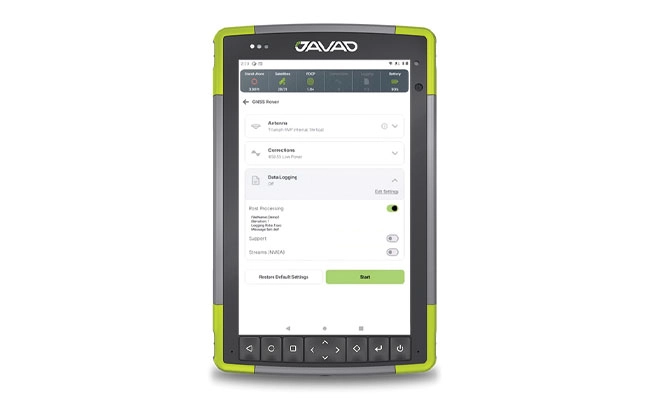
    JAVAD Data Collector (JDC) is designed to run seamlessly on any Android device and interface seamlessly with JAVAD GNSS smart antennas. JDC features simple, intuitive workflows that require minimal training, making it accessible for users of all skill levels. The software includes a Signal Bar for a quick view of receiver status, ensuring users can easily monitor their equipment’s performance. Its easy navigation allows users to move through the software efficiently. It is designed to streamline operations of customers ranging from individual surveyors to large surveying firms, making it easier to deploy and manage receivers across teams of any size with minimal training. JDC is available for download through the company website. JAVAD GNSS, javad.com

    2. Mobile Mapping System
    Lidar collects 2 million points per second

    Photo: CHC NAVIGATION
    Photo: CHC NAVIGATION

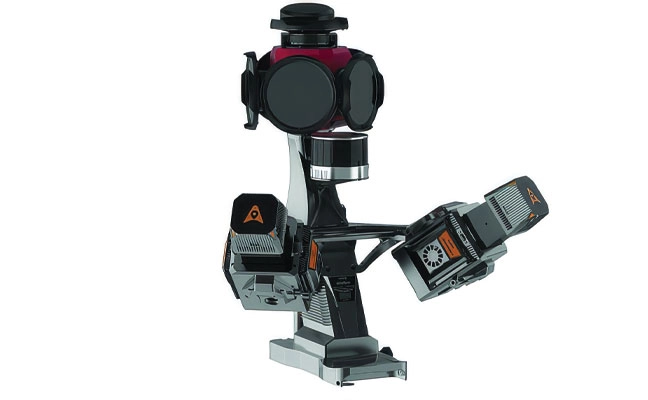
    The AU20 MMS is a vehicle-mounted mobile mapping system designed for accurate and efficient collection of 3D spatial data. It combines high-performance lidar technology, versatile sensor support and intelligent data processing to provide a practical and flexible solution for professionals in road surveying, asset management and infrastructure documentation. Its lidar system uses fourth-generation real-time waveform processing to achieve a scan rate of 2 million points per second and 200 revolutions per second, producing point cloud data with 5 mm accuracy and 3 mm precision. This level of detail allows for the identification of fine surface characteristics and features, supporting comprehensive asset inventories and condition assessments. The system’s long-range, multi-cycle laser technology enables high-density data capture up to 250 m in vehicle-mounted applications. CHC Navigation, CHCNAV.com 

  • NeQuick G code available for download

    NeQuick G code available for download

    Global ionospheric map calculated with NeQuick G for the 18 09 2019 at 07 UT (DOY 261, 2019)I (Image: GSA)
    Global ionospheric map calculated with NeQuick G for the 18 09 2019 at 07 UT (DOY 261, 2019). (Image: GSA)

    News from the European GNSS Agency (GSA)

    A version of the NeQuick G algorithm using a new coding approach is now available for download on the GSC website. This version is the result of intensive recoding by engineers at the EU’s Joint Research Centre.

    GNSS signals traveling through the ionosphere can be significantly delayed by the electrical charges in this atmospheric layer before reaching the users’ terminal. To compensate for this delay in the signal, Galileo receivers integrate a dynamic model of the ionosphere composition known as the NeQuick G model.

    Receiver manufacturers will now be able to benefit from a version of the NeQuick G correction algorithm that implements a new coding approach.

    Rigorous testing

    The JRC concluded its work recently after successful rigorous testing in the framework of the gLAB tool (GNSS software suite from the Universitat Politecnica de Catalunya). This version of the code has been designed to be highly modular, rendering it more legible for a potential programmer with no specific knowledge about signal propagation in the ionosphere. A library has been also developed to enable its quick integration into existing applications.

    This software will be released as free and open source software under the terms of the European Union Public Licence (EUPL), version 1.2.

    The open-source code is now ready to be implemented on single-frequency platforms and can be used on a global scale without limitation under the EUPL. This freedom should contribute to a wider adoption of the NeQuick G model at user level.

    This version of the NeQuick G code is available for download on the GSC website. Users can register here,  and then download the software here.

  • Trimble RTX Auto enables precision positioning for vehicles

    After 2020, Super Cruise will will be available on all General Motors brands (Photo: GM)
    After 2020, Super Cruise will will be available on all General Motors brands (Photo: GM)

    Trimble has announced the availability of Trimble RTX Auto, a GNSS software library written for use in safety critical automotive applications.

    The RTX Auto library can be integrated with any GNSS device and enables the decoding of Trimble’s RTX correction stream for centimeter-level absolute positioning accuracy, the company said.

    RTX Auto works with other on-vehicle sensors to deliver a positioning solution that satisfies advanced driver assistance systems (ADAS) and autonomous driving requirements.

    RTX Auto is both Automotive Safety Integrity Level (ASIL) and Automotive Software Process Improvement and Capability Determination (ASPICE) certified. These certifications validate that Trimble RTX Auto meets functional safety requirements for ADAS and autonomous applications in the auto industry.

    “For over 35 years, Trimble has been at the forefront of positioning innovation, accelerating productivity for our users,” said Patricia Boothe, vice president of Trimble’s Advanced Positioning Division. “RTX Auto takes our technology leadership into functional safety applications and allows the automotive industry to leverage Trimble’s leading RTX correction technology. Trimble RTX technology is helping to safely accelerate vehicle autonomy, transforming how the world drives.”

    While other correction service providers are validating their ADAS positioning products and services in test environments only, Trimble is on the road today providing RTX-based absolute positioning within General Motors’ Super Cruise, a hands-free driving system for the freeway.

  • Nestwave demos low-power GPS for IoT at Mobile World Congress

    Nestwave demos low-power GPS for IoT at Mobile World Congress

    AIworx machine learning and IoT technologies leverage digital twins’ analytics visibility for infrastructure asset performance. (Image: iStock.com/metamorworks via Bentley Systems)
    Image: iStock.com/metamorworks via Bentley Systems

    Nestwave has developed an ultra-low power, advanced GNSS solution for use in internet of things (IoT) applications.

    Nestwave, a Paris-based startup, is demonstrating its new low-power, high-accuracy GPS IP at Mobile World Congress, being held Feb. 25-28 in Barcelona, Spain.

    The software-based GNSS solution allows modem customers to add accurate position-based services to their modem platforms.

    When integrated with an IoT modem such as NB-IoT, Cat M1, LoRa or Sigfox, the solution offers low-cost geolocation for emerging applications such as asset tracking, smart factories and smart cities, without the need for an external GNSS chip.

    “After several years of development and based on a number of key signal processing breakthroughs, we believe Nestwave is well-positioned to provide a best-in-class solution for low-power IoT applications where position awareness is key,” said Rabih Chrabieh, Nestwave CEO. “We are excited to demonstrate our GPS solution, in collaboration with Cadence by leveraging their Tensilica Fusion F1 DSP platform at MWC this year.”

    “The Fusion F1 DSP is gaining traction with customers as a platform for low-cost, power-sensitive IoT communications standards like NB-IoT,” said Gerard Andrews, director of marketing for Tensilica products at Cadence.

    The Cadence Tensilica Fusion F1 DSP is designed for low-cost IoT applications requiring a single processor core that is proficient at both DSP and control-code workloads.

    Developed on a highly configurable architecture, the Fusion F1 DSP is specifically designed to excel at “always-on” processing, including wake-on-voice and sensor fusion applications.

    Additionally, the Fusion F1 DSP instruction-set architecture is very efficient at running narrowband wireless communications standards like BLE, Thread, Zigbee, 802.11ah, NB-IoT and GNSS.

    Visit the Nestwave/Cadence demo at the Cadence booth at Fira Gran Via, hall 6, stand 6L34.

  • Lighthouse front-end processes 4 GNSS frequencies simultaneously

    Lighthouse front-end processes 4 GNSS frequencies simultaneously

    Lighthouse Technology and Consulting Co. Ltd. has developed of a series of front-end processors for GNSS software receivers.

    The Hibiki processors can take input from up to four frequency GNSS signals simultaneously.

    The Hibiki front-end can process up to four GNSS signals for software receivers. (Image: Lighthouse)

    The Japanese Quasi-Zenith Satellite System (QZSS) broadcasts GNSS signals in four frequency bands: L1, L2, L5 and L6. Similarly, GPS and GLONASS broadcast in three bands, and the European Galileo and Chinese BeiDou systems broadcast in four bands.

    However, many conventional front-ends process only two bands at the same time, and cannot be used for highly specialized applications such as processing multiple signals with different frequencies at the same time.

    The Hibiki front-end processor was designed to answer to this GNSS technology demand and is able to process up to four frequency bands simultaneously, the company said.

    Hibiki has a high data transfer rate performance using USB 3.0, stably transmitting signal data to the host computer up to 50 million samples per second. This high sampling frequency is much greater than conventional front-end processors, improving L5 signal-receiving performance and reducing multipath.

    Hibiki is available starting in April.

    Chart: Lighthouse
    Chart: Lighthouse


  • CNES and Geoflex sign agreement on satellite positioning

    French Space Agency CNES has signed a cooperation agreement with the company Geoflex, granting it the right to spin off software developed by CNES that employs satellite precise point positioning (PPP) technology.

    Under the agreement, CNES is granting Geoflex a license to use its patented technologies in this field with a view to offering a global commercial operational service. This partnership ties in with the agency’s strategy of spinning off its research and development results.

    The agreement was signed June 28 at the Toulouse Space Show by Lionel Suchet, CNES’s director of innovation, applications and science, and Romain Legros, chairman of Geoflex.

    The Geoflex team was able to draw on more than 10 years’ experience in GNSS precise positioning when they founded their start-up to pursue this project. Through this cooperation agreement with CNES, Geoflex is set to benefit from significant opportunities worldwide in real-time precise positioning, navigation and timing, serving a broad customer base employing applications such as topographic mapping, construction and civil engineering, agriculture, shipping, rail, driverless vehicles and unmanned aerial systems.

    “Today’s space technologies will drive revolutionary changes in usage in the future,” Suchet said after signing the agreement. “Through their commitment to developing a global GNSS precise positioning service, CNES and Geoflex are showing that France has a key role to play in innovating and in growing our future economy. The people at this start-up are looking to shake up the status quo, so it was natural that CNES should support them.”

  • New name, new version for GAPS software

    New name, new version for GAPS software

    GAPS v6.0.0 is now rebranded as the GNSS Analysis and Positioning Software.

    GAPS software — hosted by the University of New Brunswick, Canada — provides users with accurate satellite positioning using a single GNSS receiver both in static and kinematic mode. Through the use of precise orbit and clock products provided by sources such as the International GNSS Service (IGS) and Natural Resources Canada (NRCan), it is possible to achieve centimeter-level positioning in static mode and decimeter-level positioning in kinematic mode given a sufficient convergence period.

    The newest version provides users with the ability to process various combinations of GPS, Galileo and BeiDou observables as well as several other new processing features for researchers and surveyors.

    Users are invited to submit feedback via email to [email protected].

    GAPS-derived position fixes for a test drive in Fredericton. (Image: UNB)
    GAPS-derived position fixes for a test drive in Fredericton. (Image: UNB)

  • Advanced Navigation releases GNSS/INS post-processing software


    Advanced Navigation has released its GNSS/INS post processing software Kinematica.

    Kinematica is designed to be an easy-to-use GNSS/INS post-processing software that allows users to process raw GNSS and inertial data after collection and achieve higher accuracy position, velocity and orientation than is possible in real time.

    Kinematica has been released as free software with a time lock to Aug. 1, 2016.

    The software supports kinematic GNSS positioning, which provides a 200x increase in position accuracy over standard GNSS with 8-mm position accuracy. Dual antenna GNSS heading processing is also supported.

    Kinematica processes data in forward and reverse six times, which allows it to fill any satellite outages and ignore errors that would normally affect a real-time solution. Both loosely and tightly coupled GNSS/INS processing is supported and the software automatically switches between each mode depending upon the environment.

    Kinematica supports all of Advanced Navigation’s GNSS/INS products. Support for a wide range of third-party systems is scheduled for the next update in July.

    Kinematica is targeted at surveying, scanning and aerial photography applications that need to squeeze the maximum performance out of their systems.

  • Leica Geosystems Introduces Version 4.2 of Spider Software Suite for GNSS

    Leica Geosystems has released version 4.2 of its Leica Spider software suite for GNSS RTK networks and reference stations. Leica Spider software is an integrated suite of programs for GNSS networks, consisting of Leica GNSS Spider, Leica SpiderWeb and Leica SpiderQC. With its scalability and modularity, it can be tailored to suit various GNSS surveying, machine control, GIS, seismic and structural monitoring applications, Leica Geosystems said.

    One of the major enhancements is the added support for the Leica GR25 reference server. The newest member of Leica Geosystems’ GNSS Spider family is designed for numerous permanent and semi-permanent GNSS network installations and monitoring applications, which include RTK and static networks, single base station, field campaigns, structural monitoring, atmospheric and seismic studies and offshore positioning.

    “The suite of Leica Spider software programs now perfectly complements this new device for use in RTK networks with comprehensive remote control and advanced data quality analysis,” said Frank Pache, senior product manager at Leica Geosystems.

    Leica Geosystems has enhanced the SpiderNET processing strategies and algorithms to best cope with the current significantly increasing solar activity,” Pache said. “Within the 11-year cycle of solar activity we are currently approaching, the next sunspot maximum is expected in early 2013. During these times, reliable fixing of ambiguities becomes more difficult due to the increasing impact of the ionosphere on the signal propagation. This is particularly relevant to GNSS networks that typically have large station separations of up to 70 km. Therefore, an optimum handling of the ionosphere effects is required. With this new version of GNSS Spider, we are now minimizing the impact of the ionosphere disturbance to the data processing and optimizing the quality, availability and reliability of network correction information provided to the rover.”

    In addition, the updated Leica SpiderQC features an improved version of the Leica Geosystems patented Network Online Visualisation of Accuracy (NOVA).  “This unique feature allows visualization of the spatial and temporal quality of single base and network RTK positioning across a customer’s network.  Real time maps show the distribution of residual ionosphere and troposphere/orbit error, enabling our customers and their clients to monitor the network status and identify problem areas in the network, or get an indication of expected field performance,” Pache said.