Tag: Greg Turetzky

  • Expert Advice: Little Tigers versus Wolves

    Expert Advice: Little Tigers versus Wolves

    Greg Turetzky
    Greg Turetzky

    By Greg Turetzky, Intel

    I recently attended the Fourth China Satellite Navigation Conference (CSNC, held May 15–17 in Wuhan, China), as an invited speaker and panelist. I had attended the third CSNC last year in Guangzho, and as expected this year’s was a little bigger and a little better. The Chinese GNSS industry is growing quickly, as evidenced by the more than 2000 attendees with as many as 10 simultaneous sessions at some times, with more than 200 presentations over three days, and nearly 150 exhibitors on the show floor. The conference is mainly attended by Chinese, but they are working hard to attract an international audience by providing simultaneous translation of all presentations, and dual-screen projection for slides in English and Chinese if the author chooses.

    I couldn’t possibly see everything, so I chose to spend most of my time in a series of sessions on industrial policy, regulations, standards, and intellectual property. I thought those sessions would provide the most unique information this conference had to offer. I expected to hear a lot of standard or official position statements without much audience discussion, but I was pleasantly surprised by the level of information from personal experience that the speakers offered and the amount of lively debate that often followed the presentations. The simultaneous translation was essential and not only allowed me to follow but created the opportunity for multi-language Q&A which allowed more complex questions to be asked.

    I was particularly interested in understanding what changes were going to occur since the full release of the BeiDou Interface Controld Document (ICD) in December. One thing I noticed right away is that the term Compass has pretty much gone away. The official name, and what everyone used in their presentation, is BDS. I am not quite sure I follow the methodology, but it’s an abbreviation for the BeiDou Satellite System. I would certainly recommend to anyone meeting with Chinese business associates that you appear very up to date by using BDS instead of Compass in all your presentations, oral, written or PowerPoint.

    The changing of the official name is just the first ripple in what I expect will be a wave of changes in the BDS industry (see, I learn fast). One of the most interesting talks was given by Hua Xu, whose affiliation was given in the English program as “BDS specific policies and regulations expert team, ex-director of the policy and regulations Division of Development and Reform Commission.” His talk was entitled “Thoughts of perfecting China’s BDS Industry System Construction.” He related several interesting anecdotes about the history of the satellite program, going back many years, all the way to the Cultural Revolution of the 1970s. As an example of how different the Chinese setting is for legal issues, he told us that in China, if a car hits a pedestrian, the car driver has to pay damages regardless of fault, because since he is driving the car, and the car damaged the pedestrian, he must accept responsibility. Mr. Xu spent more time talking about how China’s GNSS industry must grow in terms of industrial capability, intellectual property, and mass production, and how the government is encouraging that growth.

    To date, that growth has been very rapid, as embodied by a vast array of small companies focusing on domestic Chinese applications of BDS, in particular in survey and mapping and in search and rescue. The growth impetus now moves to the automotive sector, where there is continued investment by both the national government and regional governments to promote the use of BDS in transportation projects involving trucks, taxis, and government vehicles. Some may view this as protectionist, due to the approved vendor lists and subsidies that are provided, but I think it is just a natural effort to create local centers of excellence and jobs in a new technology; this process occurs all over the world. The companies that are in this business are the 150 or so who exhibited on the CSNC show floor, and they are the little tigers of my title.

    Most of the names of the little tigers are not that familiar outside of China: unicore, BDstar, Olinkstar, and many more. They have developed their own GPS+BDS chips and are selling them in moderate quantities of thousands for domestic customers. At CSNC, they presented lots of results that clearly show the advantages of multi-GNSS (GPS+BDS) within today’s BDS regional coverage area. Furthermore, the accuracy and time-to-first-fix performance of their solutions is comparable to the overall market. However, as market needs in China grow from thousands of units to millions of consumer devices, the little tigers are not quite ready yet to support the Lenovos (computers), HTCs (smartphones) and Huaweis (mobile phones and tablets).

    But China wants to see BDS in all those consumer devices, to demonstrate to the world the benefit of BDS; hence the ICD was released in December. The ICD release opened the gate to China’s domestic market that previously was solely hunted by the little tigers. The wolves were waiting at the gate and they have charged in. Broadcomm, CSR, Trimble, NovAtel, and others have already publicly announced BDS support in their mainstream products, in the first few months following the release.

    This was the topic of the discussions in CSNC that were most revealing for a foreigner like me to hear. I was ready to ask the tough question of what the future holds in the consumer market, because I figured no one else would. But much to my surprise, the moderator of the session put up a slide that translated to: “B1 ICD was released while Regional System is officially operational, will affect domestic BDS receiver industry? Pros? Cons?” (See opening photo.)

    The ensuing discussion was quite lively but polite on both sides of the issue. Would subsidies continue for domestic suppliers? How could local companies hope to attract investment to scale up with international competition? Where could Chinese companies carve out intellectual property to protect their inventions? What could that government really do without running afoul of the World Trade Organization?

    Many more questions were raised than answers arrived at, and I think most of the really interesting discussions took place away from the microphones and the simultaneous translation. So I cannot provide them for you.
    Even without answers, the act of discussion was enlightening. I think the fact that these discussions are happening in public forums indicates the growth and transformation of Chinese society. There were finance people, engineers, businessmen, government regulators, all debating a difficult topic.

    I don’t know the answers, but the little tigers know that the wolves are coming. And they are not running in fear. The openness of the internal debate within China indicates that the little tigers are working on a new plan, and no one should assume that the wolves are going to win. The competition in the domestic Chinese market — the very largest market, by far, of any in the world — is going to be very interesting over the next few months and years.


    Greg Turetzky is a principal engineer at Intel responsible for strategic business development in Intel’s Wireless Communication Group focusing on location. He has more than 25 years of experience in the GNSS industry at JHU-APL, Stanford Telecom, Trimble, SiRF, and CSR. With this issue, he joins GPS World’s Editorial Advisory Board.

    The statements, views, and opinions presented in this article are those of the author and are not endorsed by, nor do they necessarily reflect, the opinions of the author’s present and/or former employers or any other organization the author may be associated with.

  • Expert Advice: Setting Standards for Indoor Position

    GregTuretzky-W
    Greg Turetsky

    Communications Security, Reliability, and Interoperability Council (CSRIC) Update

    By Greg Turetsky

    Many of us remember way back in 2001 when the FCC first announced E911 position reporting requirements for cell phones. That was a long time ago in many significant ways. Everyone had 2G phones and anxiously anticipated the arrival of 3G, and with it, data. Most people still had a landline at home, and used their mobile sparingly lest they overrun their monthly minutes. Roaming was very expensive and nearly impossible overseas. Very few phones had GPS, and people only turned it on when needed, as it significantly reduced battery life.

    Now, in 2013, all of the technology has changed, but — not unexpectedly — the regulations have not. This is one of the reasons the U.S. Federal Communications Commission (FCC) created CSRIC.

    The Communications Security, Reliability, and Interoperability Council’s mission is to provide recommendations to the FCC to ensure, among other things, optimal security and reliability of communications systems, including telecommunications, media, and public safety. The current council, CSRIC III, was born on March 19, 2011, and ended on March 18, 2013. Working Group 3 (WG-3), the E911 Location Accuracy group, has looked into both outdoor and indoor location accuracy issues to help the FCC shape new guidelines. I don’t think any of us would argue that given the current patterns of cell phone usage, the ability to provide a location indoors to a public safety answering point (PSAP) is something that is now needed, has significant value to the public, and would seem to lie within our grasp technically.

    Working Group 3 is a fairly large group of experts from a wide variety of backgrounds. The actual list of participants is publicly available; what’s more interesting is the groups that they represent. Three main constituencies constitute the Working Group: the public safety community, the wireless operators, and the technology vendors. Each group has a slightly different goal, but they all worked well together to produce clear, unbiased reports that represent all the different members’ views in a way that lends more credibility to the overall report.

    On March 14, the FCC released two reports created by WG-3: the “Indoor Location Test Bed Report,” and “Leveraging LBS and Emerging Location Technologies for Indoor Wireless E911 Report.” I will not review either document here as they are available publicly, but I will summarize the highlights of the reports from my perspective as a member of the location community and a concerned citizen, and attempt to predict where the process might lead next.

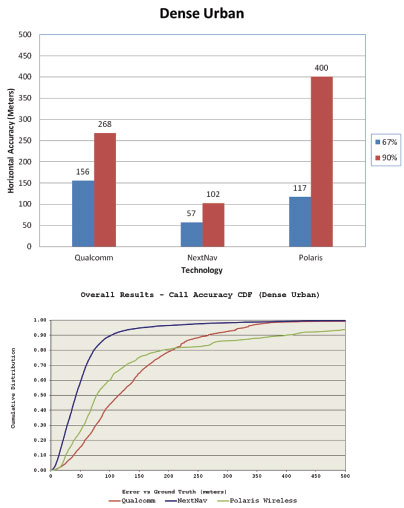
    Figure 1. Indoor accuracy in the dense urban environment.
    Figure 1. Indoor accuracy in the dense urban environment.

    Test Bed Report. In my mind, two key results emerged from the Test Bed Report. The first was very positive: the test bed showed that there are technologies capable of yielding positions indoors, and their performance can be compared analytically. This may seem like a bland statement, but it carries a significant amount of weight with both the public safety community and the FCC. It acknowledges that the technology has evolved sufficiently such that in a test bed setting, we can gather and compare, in an apples-to-apples way, the performance of diverse technologies in terms of yield and accuracy. Similar to the LightSquared reports, this report focuses on ensuring that the data itself is valid. The interpretation of the data is far too politically and economically charged to be agreed on by all parties involved. It is a great accomplishment to concur on a methodology by which testing should be done, and to produce a set of results that can be given to the FCC with the entire council’s approval.

    The second highlight from my perspective was less positive. The test bed originally had seven participants, but in the end only three completed the process. This indicates that there are even more candidate technologies for solving the indoor E911 problem — but for a variety of reasons, they were not ready for CSRIC testing at this juncture. Although having three choices is good, seven (or even more) would be better for the FCC to feel confident in its ability to create a new mandate with sufficient flexibility on implementation. There are clearly many ways to skin this cat technically, but we have to ensure that the test bed methodology allows as many as possible viable alternatives to be compared. There is clearly a gap between those technologies that are commercially available and those that can be used for E911.

    Leveraging LBS. The Leveraging LBS Technology report also reached some interesting conclusions. The concept of leveraging LBS was actually how I became involved in the CSRIC. The underlying question that the FCC asked me to explore was “Why can a smartphone user can get a dot on a map indoors (usually with an uncertainty circle, no less), but no location information shows up on the PSAP screen if he makes an E911 call?”

    As we dug into this problem, it became clear that this was less of a technology problem and more of a business/policy one. Quite a few large companies make money by providing that indoor location for various applications, but there isn’t any real money in E911 — although there are lots of liabilities. Also, many of these solutions are proprietary either to the phone, the operating system, or the application, while an E911 solution would need to be standardized across all of those as well as different carriers.

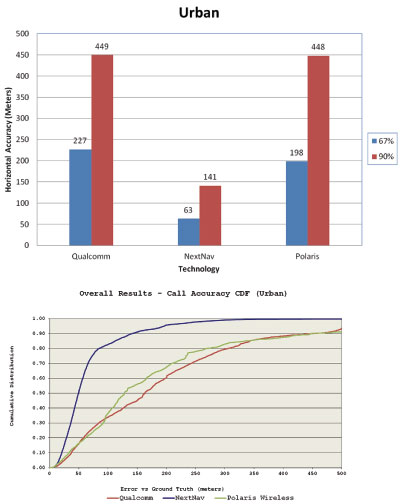
    Figure 2. Indoor accuracy in the urban environment.
    Figure 2. Indoor accuracy in the urban environment.

    Conclusion. The FCC has received two reports with similar conclusions: We have come a long way since 2001, but we might not be there — the indoor E911 promised land —just yet.

    There is still more to come, however. Therefore, many participants and observers hope the work of the current CSRIC will lay the foundation for a rational conversation about indoor E911 right now, and still be around to allow for future improvements. We have recommended that the test bed be maintained so future results can be compared with current ones. At issue is the funding source for the test bed. The FCC has announced the coming of a CSRIC IV, but has not released any further details. It is certainly the hope of WG-3 that the work performed to date to establish and validate the test bed will be available for use by future technologies as they mature.

    Locating emergency callers indoors is a critical capability that we as society must address — not for the callers’ convenience, but for their safety and or public safety generally. The problem has technical, commercial, regulatory, financial, legal, and public safety facets to it, making it a very complex issue.

    I should also note, that although E911 is a U.S. regulation, the problem of indoor location is under scrutiny in nations all over the world. I earnestly hope that all sides can continue working together to find a solution that can be implemented for the benefit of everyone.


    Greg Turetzky is senior director, CTO Office, for CSR. He served on the CSRIC Working Group 3 LBS Subgroup. He will participate in a April 16 GPS World Webinar on this topic. Registration is free.

  • Continuous Indoor Positioning: GNSS, Wi-Fi, and MEMS Dead Reckoning

    By J. Blake Bullock, Mahesh Chowdhary, Dimitri Rubin, Donald Leimer, Greg Turetzky, and Murray Jarvis

    A new chip fuses input from several sensors, using the best combination at any given time to maximize coverage and accuracy while keeping power draw to a minimum. This produces continuous position availability in indoor environments, as demonstrated by performance measurements in real-world test environments.

    Users of GPS receivers in smartphones and many other consumer electronic devices expect these devices to work in all environments, including dense urban canyons, parking garages, and indoors, enabling a wide range of location-based services such as mapping, search, tracking, and navigation. Recent advancements in assisted-GPS (A-GPS) technology have enabled improved positioning indoors, but GPS receivers are still not sensitive enough to determine position everywhere that users go.

    Several consumer products now use GLONASS and assisted-GLONASS (A-GLONASS) measurements to improve coverage and accuracy of GPS receivers. We refer to such combo receivers as GNSS receivers here. GLONASS measurements have similar characteristics to GPS measurements in that they are subject to blockage and multipath. In dense urban canyons, GLONASS measurements help to improve availability and accuracy of a position solution. However,GLONASS provides little performance improvement indoors.

    Various emerging technologies for indoor positioning use installed wireless transmitters as beacons for making measurements for positioning. Existing Wi-Fi access points (APs) can be used in this way to determine position when indoors. Other solutions include the emerging Bluetooth Smart transmitters, GSM, 3G, and other mobile phone transmitters, the NextNav network, and other dedicated beacons for indoor positioning. Each technology has advantages and disadvantages for use as an indoor solution, to be discussed here.

    The SiRFstarV location chip with SiRFusion combines A-GPS and A-GLONASS advances with Wi-Fi positioning and dead reckoning using low-cost micro-electro-mechanical systems (MEMS) sensors. Smartphones, tablets, cameras, fitness products, and other consumer electronics are equipped with an increasing array of MEMS sensors including accelerometers, magnetometers, gyroscopes, and barometers. The SiRFstarV chip acts as a gateway to receive input from all available MEMS sensors so that the output signals can be combined with the GPS, GLONASS, and Wi-Fi measurements that give absolute position. The observations from all these sources are fused together using a Kalman Filter. Smart location management makes use of the best combination of sensors at any given time to maximize coverage and accuracy while keeping power draw to a minimum. This produces continuous position availability in indoor environments.

    Target Performance and Use Cases

    The last 10 years have seen great improvements in GPS positioning indoors, primarily driven by the mobile market and the FCC E911 directive to be able to locate mobile-phone users. Today, it is possible to locate a mobile phone indoors using A-GPS, advanced forward link trilateration (AFLT), or Wi-Fi positioning. Typically it takes several seconds to determine a fix indoors, and the accuracy is not as good as outside. It is also not feasible to get continuous position updates for use in tracking, fitness, or navigation systems.

    Wi-Fi positioning has improved the availability of fixes indoors and also the time to get a fix. However, today AP positioning is based on surveys that have been done using GPS vehicles outside, so the determined positions tend also to be outside, even when the mobile device is indoors.

    To reliably deliver indoor positioning, the positioning system must be able to:
    ◾    Determine position quickly — within a few seconds.
    ◾    Determine position accurately — within 5–10 meters, circular error probable (CEP) 50 percent.
    ◾    Determine position updates at 1 Hz.
    ◾    Preserve battery life.

    Cameras have very different uses than handsets. Typically, a camera is off until the user is ready to take a picture or video. When a picture is taken, theposition can be recorded and used to geotag the image with the location, date, and time. For this use case, the positioning system needs to be able to determine position indoors quickly and with low power, but continuous updates at 1 Hz are not needed.

    Fitness products use location for recording distance traveled, speed, elevation, calorie counting, and showing a track of running or cycling workouts. Users value good accuracy and a fast startup time when they are about to begin a workout. The positioning system needs to be able to determine position continuously, but not necessarily show the position updates in real time.

    Battery life for a typical assest-tracking device is extremely important, as is the ability to locate the asset in any environment. Continuous position updates are not needed. A typical feature of asset-tracking systems is the ability to set a geofence boundary, used for generating alerts. The positioning system needs to determine position periodically and compare with the geofence. If the position is outside the geofence, an alert is sent to the user.

    GNSS Positioning

    Positioning algorithms on the SiRFstarV Quad-GNSS combine range measurements from all-in-view GPS, GLONASS, QZSS, and SBAS satellites. The chip is hardware-ready to enable Galileo and Compass measurements with a future software update. Immunity to interference, cross-correlation, and multipath impairments are provided to achieve very high sensitivity, which is critical for indoor positioning. Nevertheless, the utility of reception sensitivities below –165 dBm has been found to have limited value for all but static cases, due to the very long integration times required to make reliable measurements. Increasing the number of independent range measurements helps improve indoor positioning, and using multiple constellations is a key enabler to provide them.

    The improvement in indoor positioning by using multiple constellations is similar to the improvement in urban canyon positioning, since the impairments are similar.

    One significant difference is that multipath delays for indoor environments are typically much shorter, and conventional mitigation methods cannot be applied without a very wide RF bandwidth. The shorter delays therefore produce lower signal levels due to phase cancellations and pseudorange bias errors, which are recognized as multipath errors and reduced as part of the chip’s measurement processing. While the advantage of augmenting GPS measurements with GLONASS is typically 20 to 40 percent improvement in position accuracy in urban canyon environments, it shrinks to only 7 to 15 percent indoors. Even with GLONASS measurements, the position is frequently shown outside of the building.

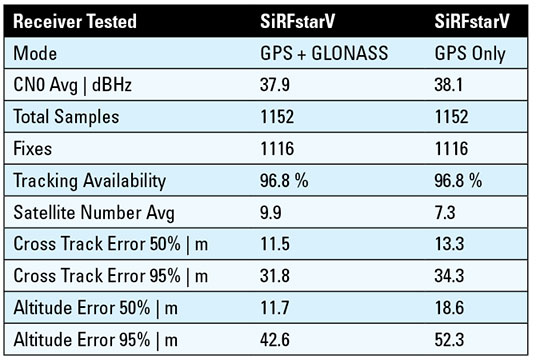
    Figure 1 shows the results of an indoor walk test with a SiRFstarV receiver using GPS and GLONASS. The test was done on multiple floors of a three-story commercial building. Table 1 shows a summary of the performance metrics as determined by stopping at benchmark locations during the test. Fixes are available nearly 97 percent of the time. The addition of GLONASS tracking increased the average number of satellite measurements from 7.3 to 9.9 and improved the horizontal and vertical accuracy by about 7 to 15 percent. The horizontal accuracy is about 11.5 meters, 50 percent CEP. However, more than half the fixes are shown outside of the building.

    Source: J. Blake Bullock, Mahesh Chowdhary, Dimitri Rubin, Donald Leimer, Greg Turetzky, and Murray Jarvis  A
    Table 1. Impact of GLONASS on indoor positioning.

    This test had high availability, but many environments cannot provide GNSS signals with sufficient energy to obtain position fixes. While the use of multiple constellations improves the accuracy and availability of the GNSS fixes, additional position sources are needed to achieve suitable availability and accuracy for continuous indoor positioning.

    MEMS Pedestrian Dead Reckoning

    Pedestrian dead-reckoning (PDR) logic is realized using integration of MEMS sensors with the SiRFstarV GNSS receiver, which has a dedicated I2C port designed to interface with MEMS sensors. A data-acquisition task collects sensor data and performs low-level error checking, timing synchronization, and buffering of the data from various sensors. This data is sent periodically to the process where a sensor data handler prepares it for further processing.

    Acceleration data is processed by the context (or user mode) detection algorithm to determine the dynamic state of the user (or receiver) in order to select appropriate position-determination algorithms and associated motion parameters used by these algorithms. The PDR algorithm is employed when the user mode is classified as walking, fast-walking, jogging, stationary, climbing/descending stairs, elevator, and escalator.

    The generalized navigation equation can be written as

    Source: J. Blake Bullock, Mahesh Chowdhary, Dimitri Rubin, Donald Leimer, Greg Turetzky, and Murray Jarvis  A  (1)

    where vne is ground velocity in navigation frame, Cnb  is direction cosine matrix relating body reference frame to navigation frame, b is specific force, ωnen is turn rate of Earth, ωnen is body rate, and gnl  is local gravity vector expressed in navigation frame. This equation (in navigation frame) relates the ground speed of an object to measured specific force and measured body rate. The generalized navigation equation, when integrated twice, transforms from the acceleration of the platform into position represented in North and East reference frame, results in Equation 2,

    Source: J. Blake Bullock, Mahesh Chowdhary, Dimitri Rubin, Donald Leimer, Greg Turetzky, and Murray Jarvis  A  (2)

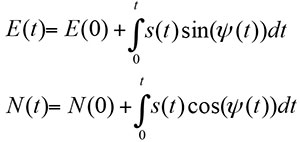
    where, s(t) is displacement and ψ(t) is heading. In the case of pedestrian motion, velocity and heading can be assumed to be constant during the interval when a step is taken. With this assumption, the integral form of Equation 2 can be rewritten as a difference equation with piece-wise linear approximation.

    Source: J. Blake Bullock, Mahesh Chowdhary, Dimitri Rubin, Donald Leimer, Greg Turetzky, and Murray Jarvis  A  (3)

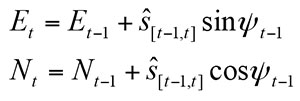
    This equation describes a method of dead reckoning (DR) that is based on step counting rather than integration of acceleration and angular rate. This PDR process consists of three important components: the previously known absolute position of the user at time t-1 (Et-1, Nt-1), the stride length or distance traveled by the user since time t-1 (), and the user’s heading (ψ) since time t-1. The coordinates (Et, Nt) of a new position with respect to a previously known position (Et-1, Nt-1) can be computed as shown in Equation 3. The position initialization of the PDR process can be accomplished using any or a combination of absolute positioning technologies such as GNSS, Wi-Fi, or GSM.

    Performance of PDR algorithms is dependent on obtaining calibrated MEMS inertial sensor data continuously. Calibration of sensors is accomplished through collecting and processing sensor data for user motion of device in Earth’s gravity and magnetic field. Accelerometer and gyroscope calibration logic utilize the knowledge of device stationary condition. Magnetic sensor calibration logic requires that various axes of sensor are exposed to Earth’s magnetic field vector at the user location. With the given time and location estimate, the Earth’s magnetic field parameters are computed using the World Magnetic Model. Normal use of a mobile device would result in rotations in various Euler planes thereby applying Earth’s magnetic field to various axes of magnetic sensor. Earth’s magnetic field parameters are also used to detect occurrences of magnetic disturbances. Magnetic sensor measurements are de-weighted for the PDR process during such magnetic disturbances.

    The essential logic components that affect the performance of PDR positioning system are: calibration of sensors, step detection, determination of walking direction, positioning fusion logic, and orientation of phone while walking. Typical phone users will have the phone in a pocket, in a belt clip, in a purse or bag, in their hands looking at it, or up to their ear in a conversation. The PDR algorithms need to be able to perform robustly in any of these orientations.

    With PDR, an absolute position can be propagated as a user moves on foot. Due to the error growth characteristics of typical MEMS devices used in consumerelectronics, the estimated path deviates from the actual path as a function of distance traveled. The error growth is typically on the order of 10 percent of distance traveled, especially in the presence of magnetic disturbances. This level of error growth makes MEMS PDR unsuitable as the sole positioning solution when indoors. Periodic absolute positioning updates are required to correct the path and to allow additional calibration.

    Wi-Fi Positioning

    Opportunistic positioning using observed Wi-Fi signals is a well established method of absolute positioning in GNSS-denied environments. Off-the-shelf Wi-Fi access point hardware is not well suited to positioning using timing observations, therefore the chip under discussion uses observed signal strengths together with the broadcast unique identifiers (BSSIDs) as the basis for the Wi-Fi positioning sub-system. Signal strength information is by its nature asymmetric. A strong observation of a Wi-Fi AP indicates that one is near it, but it is not safe to infer from a weak observation that you are far away. This is because weak observations may be due to, for example, occlusion, fading, or antenna orientation. This means that the performance of Wi-Fi positioning varies considerably with location and time, especially in areas with many pedestrians.

    There are several limitations to Wi-Fi positioning. The first is that since it is opportunistic, there is no guarantee of performance. Fortunately, AP density is typically highest in the areas where Wi-Fi positioning is most needed, namely, deep indoors and in dense urban areas. Secondly, there is no guarantee that APs will remain in the same locations. APs may be attached to mobile devices, or AP equipment may simply be moved. This leads to a requirement for the database of AP locations to be dynamically monitored and continuously improved. Lastly, the location of the APs is not known a priori, and hence there needs to be some independent means of locating the APs in order for them to be used for positioning. The CSR server implementation uses the other technologies present, namely GNSS and MEMS, to generate this information. This avoids the need to manually survey areas where Wi-Fi positioning coverage is required.

    The chip supports Wi-Fi receive (sniffing) and positioning via scanning of the ISM band to detect any broadcast 802.11b Barker codes on any of the 14 channels. This process takes approximately 100 milliseconds/channel, producing a scan time of 300 milliseconds for the three primary channels, or a scan time of 1.4 seconds for a systematic scan of the entire band.

    The usual configuration is for the SiRFstarV chip to be connected to the CSR Positioning Center (CPC) server via software running on a host processor in the device. On request, the CPC can then provide the device with all the APs known to be in the vicinity of the user. This data is sent as a sequence of spatially contiguous sets of APs in a tiled structure. The benefit of serving tiles to the user, rather than user’s position or only the APs instantaneously detected, is that the client device can subsequently operate independently with only occasional server contact. In fact, since the chip supports on-board storage of the AP tile information, it can also operate for extended periods without waking up the host, a feature useful for low-power geo-fencing and other location functions.

    Another important aspect of the CPC is that is supports crowd-sourced learning of Wi-Fi APs. Client SiRFusion devices submit anonymous sets of Wi-Fi signal strength data and associated BSSIDs, together with contemporaneous GNSS and relative information from the MEMS devices. By collating all the information available in an area across users, the system is able to calculate the most likely locations for Wi-Fi APs and hence generate tiles available to provide to all users. Unlike crowd-sourced systems based on GNSS alone, CSR also uses relative data from MEMS PDR to extend the coverage area of the crowd-sourcing indoors. This produces better Wi-Fi positioning performance indoors.

    Sensor Fusion

    The GNSS, Wi-Fi, and MEMS PDR solutions offer varying levels of accuracy, coverage, and reliability. CSR has developed SiRFusion, a Kalman filter-based fusion engine in the SiRFstarV device, to combine all these location inputs. Sensor fusion is a critical component and does the job of fusing the multiple sources of position information to provide a single best estimate of position and confidence to the user. It takes as input absolute positions from GNSS and Wi-Fi and also any relative information derived from the MEMS PDR sub-system. Figure 2 illustrates the major components of SiRFusion.

    Source: J. Blake Bullock, Mahesh Chowdhary, Dimitri Rubin, Donald Leimer, Greg Turetzky, and Murray Jarvis  A
    Figure 2. Major components of SiRFusion.

    To determine how to weight and smooth the different inputs, it is crucial that the individual input technologies provide reliable estimates of their confidence and correlation. As an example, we mentioned earlier that the quality of Wi-Fi positioning is variable and is best when strong APs are seen. A high quality Wi-Fi position, signified by a high confidence value, will cause the fusion filter to be strongly biased towards this positioning source. When the Wi-Fi position quality subsequently deteriorates, this is reflected in a lower position confidence, and hence the fusion filter down-weights Wi-Fi influence. In turn, this allows dominance of the MEMS PDR input until another sufficiently high-quality absolute position allows the filter to correct. The net effect of this behavior is that the MEMS bridges the position output smoothly between high-quality absolute position fixes and to a first approximation, any low-grade information is ignored. Another benefit is that individual Wi-Fi positions can be jumpy, because on an individual scan there is considerable variation in the audible APs and their signal strengths. Sensor fusion with MEMS PDR helps to smooth this out, providing a continuous trajectory and a more satisfying user experience.

    Another job of the fusion engine is to transition smoothly from indoors where Wi-Fi and MEMS PDR dominate, to outdoors where GNSS dominates. This happens automatically in the fusion filter with the GNSS becoming increasingly dominant outdoors as GNSS confidence improves. Conversely, the Wi-Fi position accuracy will typically decrease outdoors and the dominant technology will therefore gradually dominate the solution. When technologies are not being used they can be switched off or placed in a maintenance mode to reduce unnecessary power consumption.

    Performance Results

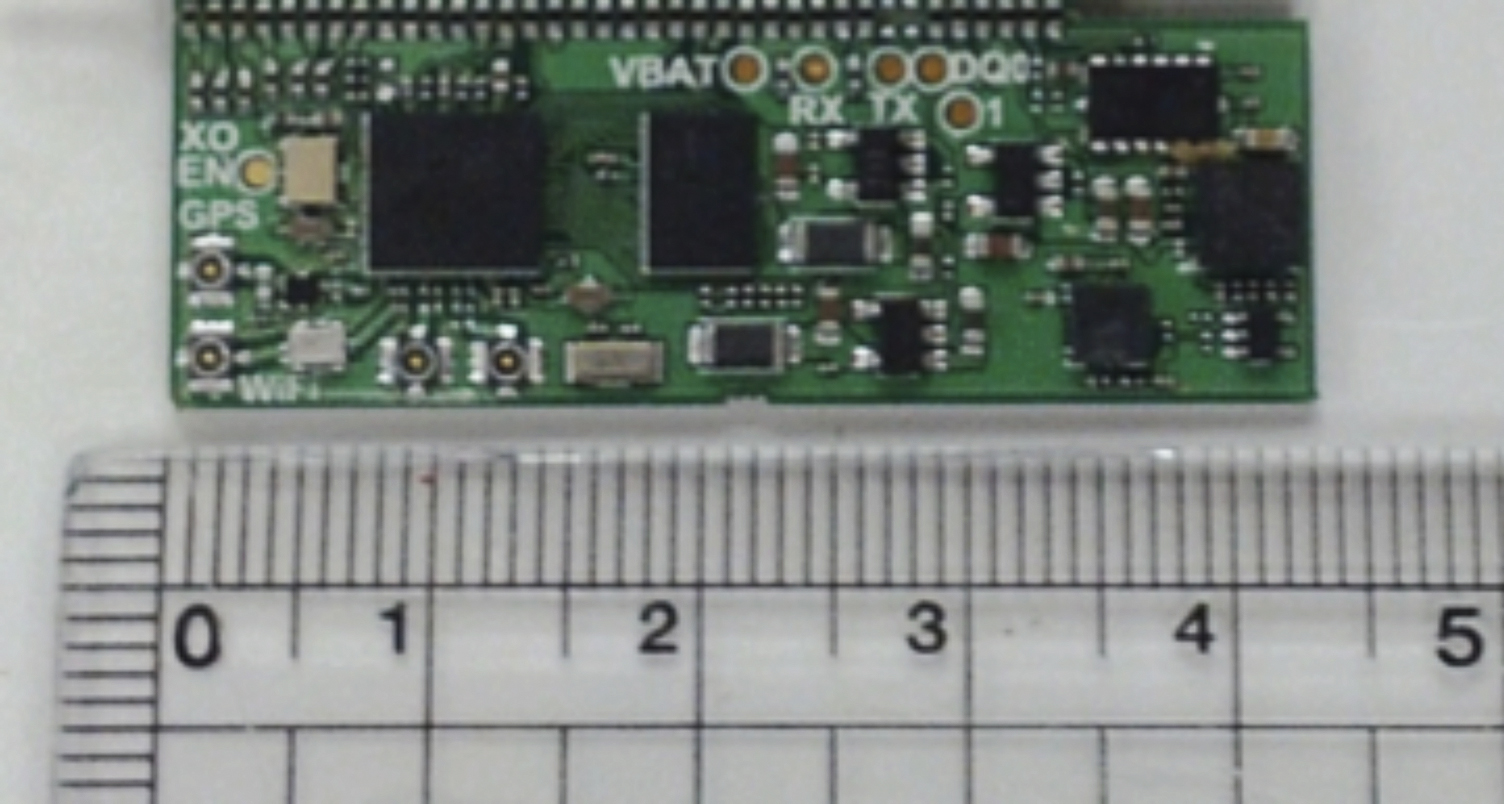
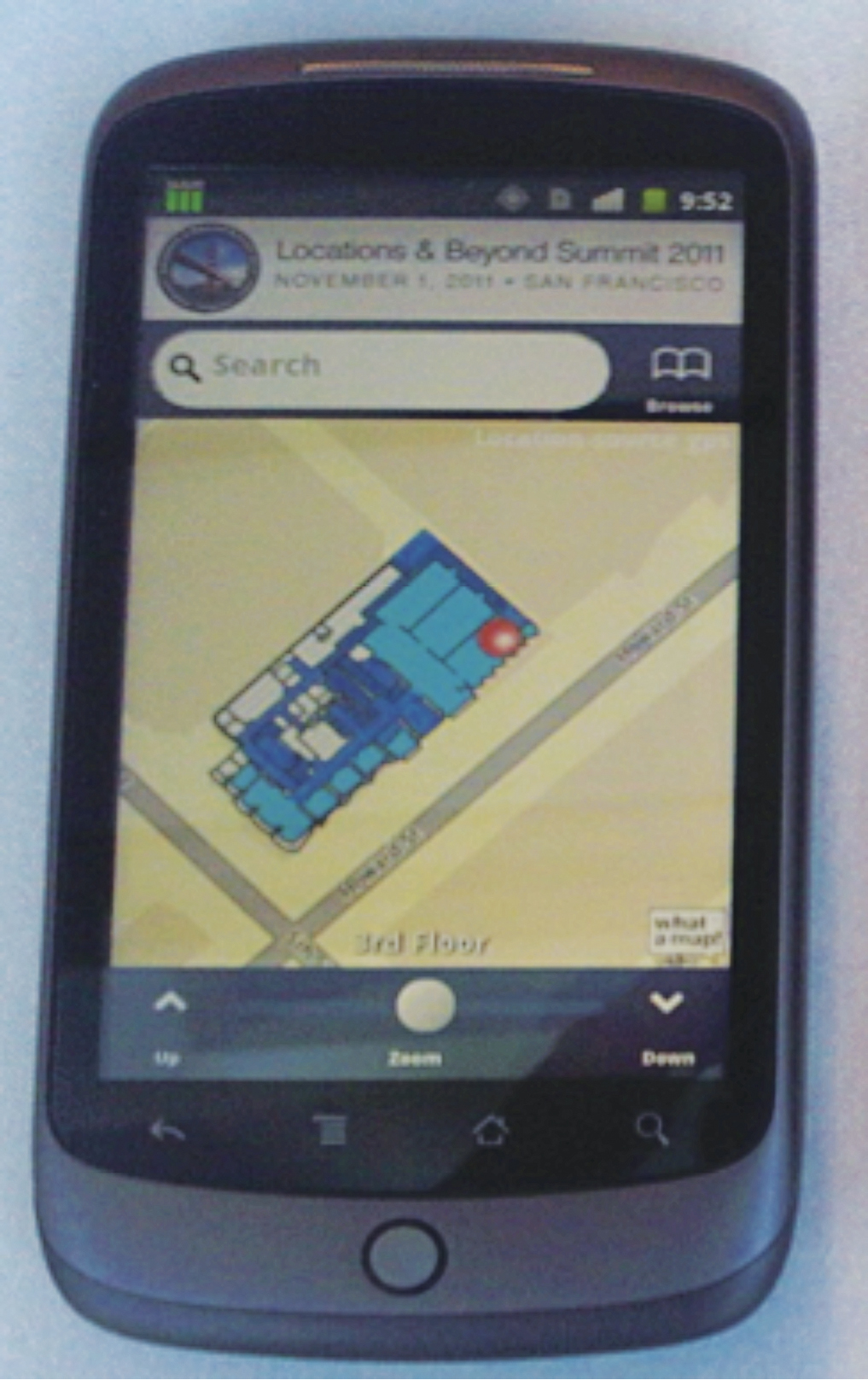
    CSR has developed a demo platform with SiRFstarV and SiRFusion in a modified HTC Google Nexus One handset with Android. Figure 3 shows a modulewith the receiver and MEMS devices; the module is mounted inside the HTC phone shown in Figure 4. The data log includes PDR output, Wi-Fi positioning, GNSS positioning, and the combined sensor-fusion solution.

    Source: J. Blake Bullock, Mahesh Chowdhary, Dimitri Rubin, Donald Leimer, Greg Turetzky, and Murray Jarvis  A
    Figure 3. Module with MEMS devices.
    Source: J. Blake Bullock, Mahesh Chowdhary, Dimitri Rubin, Donald Leimer, Greg Turetzky, and Murray Jarvis  A
    Figure 4. HTC Google Nexus test phone.

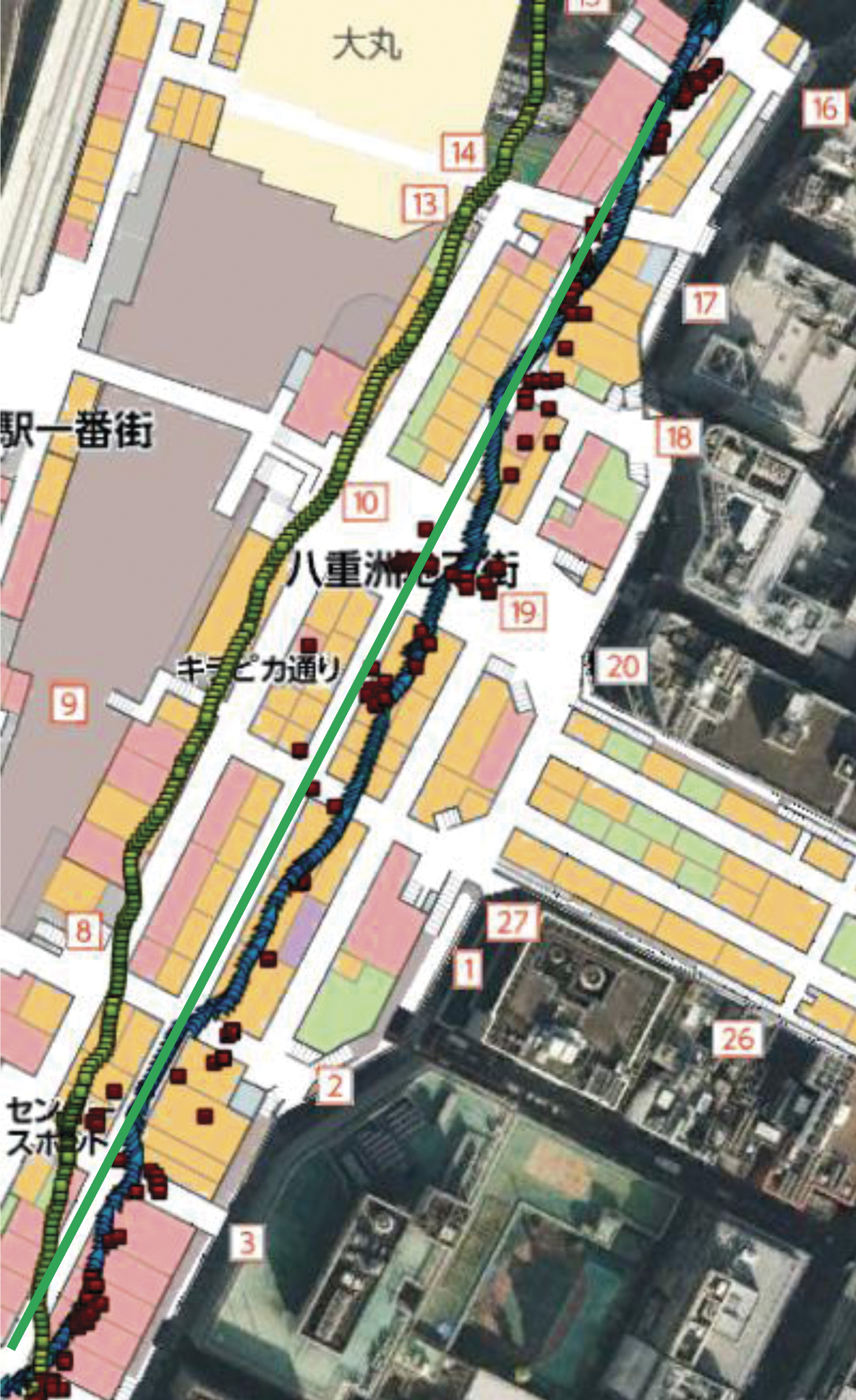
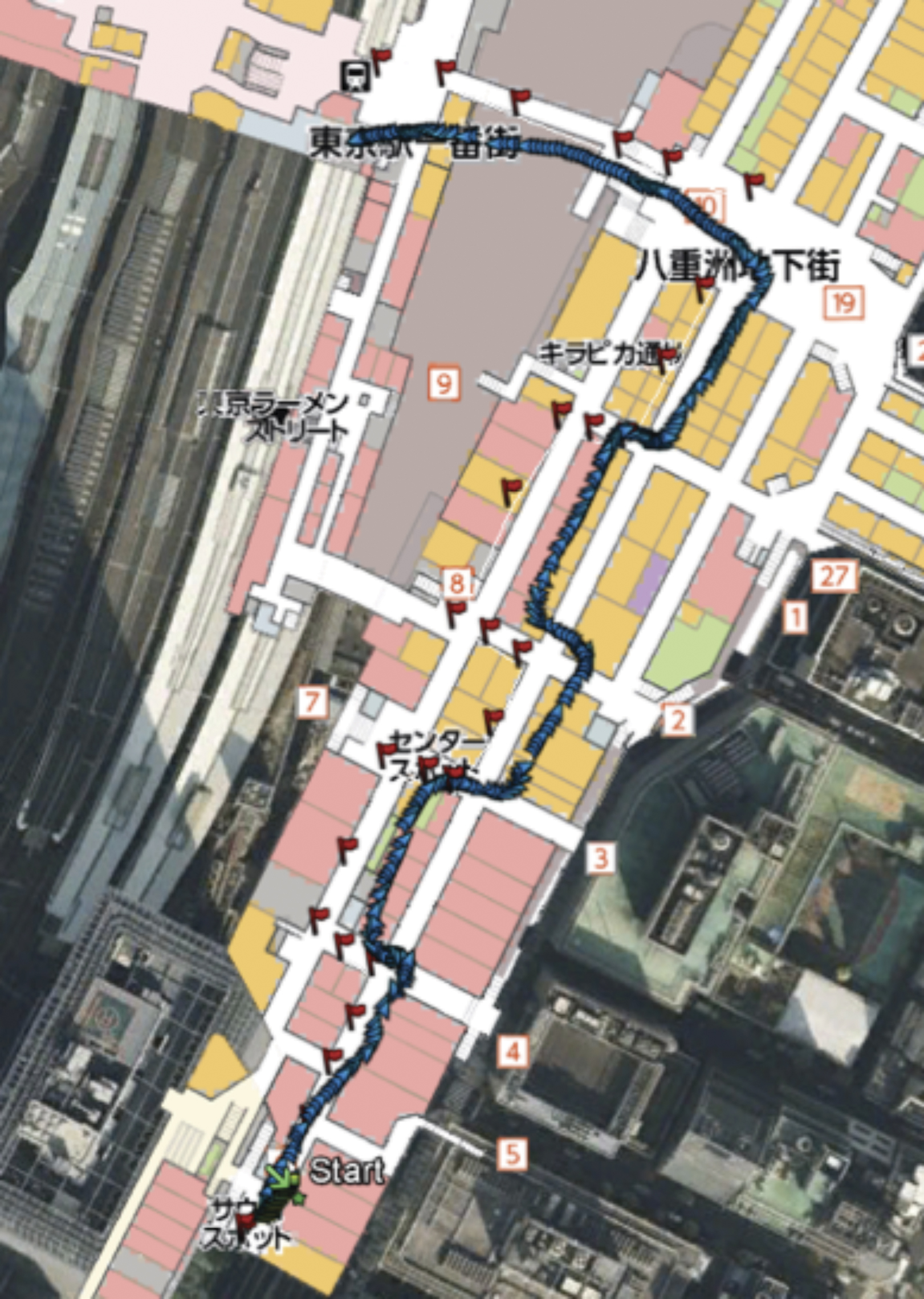
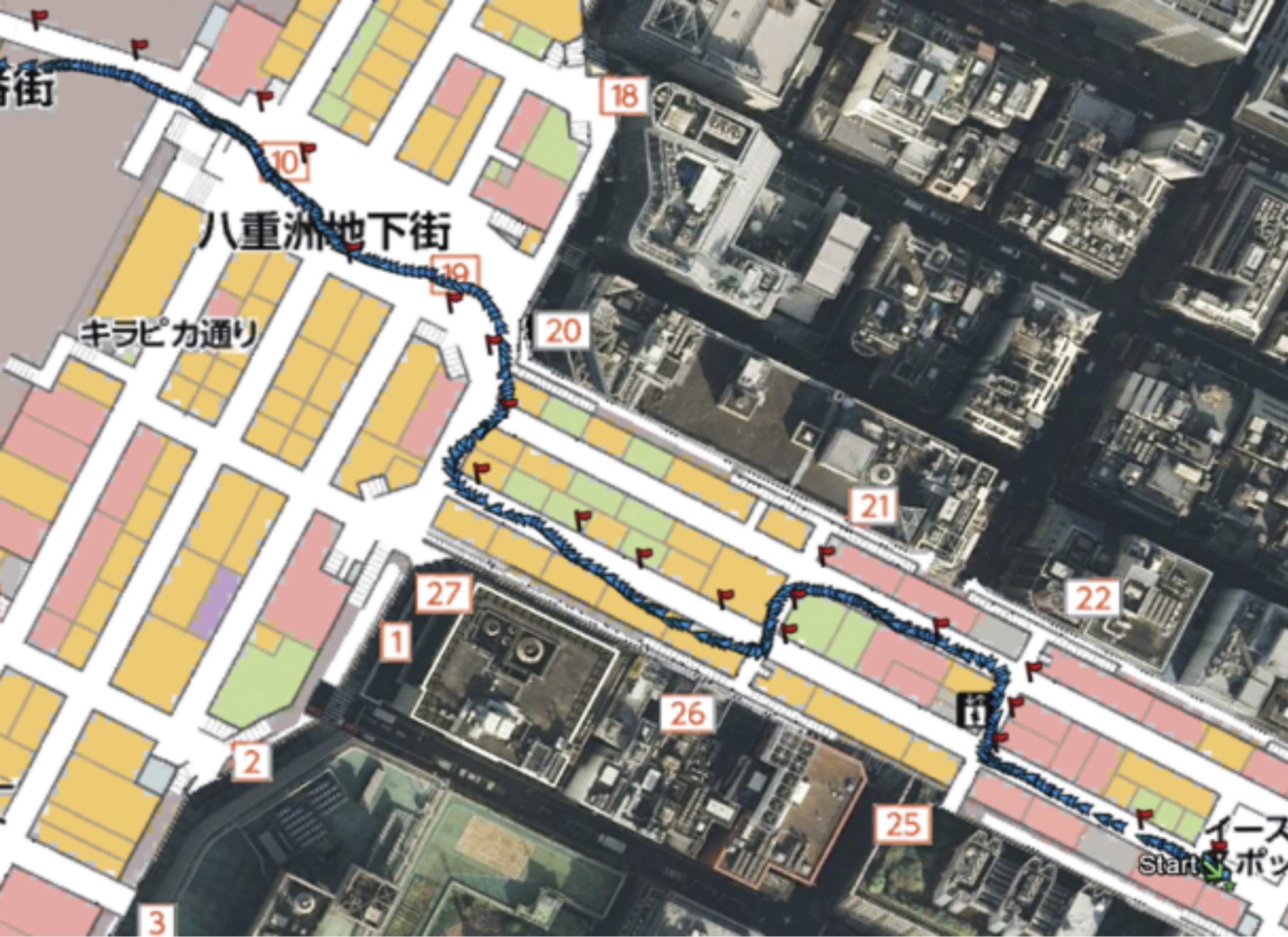
    A series of tests were carried out in Tokyo Station in Tokyo, Japan. The tests shown here were all done on the B1F level in the shopping area adjacent to the station. This area is two levels below the tracks and is below ground. There are no windows, and there was no GNSS reception. The environment also has lots of magnetic anomalies due to tracks, trains, elevators, escalators, and many people in motion, which affects Wi-Fi signals. Each plot shows an indoor map superimposed on the Google Earth image of the area. The narrow aisles in the map are about 5 meters wide. The map is used for presenting results only; it was not used to do map-aiding or map-matching.

    AP harvesting and learning was done in this area before the tests were conducted. In each test, the phone is turned on, and SiRFusion uses Wi-Fi measurements and data from the AP database to determine the initial position without any assistance from GNSS. In each case, the initial position was determined within 1–3 seconds.

    In Figure 5, the route walked is shown by the straight green line, with the start point in the lower left corner. Wi-Fi positioning is shown in red, the yellow isthe MEMS PDR solution, and the blue shows the SiRFusion solution, which in this case is combining Wi-Fi and PDR. The Wi-Fi position is not available every second and at times has discontinuities of several meters. This is due to the signal variability as discussed previously. The PDR solution shows a gradual drift that is more than 25 meters off track in places. This is not an issue for SiRFusion, as only the relative positioning is used from the PDR output. The SiRFusion solution shows a smooth continuous output that has a maximum cross-track error of about 7 meters. Note that the error of the SiRFusion solution does not follow the PDR solution. The absolute positioning provided by the Wi-Fi fixes keeps the solution on track.

    Source: J. Blake Bullock, Mahesh Chowdhary, Dimitri Rubin, Donald Leimer, Greg Turetzky, and Murray Jarvis  A
    Figure 5. Tokyo Station test showing Wi-Fi (red squares), PDR (light green squares), and SiRFusion output (blue); straight green line shows true path followed.

    Figure 6 introduces a test with several turns in the corridors. The path walked is marked by the red flags, and took just under six minutes. The fusion solution is shown in blue. The start point was in the lower left. The fusion solution was able to detect each of the turns made while walking. The shape of the path clearly follows the marked path walked. The largest deviation from the path was ~7 meters. Typically, the solution was within 5 meters of the path walked.

    Source: J. Blake Bullock, Mahesh Chowdhary, Dimitri Rubin, Donald Leimer, Greg Turetzky, and Murray Jarvis  A
    Figure 6. Tokyo Station test showing turns; red flgas mark actual path, blue is SiRFusion output.

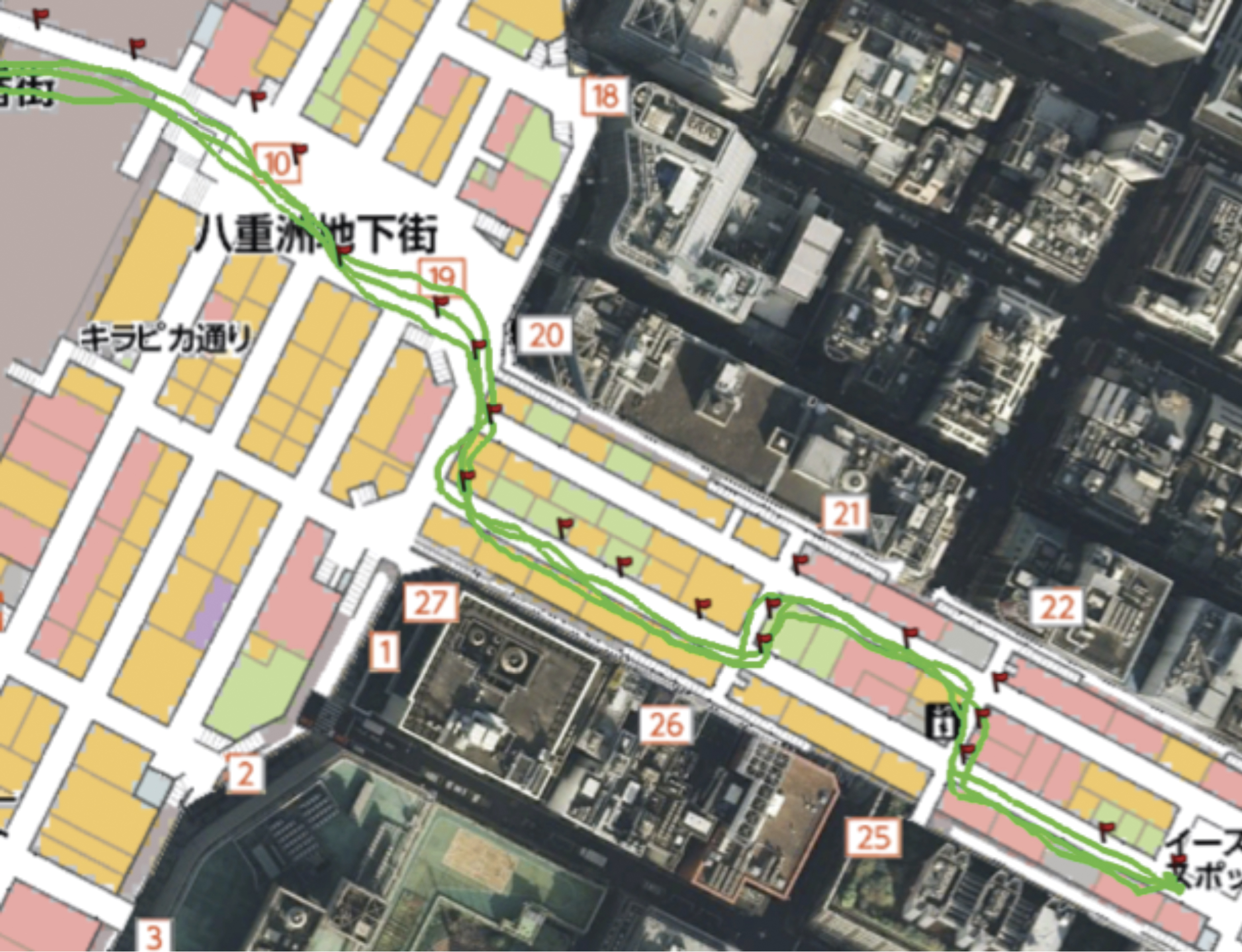
    Figure 7 shows another path through the corridors, this time just over seven minutes in duration. Again, the fusion solution shows each turn correctly and in this case, the maximum cross-track error is about 5 meters. Figure 8 shows the same path, but with the output from three separate walks shown in green. A cold start was done before each walk. The results agree closely, showing high repeatability between test runs.

    Source: J. Blake Bullock, Mahesh Chowdhary, Dimitri Rubin, Donald Leimer, Greg Turetzky, and Murray Jarvis  A
    Figure 7. Tokyo Station test showing turns; legend as per Figure 6.
    Source: J. Blake Bullock, Mahesh Chowdhary, Dimitri Rubin, Donald Leimer, Greg Turetzky, and Murray Jarvis  A
    Figure 8. Tokyo Station test repeatability; light green shows three successive SiRFusion test runs.

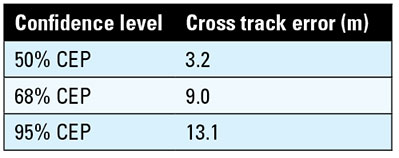
    To obtain a quantitative measure of the performance accuracy, the locations of several points in the Valley Fair Mall in Santa Clara, California, were determined. During several independent test runs in the mall, the tester went to each designated test point and indicated a marker in the log. The measured positions were compared with the determined positions to generate the performance statistics shown in Table 2. The cross-track error was 3.2 meters 50 percent CEP and 13.1 meters 95 percent CEP. These levels agree with the estimated results determined from the maps in the Tokyo tests.

    Source: J. Blake Bullock, Mahesh Chowdhary, Dimitri Rubin, Donald Leimer, Greg Turetzky, and Murray Jarvis  A
    Table 2. Accuracy test, Santa Clara Mall.

    These tests show excellent results in availability, accuracy, stability, and repeatability. The availability is near 100 percent, with the only missing fixes being the first couple of seconds on startup. The position accuracy is sufficient to guide a user to the correct storefront, terminal, or track in a complicated indoor environment. The smooth continuous output can be used for voice guidance applications.

    Applications

    Continuous indoor positioning enables important consumer and commercial applications including indoor search, navigation, social networking, andadvertising on mobile devices, indoor geotagging on camera devices, indoor workout monitoring on fitness devices, and asset tracking.

    Mobile Devices. Search, mapping, and navigation are popular uses for smartphones, tablets, and other mobile devices. These services are even more powerful when taken indoors in shopping centers, airports, train stations, and other public places. In a large shopping area, a consumer can search for the nearest store with items of interest and get walking directions to that store. He or she may receive a coupon or ad relevant to the store or item that they searched for. Business owners are interested in targeted mobile ads to help connect with interested shoppers.

    Camera Devices. Location capability is emerging on camera devices for geotagging the location where a photo was taken so that it can be embedded with other meta-data in the image file. Geotagged photos can be easily shown on maps, sorted by location, and shared with others. Indoor positioning enables geotags to work inside as well as outside, completing the coverage availability.

    Fitness Devices. Fitness watches and other workout tracking products use location to measure distance traveled, calories burned, steps taken, and plot workout tracks on maps. With indoor positioning, indoor workouts can also be included in consumers’ data analysis as they track a wider variety of workout types.

    Machine-to-Machine and Asset Tracking. The benefits of indoor location extend the asset-tracking model from fleets of trucks and automobiles to include all types of valuable assets, from children to pets to merchandise and even data. It is valuable to provide an individual with their own location, but it is even more valuable to provide the location of objects that are somewhere else in an M2M application. The low-power, ubiquitous location capability of SiRFstarV and SiRFusion allows very small tags with months of battery life to be attached to virtually any object and in combination with an appropriate communication link (cellular, Wi-Fi or BLE) report that position to the CPC. From there, a cloud-based location service to carriers, retailers, malls, government agencies and others can add location to their product mix. This service can even be extended to provide data security so that sensitive corporate information could only be accessed by devices within an authorized area, and not in a public place such as an airport. By making ubiquitous location information available on almost any imaginable platform, the use cases are nearly limitless.

    Conclusion

    Sensor fusion algorithms have been developed and refined to address the problem of determining position indoors. Performance testing shows that the position availability approaches 100 percent, and accuracy exceeds 10 meters, 50 percent CEP. The fusion technology is suitable for integrating in a wide range of consumer and commercial devices. The solution uses existing wireless infrastructure and can be deployed around the world with no new equipment to install or surveying to perform. The self-learning capability adapts to changes in the signal environment.

    Acknowledgments

    Seiji Ishikawa and Shinya Ohno of CSR performed the testing in Tokyo Station and were instrumental in preparation and analysis.

    ST Microelectronics provides the MEMS sensors used in much of CSR SiRFusion testing.


    J. Blake Bullock was senior product manager responsible for CSR’s next generation of GNSS solutions. He has now transferred to Samsung System LSI Business and is responsible for GNSS and indoor positioning solutions. He holds a M.Sc. degree in geomatics engineering from the University of Calgary, an MBA from Arizona State University, and several patents in LBS and navigation.

    Mahesh Chowdhary is senior director MEMS technology at CSR where he works on the integration of GPS, MEMS sensors, and wireless technologies. As founder and CTO of Acculeon, he pioneered the use of GPS and MEMS sensors in vehicle safety applications. He received his Ph.D. in Applied Science from The College of William and Mary, Williamsburg, Virginia.

    Dimitri Rubin is senior director at CSR and is responsible for the development of the SiRFusion system. He has worked in the wireless communication field for 24 years.

    Don Leimer is managing the GNSS Advanced Development group at CSR. Mr. Leimer has led and contributed to numerous commercial and military GNSS developments including GPS Phase I.

    Greg Turetzky is senior director for location and technology strategy in CTO office at CSR. He has an M.S. in computer science from Johns Hopkins and holds a number of patents in GPS.

    Murray Jarvis is a consultant research and development engineer at CSR. He holds a Ph.D. in physics and has worked on a variety of positioning technologies including GNSS, cellular and Wi-Fi.

  • Expert Advice: Moore’s Law and GNSS

    Greg Turetzky
    Greg Turetzky

    by Greg Turetzky

    I started my relationship with GNSS and Moore’s Law in 1985, writing software for GPS tracking loops on the Advanced Range Instrumentation Aircraft program at the Applied Physics Laboratory of Johns Hopkins University for the U.S. Air Force. The project’s purpose was to navigate a large jet to accurately fly a pattern to drop buoys into the ocean. That receiver had seven circuit boards (six trackers and one navigator) mounted on a VME backplane in a 19-inch rack mount in the back of a C-130, and was about the size and weight of suitcase.

    In 1988, I helped design and build a single-board Swordfish receiver at Stanford Telecom that went into a two-man portable pseudolite for Trident missile testing. This was considerably smaller and lighter: about the size and weight of a desktop computer. Moore’s law — which, by the way, states that the number of transistors that can be placed inexpensively on an integrated circuit doubles approximately every two years — helped mostly by allowing much better CPUs and memories so we could put it all on a single board. I actually carried this beast off a landing ship tank (LST) onto a small island in the South Pacific called Kwajalein.

    With Moore’s law in full swing in 1990, I moved to the commercial sector at Trimble Navigation and worked on the NavTrac, a lunchbox-sized complete GPS receiver for marine navigation, and then onward to timing receivers and eventually credit-card-sized modules. It became clear that Moore’s Law was a great friend of GNSS and was going to enable a whole new slew of applications by moving from the board level to the chip level.

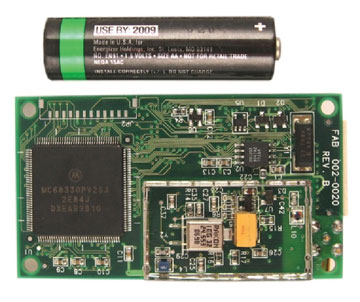
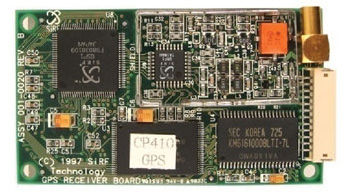
    I went to SiRF Technology, Inc., very soon after it was founded in 1995, to help develop the first commercially successful GPS chipset, the SiRFstarI (see photo).

    chip1-W
    Photo: SiRF Technology, Inc.
    chip2-W
    Photo: SiRF Technology, Inc.
    SiRFstarI-based module, both sides, with representative AA battery to scale.


    You can see that this module still had separate chips for the CPU, flash, SRAM, GPS correlator chip, the GPS RF ASIC,  and a lot of other components.

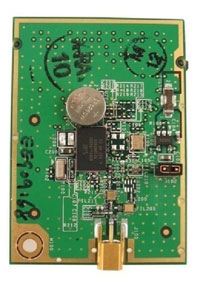
    Last year, we introduced the SiRFStarIV architecture and the GSP4e chip. The module made from this chip has the same basic functionality (RF in, position out) but at a much higher performance level in terms of sensitivity, time to first fix, accuracy, and much lower power consumption. The photo at right shows a 4e module. Also note how few external components are required.

    SiRF 4e module. A hearing-aid battery shows scale and represents the relative power requirements of this module. Photo: SiRF Technology, Inc.
    SiRF 4e module. A hearing-aid battery shows scale
    and represents the relative power requirements of this module. Photo: SiRF Technology, Inc.

    To really understand the impact of Moore’s law on GNSS today, we have to break down the impact on the various parts of the receiver. The measurement of each section (area, power, or bytes) was then normalized to a starting point of 100 in 1995. The time span of 14 years is about seven Moore’s law doublings (every 2 years), producing an expected decrease of 1/128. We can see that the power and digital silicon area have tracked very well over that time period. However, it is also apparent that RF has not even come down by half in that time frame (although it has swallowed a lot of external components as seen in the pictures) — and the code size (ROM + RAM) has grown by 2.5 times.

    This has turned Moore’s law into a bit of a foe in the current timeframe, as the costs associated with silicon products are clearly known to customers (die size is easy to measure) and has driven the prices for GPS receiver downwards accordingly. However, as one can see, more and more software is needed to enable the new features and functions, and with dropping prices due to decreased silicon size, it becomes harder and harder to pay to feed all the hungry engineers here at CSR. This is the crossroad at which our segment of the industry has arrived: how do we continue to add innovation and still make a profit selling silicon when Moore’s Law is not helping anymore? I am not sure I know the answer yet, but we have a lot of good ideas that we are working on.

    Most of these ideas come from expanding the notion of location determination to extend beyond using just GPS and its currently available augmentations. Adding support for other GNSS constellations requires more hardware; the amount is highly dependent on which constellation(s) we are talking about. GLONASS, because of its different frequency, requires more RF silicon, requiring more total area because the existing area is not shrinking as fast. Galileo and COMPASS will require more digital area for their complex coding schemes, but these can be more easily handled with shrinking process geometry. All will require significant software effort to bring in new acquisition schemes, tracking loops, and navigation algorithms.

    But location determination will not be a GNSS-only problem for much longer. Hybrid navigation using other signals of opportunity and MEMS sensors will play a large role in expanding the ability to provide accurate location to consumers wherever they go. The integration of these technologies into a coherent location determination system is a large software effort, and one that CSR has been working on for years in automotive applications.

    Clearly, the need for accurate location continues to grow in consumer devices. At CSR we feel we are in the best position to deliver that, with or without help from Moore’s law.


    Greg Turetzky is senior marketing director for SiRF Technology Inc., a member of the CSR Group of companies.