Tag: In-Orbit Validation

  • The System: Galileo Accomplishes In-Orbit Validation

    Galileo Accomplishes In-Orbit Validation

    Nucleus of Four Now Operational: It “Works, and Works Well”
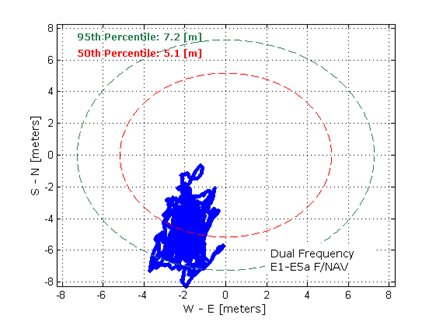
    figure 1  Dual-frequency Galileo positioning performance during the In-Orbit Validation phase: positioning accuracy is an average 8 m horizontal and 9 m vertical (95% of the time). Its average timing accuracy is 10 nanoseconds on average. Plot courtesy of ESA.
    Dual-frequency Galileo positioning performance during the In-Orbit Validation phase: positioning accuracy is an average 8 m horizontal and 9 m vertical (95% of the time). Its average timing accuracy is 10 nanoseconds on average. Plot courtesy of ESA.

    The European Space Agency (ESA) announced fulfillment of the in-orbit validation (IOV) of Galileo on February 10. IOV was achieved with four satellites, the minimum number needed to perform navigation fixes.

    “IOV was required to demonstrate that the future performance that we want to meet when the system is deployed is effectively reachable,” said Sylvain Loddo, ESA’s Galileo Ground Segment manager. “It was an intermediate step with a reduced part of the system to effectively give evidence that we are on track.”

    Following a March 2013 first determination of a ground location, jointly by Galileo’s space and ground segments, program managers undertook  a wide variety of tests all across Europe.

    “More than 10,000 kilometers were driven by test vehicles in the process of picking up signals, along with pedestrian and fixed receiver testing. Many terabytes of IOV data were gathered in all,” said Marco Falcone, ESA’s Galileo System manager.

    According to ESA’s elaboration on the test results, the system has proved itself capable of solely performing positioning fixes across the planet.

    Galileo’s observed dual-frequency positioning accuracy is an average of 8 meters horizontal and 9 meters vertical, 95 percent of the time. Its average timing accuracy is 10 billionths of a second. Its performance is expected to improve as more satellites are launched and ground stations come on line.

    For Galileo’s search-and-rescue function — operating as part of the existing international Cospas–Sarsat programme —  77 percent of simulated distress locations can be pinpointed within 2 kilometers, and 95 percent within 5 kilometers. All alerts are detected and forwarded to the Mission Control Centre within a minute and a half, compared to a design requirement of 10 minutes.

    “Europe has proven with IOV that in terms of performance we are at a par with the best international systems of navigation in the world,” said Didier Faivre, ESA director of Galileo and Navigation-related Activities.

    Historically Speaking. In a February 2013 GPS World article, Peter Steigenberger, Urs Hugentobler, and Oliver Montenbruck discussed Galileo-only positioning. “Using an ionosphere-free dual-frequency linear combination of pseudorange measurements on the Galileo E1 and E5a frequencies, the position of the TUME reference station [at the Technische Universität München (TUM) in Munich, Germany] could be determined with a 3D position error of less than 1.5 meters,’” the authors said.

    Crystal Ball Gazing. The next two Galileo satellites, of the full operational capability (FOC) class, currently complete their testing for flight clearance at ESA’s ESTEC facility.

    Six such satellites are destined to rise into space in 2014, according to ESA’s master plan. Should all those launches occur as scheduled, Galileo’s initial services could start by the end of the year.

    GNSS Vulnerable: What to Do?

    Too Much Sensitivity, Not Enough Robustness, Says Parkinson

    Brad Parkinson, the founding architect of GPS, told a UK conference that the system needs to be made more robust to ensure worldwide availability of services to users. His concerns over GPS availability relate to threats such as the loss of authorized frequency spectrum (implicitly creating licensed jammers), space weather due to hyperactive ionospheric conditions, and deliberate or inadvertent jamming of GPS signals.

    He warned that GPS is more vulnerable to sabotage or disruption than ever before, and charged that politicians and security chiefs are ignoring the risk. Western governments are “in their infancy in recognizing the problem,” he remarked further in an interview with London’s Financial Times. “[In the United States] I don’t know anyone that is really in charge of it. The Department of Homeland Security should be [but] … they don’t have any people that understand it very well. They’ve got one person without any budget to speak of.”

    He also warned that Europe’s €5 billion Galileo system is equally at risk.

    Parkinson proposed a three-stage program to:

    • Protect (legally) the signal and physically eliminate jamming sources;
    • Toughen the GPS/Galileo receiver’s resistance to interference;
    • Augment the GPS signals with other satellites or with ground-based transmitters such as eLoran.

    To support his proposal, Parkinson stated, “The number one need for all GPS or Galileo users is availability. Over the years, manufacturers of signal receiver technologies have focused too much on sensitivity and not enough on resilience or robustness. The maritime industry is a particular concern where users have taken GPS for granted. They must increase preparedness and backups as they do in aviation or other GNSS-using industries.

    “Even today, most ships have only GPS and the vision of their crew to guide them when approaching harbors. As you can see from today’s conference, there are a wealth of solutions to toughen and back up GPS, many of which are not technologically difficult nor expensive, but still their adoption in sectors such as global shipping is certainly not adequate.”

    As part of his protection program, Parkinson urged that penalties for jamming GPS networks be coordinated worldwide. “In Australia, if you cause interference likely to cause prejudice to the safe conduct of a vessel, it’s five years in the jug [jail] and $850,000.” Contrasting this with a U.S. case that may simply impose a forfeiture of the culprit’s jamming device, Parkinson added, “I’m calling for the community of nations to move to the Aussie-type penalties.”

    In the toughening regard, Parkinson alluded to integration of GPS data with information derived from an inertial positioning system. “If you combine all of these things, a good set should be able to fly within 1 kilometer of a jammer with a 10-kilometer range,” said Parkinson. “That’s what I call toughening.”

    Parkinson made his remarks as the keynote speech at GNSS Vulnerabilities and Resilient PNT 2014, hosted by the Royal Institute of Navigation. He will also deliver the keynote address, “Assured PNT: Assured World Economic Benefits,” for the European Navigation Conference on April 15 in The Netherlands.

    GLONASS Seeks Broader Monitoring Footprint; Launch Imminent

    Russia will deploy as many as seven ground monitoring and augmentation stations for GLONASS outside its national boundaries. GLONASS/GNSS Forum Association Executive Director Vladimir Klimov stated that “It is planned to deploy about six or seven stations on foreign territories this year.” Negotiations for the stations are now taking place with foreign nations.

    Currently, there are 46 GLONASS ground stations on Russian territory, eight in neighboring countries, three in Antarctica, and one in Brazil. The United States recently spurned, with some Congressional trumpeting, a Russian tender to site one of the ground stations on U.S. soil.

    New Instrument in Space. In mid-February, the most recent GLONASS-M satellite traveled to the Plesetsk cosmodrome for a probable mid-March launch. GLONASS-M 54 will carry a high-accuracy thermal stabilization unit, installed on the spacecraft for testing and flight qualification. The next-generation K-class of GLONASS spacecraft will loft this device to provide increased positioning accuracy.

    Five GLONASS-M craft are planned for launch in 2014, in one triple and two single launches.
  • Galileo Achieves In-Orbit Validation

    Dual-frequency Galileo positioning performance during the In-Orbit Validation phase: positioning accuracy is an average 8 m horizontal and 9 m vertical (95% of the time). Its average timing accuracy is 10 nanoseconds on average. Plot courtesy of ESA.
    Dual-frequency Galileo positioning performance during the In-Orbit Validation phase: positioning accuracy is an average 8 m horizontal and 9 m vertical (95% of the time). Its average timing accuracy is 10 nanoseconds on average. Plot courtesy of ESA.

    The in-orbit validation of Galileo has been achieved, according to the European Space Agency (ESA). Europe now has the operational nucleus of its own satellite navigation constellation in place — the world’s first civil-owned and operated satnav system.

    Four is the minimum number of satellites needed to perform navigation fixes. In 2011 and 2012, the first four satellites were launched into orbit. In 2013, these satellites were combined with a growing global ground infrastructure to allow the project to undergo its crucial in-orbit validation phase: IOV.

    “IOV was required to demonstrate that the future performance that we want to meet when the system is deployed is effectively reachable,” said Sylvain Loddo, ESA’s Galileo Ground Segment manager. “It was an intermediate step with a reduced part of the system to effectively give evidence that we are on track.”

    Galileo Validated Video

    On March 12, 2013, Galileo’s space and ground infrastructure came together for the first time to perform the historic first determination of a ground location, taking place at ESA’s Navigation Laboratory in the ESTEC technical centre, in Noordwijk, the Netherlands. From that point, generation of navigation messages enabled full testing of the entire Galileo system. A wide variety of tests followed, carried out all across Europe.

    “ESA and our industrial partners had teams deployed in the field continuously for test operations,” said Marco Falcone, ESA’s Galileo System Manager. “More than 10,000 km were driven by test vehicles in the process of picking up signals, along with pedestrian and fixed receiver testing. Many terabytes of IOV data were gathered in all.”

    The single most important finding from the test results? Galileo works, and it works well. The entire self-sufficient system has been shown as capable of performing positioning fixes across the planet.

    Galileo’s observed dual-frequency positioning accuracy is an average of 8 meters horizontal and 9 meters vertical, 95 percent of the time. Its average timing accuracy is 10 billionths of a second. Its performance is expected to improve as more satellites are launched and ground stations come on line.

    For Galileo’s search and rescue function — operating as part of the existing international Cospas–Sarsat programme —  77 percent of simulated distress locations can be pinpointed within 2 kilometers, and 95 percent within 5 kilometers. All alerts are detected and forwarded to the Mission Control Centre within a minute and a half, compared to a design requirement of 10 minutes.

    “Europe has proven with IOV that in terms of performance we are at a par with the best international systems of navigation in the world,” said Didier Faivre, ESA director of Galileo and Navigation-related Activities.

    In an article for The System section of the February 2013 GPS World, Peter Steigenberger, Urs Hugentobler, and Oliver Montenbruck discuss Galileo-only positioning. “Using an ionosphere-free dual-frequency linear combination of pseudorange measurements on the Galileo E1 and E5a frequencies, the position of the TUME reference station [at the Technische Universität München (TUM) in Munich, Germany] could be determined with a 3D position error of less than 1.5 meters,’” the authors said. Read more here.

  • Four Galileo Birds Sighted over Asia

    Four Galileo Birds Sighted over Asia

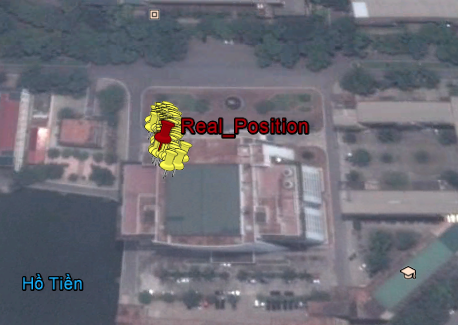
    Scientists in Hanoi, Vietnam, send word that on March 27 the four Galileo in-orbit validation satellites were visible at the same time in the sky over that Southeast Asian country for nearly two hours (from 2:15 to 4:00 GMT) while transmitting a valid navigation message. The research team of the NAVIS Centre at Hanoi University of Science and Technology (HUST) successfully computed what they claim is the first Galileo-only position fix in Asia.

    Figure 1 depicts the obtained positions are depicted on top of the roof of the NAVIS Centre, where the antenna used to receive the signals is located (latitude = 21°00’16.69” N, Longitude = 105°50’37.90” E, height = 35,2 meters).

        Figure 1. Positions obtained by only Galileo E1 Open Service (the antenna is located at the roof of the Ta Quang Buu library building inside HUST campus)
    Figure 1. Positions obtained by only Galileo E1 Open Service (the antenna is located at the roof of the Ta Quang Buu library building inside HUST campus)

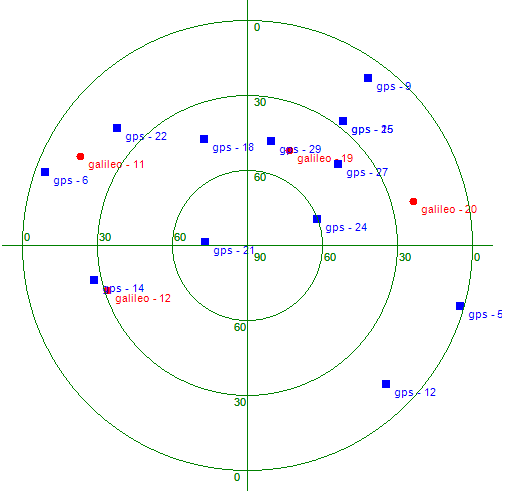
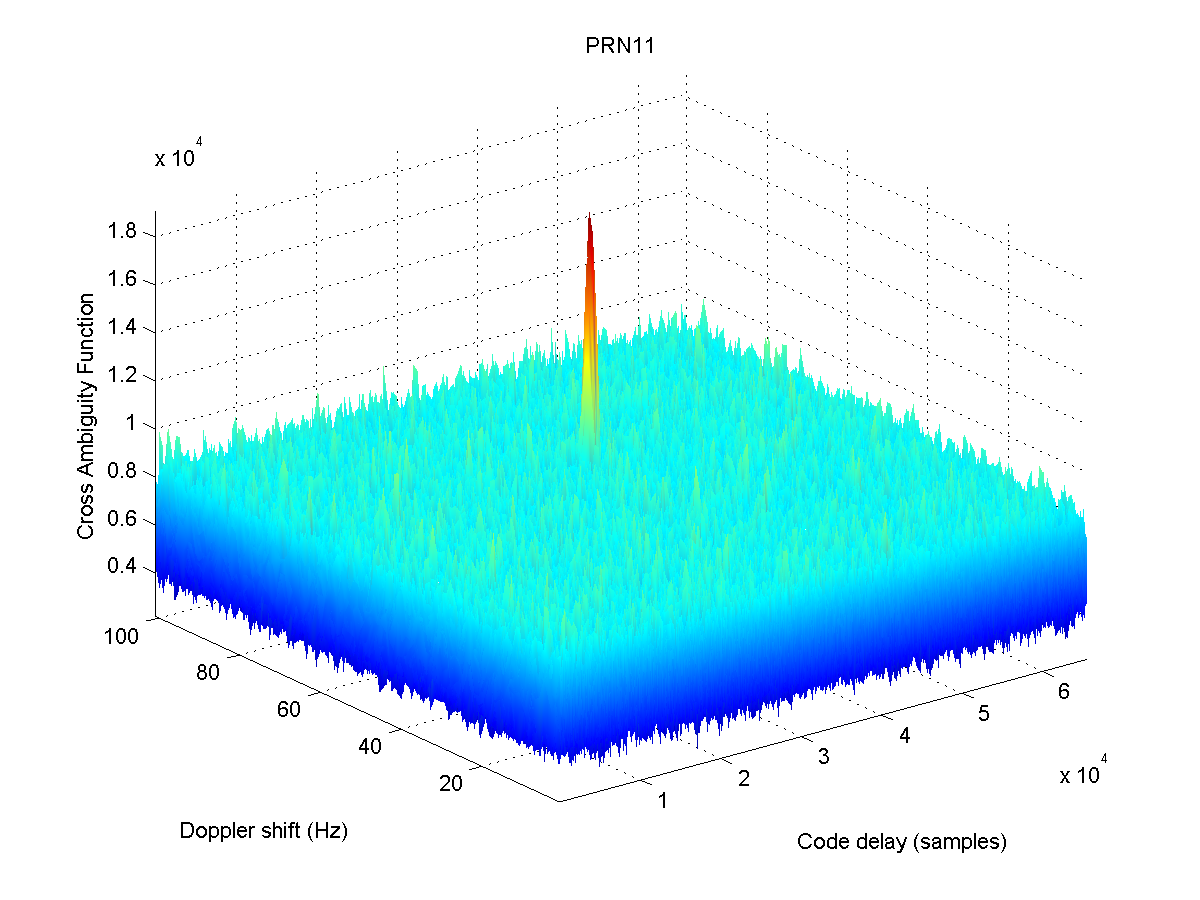
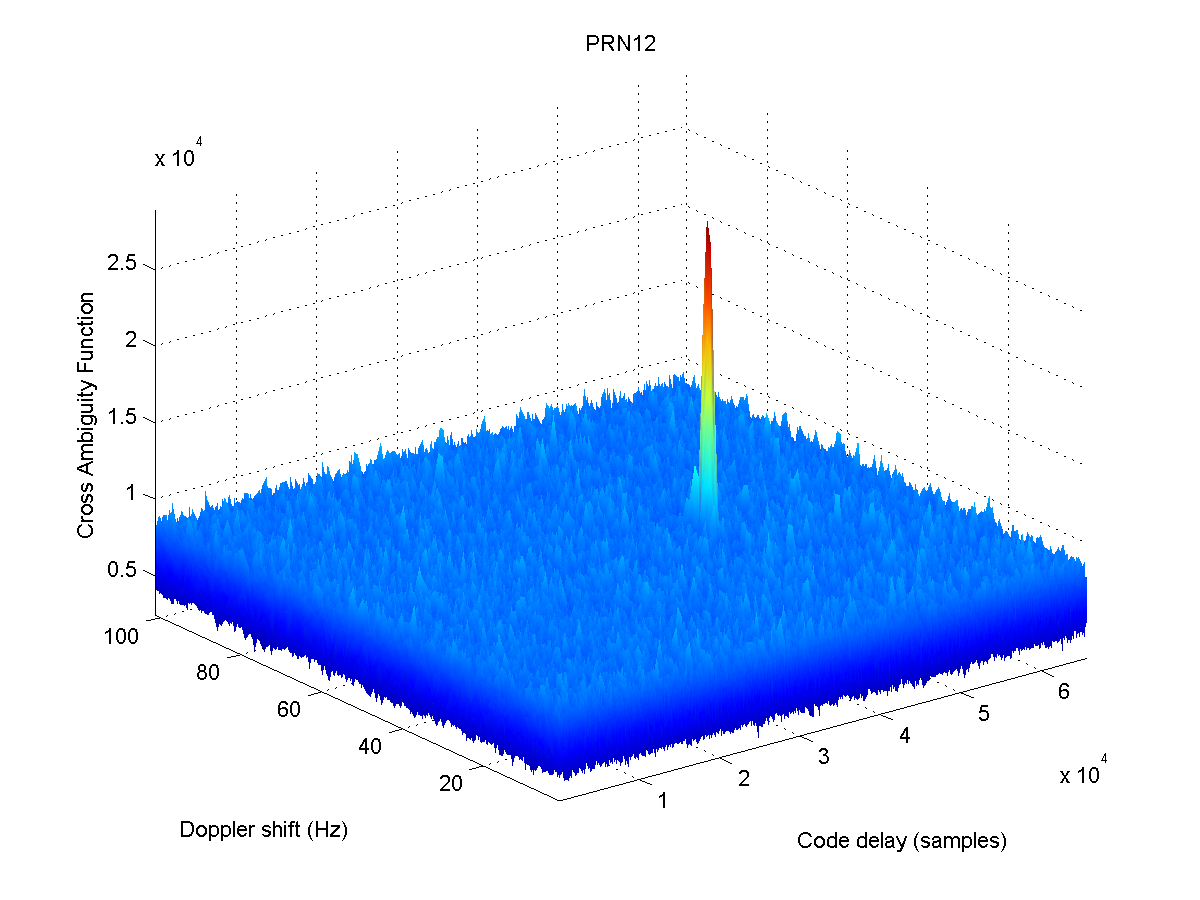
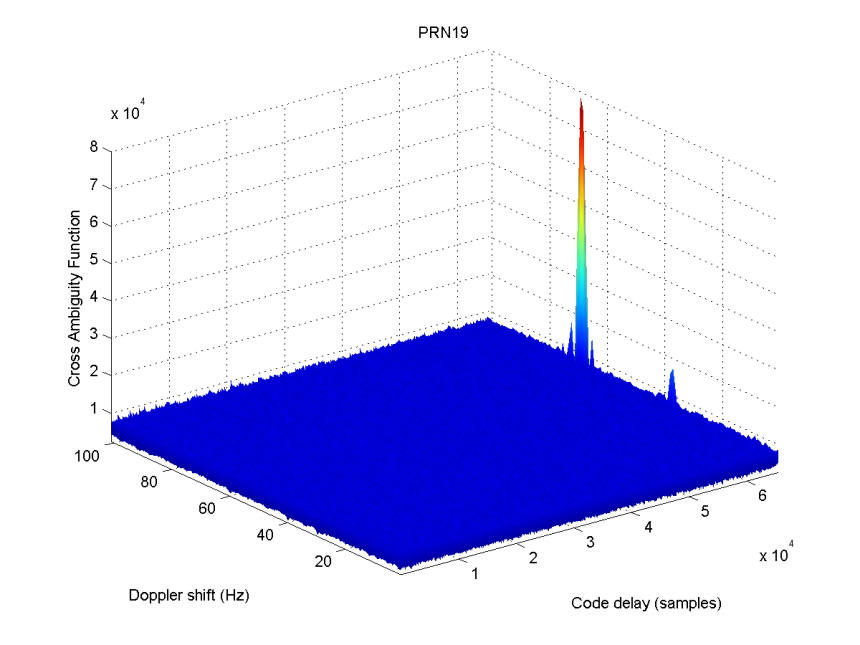
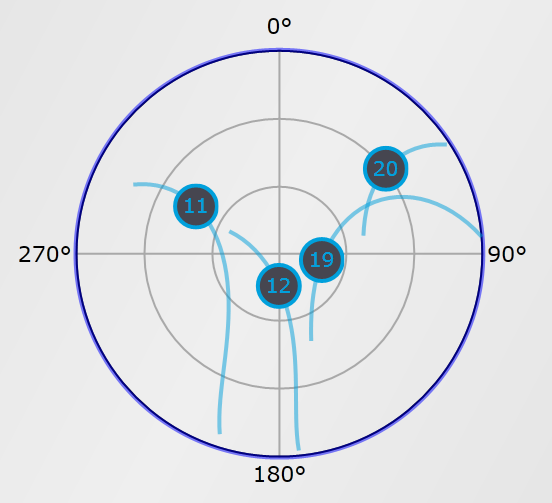
    Figure 2 shows the positions of the four Galileo satellites and of 12 GPS satellites at time of acquisition, while Figure 3 reports the acquisition results of the four Galileo IOV satellites.

        Figure 2. Skyplot of the satellites of the GPS and Galileo systems at the time of the campaign. The Galileo satellites are PFM (PRN11), FM2 (PRN12), FM3 (PRN19), and FM4 (PRN20).
    Figure 2. Skyplot of the satellites of the GPS and Galileo systems at the time of the campaign. The Galileo satellites are PFM (PRN11), FM2 (PRN12), FM3 (PRN19), and FM4 (PRN20).
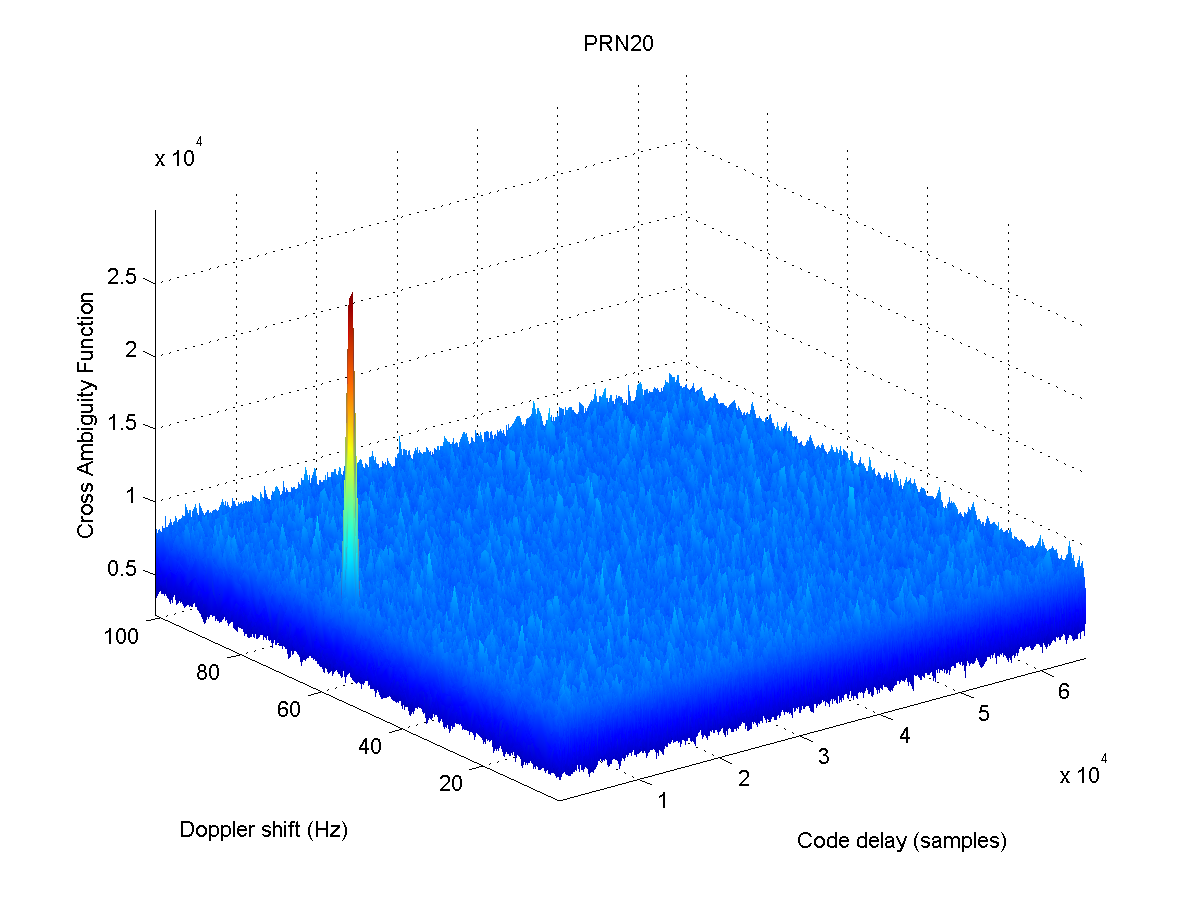
    Figure 3. Acquisition results of the four Galileo IOV satellites
    Figure 3. Acquisition results of the four Galileo IOV satellites: PRN 11.
    Figure 3. Acquisition results of the four Galileo IOV satellites
    Figure 3. Acquisition results of the four Galileo IOV satellites: PRN12.
    Figure 3. Acquisition results of the four Galileo IOV satellites
    Figure 3. Acquisition results of the four Galileo IOV satellites: PRN19.
    Figure 3. Acquisition results of the four Galileo IOV satellites
    Figure 3. Acquisition results of the four Galileo IOV satellites: PRN20.

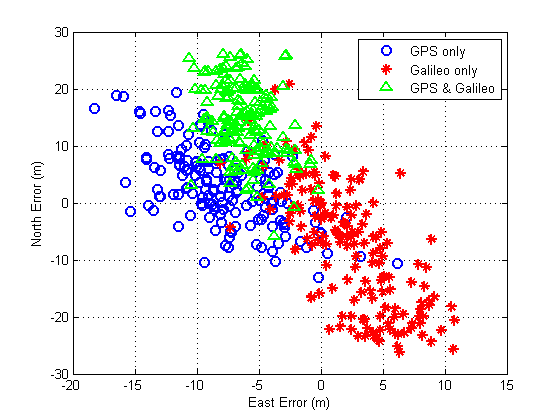
    Comparison of the position computed using only Galileo, only GPS or both systems together is also presented in Figure 4. It should be noted that during the campaign, the data demodulation process reports that the Galileo system announces the “navigation data valid” status for PFM and FM3, meanwhile the “working without guarantee” for FM2 and FM4.

    Figure 4. Position computed when using GPS only, Galileo only, or GPS+Galileo
    Figure 4. Position computed when using GPS only, Galileo only, or GPS+Galileo

    The NAVIS Centre, located at the Hanoi University of Science and Technology in Hanoi, Vietnam, was established with a project co-funded by the European Union and collaborates with European and Asian partners on research and development of satellite navigation technology in Southeast Asia. This report was made by Dr. Ta Hai Tung, director of the NAVIS Centre, and Prof. Gustavo Belforte, co-director.

  • PLAN Group Tracks Galileo Satellites for Positioning in Canada

    by James T. Curran, Mark Petovello, and Gérard Lachapelle

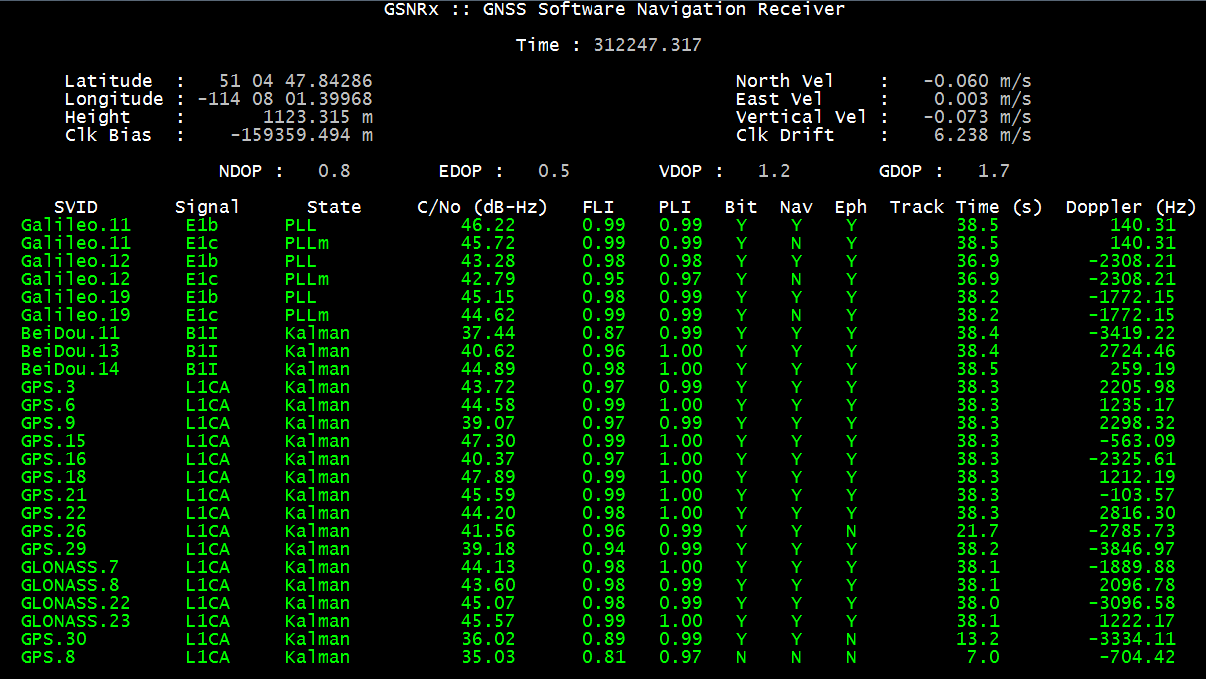
    Within a day of their initial activation over central Europe on March 12, Galileo satellites were visible over North America. The PLAN Group of the University of Calgary was successful in capturing and processing the signals from these satellites as they emerged. Galileo PRN 11, 12, and 19 were found and tracked on E1B/C. The PLAN software GSNRx was also able to track simultaneously GPS L1 and GLONASS L1 and produce combined position solutions.

    Examining the Galileo navigation message transmitted on the E1B signal, it was found that the satellite health status is flagged as E1BHS=3 meaning Signal Component currently in Test, and the data validity status is flagged as E1BDVS=1 meaning Working without Guarantee. Current Galileo-ready commercial receivers may automatically discard measurements from a satellites broadcasting such messages. Parsing the received words in the I/NAV message, it was noted that more 50 percent of them were of type 0, although all words (types 0 to 10) were decoded at some point during the test.

    Data was collected using a roof-mounted NovAtel 702GG antenna and an in-house two-channel digitizing front-end clocked by a high quality OCXO and also a three-channel National Instruments front-end for post-processing. The two-channel intermediate frequency data was streamed live to a laptop computer for real-time processing with GSNRx. Two RF channels were processed, the first centered at 1574.0 MHz with an IF bandwidth of 10.0 MHz, for the GPS L1 C/A and Galileo E1B/C signals and the second centered at 1602.0 MHz again with a bandwidth of  10.0 MHz, for the GLONASS L1 OF signals. The GPS and GLONASS signals were tracked using a Kalman-filter-based tracking strategy while the Galileo signals were tracked using a specialized data-pilot algorithm.

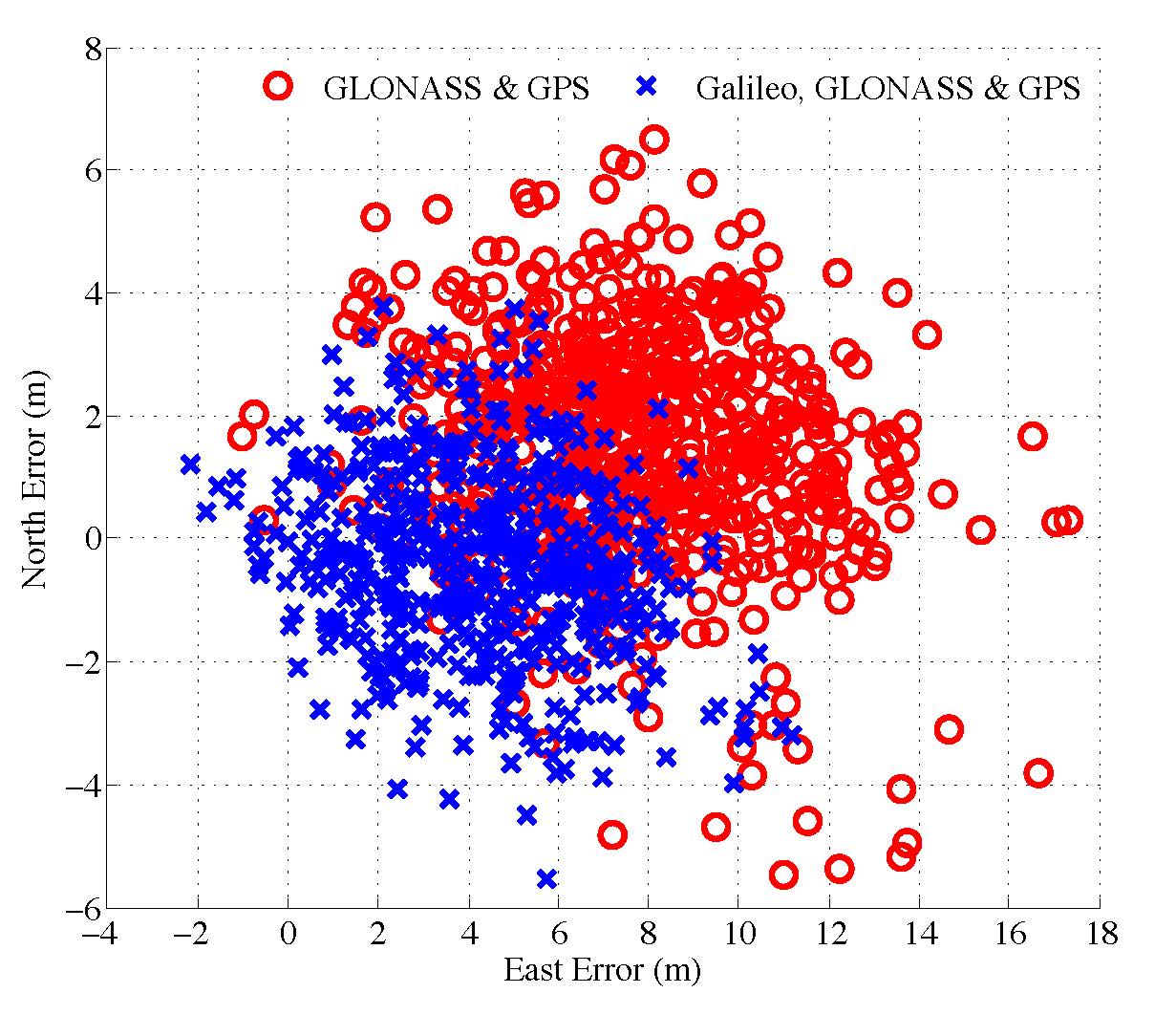
    Figure 1. Scatter plot of the north and east position
    Figure 1. Scatter plot of the north and east position

    Pseudorange and Doppler observations were extracted from the tracking strategies at a rate of 2 Hz. A 2D horizontal plot of the combined GPS & GLONASS and the combined Galileo, GLONASS & GPS single-frequency single-point solutions is presented in Figure 1.

    Figure 2: Skyplot of the Galileo satellites.
    Figure 2: Skyplot of the Galileo satellites.

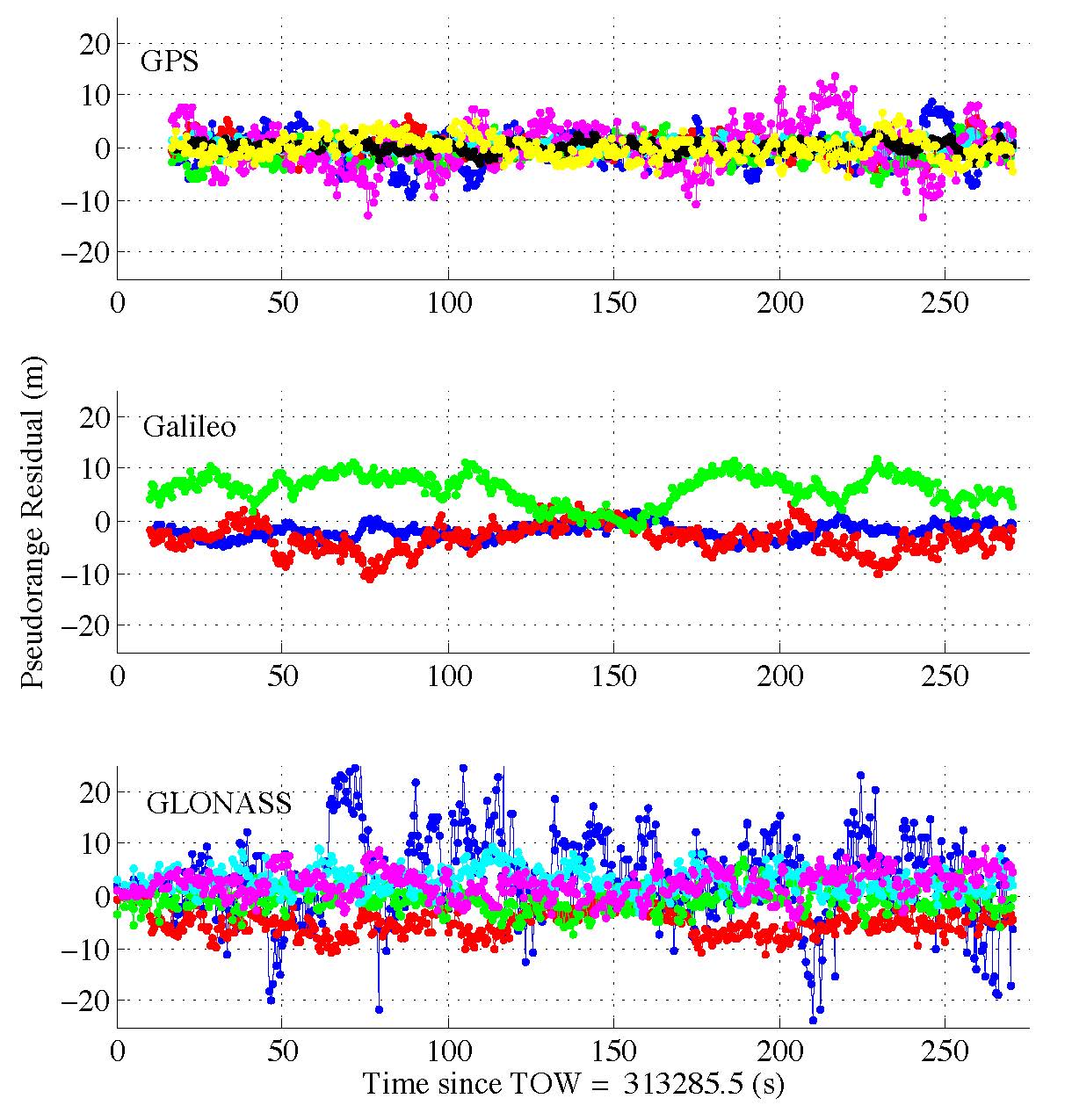
    The pseudorange residuals are plotted against time for each PRN tracked from each of the three systems in Figure 3. It is apparent that the addition of the three Galileo observations contributes to a reduction in bias and standard deviation in the horizontal directions, showing an excellent functioning of the Galileo satellites and PLAN Group equipment and software.

        Figure 3. Pseudorange residuals are plotted against time for each PRN tracked from each of the three systems.
    Figure 3. Pseudorange residuals are plotted against time for each PRN tracked from each of the three systems.
    screenshot
    Figure 4. A screenshot of the receiver processing the data.


    Contact: Dr. James T. Curran

    Email: James.T.Curran at ucalgary.ca

  • Septentrio Makes Galileo and Four-Constellation Position Fixes

    Septentrio Makes Galileo and Four-Constellation Position Fixes

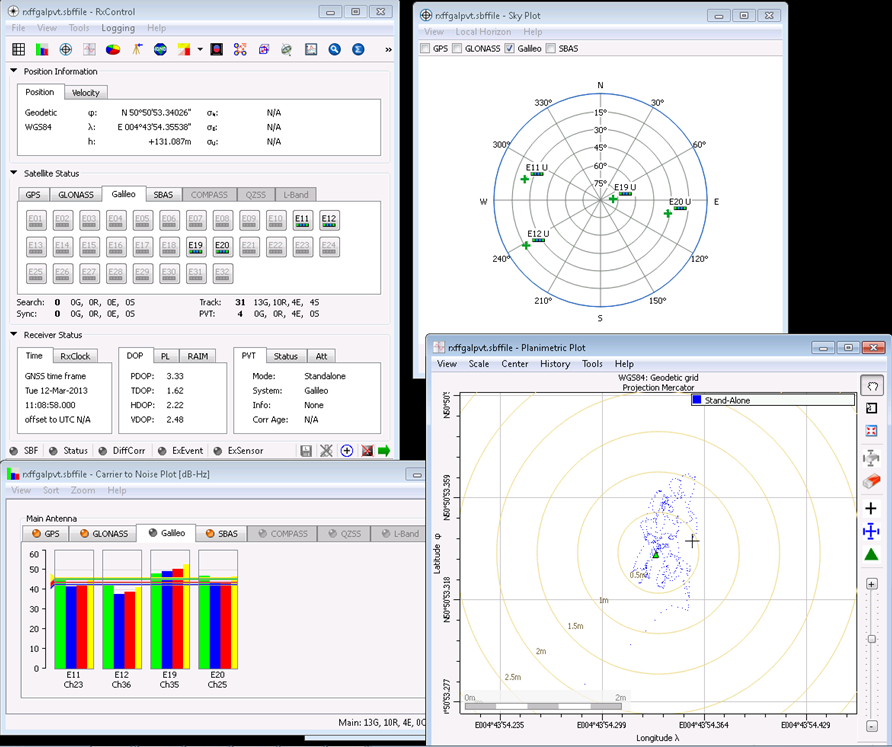
    Septentrio became the first receiver manufacturer to report an autonomous real-time position calculation using Galileo IOV satellites, with its own standard commercial receiver. The company based in Leuven, Belgium announced on March 12 that it performed a first autonomous real-time Galileo position, velocity, and timing (PVT) calculation, based on live Interface Control Document (ICD)-compliant Galileo messages from the four Galileo in-orbit validation (IOV) satellites.

    Galileo-PVT

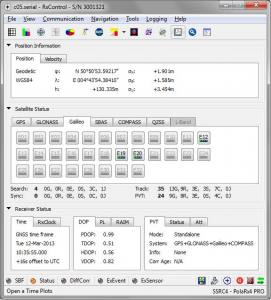
    The standalone position was calculated from in-orbit navigation messages using a standard PolaRx4 GNSS receiver equipped with commercially released firmware.

    This achievement followed another recent Septentrio milestone; the announcement of a first GPS+Glonass+BeiDou PVT less than two weeks after the BeiDou2 ICD publication in December — and it was itself followed by a Septentrio release stating performance of what it believes to be the first 4-constellation PVT performed by a standard commercial receiver.

    4-constellation_PVT

    “On Tuesday 12-Mar-2013 at approximately 10:35 UTC we included three Galileo IOV satellites (E12, E19 & E20) in a multi-constellation PVT. The 3D-position fix happened shortly after it was brought to Septentrio’s attention that the Galileo IOV satellites were transmitting, for the first time ever, a fully usable navigation message as part of an ESA experiment.

    “This ability to rapidly incorporate new constellations demonstrates the flexibility of the architecture of Septentrio receivers,” the company statement continued.

    “We are delighted that Septentrio receivers are amongst the first to witness the readiness of the Galileo navigation message to perform a position fix from in orbit signals,” commented Peter Grognard, Septentrio’s founder and CEO. “Septentrio has been involved since 2003 in all major milestones that pave the way for the European constellation genesis.”

  • Signal Decoding with Conventional Receiver and Antenna

    Signal Decoding with Conventional Receiver and Antenna

    A Case History Using the New Galileo E6-B/C Signal

    By Sergei Yudanov, JAVAD GNSS

    A method of decoding an unknown pseudorandom noise code uses a conventional GNSS antenna and receiver with modified firmware. The method was verified using the signals from the Galileo In-Orbit Validation satellites.

    Decoding an unknown GNSS pseudorandom noise (PRN) code can be rather easily done using a high-gain steerable dish antenna as was used, for example, in determine the BeiDou-M1 broadcast codes before they were publicly announced. The signal-to-noise ratio within one chip of the code is sufficient to determine its sign. This article describes a method of getting this information using a conventional GNSS antenna and receiver with modified firmware. The method was verified using the signals from the Galileo In-Orbit Validation (IOV) satellites. In spite of the fact that only pilot signal decoding seems to be possible at first glance, it is shown that in practice data signals can also be decoded.

    Concept

    The idea is to do coherent accumulation of each chip of an unknown signal during a rather long time interval. The interval may be as long as a full satellite pass; for medium Earth orbits, this could be up to six hours. One of the receiver’s channels is configured in the same way as for signal tracking. The I and Q signal components are accumulated during one chip length in the digital signal processor, and these values are added to an array cell, referenced by chip number, by the processor. Only a limited amount of information need be known about the signal: its RF frequency; the expected chip rate; the expected total code length; and the modulation method.

    The decoding of binary-phase-shift-keying (BPSK) signals (as most often used) is the subject of this article. It appears that the decoding of more complicated signals is possible too, but this should be proved. A limitation of this method (in common with that of the dish method) is the maximum total code length that can be handled: for lengths greater than one second and bitrates higher than 10,000 kilobits per second, the receiver’s resources may not be sufficient to deal with the signal.

    Reconstructing the Signal’s Phase

    This method requires coherency. During the full accumulation period, the phase difference between the real signal phase and the phase of the signal generated by the receiver’s channel should be much less than one cycle of the carrier frequency. Depending on the GNSS’s available signals, different approaches may be used. The simplest case is reconstruction of a third signal while two other signals on different frequencies are of known structure and can be tracked.

    The main (and possibly the only significant) disturbing factor is the ionosphere. The ionospheric delay (or, more correctly, the variation of ionospheric delay) is calculated using the two known tracked signals, then the phase of the third signal, as affected by the ionosphere, is predicted.

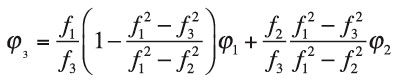
    The final formula (the calculations are trivial and are widely available in the literature) is:

    Y-Eq1

    where:
    φ1 , f1 are the phase and frequency of the first signal in cycles and Hz, respectively
    φ2 , f2   are the phase and frequency of the second signal in cycles and Hz, respectively
    φ3 , f3   are the phase and frequency of the third signal in cycles and Hz, respectively.

    It was confirmed that for all pass periods (elevation angles less than 10 degrees were not tested), the difference between the calculated phase and real phase was always less than one-tenth of a cycle. GPS Block IIF satellites PRN 1 and PRN 25 were used to prove this: the L1 C/A-code and L5 signals were used as the first and second signals, with the L2C signal as the third unknown.

    If two known signals are not available, and the ionospheric delay cannot be precisely calculated, it is theoretically possible to obtain an estimate of the delay from one or more neighboring satellites with two signals available. Calculations and estimations should be carried out to investigate the expected precision.

    The Experiment

    The Galileo E6-B/C signal as currently transmitted by the IOV satellites was selected for the experiment, as its structure has not been published. The E6 signal has three components: E6-A, E6-B and E6-C. The E6-A component is part of the Galileo Public Regulated Service, while the two other components will serve the Galileo Commercial Service. The E6-B component carries a data signal, while the E6-C component is a pilot signal.

    From open sources, it is known that the carrier frequency of the E6 signal is 1278.75 MHz and that the E6-B and E6-C components use BPSK modulation at 5,115 chips per millisecond with a primary code length of one millisecond. E6-B’s data rate is 1,000 bits per second and the total length of the pilot code is 100 milliseconds (a secondary code of 100 bits over 100 milliseconds is also present in the E6-C signal, which aids in signal acquisition).

    A slightly modified commercial high-precision multi-GNSS receiver, with the E6 band and without the GLONASS L2 band, was used for this experiment. The receiver was connected to a conventional GNSS antenna, placed on a roof and was configured as described above. The E1 signal was used as the first signal and E5a as the second signal. The E6 code tracking (using 5,115 chip values of zero) was 100 percent guided from the E1 code tracking (the changing of the code delay in the ionosphere was ignored). The E6 phase was guided from E1 and E5a using the above equation. Two arrays for 511,500 I and Q samples were organized in firmware. The integration period was set to one chip (200 nanoseconds).

    Galileo IOV satellite PRN 11 (also variously known as E11, ProtoFlight Model and GSAT0101) was used initially, and the experiment started when the satellite’s elevation angle was about 60 degrees and lasted for only about 30 minutes. Then the I and Q vectors were downloaded to a PC and analyzed.

    Decoding of Pilot Signal (E6-C)

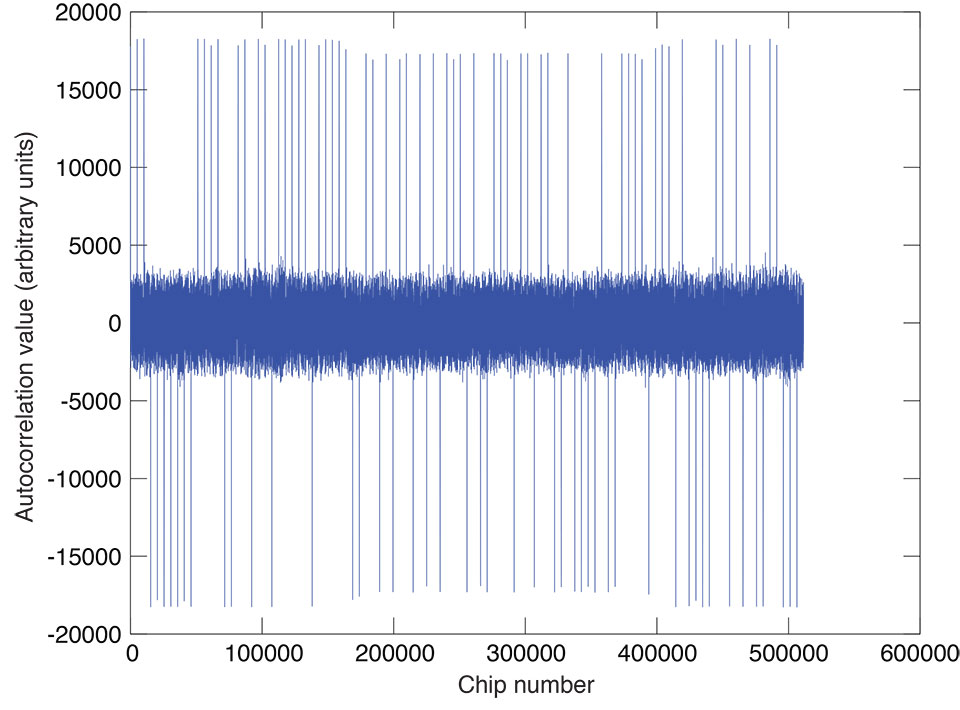
    Decoding of the pilot signal is made under the assumption that any possible influence of the data signal is small because the number of ones and zeros of E6-B in each of 511,500 chips of the 100-millisecond integration interval is about the same. First, the secondary code was obtained. Figure 1 shows the correlation of the first 5,115 chips with 5,115 chips shifted by 0 to 511,500 chips. Because the initial phase of the E6 signal is unknown, two hypotheses for computing the amplitude or signal level were checked: [A] = [I] + [Q] and [A] = [I] – [Q], and the combination with the higher correlation value was selected for all further analysis.

    Y-Fig1
    Figure 1. Un-normalized autocorrelation of E6-C signal chips.

    In Figure 1, the secondary code is highly visible: we see a sequence of 100 positive and negative correlation peaks (11100000001111 …; interpreting the negative peaks as zeros).This code is the exact complement (all bits reversed) of the published E5a pilot secondary code for this satellite. More will be said about the derived codes and their complements later. It appears that, for all of the IOV satellites, the E6-C secondary codes are the same as the E5a secondary codes.

    After obtaining the secondary code, it is possible to coherently add all 100 milliseconds of the integration interval with the secondary code sign to increase the energy in each chip by 100 times. Proceeding, we now have 5,115 chips of the pilot signal ­— the E6-C primary code.

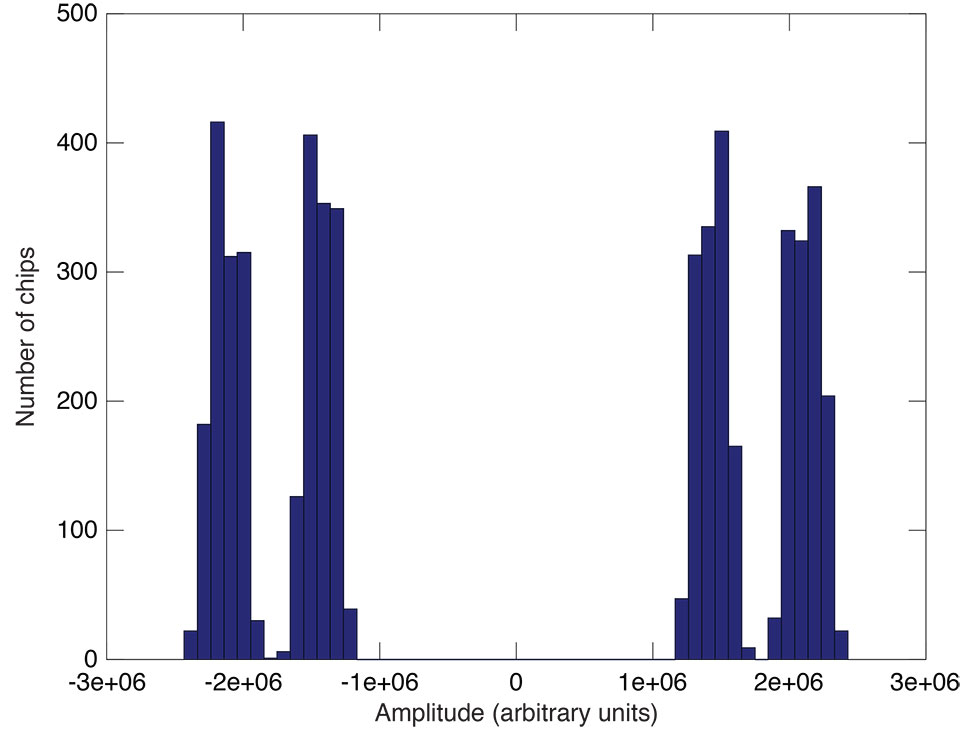
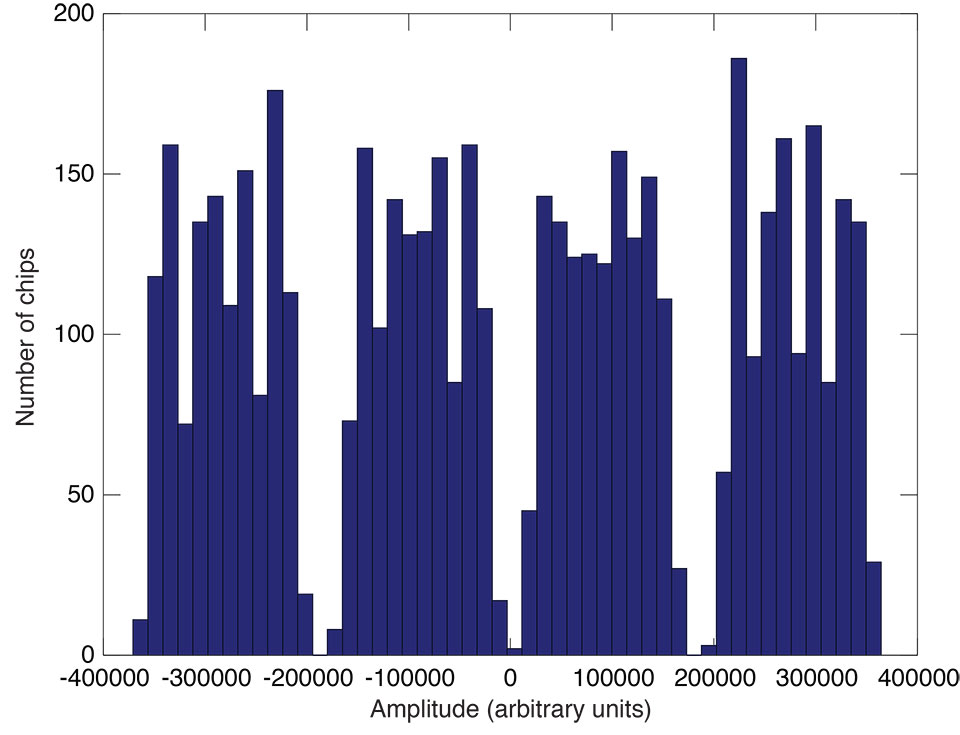
    To understand the correctness of the procedure and to check its results, we need to confirm that there is enough signal energy in each chip. To this end, a histogram of the pilot signal chip amplitudes can be plotted (see Figure 2). We see that there is nothing in the middle of the plot. This means that all 5,115 chips are correct, and there is no chance that even one bit is wrong.

    Y-Fig2
    Figure 2. Histogram of pilot signal chip amplitude in arbitrary units.

    But there is one effect that seems strange at first glance: instead of two peaks we have four (two near each other). We will shortly see that this phenomenon results from the influence of the E6-B data signal and it may be decoded also.

    Decoding the Data Signal

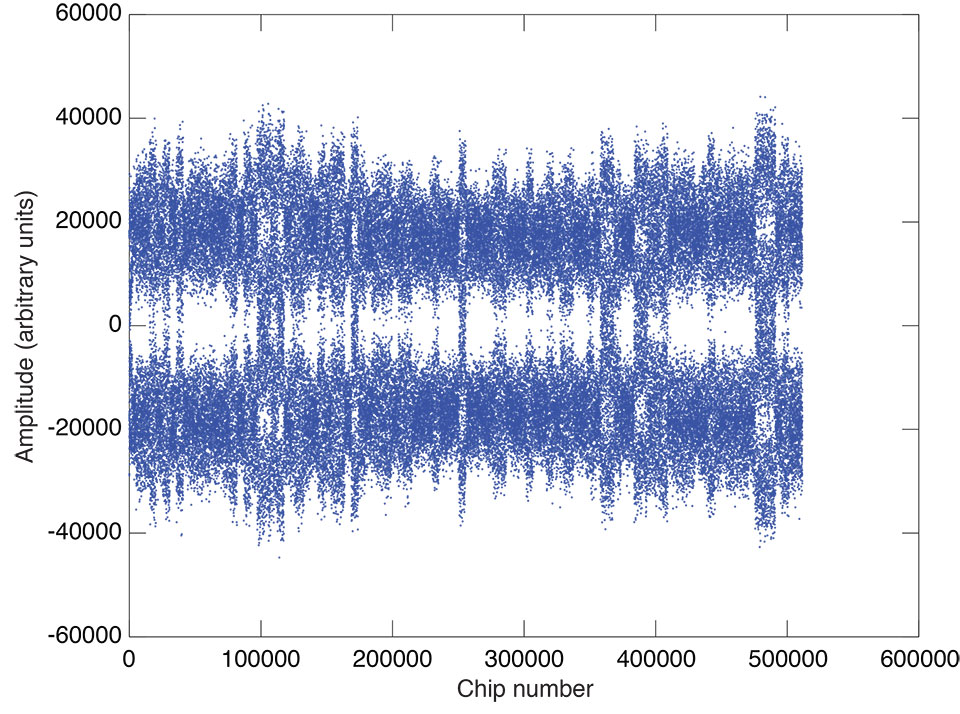
    The presence of four peaks in the histogram of Figure 2 was not understood initially, so a plot of all 511,500 signal code chips was made (see Figure 3).
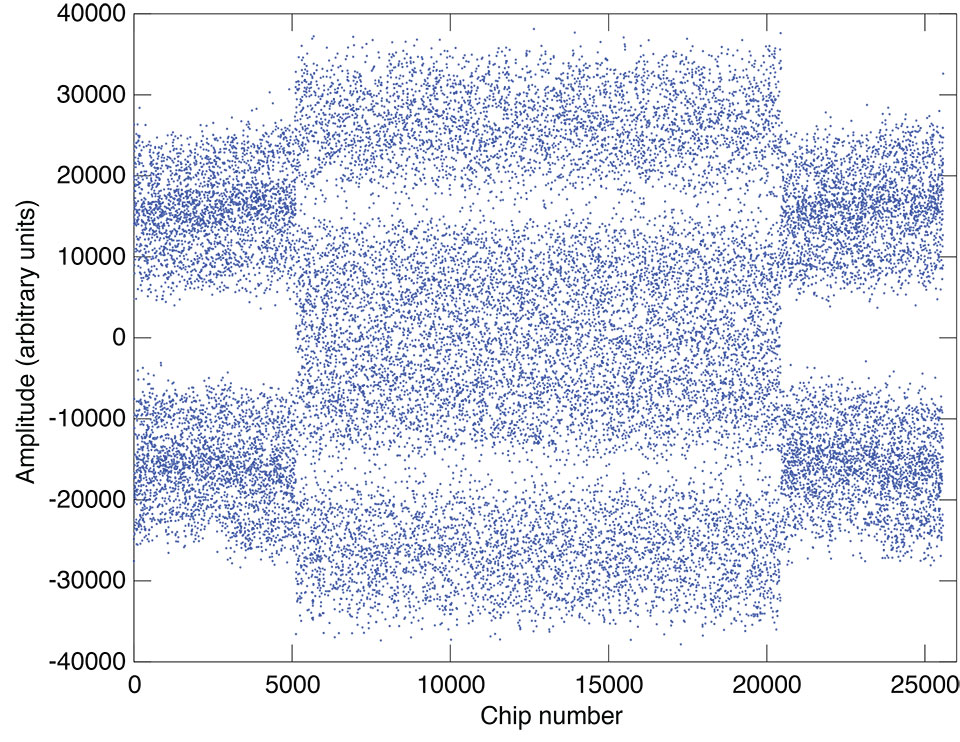
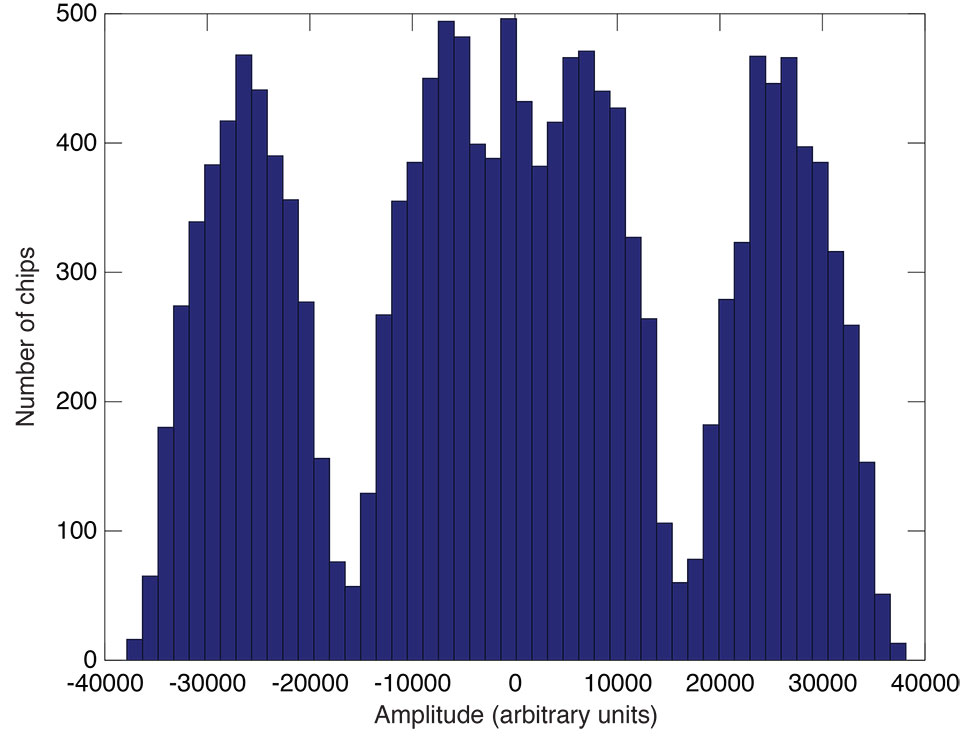
    Interestingly, each millisecond of the signal has its own distribution, and milliseconds can be found where the distribution is close to that when two signals with the same chip rate are present. In this case, there should be three peaks in the energy (signal strength) spectrum: –2E, 0, and +2E, where E is the energy of one signal (assuming the B and C signals have the same strength).

    Figure 3. Plot of 511,500 signal code chip amplitudes in arbitrary units.
    Figure 3. Plot of 511,500 signal code chip amplitudes in arbitrary units.

    One such time interval (starting at millisecond 92 and ending at millisecond 97) is shown in Figure 4. The middle of the plot (milliseconds 93 to 96) shows the described behavior. Figure 5 is a histogram of signal code chip amplitude for the signal from milliseconds 93 to 96.

    Figure 4  Plot of signal code chip amplitude in arbitrary units from milliseconds 93 to 96.
    Figure 4. Plot of signal code chip amplitude in arbitrary units from milliseconds 93 to 96.

    Then we collect all such samples (milliseconds) with the same data sign together to increase the signal level. Finally, 5,115 values are obtained. Their distribution is shown in Figure 6.

    The central peak is divided into two peaks (because of the presence of the pilot signal), but a gap between the central and side peaks (unlike the case of Figure 5) is achieved. This allows us to get the correct sign of all data signal chips. Subtracting the already known pilot signal chips, we get the 5,115 chips of the data signal — the E6-B primary code. This method works when there are at least some samples (milliseconds) where the number of chips with the same data bit in the data signal is significantly more than half.

    Y-Fig5
    Figure 5. Histogram of signal code chip amplitude.
    Figure 6  Histogram of the signed sum of milliseconds chip amplitude with a noticeable presence of the data signal.
    Figure 6. Histogram of the signed sum of milliseconds chip amplitude with a noticeable presence of the data signal.
    Proving the Codes

    The experimentally determined E6-B and E6-C primary codes and the E6-C secondary codes for all four IOVsatellites (PRNs 11, 12, 19, and 20) were put in the receiver firmware. The receiver was then able to autonomously track the E6-B and E6-C signals of the satellites.

    Initial decoding of E6-B navigation data has been performed. It appears that the data has the same preamble (the 16-bit synchronization word) as that given for the E6-B signal in the GIOVE Interface Control Document (ICD). Convolutional encoding for forward error correction is applied as described in the Galileo Open Service ICD, and 24-bit cyclic redundancy check error detection (CRC-24) is used. At the time of the analysis, all four IOV satellites transmitted the same constant navigation data message.

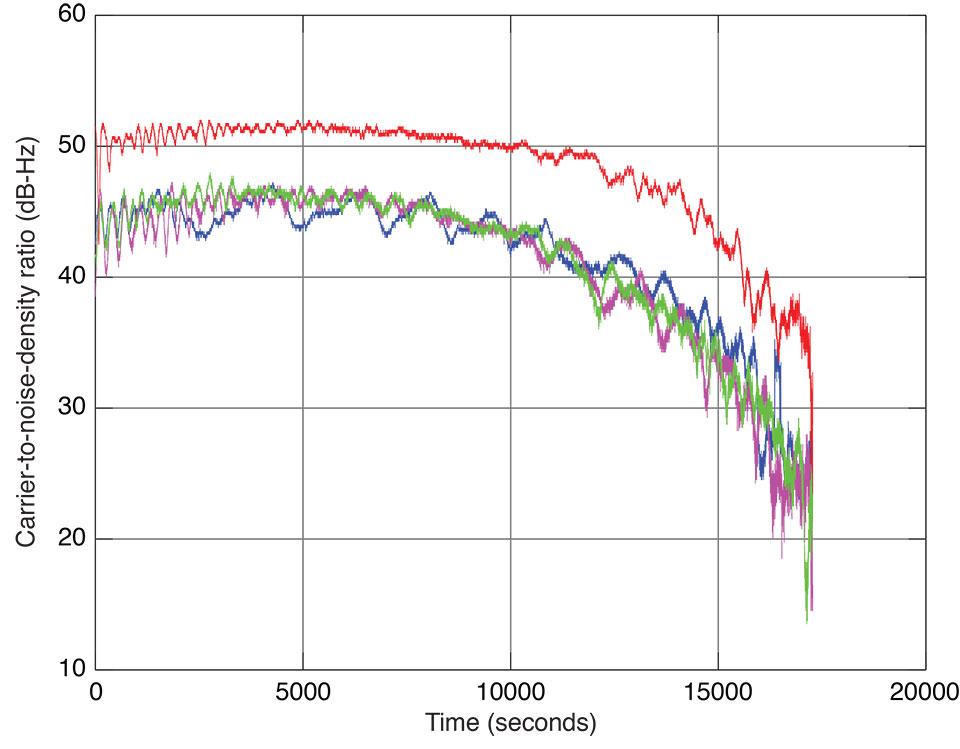
    Plots of PRN 11 E6 signal tracking are shown in Figure 7 and in Figure 8. The determined codes may be found at env-gpsworld-integration.kinsta.cloud/galileo-E6-codes. Some of these codes may be the exact complement of the official codes since the code-determination technique has a one-half cycle carrier-phase ambiguity resulting in an initial chip value ambiguity. But from the point of view of receiver tracking, this is immaterial.

    Figure 7  Signal-to-noise-density ratio of E1 (red), E5a (magenta), E5b (blue), and E6 (green) code tracking of Galileo IOV satellite PRN 11 on December 21–22, 2012.
    Figure 7. Signal-to-noise-density ratio of E1 (red), E5a (magenta), E5b (blue), and E6 (green) code tracking of Galileo IOV satellite PRN 11 on December 21–22, 2012.
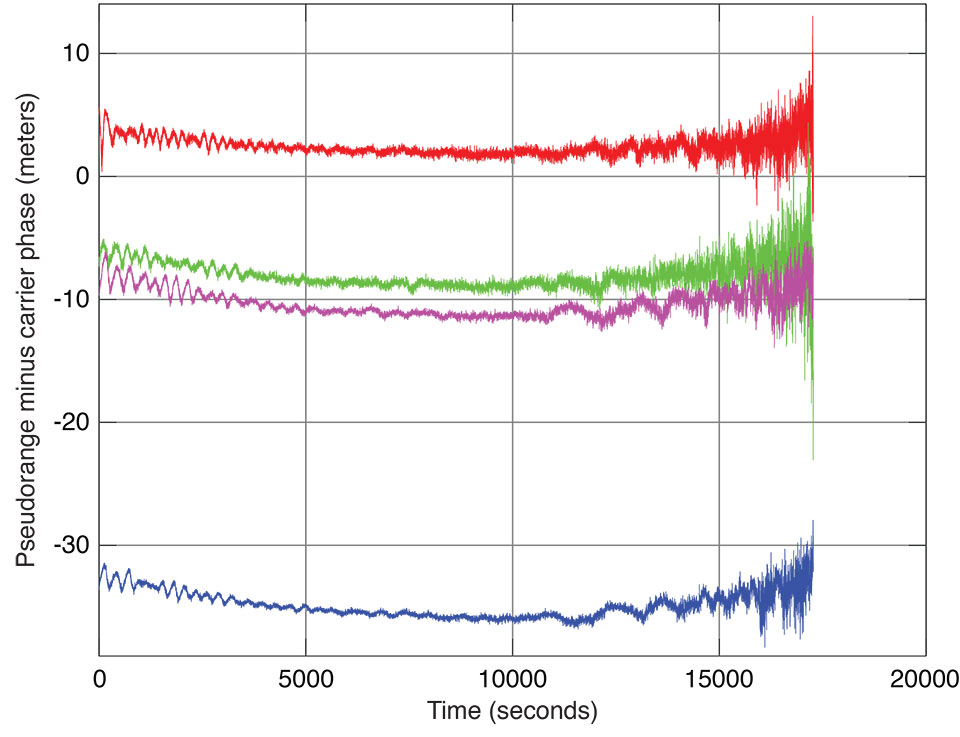
    Figure 8  Pseudorange minus carrier phase (in units of meters) of E1 (red), E5a (magenta), E5b (blue), and E6 (green) code tracking of Galileo IOV satellite PRN 11 on December 21–22, 2012.
    Figure 8. Pseudorange minus carrier phase (in units of meters) of E1 (red), E5a (magenta), E5b (blue), and E6 (green) code tracking of Galileo IOV satellite PRN 11 on December 21–22, 2012.
    Acknowledgments

    Special thanks to JAVAD GNSS’s DSP system developers. The system is flexible so it allows us to do tricks like setting the integration period to one chip, and powerful enough to be able to do required jobs within a 200-nanosecond cycle. This article was prepared for publication by Richard Langley.

    Manufacturers

    A JAVAD GNSS TRE-G3T-E OEM receiver, a modification of the TRE-G3T receiver, was used in the experiment, connected to a conventional JAVAD GNSS antenna. Plots of E6 code tracking of all four IOV satellites may be found on the company’s website.


    Sergei Yudanov is a senior firmware developer at JAVAD GNSS, Moscow.

  • Galileo IOV Satellites Begin Transmitting Navigation Messages

    News courtesy of CANSPACE listserv.

    Two of the Galileo In-Orbit Validation satellites, E11 and E12, began transmitting navigation messages on their Open Service signals on January 17. Several stations in the Cooperative Network for GNSS Observation and the International GNSS Service’s Multi-GNSS Experiment network received the messages. The epheremis data in the messages appears to be updated every 10 minutes.

  • Transmissions from Galileo Satellite IOV-4 Begin

    News courtesy of CANSPACE listserv.

    The Technische Universitaet Muenchen has reported that transmissions of the L1/E1 signal from Galileo satellite IOV-4 (FM-4) started at about 17:15:10 GPS Time December 12. The navigation signals of both of the recently launched in-orbit validation satellites have now been activated.

    A number of stations in the Cooperative Network for GNSS Observation as well as some stations participating in the International GNSS Service’s Multi-GNSS Experiment are tracking IOV-4. The satellite is using PRN code E20.

    If the commissioning schedule is similar to that of IOV-3, the E5 and E6 signals of IOV-4 should be switched on over the next few days.

  • Transmissions from Galileo Satellite IOV-3 Have Begun

    Transmissions from Galileo Satellite IOV-3 Have Begun

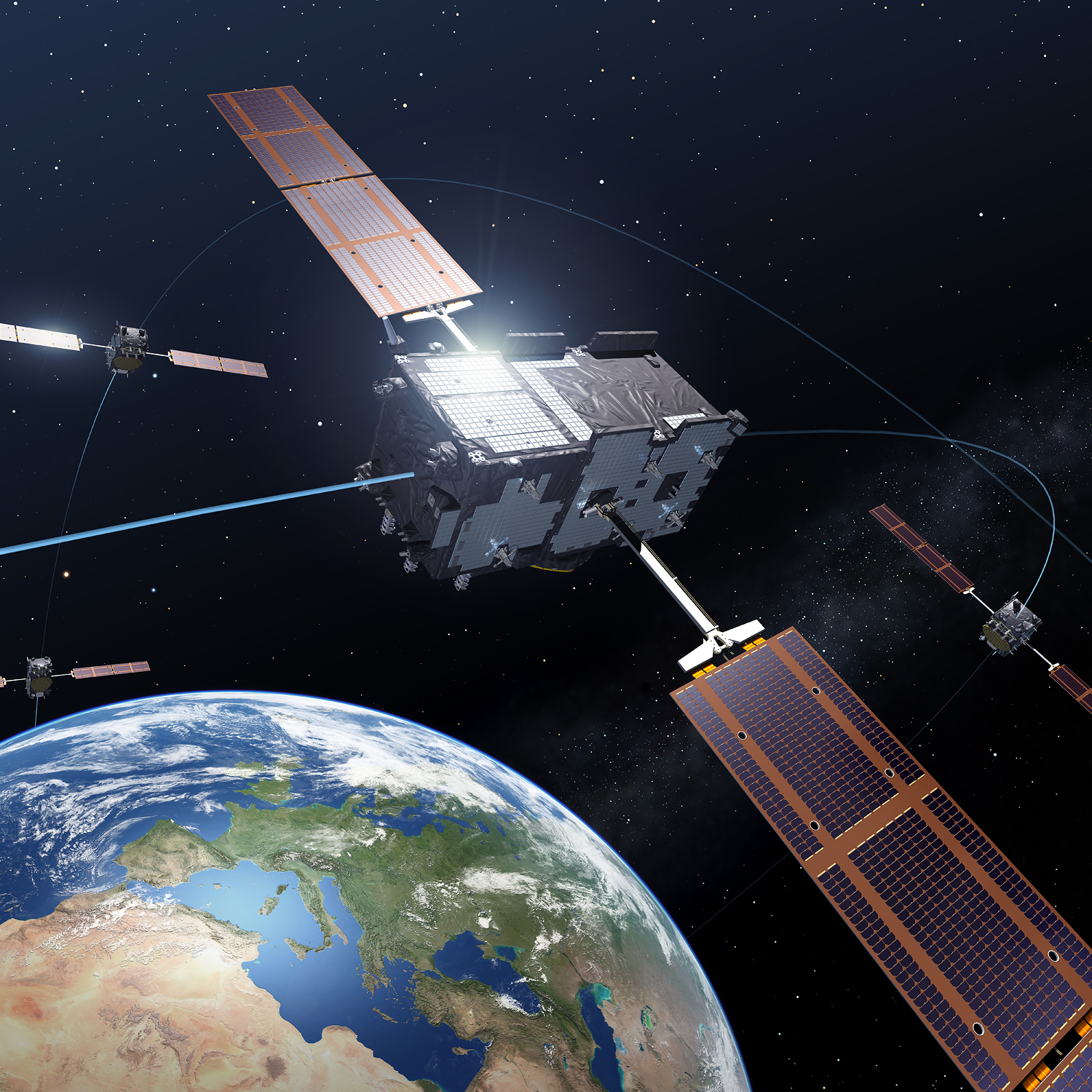
    Four Galileo In-Orbit Validation satellites in medium-Earth orbit, the minimum number needed to perform a navigation fix. (Credits: ESA – P. Carril)

    According to a report from the Technische Universitaet Muenchen, transmissions of the L1/E1 signal from the recently launched Galileo satellite IOV-3 (FM-3) started at about 13:55:20 GPS Time December 1. Transmissions from IOV-3 of the E5 signal began December 2. By December 4, all three Galileo bands, including E6, were being broadcast, according to the European Space Agency (ESA).

    Several stations of the Cooperative Network for GNSS Observation as well as some stations participating in the International GNSS Service’s Multi-GNSS Experiment are tracking IOV-3. The satellite is using PRN code E19.

    The Galileo In-orbit Validation (IOV) satellites were launched on October 12 (Flight Model 3 and 4). Now that FM3’s payload has been activated, FM4 is set to begin transmitting test navigation signals later this month. The first two satellites have already passed their in-orbit testing.

    Galileo is designed to provide highly accurate timing and navigation services to users around the world, ESA said, so the testing is being carried out in addition to the standard satellite commissioning to confirm that the critical navigation payloads have not been degraded by the violence of launch.

    While the satellites are run from Galileo’s Oberpfaffenhofen Control Centre near Munich in Germany and their navigation payloads are overseen from Galileo’s Mission Control Centre in Fucino, Italy, a separate site is used for the in-orbit testing. Located in the heart of Belgium’s Ardennes forest, Redu is specially equipped for Galileo testing, with a 15-m diameter S-band antenna to upload commands and receive telemetry from the satellite, and a 20-m diameter L-band dish to monitor the shape and quality of navigation signals at high resolution.

    “This marked the very first time that a Galileo payload was activated directly from ESA’s Redu centre in Belgium,” explained Marco Falcone, overseeing the campaign effort as Galileo’s System Manager. “We have now established an end-to-end setup in Redu that allows us to upload commands generated from Fucino’s Galileo Control Centre to the satellite payload whenever the satellite passes over the station, while at the same time directly receiving the resulting navigation signal through its main L-band antenna.

    “The result is our operations are much more effective, shortening the time needed for payload in orbit testing.”

    Operating at an altitude of 23,222 km, the Galileo satellites take about 14 hours to orbit Earth, typically coming into view of Redu for between three to nine hours each day.

  • The System: Patent Attempt on GPS, Galileo Signals Appears Done

    One of the GNSS controversies of the past year ended, not with a bang nor with a whimper, but like the fog, silently creeping away on its little cat feet. The UK patent applications against the interoperative GPS/Galileo signal design appear to have been dropped.

    Vague rumblings emerged throughout spring and summer this year that two British technologists, backed by the U.K. Ministry Defense, had filed patents on the future interoperable GPS and Galileo binary-offset carrier signal designs. If granted and enforced, the patents would have severely disrupted modernization plans for both systems and levied unexpected costs upon receiver manufacturers. A company called Ploughshare Innovations Ltd. started contacting manufacturers and asking for payment of royalties, based on the patent filings.

    After significant uproar and negotiations before and behind the scenes, it now appears that the initiative has been quietly scuttled. The U.S. Patent Office file on application number 11/774,412, Modulation Signals for a Satellite Navigation System, on the Patent Office’s website, now reads “Expressly Abandoned — During Examination.” The status is dated September 16, 2012, some time ago, but none of the parties involved, whether as filers or negotiators, has made any public announcement about it.

    Both Sides Now. Checking the European Patent Office and its registry — which is no trivial task of website navigation — turns up a note, dated September 24, under the docket for EP1830199, Modulations Signals for a Satellite Navigation System. The note states “Patent surrendered.”  A few days later, another note: “Lapsed in a contracting state announced via postgrant inform. From Nat. Office to EPO,” with further information to the effect of “lapse because of failure to submit a translation or the description or to pay the fee within the prescribed time limit.”

    For good measure, a final docket note on October 3: “Lapsed due to resignation by the proprietor.”

    Lockheed Martin Logs Enviro OK on GPS III Sat

    The Lockheed Martin team developing the U.S. Air Force’s GPS III  satellites has completed thermal vacuum testing for the Navigation Payload Element (NPE) of the GPS III Non-Flight Satellite Testbed (GNST). The milestone is one of several environmental tests verifying the navigation payload’s quality of workmanship and increased performance compared to the current generation of satellites.

    During thermal vacuum testing, the navigation payload’s performance was proven in a vacuum environment at the extreme hot and cold temperatures it will experience on orbit to ensure it will operate as planned once in space. Following the test, the NPE will now be integrated with the GNST for final satellite level testing.

    The GNST is a full-sized prototype of a GPS III satellite used to identify and solve development issues prior to integration and test of the first space vehicle. The approach significantly reduces risk, improves production predictability, increases mission assurance and lowers overall program costs. Following integration and test at Lockheed Martin’s GPS Processing Facility (GPF) near Denver, the GNST will be shipped to Cape Canaveral Air Force Station, Florida, for risk reduction activities at the launch site.

    Lockheed Martin is on contract to deliver the first four GPS III satellites for launch. The Air Force plans to purchase up to 32 GPS III satellites.

    Galileo IOV Satellites in Position

    The Galileo In-Orbit Validation (IOV) satellites launched on October 12 (Flight Model 3 and 4), have now been positioned in their designated orbits, according to tracking data from the U.S. Joint Space Operations Center. A plot of the IOV constellation is now available at http://gge.unb.ca/test/Galileo.argper.690.432000.pdf.

    The four IOV satellites are in two orbital planes separated by about 120 degrees. Within each plane, the satellites are separated by about 40 degrees. This orbital arrangement will allow the four satellites to be simultaneously tracked for periods of time by GNSS monitoring stations, permitting positioning tests using only IOV data to be carried out. However, no signals from FM3 or FM4 have yet been detected by stations of the International GNSS Service.


  • Leadership Awards 2012: Pairing LEOs with GNSS Birds

    CYGNSS, Others Deliver Now and in Future for Global Weather Forecast

    Editor’s Note: This article reproduces the acceptance speeches given by the winners of GPS World’s 2012 Leadership Awards, at the Leadership Dinner in Nashville in September. The Leadership Dinner was sponsored by Lockheed Martin and Deimos Space.


    Martin Unwin, Surrey Satellite Technology Limited; Principal GNSS Engineer, winner in the Satellites category. He is a key member of the team that built the GIOVE-A satellite (recently retired) and is now working on the Galileo FOC satellites. He is also recognized for his work on space-borne receivers.

    Headshot: Martin Unwin, Surrey Satellite Technology, winner in the Satellites category.

    I feel privileged and honored to receive this award from GPS World, and I am truly sorry now that  I chose this year not to attend the ION-GNSS conference to receive it!

    With respect to the achievements in GIOVE-A and Galileo, I cannot claim this award on behalf of myself, but I will claim it on behalf of the people in Surrey Satellite Technology Limited (SSTL) who made the projects possible, and to those in the team here who have been working tirelessly to make the payloads and satellites happen. We are of course partnered with others in Europe that have been laboring equally hard, so it has been a true team effort.
    With respect to the spaceborne GPS and GNSS activities, my achievements have only been possible thanks to the top-class staff we have in the receivers team, and thanks are also due to the support we have had from the rest of SSTL.

    In the 20 years I have been in the company, Surrey Satellite Technology Ltd has grown from a small university-based department to a major player in the international space scene, and I am immensely proud to have been part of this story.

    A Few Words for the Future

    Whilst it cannot quite match the early heady days of GPS, I still think nevertheless we are entering an exciting time in the GNSS world. We have two operational systems, and within a few years, we will be seeing two more reaching operational capability. Dual- and even triple-frequency civil signals will soon become operationally available, and some very wide bandwidth signals will be sent down, in particular, by Galileo. There is bound to be a steep learning curve in understanding how to exploit these new signals, with a few crevasses to be negotiated during the climb. But these new signals are bound to lead to an expanded vista of increased accuracy and robustness, and undoubtedly some unexpected destinations.

    Taking perhaps the highest perspective, spaceborne remote sensing is a good example that has surprising relevance to the rest of us still on the ground. In this case, GNSS satellites are used as radar sources, and all that is required on a low-Earth orbiting (LEO) satellite to change the world is a GNSS receiver. GPS radio-occultation measurements from low-Earth orbit are now already the third most important data source for our global weather forecasts, thanks to the like of the COSMIC and MetOp satellites.

    Furthermore, a new constellation of satellites called CYGNSS has recently announced by NASA that will be using ocean-reflected GPS signals to probe inside hurricanes and typhoons, and for the first time will enable the sensing of the wide-scale ocean roughness, leading to improved global wind and wave knowledge. By adding to this spaceborne receiver the ability to accommodate signals from GLONASS, Galileo, and Compass, plus any other available GNSS-type signals, the number of measurements is instantly quadrupled, and a new capability in sensing the atmosphere, waves, and even ice and land is likely to be seen. Meteorologists already view GPS as an emerging utility for weather and climate sensing, but I think this new role for GNSS will be reinforced and expanded into yet another area where GNSS incontrovertibly, if indirectly, makes such a significant difference to our daily lives.

    As with many other applications where GNSS has become important or even critical to our modern world, this is, at the same time, both a blessing and a matter for some caution.

  • Latest Galileo IOV Satellites on Orbit

    News courtesy of CANSPACE listserv

    The Galileo In-orbit Validation (IOV) satellites launched on October 12 (Flight Model 3 and 4), have now been positioned in their designated orbits, according to tracking data from the U.S. Joint Space Operations Center. A plot of the IOV constellation is now available.

    The four IOV satellites are in two orbital planes separated by about 120 degrees. Within each plane, the satellites are separated by about 40 degrees. This orbital arrangement will allow the four satellites to be simultaneously tracked for periods of time by GNSS monitoring stations, permitting positioning tests using only IOV data to be carried out. However, no signals from FM3 or FM4 have yet been detected by stations of the International GNSS Service.