
Tag: infotainment

  • Clarion Selects Averna for Testing In-Vehicle Infotainment Systems

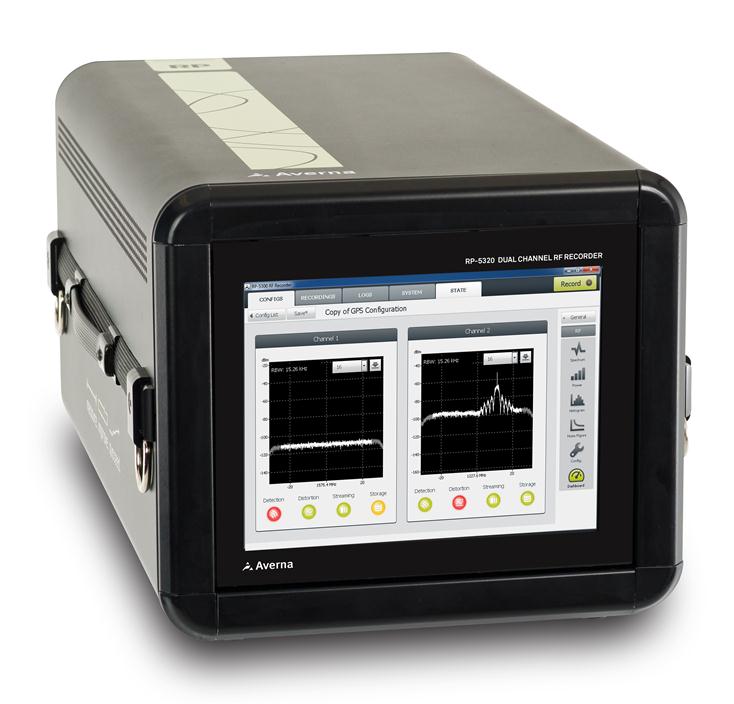
    Averna’s Record & Playback platform.
    Averna’s Record & Playback platform. Photo: Averna

    Averna, a developer of test solutions and services for communications and electronics device makers, announced today that Clarion has selected Averna’s Record & Playback solution to validate upcoming in-vehicle entertainment systems and certify that the devices perform well in real-world conditions. Clarion is a global manufacturer and seller of car navigation systems and in-vehicle equipment with a focus on car audio systems.

    The R&D Division, Experiment and Evaluation Team at Clarion will use Averna’s R&P platform to record radio signals such as AM, FM, HD Radio, and DAB from key locations around the world and replay them in the Tokyo-based lab where the design team is located.

    The R&P platform selected by Clarion features:

    • RP-5100, a compact 2-channel RF recorder designed to record live RF signals in the field
    • URT-5000, a software-defined RF Player and Signal Generator
    • RF Studio, high-performance RF record-and-playback software for RF product designers and researchers to facilitate recording, analysis and storage of RF signals
    • DriveView plug-in for synchronized recording/viewing of video, audio, and GPS positioning data

    The Averna RP-5100 RF Recorder is specifically designed to capture real-world RF signals, with impairments, for navigation as well as broadcast radio and video receiver validation, testing and support. The system has two 20-MHz wide channels that can be tuned on any frequencies from 250 kHz to 2.65 GHz. To address the challenges of validating the RF response with the physical environment, Averna has developed DriveView, a plug-in for the proprietary RF Studio software, offering visual verification by video-recording drive tests.

    “Clarion needed a platform to record live RF environments and reproduce them in a repeatable manner in their lab. Our R&P solution allows them to go through all the different use cases without having to go back in the field at each testing phase,” said Etienne Frenette, VP of Sales, Asia for Averna. “As receivers become more complex, it is imperative that real-world signals and conditions be recreated for thorough validation and testing in order to help enhance the user experience.”

    “We recognize and appreciate Averna’s unique expertise and advanced solutions in device performance testing,” commented the R&D Division, Experiment and Evaluation Team at Clarion. “Clarion is dedicated to delivering better products reaching the market faster and Averna is helping us achieve this goal.”

  • CTIA: Automakers Developing Their Own Infotainment Apps

    OnStar_logo-TBy Janice Partyka

    It’s a trifecta. The most interesting news at CES, Mobile World Congress, and now CTIA was the connected vehicle. Last week at CTIA, the biggest mobile conference in the U.S., GM and OnStar demonstrated ideas of what we can expect in vehicles once AT&T’s LTE network makes its way into vehicles. We heard about many of their concepts in February at Mobile World, but with the infotainment possibilities being shown at CTIA, it is clear the endeavor is evolving quickly. Providers of navigation, mapping, traffic, middleware, search, points of interest and mobile advertising have key roles. We’ll check in ahead with some of these companies.

    GM and OnStar envision an in-vehicle curated app ecosystem with downloadable apps and remote vehicle management. Developers will have access to APIs that can access the vehicle’s speed, performance, GPS, fuel economy and other information, but are kept out of areas that could cause safety issues. GM, as well as other OEMs, is not ready to let the app marketplace take money out of its pocket. The automaker is pushing to get apps built specially for its vehicles. Mary Chan of GM said that the business model hasn’t been decided, but the apps may be free, bundled into a service that GM charges for, or paid out to the developers. Another possibility is an app subscription paid for on a smartphone could be applied to a separate app in the car. We have to wait until model year 2015 to see it come off the assembly line.

    Snippets heard at CTIA:

    “The biggest challenge of indoor location is having a good enough return on investment by the venue.” Derek Peterson, Boingo

    “We hear many pitches from companies that want to supply us with indoor location technology, but so many of them are just unscalable.” David Hildebrandt, ATT

    “Relevant, connected car data trumps free.” Mary Chan, General Motors

    “The future killer mobile apps are banking, retail, medical (records, diagnosis) and government (voting, administrative).” Michael Saylor, MircoStrategy

    “The ownership of data in connected cars will be a huge issue. And what happens to data in a vehicle when you transfer ownership?” Mary Chan, General Motors

    Traffic Information Is Getting Better. Traffic information is getting more granular, hence more useful. INRIX and others are collecting traffic data in road segments about 250 meters long, a significant improvement from the past. Not too long ago, traffic data was provided solely by sensors, cameras and helicopters, which covered only highways and some arterial roads. The use of crowd-sourced traffic data now provides a leap in the amount of traffic data collected, enabling more current traffic conditions, as well more roads, to be monitored. “We can collect traffic data for these small road segments from all sources, crunch it and turn it around in under a minute,” says Bill Schwebel of INRIX.

    How Fast? In a few years, Schwebel says we will see an expansion of navigation that goes beyond driving from point A to point B. This would include accurate estimates of the entire length of your trip, for instance, driving from your home to arriving at your airport gate. “We will be getting more feeds from parking lots with electronic counters, but we can also see the dwell time in a parking lot, or cars that exit without parking, all from crowdsourcing,” adds Schwebel. Waits at TSA lines or rental car counters can be devised using historical and near real-time data. When schedules of events in the area and school calendars are added, the predictions get better.

    Navigation Changes Ahead. Turn-by-turn navigation will take a step forward to becoming more interactive when it becomes a two-way broadcast. Niall Berkery of Telenav, predicts that two-way connected navigation will appear in 2014-2016. “We are now focused on reducing the complexity of navigation and making it more personalized,” says Berkery. The entire industry, hindered by the perspective that navigation is free, is focusing on adding value. Telenav acquired ThinkNear to add hyperlocal marketing to its offering.

    Embedded Navigation and the Delivery Man. Berkery estimates that 30% of navigation systems are embedded in the vehicle, which can makes updating or servicing the devices challenging. Some years ago an interesting solution was developed in China. When an embedded navigation system needed servicing, it was handled by a package delivery service, similar to FedEx. The delivery person manually removed the navigation hard drive from a consumer’s vehicle and sent it off to be fixed or replaced. When the drive came back from the factory, the package delivery person reinstalled it. That’s pretty special service.

    If you missed last week’s CTIA show, held May 21-23 in Las Vegas, you will have to wait a year and a half for its next appearance. With CES and the Mobile World Congress positioned on the calendar prior to CTIA, the other shows drew the lion’s share of product announcements and crowds. CTIA will reposition itself in front of these competing shows. CTIA’s new “Super Mobility Week” will be more international and take the place of the current fall and spring CTIA shows. Super Mobility Week will be held Sept 9-11, 2014 in Las Vegas and will include MobileCON and other major partnerships to create a bigger show experience.
  • Agero Unveils Auto Infotainment Development Kit

    Agero Connected Services has announced the development of the AgeroView DevKit, a new cross-platform toolkit designed to accelerate the deployment of cloud-based automotive infotainment system applications. The DevKit includes specialized APIs (Application Programming Interfaces) and associated support to enable access to a variety of in-vehicle platforms ranging from safety and GPS positioning to multimedia and climate control.

    The DevKit, which will include an application software development kit (SDK) as well as a hardware evaluation kit, will be evaluated by select automakers during the first half of 2013 before its release.

    According to Agero, the launch of the AgeroView DevKit will remove significant barriers that constrain today’s in-vehicle infotainment systems. Until now, infotainment system features have always remained relatively static over the course of the vehicle’s lifetime. With the DevKit, automakers and developers can deploy more exciting and convenient experiences even years after the vehicle is sold. Drivers and passengers will be able to personalize their device interfaces on demand, and dealers will have the opportunity to introduce new content and interfaces.

    The AgeroView DevKit will allow the deployment of far more efficient and practical applications, particularly those involving navigation, messaging, and safety/diagnostics. Motorists will receive  the added value created by the vehicle’s ever-improving array of functions, content, and service offerings.

    “With the AgeroView DevKit, automakers will now be able to target the applications critical to their brand and quickly deliver a user experience that builds brand equity,” said Frank Hirschenberger, Agero’s senior director of Innovation. “Moreover, the DevKit lets developers create apps with a simple, easy-to-learn interface that takes into account evolving knowledge on minimizing driver distraction.”

    The AgeroView DevKit also provides the critical portal between Agero’s AgeroView in-vehicle cloud services and the in-vehicle electronics. The DevKit makes it simple for developers to write and validate production-ready, automotive-centric apps through the use of standard Web technologies, the company said.

    The AgeroView DevKit resides as a component in the AgeroView cloud platform developed by Agero in partnership with M-Way Solutions, GmbH. The platform gives automakers and vehicle owners the flexibility to substitute providers of specific content such as navigation, entertainment, and news as well as customize graphic and audio interfaces whenever desired.

  • TI’s Wi-Link 8Q Provides Wireless Connectivity for Auto Infotainment

    Wireless connectivity is becoming a key feature in automobiles for sharing and viewing content from smartphones and tablets to in-car systems, easy pairing of devices, navigation and replacement of expensive cables for in-car communication. To answer this need, today Texas Instruments Incorporated (TI) introduced the WiLink 8Q family of wireless automotive connectivity solutions.

    “GNSS technology combines GPS and GLONASS signals with the on-chip positioning engine producing a more accurate fix of your location, making “urban canyons” non-existent,” according to the TI Behind the Wheel blog. TI is demonstrating WiLink 8Q and other technologies at the Consumer Electronics Show this week in Las Vegas.

    With its multi-radio technology, the WiLink 8Q family reaches new levels of cross platform scalability and delivers advanced features including in-car multimedia streaming video in parallel with Bluetooth hands-free calling and advanced audio distribution profile (A2DP) stereo sound. Additionally, with near field communications (NFC) for easy Wi-Fi and Bluetooth pairing, WiLink 8Q solutions enable an easy connection between a smartphone or tablet and the automobile, providing a seamless user experience, according to TI.

    The WiLink 8Q family is designed for Wi-Fi Certified Miracast operation. With an integrated power amplifier (PA) and complete software reuse across all family members, WiLink 8Q solutions provide a full range of products for wireless automotive infotainment including:

    • Super-combo SoCs with Wi-Fi, Bluetooth, Bluetooth low energy, NFC, and GNSS support.
    • Combo-connectivity system-on-chips (SoCs) with Wi-Fi and Bluetooth support.
    • More integrated combo-connectivity SoCs with Wi-Fi, Bluetooth, Bluetooth low energy and NFC.

    “Delivering the familiar experience consumers have with smartphones and the tablets into the automobile to share information and content from drivers’ and passengers’ devices is driving the need for strong wireless connectivity solutions. Wi-Fi, Bluetooth, NFC and GNSS have to work together seamlessly as integrated parts of the entire system,” said Mattias Lange, automotive connectivity product line manager, Wireless Connectivity Solutions, TI. “The WiLink 8Q family takes our expertise in wireless connectivity and automotive applications to the next level with support of four different RF technologies on one SoC – a truly integrated approach to automotive infotainment.”