Tag: International Hydrographic Organization

  • Fugro helps improve Papua New Guinea’s navigation safety

    Fugro helps improve Papua New Guinea’s navigation safety

    Photo: Fugro
    Photo: Fugro

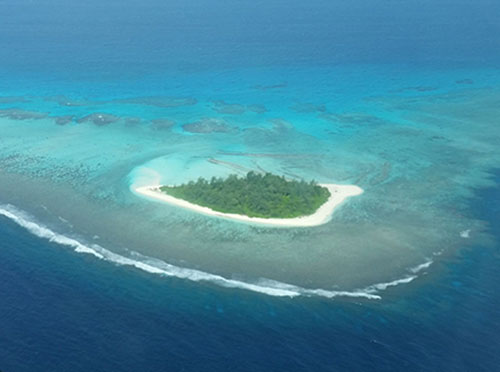
    Fugro has completed a hydrographic survey to determine a safe channel through the Star Reef Passage in Papua New Guinea.

    Fugro worked with the National Maritime Safety Authority (NMSA) and with funding from the Asia Development Bank (ADB) on the survey, which will be used to update nautical charting and improve coastal zone management.

    The project is a key initiative contributing to Papua New Guinea’s sustainable economic development.

    Fugro used its LADS HD+ Airborne Lidar Bathymetry (ALB) system, which was deployed with a team of surveyors from both the NMSA and Fugro working in collaboration.

    Fugro’s ALB system meets International Hydrographic Organization (IHO) standards with the data now set to be used to update nautical charts. The data was collected safely and with minimal environmental impact on the sensitive reef environment or local marine activity.

    Through this Maritime and Waterways Safety Project, Fugro has successfully worked with the NMSA and ADB to help deliver both hydrographic data and training of NMSA staff.

    The project is designed to improve the safety and efficiency of international and national shipping in coastal areas and waterways of Papua New Guinea by improving maritime safety information infrastructure and practices and capacity. Safer maritime activities that improve trade and tourism, as well as information to help manage the environment, will bring direct benefit to PNG’s coastal communities.
  • Guiding an unmanned vessel

    Guiding an unmanned vessel

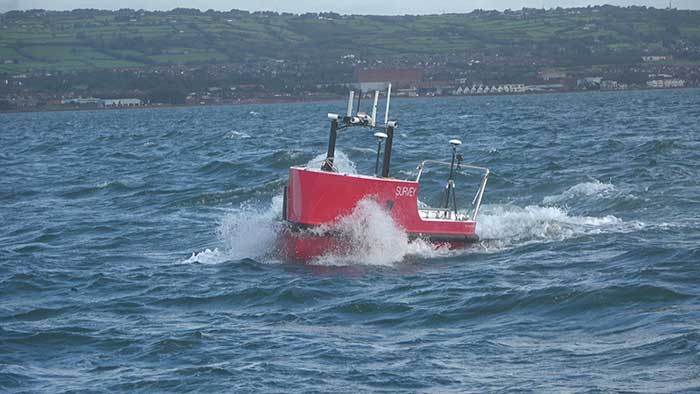
    U.K.-based Unmanned Survey Solutions (USS) has created a unique unmanned surface vessel called the Accession Class USV. It’s modular design offers three variable boat lengths depending on the desired application. The base boat length of 3.5 m can be extended to 4.25 m or 5 m by adding additional hull sections.

    The standard USV configuration includes sensors for meeting International Hydrographic Organization (IHO) special-order surveys. The sensors consist of an R2Sonic SONIC 2024 multibeam sonar; an SBG Apogee Navsight Inertial + GNSS solution, and a Valeport MiniSVS and Swift SVP for measuring sound velocity.

    Image: Unmanned Survey Solutions
    Image: Unmanned Survey Solutions

    The data is acquired in either Hypack or QINSy hydrographic software and used for mission planning, data acquisition, post processing and final products. Designed for operations in both nearshore and offshore environments, the autonomous platform is safer and more cost-effective than comparative manned vessels, USS said.

    Image: Unmanned Survey Solutions
    Image: Unmanned Survey Solutions

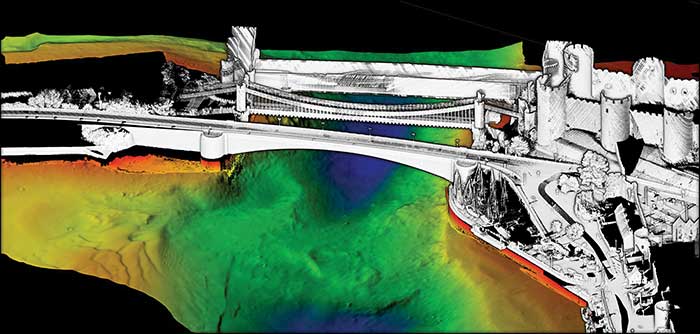
    Although the Accession USV is payload agnostic and fully customer configurable, the standard configuration can also be interfaced with a mobile lidar such as the Carlson Merlin laser scanner for mapping terrestrial structures to create a full 3D point cloud above and below the water. This is achievable because of the embedded SBG inertial navigation system (INS), which is extremely versatile for both shallow or deeper water regions as well as challenging GNSS environments such as under bridges. In such situations, the centimeter-level RTK position accuracy is greatly improved using the SBG’s Qinertia post-processing software. This PPP- and PPK-capable software offers single or virtual base-station modes and can even incorporate users’ own base-station RINEX data.

    “Not only did we want to create an autonomous vessel specifically for surveyors, but we also wanted to incorporate the latest advanced sensor technologies,” said James Williams, USS director. “It was also extremely important that the final combined solution had a low CO2 footprint and was more cost effective than similar manned vessels.”

  • Fugro awarded airborne lidar bathymetry deal in Canada

    Fugro, Canadian Hydrographic Service, airborne lidar bathymetry, ALB surveys, International Hydrographic Organization.
    Mahon Bay, Nova Scotia, Canada, is one of the many sites that Fugro will survey this winter.

    Fugro has been awarded new task orders by the Canadian Hydrographic Service (CHS) to conduct airborne lidar bathymetry (ALB) surveys in Eastern and Central Canada, Fugro announced in a news release on Dec. 15. The task orders, which have been issued under a supply arrangement Fugro holds with the CHS, are in support of their nautical charting programs and involve the survey of multiple sites along the coasts of Quebec, Newfoundland and Labrador, Prince Edward Island, Nova Scotia and Central Canada.

    Fugro’s ALB systems will be used to acquire hydrographic survey data and seabed imagery in shallow coastal waters, where the acquisition of similar information by traditional vessel-based acoustic methods is inefficient, expensive and unsafe. The data will fill gaps in shallow water and junction with existing deeper water data that have been acquired previously by CHS vessels. All data will be acquired to International Hydrographic Organization (IHO) Order 1B, an international standard for conducting hydrographic surveys, and will ultimately be used to update CHS’s nautical charts.

    Fugro provides ALB products and services worldwide to public and private sector clients as a rapid and cost-effective solution to nearshore hydrographic survey needs where scale of the project, time constraints and user safety are of primary concern.